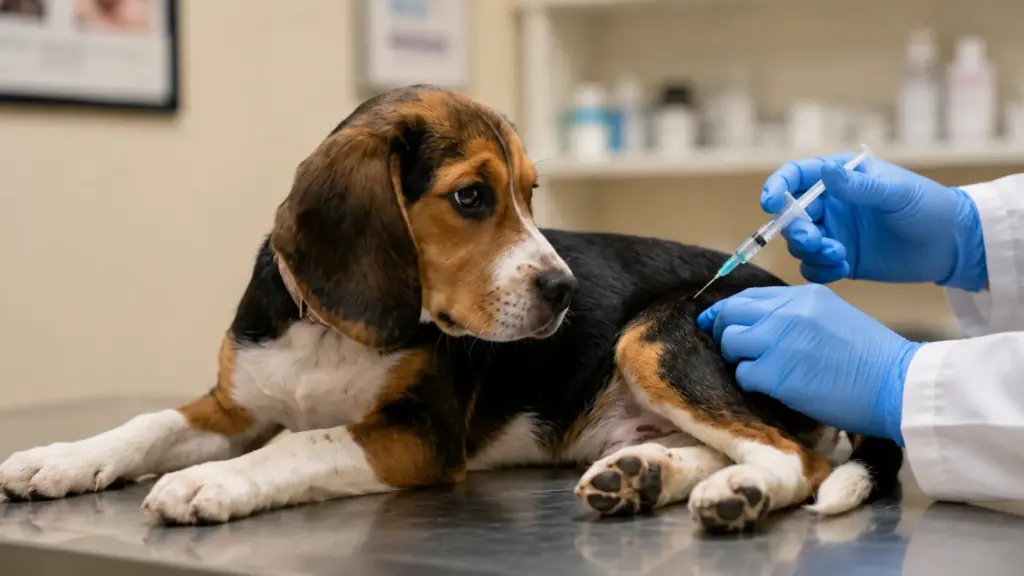
You bring your puppy home, and everything is perfect. The zoomies, the tiny snores, the way they tilt their head at absolutely nothing.
Then, somewhere between the third chewed sock and your first vet call, the question hits: when exactly do they need their shots?
It’s one of those things that sounds simple until you’re staring at a stack of paperwork and three different schedules online.
I’ve seen a lot of first-time puppy parents get overwhelmed by the timing and the vaccine names.
The truth is, the puppy shots schedule is actually pretty straightforward once you see it laid out clearly.
And getting it right in the first year is one of the most important things you’ll do for your dog’s long-term health.
Why Puppies Need Vaccinations Early in Life?
Puppies need vaccinations early in life because their immune systems are still developing.
During the first few weeks, puppies receive maternal antibodies from their mother’s milk, which helps protect them from illness.
These antibodies slowly fade between 6 and 16 weeks, creating a “window of vulnerability” where puppies can easily catch dangerous diseases.
This is why vets recommend multiple booster shots during the first year.
One vaccine alone does not fully protect a puppy because the immune system needs time and repeated exposure to build strong protection.
Puppy vaccines help prevent serious illnesses like parvovirus, distemper, rabies, adenovirus, and leptospirosis.
Some of these diseases can become fatal without treatment. Rabies is especially dangerous because it can spread to humans as well.
Following the correct puppy shots schedule gives puppies a safer and healthier start during their most vulnerable stage of life.
Core Vaccines Every Puppy Needs
Every puppy vaccination plan is built around a core set of vaccines that protect against serious, highly contagious diseases.
- Distemper: A severe viral disease that affects the respiratory system, digestive tract, and nervous system. It spreads through airborne exposure or contact with infected dogs and can be fatal without vaccination.
- Adenovirus (Hepatitis): Targets the liver and spreads through bodily fluids such as urine and saliva. It can cause serious organ damage, especially in young puppies.
- Parvovirus: Highly contagious and able to survive in the environment for long periods. It leads to severe vomiting, bloody diarrhea, and dehydration, making it one of the most dangerous infections for puppies.
- Parainfluenza: Contributes to kennel cough, a fast-spreading respiratory infection commonly found in places where dogs gather, such as parks and boarding facilities.
- Rabies: A fatal disease that can spread to humans and is legally required in many regions. Initial vaccination is followed by booster doses to maintain long-term protection.
Puppy Shots Schedule by Age
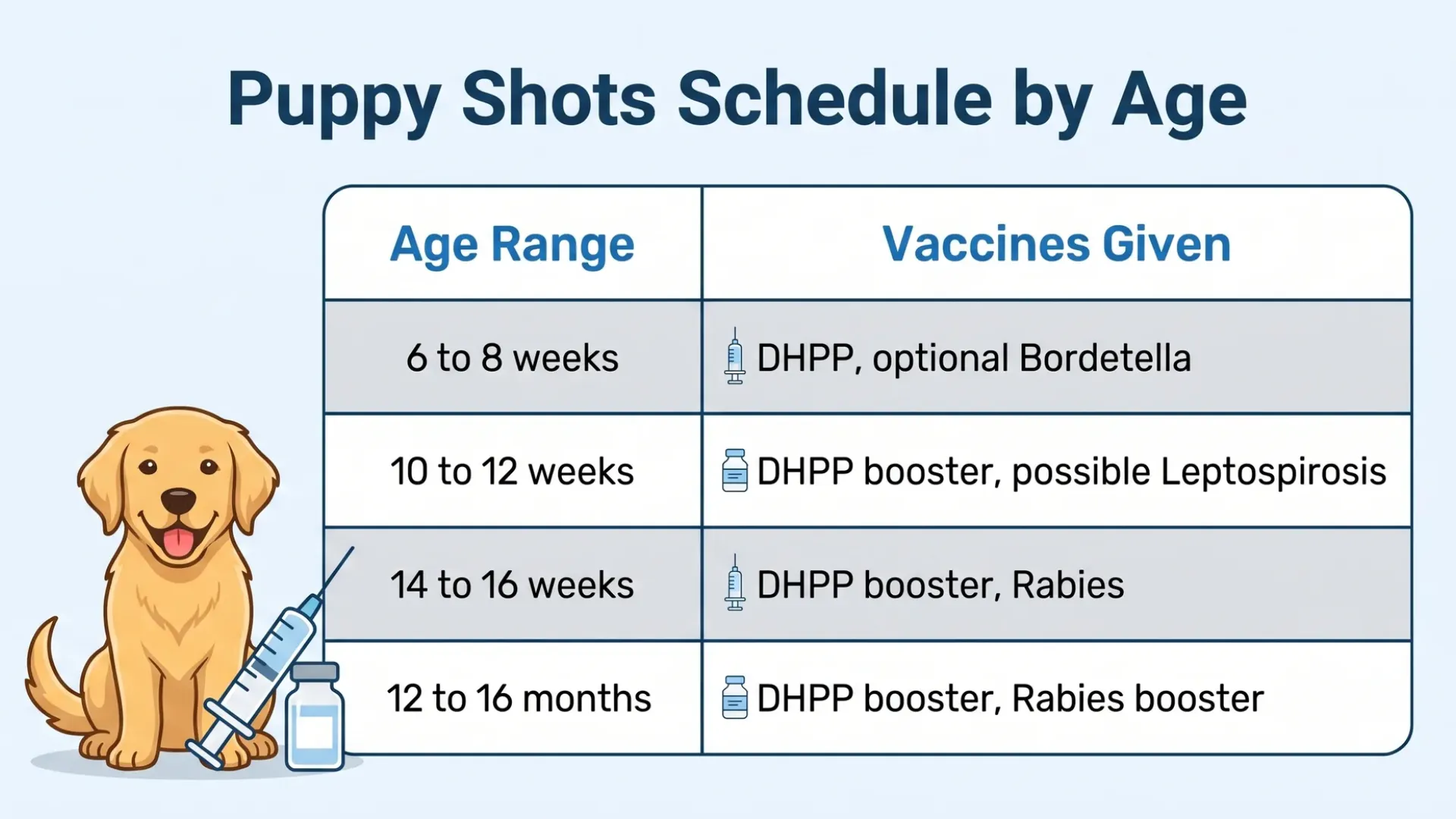
Getting a clear puppy shots schedule by age makes early care much easier. Vaccinations follow a structured timeline that builds immunity step by step, from the first few weeks through the first year.
1. 6 to 8 Weeks
The first puppy vaccination visit usually happens between 6 and 8 weeks of age, which protects against several serious diseases, including parvovirus and distemper.
In my clinic, this is often the visit where new owners have the most questions, and understandably so.
During this stage, puppies often receive:
- DHPP vaccine
- Bordetella vaccine
The DHPP vaccine, often called the 5 in 1 shot, forms the foundation by covering multiple illnesses in a single dose, making early protection more efficient:
At this age, maternal antibodies from the mother are still present, so full protection has not developed yet. Puppies remain vulnerable to infections and should avoid risky environments like dog parks or public pet areas.
2. 10 to 12 Weeks
By this age, maternal antibodies continue to fade, allowing vaccines to work more effectively.
Vets may discuss socialization, feeding routines, parasite prevention, and safe outdoor activities during this appointment.
Puppies usually receive:
- DHPP booster
- Leptospirosis vaccine
Even though immunity improves after the second round, puppies are not fully protected yet.
Careful supervision around unfamiliar dogs and public spaces still matters during this stage of development.
3. 14 to 16 Weeks
The 14 to 16-week stage is one of the most important parts of the puppy vaccination schedule.
By this age, maternal antibodies are mostly gone, which allows the puppy’s immune system to respond more strongly to vaccines.
Puppies usually receive:
- Final DHPP booster
- Rabies vaccine
Rabies vaccination is legally required in many areas across the United States because the disease can spread to humans and other animals.
Many veterinarians begin discussing regular exercise, training classes, and safer social activities once this stage is completed.
4. 12 to 16 Months Booster Shots
Puppies need another round of booster shots between 12 and 16 months to strengthen long-term immunity.
Even though puppies completed their earlier vaccine series, immunity can weaken over time without reinforcement.
These boosters commonly include:
- DHPP
- Rabies vaccines
The one-year booster helps maintain protection against serious diseases as puppies transition into adulthood.
After this stage, many adult dogs move onto yearly or every three-year vaccination schedules, depending on the vaccine type and veterinary recommendations.
Does Your Puppy Need Non-Core Vaccines?

Not every puppy requires vaccines beyond the core set. These decisions depend on lifestyle, environment, and exposure to other animals.
Vets assess daily habits early on to recommend a plan that fits your puppy’s specific needs and risks.
Vets consider outdoor exposure, location, and interaction with other dogs before suggesting options.
- Bordetella: Useful for puppies in daycare, parks, or boarding; often required by such facilities.
- Leptospirosis: Protects against bacteria in contaminated water and soil; ideal for active outdoor puppies.
- Lyme disease: Recommended in tick-prone areas, especially for puppies in grassy or wooded spaces.
- Canine influenza: Helps reduce severity in dogs exposed to group environments.
Common Puppy Vaccine Side Effects
Mild reactions after vaccines are normal and usually short-lived. Most puppies feel a little sleepy for 24 to 48 hours after a visit.
These are rare but need immediate veterinary attention. The American Veterinary Medical Association notes that severe allergic reactions occur in fewer than 1 in 10,000 doses.
- Sleepiness: Puppies may seem tired or less active than usual for the rest of the day after getting shots.
- Mild Fever: A slight increase in body temperature can happen as the immune system responds to the vaccine.
- Injection Site Soreness: Some puppies may feel tenderness, swelling, or discomfort around the area where the vaccine was given.
- Reduced Appetite: Eating less for a short period after vaccination is common in many puppies.
- Mild Swelling: Small lumps near the injection site may appear and usually fade within a few weeks.
- Vomiting or Diarrhea: Mild stomach upset can happen occasionally, but should not last long.
- Facial Swelling: Puffiness around the face, eyes, or muzzle may signal an allergic reaction and needs immediate veterinary attention.
- Breathing Trouble: Difficulty breathing or wheezing after vaccines is considered an emergency.
- Severe Lethargy: Extreme weakness or inability to stand is not normal and should be checked by a vet right away.
What Happens if a Puppy Misses a Vaccine?
Missing a puppy vaccine can leave a puppy unprotected during an important stage of immune system development.
Puppy shots follow a strict schedule because protection builds gradually with each booster.
Delaying vaccines for too long may increase the risk of serious diseases like parvovirus and distemper.
In some cases, vets may continue the schedule if the delay is short, but longer gaps can require restarting part of the vaccine series.
For example, missing a booster by one week is usually less serious and often only needs a rescheduled appointment.
Missing vaccines by several months may reduce protection and force the vet to repeat earlier shots.
Contacting a veterinarian quickly after a missed appointment is important because every puppy has different health needs, exposure risks, and vaccination requirements based on age, lifestyle, and local disease risks.
The core vaccines for dogs are well-studied and proven safe. Missing one dose doesn’t erase everything, but it does leave your puppy vulnerable longer than necessary. Get back on track as soon as you realize there’s a gap.
Conclusion
Following the right puppy shots schedule is one of the most important parts of keeping a puppy healthy during the first year of life.
Vaccines help protect against serious diseases while giving puppies the strong immune support they need as they grow.
Staying consistent with booster appointments, understanding vaccine timing, and working closely with a veterinarian can make the entire process less stressful for first-time dog owners.
Every puppy may have slightly different needs depending on lifestyle, environment, and health history, but a proper vaccination routine creates a safer start for all dogs.
Have you recently started your puppy vaccination journey? Share your experience, questions, or tips in the comments below.
Frequently Asked Questions
Do Indoor Puppies Still Need All the Core Shots?
Yes. Indoor puppies still face risks from people, pets, and contaminated objects. Parvovirus survives long outside. Rabies is legally required. Core vaccines are essential for all puppies.
How Much Do Puppy Shots Cost on Average?
DHPP costs $20 to $60 per dose, and rabies costs $20 to $30. First-year totals are $100 to $300. Low-cost clinics can reduce expenses significantly.
Can Puppies Get Too Many Vaccines at Once?
Vaccines are carefully scheduled to avoid overload. Vets follow tested guidelines, so receiving multiple shots in one visit is generally safe and effective for building immunity.
Can I Walk my Puppy After the 2nd Vaccination?
Yes, short walks in low-risk areas are usually safer after the second vaccination, but puppies should still avoid dog parks and unknown dogs.