Finding a tiny tooth on the floor can feel worrying the first time it happens. One minute, your puppy is chewing a toy, and the next, you spot a little white tooth that looks like a grain of rice.
The good news is that this is a normal part of growing up. Puppy teeth fall out as adult teeth push through the gums during early puppyhood.
During this time, your puppy may chew more, drool, leave pink marks on toys, or seem fussier.
These signs can look concerning at first, but they are often part of the normal teething process. Still, it helps to know what is normal and what needs attention.
This guide explains when puppy teeth fall out, why it happens, what signs to expect, how to help your puppy feel better, and when a vet should check their mouth.
Why Puppies Lose Their Teeth?
Puppies lose their baby teeth because those teeth are only meant to support them during their earliest stage of growth and development.
As your puppy grows, their jaw becomes stronger and wider, while adult teeth start forming beneath the gums, ready to replace the temporary ones.
These developing adult teeth slowly push upward, putting pressure on the roots of the baby teeth and weakening their hold in the gums.
Over time, the roots break down, the baby teeth loosen, and they fall out naturally, similar to what happens in children but at a much faster pace.
I often describe it to owners this way: the adult teeth are essentially evicting the baby teeth from below.
This internal pressure can make your puppy’s gums feel sore, tender, or slightly itchy during the teething phase.
That discomfort is one of the main reasons puppies chew more often, as chewing helps ease the irritation in their gums.
While chewing provides relief, it can also lead your puppy to bite shoes, furniture, fingers, or other household items within reach.
When Do Puppy Teeth Fall Out?
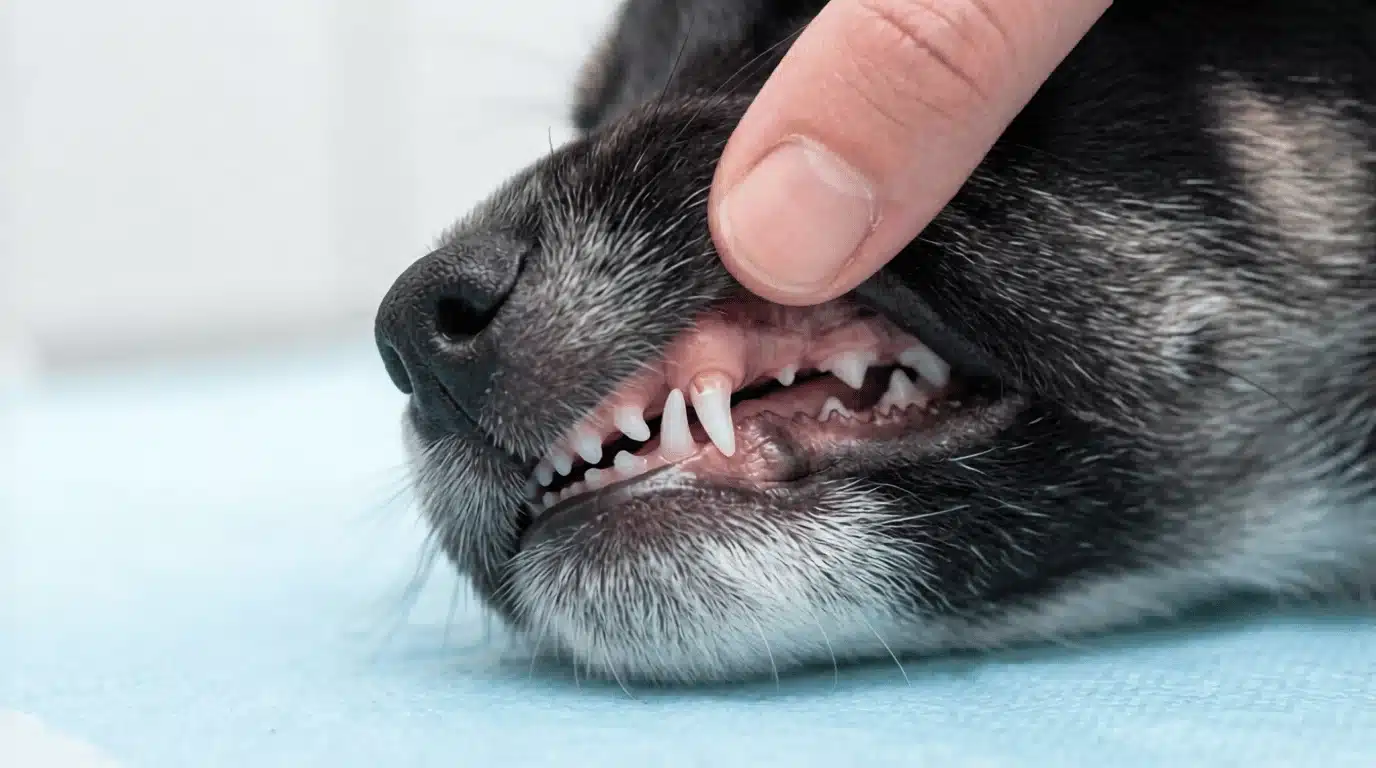
Puppy teeth usually start falling out around 12 to 16 weeks old, or about 3 to 4 months of age.
This is when the permanent adult teeth begin to push through the gums and replace the temporary baby teeth.
The full process does not happen in one week. Most puppies keep losing baby teeth and growing adult teeth until around 6 to 7 months old.
By that point, your puppy should have 42 adult teeth instead of the 28 baby teeth they had earlier. Breed size, growth rate, and individual development can affect the timing.
Large breeds generally complete the transition faster.
Small breeds such as Yorkshire Terriers and Chihuahuas are more likely to hold onto baby teeth longer and face a higher risk of retained teeth.
Puppy Teething Timeline by Age
Puppy teething happens in stages, and each age range brings different changes to the mouth. Some puppies lose teeth earlier or later than others, but most follow a fairly similar pattern as baby teeth fall out and adult teeth grow in.
| Puppy age | What usually happens |
|---|---|
| 0 to 2 weeks | No visible teeth |
| 3 to 4 weeks | Baby teeth begin appearing |
| 6 to 8 weeks | Most puppies have 28 baby teeth |
| 12 to 16 weeks | Baby teeth start falling out |
| 3 to 5 months | Incisors and canines begin changing |
| 4 to 6 months | Premolars change |
| 5 to 7 months | Adult molars come in |
| 6 to 7 months | Most puppies have 42 adult teeth |
Do Puppy Teeth Fall Out in a Specific Order?
Puppy teeth usually fall out in a fairly predictable order, which makes it easier to track normal development during the teething stage.
- The small front teeth, called incisors, often go first.
- After that, the canine teeth, or fang teeth, start changing.
- Premolars follow as the puppy gets older.
- Unlike other teeth, adult molars do not replace baby teeth because puppies are not born with baby molars.
Instead, these larger teeth emerge at the back of the mouth between 5 and 7 months.
Understanding the order helps you recognize what is normal during teething. If your puppy loses a front tooth first, it is usually part of the expected pattern.
Mild bleeding, extra chewing, and slight gum sensitivity can also happen during this stage.
If you notice baby and adult teeth sitting together in the same spot for too long, that may indicate retained baby teeth and should be checked by a vet.
Early Signs Your Puppy is Teething
Puppy teething usually comes with a mix of physical changes and noticeable behavior shifts. Some puppies handle the stage calmly, while others become more active with chewing and mouthing as their adult teeth start coming in.
- More chewing than usual: Your puppy may chew toys, shoes, furniture, or blankets more frequently throughout the day to help ease growing pressure and soreness in the gums.
- Mouthing hands, sleeves, or toys: Teething puppies often mouth more because their gums feel sore or itchy.
- Mild drooling: A little extra drool can happen as new teeth push through the gums and create temporary irritation or sensitivity inside the mouth area.
- Tiny white teeth on the floor: You may find small baby teeth in bedding, near toys, or around your puppy’s crate after active chewing or rough play sessions.
- Pink marks on chew toys: Light bleeding can leave faint pink stains on toys, blankets, or chew items, which is usually considered normal during the teething process.
- Mild gum bleeding: A small amount of bleeding may happen when baby teeth loosen and fall out naturally while your puppy chews on harder surfaces or toys.
- Short periods of fussiness: Your puppy may seem restless, clingy, or less interested in food for short periods because gum discomfort can temporarily affect mood and appetite.
- More interest in soft or cool chew items: Chilled toys or softer chews may feel better on sore gums and can provide extra comfort during difficult stages of teething.
How to Soothe a Teething Puppy Safely?
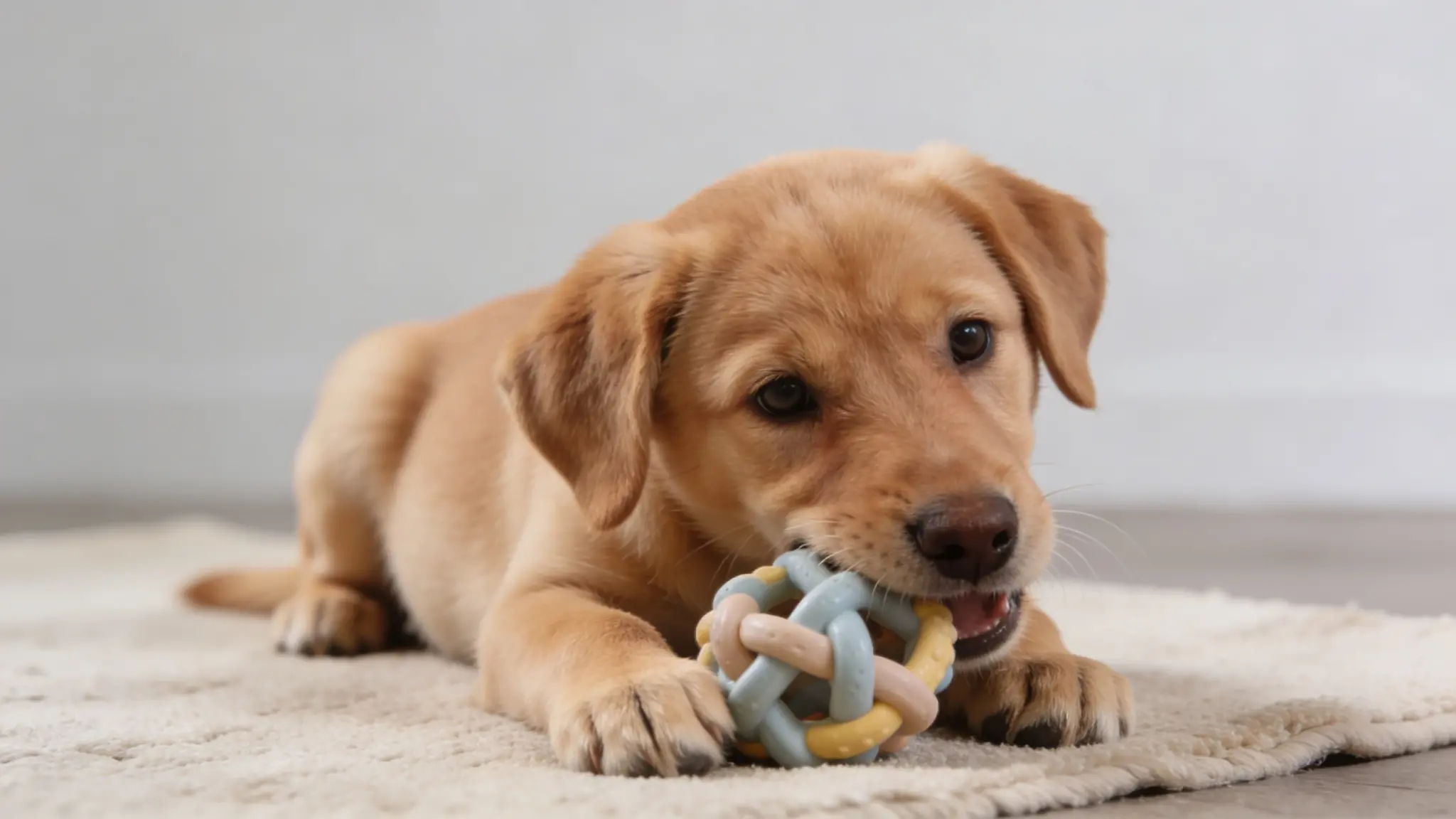
1. Offer Safe Chew Toys First
Give your puppy safe chewing options before they choose shoes, furniture, or your hands.
Soft rubber puppy toys are a good choice because they press gently on sore gums without being too hard on growing teeth.
Choose toys made for puppies, not adult dogs, because puppy teeth and jaws are still developing. Keep a few safe toys nearby so you can redirect chewing quickly before it becomes a habit.
2. Use Chilled Toys for Sore Gums
Chilled puppy-safe toys can help calm gum discomfort and make chewing feel more soothing. You can also use a cold, damp washcloth under supervision if your puppy likes softer textures.
Remove the washcloth if your puppy starts tearing it, because swallowed fabric can cause stomach trouble, and avoid hard frozen items, as they can be too firm for sensitive puppy teeth.
3. Redirect Biting Calmly
If your puppy chews your hand, shoe, or sofa, interrupt gently and offer a safe chew toy instead.
Praise them when they chew the right item so they learn what is allowed.
Try to stay calm, because big reactions can make your puppy think biting is a game. The goal is to teach your puppy what to chew, not scare them for normal teething behavior.
4. Avoid Turning Chewing Into a Game
Do not chase, shout, or pull things away dramatically when your puppy bites the wrong item. That can make chewing feel more exciting and encourage them to repeat it.
Instead, calmly remove the item and replace it with a puppy-safe chew toy. This keeps the moment simple and helps your puppy build better chewing habits.
5. Practice Gentle Mouth Handling
Gently touch your puppy’s lips and gums for a few seconds, then reward them, as this helps them get used to brushing, dental checks, and future mouth care.
Small, positive practice sessions now can make dental care much easier as your puppy grows. Keep each session short so your puppy does not feel trapped or stressed.
6. Watch for Signs of Real Discomfort
Mild chewing, drooling, and gum soreness can be normal during puppy teething.
Call your vet if your puppy refuses food, has heavy bleeding, swollen gums, or seems unusually painful.
You should also watch for pawing at the mouth, strong bad breath, or baby teeth that do not fall out. Teething should not prevent your puppy from eating, playing, or acting normally.
What Should You Avoid Giving a Teething Puppy?
Teething puppies need chew relief, but not every chew is safe. Here is a list of what you should give a teething puppy:
- Hard Bones: Real bones can be too dense and may crack fragile puppy teeth. They can also splinter, which increases the risk of mouth injuries or internal damage if swallowed.
- Antlers: These are extremely hard and lack the “give” needed for developing jaws. Even adult dogs can damage their teeth on antlers, so they are not suitable during teething.
- Hard Nylon Chews: If the plastic doesn’t flex, it’s likely too tough. Some nylon toys are designed for aggressive adult chewers, so always check for softness or flexibility first.
- Ice Cubes: While cold is good, biting down on frozen solids can cause dental fractures. I have seen fractured puppy teeth from ice cube chewing in the clinic more than once.
- Inflexible Toys: Avoid any toy that does not bend or flex at all when you try to move it. Rigid toys do not absorb pressure.
- Small Objects: Anything small enough to be swallowed or broken into pieces poses a major choking hazard. Teething puppies may chew aggressively.
- Your Hands: Avoid using your hands or fingers as “play” chew toys. This prevents your puppy from developing a habit of biting skin as they grow stronger.
A simple rule helps: If the item is so hard that it does not flex at all, it may be too tough for puppy teeth. Growing teeth and gums are still sensitive.
When Should You Call The Vet?
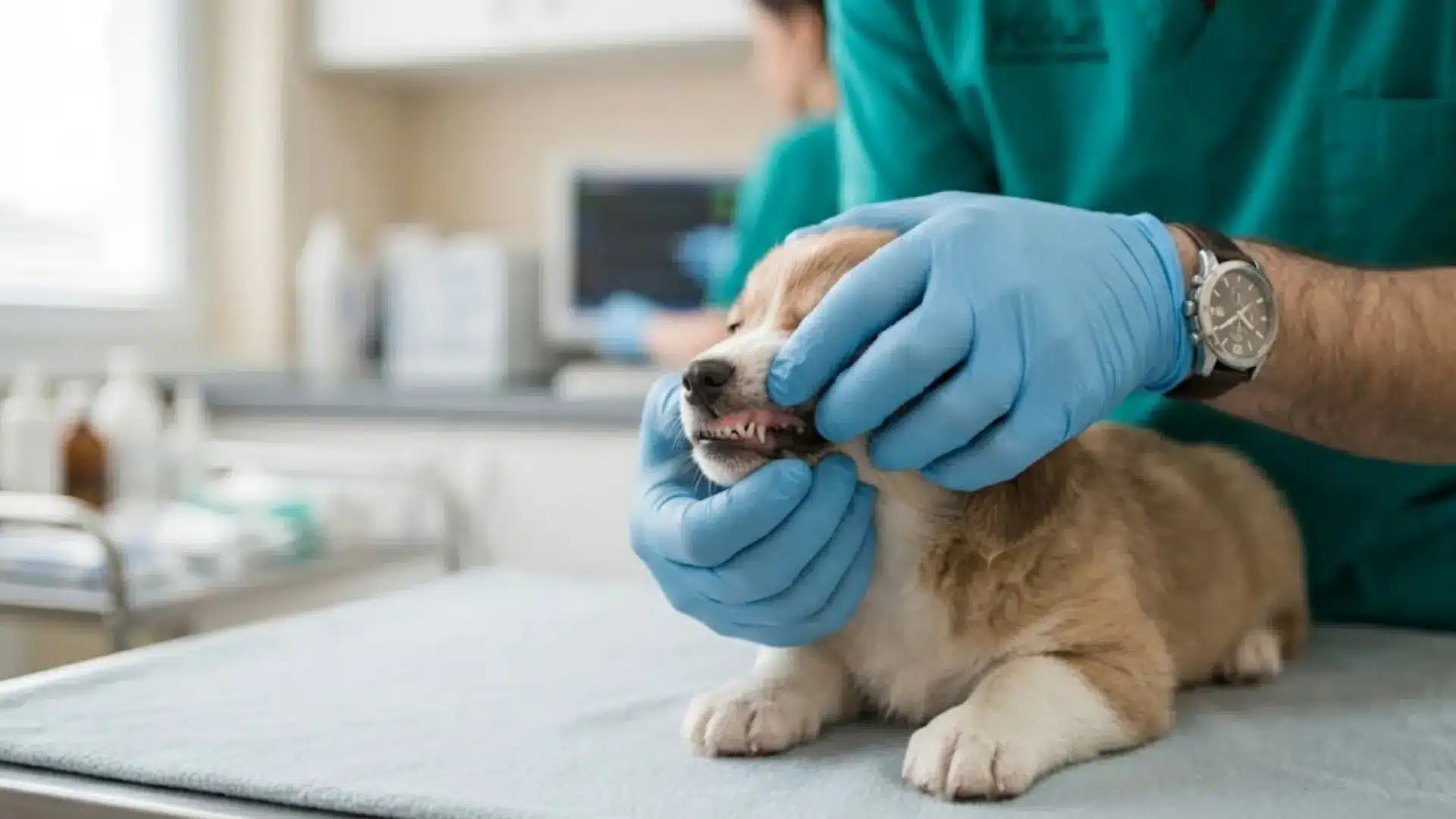
Most puppy teething is normal, but some signs need attention. Mild chewing and light gum irritation are expected. Heavy bleeding or swollen gums are not.
Call your vet if your puppy refuses food or drops kibble while eating. Pawing at the mouth or crying during chewing can also signal discomfort.
The American Veterinary Medical Association (AVMA) recommends routine dental exams starting in puppyhood to catch retained teeth and other issues early.
Retained baby teeth are a common concern. This happens when baby teeth stay even after adult teeth come in. It can lead to crowding and gum irritation.
Small and flat-faced breeds are more at risk. If your puppy is around 6 months old and still has baby teeth, get a vet check.
You should also watch for bad breath that feels unusual. A strong smell can mean food is stuck between crowded teeth or the gums are irritated.
Teeth growing in the wrong position can affect your puppy’s bite. This may lead to chewing problems or long-term dental issues if left unchecked.
If your puppy seems in constant pain or avoids chew toys completely, it is not normal. Teething can cause discomfort, but it should not stop your puppy from eating or playing.
Left untreated, retained teeth can also contribute to dog tooth decay and gum disease as your puppy gets older.
Conclusion
Puppy teething can look a little strange at first, especially when you find a tiny tooth on the floor or notice pink marks on a chew toy.
Most of the time, it is a normal part of growing up. Puppy teeth usually start falling out around 12 to 16 weeks, and most puppies have their adult teeth by 6 to 7 months.
The best thing you can do is follow the timeline, offer safe chew toys, avoid very hard items, and watch for signs of retained baby teeth.
If your puppy still has baby teeth after 6 to 8 months, or if eating, bleeding, swelling, or pain seems unusual, call your vet.
Where is your puppy in the teething timeline right now? Share your puppy’s age in the comments and tell us what stage they are at: just starting, chewing nonstop, or almost done teething.
Frequently Asked Questions
Can Puppy Teething Cause Sleep Changes?
Yes, some puppies may sleep more or less due to gum discomfort. Mild changes are normal, but constant restlessness or crying is not.
Is it Safe if My Puppy Swallows a Baby Tooth?
Yes, this is common. Many puppies swallow baby teeth while eating or chewing, and it usually passes without a problem. You may never find a tooth at home, even when teething is happening normally.
My Puppy is 8 Months Old and Still Has Baby Teeth. Should I Worry?
Yes, it is worth calling your vet. By 8 months, most puppies should have lost their baby teeth. Teeth that remain can crowd the adult teeth, irritate the gums, and affect how the bite develops.