Chewing is normal for dogs. It helps puppies deal with sore gums, keeps adult dogs busy, and gives them a way to handle stress, boredom, or extra energy.
The problem starts when chewing turns into damage around the home. Shoes, furniture, wires, doors, and rugs can all become targets when a dog has no better outlet.
Many pet owners get faster results when they stop treating chewing as a discipline problem and start seeing it as a communication problem.
In this blog on how to stop dog chewing, you will learn why dogs chew, what destructive chewing can mean, and how to guide the habit without fear or confusion.
You will also see what to avoid, when chewing needs extra help, and how to build better daily habits.
Why Do Dogs Chew in the First Place?
Before you can stop the behavior, you need to understand it. Chewing is not a character flaw; it is hardwired into dogs.
From puppyhood to adulthood, dogs use their mouths to explore the world around them, much like human toddlers use their hands.
In my clinical experience, the pet owners who make the fastest progress are the ones who stop asking “how do I punish this?” and start asking “what is my dog trying to tell me?”
Chewing also serves real physical purposes. It helps puppies relieve gum discomfort during teething. For adult dogs, it keeps jaw muscles strong and teeth clean.
The problem is not chewing itself; it is when that chewing gets directed at your furniture, shoes, or electrical cords instead of appropriate objects. Understanding the “why” behind the behavior is the first and most important step toward a solution.
Common Behavioral Reasons Behind Destructive Chewing
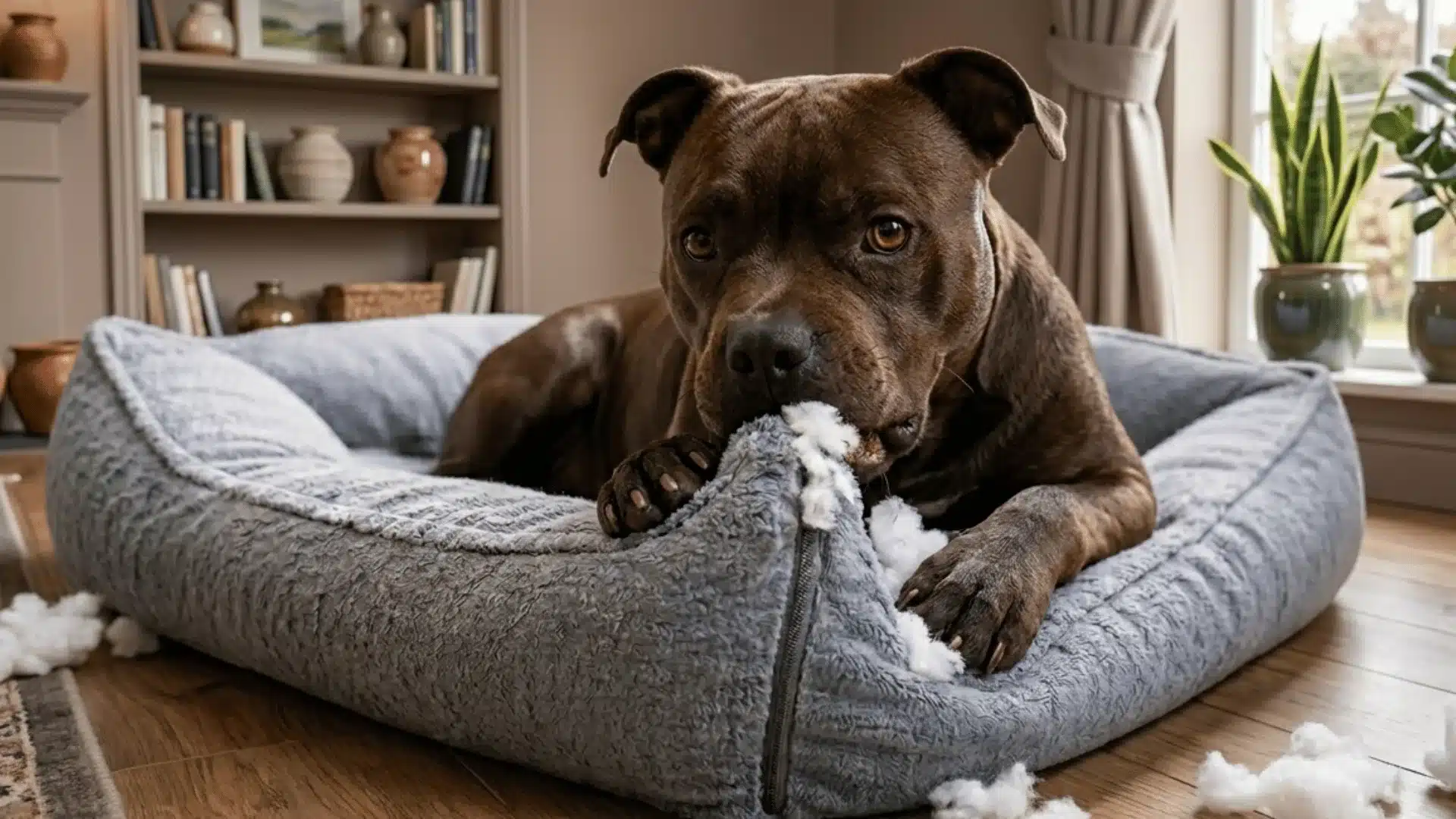
Destructive chewing rarely happens without a reason. Below are the most common behavioral triggers I see in dogs of all ages and breeds. Identifying which one applies to your dog will shape everything you do next.
1. Teething and Puppy Exploration
Puppies between 3 and 8 months of age are cutting new teeth, and their gums genuinely hurt. Gnawing on objects brings real physical relief.
At the same time, puppies are exploring their environment with their mouths, the way an infant might reach out and grab everything in sight.
This phase typically passes once adult teeth are fully in, usually by around 6 to 7 months. The best approach here is not prevention but redirection; make sure your puppy always has access to safe, appropriate chew toys.
2. Boredom and Lack of Mental Stimulation
A tired dog is a well-behaved dog. When dogs do not get enough physical exercise or mental engagement, they find their own entertainment, and that usually means chewing whatever is within reach.
I have seen this pattern repeatedly in high-energy breeds like Border Collies and German Shepherds, though any dog can fall into it.
If your dog’s chewing spikes during the day while you are at work, boredom is very likely a factor. Daily walks, fetch sessions, puzzle feeders, and training exercises all help drain that pent-up energy before it turns into destruction.
3. Separation Anxiety and Stress
This is where chewing crosses from habit into a deeper behavioral concern. Dogs with separation anxiety chew to self-soothe when their person is away. The behavior is driven by genuine distress, not a training gap.
According to the ASPCA, one of the most common complaints from pet owners is that their dogs become disruptive or destructive when left alone, and separation anxiety is frequently the underlying cause.
Signs to watch for include chewing that only happens in your absence, focus on exit points like doors and window frames, and other distress behaviors such as excessive drooling or vocalization before you leave.
4. Attention-Seeking Behavior
Dogs are social, observant creatures. If your dog has learned that grabbing your sock and running across the room results in you dropping everything and chasing them, that behavior will repeat, because it worked.
Without realizing it, many pet owners reward destructive chewing with the very thing their dog wanted: attention.
Even a scolding counts as engagement from a dog’s perspective. Redirecting calmly without making a big scene is far more effective than reacting.
How to Stop Dog Chewing With Proven Strategies

Once you have identified the cause, you can build a plan. These strategies work best when used together, not in isolation.
1. Dog-Proof Your Space
Remove anything you do not want chewed from your dog’s reach. Keep shoes in closed closets, tuck cords behind furniture, and use baby gates to block rooms with furniture, rugs, or loose items.
This step does not fix the habit on its own, but it stops damage while training is in progress.
A safe setup also lowers stress for both you and your dog. The goal is simple: give your dog fewer chances to make the wrong choice.
2. Redirect to Appropriate Chew Toys
When you catch your dog chewing something they should not, stay calm. Take the item away and offer a safe chew toy right away.
Once your dog starts chewing the right object, praise them in a relaxed voice. This teaches them what works instead of only showing them what is wrong.
Rubber toys, stuffed Kongs, bully sticks, and nylon chews can all help. Rotate them every few days so they do not feel boring.
3. Use Taste Deterrents
Taste sprays can help when a dog keeps chewing the same chair leg, cord, rug, or fabric item.
Bitter Apple spray is one common option, and many dogs dislike the taste enough to stop. Spray a small area first and watch your dog the first time they try it.
Some dogs ignore bitter flavors, so do not rely on this alone. It works best with training, redirection, and better access to proper chew items.
4. Never Punish After the Fact
If you find a chewed shoe or damaged cushion after it happened, correction will not help. Dogs do not link an old action to a later punishment the way people often think they do.
Scolding after the fact can make your dog nervous or unsure around you, but it will not teach them what to chew instead. It can even make them hide the behavior.
Focus on prevention, not reaction. Clean up the item, adjust the space, and aim to catch the behavior earlier next time so you can guide it properly.
5. Teach the “Drop It” and “Leave It” Commands
These two commands are among the most practical tools in any dog owner’s training toolkit.
Use positive reinforcement, rewarding your dog with a treat and praise every time they release an item or back away from it. Over time, this gives you a verbal tool to interrupt chewing before it causes damage.
You can find a solid step-by-step breakdown of how positive reinforcement training works for dogs applies the same reward-based principles.
6. Increase Physical and Mental Exercise
Many dogs chew because they have too much energy and not enough to do. A short walk, play session, or basic training before you leave the house can help reduce that buildup.
Mental work is just as important as physical activity. Puzzle feeders, sniff games, frozen food toys, and simple training tasks keep your dog’s mind engaged.
When their day includes both movement and thinking, they are less likely to turn to furniture or shoes. A balanced routine makes good behavior easier to maintain over time.
Tips to Prevent Chewing Before it Starts
Prevention is always easier than correction. These habits, when built early, significantly reduce the chances of destructive chewing becoming a pattern.
- Consistent supervision: Keep a close eye on puppies and newly adopted dogs whenever they are loose in the house. You cannot redirect a behavior you do not see.
- Safe confinement: When you cannot supervise, use a crate or a dog-proofed room. This is not punishment, it is structure. Choosing the right crate size matters more than most people realize, because a properly fitted crate helps your dog feel secure rather than stressed.
- Toy variety: Offer chews in different textures, shapes, and materials. Some dogs prefer hard rubber while others go for rope toys. Find what your dog gravitates toward and stock up.
- Consistent rules: Do not offer old shoes or worn socks as toys. Dogs cannot distinguish between an old sneaker and a new one. Keep household items and dog toys clearly different.
- Structured daily routine: Dogs thrive on predictability. A consistent schedule for meals, walks, and rest reduces general anxiety and helps curb stress-driven chewing.
When Should You See a Vet or Trainer?
Most chewing problems respond well to the strategies above. But there are situations where professional intervention is the right call.
If your dog is chewing through walls, doors, or window frames, not just toys or shoes, that level of destruction usually signals severe separation anxiety rather than simple boredom. Separation anxiety is a complex behavioral condition.
It does not typically improve with management alone and often requires a structured behavior modification program, sometimes alongside veterinary support.
You should also consult a veterinarian if chewing appears to be linked to compulsive behavior, physical discomfort, or if your dog has been on a calorie-restricted diet and directs chewing at objects that smell like food.
In rare cases, chewing can be tied to dental pain, gastrointestinal discomfort, or neurological conditions, all of which require a proper clinical evaluation.
From my clinical practice, I have found that the earlier you act, the easier it is to address behavior issues. Do not wait months hoping the behavior will resolve on its own.
Conclusion
Understanding how to stop dog chewing starts with one important shift: seeing the behavior as a signal, not a personality flaw.
Whether your dog is teething, bored, anxious, or seeking attention, each cause has a clear and practical response.
Dog-proofing your home, redirecting consistently, increasing exercise and mental stimulation, and using positive reinforcement are the core pillars of an effective approach.
For dogs showing extreme destruction or signs of separation anxiety, getting professional support early makes a real difference.
As a veterinarian, the most important thing I want you to take away is this: Patience and consistency will outperform punishment every time.
Start with one strategy, stay consistent for two to three weeks, and build from there. Your dog wants to get it right. They just need the right guidance to do it.
If you have tried any of these methods or are dealing with a specific chewing issue, drop a comment below and share your experience. I would love to hear what has worked for you
Frequently Asked Questions
At What Age Does Destructive Chewing Usually Stop in Puppies?
Most puppies go through the most intense chewing phase between 3 and 8 months as their adult teeth come in. Many settle down by 12 to 18 months once they are past the teething stage and have learned what is acceptable to chew with consistent training.
Can Certain Dog Breeds Be More Prone to Destructive Chewing?
Yes. High-energy breeds like Border Collies, Labrador Retrievers, and Australian Shepherds tend to chew more when under-exercised or under-stimulated. However, any breed can develop destructive chewing habits without proper guidance.
Is it Safe to Use Taste Deterrent Sprays Around Children or Other Pets?
Most commercially available deterrent sprays are non-toxic and safe for use in homes with children and other animals. Always read the product label and test on a small area before wide application.