If you’ve landed here, you’re doing what thousands of cat owners do before spending a penny searching for honest Applaws reviews from people who’ve actually fed this food to their cats. Not marketing copy. Real results.
After years advising pet parents on what’s actually inside their cat’s bowl, I’ve learned that the brands with the shortest ingredient lists often generate the most questions.
Applaws is one of them. The promise is simple: named meats, no fillers, nothing you can’t pronounce. For most of its history, it delivered on that. Whether it still does in every situation is what this review is here to answer.
Applaws built its reputation on transparency, and owners believed it. Then came the 2024 rebrand, and Trustpilot reviews began noting that cats who had happily eaten Applaws for years suddenly turned their noses up at it.
Fish varieties lost their distinctive smell. Was it a formula change? A quality dip? Or just a coincidence? Let’s take a close look because the answers matter for your cat’s health.
About Applaws
Applaws launched in the UK in 2006 when two founders, Roger and John, set out to create cat food with genuinely recognizable ingredients: chicken breast, tuna fillet, and broth. At the time, that kind of transparency was rare in the pet food market.
The brand is now owned by MPM Products Ltd, a Manchester-based company that holds B Corp certification for its ethical sourcing and labor practices. B Corp is a business ethics credential, not a nutrition standard. It does not guarantee your cat’s food meets any specific health benchmark.
In early 2024, MPM unveiled what it called the largest rebrand in Applaws’ history, rolled out across all product lines in 40+ countries.
That rebrand is the source of ongoing owner concern, which I address directly below.
What Cat Parents Actually Think of Applaws Cat Food?
Ingredient lists and nutritional tables only tell half the story. The other half lives in the review sections of Trustpilot, Chewy, and Amazon, where cat owners write in the moment, right after their cat wolfs the bowl down or walks away in disgust.
When dozens of owners independently describe the same change, reduced aroma, cats refusing previously loved flavors, that’s meaningful data, regardless of what a brand’s PR team says.
To give you a genuine picture, I reviewed hundreds of verified owner reports. The findings are mixed, and the pattern that emerges after 2024 is specific enough to take seriously.
1. Applaws Cat Food Review on Trustpilot
Trustpilot is where the most candid long-term owner feedback lives, and for Applaws, it tells a story no competing review blog has reported: a pronounced shift in negative sentiment following the 2024 rebrand.
Reviews from loyal, multi-year customers who had previously praised the brand began appearing with a recognizable pattern.
Cats that had eaten specific varieties for one, two, or even five years suddenly refused to touch the food. The most commonly described differences were reduced aroma and drier broths.
2. Applaws Cat Food Review on Chewy
Chewy reviews for Applaws trend predominantly positive, with high ratings particularly for the wet food range. The brand performs exceptionally well with cat owners who have tried multiple other brands and struggled with fussy eaters.
Reviews frequently credit Applaws as the food that finally worked for their discriminating cat. Multi-cat households also note that Applaws tends to get consensus approval across cats with different preferences, which is genuinely rare.
3. Applaws Cat Food Review on Amazon.com
Amazon’s high review volume provides statistical confidence that Chewy’s smaller pool cannot. The overall rating is positive, with the wet food range performing strongly on palatability and the dry food receiving more mixed feedback.
One recurring Amazon complaint is mislabeling: buyers receive tuna varieties that appear to contain crab or shrimp blends instead.
The reviewer noted her cat’s sudden disinterest coincided with the contents looking different from prior orders. This is particularly relevant if your cat has a known food sensitivity.
The most common Amazon complaints mirror Chewy’s price sensitivity and reports of digestive upset with the dry food. If your cat has been vomiting after switching to Applaws dry kibble, here’s a helpful guide on why cats throw up food and when it warrants a vet visit.
Applaws Full Product Range
There are four distinct product categories in Applaws’ cat food catalog: dry food, wet food, treats, and toppers/broths; and within those categories, a critical distinction that most buyers miss: not all Applaws products arenutritionally equal.
Some are complete meals. Most wet foods are supplementary, and a newer product line sits in between.
1. Wet Food
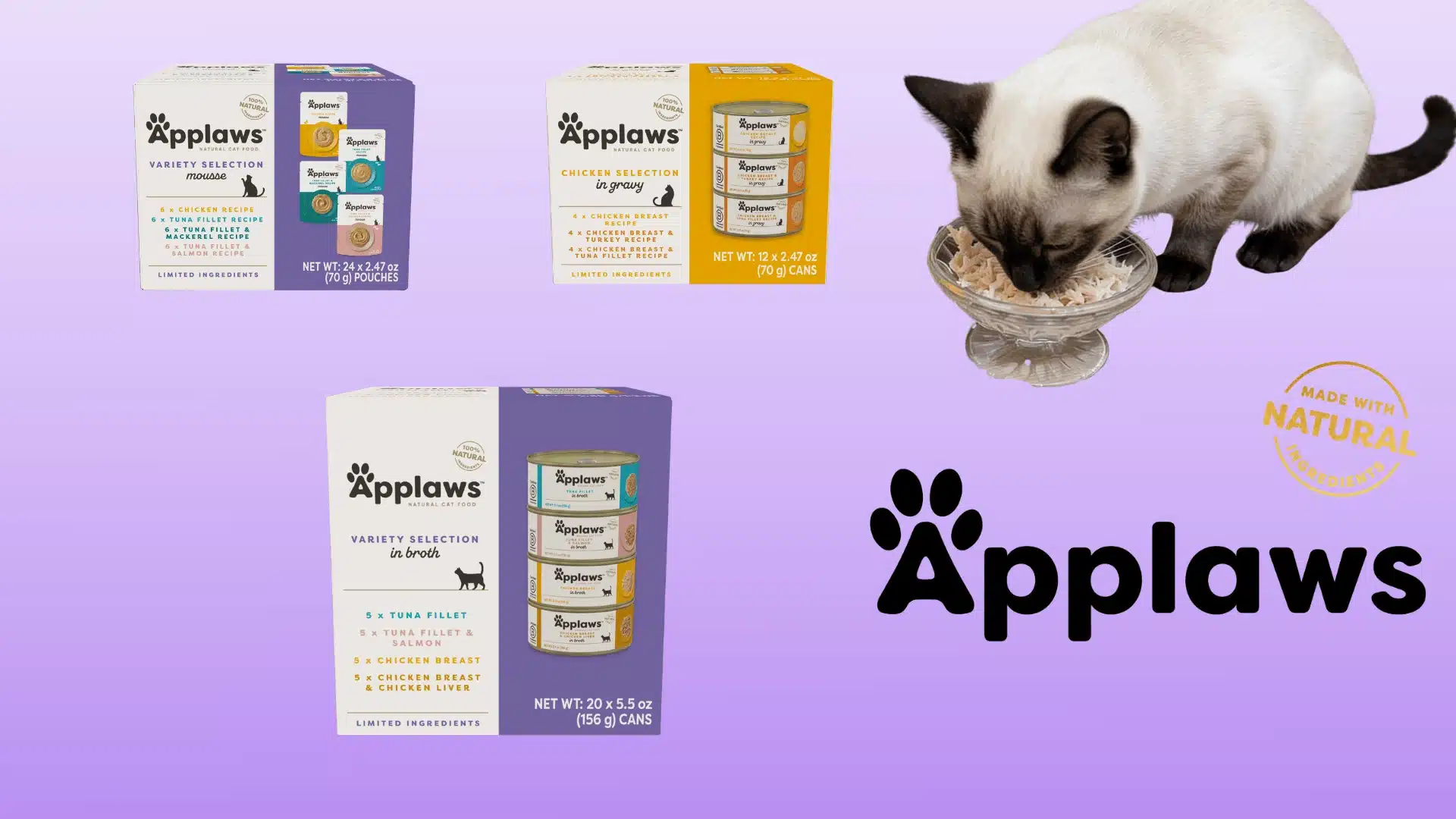
The broth, gravy, and mousse varieties are what built the brand’s reputation. Most are supplementary foods, meaning they are not formulated to meet full nutritional requirements on their own.
Their value is real: short ingredient lists make them ideal for elimination diets in cats with food sensitivities, and the high moisture content supports hydration and kidney health.
Available proteins include chicken, tuna, salmon, whitefish, sardine, mackerel, and ocean fish. The Vitality line is the exception here. It is AAFCO-complete wet food and can be fed as a sole diet.
If you want to feed Applaws wet exclusively, the Vitality product line is the one to use.
2. Dry food
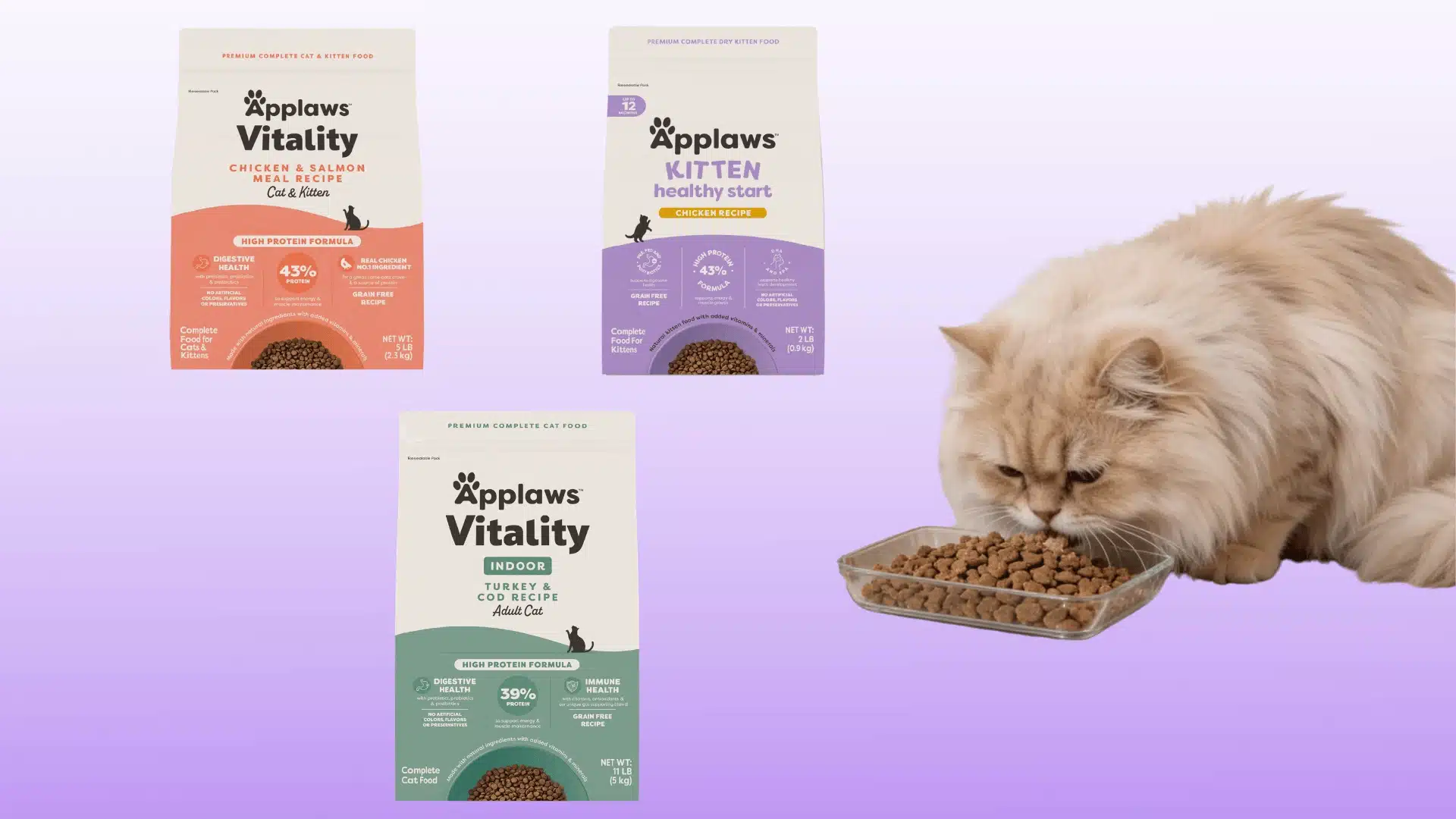
Applaws currently offers five dry food recipes, including one kitten formula. All are AAFCO-complete and grain-free, with a named cut of meat as the first ingredient.
Protein content averages around 39% on a dry matter basis, which is above average for kibble. Every recipe includes added taurine, niacin, and flaxseed as an omega-3 source. The kitten formula adds menhaden fish oil for DHA.
One thing worth knowing: all Applaws dry recipes use meat meal rather than fresh meat as their primary protein source. Meat meal is a concentrated, dehydrated protein with high bioavailability. This is standard in dry cat food manufacturing and not a nutritional red flag, but it does explain why the dry food isn’t classified as human-grade
3. Treats
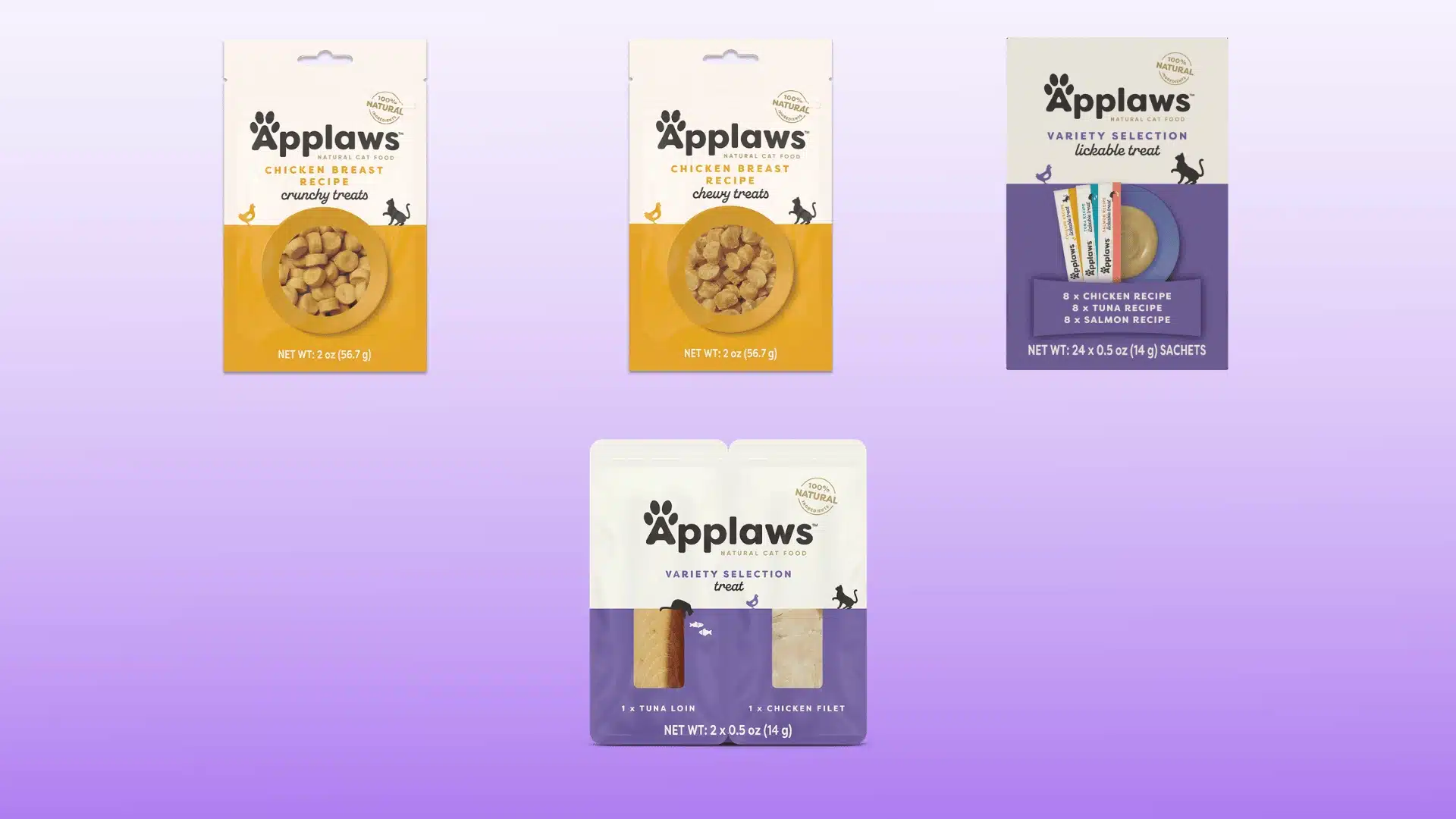
Applaws treats are among the cleanest on the market. All treat varieties share the brand’s commitment to no artificial additives.
The freeze-dried range: tuna fillet, salmon, and chicken breast, contains a single ingredient (the named meat). Each treat is about 2 calories, making them an excellent choice for training without significantly affecting your cat’s daily caloric intake.
The loin and filet range (tuna loin, salmon filet, chicken and rosemary filet, mackerel filet, tilapia filet) is a whole cut of meat, essentially the same quality as the wet food range but in treat format.
Some reviewers have flagged the sodium content of the loin treats as a potential concern for cats on sodium-restricted diets (such as those managing heart or kidney disease).
Nutrition Analysis of Applaws Cat Food
Before diving into the numbers, one concept unlocks all cat food labels: dry matter basis (DMB). Because wet food can be 80–85% water, raw-label percentages are misleading when comparing wet to dry.
DMB removes water from the equation. To calculate it: subtract the moisture % from 100, then divide the nutrient % by that result and multiply by 100.
| Nutrient | Wet – Complementary (DMB) | Wet – Vitality (DMB) | Dry Food (DMB) | What Cats Actually Need |
|---|---|---|---|---|
| Protein | ~78–85% | Higher (fortified) | ~35–40% | Minimum 26% (adult maintenance) per AAFCO |
| Fat | ~0.1–1% | Higher | ~14–16% | 20–40% for active adult cats |
| Carbohydrates | ~8–12% | Moderate | ~33–34% | Under 10% recommended by most feline nutritionists |
| Fibre | ~11% | ~7% | 2–4% typical recommendation | |
| Moisture | ~80–85% | ~80% | ~10% | Cats evolved from desert animals; higher moisture is better |
| Nutritionally Complete? | No | Yes | Yes |
The fat issue is the most underreported problem with Applaws wet food. At 0.1% fat in most complementary recipes, these foods are so low in fat that they cannot support a cat’s energy needs or fat-soluble vitamin absorption.
This is the primary reason they’re classified as supplementary, not an arbitrary label. For cats losing weight or showing low energy, the first question should be whether Applaws wet food is their primary diet.
A typical 10-lb indoor adult cat needs approximately 200–250 kcal/day. Taurine is non-negotiable; cats cannot synthesize it in sufficient quantities, and deficiency leads to dilated cardiomyopathy and vision loss. The Vitality line and all dry food formulas include adequate taurine.
Applaws Recall History
In June 2021, MPM Products issued a voluntary recall of several Applaws dry cat food varieties manufactured at the Fold Hill Foods facility in Lincolnshire, UK. The recall was linked to a surge in cases of feline pancytopenia.
A joint investigation by the Royal Veterinary College and the UK Food Standards Agency concluded in 2022 that the most likely cause was mycotoxin contamination (T2 and HT2 toxins) from Fusarium mould. The Fold Hill Foods relationship was terminated following the recall.
As of March 2026, the US Food and Drug Administration has no recorded recalls of Applaws cat food products. I recommend verifying this directly through the FDA’s Animal and Veterinary Recalls database before placing any bulk order, as recall status can change.
How to Feed Your Cat Applaws Correctly?
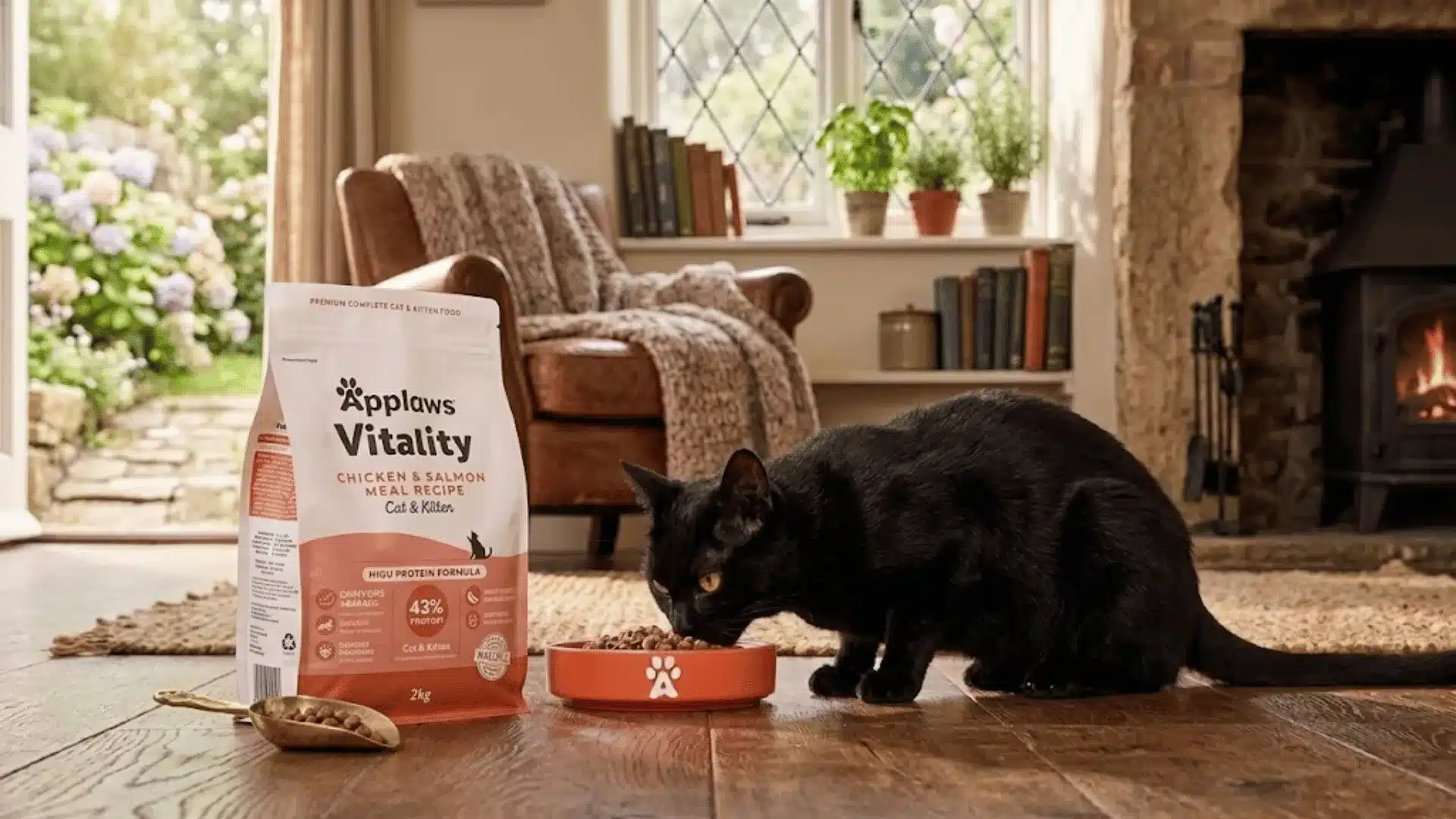
Applaws is at its best when used strategically. In my experience advising clients, the most common mistake isn’t choosing the wrong Applaws product; it’s not pairing it correctly. Here are three approaches that work:
- The Classic Topper Approach (Most Common): Use Applaws dry food (or any other AAFCO-complete dry food) as the nutritional foundation of your cat’s diet, and add a portion of Applaws wet food on top at one or two meals per day.
- Complete Wet Food Pairing: If you prefer to feed wet food exclusively, pair Applaws’ complementary wet food with a complete and balanced wet food at alternating meals.
- Vitality Line as Sole Diet: The Vitality range is AAFCO-complete wet food. Feed it as your cat’s primary diet and rotate flavors to prevent palatability fatigue.
Structuring these approaches into a consistent routine becomes much easier when following a well-planned cat feeding schedule, allowing each meal to serve a clear purpose while supporting overall health.
How Applaws Cat Food Compares to Other Cat Foods?
Applaws positions itself as a premium brand, and the price reflects that. But “premium” means different things across the product range.
The dry food is actually competitive value, while the wet food is expensive for what is categorically a supplementary product rather than a complete meal.
Applaws does not exist in a vacuum. The premium natural cat food market has become significantly more competitive since 2006, and several brands now offer what Applaws does not: complete and balanced wet food at comparable or lower price points.
Here is how Applaws measures up against its three most relevant competitors across the axes that actually matter to cat owners.
| Brand | Price/oz (approx) | B Corp? | Recalls | Best For |
|---|---|---|---|---|
| Applaws | $0.87–$1.04 | Yes | 1 (UK 2021) | Fussy eaters, supplemental |
| Tiki Cat | ~$0.80 | No | 0 | Complete high-protein wet |
| Weruva | ~$0.75 | No | 0 | Grain-free complete wet |
| Smalls | ~$1.60+ | No | 0 | Human-grade, fresh diet, top-quality nutrition. |
Is Applaws Cat Food Good for Different Types of Cats?
Whether Applaws is suitable depends on the cat’s health, diet balance, and product choice.
Healthy adult cats can benefit when wet food is used as a topper alongside complete dry food, rather than as a sole diet.
Overweight cats may do well with broth-based wet options due to low fat and high moisture. Cats with sensitive stomachs often respond positively to simple recipes like chicken in broth.
Fussy eaters are the best fit, as palatability is a strong point. Senior cats benefit from softer textures and hydration support.
Kittens require the specific kitten formulas for proper development. Cats with UTIs, kidney issues, or thyroid concerns need careful selection or veterinary guidance.
Conclusion
Applaws earns its reputation, but only when used correctly. The wet food range is genuinely impressive: minimal ingredients, real named meat, nothing unnecessary.
The dry food is decent and AAFCO-complete, though unremarkable compared to other premium grain-free kibbles at a similar price.
The bigger story heading is the post-rebrand pattern that won’t go away. Long-term customers across Trustpilot consistently report palatability drops and outright rejection from cats who had happily eaten Applaws for years.
Applaws hasn’t confirmed any formula change, but the pattern is too consistent to dismiss.
My take after working with dozens of cats on this brand: it’s one of the better supplementary options out there, especially for fussy eaters and cats with sensitive stomachs. Just know what you’re buying.
Pair it right, watch your cat’s response, and if something changes after a new bag or can, trust your instincts. You know your cat better than any label does.
If you’ve noticed a difference since the rebrand, or if Applaws finally cracked the code for your picky eater, we’d love to hear about it in the comments below. Your experience helps other cat parents make smarter choices.
Frequently Asked Questions
Is Applaws Cat Food Complete and Balanced?
Most Applaws wet foods are complementary and not complete meals. Only the Vitality range and dry food formulas meet AAFCO standards for balanced nutrition and can support a full daily diet.
Is Applaws Cat Food Good for Kittens?
Applaws offers specific kitten formulas with added nutrients like DHA for growth. Regular adult variants are not suitable alone, so always choose kitten-specific options for proper development and health support.
Why is Applaws Cat Food So Expensive?
Applaws uses high-quality, named meat ingredients with minimal fillers. This increases production costs, especially in wet food, where real cuts of meat and simple recipes drive the higher price point.