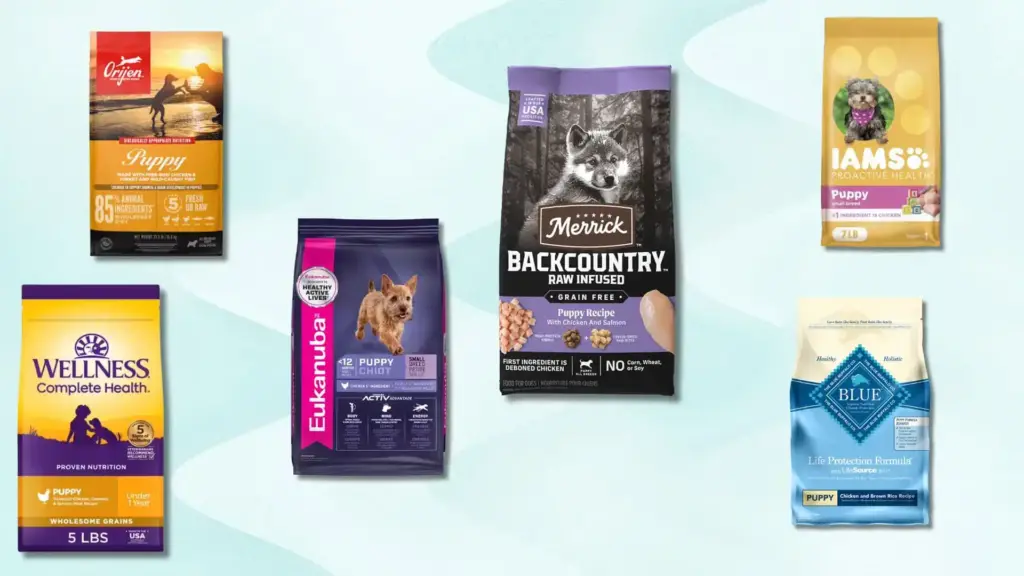
A new puppy owner walks into a pet store with the best intentions. Minutes later, they are standing in the middle of the aisle staring at dozens of colorful bags promising stronger bones, shinier coats, and smarter puppies.
It quickly becomes overwhelming. Every brand claims to be the best, but choosing the right food suddenly feels like a big responsibility.
You want to get this right. And you should. The early months of a puppy’s life play a huge role in their growth, digestion, and long-term health.
That is why many pet owners look for vet-recommended puppy food instead of relying on flashy packaging or marketing claims.
In this guide, you will find brands veterinarians consistently point to, what actually makes high-quality puppy food, what the research says about grain-free diets, and what real dog owners in the community say about feeding their puppies.
Quick Answer: Top Vet-Recommended Puppy Food Brands
If you are short on time, here is what veterinarians and board-certified nutritionists most consistently recommend for healthy puppies in the US.
These brands meet AAFCO standards, employ dedicated veterinary nutritionists, and conduct actual feeding trials rather than relying on formula calculations alone:
- Royal Canin Puppy: Best for breed-specific and size-specific nutrition
- Hill’s Science Diet Puppy: Best for research-backed, clinical-grade formulas
- Purina Pro Plan Puppy: Best all-around with live probiotics and strong feeding trial data
- Iams Proactive Health Puppy: Best budget-friendly option without compromising core nutrition
- Eukanuba Puppy: Best for high-protein, performance-oriented breeds
Read on for a full breakdown of each brand, a grain-free diet warning you need to know, and a complete puppy feeding guide.
What Makes a Puppy Food Truly High Quality?
A high-quality puppy food is one that meets AAFCO nutritional standards for growth, lists a named protein as the first ingredient, and has been verified through actual feeding trials rather than formula calculations alone.
Choosing the right puppy food becomes easier when you focus on the standards veterinarians actually care about.
Most vets suggest starting with formulas where real meat, such as chicken, lamb, or salmon, appears as the first ingredient, since growing puppies need strong protein for healthy muscle development.
Choosing puppy food by size and life stage matters just as much as ingredient quality, since a Yorkie puppy and a Labrador puppy have genuinely different calorie and calcium needs.
Equally important is life stage formulation. Puppies require nutrients designed for growth, which adult dog food does not provide.
Pet parents should also avoid foods with excessive fillers, vague meat meal descriptions, or artificial preservatives.
The AAFCO Standard: Your Non-Negotiable Baseline
Before looking at any brand, check the AAFCO (Association of American Feed Control Officials) nutritional adequacy statement on the packaging.
This is the most important label you will read. It should say one of two things:
- “Formulated to meet AAFCO nutrient profiles for growth,” the food meets the minimum nutritional requirements on paper.
- “Complete and balanced for growth, as substantiated by AAFCO feeding trials,” the food has been tested in actual feeding studies with real puppies. This is the higher standard and what most veterinary nutritionists prefer.
The brands covered in this guide all meet AAFCO standards, and the top three- Royal Canin, Hill’s, and Purina- conduct actual feeding trials rather than just formula calculations.
Why DHA Matters More Than You Think?
DHA (Docosahexaenoic Acid) is an omega-3 fatty acid that plays a direct role in your puppy’s brain development and visual acuity during the first year of life.
Puppies cannot efficiently produce DHA on their own, so it must come from their food, typically through fish oil or fish meal.
When I review puppy food formulas for clients, DHA is one of the first things I check on the guaranteed analysis panel, right after protein and fat levels.
Many vets reference both WSAVA nutrition guidelines and AAFCO standards when evaluating trusted puppy food brands.
In practice, AAFCO compliance is the minimum threshold, while WSAVA guidelines direct pet parents toward brands with dedicated nutrition research teams and published feeding studies.
Signs Your Puppy is Eating High Quality Puppy Food
Choosing the right food shows results quickly. When puppies eat high-quality puppy food, their bodies reflect proper nutrition and growth.
- Healthy coat and skin: A soft, shiny coat and clear skin usually indicate balanced nutrients, essential fatty acids, and proper hydration in your puppy’s daily diet.
- Consistent energy levels: Puppies that eat well-balanced food stay playful and active throughout the day without appearing unusually tired or sluggish.
- Good stool quality: Firm, well-formed stools and regular digestion often signal that the food ingredients are easily digestible and nutritionally balanced.
- Steady weight gain: Gradual and consistent weight gain shows your puppy is receiving enough calories, protein, and nutrients for healthy growth.
- Strong appetite: Puppies who enjoy their meals and finish portions regularly can indicate the food is both nutritious and appealing.
One sign that often gets overlooked isstool volume.
A high-quality, digestible puppy food produces smaller, firmer stools because the puppy’s body is actually using more of what it eats.
Bulky, loose stools often signal a food with poor digestibility or excessive filler content, regardless of how premium the marketing looks. This is something I point out to pet parents regularly in consultations.
Best Vet-Recommended Puppy Food Brands
These are brands that consistently appear in veterinary discussions, nutrition forums, and community recommendations for all the right reasons.
1. Royal Canin Puppy
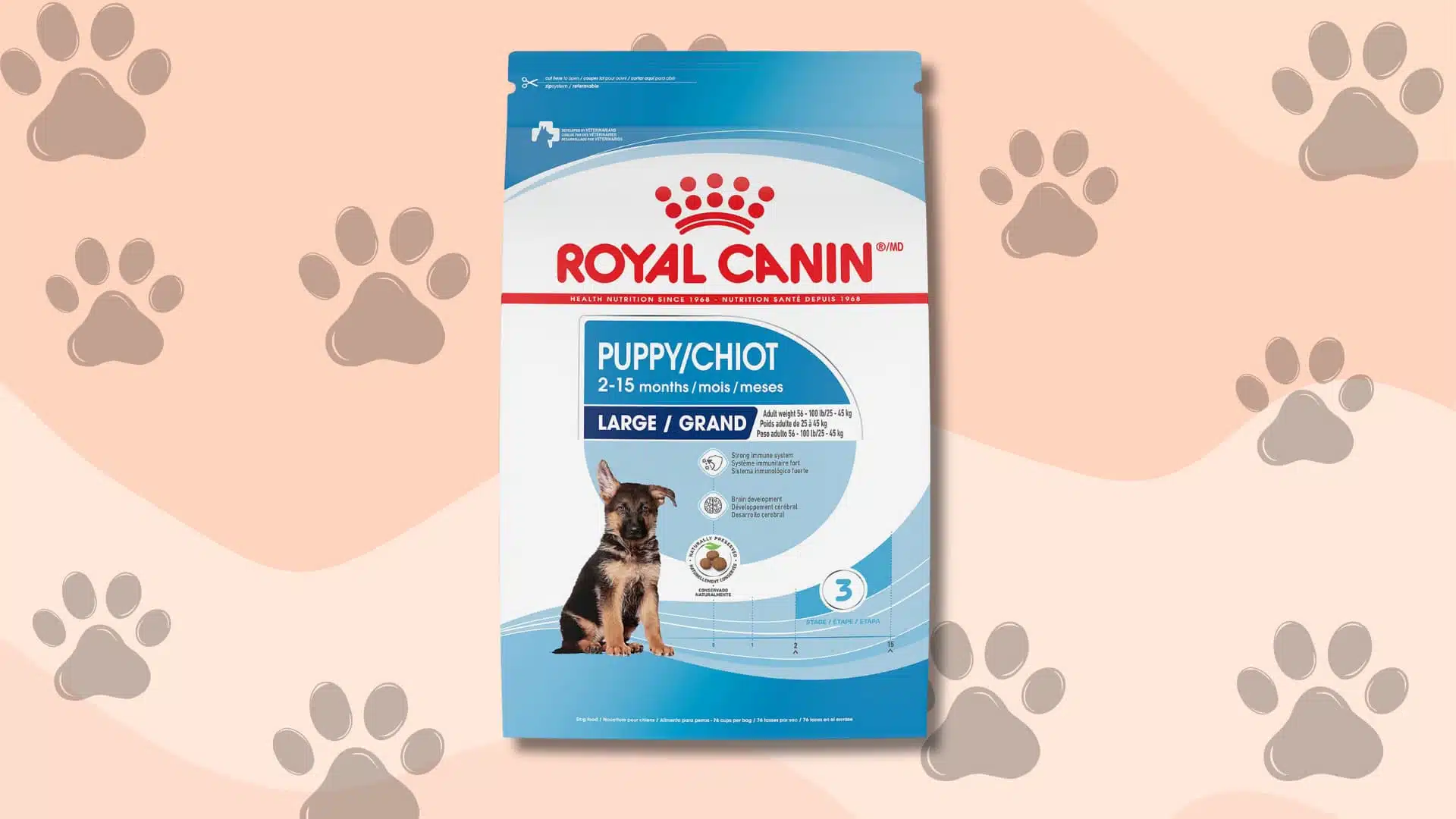
Royal Canin Puppy is among the most commonly recommended options when discussing vet-recommended puppy food.
What sets Royal Canin apart is its size- and breed-specific formulas. Their puppy line is broken into X-Small, Small, Medium, Maxi, and Giant categories.
Because a 3-pound Yorkie puppy and a 15-pound Labrador puppy have genuinely different calcium, protein, and calorie needs.
Some formulas go even further, with breed-dedicated recipes for Golden Retrievers, French Bulldogs, and German Shepherds.
Royal Canin employs full-time board-certified veterinary nutritionists and conducts extensive feeding trials, not just formula calculations, to verify that their food works in real puppies.
Their kibble shapes are also engineered for specific jaw structures, which improves chewing and digestibility.
Veterinarians frequently recommend Royal Canin to clients whose puppies have sensitive digestion, given its high digestibility scores and consistent stool quality outcomes.
2. Hill’s Science Diet Puppy
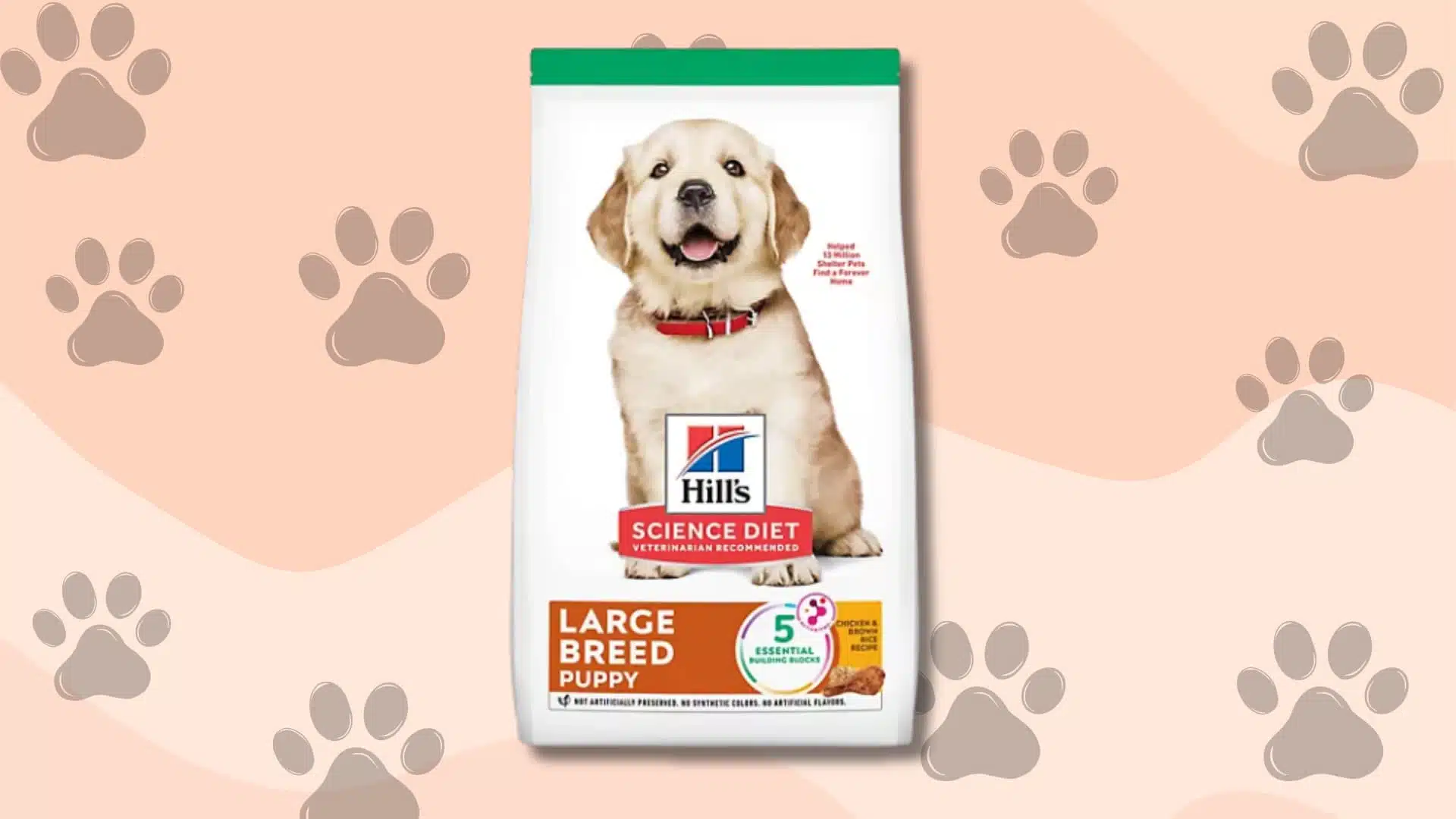
Hill’s Science Diet Puppy is widely recommended by veterinarians because of its research-based approach to pet nutrition.
Hill’s operates its own Pet Nutrition Center, where over 220 veterinarians, food scientists, and PhD nutritionists work on formula development.
Their “Large Breed Puppy” formula is specifically calibrated to support controlled bone growth, because large- and giant-breed puppies that grow too fast are at higher risk of orthopedic problems like hip dysplasia and osteochondrosis.
Its recipes focus on high-quality protein, controlled minerals for bone development, and DHA to support brain and eye health.
One client I worked with had a 10-week-old Golden Retriever she was feeding a generic “all life stages” kibble.
Within three weeks of switching to Hill’s Large Breed Puppy, on the recommendation of her vet, his gait improved, and his coat became noticeably denser.
It is a good reminder that life-stage formulation is not just a marketing term.
3. Purina Pro Plan Puppy
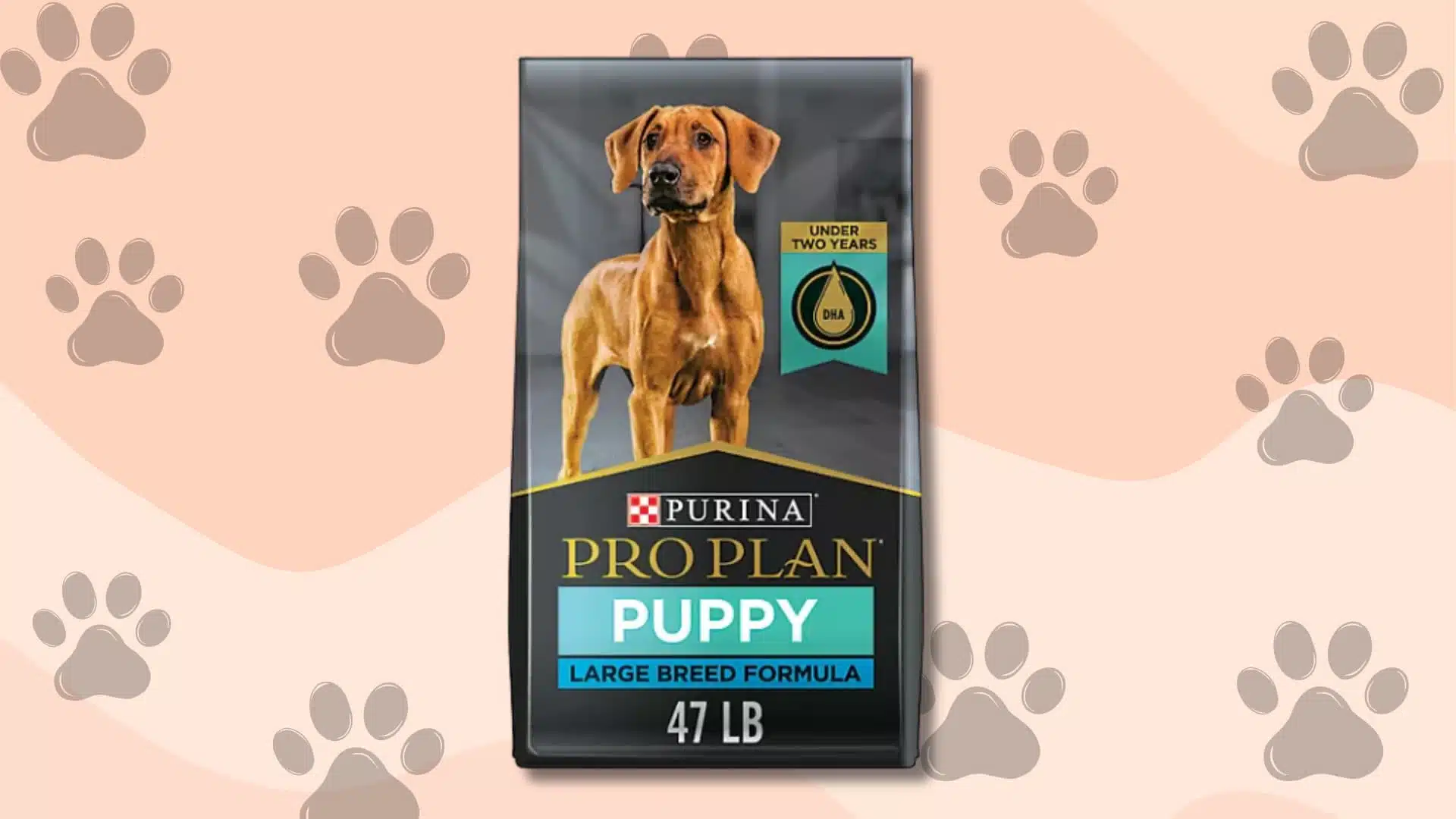
Purina Pro Plan Puppy is another commonly suggested choice among veterinarians and breeders.
Backed by over 90 years of nutritional research and a team of more than 500 scientists and veterinarians, Purina Pro Plan is one of the few brands that consistently conducts AAFCO feeding trials rather than relying solely on nutrient calculations.
Their standard puppy dry formula (chicken and rice) provides approximately 393 kcal per cup, making it one of the more calorie-dense options in this category.
Their puppy formulas include live probiotic cultures to support digestive and immune health, a feature that sets them apart from most competitors at a similar price point.
Many recipes include real chicken as the main protein source along with DHA to support brain development.
It is also one of the few vet-recommended brands that offers a sensitive skin and stomach puppy formula for dogs with early signs of food sensitivities, as well as high-energy formulas for sporting and working breeds.
4. Eukanuba Puppy
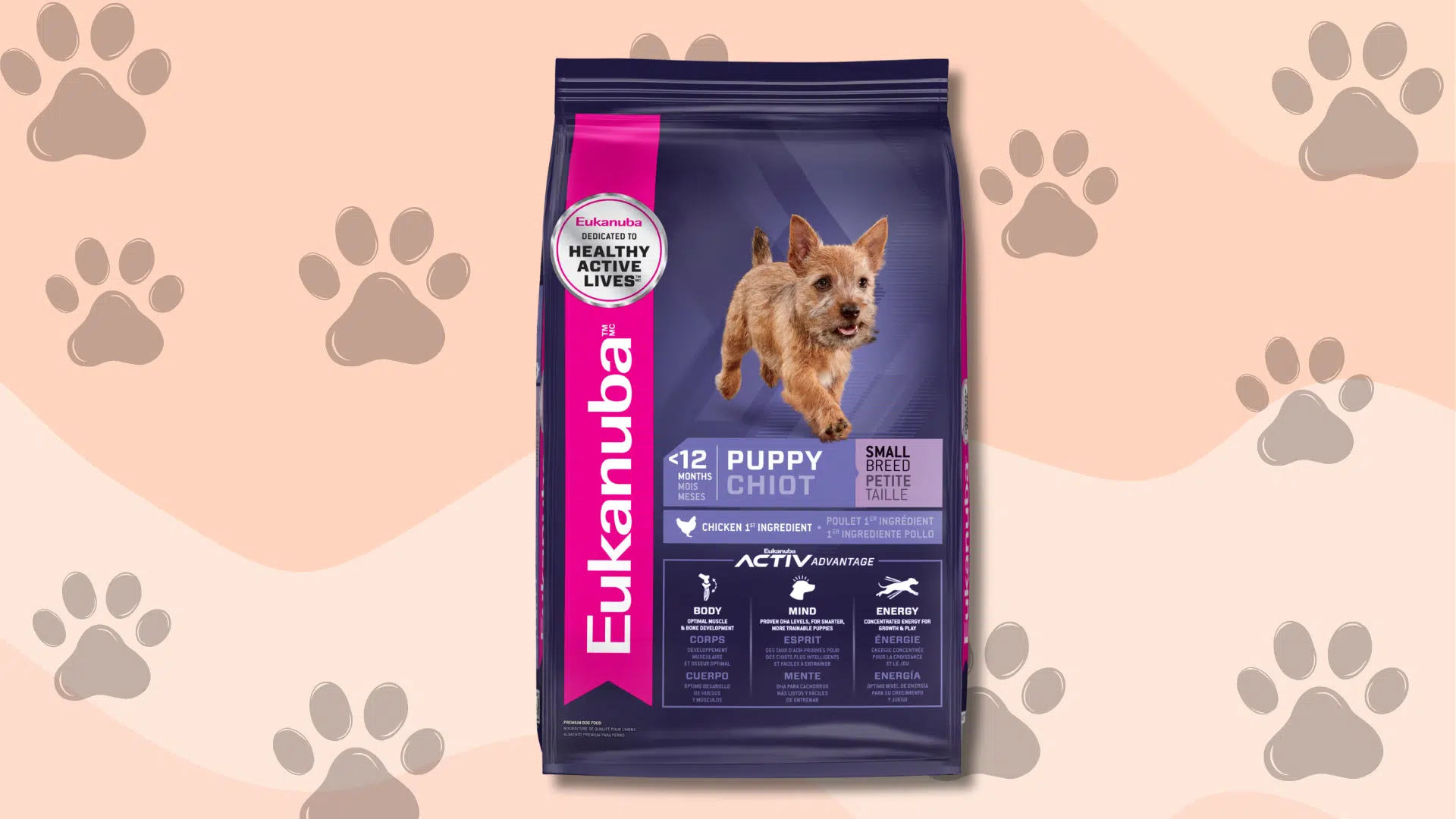
Eukanuba Puppy food is often recommended for its focus on performance-based nutrition and balanced growth formulas.
Eukanuba is particularly strong in its animal protein concentration, their puppy formulas typically feature over 60% animal-based ingredients, supporting lean muscle development in active and working breeds.
Their formulas also include targeted levels of calcium and phosphorus, making them a solid choice for large breed puppies where bone density during growth is a concern.
Its recipes also include DHA for brain development and carefully balanced minerals that help support strong bones and joints.
Worth noting: Eukanuba is less widely stocked than Royal Canin or Purina at general pet retailers, but it remains a respected option among breeders and performance dog handlers who prioritize muscle conditioning in growing puppies.
5. Iams Proactive Health Puppy
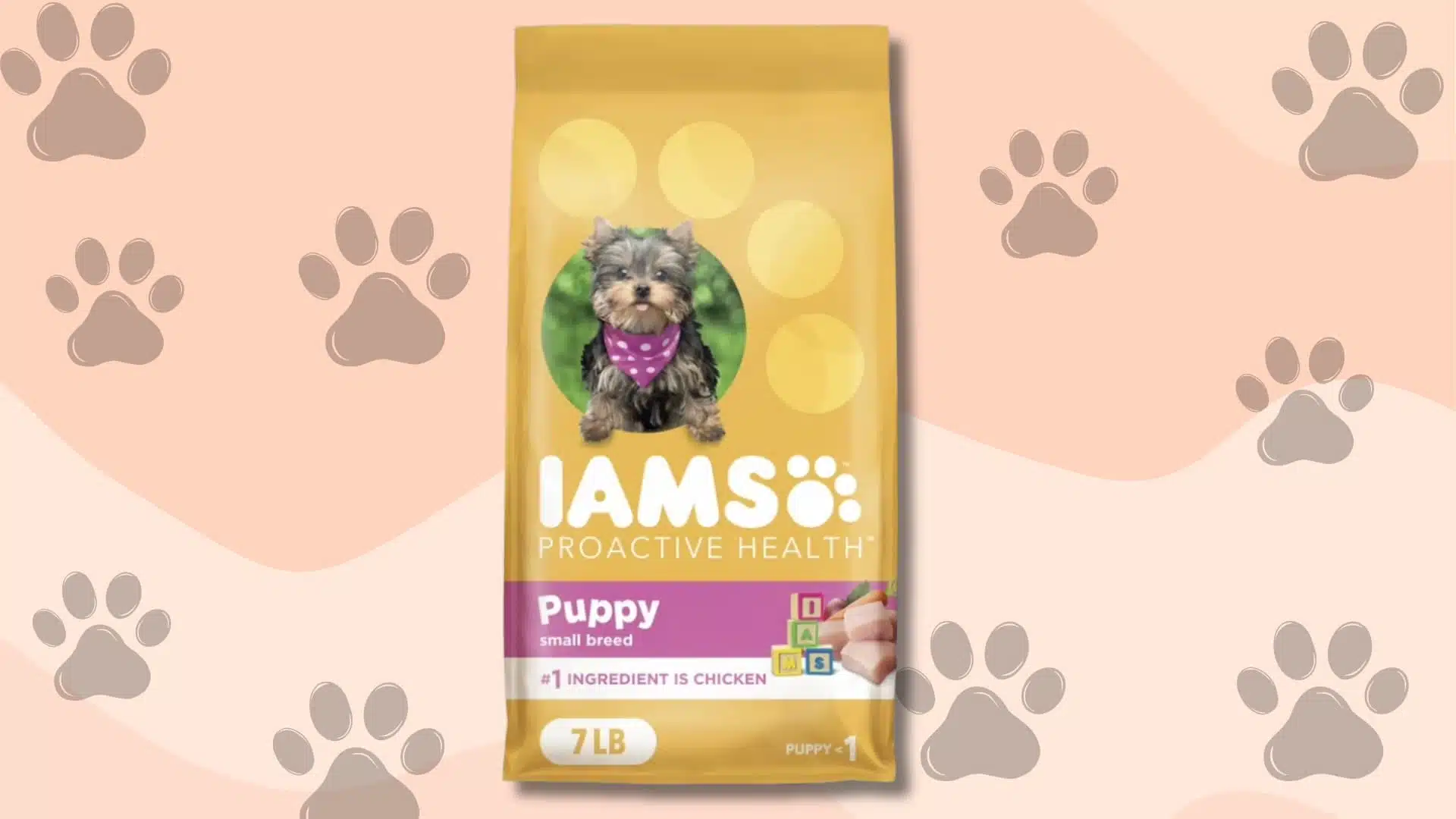
Iams Proactive Health Puppy is commonly suggested as a reliable and accessible option for balanced puppy nutrition.
For pet parents working with a tighter budget, Iams is the brand I most consistently recommend as a quality-first, affordable option.
It uses farm-raised chicken as the primary protein, includes DHA from fish oil, and meets AAFCO nutritional standards for growth without the premium price tag of Hill’s or Royal Canin.
The ingredient list is straightforward and honest, which matters a great deal when you are reading labels at 10 p.m., trying to make a decision.
Real chicken is often used as the primary protein source in many of its formulas.
Iams also contains beet pulp as a prebiotic fiber source, which supports healthy gut bacteria and consistent digestion in puppies.
6. Wellness Complete Health Puppy
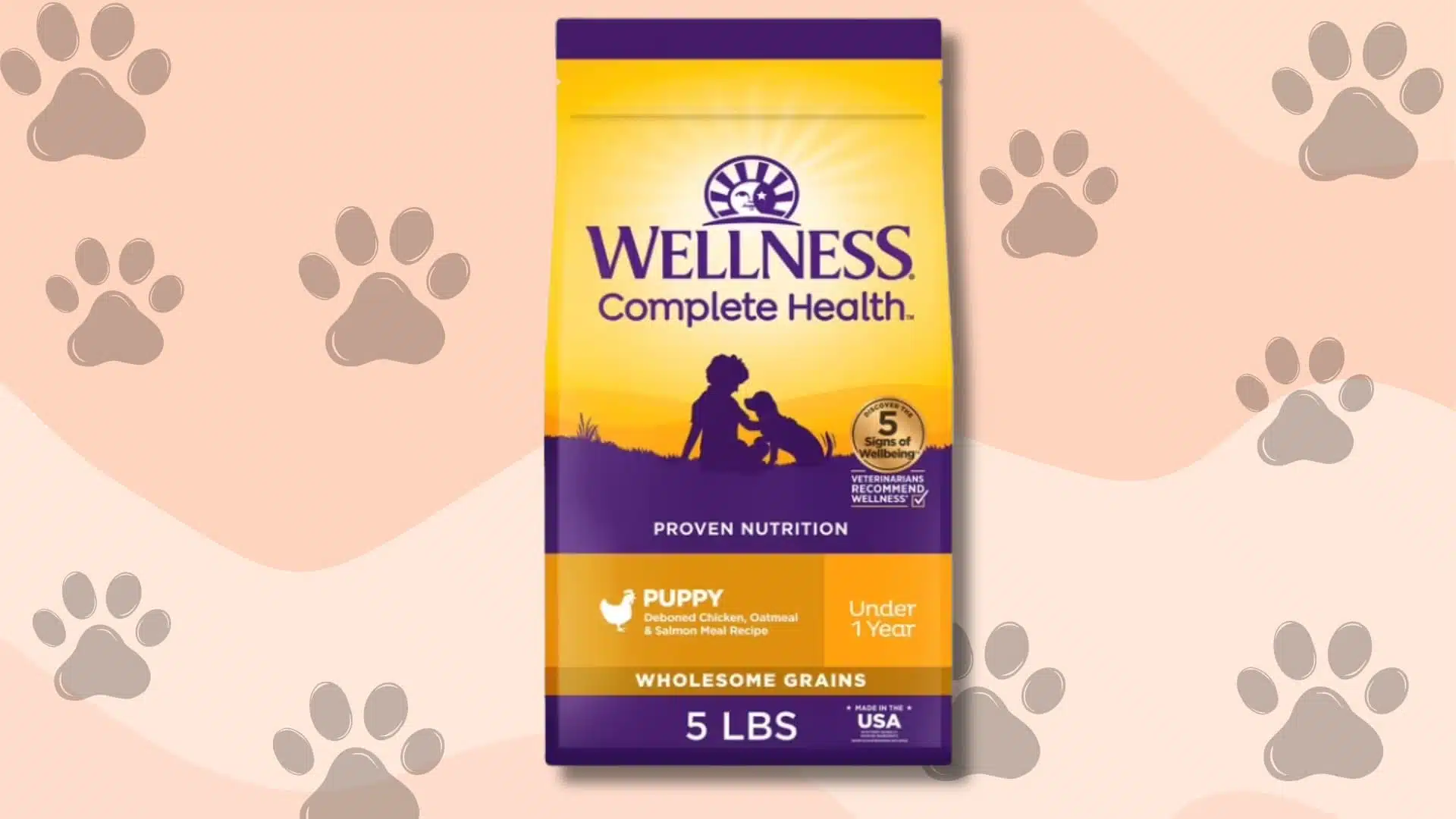
Wellness Complete Health Puppy is often chosen by pet owners seeking natural-ingredient-focused puppy food.
The formula typically includes real meat as the main ingredient along with fruits, vegetables, and whole grains that support balanced nutrition.
Wellness is a strong option for pet parents who prefer to avoid artificial preservatives and synthetic additives.
Their Complete Health Puppy formula uses natural preservatives, such as mixed tocopherols (vitamin E), and includes omega fatty acids from flaxseed and salmon oil.
It meets AAFCO standards for growth and is a reasonable grain-inclusive alternative to boutique grain-free options. However, Wellness does not publicly publish feeding trial data to the same degree as Hill’s, Purina, or Royal Canin.
If your puppy has any underlying health conditions, consult your vet before choosing this brand as the primary diet.
7. Orijen Puppy
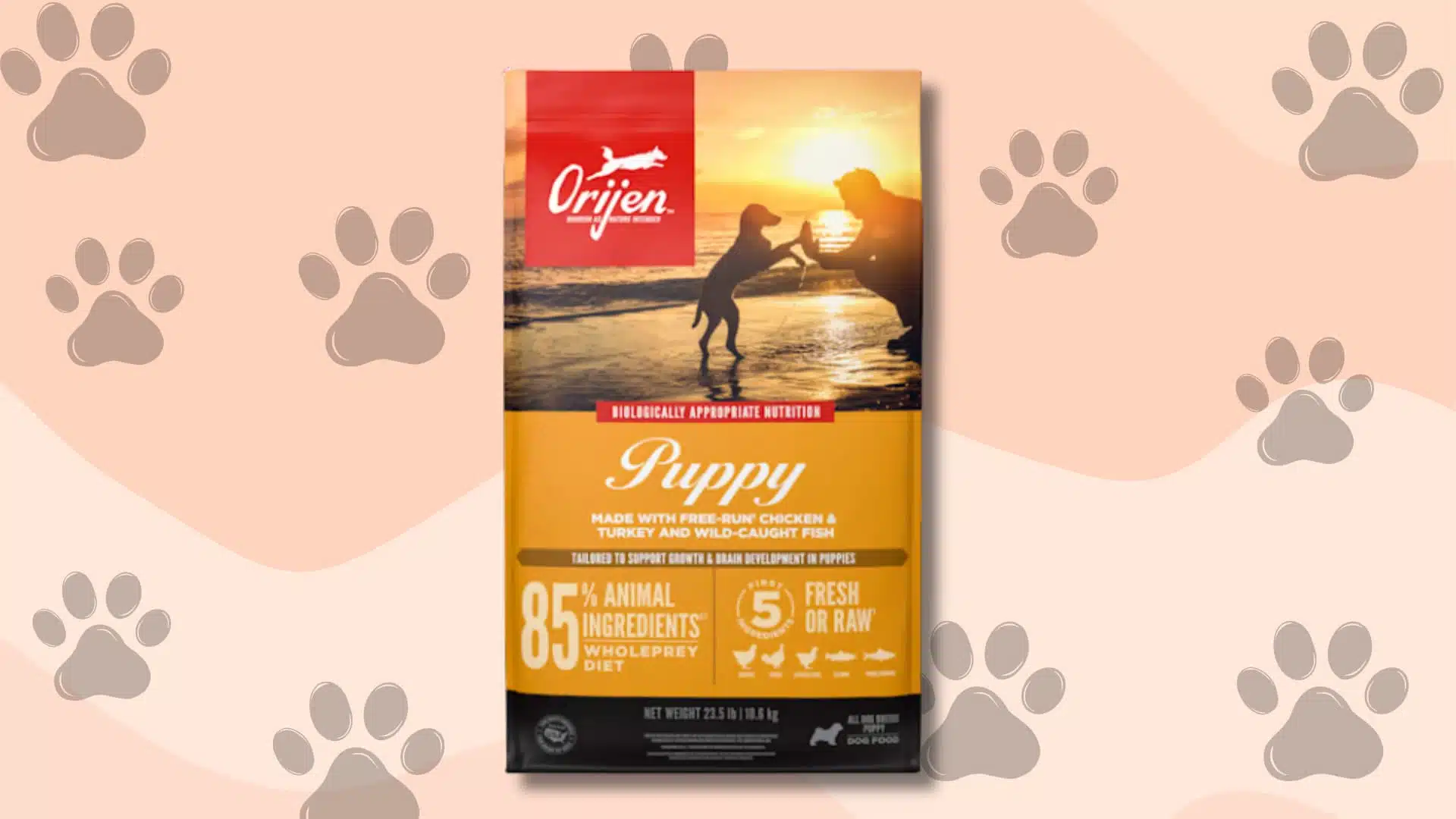
Orijen Puppy is known for its high-protein formulas, which feature a high percentage of animal-based ingredients.
The brand focuses on biologically appropriate nutrition, meaning recipes are designed to resemble a dog’s natural diet.
Orijen’s puppy formula typically contains around 85% animal ingredients, fresh and raw meats, organs, and cartilage, with the remaining 15% from fruits, vegetables, and botanicals.
This makes it one of the most protein-dense options on this list. If you have a large or giant breed puppy, consult your vet before choosing Orijen.
It is nutrient-rich enough that some veterinary nutritionists caution against it for large breed puppies, as excessive protein and calcium in the early growth phase can accelerate bone development and increase joint stress.
For small- and medium-breed puppies with no health concerns, Orijen is a high-quality, grain-inclusive (in some varieties) option with excellent ingredient transparency.
8. Blue Buffalo Puppy
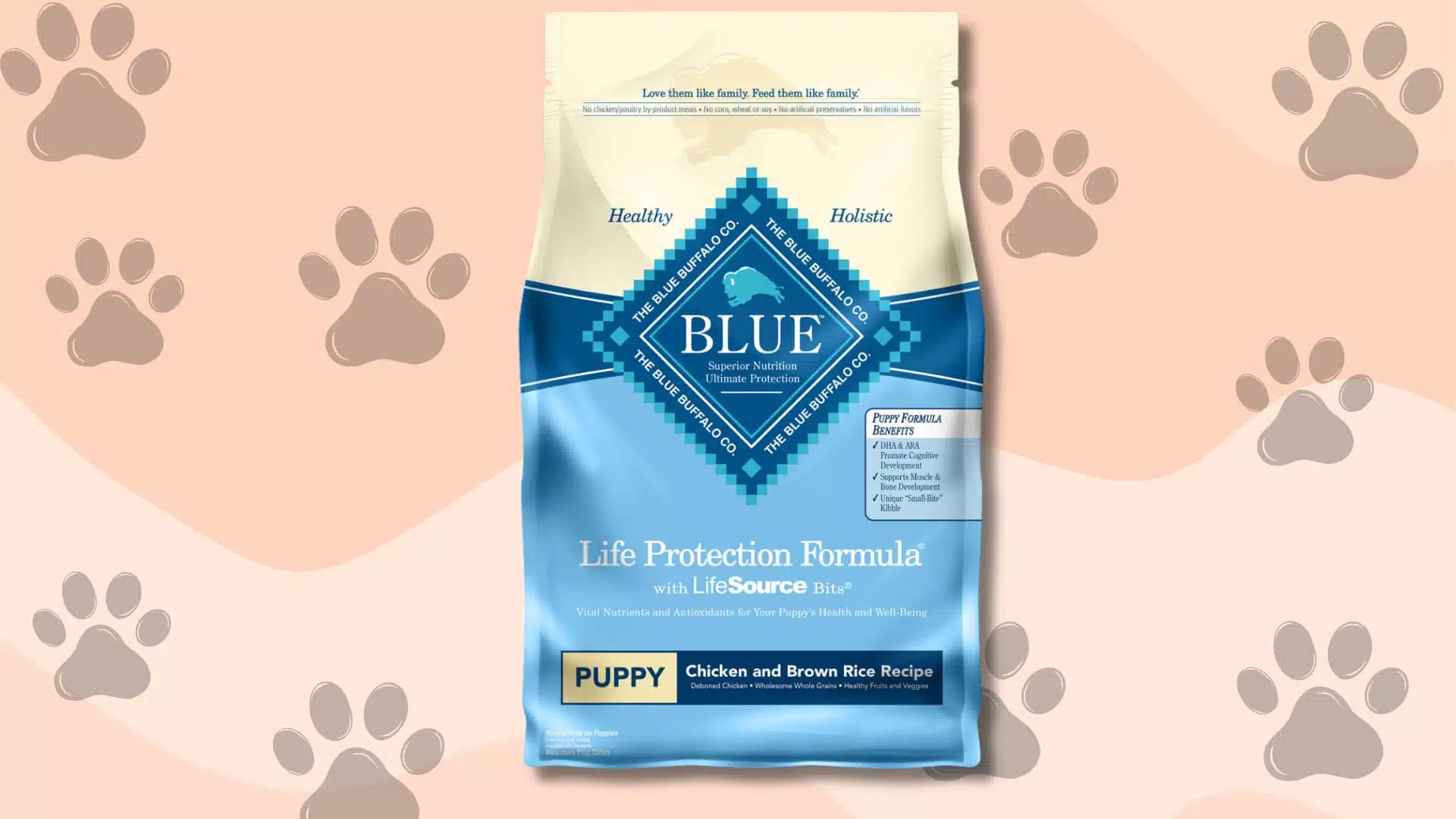
Blue Buffalo Puppy is a popular choice among dog owners who prefer recipes made with natural ingredients.
The formula typically features real chicken as the first ingredient along with whole grains and vegetables that support balanced growth.
The brand also includes its signature LifeSource Bits, which contain vitamins, minerals, and antioxidants designed to support immune health and overall development in puppies.
Important note: Blue Buffalo offers both grain-inclusive and grain-free puppy formulas. If you are considering their grain-free “Wilderness” line, read the grain-free warning section below before deciding. Their standard grain-inclusive “Life Protection Formula” puppy range is the safer and more widely recommended choice for most puppies.
9. Merrick Grain-Free Puppy
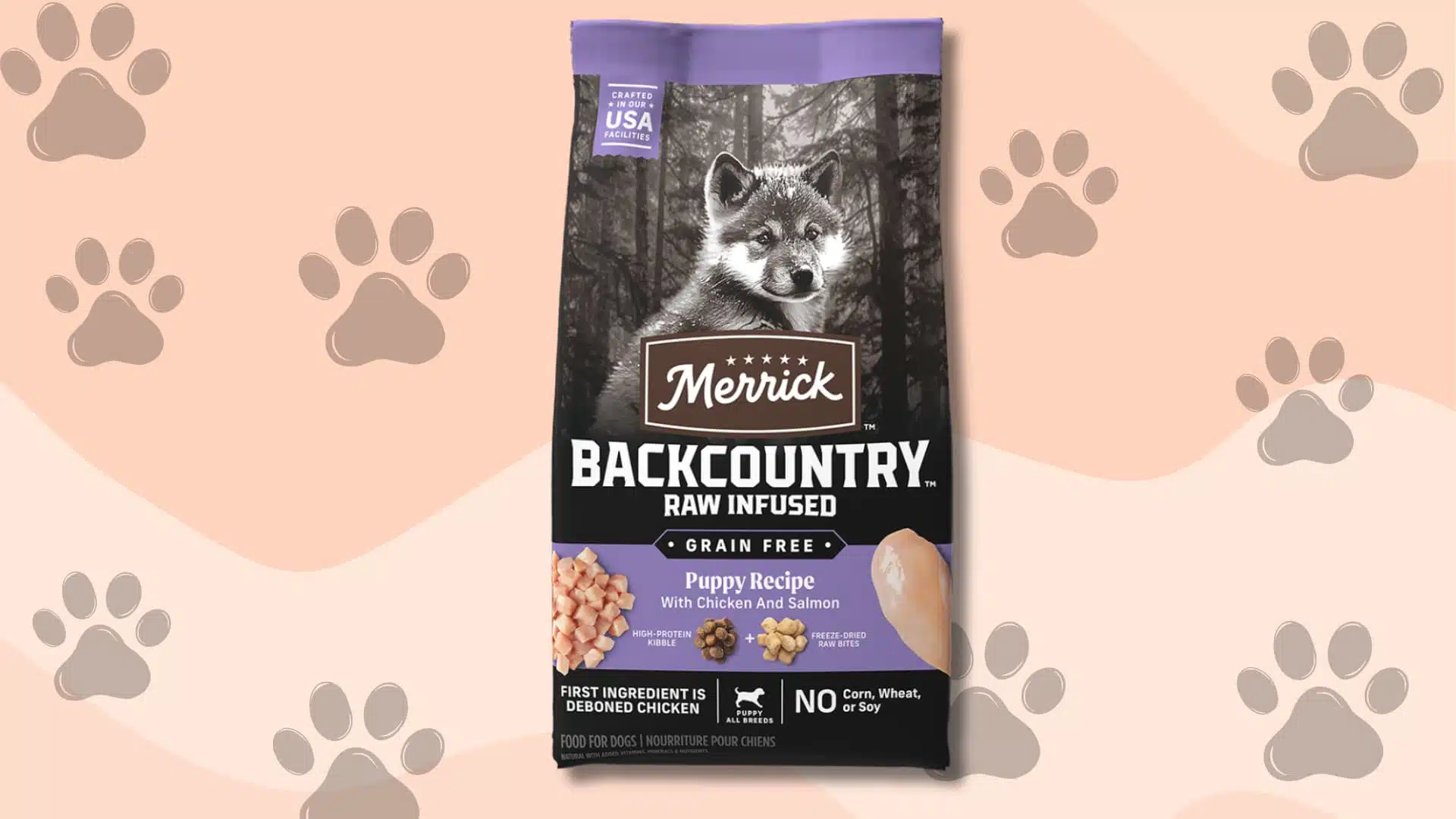
Merrick Grain-Free Puppy food focuses on protein-rich recipes made with real meat as the primary ingredient.
Merrick uses deboned beef, chicken, or salmon as its first ingredient, and its recipes are produced in US-based facilities, appealing to pet parents who prioritize domestic sourcing.
Their grain-free puppy formula replaces grains with sweet potatoes and peas.
Because this is a grain-free formula, it falls within the category of diets currently under FDA investigation for a potential link to Dilated Cardiomyopathy (DCM) in dogs.
See the section below for the full context. Merrick is a quality brand, but this is a risk factor worth discussing with your veterinarian, especially if your puppy is a breed predisposed to heart conditions
The Grain-Free Diet Warning for Every Puppy Owner
Over the past several years, grain-free dog food became a marketing phenomenon, with many pet parents assuming that grain-free automatically means healthier or more natural. This assumption carries real risk.
In 2018, the FDA began investigating a potential link between grain-free boutique diets and Dilated Cardiomyopathy (DCM), a serious and potentially fatal heart condition in dogs.
The investigation focused on diets that replace grains with legume-heavy alternatives like peas, lentils, and chickpeas, which may interfere with taurine metabolism, an amino acid essential for heart muscle function.
The current veterinary consensus is clear: unless your puppy has a diagnosed allergy to a specific grain (which is rare; most food allergies in dogs are protein-based, not grain-based), grain-inclusive diets are the safer choice.
Grains like rice, oats, and barley provide easily digestible carbohydrates, support gut health, and do not carry the cardiac risk flags currently associated with high-legume grain-free diets.
The brands most consistently recommended by US veterinarians, Hill’s, Royal Canin, and Purina Pro Plan, are all grain-inclusive.
In my twelve years of advising pet parents, this is the single piece of advice I find myself repeating most: do not go grain-free without a specific, diagnosed reason from your veterinarian.
Large Breed vs. Small Breed Puppy Food: Which one Matters
One of the most overlooked decisions in puppy nutrition is choosing a formula that matches your puppy’s adult size, not just their current weight.
1. Large & Giant Breed Puppies
Large breed puppies like Labrador Retrievers, German Shepherds, and Great Danes (expected adult weight over 50 lbs) grow rapidly, and that speed is exactly the problem.
Overfeeding calcium or providing excess calories during the growth phase can cause bones to develop faster than joints can accommodate, leading to orthopedic conditions such as hip dysplasia, osteochondrosis, and angular limb deformities.
Look for formulas labeled “Large Breed Puppy” that have controlled calcium levels (ideally around 1.0–1.5% on a dry matter basis) and a balanced calcium-to-phosphorus ratio.
2. Small & Toy Breed Puppies
Small breed puppies (expected adult weight under 20 lbs) have faster metabolisms and smaller mouths.
They need calorie-dense food in smaller kibble sizes, and their blood sugar can drop quickly between meals.
Look for small-breed puppy formulas with higher caloric density and kibble designed for tiny jaws. Royal Canin’s X-Small and Small puppy lines and Hill’s “Small Paws” formula are specifically built for this.
3. Medium Breed Puppies
A standard puppy formula from any of the recommended brands above will generally serve medium breeds well.
When in doubt, use your puppy’s expected adult weight as the guide. Most brand websites have a size-selector tool.
What Puppy Owners Say About Choosing the Best Puppy Food?
As someone who closely monitors these community discussions, I find that Reddit and pet forums often reveal the same real-world patterns we see in clinical settings.
Here is a summary of what dog owners consistently share:
The community often recommends Purina Pro Plan, Hill’s Science Diet, and Royal Canin for their strong nutrition standards and vet support.
Several highly upvoted comments specifically warned against choosing food based on store-brand advertising or influencer recommendations, echoing what most veterinary nutritionists say: popularity on social media has no correlation with nutritional quality or safety data.
Several users also pointed out that puppies can react differently to the same food, so what works for one dog may not work for another.
The conversation highlighted that factors like breed size, digestion, and activity level matter when choosing food.
A recurring theme across discussions was the “picky eater” problem; many users found that constantly switching brands created the problem rather than solving it.
The approach most experienced owners recommended: place the food down, allow 20 minutes, then pick it up. Consistency trains appetite.
Overall, most commenters agreed that foods that meet recognized nutritional guidelines and are recommended by vets tend to be the safest starting point for new puppy owners.
Safe Steps to Transition Your Puppy to a New Food
Switching your puppy to a new food should always be done gradually to avoid upsetting their digestive system.
Puppies have sensitive stomachs, and sudden dietary changes can lead to stomach discomfort or loose stools.
- Day 1 to 2: 75 percent old food, 25 percent new food
- Day 3 to 4: 50 percent old food, 50 percent new food
- Day 5 to 6: 25 percent old food, 75 percent new food
- Day 7 onward: Fully switch to the new puppy food
During the transition, watch for warning signs such as loose stool, vomiting, or unusual lethargy. If symptoms persist for more than a day or worsen, contact your veterinarian for guidance.
From experience: If your puppy shows persistent soft stools even after a slow transition, do not immediately assume food intolerance. First check if you are overfeeding, most first-time puppy owners feed 20–30% more than the package guidelines recommend, which alone can cause digestive upset. Measure portions with a kitchen scale for the first two weeks.
Tracking puppy health milestones in the first year alongside feeding changes can help you spot patterns early and give your vet a clearer picture during checkups.
How Often Should You Feed Your Puppy? (Age-Based)
Portion size is only half the equation. Feeding frequency matters just as much, especially for small breeds whose blood sugar can dip between meals.
- 8–12 weeks: 4 meals per day
- 3–6 months: 3 meals per day
- 6–12 months: 2 meals per day
- 12 months+ (small/medium breeds): Transition to adult food and 2 meals per day
- 12–24 months (large/giant breeds): Continue puppy food for large breeds until 18–24 months, per your vet’s advice.
Always follow the specific feeding guidelines on your chosen brand’s packaging as a starting reference, then adjust based on your puppy’s body condition score. You should be able to feel but not see their ribs.
Wet Food, Dry Food, or Both? What Vets Actually Recommend
This is one of the most common questions I receive, and the answer is more nuanced than most pet food marketing suggests.
Dry kibble is the most commonly recommended option for puppies because it is calorie-dense, shelf-stable, cost-effective, and the chewing action provides mild dental abrasion that helps reduce plaque buildup.
Wet/canned food has a much higher moisture content (around 70–80%), which supports hydration and can be more palatable for picky eaters or puppies recovering from illness.
It is not a complete substitute for dry food in most cases, but it is a useful addition.
Mixed feeding (adding a small amount of wet food to dry kibble) is perfectly safe and often recommended for puppies that show low interest in kibble.
Just ensure you account for the added calories from wet food to avoid overfeeding.
Fresh food options from brands like The Farmer’s Dog have also gained traction in veterinary circles for puppies with specific dietary needs, though they come at a higher price point and require careful portion management.
If you are considering fresh food, confirm it carries an AAFCO statement for growth before making the switch.
If you are still uncertain whether dry kibble is the right foundation for your puppy’s diet, this breakdown of whether kibble is actually harmful addresses the most common concerns in plain terms.
If you are feeding wet food as a primary diet, verify independently that it carries an AAFCO statement for growth; not all wet puppy foods are complete and balanced on their own.
Ingredients You Should Avoid in Puppy Food
Understanding which ingredients raise concerns makes label-reading faster and more useful when you are standing in a pet store aisle trying to make a quick decision.
- Artificial preservatives: Chemical preservatives such as BHA and BHT extend shelf life but may not support long-term health in growing puppies.
- Excess fillers: Large amounts of corn, wheat, or soy can reduce overall nutritional quality and provide limited value compared to protein-rich ingredients.
- Low-quality meat sources: Vague labels like “meat byproduct” or unspecified meat meals make it difficult to identify the true protein source.
- Artificial colors and flavors: Added dyes and flavor enhancers improve appearance or taste but provide no real nutritional benefit for puppies.
- High sugar or sweeteners: Ingredients like corn syrup or added sugars can contribute unnecessary calories and may lead to unhealthy weight gain.
Conclusion
Choosing the right vet-recommended puppy food is one of the most important decisions you will make for your puppy’s early development.
While marketing claims can be confusing, focusing on veterinary guidance, balanced nutrition, and trusted brands makes the decision easier.
A truly high-quality puppy food supports healthy growth, strong bones, good digestion, and steady energy levels.
Paying attention to ingredients, breed size needs, and proper feeding practices can make a big difference in your puppy’s long-term health.
Every puppy is different, so it may take some trial and adjustment to find the best fit.
If you have experience with a puppy food brand that worked well for your dog, drop your comments below and share your thoughts with other pet parents.
Frequently Asked Questions
What is the Number One Vet-Recommended Puppy Food?
There is no single universal answer, but Royal Canin, Hill’s Science Diet, and Purina Pro Plan are the three brands most consistently recommended by US veterinarians. All three conduct AAFCO feeding trials, employ board-certified veterinary nutritionists, and offer breed- and size-specific formulas.
When Should I Switch My Puppy to Adult Food?
Most small- and medium-breed puppies transition to adult food at around 12 months. Large- and giant-breed puppies should typically remain on a large-breed puppy formula until 18–24 months.
Your veterinarian is the best person to confirm the right timing based on your puppy’s growth curve.
Is Grain-Free Puppy Food Safer for Dogs with Allergies?
Not usually. Most food allergies in dogs are caused by specific proteins, such as chicken or beef, not grains. Grain-free diets also carry an FDA-flagged risk for Dilated Cardiomyopathy (DCM). Unless your vet has diagnosed a grain allergy, a grain-inclusive formula is the safer starting point.
How Do I Know if My Puppy’s Food is Working?
Look for firm stools, a shiny coat, steady weight gain, consistent energy levels, and a strong appetite. If you notice loose stools, dull coat, sluggishness, or poor weight gain, consult your vet before switching brands.
Can I Cook Homemade Food for My Puppy?
Home-cooked diets for growing puppies are difficult to balance correctly. It is nearly impossible to achieve the right calcium-to-phosphorus ratio in a home kitchen without a board-certified nutritionist’s specific recipe.
Deficiencies during the growth phase can cause serious bone problems. If you want to supplement with fresh food, talk to a veterinary nutritionist first.