When a veterinarian says your dog has congestive heart failure, your mind jumps to the worst possible outcome.
You picture a heart giving out without warning. You brace yourself for goodbye. But that is not what this diagnosis usually means.
Congestive heart failure in dogs is not a sudden shutdown. It is a gradual weakening of the heart’s ability to pump blood properly.
As pressure builds, fluid collects in the lungs or abdomen, leading to coughing, fatigue, or breathing trouble.
It sounds frightening, and it is serious, but it is often manageable. Many dogs live months or even years with the right treatment plan.
The key is understanding what congestive heart failure in dogs truly involves, what causes it, and how early action can protect your dog’s comfort and quality of life.
What Is Congestive Heart Failure in Dogs?
Congestive heart failure in dogs is a condition in which the heart cannot pump enough blood to meet the body’s needs, leading to fluid buildup in the lungs or abdomen.
A healthy heart moves oxygen-rich blood from the lungs to the rest of the body. It also returns used blood for reoxygenation.
This steady circulation supports normal organ and muscle function. When this process weakens, pressure builds inside the vessels.
That pressure causes fluid to leak into nearby tissues. In many cases, it collects in the chest or belly area, which explains the term “congestive.”
Heart disease refers to structural or functional issues within the heart.
Causes of Congestive Heart Failure in Dogs
Congestive heart failure in dogs typically develops because of underlying heart problems that gradually weaken the heart’s ability to pump blood efficiently over time.
- Degenerative valve disease: This is one of the leading causes, especially in small breeds like Cavalier King Charles Spaniels and Dachshunds, where worn valves allow blood to leak backward.
- Dilated cardiomyopathy: More common in large breeds such as Dobermans and Great Danes, this condition causes the heart muscle to weaken and stretch, making it struggle to pump effectively.
- Heartworm disease: Untreated heartworm infections damage the heart and lungs over time, placing significant strain on the circulatory system and potentially leading to heart failure.
- Congenital heart defects: Some dogs are born with structural heart abnormalities that disrupt normal blood flow, increasing the risk of congestive heart failure later in life.
- Age and breed predisposition: As dogs age, natural wear and tear on the heart increases the risk, and certain breeds are genetically more vulnerable to specific heart conditions.
Signs of Congestive Heart Failure that Affect the Dog
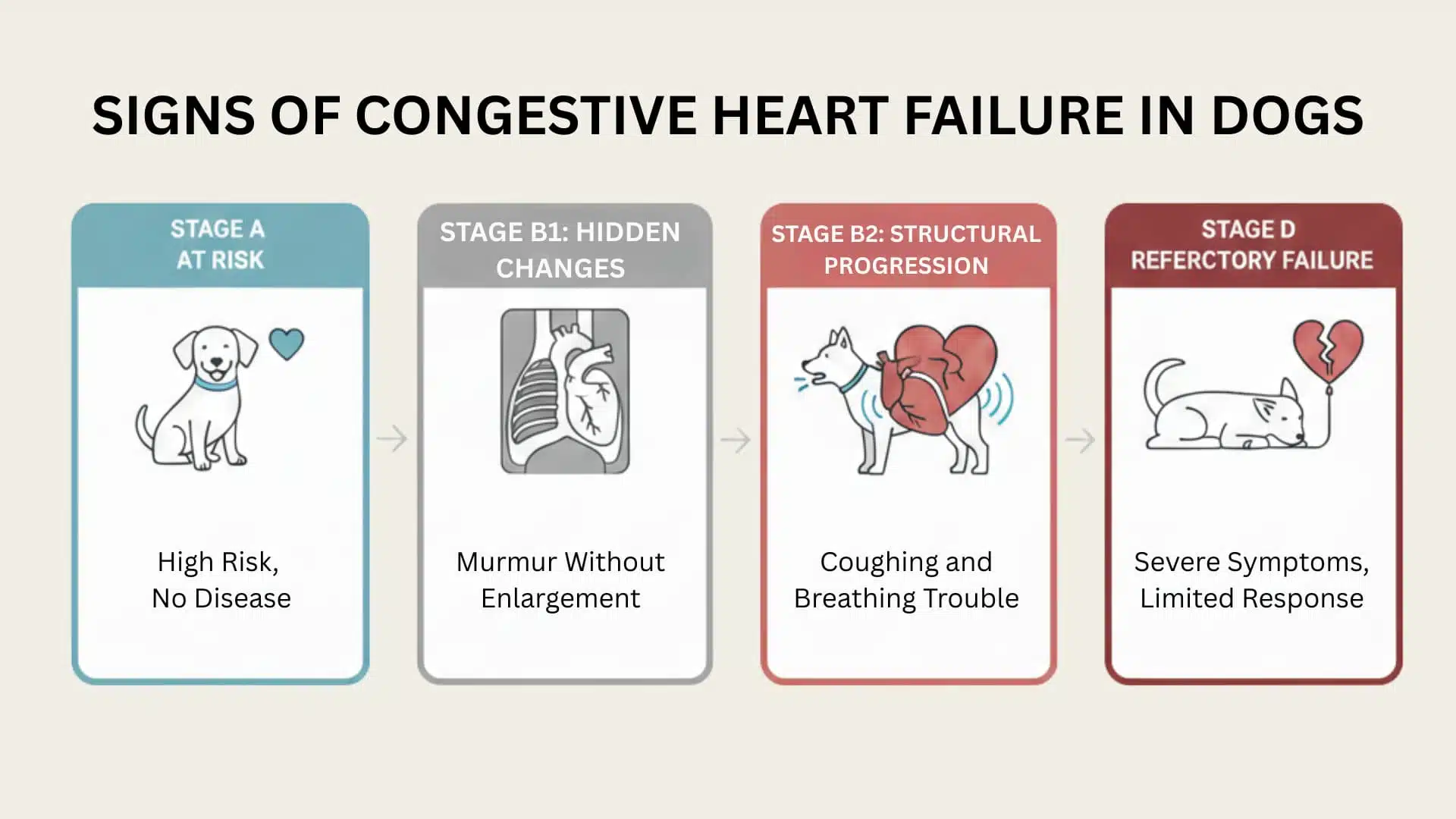
As congestive heart failure progresses, symptoms become more noticeable and serious. Veterinarians classify the condition into stages to guide treatment and monitor decline.
1. Stage A: At Risk
Stage A includes dogs that are at high risk of developing congestive heart failure but currently show no symptoms or structural heart changes.
This stage often applies to breeds genetically predisposed to heart disease. The heart functions normally, and no murmur is detected.
Preventive care, routine checkups, and early screening are essential during this phase to monitor for future changes and reduce the chances of the condition progressing unnoticed.
2. Stage B1: Hidden Changes
In Stage B1, a heart murmur is detected during a veterinary exam, but no outward symptoms are present.
The heart has not yet developed structural enlargement or visible damage. Dogs in this stage usually behave normally and remain active.
Regular monitoring through exams and imaging helps track any progression.
While treatment may not always begin immediately, close observation is critical to catch early structural changes before clinical signs appear.
3. Stage B2: Structural Progression
Stage B2 is characterized by a heart murmur and structural changes, such as heart enlargement, visible on imaging tests.
Despite these internal changes, the dog still does not show any clear clinical signs, such as coughing or breathing difficulty.
Because the heart is beginning to weaken, veterinarians often start medication at this stage to delay the onset of congestive heart failure.
Early intervention here can significantly improve long-term outlook and slow disease progression.
4. Stage C: Active Symptoms
Dogs in Stage C show clear clinical signs of congestive heart failure. These typically include persistent coughing, difficulty breathing, exercise intolerance, and noticeable fatigue.
Fluid buildup in the lungs or abdomen is common at this point. Medical treatment becomes necessary to manage symptoms and improve comfort.
With proper medication and monitoring, many dogs can maintain a reasonable quality of life, though the condition requires consistent care and follow-up visits.
5. Stage D: Advanced Failure
Stage D represents advanced congestive heart failure that no longer responds well to standard treatment.
Symptoms become severe and harder to control, including labored breathing even at rest, weakness, and frequent fluid accumulation.
Specialized medications or adjusted treatment plans may be attempted. At this stage, quality of life becomes the primary concern.
Pet owners may need to have honest conversations with their veterinarian about comfort-focused care or euthanasia decisions.
Is Congestive Heart Failure in Dogs Curable?
Congestive heart failure in dogs is usually not curable. In most cases, the underlying heart damage cannot be reversed.
However, that does not mean there is no hope. The condition is often manageable with the right treatment plan.
Medications can reduce fluid buildup, improve heart function, and ease breathing difficulties. Early diagnosis makes a significant difference, as starting treatment before symptoms become severe can slow progression.
Consistency also matters. Skipping medications or follow-ups can worsen the condition.
The primary goal is not a cure but maintaining comfort, stability, and the best possible quality of life for as long as possible.
Living With a Dog Who Has Congestive Heart Failure
Caring for a dog with congestive heart failure requires patience, structure, and close communication with your veterinarian to help maintain comfort and stability.
- Medication routines: Dogs with congestive heart failure often need daily medications to reduce fluid buildup and support heart function. Giving doses on time and never skipping them is essential for stability.
- Monitoring breathing at home: Keeping track of your dog’s resting breathing rate can help detect early worsening. Any sudden increase in breathing rate, labored breathing, or coughing should prompt a vet visit.
- Adjusting exercise: Physical activity should be gentle and controlled. Short, calm walks are usually safer than intense play, which can strain an already weakened heart.
- Follow-up vet visits: Regular checkups, imaging, and blood work allow your veterinarian to adjust medications and monitor your pet’s progress before symptoms become severe.
When to Call the Vet Immediately
Congestive heart failure in dogs can shift from stable to critical faster than many owners expect. Recognizing emergency warning signs early can make the difference between stabilization and a life-threatening crisis.
Seek immediate veterinary care if you notice:
- Labored breathing or rapid breathing at rest
- Visible struggle to inhale or extended neck posture while breathing
- Collapse or fainting episodes
- Sudden swelling in the abdomen or limb
Congestive heart failure in dogs requires urgent medical attention during flare-ups, and early intervention can significantly improve your dog’s chances of recovery and comfort.
Conclusion
Congestive heart failure in dogs is a serious condition, but it is not always the immediate end that many owners fear.
With early diagnosis, proper medication, and consistent monitoring, many dogs continue to live comfortable and meaningful lives.
The key is staying informed, recognizing changes early, and working closely with your veterinarian to adjust care as needed.
While congestive heart failure in dogs is usually not curable, it is often manageable with the right approach and commitment.
Every dog responds differently, which is why awareness and proactive care matter so much.
If you have experience managing this condition or have questions about congestive heart failure in dogs, drop your comments below and join the conversation.