

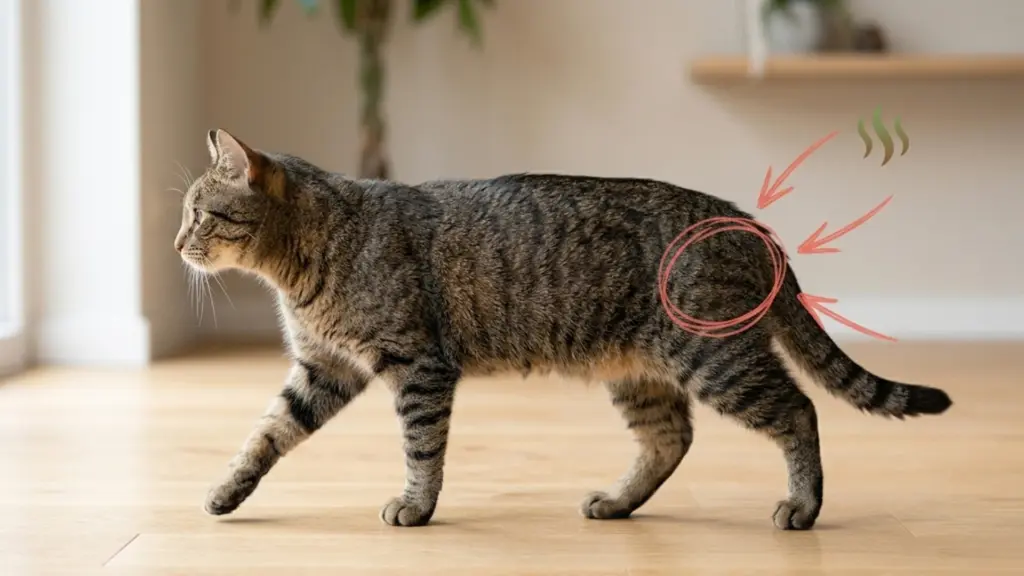
You lean in to pet your cat, then that weird smell hits you before the purring even starts properly. If you have searched why does my cat’s butt smell, I get why you feel confused and a little grossed out.
A smelly cat’s rear can point to several things: anal glands, loose stools, dirty fur, worms, diet issues, irritated skin, or even a urinary tract infection.
Some smells fade after one messy bathroom trip, but others keep coming back and point to something that needs care.
We will be telling you why cats sniff rear ends, what causes the odor, and when it is time to call a vet. Before blaming your cat for being nasty, let’s first understand what that smell is trying to tell you.
Why Do Cats Sniff Each Other’s Butts?
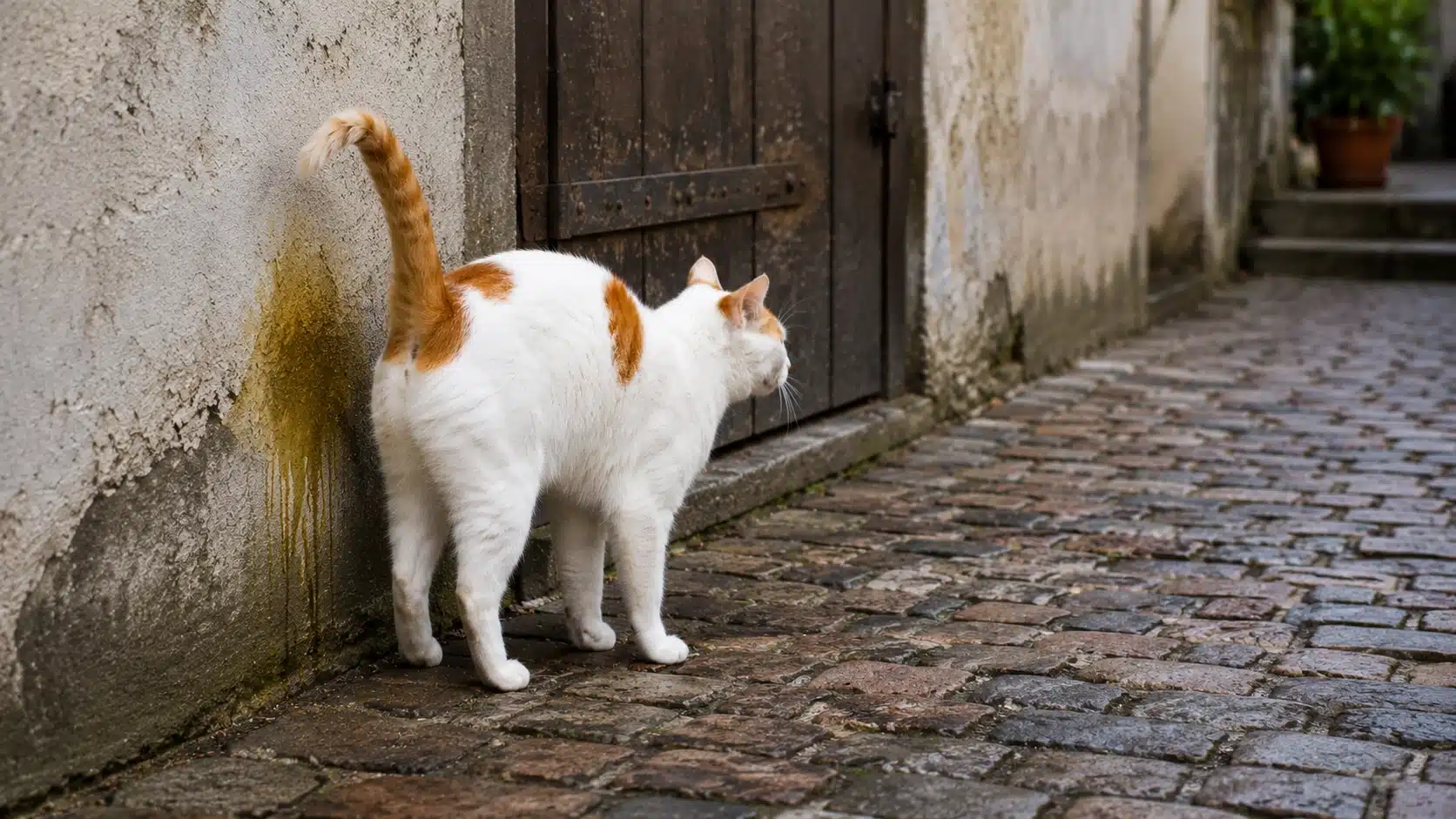
According to VCA Hospitals, cats sniff butts because scent is their primary way of understanding other cats around them. They have two small anal glands near the anus that release a strong fluid.
This fluid carries real-time details about health, stress, diet, and even mood. So when cats sniff there, they are basically reading each other like a profile check, that its his/her buddy.
For humans, that smell should stay very mild most of the time. You might notice it right after your cat poops or suddenly gets scared.
But if you keep asking why my cat’s butt smells day after day, something is off.
A persistent stinky cat rear can mean full anal glands, dirty fur, or gut problems, and that is when normal feline behavior becomes a warning sign.
Key Reasons for a Smelly Cat Rear End
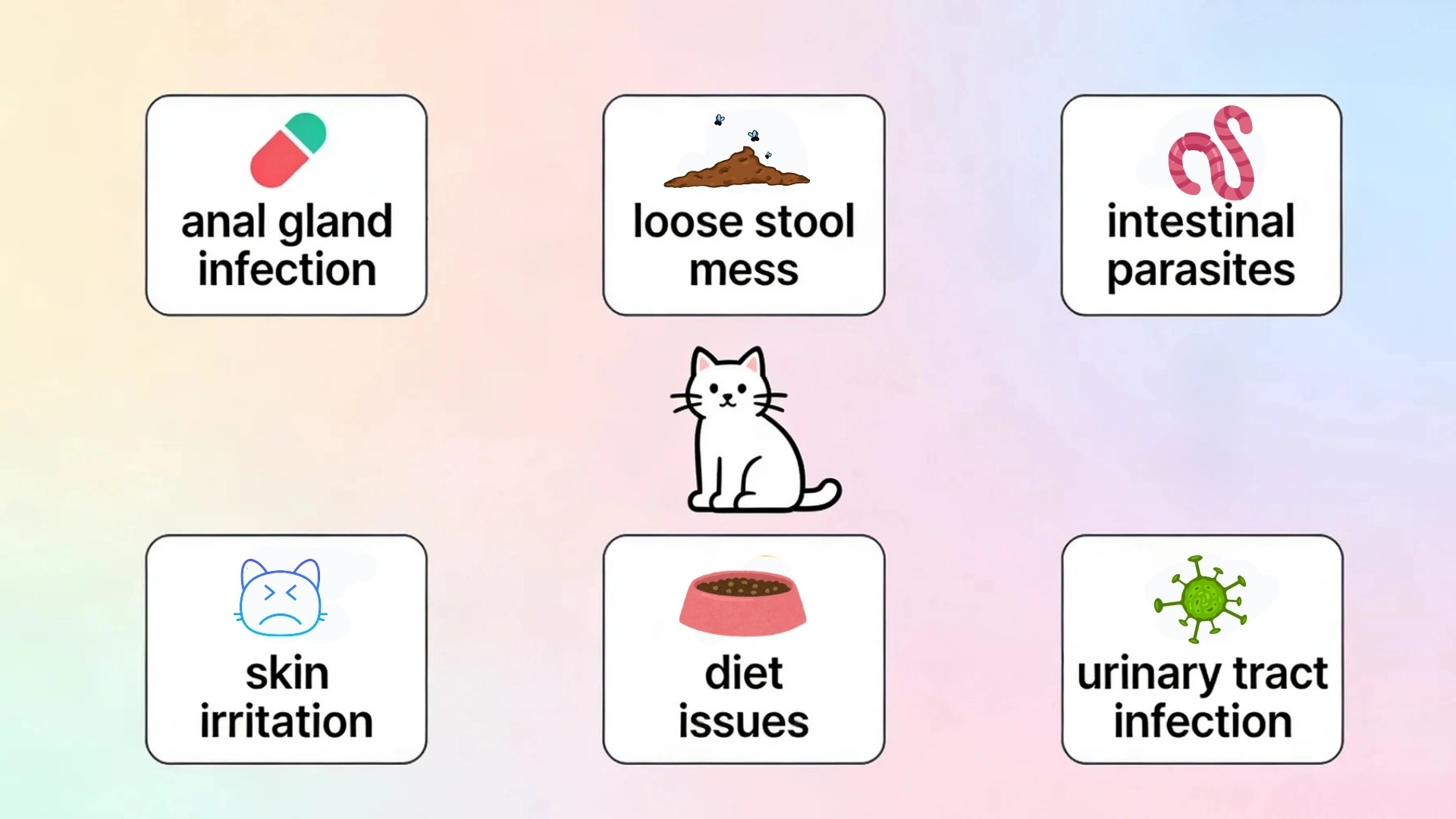
A smelly cat’s rear usually has a real cause, and most trace back to glands, digestive issues, skin problems, or diet. Here is what to look for:
1. Anal Gland Infection or Abscess
This is one of the most serious reasons behind a strong and lasting smell from your stinky cat’s rear end.
When anal glands stay full for too long, bacteria start growing inside them. This can turn into an infection, and in worse cases, a painful abscess can form.
You may notice swelling, redness, or even leaking fluid near the anus. The smell becomes very sharp and hard to ignore.
Cats with infected glands also tend to sit awkwardly, avoid lying on hard surfaces, or lick the rear area far more than usual.
2. Diarrhea or Loose Stools
Loose stools can easily stick around your cat’s rear area and create a bad smell over time. When poop is not firm, it does not cleanly pass out, so residue gets left behind on fur or skin.
This is more common in long-haired cats, where things can get messy fast. On top of that, soft stools do not press the anal glands enough, so they stay full.
That combo makes the stinky cat problem worse and more frequent.
3. Intestinal Parasites
Parasites inside your stinky cat’s gut can mess with digestion and lead to a strong, unusual smell from the rear end.
Worms like tapeworms often cause irritation around the anus, making cats lick or bite the area more than usual.
You might even notice small rice-like pieces near the tail or bedding.
These parasites also affect stool quality, which adds to the odor problem. If left untreated, the smell and discomfort can worsen over time.
Problems with gut health, including parasites and chronic loose stool, can also trigger digestive issues in cats that show up as dry heaving or gagging, a sign the problem is broader than just the rear end.
It may take a few weeks for gut flora to normalize and stool to firm up enough to press the glands properly.
A follow-up stool check with your vet is worth doing if the smell does not improve within 2 to 3 weeks of treatment.
4. Skin Fold Irritation or Dermatitis
Some cats have extra skin or thick fur around the tail, which traps moisture and dirt easily. This creates a warm environment where bacteria multiply fast and produce a sour, musty smell.
Overweight cats are especially prone to this because skin folds near the rear stay hidden and are hard to reach during grooming.
Maintaining a healthy cat’s weight reduces both the likelihood of skin folds forming and the difficulty of self-grooming. You may also notice redness, itching, or greasy fur around the area.
Left unaddressed, this becomes a persistent odor problem.
5. Diet and Gut Issues
What your cat eats plays a big role in how their rear end smells day to day. Low-fiber foods, sudden diet changes, or food sensitivities can upset digestion and lead to soft or messy stools.
When stools are not firm, anal glands do not empty properly, which adds to the smell problem. Some stinky cats also develop gas or poor gut balance, making things worse.
In my experience, switching to a higher-quality, high-fiber diet is one of the first recommendations I make when anal gland problems keep recurring.
It is a simple change that often resolves the issue without any procedures.
6. Urinary Tract Infection (UTI)
A UTI is a less-discussed but real cause of a bad smell from a cat’s rear end. When bacteria cause an infection in the urinary tract, the urine develops a foul odor.
That urine can dribble onto fur around the genitals and anus, leading to skin irritation and a noticeable smell that gets worse if the area is not cleaned regularly.
Male cats are at higher risk of complications from UTIs, including urinary blockage, which is a medical emergency.
If you notice frequent urination, accidents outside the litter box, blood in urine, or excessive licking of the genital area alongside any rear-end odor, contact your vet right away.
A UTI will not clear on its own and can become serious quickly if untreated. Always consult a licensed veterinarian before assuming the cause; self-diagnosing between a UTI and an anal gland problem is difficult at home.
7. Senior Cats and Grooming Difficulty
Older cats, generally those over 7 years, can develop joint pain or arthritis that makes it harder to reach and groom the rear area.
When that spot goes uncleaned, residue from stool or urine builds up and creates a persistent smell.
If your senior cat suddenly seems less tidy in the rear area, reduced grooming ability may be the reason. A vet check can help confirm whether arthritis or another age-related issue is behind the change.
Is a Stinky Cat Butt Normal, or is It Actually a Problem?
A light smell from your cat’s rear can be normal sometimes, especially after poop or when they feel scared. Cats release small amounts of anal gland fluid as part of their daily behavior.
In those cases, the smell fades quickly and does not stick around. So if it happens once in a while, there is no need to stress about it.
But if you keep wondering why your cat’s butt smells every single day, the odor is no longer normal.
If it spreads through the room, sticks to surfaces, carries a sharp fishy quality, or comes with other symptoms like scooting, swelling, or licking, it is a warning sign.
That is when a stinky cat’s rear points to a real health issue, full glands, infection, digestive trouble, or something else that needs attention.
When to See a Vet About Your Cat’s Rear End?
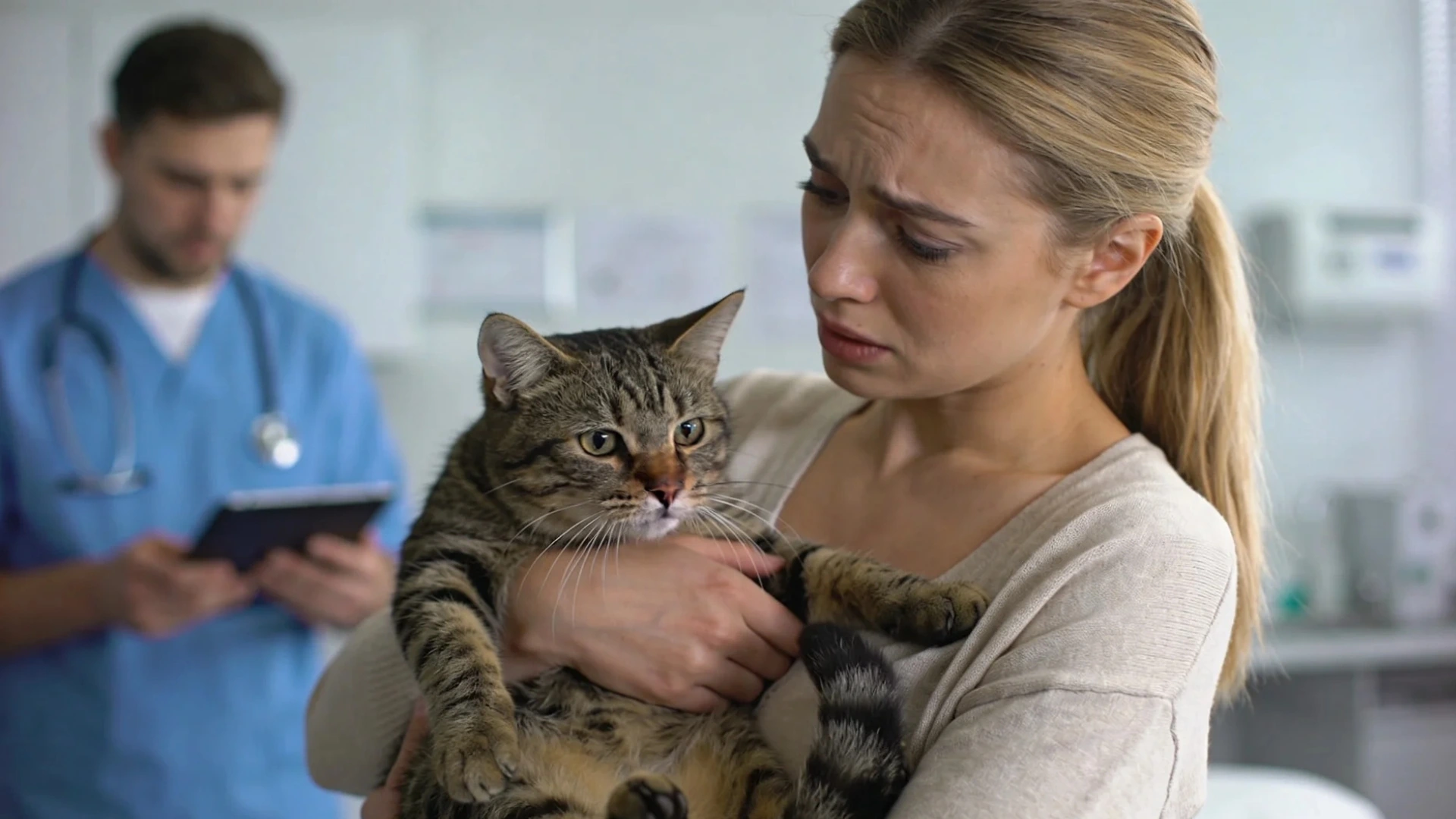
Sometimes the smell clears after one messy poop, but you should not wait too long if it keeps coming back again. A strong rear-end smell can slowly turn into a painful infection if the root cause is not handled early.
Many cat owners ignore it at first, thinking it is just dirt or diet, but that delay can make things worse over time.
Watch for these signs:
- Smell not going away: Strong odor that sticks around for more than 2 to 3 days instead of fading after a normal litter box use.
- Visible irritation: Redness, swelling, or sore-looking skin near the anus that just looks off compared to normal.
- Discharge: Fluid, blood, or pus leaking out is not something to ignore at all.
- Obsessive grooming: Your cat keeps going back to the same spot again and again, licking or biting more than usual.
- Frequent scooting: Dragging the butt across floors often instead of just once in a while.
- Pain signs: Reacting suddenly, like hissing, flinching, or pulling away when you touch near the tail.
- Possible worms: Tiny white rice-like bits near the butt, in the litter box, or stuck to bedding.
Cats are very good at hiding pain, so even small behavior changes matter a lot here. If your cat starts hiding more often, avoids the litter box, or acts irritable without a clear cause, treat it as a signal.
Early care keeps treatment simple and prevents more serious complications. Why does my cat’s butt smell is a question worth taking seriously rather than brushing aside.
What Your Vet Will Actually Do?
When you take your cat in for a smelly rear issue, the check is usually quick and direct. The vet will first look for swelling, redness, irritation, discharge, or pain around the rear area.
This helps them see whether the smell is coming from the anal glands, skin, stool, or another issue.
They may gently press the anal glands, which sit at roughly the 4 o’clock and 8 o’clock positions, to check if they are full or blocked.
If needed, they can express the glands safely and see if the fluid looks thick, bloody, or infected.
They may also ask about diet changes, check stool quality, or test for parasites if your cat has itching, loose stool, or rice-like bits near the tail.
It is worth noting that healthy cats should not need regular gland expression unless symptoms are present. Expressing glands that are not truly problematic can lead to scar tissue over time.
Your vet will guide you on whether expression is needed and how often.
If an infection is found, the vet may prescribe antibiotics or flush and clean the area. For recurring cases, diet changes, fiber support, or scheduled gland checks may be recommended.
What Do Cat Pet Owners Say?
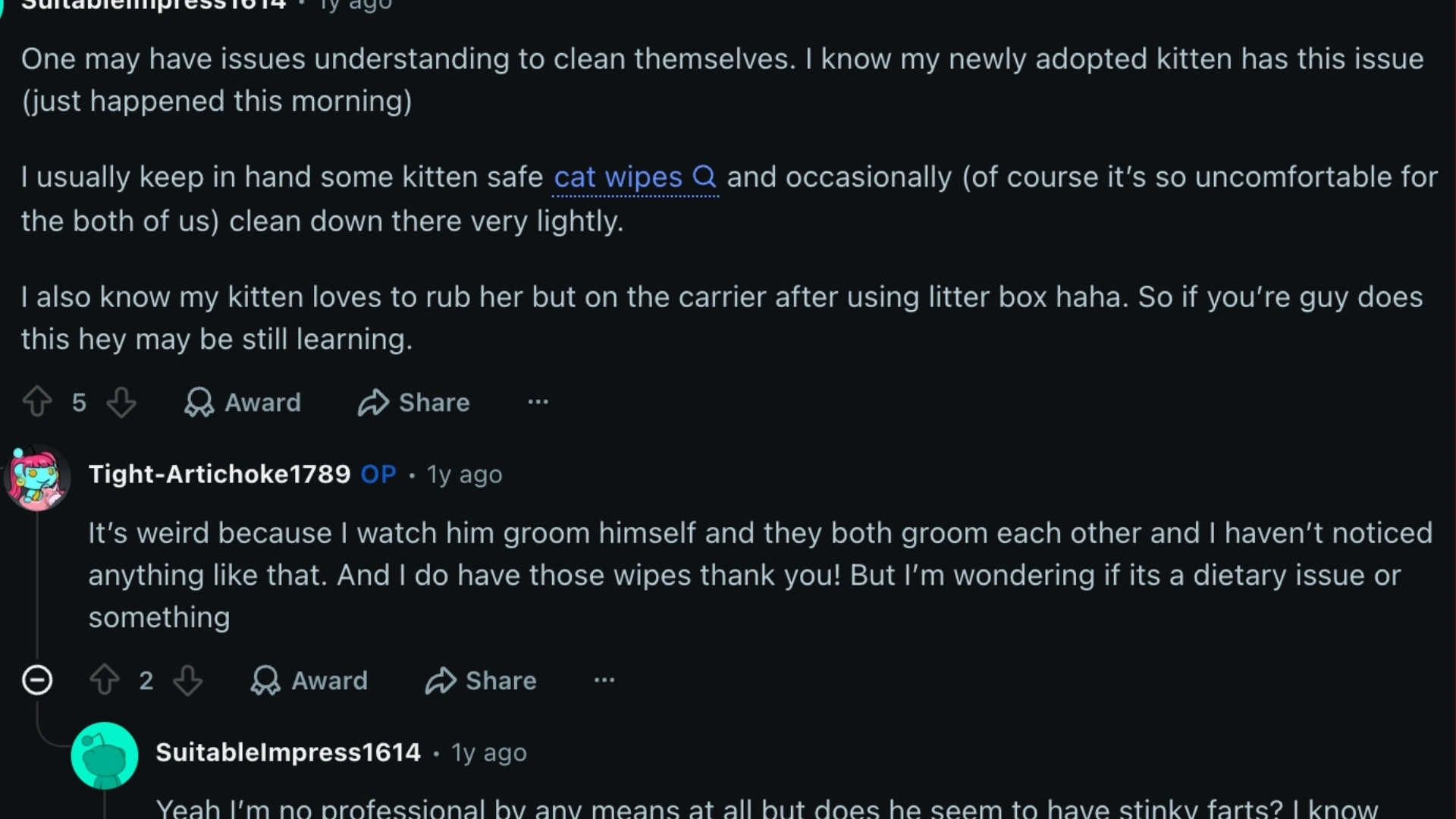
Reddit threads show that many cat owners notice the same issue, where one cat smells bad while another on the same diet smells completely fine.
A common pattern people point out is anal gland buildup, where one cat’s glands do not empty properly and start leaking a strong smell.
Some owners say the odor gets worse randomly, especially after walking or sitting.
Others mention that long-haired cats or less clean cats struggle more with keeping the area fresh. A few also connect it to diet trials, mild gas, or soft stools, even when everything else looks normal.
Another thing that shows up often is confusion at first, especially for new cat owners.
Many new owners say they had no idea anal glands existed until they found themselves searching why does my cat’s butt smell at midnight.
In most cases, getting the glands checked or expressed by a vet solved the issue quickly. That one visit tends to answer the question and, for many cats, ends the problem entirely.
How to Keep Your Cat’s Butt End Clean and Odor-Free?
Keeping your cat clean back there is mostly about routine care and fixing the root cause early.
You do not need anything fancy, just consistent habits that support digestion, grooming, and hygiene. A clean rear also means fewer chances of infections or strong smells building up over time.
- Diet quality: Feed a balanced diet so stools stay firm and glands clear naturally.
- Food changes: Avoid sudden switches since even small changes can upset digestion fast.
- Fur trimming: Keep the tail area trimmed because long fur traps dirt, moisture, and leftover stool easily.
- Cleaning routine: Wipe gently with pet-safe wipes when needed.
- Parasite checks: Watch for worms or odd signs.
- Grooming habits: Some cats skip that area, so notice it.
- Litter hygiene: Keep the box clean so bacteria do not stick back onto your cat’s fur and make the smell worse again.
It is also worth knowing that stress is a trigger for sudden anal gland release.
If your cat seems tense or reactive around new pets or changes at home, understanding the signs of cat stress and anxiety can help you address one of the less-obvious causes of rear-end odor.
Conclusion
A stinky cat butt may feel like a small issue at first, but it often points to something your cat cannot explain in words.
If you searched why does my cat’s butt smell, the reason is usually linked to glands, digestion, skin, or hygiene problems.
I always see this as a signal instead of just an annoying smell that you try to ignore for days. Some cats handle it fine with cleaning and diet, while others need proper care before it turns into pain or infection.
You should watch small changes closely because they tell you more than your cat ever can through behavior.
If you have dealt with a stinky cat before and found something that worked well, tell us, share with us in the comments below.
Frequently Asked Questions
Can Indoor Cats Still Get Anal Gland Problems?
Yes, indoor cats develop anal gland issues just as often as outdoor cats. Being inside does not protect against impaction, infection, or the soft stools that prevent proper gland emptying.
Diet, weight, and stress levels are bigger factors than indoor versus outdoor lifestyle. Regular vet checkups help catch early signs before discomfort sets in.
Can Stress Cause My Cat’s Anal Glands to Smell Suddenly?
Yes, stress can cause a sudden smell from your cat’s rear area without warning. When cats feel scared or overwhelmed, they may release anal gland fluid on their own.
This can happen after loud noises, travel, or meeting new animals. The smell is strong but usually fades quickly and does not need treatment.
Does Being Spayed or Neutered Affect a Cat’s Anal Gland Health?
Spaying or neutering does not directly affect anal gland function in cats. However, these cats may gain weight more easily over time if diet and activity are not managed well.
Extra weight can make grooming harder and increase gland problems. Keeping your cat active and at a healthy weight helps reduce the risk.
Can Anal Gland Issues Spread to Other Pets in the House?
Anal gland problems like impaction or infection do not spread from one pet to another. These issues are internal and not contagious in nature.
However, parasites like worms can spread between pets if they share space or litter areas. If worms are suspected, all pets should be checked and treated together.
How Do I Know if My Cat Needs Regular Gland Expression or is a One-Time Thing?
Some cats never need help with their anal glands, while others may face repeated issues over time.
After the first check, your vet can guide you based on your cat’s condition and history. If symptoms keep coming back, regular checks may be needed. Otherwise, it may just be a one-time issue.