

A kennel can meet every practical need and still look completely wrong in its setting. The opposite is just as frustrating: a polished enclosure may be difficult to clean, poorly ventilated, or too cramped for your dog.
I start by looking at the dog, the available area, and the daily cleaning routine. These dog kennel ideas cover indoor furniture units, small-home solutions, covered backyard runs, DIY builds, and multiple-dog layouts.
Each option includes details worth copying and possible problems to check before committing. Save the designs that suit your space, then compare their size, flooring, airflow, shade, and gate access before choosing one for your home or yard.
What Makes a Kennel Work Well?
A good kennel gives your dog room to stand, turn, stretch, and rest in a natural position.
Current expert guidance also stresses correct sizing, ventilation, durability, and comfort. Indoor enclosures need washable surfaces, protected cords, safe hardware, and placement near normal household activity.
Outdoor runs require shade, shelter, drainage, drinking water, secure panels, and protection from extreme weather, and federal housing standards for animal facilities even specify exact temperature and ventilation ranges for this reason.
The kennel should support calm, positive use rather than punishment. Animal welfare experts recommend training methods and equipment that cause the least stress.
Choose the location and construction around your dog’s physical needs, habits, and comfort.
Indoor Kennel Ideas for Living Spaces
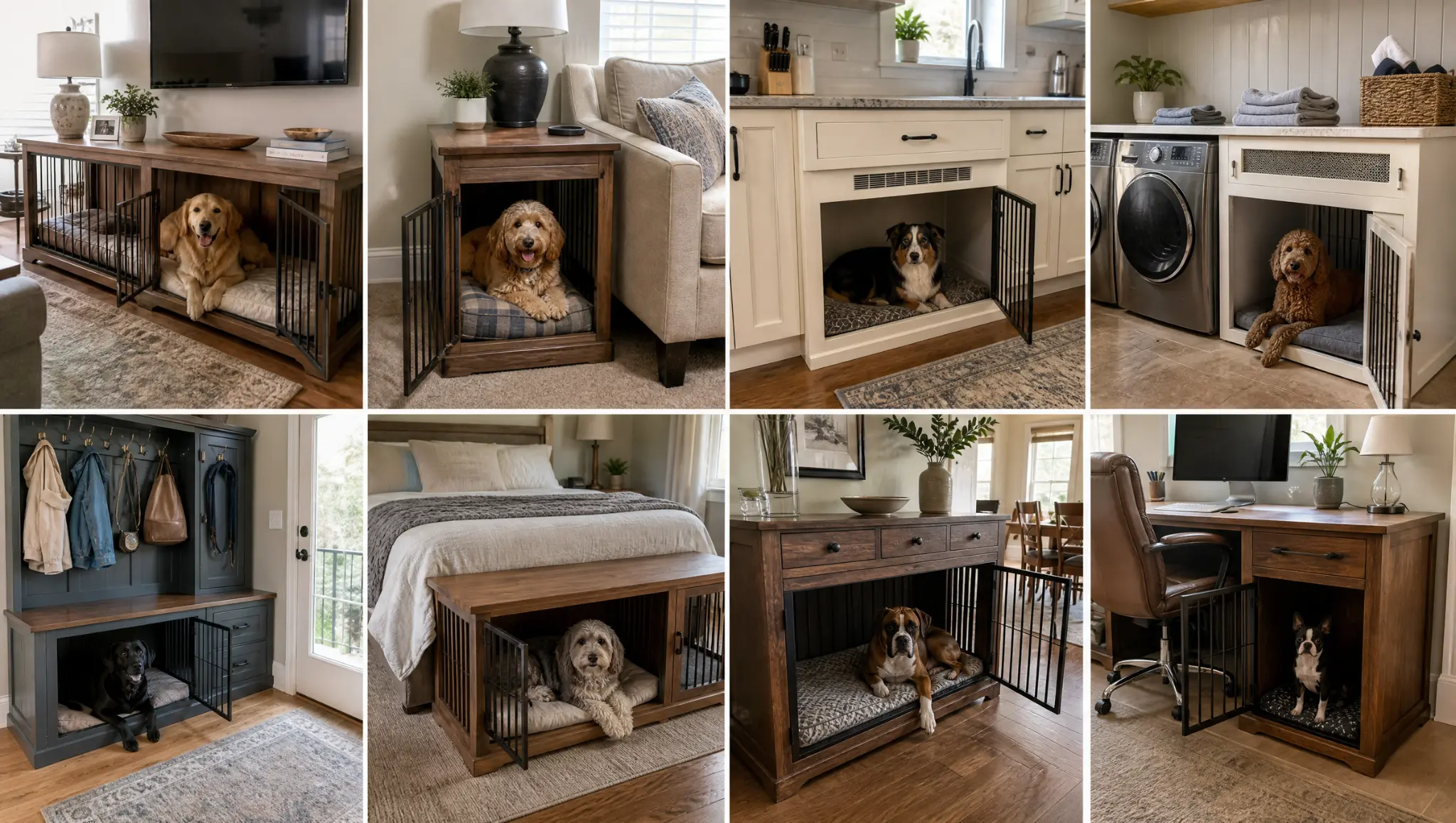
Indoor kennels can become useful parts of a room when their placement and materials support daily life. These eight options combine resting space with common household functions.
1. Living Room Console Kennel
A long wooden kennel can serve as a media console while giving your dog a defined resting place. Open metal sides maintain airflow and visibility, while covered channels keep electrical cords beyond reach.
Add a removable floor liner for easier cleaning. The interior should be large enough for your dog to stand, turn, stretch, and rest comfortably, and working out the right dimensions before you build saves you from redoing the whole piece later.
2. End Table Kennel
An end table kennel uses the space beside a sofa or bed without adding another large piece of furniture. It works best for a calm small dog that does not chew wood.
Keep lamps, drinks, and electrical cords away from the edges. Leave ventilation space around the open sides and choose a stable top that will not shift when bumped.
3. Built-In Cabinet Kennel
A built-in kennel can occupy an unused section of lower cabinetry in a kitchen, mudroom, or family room. Ventilate several sides instead of relying only on the front opening.
Include a removable tray that reaches every interior corner. Cover outlets and hardware while leaving enough clearance for the door to open completely.
4. Laundry Counter Kennel
The open area beneath a laundry folding counter can hold a low-profile kennel. A waterproof liner protects the floor from wet paws, spills, and accidents.
Store detergent and cleaning supplies inside secured cabinets. Check whether appliance noise, movement, warmth, or vibration prevents your dog from resting comfortably before using the area regularly.
5. Mudroom Kennel Station
A mudroom station can combine a kennel with closed drawers, leash hooks, and storage for walking supplies. Place hooks high enough that leads cannot fall into the enclosure.
Keep food, chemicals, and small accessories behind secure doors. Position the sleeping area away from wet footwear, busy entrances, and cold exterior drafts.
6. Bedroom Bench Kennel
A low kennel can work as a bench along an empty bedroom wall or beneath a shaded window. Choose a quiet position away from heaters and cooling vents.
Secure curtains and blind cords beyond your dog’s reach. Keep heavy objects off the top and place a familiar washable mat inside for comfortable nighttime rest.
7. Dining Room Sideboard Kennel
A wide furniture kennel can serve as a dining room sideboard while keeping your dog near household activity. Use sealed surfaces that tolerate food spills and regular wiping.
Keep hot dishes, glassware, and serving items away from the edges. Arrange nearby chairs so they never block the entrance or restrict ventilation.
8. Home Office Kennel
A kennel near your desk lets your dog rest close by without taking up the work area. Place it beyond the path of rolling chairs and drawers.
Route computer cables through enclosed channels outside the frame. Keep printers and speakers far enough away that sudden sounds do not repeatedly interrupt sleep.
Indoor furniture should never reduce airflow, movement, or cleaning access for appearance alone. Every surface and fitting must remain easy to inspect, reach, and maintain.
Space-Saving Kennels for Small Homes
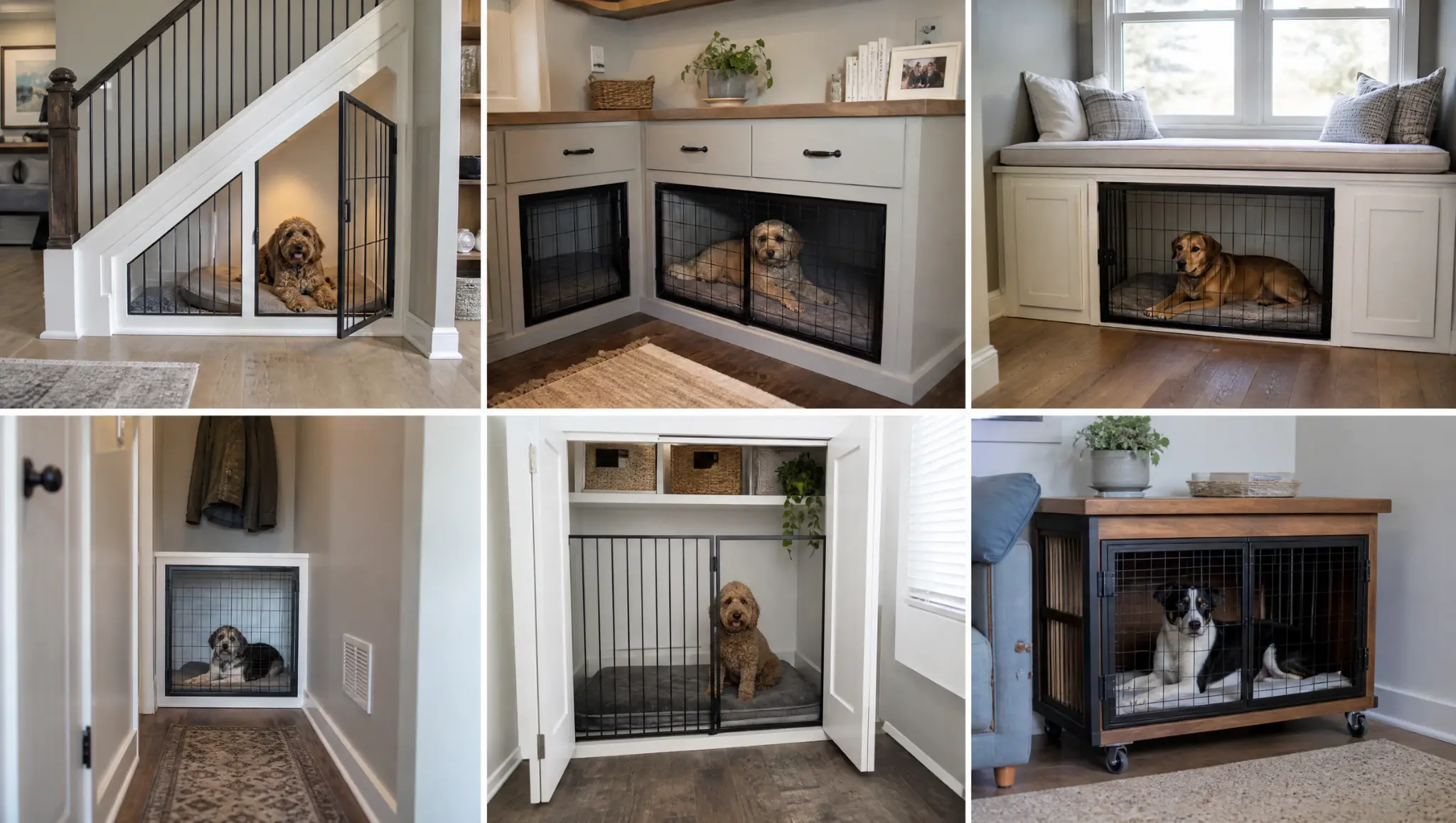
Apartments and compact rooms benefit from layouts using corners, recesses, and existing furniture footprints. The dog’s measurements must still determine the required interior space.
9. Under-Stair Kennel
An open stair recess can become a useful sleeping nook when it provides enough height, depth, and ventilation. Protect wiring and cover rough wall edges before adding a gate.
Use a removable floor liner to control moisture and hair. Make the entrance wide enough for bedding and cleaning equipment to pass through easily, especially since space requirements shift quite a bit from one breed to the next in a tight nook like this one.
10. Corner Dog Kennel
An angled or L-shaped kennel can occupy a corner that standard rectangular furniture cannot use efficiently. Keep both rear sections accessible during cleaning.
Install storage beside or above the enclosure without covering ventilation panels. Position the door toward an open wall and preserve a flat interior area where your dog can rest naturally.
11. Window Seat Kennel
A kennel below a deep window seat combines household seating with a dedicated sleeping area. Check the glass temperature during different parts of the day.
Secure curtains, blind cords, and nearby objects beyond reach. Add shade when sunlight heats the interior, and use a washable base to protect against condensation and accidents.
12. Hallway Nook Kennel
A recessed hallway can hold a narrow kennel without taking floor space from the main room. Maintain enough clearance for people carrying bags or laundry.
Use rounded exterior corners to reduce accidental bumps. Face the entrance away from the walkway and avoid drafty locations beside frequently opened exterior doors.
13. Closet Conversion Kennel
An open closet may become a kennel when it has reliable ventilation and enough usable room. Remove solid doors if they restrict airflow.
Protect electrical outlets, wiring, shelves, and exposed hardware. Keep upper storage empty or securely enclosed, then cover the interior walls and floor with washable materials that tolerate moisture and hair.
14. Rolling Furniture Kennel
A kennel fitted with lockable casters can move between rooms when the household layout changes. Choose wheels rated for the combined weight of the frame and dog.
Lock every caster before use and cover moving hardware. Test the unit on its intended flooring to confirm that it remains steady when your dog changes position.
A compact kennel still needs room to stand, turn, and rest naturally. Measure your dog before choosing a kennel to ensure the available floor area is sufficient.
Outdoor Dog Kennel Ideas for Backyards
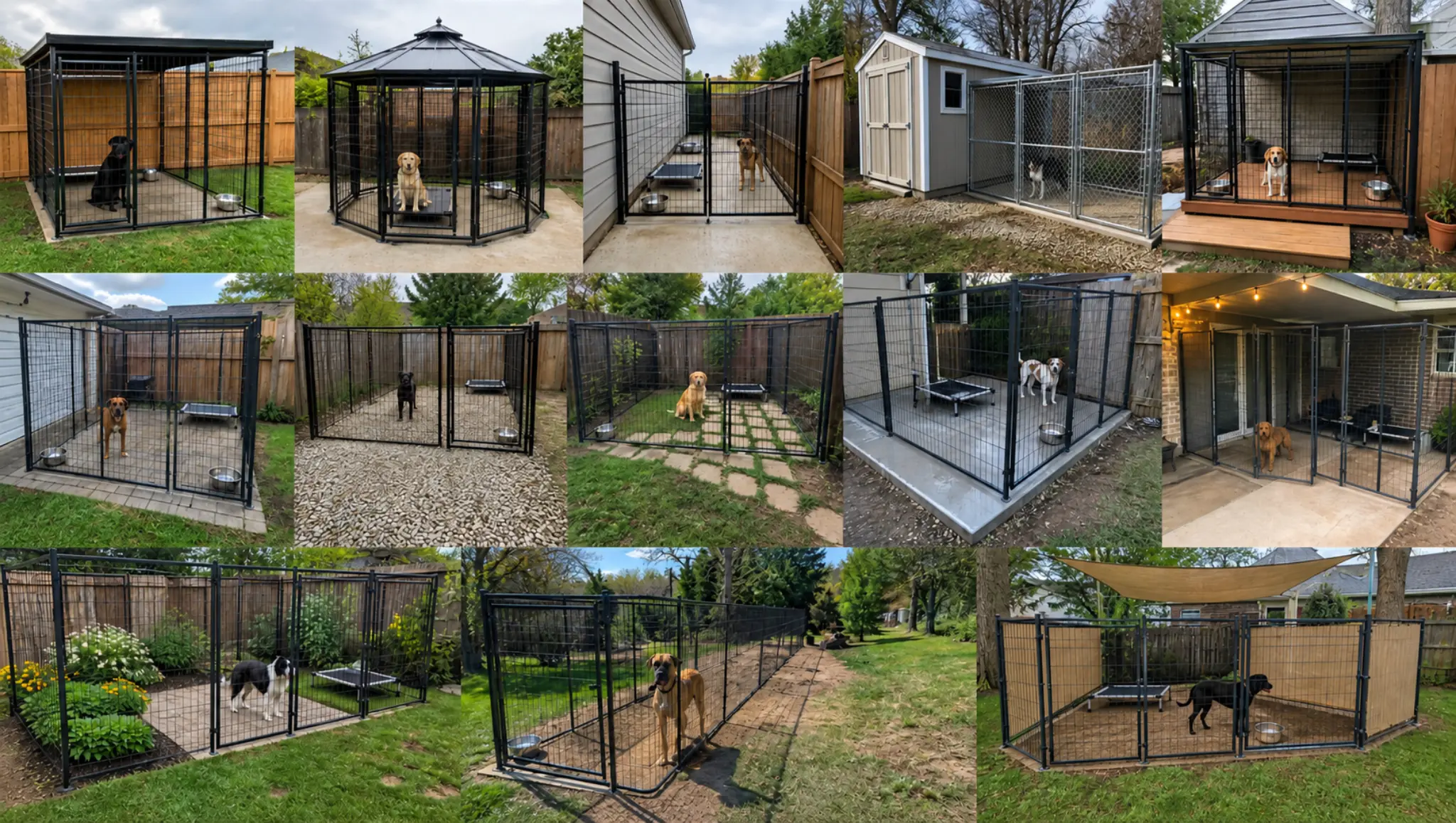
A secure outdoor kennel needs more than fencing. These setups address roofing, shade, drainage, flooring, water, shelter, maintenance, and common backyard limitations.
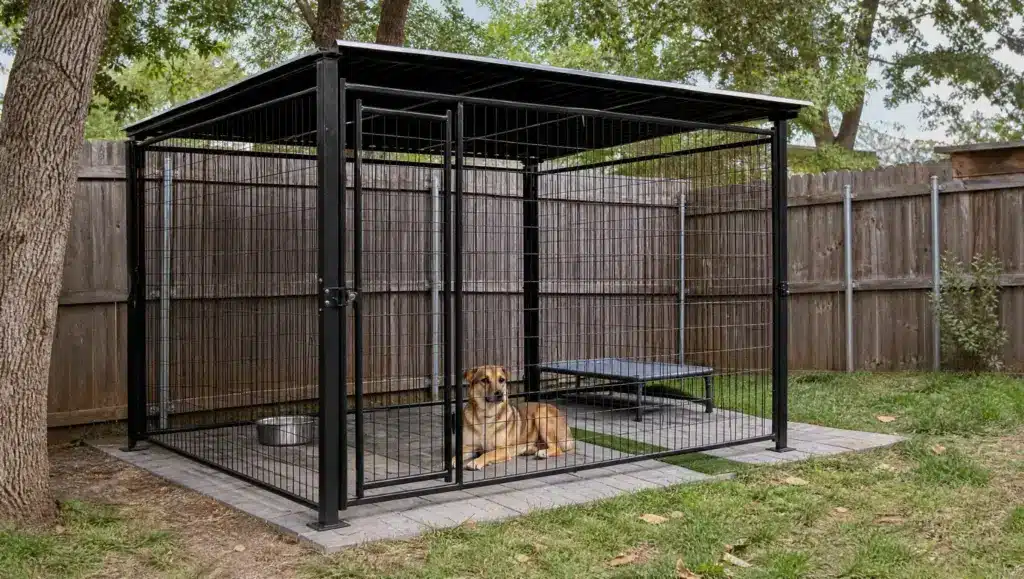
15. Covered Backyard Run
A rectangular metal-panel run provides a defined area for supervised outdoor rest and movement. Extend the roof far enough to reduce wind-driven rain.
Include a dry sleeping zone and shaded water station. Anchor every panel securely and direct surface water away from the gate, shelter, and nearby buildings.
16. Gazebo-Style Kennel
A multi-sided kennel with a pitched roof can sit neatly within an open backyard. Its shape provides several viewing angles and flexible placement.
Use weather-resistant roofing and firmly anchored panels. Add a protected corner for windy conditions, and make sure the roof supports cannot become climbing points or chewing hazards.
17. House-Attached Side Run
A narrow run beside the house makes use of an underused side yard. Controlled access through a secure dog door can connect the indoor and outdoor areas.
Check utility meters, windows, vents, and cooling equipment before installation. Redirect gutter runoff and lock the dog door whenever you can’t supervise outside access.
18. Shed and Run Setup
A small shed connected to an open run creates separate areas for resting and movement. Ventilate the enclosed portion and use insulation suited to local conditions.
Protect windows, wiring, and interior edges from chewing. Store tools and chemicals elsewhere, then add a full-size service door so you can clean every surface.
19. Raised Deck Kennel
A low composite or sealed-wood platform creates a dry resting place above damp ground. Select a textured surface that provides steady footing.
Protect every edge from splinters and chewing, and keep the step accessible for older dogs. Inspect beneath the platform regularly for waste, insects, standing water, and damaged supports.
20. Paver Floor Kennel
Closely fitted pavers create a firm kennel floor that is easier to clean than bare soil. Install them over a prepared, level base with secure edging.
Choose textured pavers that provide grip during wet weather. Add dependable shade and repair loose blocks before they create gaps, raised edges, or unstable walking areas.
21. Gravel Floor Kennel
Gravel can support drainage when installed over a compacted base with strong perimeter edging. Select stones that remain comfortable beneath your dog’s paws.
Remove waste promptly and replace soiled sections when needed. Choose another flooring material if your dog digs excessively or regularly carries, chews, or swallows loose stones.
22. Grass and Paver Run
Combining grass with pavers creates separate soft and firm areas inside one kennel. Place pavers near the entrance and fence line where foot traffic is heaviest.
Select grass suited to the yard’s sunlight and climate. Prepare to repair worn sections where repeated running, digging, or urination damages the lawn.
23. Sealed Concrete Kennel
Sloped concrete creates a durable floor for a permanent outdoor kennel and supports efficient cleaning. Apply a non-slip coating that remains secure when wet.
Direct drainage away from bedding and neighboring property. Provide a raised padded surface because bare concrete is hard and can become uncomfortably hot or cold.
24. Covered Patio Kennel
Removable kennel panels can fit beneath an existing patio roof without requiring a separate shelter. Keep grills, heaters, electrical cords, and chemicals outside the enclosure.
Anchor panels so nearby furniture cannot shift them. Check overhead beams for climbing routes and account for rain that may reach beyond the roofline.
25. Garden-Border Kennel
A kennel beside a planted border can feel more connected to the surrounding backyard. Use only dog-safe plants and keep fertilizers, pesticides, and sharp tools elsewhere.
Leave clearance between plants and fencing for inspections. Remove fallen berries, seeds, mushrooms, broken branches, and other possible hazards before allowing your dog inside.
26. Long Exercise Run
A long enclosure gives a large or active dog more space to move in a controlled way. Match the fence height and panel strength to the dog’s jumping and pushing behavior.
Keep the central route free from obstacles. Add separate shaded water and resting areas, and reinforce ground worn by repeated running or turning.
27. Seasonal Weather Kennel
Adjustable shade and removable wind panels can prepare a kennel for changing seasonal conditions. Install them without blocking necessary ventilation.
Check shade coverage as the sun changes position throughout the day. Keep indoor housing available whenever heat, cold, wind, heavy rain, or storms make the outdoor enclosure unsafe, since heat-related illness in pets can set in faster than most owners expect.
DIY Kennel Designs to Build
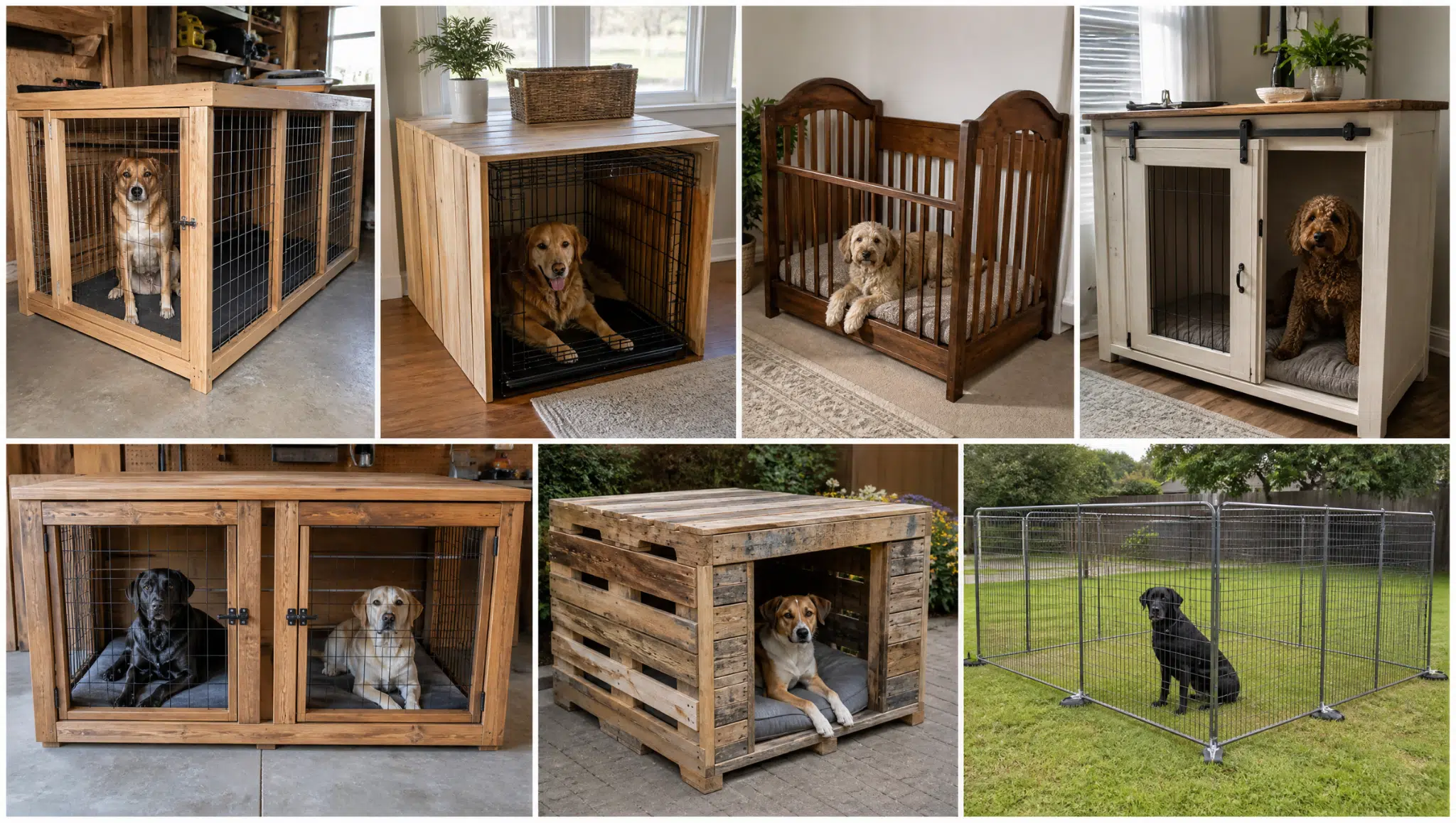
Building your own kennel provides control over its size, materials, doors, and location. Each project still requires accurate measurements, safe finishes, secure fittings, and easy access for cleaning.
28. Wood and Welded-Wire Kennel
A wooden frame with welded-wire panels can work indoors or beneath an outdoor shelter. Securely attach the wire and cover every cut edge.
Place screws where your dog cannot scrape against them. Apply a dog-safe washable finish, then test the frame and gate for movement before adding bedding or allowing entry.
29. Wire Crate Cover
A removable wooden cover can help a standard wire crate fit more naturally within a living room or bedroom. Leave every ventilated side open.
Keep trim, fasteners, and fabric out of chewing range. Make the cover easy to lift away so the original doors, divider, handle, and folding mechanism remain fully usable.
30. Repurposed Crib Kennel
A solid wood crib may provide materials for a kennel after a careful safety and condition check. Measure every opening because crib slat spacing varies.
Remove weak joints, unsafe coatings, and decorative parts that could trap paws. Replace the original closure with a secure latch and reject any frame showing rot or major damage.
31. Sliding-Door Kennel
A sliding door saves clearance where a hinged gate would interfere with furniture or a walkway. Install a track stop that prevents the door from leaving its rail.
Add a latch your dog cannot operate. Protect paws from moving components and remove collected hair regularly so the door continues to close completely.
32. Farmhouse Double Kennel
A double wooden kennel provides two individual compartments beneath one continuous surface. Size each side for the dog using it.
Install separate doors, washable trays, and adequate ventilation throughout the frame. Add a suitable divider and reinforce the central support so movement in one compartment does not loosen the other.
33. Pallet-Wood Kennel
Reclaimed pallet boards can reduce the need for new lumber, but you must carefully inspect their source and condition. Reject boards with chemical odors, stains, rot, or unknown markings, since older pallets may carry wood preservative chemicals that aren’t safe for a dog to chew on.
34. Modular Panel Run
Prefabricated metal panels can form a temporary run that you can resize or relocate as needed. Match panel height to your dog’s jumping and climbing ability.
Reinforce the gate and every connection. Anchor the structure to the ground surface, then check stability after moving it or following strong wind and heavy rain.
Prepare a materials list, cut plan, and final safety check before construction. Permanent structures may require local approval based on roofing, foundations, utilities, dimensions, and property setbacks.
Kennel Layouts for Multiple Dogs
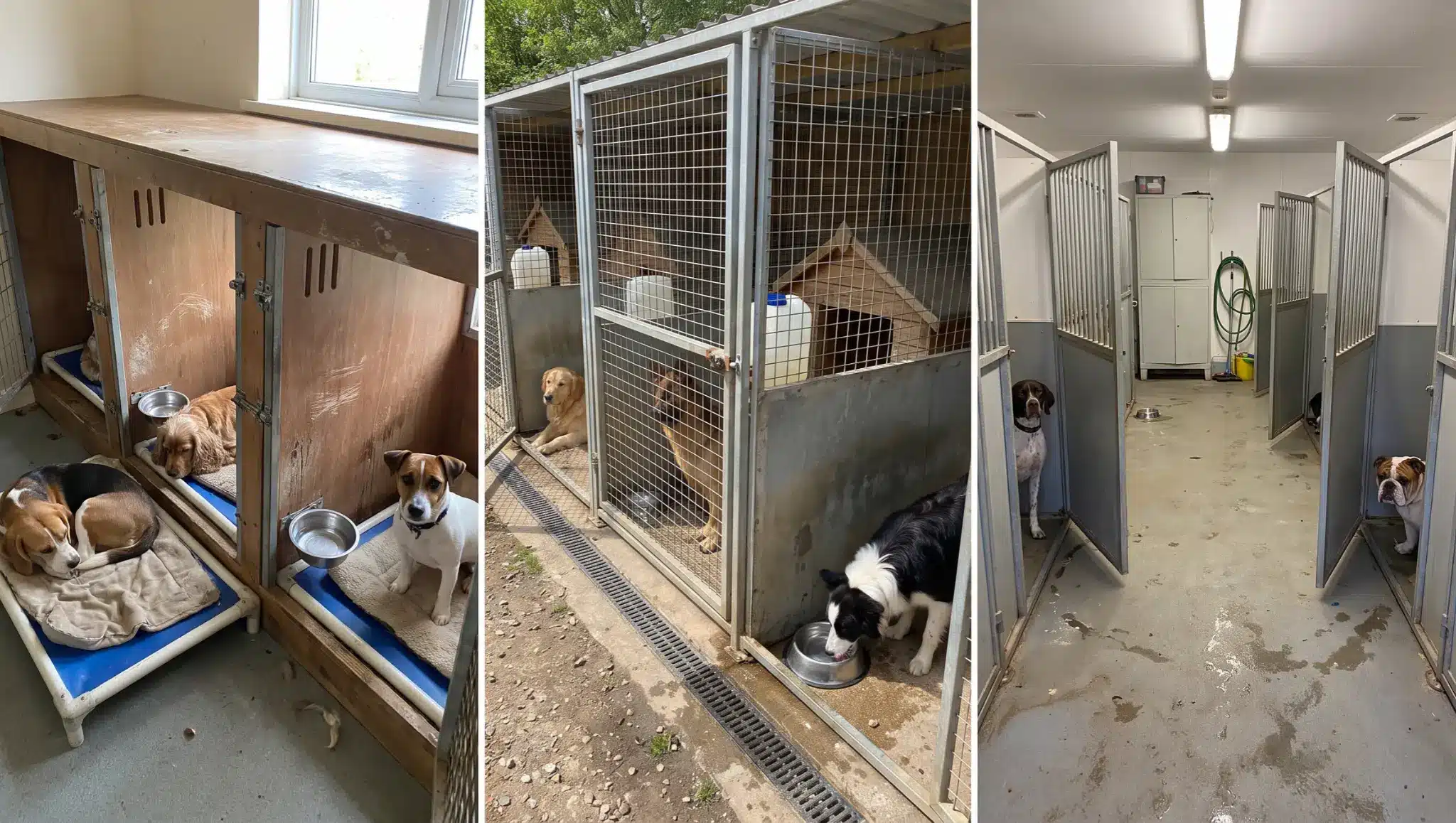
Several dogs may need separate resting areas even when they interact well elsewhere. These layouts support controlled access, individual feeding, cleaning, and scheduled separation.
35. Side-by-Side Indoor Kennels
Individual kennels can sit beneath one continuous counter to create an organized indoor station. Give every compartment a separate door and removable floor tray.
Maintain ventilation through the central sections. Use dividers suited to each dog so you can clean one enclosure without opening or disturbing the dogs housed beside it.
36. Divided Outdoor Runs
Connected outdoor runs provide individual areas while using one shared structural frame. Install secure partitions and separate gates for every section.
Add individual shelters, water containers, and drainage paths. Consider solid lower dividers if neighboring dogs react through fencing, and arrange each entrance so one open gate cannot release every dog.
37. Central-Aisle Kennel Layout
A central aisle places individual kennel bays along one or both sides of a clear service path. Keep the walkway wide enough for feeding and cleaning equipment.
Ensure open gates don’t block movement. Provide safe lighting and store food, tools, and chemicals where dogs cannot reach them through the kennel fronts.
Base shared housing on each dog’s temperament, feeding habits, and behavior rather than available floor area alone. Separate compartments simplify daily care and provide control when dogs need time apart.
How to Choose the Right Kennel
Start with your dog’s size, age, mobility, chewing habits, and response to confinement. Then compare each suitable layout against the space available, daily cleaning routine, local weather, and planned length of use.
Indoor furniture kennels suit calm dogs that rest comfortably near household activity. Covered outdoor runs provide more movement but require reliable shade, drainage, water, shelter, and secure anchors.
Multiple-dog households usually benefit from individual doors and divided resting areas, even when the dogs spend supervised time together.
Check every gate, panel, floor edge, fastener, and ventilation opening before use. If your dog scratches, bends bars, refuses to enter, pants heavily, or shows repeated distress, reassess the setup instead of assuming more time inside will solve the problem.
Conclusion
The most useful dog kennel ideas succeed because they fit the dog and the setting, not just the look.
I would save three options that suit your available area, then compare their airflow, flooring, cleaning access, shade, gate position, and upkeep.
A console kennel may work for a calm indoor dog, while an active large dog may need a long covered run. Multiple dogs often benefit from individual compartments, even when they enjoy time together elsewhere.
Before buying materials, measure your dog, inspect the location at different times of day, and plan how you’ll clean every surface. Choose your favorite setup and sketch the full layout before beginning the build.
Frequently Asked Questions
Can a Kennel Be Placed in a Garage?
A garage may work only if you can control temperature, airflow, fumes, chemicals, vehicles, and noise. Unconditioned garages can become dangerously hot or cold, so monitor the area and never assume it matches normal indoor conditions.
Does a Permanent Yard Enclosure Require a Permit?
Requirements vary by city, county, structure height, roof coverage, setbacks, concrete work, and property association rules. Contact the local building department before installing foundations, utility connections, permanent posts, drainage systems, or a fixed roof.
Can Safe Plants Grow Near the Enclosure?
Dog-safe plants may grow nearby if leaves, roots, mulch, and irrigation parts stay out of reach. Avoid chemical treatments and thorny growth, leave room for fence inspections, and confirm every plant’s safety before adding it.
Should Cameras Be Used During Kennel Time?
A camera may help identify barking, pacing, escape attempts, or equipment problems while an owner is away. It cannot replace supervision or emergency planning, and owners should discuss severe distress with a veterinarian or qualified behavior professional.