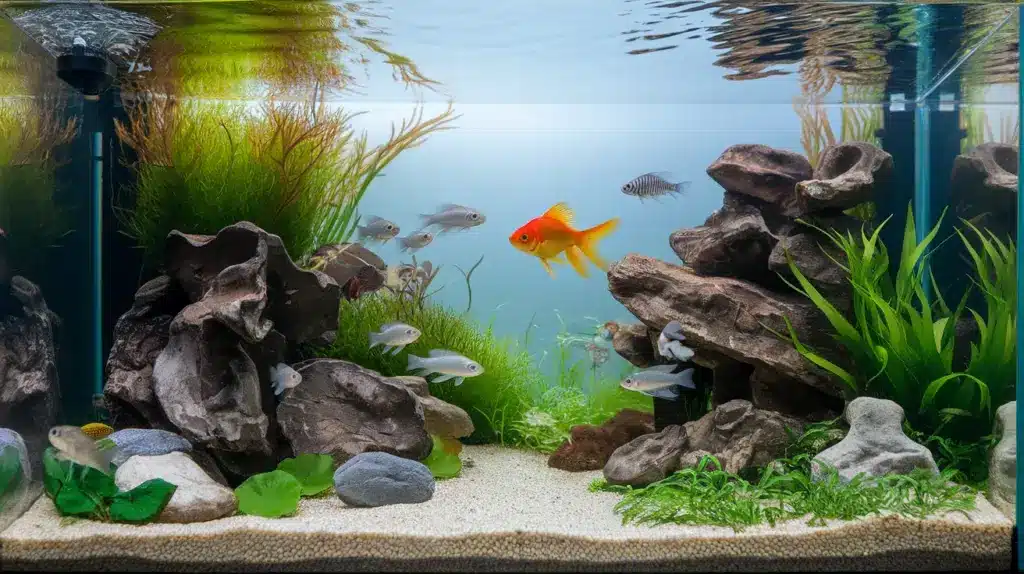


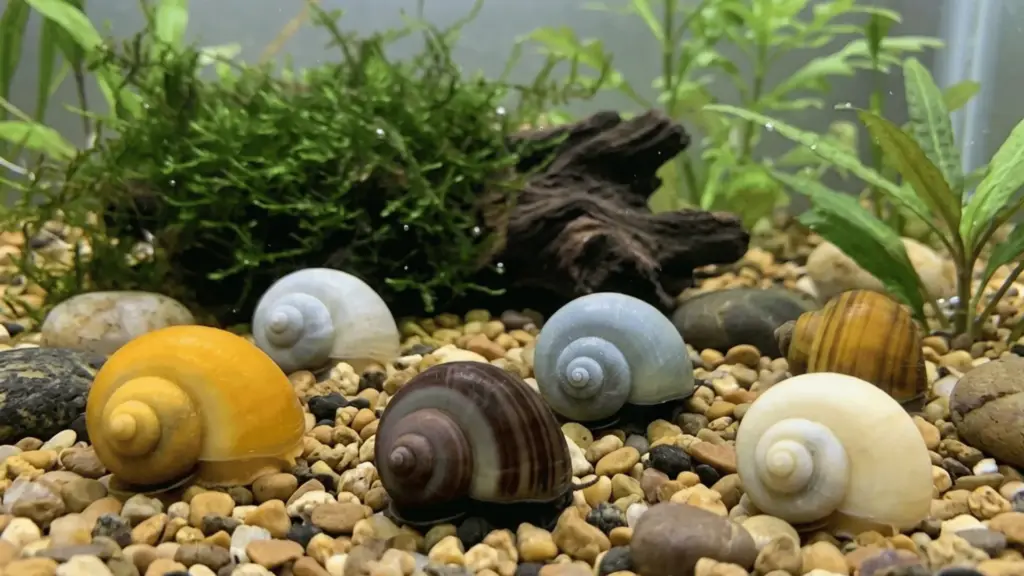
If your mystery snail has been hiding all day, barely moving, or staying locked in its shell, your tank lighting might be the problem.
Most new aquarists set up bright tanks, thinking it helps their pets thrive, but for mystery snails, that bright light can actually do more harm than good.
As a veterinarian with over years of experience working with aquatic and exotic pets, I have seen lighting-related stress go unnoticed far too often.
Understanding what mystery snails actually prefer when it comes to light or dark is one of the simplest things you can do to dramatically improve their health and activity
Understanding How Mystery Snails See and Sense Light
Mystery snails (Pomacea bridgesii) do not have advanced eyes like humans or even most fish.
Their eyes are simple structures called ocelli, located at the tips of their cephalic eyestalks. These eyes are not built for sharp vision or color recognition.
Instead, they function primarily as light sensors, detecting changes in light intensity and movement rather than forming detailed images.
Beyond their eyes, other cells across their body also respond to light, making them sensitive creatures overall.
This is why sudden changes in lighting, such as flicking the tank light on and off abruptly, can cause defensive reactions like shell retraction or even the dramatic “free-fall” behavior where a snail lets go of the tank wall and drops to the bottom.
Their entire body registers that shift, not just their eyes.
Are Mystery Snails Nocturnal or Crepuscular?
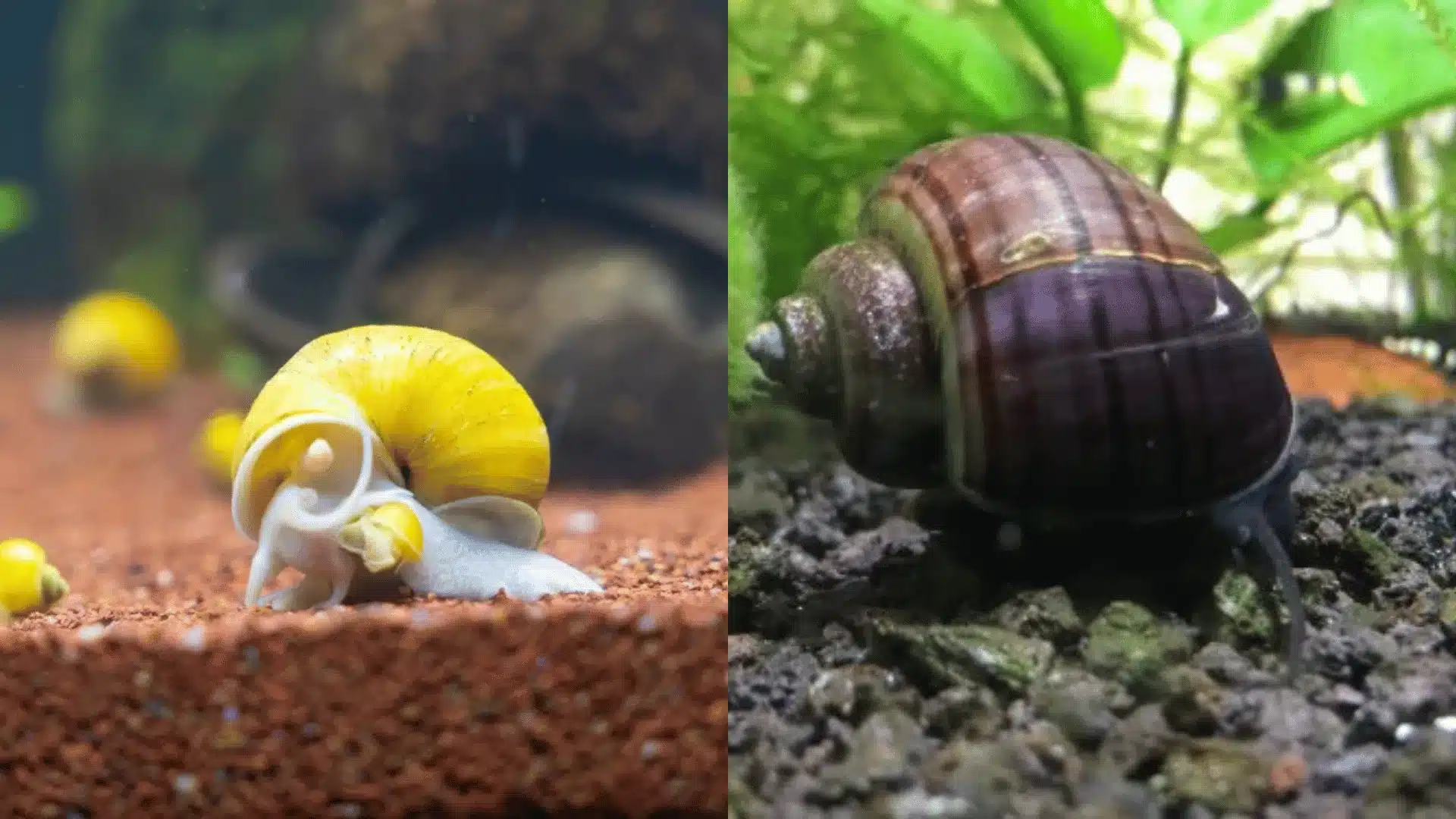
There is a common assumption that mystery snails are nocturnal, but that is not quite accurate.
They are actually crepuscular, meaning they are most active during the transitional periods of dawn and dusk when light intensity is at its lowest.
Many aquarists notice their mystery snails becoming more energetic right when the tank lights first come on in the morning or just before they switch off in the evening.
During full daylight hours with bright lighting, they tend to slow down, seek shade, or stay tucked in their shells. During complete darkness, they forage actively for food.
Do Mystery Snails Prefer Light or Dark?
The honest answer is neither extreme. Mystery snails do not need complete darkness, but they are far more comfortable in low to moderate light conditions than in bright, constant illumination.
When exposed to intense light without shade or breaks, they will actively seek out darker areas. If none are available, they simply retreat into their shells and wait it out.
In terms of behavior, mystery snails thrive in environments that closely mimic their natural South American habitats, shallow freshwater ponds and streams where light filters through aquatic plants, creating a mix of lit and shaded zones.
Replicating that balance in your tank is the key to keeping them healthy and active.
For a deeper look at what can cause mystery snails serious harm in your tank, including lighting issues paired with poor water quality, check out this helpful resource on what kills aquarium snails fast.
What Happens When Mystery Snails Get Too Much Light?
When mystery snails are kept under bright, continuous lighting with nowhere to hide, the effects become visible fairly quickly.
- They withdraw into their shells for extended periods, sometimes hours at a time.
- Their feeding activity drops significantly.
- Over time, chronic light-related stress can weaken their immune response, making them more vulnerable to infections and shell deterioration.
Sudden bursts of bright light also trigger a sharp defensive reaction, where the snail releases its grip and falls to the tank bottom. While this looks dramatic, repeated occurrences are a sign that something in the environment, including lighting, needs to be adjusted.
The Ideal Lighting Schedule for Mystery Snails
Creating the right lighting routine does not require expensive equipment. The goal is simply consistency and balance.
A schedule of 8 to 12 hours of light followed by 12 to 14 hours of darkness works very well for mystery snails.
This mirrors a natural day-night cycle and helps regulate their internal rhythm, which in turn supports healthier feeding, activity, and shell growth.
Using a timer to automate your tank light is one of the best investments you can make. It removes the guesswork and ensures your snails experience a predictable cycle every day.
LED lights are the top choice because they produce very little heat, are energy efficient, and can be adjusted in intensity. Avoid UV or black lights entirely, as these are harmful to aquatic invertebrates.
For a broader look at how lighting fits into overall care, the complete guide to mystery snail care and lifespan walks through everything from water conditions to feeding habits.
Tips for Getting Mystery Snail Lighting Right
Getting mystery snail lighting right ensures healthy behavior, steady algae growth, and a stress-free tank, making small adjustments in light timing, intensity, and type worthwhile.
- Use a timer: Consistency is everything; a programmable light timer keeps the cycle stable without you having to remember to turn lights on or off daily.
- Choose LED lights: Low heat output and adjustable brightness make LEDs the safest and most snail-friendly lighting option available.
- Avoid sudden light switches: Abrupt changes from full dark to full bright startle snails and trigger defensive shell retraction; always allow gradual transitions.
- Aim for 8-12 hours of light: This range supports algae growth for food while giving snails enough dark time for active foraging and rest.
- Skip UV and black lights: These wavelengths stress aquatic invertebrates and offer no benefit to mystery snails or their tank ecosystem.
- Observe behavior as feedback: If your snail is hiding all day, try reducing light intensity or duration before assuming a health issue is to blame.
Creating the Right Tank Environment to Balance Light and Dark
Good lighting habits only work well when paired with a tank setup that gives mystery snails physical options.
Live plants like Java Fern and Anubias are excellent additions because they provide natural shade, grow well under moderate lighting, and are tough enough that snails can crawl over them without damage.
Driftwood, smooth rocks, and aquarium-safe caves or decorations also give snails sheltered zones to retreat to when the light feels too intense.
It is worth noting that lighting directly controls algae growth in your tank. Since mystery snails graze on algae as a food source, moderate lighting supports a healthy supply without tipping into an overgrowth problem.
The balance between light duration and tank plant density is something worth paying attention to as your tank matures.
Conclusion
Mystery snails do not need bright tanks to thrive. As crepuscular creatures, they are naturally wired to be most active in low light, and forcing them into constant bright conditions leads to stress, inactivity, and long-term health problems.
The sweet spot for light or dark balance is a consistent 8 to 12 hours of moderate light paired with adequate darkness and physical hiding spots in the tank.
Simple changes like adding a light timer, choosing LED lighting, and planting Java Fern or Anubias can make a remarkable difference in how your mystery snail behaves and feels.
Paying attention to their behavior is the best guide you have. When they are active, feeding, and exploring, you know the environment is right.
Frequently Asked Questions
Can Mystery Snails Survive without Any Light?
Yes, mystery snails can survive in complete darkness. They do not depend on light for vision or navigation the way fish do.
Does Light Affect Mystery Snail Shell Growth?
Indirectly, yes. Light drives algae production, and algae is a key calcium source for mystery snails. Without adequate lighting, algae growth drops, which can reduce calcium intake over time and contribute to thin, brittle, or pitted shells.
Do Mystery Snails Need a Light on At Night?
No. Mystery snails do not need light at night and actually forage more actively in darkness. If you want to observe them after lights-out without disturbing their behavior, a low-intensity moonlight or blue LED setting works well.