If your dog has small, raised spots that look red or swollen, it can be hard to know what’s going on.
With years in veterinary practice, I have examined thousands of dogs with skin concerns, and the causes range from simple bug bites to more serious infections.
Red bumps on a dog’s skin are actually pretty common, and they show up in dogs of all breeds and ages. Some bumps fade on their own within a day or two.
Others stick around, spread, or get worse over time. In this post, I’ll walk you through the most likely causes behind those bumps.
You’ll also learn about different types of dog rashes, what symptoms to look for, and when a vet visit makes sense.
By the end, you’ll have a better idea of how to handle the situation and what steps to take next.
What Do Red Bumps on a Dog’s Skin Look Like?
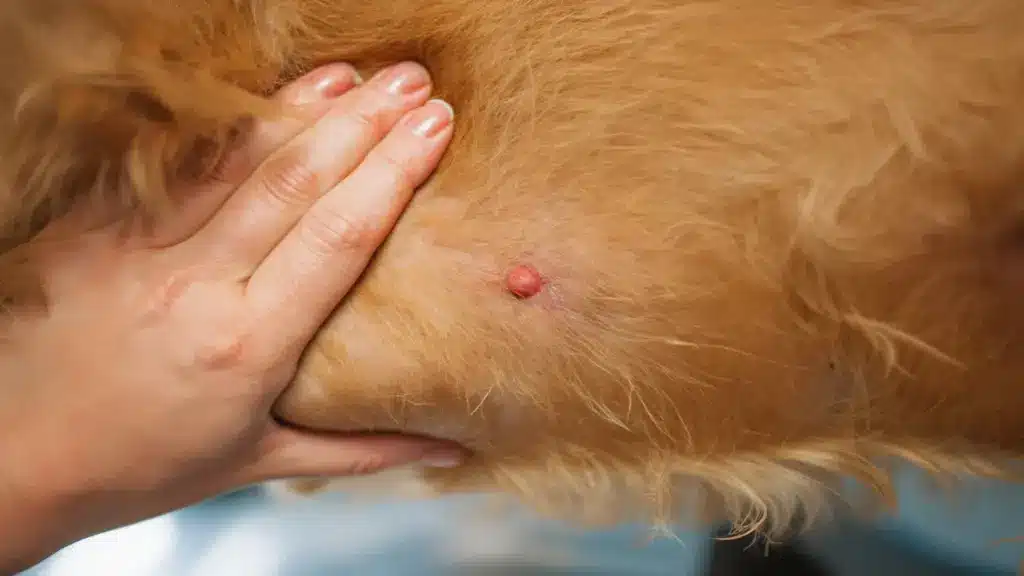
Red bumps on a dog’s skin can appear in different shapes and sizes.
Some look like small raised dots, while others may be larger, swollen patches. The bumps might be flat, firm, or filled with fluid, depending on the underlying cause.
In some cases, the skin around the bump turns pink or dark red.
Flaking, crusting, or hair loss near the affected area is also common. A dog with itchy skin often scratches or licks the spot nonstop, which can worsen the irritation.
Bumps can show up anywhere on a dog’s body. Common spots include the belly, ears, paws, and groin.
Paying attention to the location, size, and color of the bumps can help narrow down the possible cause before a vet visit.
Common Causes of Red Bumps on a Dog’s Skin
Red bumps on a dog’s skin develop for a wide range of reasons. Some causes are mild, like a reaction to a new shampoo or a bug bite. Others can be more serious and may need medical attention from a vet.
1. Allergic Reactions
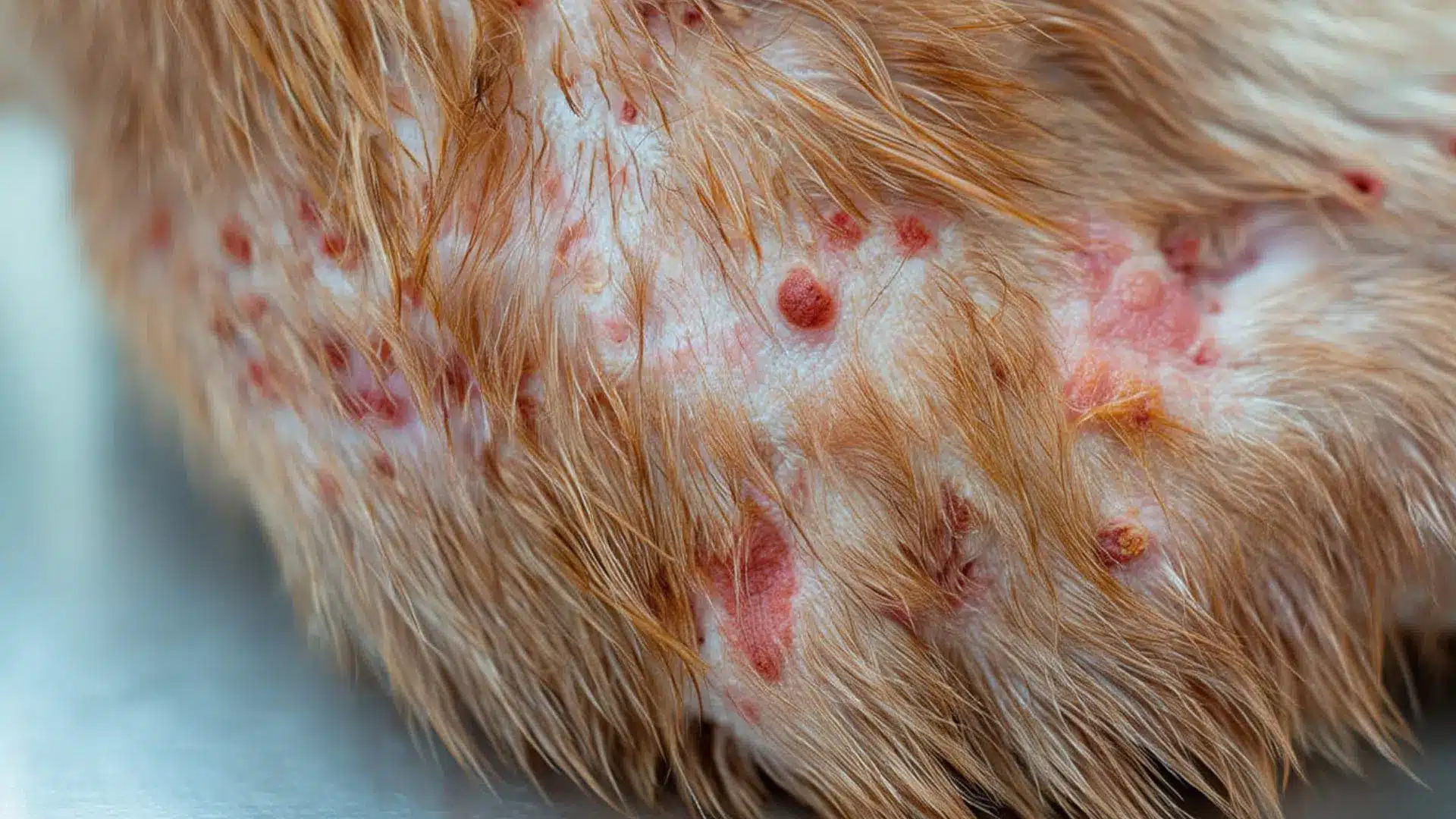
Allergies are among the top causes of allergy bumps in dogs. Food ingredients, pollen, dust mites, and certain cleaning products can all trigger a skin reaction.
The bumps usually appear on the belly, paws, and around the ears. Dogs with allergies may also show signs such as constant scratching, redness, and watery eyes.
Flea allergy dermatitis is another common type, in which a single flea bite can trigger an intense skin reaction.
According to the ASPCA, allergies are one of the most frequently diagnosed conditions in dogs across all age groups.
In my clinic, allergy bumps on dogs account for roughly one in every four skin-related visits during spring and early summer, when pollen counts rise sharply.
2. Flea Bites and Parasites
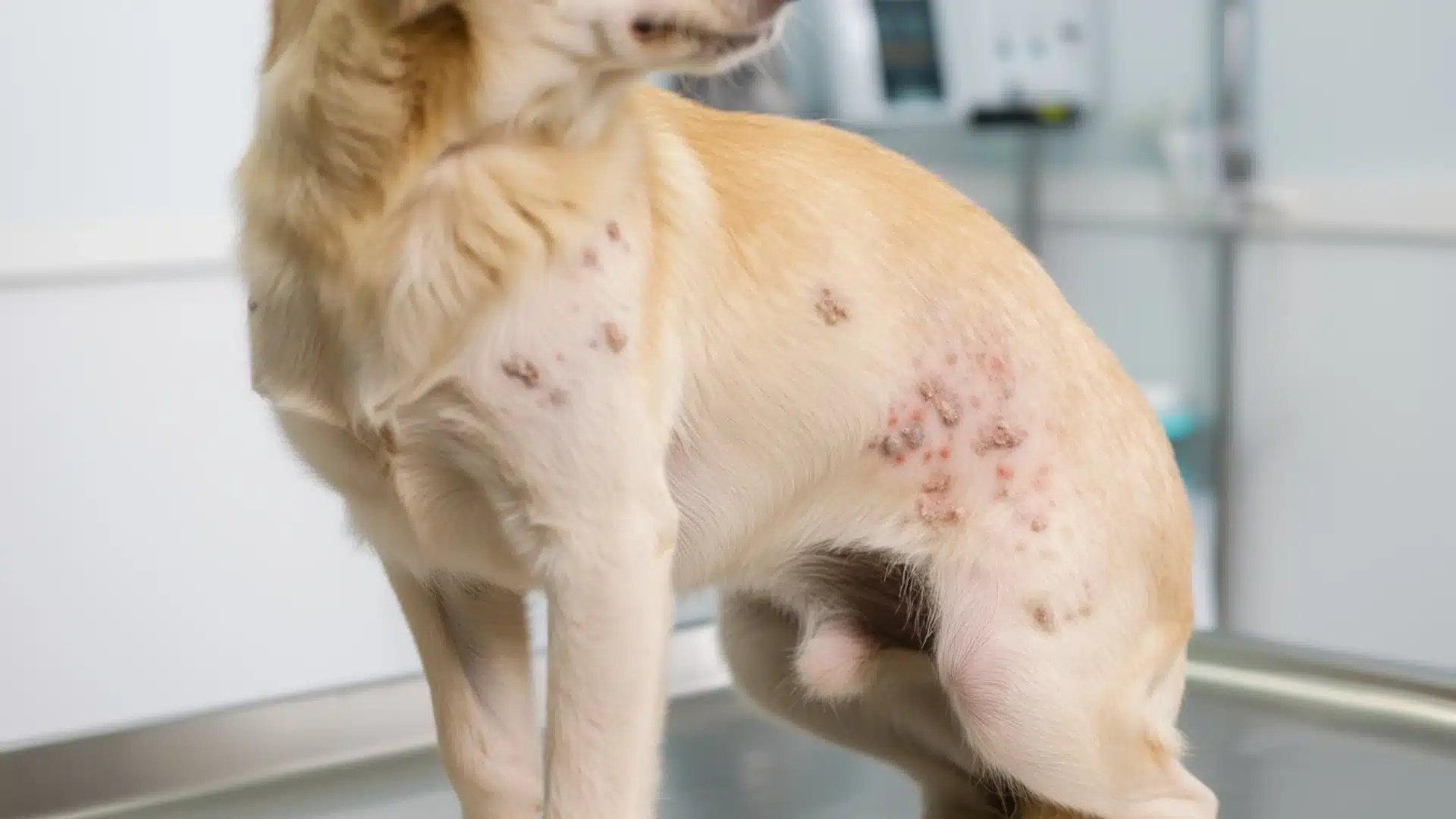
Fleas, ticks, and mites can cause red, itchy bumps on a dog’s body. Flea bites usually leave small, clustered bumps, often found near the tail base and lower back.
Mites can cause a condition called mange, which leads to hair loss, scaly skin, and sore patches.
Ticks also leave raised bumps at the bite site, and some carry infections that need quick treatment. Keeping a dog on a regular parasite-prevention schedule significantly reduces the risk of these skin reactions.
If fleas are the cause, removing them quickly is just as important as treating the bumps. This post on getting rid of fleas naturally covers safe methods you can try at home.
3. Bacterial Skin Infections
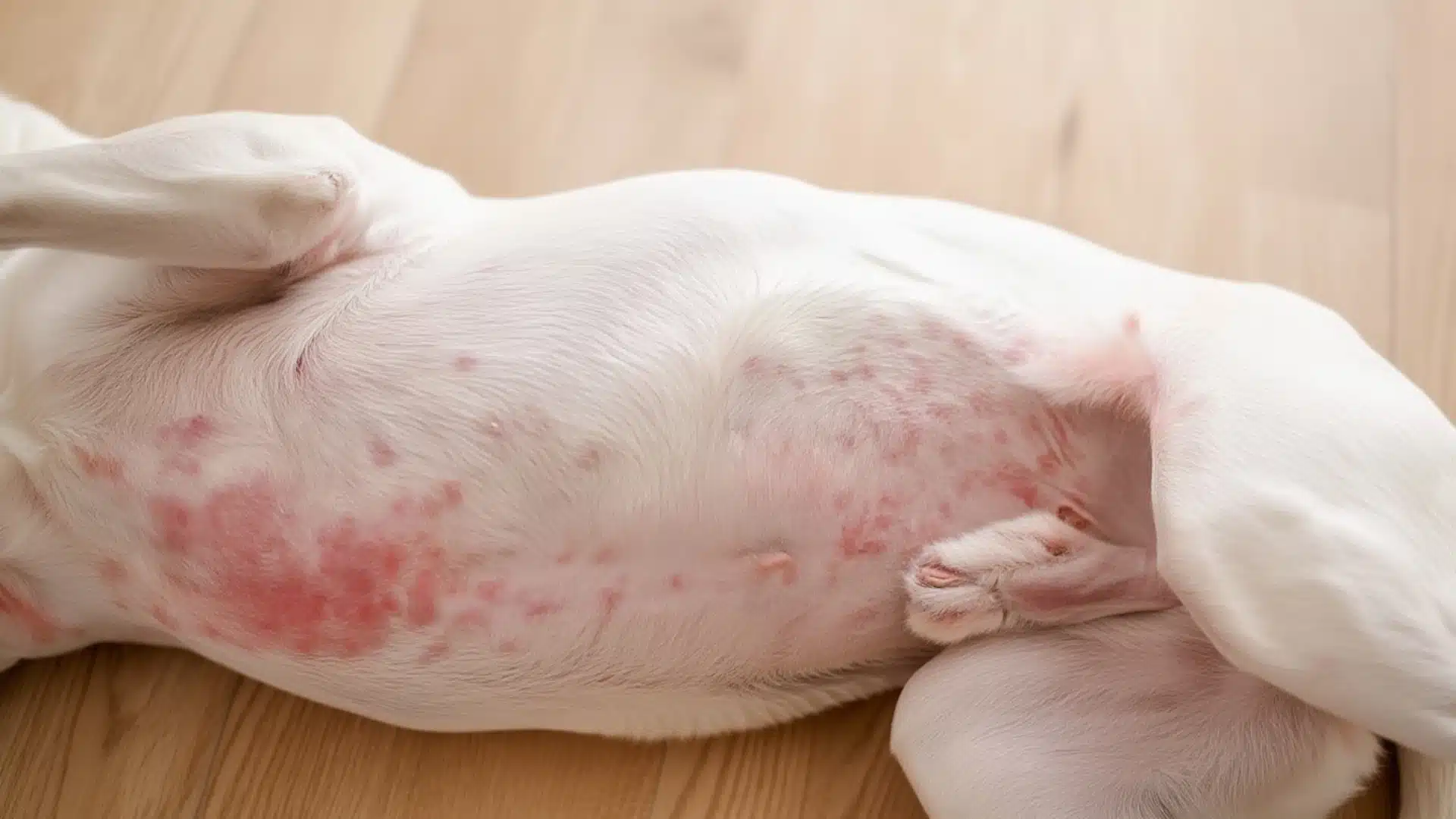
Bacterial infections, often called pyoderma, happen when bacteria enter the skin through a cut, scratch, or irritated area.
Red bumps on a dog’s skin caused by bacteria may look like pimples or small blisters filled with pus.
Dogs often lick or chew at the spot, which can spread the infection further. Pyoderma is common in dogs with deep skin folds or weakened immune systems.
A vet typically prescribes antibiotics to clear the infection and stop it from spreading.
Breeds like Bulldogs, Shar Peis, and Pugs are more prone to bacterial skin issues due to their deep facial and body folds, which trap moisture and harbor bacteria.
4. Fungal Infections
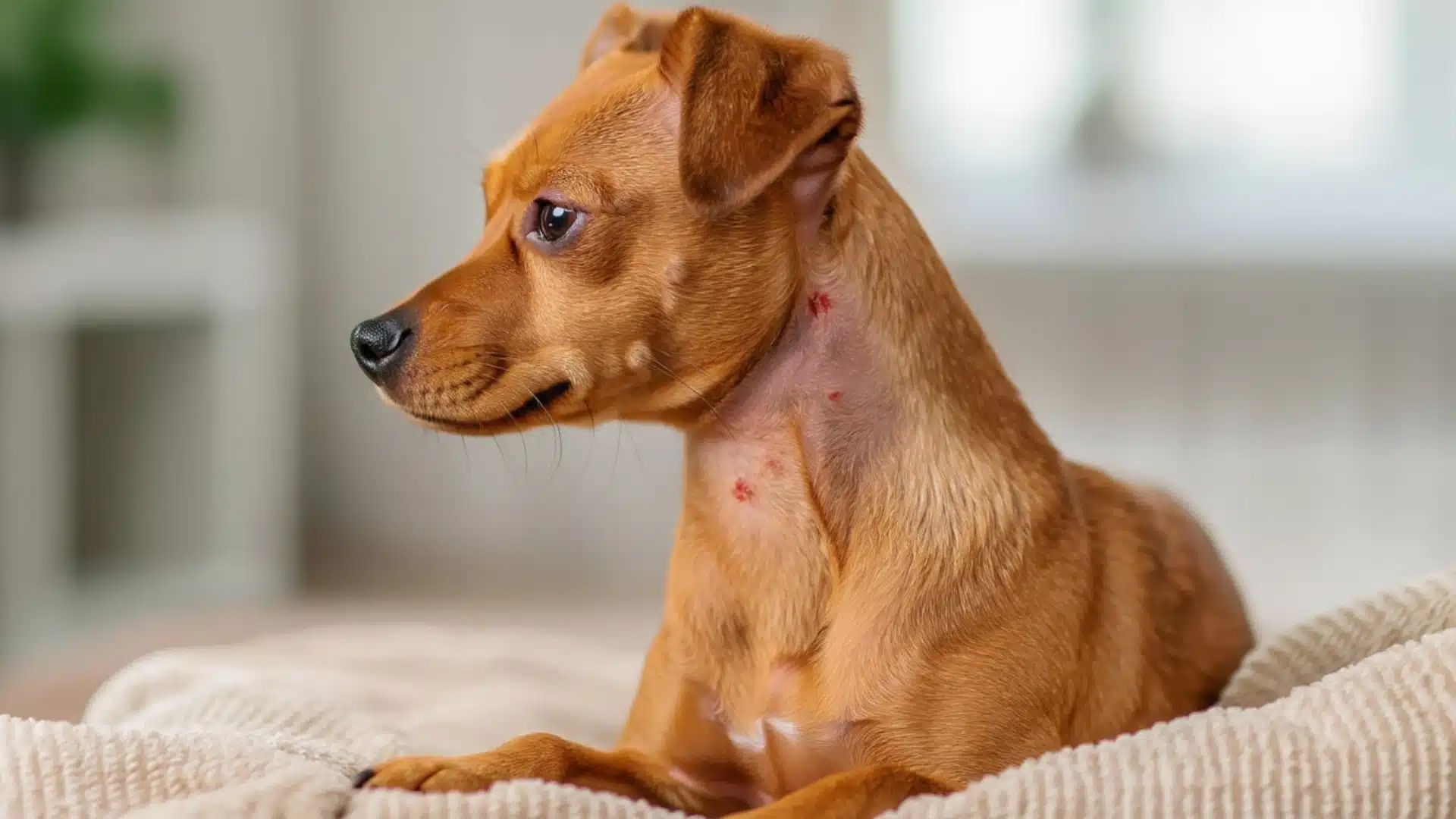
Fungal infections like ringworm can cause circular, red patches on a dog’s skin.
Despite the name, ringworm is not a worm but a fungus that spreads through direct contact with an infected animal or contaminated surface.
Yeast infections are another common type, often found in warm, moist areas such as the ears and skin folds.
Antifungal medication from a vet is usually needed to treat these types of dog rashes properly and prevent recurrence.
5. Contact Dermatitis
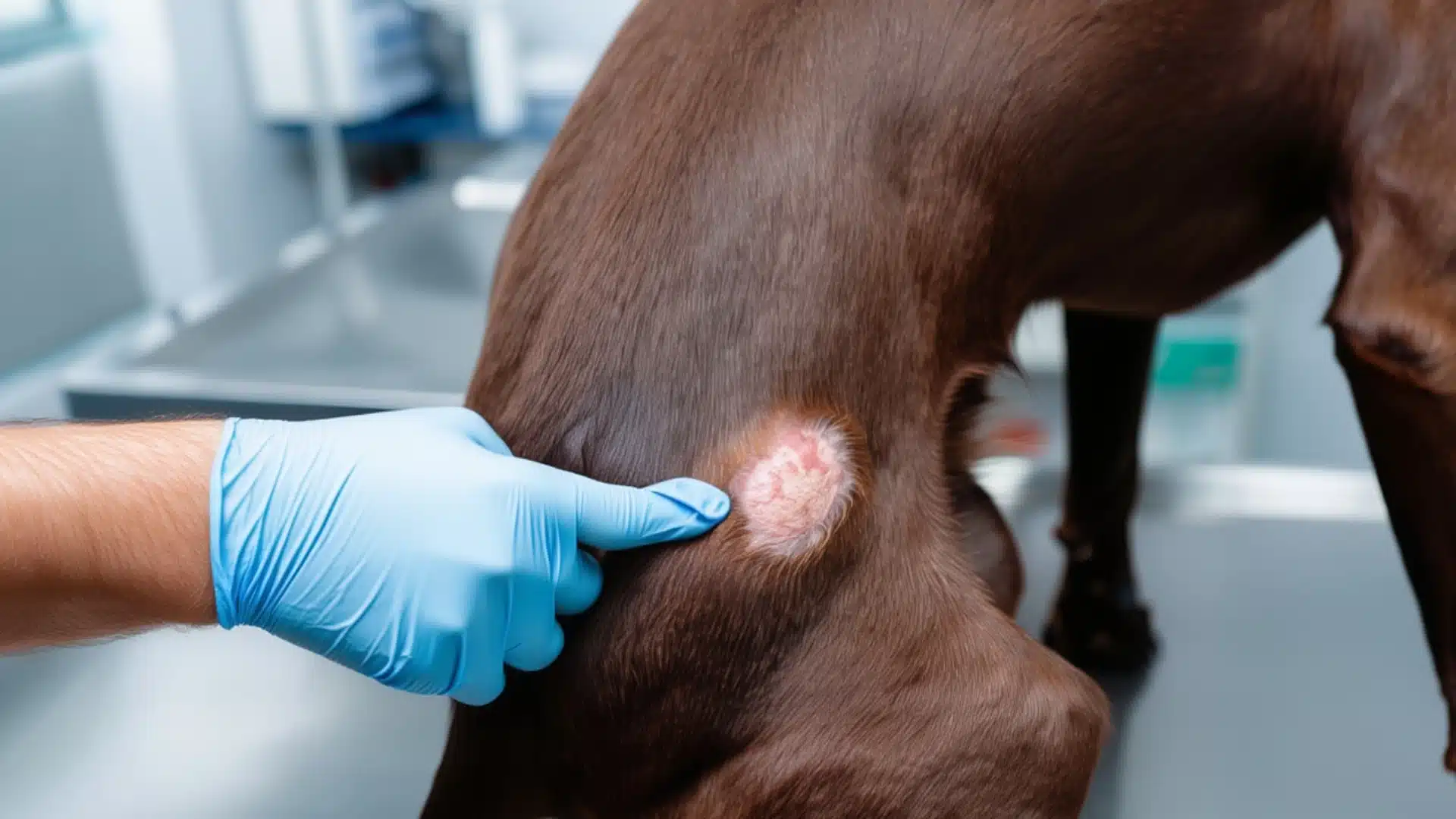
Contact dermatitis happens when a dog’s skin reacts to something it physically touches.
Common triggers include certain grasses, lawn chemicals, rough fabrics, and household cleaners. The result is often inflamed, irritated bumps in the area that came into contact.
Dogs with contact dermatitis may develop rashes on the underside of the body, the paw pads, or the chin area.
Removing the irritant and gently washing the area with mild soap usually helps. I would also recommend a soothing topical cream or a short course of antihistamines for relief.
When Do Red Bumps Need Vet Attention?

Some red bumps on a dog’s skin go away within a day or two without any help. Others stick around, change shape, or get worse, and that usually means something deeper is going on.
Watch for changes in size, color, or texture. A bump that grows quickly, bleeds, or oozes pus should be checked by a vet as soon as possible.
Signs that need immediate vet care: Facial swelling, difficulty breathing, rapid spread of bumps, or bumps with vomiting or lethargy may indicate a severe allergic reaction or anaphylaxis, requiring emergency treatment.
If a dog becomes sluggish, stops eating, or develops a fever along with skin bumps, the issue may be affecting more than just the skin.
Bumps near the eyes, mouth, or joints also need prompt attention. Taking quick action can prevent minor skin irritation from becoming a bigger health problem.
One tip I always share with pet owners: take a clear photo of the bumps on day one, then again every 24 hours.
Showing your vet a visual timeline speeds up and improves the accuracy of diagnosis compared to relying on memory alone.
Types of Dog Rashes Linked to Red Bumps
Not all red bumps on a dog’s skin look the same, as different skin conditions can create different types of rashes with their own patterns and symptoms.
Hives appear as raised, round welts that show up suddenly and are commonly caused by allergic reactions to food, insect stings, or certain medications.
Hot spots usually look like red, moist patches that form quickly on the skin, often developing when a dog repeatedly licks or scratches the same area.
Folliculitis causes small bumps around hair follicles and is often linked to bacterial infections, which are common in dogs with short coats.
Sebaceous cysts are firm lumps that develop under the skin and may become red or tender when they become infected.
Histiocytomas are small, red growths in dogs under 2 years old, usually on the head, ears, or legs. They often resolve on their own within weeks and are common in breeds like Boxers and Boston Terriers.
Dog acne appears as red bumps on the chin and muzzle, most often in short-haired breeds aged 6 months to 1 year. It can look similar to folliculitis, so a vet exam is needed to confirm the cause.
For a more detailed visual breakdown of skin issues, this post on common dog skin conditions covers signs and treatment options for each type.
Tips to Help Prevent Red Bumps on a Dog’s Skin
Preventing skin problems is easier than treating them after they appear. A few consistent habits can reduce the likelihood of red bumps appearing on a dog’s skin in the first place.
- Use vet-approved flea and tick prevention: A regular parasite control schedule helps avoid flea allergy dermatitis and tick-related skin reactions.
- Bathe with mild, dog-safe shampoo: Harsh soaps strip natural oils and irritate the skin. A gentle, fragrance-free formula works best for sensitive dogs.
- Feed a balanced diet: Good nutrition supports healthy skin and a strong immune system. Omega fatty acids are especially helpful for coat and skin health.
- Check skin regularly: Running hands through the fur during grooming helps catch bumps or rashes early before they spread.
- Keep the living space clean: Washing bedding, vacuuming carpets, and reducing dust limits allergen exposure inside the home.
Conclusion
Red bumps on a dog’s skin can point to many different things, but most cases are manageable once the cause is clear.
I hope this post helped you understand what might be behind those bumps and when it’s time to act.
From allergies and infections to parasites and contact reactions, each cause has its own set of warning signs worth knowing.
The best approach is to stay watchful and respond early if the bumps don’t go away within a few days.
With regular skin checks, a clean environment, and the right prevention routine, most skin issues can be caught before they get serious.
Has your dog ever had red bumps on their skin? Share your experience in the comments so others dealing with the same issue can learn from it.