

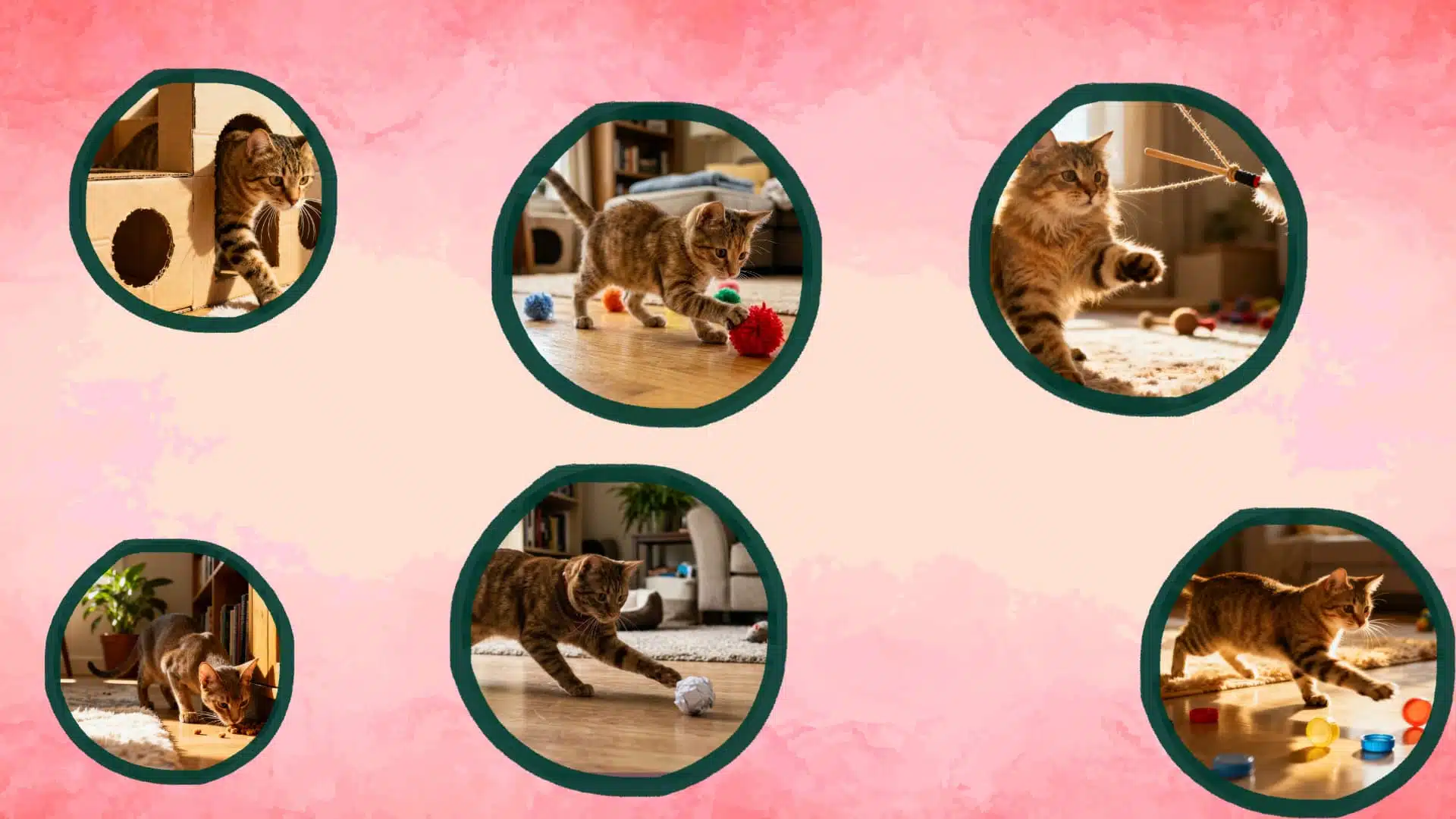
Your cat knocks things off shelves, scratches the sofa, and stares at the wall at 2 AM. It looks like bad behavior, but it’s usually boredom.
Cats are natural hunters, problem-solvers, and climbers. When they don’t get enough stimulation, they create their own chaos.
That’s where DIY cat enrichment comes in. Instead of buying expensive toys, you can turn everyday items into simple activities that keep your cat active and mentally engaged.
From treat puzzles to cardboard mazes, these ideas tap into your cat’s instincts while keeping things fun and affordable.
The best part? You don’t need special tools or skills. Just a few minutes and some creativity can make a real difference in your cat’s mood, energy, and overall behavior.
As a veterinarian who sees the effects of under-stimulation in clinic almost weekly, from stress-related over-grooming to obesity, I can tell you that enrichment is one of the most underrated tools in a cat owner’s hands.
What is Cat Enrichment and Why Does It Matter?
When discussing cat enrichment, it refers to giving cats opportunities to think, move, and stay curious. Cats need more than food and a cozy bed; they require activities that challenge their minds and bodies.
According to the ASPCA, enrichment can include activities like play, food puzzles, and environmental changes that keep cats mentally and physically active.
Adding play and new experiences helps cats feel happier and more balanced. A bored cat may start scratching furniture or acting restless.
Enrichment helps prevent these behaviors. Simple activities like chasing a toy mouse or climbing a box tower allow cats to use their natural skills.
When time is set aside for play and stimulation, cats stay sharp, relaxed, and confident. Even a few minutes of daily activity can make a noticeable difference in their health and mood.
If you want a broader look at structured cat enrichment activities beyond DIY toys, including screen-based and outdoor options, that’s worth exploring alongside this guide
Easy Ways to Make DIY Cat Enrichment Toys at Home
You don’t need fancy tools or expensive supplies to make fun toys for your cat. Most of these ideas use simple household items that turn into hours of play and exercise.
1. Toilet Paper Roll Treat Puzzle
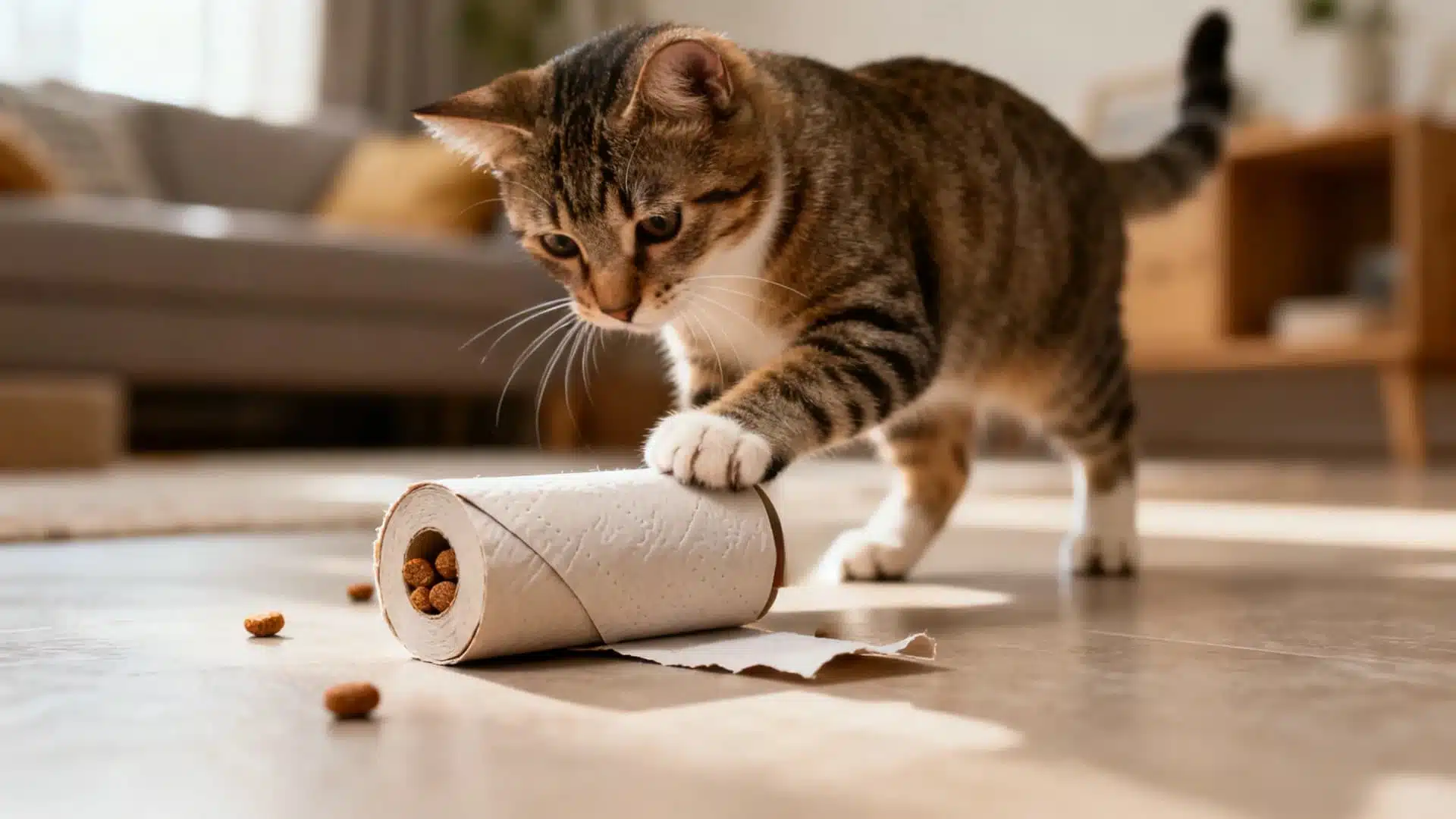
This keeps your cat mentally active and entertained by making them work for their treats. It’s quick, fun, and ideal for indoor cats who need stimulation.
It helps sharpen their instincts and encourages problem-solving, much as they’d hunt in the wild.
I recommend this to clients as the very first puzzle feeder to try; it’s free, takes 30 seconds to make, and I’ve watched even timid cats warm up to it within minutes of introduction.
You only need a toilet paper roll and a few treats, making it a perfect low-cost boredom buster. Avoid using glue or decorations that could be swallowed.
From a safety standpoint, always use your cat’s daily kibble allocation rather than extra treats for this puzzle; it keeps calories in check while turning mealtime into enrichment. Replace the roll once it starts to soften or tear.
Steps to Make It:
- Take a toilet paper roll.
- Add a few dry treats inside.
- Fold both ends of the roll to close it.
- Place it on the floor and let your cat play.
- Refill with new treats as needed.
2. Sock Catnip Toy
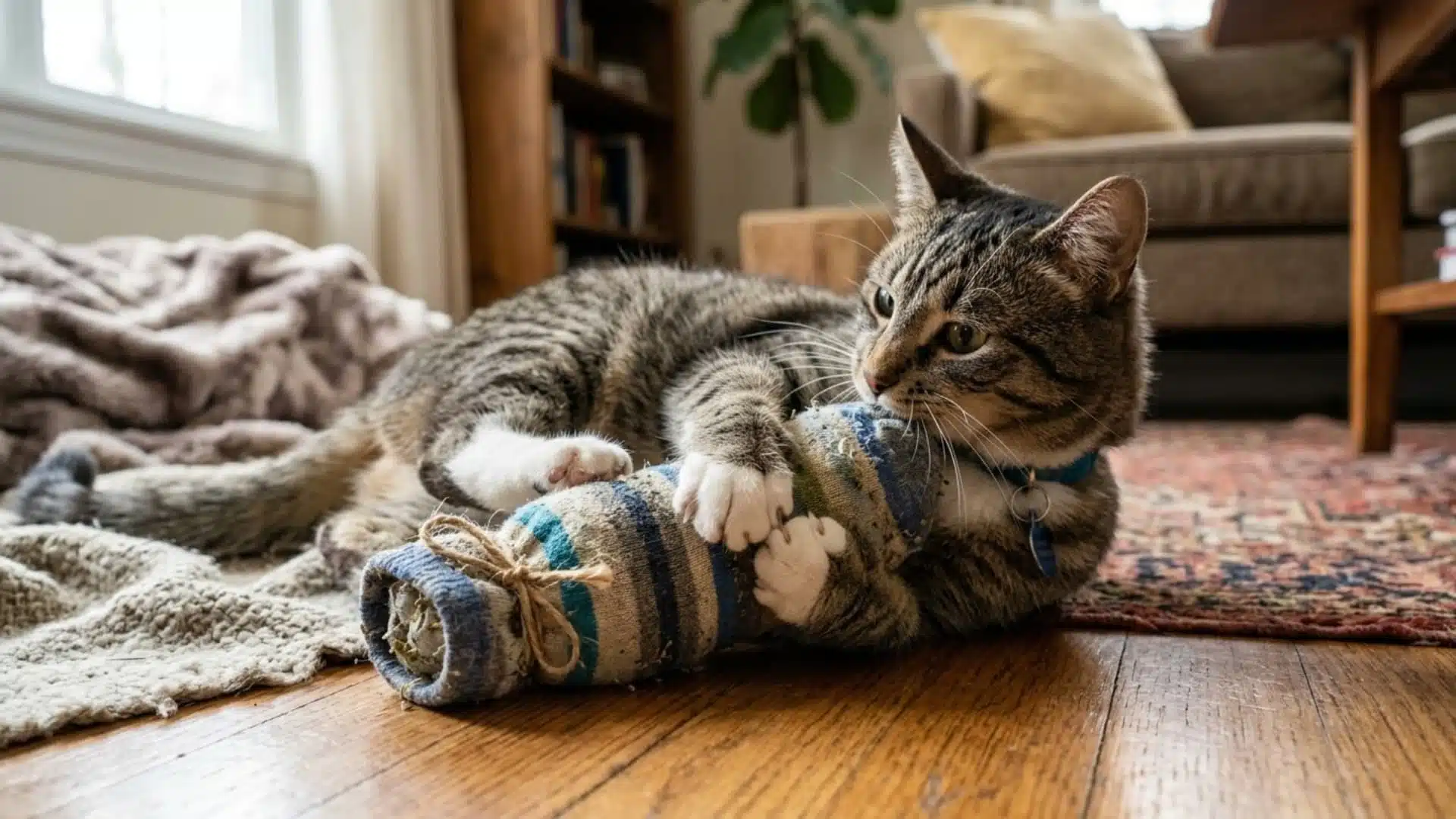
A sock catnip toy is one of the easiest and most comforting DIY projects for cats. It gives them something soft to grab, bite, and kick, helping ease boredom, stress, and extra energy.
You just need an old sock, some dried catnip, and a little soft stuffing. One thing I always clarify in clinic: not every cat responds to catnip, the reaction is genetic, and roughly 30–50% of cats won’t show any interest.
If yours is in that group, try silvervine or dried valerian root as a substitute; in my experience, these work on many catnip-indifferent cats.
It’s affordable, quick to make, and perfect for reusing old materials. Check it regularly for holes or loose threads to keep it safe, and replace it when the scent fades or the sock wears out.
Steps to Make It:
- Fill an old sock halfway with dried catnip.
- Add some soft filling like cotton or fabric scraps.
- Tie a knot at the open end to seal it.
- Toss the toy on the floor for your cat to play.
- Refresh or replace it once the scent weakens.
3. Cardboard Box Maze
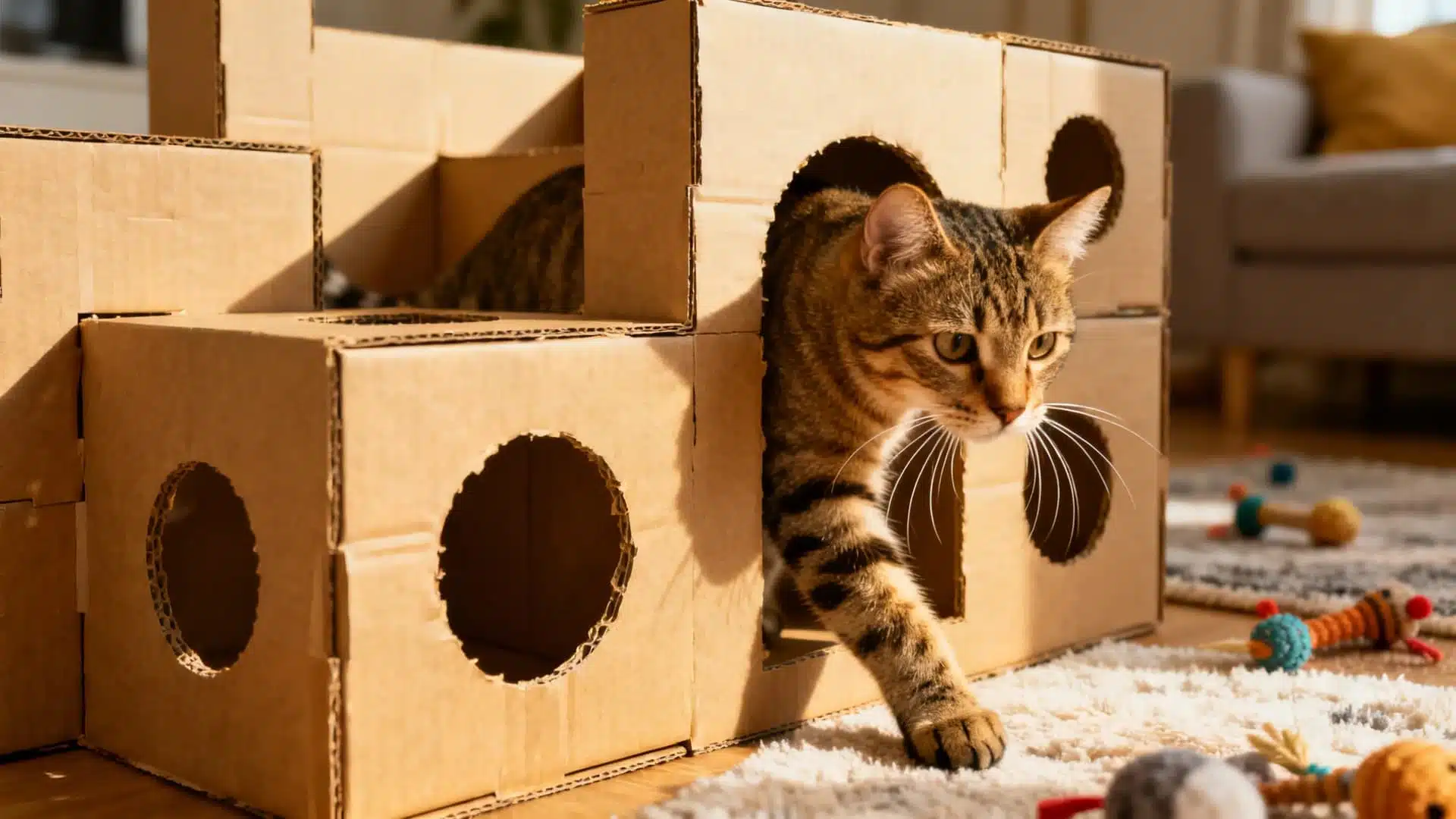
This maze helps your cat stay curious and active while looking at different spaces. It’s a perfect indoor enrichment activity that uses simple materials you already have.
Cats love hiding, climbing, and peeking through holes, and this setup keeps them engaged for hours.
It costs nothing and helps build confidence and physical strength. Always remove any staples, tape, or small pieces that could be unsafe.
You can rearrange boxes anytime to make the maze feel new again. A client of mine built a three-box maze for her senior tabby who had stopped playing with store-bought toys.
Within a week, she told me he was more active and sleeping better at night, a small change with a real behavioral shift.
Steps to Make It:
- Gather several clean cardboard boxes.
- Cut holes large enough for your cat to move through.
- Connect or stack the boxes using tape.
- Hide treats or toys inside the maze.
- Let your cat learn at their own pace.
4. Feather Wand Toy
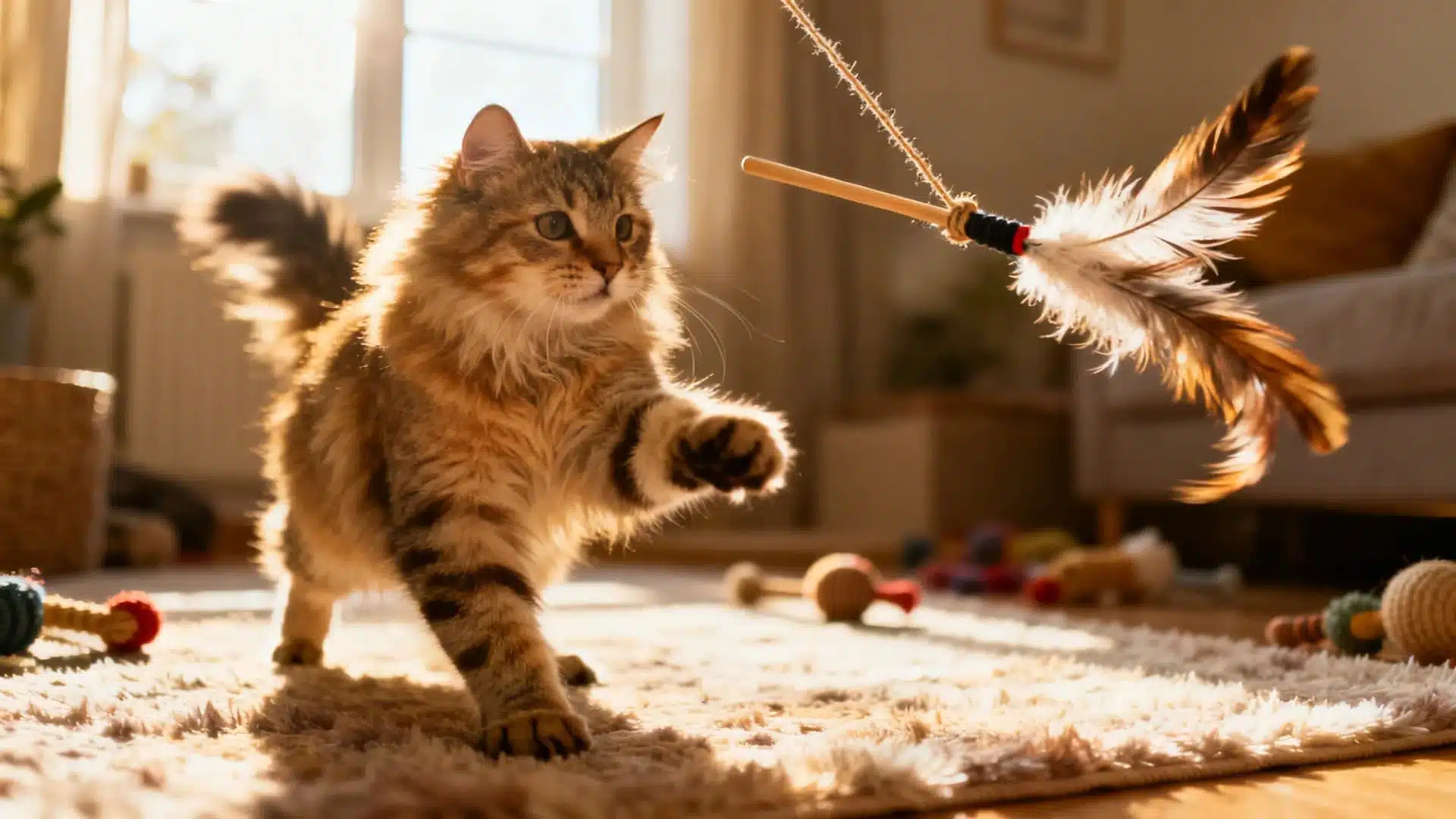
A feather wand is one of the best ways to help your cat stay active while bonding with you. It mimics the movement of birds or small prey, encouraging your cat to chase, jump, and pounce.
This toy supports exercise, sharpens reflexes, and keeps indoor cats fit. From a behavioral standpoint, wand play is particularly important because it mimics the full prey sequence, stalk, chase, pounce, and catch, which gives cats a genuine sense of satisfaction.
I always tell clients: end each wand session by letting your cat “catch” the toy a few times. Cats that never get to catch become frustrated, not tired.
Always supervise your cat during play to prevent chewing or tangling, and store it away afterward to keep it in good condition.
Steps to Make It:
- Find a lightweight stick or dowel to use as the handle.
- Cut a piece of string about two feet long and tie it securely to one end.
- Attach feathers to the other end using tape or glue.
- Move the wand around like a flying bird to grab your cat’s attention.
- Store it safely when playtime ends.
5. Bottle Cap Chase Toy
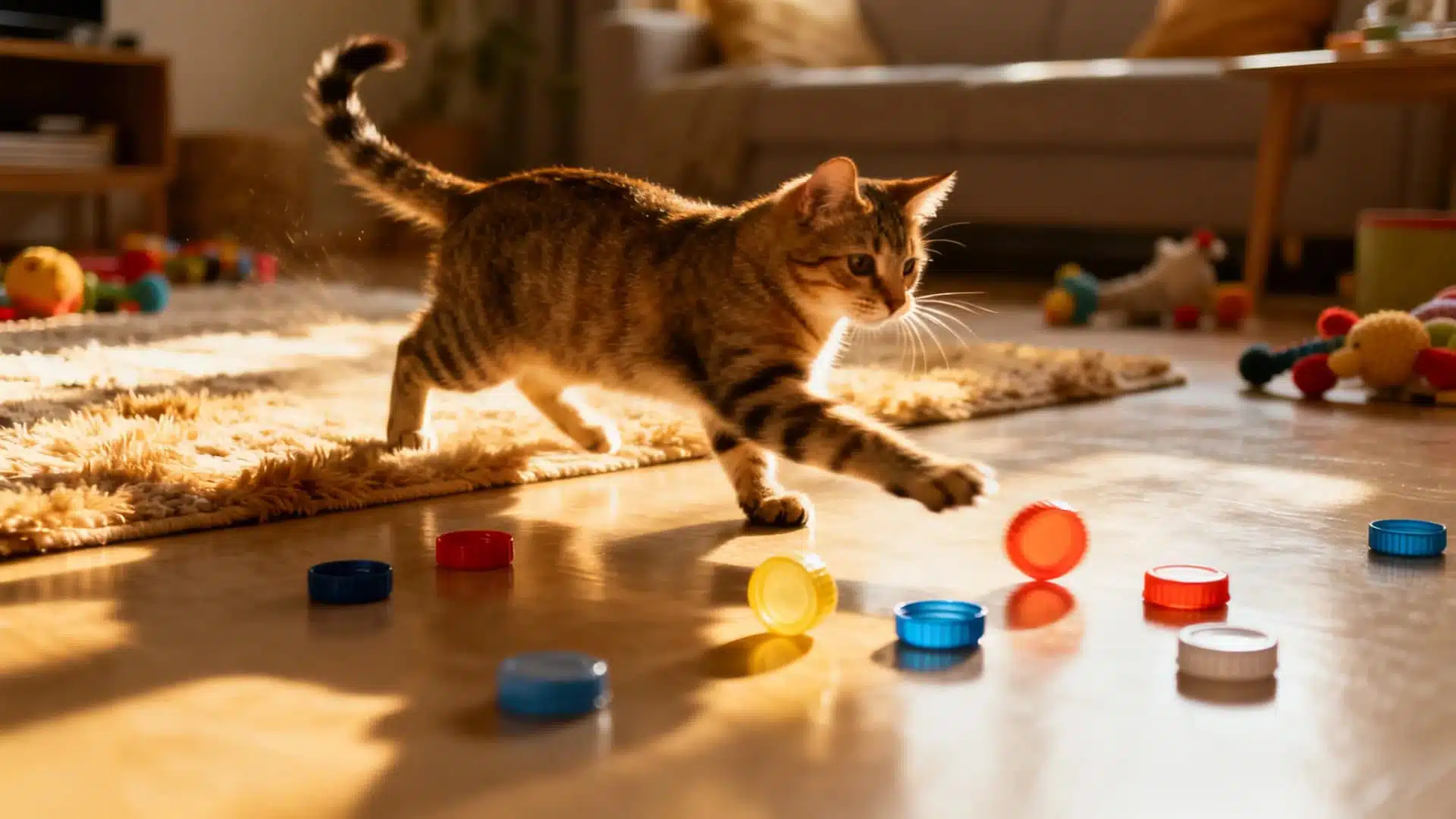
This is perfect for cats that love to chase and bat things across the floor. It’s lightweight, fast-moving, and taps into their natural prey instincts.
You only need a few clean plastic bottle caps, nothing expensive. It’s completely free and can be played anywhere, especially on smooth floors.
Make sure the caps are large enough so they can’t be swallowed. As a general rule, any toy piece smaller than a cat’s molar tooth poses a risk of ingestion. When in doubt, go larger.
Check them regularly for cracks or sharp edges. The unpredictable movement keeps your cat engaged and provides healthy exercise.
Steps to Make It:
- Collect clean, wide plastic bottle caps.
- Ensure there are no sharp edges or rough spots.
- Scatter them across an open area on the floor.
- Encourage your cat to chase, bat, and paw at them.
- Swap caps out occasionally to keep playtime fresh.
Tip: Always keep a close eye on your cat while they play with bottle caps. Without supervision, it could lead to choking or other unwanted incidents.
6. Yarn Pom-Pom Balls
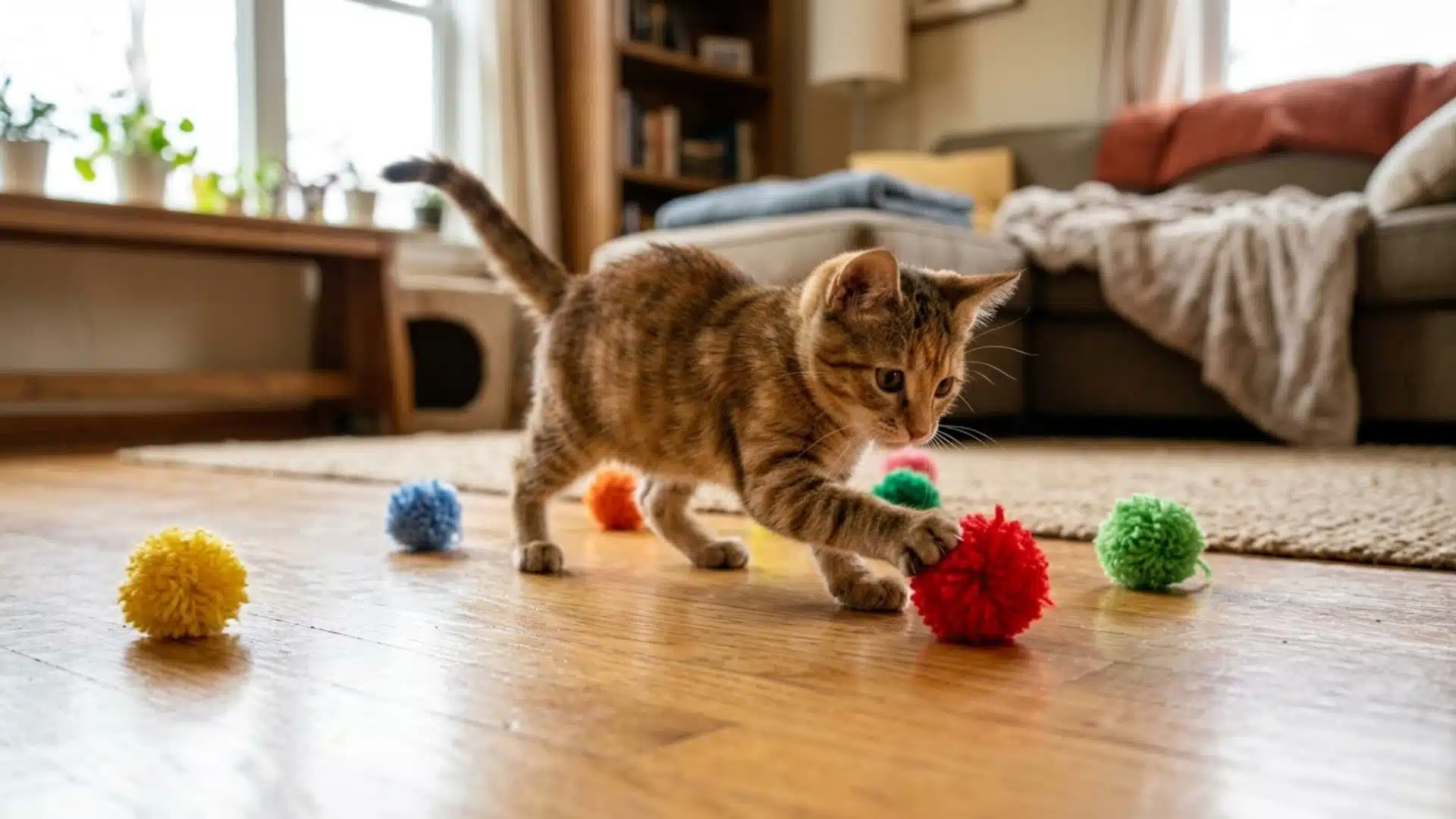
Yarn pom-pom balls are soft, lightweight toys that encourage your cat to chase, bat, and pounce safely indoors.
They’re great for promoting exercise, improving coordination, and keeping cats entertained even when alone.
You can make several in different colors and sizes using leftover yarn, no special tools needed. Important vet note: always use thick, tightly woven acrylic yarn rather than thin wool.
Wool strands can unravel and, if ingested, cause gastrointestinal obstructions, something I’ve unfortunately seen in the clinic. If the pom-pom starts shedding strings, throw it out immediately.
Steps to Make It:
- Wrap yarn around your fingers about 30–40 times.
- Slide it off carefully and tie it tightly in the center.
- Cut the loops on both sides to form a pom-pom.
- Trim uneven ends for a clean shape.
- Supervise play and replace when worn.
7. Paper Ball Crinkle Toy
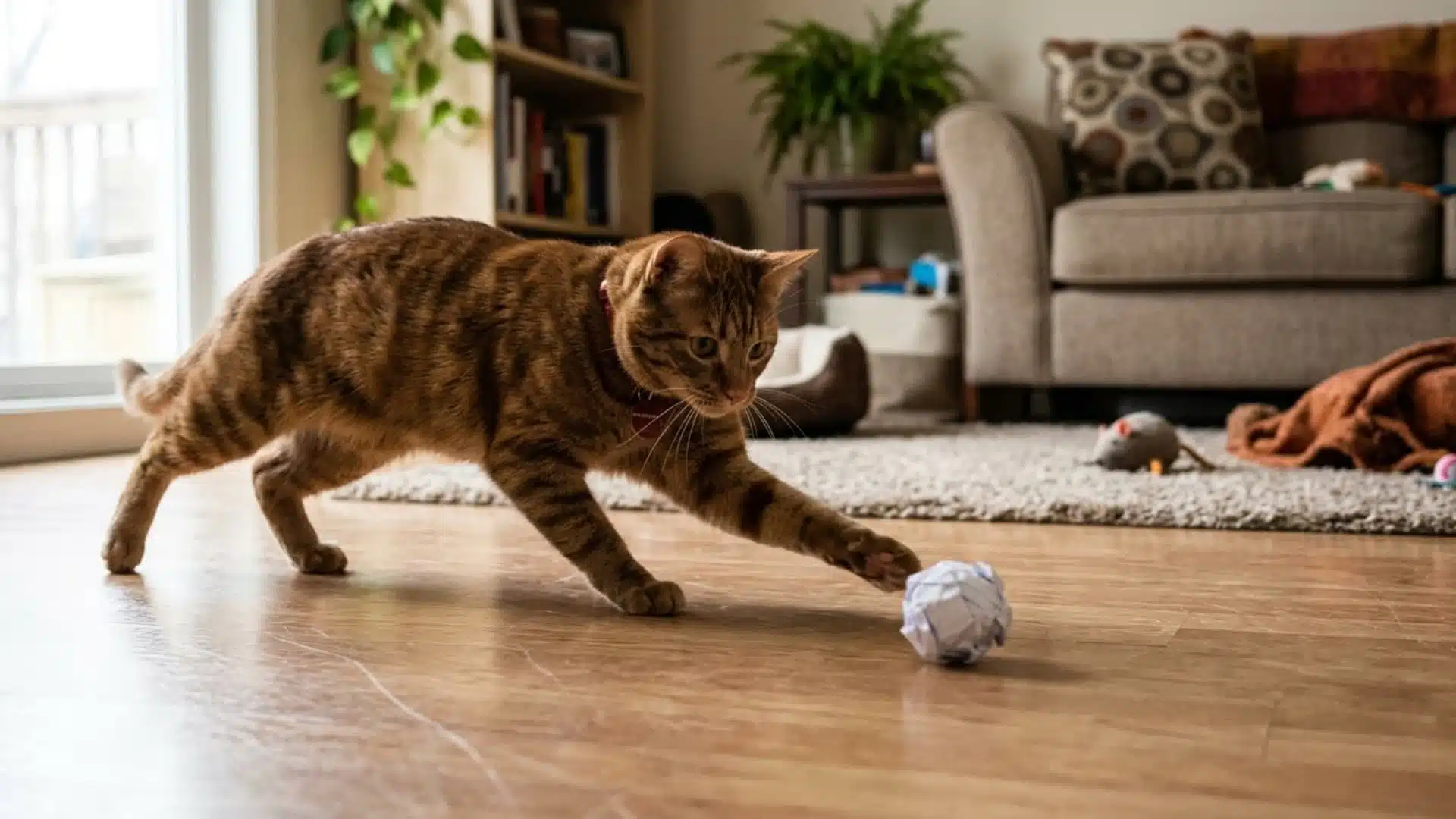
A paper ball crinkling toy is one of the simplest yet most effective DIY cat toys. The crinkly sound and lightweight instantly grab your cat’s attention, making them chase, jump, and pounce.
It’s quick to make, costs nothing, and works well for short, high-energy play sessions. Use plain or kraft paper instead of glossy or inked paper to keep it safe.
This toy helps relieve boredom and adds movement to your cat’s routine. Replace it when it becomes flattened, torn, or soggy.
Steps to Make It:
- Take a small piece of clean, plain paper or foil.
- Crumple it gently into a loose ball.
- Drop it on the floor to catch your cat’s attention.
- Let your cat chase and bat it freely.
- Discard and make a new one when worn out.
8. Treat Hunt Game
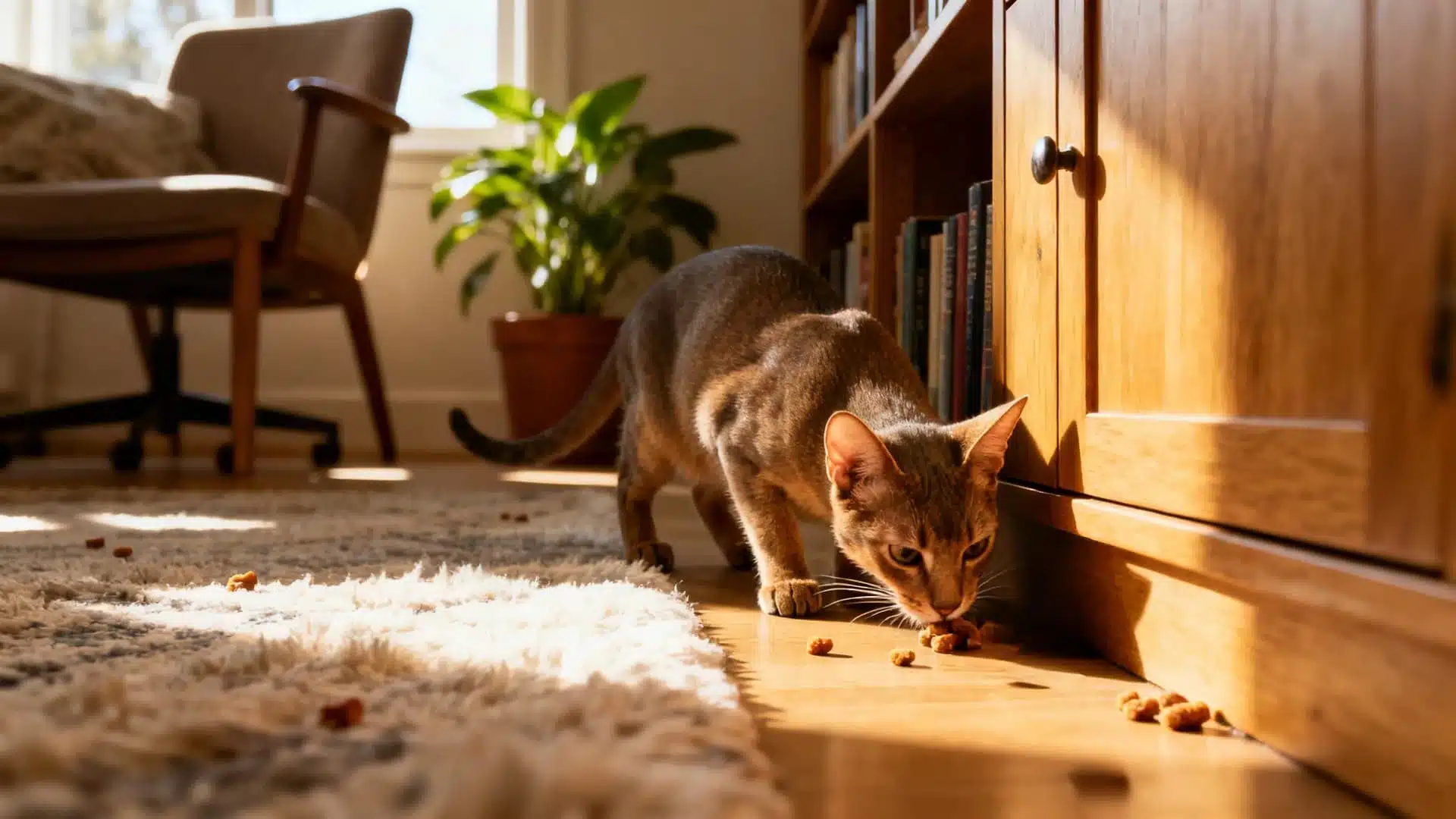
The treat hunt game combines fun and learning, encouraging your cat to use their natural instincts to search, sniff, and solve.
It’s perfect for keeping indoor cats mentally alert and physically active while offering a healthy reward.
You can use their regular kibble or small treats for this activity. It’s free, takes only a few minutes to set up, and makes mealtime more engaging.
Be sure to change hiding spots and difficulty levels often to keep your cat interested and avoid overfeeding.
Steps to Make It:
- Choose small, healthy treats your cat enjoys.
- Hide them in easy-to-find spots around the room.
- Encourage your cat to search and sniff them out.
- Gradually make hiding places more challenging.
- Rotate locations regularly to keep it exciting.
9. Egg Carton Puzzle Feeder
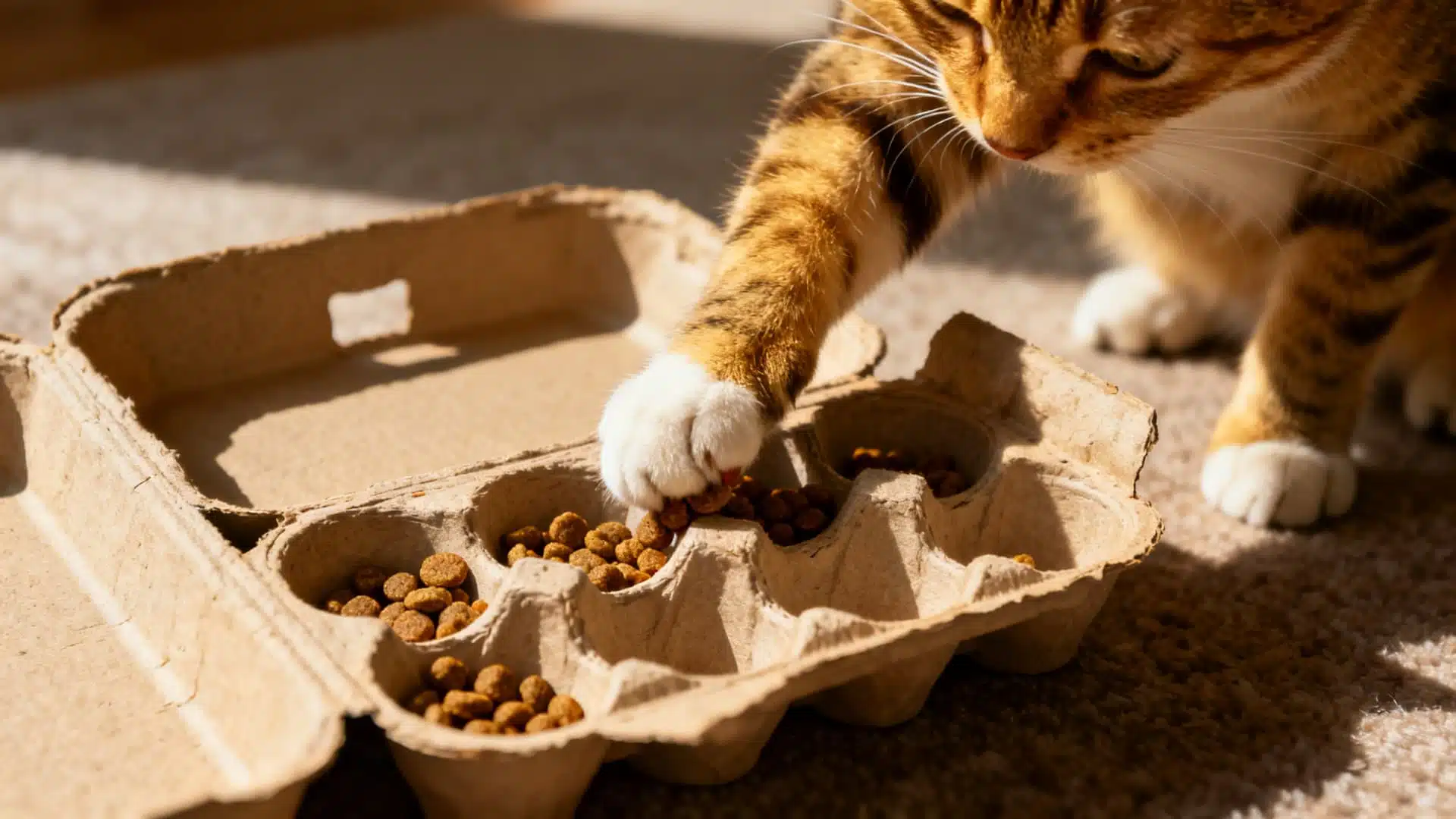
An egg carton is one of the most underrated free puzzle feeders you likely already have at home. It turns a regular meal into a foraging challenge that engages your cat’s nose and problem-solving instincts simultaneously.
I started recommending this to clients managing overweight cats as part of a slower-eating strategy.
If that’s a concern for your cat, our guide on how to help your cat lose weight covers the full picture alongside diet and activity changes.
When kibble is spread across egg cups instead of poured into a bowl, cats eat more slowly, feel more satisfied, and engage their hunting brain rather than just eating out of habit.
Start with one cup filled and the rest empty, so your cat learns the concept, then fill more cups as they get the hang of it.
Steps to Make It:
- Use a clean, dry cardboard egg carton.
- Place small amounts of kibble or treats in each cup.
- Let your cat sniff and paw the food out.
- Gradually add a loose paper cover over some cups to increase difficulty.
- Discard the carton if it becomes wet or torn.
Materials to Avoid in DIY Cat Toys
After years of treating cats in the clinic for toy-related injuries and ingestion issues, here’s my short list of materials that should never appear in a homemade cat toy:
- Thin wool or loosely spun yarn: Can unravel and cause intestinal obstruction if swallowed
- Rubber bands and hair ties: Among the most common foreign body ingestion items I see, cats are drawn to the texture and will eat them
- Hot glue with synthetic fragrances: Some scented glue sticks contain compounds that can irritate airways
- Glossy or ink-heavy paper: Printing inks can contain heavy metal compounds; use plain kraft or newspaper-free paper
- Essential oil-treated fabrics: Many essential oils (tea tree, eucalyptus, cinnamon) are toxic to cats, even in small dermal exposures
- Thin plastic bags or cellophane: Choking and suffocation risk; use only thick, crinkled paper or foil instead
The Importance of Enrichment for Cats
Keeping your cat’s mind and body active is just as important as feeding them well. Indoor cats face a hidden welfare challenge: while staying indoors protects them from traffic, predators, and disease, it also removes the natural sensory complexity they’re hardwired to need.
Without enrichment, boredom isn’t just an inconvenience; it’s a genuine health risk. Studies and clinical observation link chronically under-stimulated indoor cats to higher rates of obesity, type 2 diabetes, feline idiopathic cystitis, and anxiety-based compulsive disorders like excessive grooming.
Simple activities like chasing, climbing, or solving treat puzzles give them a healthy way to release energy.
These moments of play also build confidence and keep your cat’s instincts sharp. Indoor cats especially benefit from small daily challenges that make life more interesting.
A few minutes of enrichment each day can prevent unwanted behaviors like scratching or over-grooming.
It doesn’t take much, just some creativity and consistency, to turn ordinary household items into fun ways to keep your cat active, relaxed, and content.
Tips for Keeping Playtime Fun and Safe
Playtime should be fun for both you and your cat, but it’s just as important to keep it safe. A few smart choices can prevent accidents and make every session enjoyable.
- Choose non-toxic materials: Always use safe fabrics, glues, and paints when making toys. Avoid anything sharp or small enough to swallow.
- Supervise play: Stay nearby, especially when introducing a new toy. You’ll catch any issues before they become dangerous.
- Adjust difficulty: If your cat gets frustrated, simplify the game. For confident cats, make it a little more challenging to keep them engaged.
- Watch for signs of tiredness: When your cat walks away or slows down, let them rest. Overdoing it can lead to stress.
- Rotate toys: Switching toys often keeps things fresh and prevents wear that could make them unsafe.
How Often Should You Rotate Cat Enrichment Toys?
Rotating a cat’s toys every week or two helps keep playtime exciting and prevents boredom. Cats tend to lose interest when they are exposed to the same toys repeatedly.
By swapping toys regularly, each item feels new again. It’s helpful to keep a small box or drawer for storage and rotate a few toys at a time.
Before storing toys, it’s important to check for wear or loose parts that could become unsafe.
Observing which toys your cat prefers can also make a real difference. In my practice, I always ask clients to track which enrichment activities their cat engages with the longest.
This tells us whether the cat leans toward tactile, visual, or olfactory stimulation, and helps us tailor a rotation that actually works for that individual animal.
This simple routine keeps cats mentally alert, physically active, and more engaged during playtime. It also helps save money, as older toys can feel new again after a short break.
Signs Your Cat Needs More Mental Stimulation
Just like people, cats can get bored or frustrated when they don’t have enough to do. Recognizing the signs early helps you add the right kind of enrichment before bad habits start.
- Restlessness: Your cat may pace, follow you constantly, or seem unable to relax. More play can help release that extra energy.
- Excessive meowing: When a cat keeps calling for attention, it’s often a sign that they need something engaging to do.
- Scratching furniture: This can be your cat’s way of dealing with boredom or stress. Offer scratching posts and climbing spots instead.
- Disinterest in play: If toys no longer catch their attention, they may need new challenges or rotating enrichment ideas.
- Overeating or sleeping too much: A lack of stimulation often leads to low energy and weight gain.
Conclusion
Creating DIY cat enrichment toys doesn’t have to be complicated. Start small with simple ideas and watch how your cat reacts. The goal isn’t perfection; it’s to keep your cat curious, active, and happy.
As a veterinarian, my standard recommendation to cat owners is simple: aim for 2 five-minute interactive play sessions daily, 1 puzzle feeder at least every other day, and at least 1 environmental enrichment element, like a window perch or a rotating toy box, that works even when you’re not home.
That combination covers physical, cognitive, and sensory needs without overwhelming a busy schedule.
You’ll soon notice which activities your cat enjoys most, and that helps you plan better projects next time.
I’ve learned that even five minutes of daily play can make a big difference in a cat’s mood and behavior.
Try using different textures, sounds, or movements to see what excites them most. The more you observe and adjust, the more rewarding playtime becomes for both of you.
Most of all, enjoy the process. Each toy you make is more than just a game; it’s a chance to build a stronger bond with your cat.
If you found these ideas helpful or have tried any of them, feel free to drop your comments and share your experience.