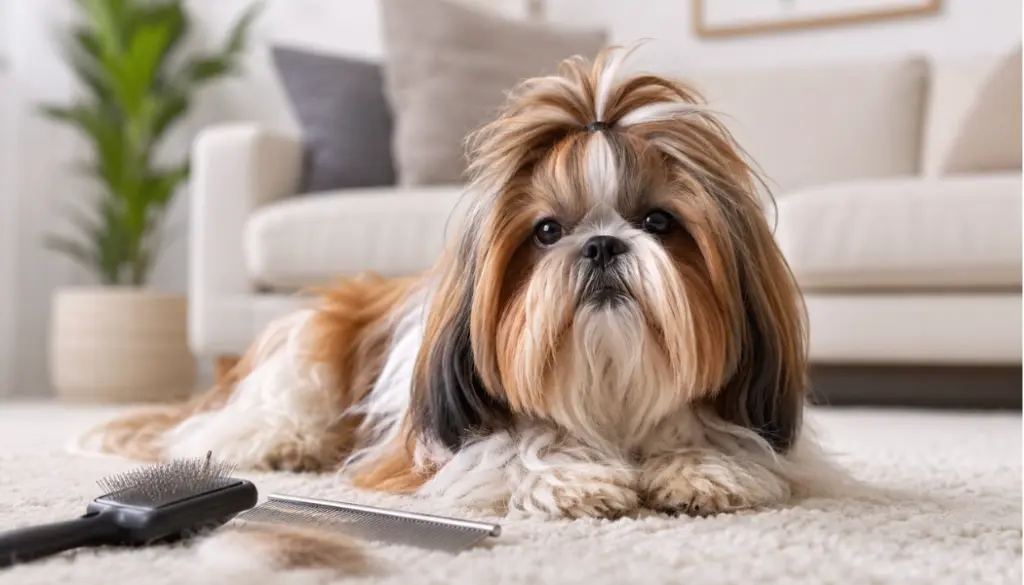
Shih Tzus have a funny way of making new owners suspicious. You bring them home, prepare for hair on the sofa, the bed, the black hoodie, and then barely anything shows up.
That is the part people misunderstand. Shih Tzus do shed, but their loose strands often stay caught inside the coat instead of falling everywhere like fur from many other breeds.
So when someone calls them low-shedding, that is true, but it doesn’t mean zero maintenance. Their coat still needs attention, especially during puppy coat change or when something feels off.
The real answer is not just whether they shed. It is knowing what amount is normal, when it increases, and when your dog is asking for help.
Why Do Shih Tzus Shed so Little?
Most dogs have fur with a short growth cycle, so they shed noticeably on floors, clothes, and furniture.
Shih Tzus are different because their hair grows continuously, much like human hair. Their double coat has a soft undercoat and a long, silky topcoat.
When loose strands fall out, they usually remain caught in the coat rather than dropping around the home. Regular brushing removes that trapped hair before it turns into tangles or mats.
This is why shed hair shows up on the brush far more than on carpets or sofas.
Low-shedding small breeds like the Maltese, Yorkie, and Lhasa Apso have similar coat behavior, which is why they are often recommended for indoor owners who want cleaner living spaces.
Quick Comparison: Shih Tzu Shedding vs. Similar Small Breeds
| Breed | Coat type | Shedding level | Hair stays in the coat? | Daily brushing needed? |
|---|---|---|---|---|
| Shih Tzu | Double, silky hair | Very low | Yes | During puppy coat change; 3-4x/week otherwise |
| Maltese | Single, silky hair | Very low | Yes | Yes |
| Yorkshire Terrier | Single, fine hair | Very low | Yes | Yes |
| Lhasa Apso | Double, dense hair | Low | Mostly | Yes |
| Pomeranian | Double fur | Moderate-high | No | Yes (heavier brushing) |
Shih Tzu Puppy Shedding: What to Expect?
Many new Shih Tzu owners panic when their puppy suddenly sheds more than usual. Don’t worry, this is completely normal.
Shih Tzu puppies have a soft, single-layer puppy coat.
Between 8 and 12 months, they start transitioning to their adult double coat. This change peaks around 9–12 months and can last several months, causing extra loose hair, tangles, and matting.
What to expect:
- More hair on the brush
- Increased matting
- Mild shedding on furniture
- Uneven coat appearance
The good news? Shedding drops back to very low levels once the adult coat fully grows in (around 18–24 months).
Daily brushing during this phase prevents mats and supports healthy coat growth. Understanding this natural process helps new owners stay calm and prepared.
When Do Shih Tzus Shed More than Usual?
There are four windows when you can expect noticeably more shedding, and none of them mean that something is wrong.
- Puppy coat change (9 to 12 months): The soft puppy coat transitions into the thicker adult coat, causing noticeable loose hair and matting for several months. Daily brushing becomes important during this stage.
- Seasonal shedding: Spring and summer can bring a mild increase in shedding as temperatures rise. Shih Tzus shed far less than heavy-shedding breeds, and regular brushing usually controls it easily.
- Pregnancy and hormonal changes: Female Shih Tzus may experience temporary coat loss during pregnancy because hormonal shifts affect hair growth. The coat typically returns to normal after recovery.
- Senior coat thinning: Older Shih Tzus often develop thinner, finer hair that falls more easily with age. Mild thinning is normal, but bald spots or skin irritation may require veterinary attention.
What Causes Excessive Shedding in a Shih Tzu?
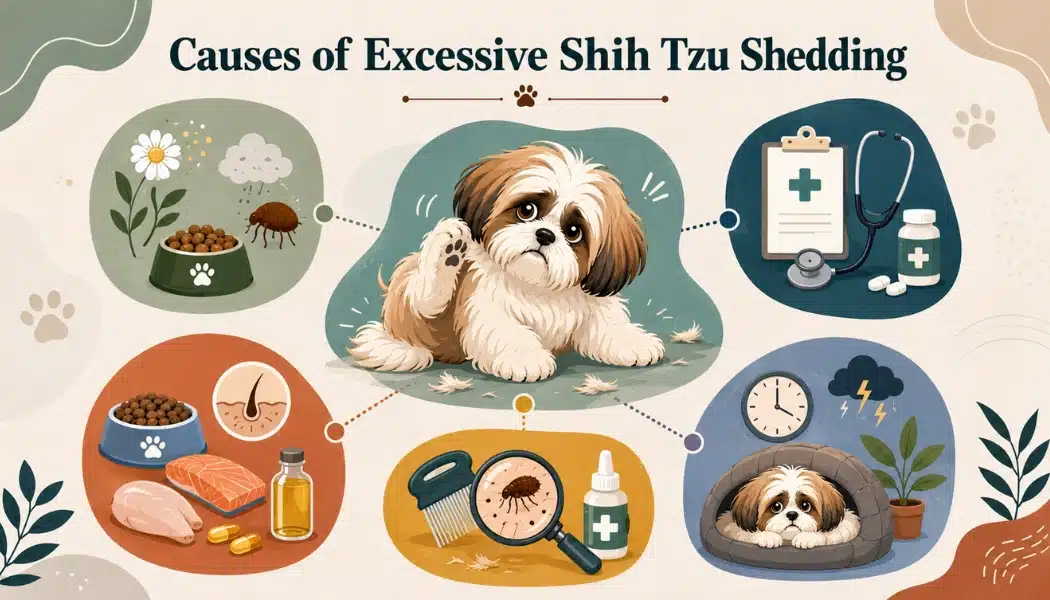
Excessive shedding outside normal shedding periods usually indicates an underlying issue rather than typical Shih Tzu coat behavior.
Allergies, poor nutrition, parasites, stress, infections, or hormonal imbalances are common causes that weaken the coat and increase hair loss.
Note: All treatment options below should be discussed with and supervised by your veterinarian. Do not start oral medications or modify your dog’s treatment plan without professional guidance.
1. Health Conditions That Trigger Hair Loss
Some health problems can cause abnormal coat loss in Shih Tzus.
The American College of Veterinary Dermatology notes that skin, hormonal, and allergy-related issues often require proper diagnosis before treatment.
- Hypothyroidism can cause thinning hair, weight gain, and low energy
- Cushing’s disease may create even thinning across the body
- Bacterial or fungal infections can damage hair follicles
- Seborrhea may cause greasy, flaky skin with shedding
- Redness, odor, scaling, or bald patches need vet attention
2. Allergies: Food and Environmental
Allergies can cause a Shih Tzu to scratch, lick, and lose hair more quickly than usual.
Food triggers and environmental allergens should be carefully assessed, especially when shedding is accompanied by itching or irritated skin.
- Flea allergy dermatitis can start after one flea bite
- Chicken, beef, wheat, and soy may trigger food reactions
- Pollen, dust mites, and mold can irritate the skin
- Elimination diets help identify food-related causes
- Vet guidance keeps allergy testing and diet changes safe
In my experience speaking with breeders, flea allergy dermatitis tends to be underestimated as a shedding cause because owners often do not see the flea itself.
Flea prevention at home is worth building into your routine before shedding gets out of hand.
3. Poor Diet and Nutrient Gaps
A Shih Tzu’s coat often shows poor nutrition before other health changes appear. Low protein, a lack of healthy fats, or poor food quality can make the coat dry, brittle, and more prone to shedding.
- Dry, flaky skin
- Dull or coarse coat
- Brittle hair strands
- Low omega-3 and omega-6 intake
- Food without a named protein source
4. Stress and Anxiety
Stress can trigger extra shedding, even in low-shedding breeds like Shih Tzus.
Changes in routine, moving homes, new pets, loud environments, or separation anxiety may cause a temporary shedding response.
- Sudden increase in loose hair
- Shedding after major routine changes
- Restlessness or hiding
- Excessive licking or scratching
- Improvement once stress settles
How to Manage and Reduce Shih Tzu Shedding?
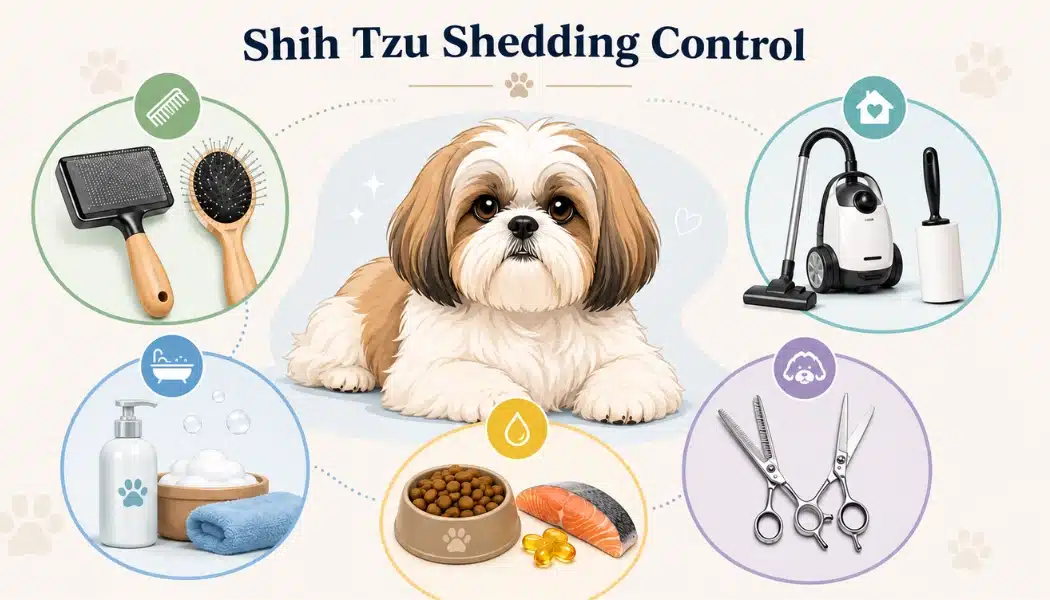
Good news: keeping Shih Tzu shedding low mostly comes down to consistent grooming.
Regular brushing, proper bathing, coat-friendly nutrition, and timely professional grooming all help control loose hair before it becomes a problem.
- Brushing routine: Brush three to four times a week with a slicker brush and a pin brush to remove loose hair before it tangles. During puppy coat change, brush daily to prevent mats.
- Bathing frequency: Bathe every four to six weeks with dog-safe shampoo. Overbathing can strip natural oils, dry skin, and increase shedding.
- Diet support: Choose foods with a named protein source first and enough omega fatty acids. Fish oil can support a softer coat texture.
- Professional grooming: Schedule grooming every six to eight weeks, especially for long coats. A puppy cut keeps hair shorter and reduces daily maintenance.
- Home cleanup: Use a HEPA vacuum, washable covers, and a lint roller for light cleanup. Most loose Shih Tzu hair stays trapped in the coat.
A quality dog conditioning routine helps keep the coat manageable between brushing sessions. Checking professional grooming costs early helps with budgeting.
Are Shih Tzus Hypoallergenic?
No dog breed is truly hypoallergenic. The proteins that trigger allergic reactions are found in a dog’s saliva, urine, and skin dander, not only in loose hair.
That means even a hairless dog can still cause symptoms in someone sensitive to dog allergens.
Shih Tzus can still be a better choice for many allergy-prone homes because they shed very little compared with most breeds.
Less loose hair around the house means less dander spreads onto floors, furniture, and clothing. This can reduce airborne allergens and make cleaning easier.
The American Kennel Club (AKC) includes Shih Tzus among breed options often considered for people with mild sensitivities.
Reactions still vary from person to person. Anyone with serious allergies should spend time with a specific Shih Tzu before adopting to see how their body responds.
Spending 30 to 60 minutes in the same room is more reliable than any breed label.
What Shih Tzu Owners Say About Shedding?
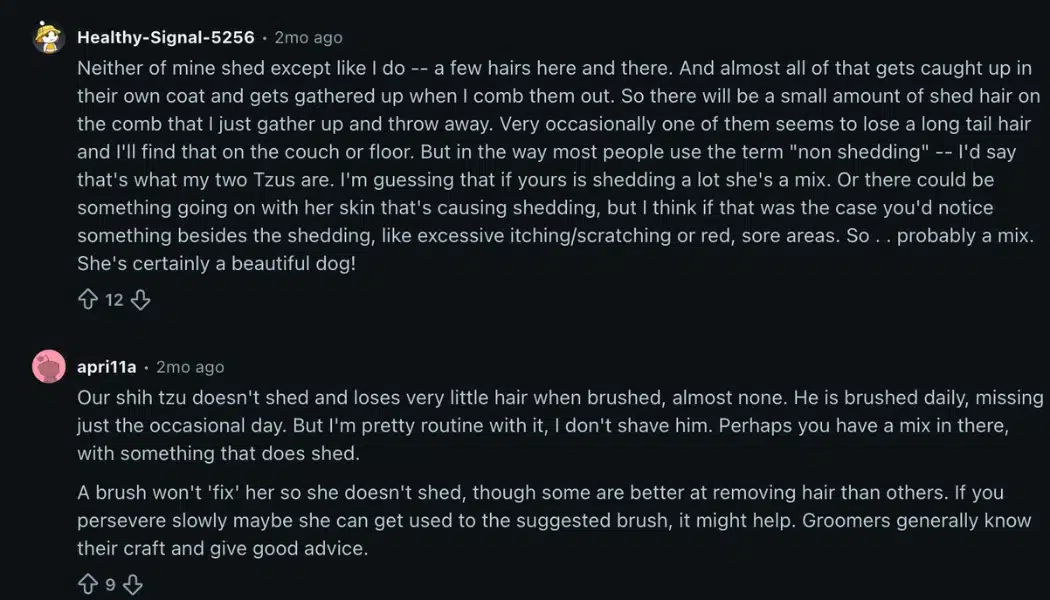
Reddit comments show a mostly consistent owner perspective. Shih Tzus shed very little, but loose hair often gets caught in the coat and comes out during combing or brushing.
Someone said a comb can work better than a brush because brushes may pull the hair, and starting gently on the back helps the dog adjust.
Several owners mentioned finding only a few hairs here and there, with most collected from the comb.
Others said daily brushing, a short body trim, and grooming every five weeks keep shedding easy to manage.
A few also pointed out that heavy shedding may suggest a mixed breed or a skin issue, especially if it is accompanied by itching, redness, or sore patches.
Overall, owners see Shih Tzus as low-shedding but grooming-dependent.
When to Call Your Vet About Shedding?
Normal Shih Tzu shedding is gradual and evenly spread across the coat. A vet visit is needed when hair loss appears sudden or patchy, or is accompanied by skin or behavioral changes.
- Bald patches or circular hair loss: This may suggest infection, ringworm, or a follicle-related problem rather than normal shedding.
- Red skin, sores, scaling, or a bad smell: These can point to bacterial or fungal infections that often need treatment, especially if the skin looks irritated or the smell keeps getting worse.
- Sudden clumps of hair coming out: This usually signals a deeper health issue rather than routine coat turnover, and it can happen when the skin or body is under stress.
- Constant scratching, licking, or chewing: This often indicates allergies, fleas, mites, or ongoing skin irritation that is making your dog uncomfortable.
- Low energy, appetite changes, or increased thirst: These may suggest thyroid or hormonal trouble, especially if they show up along with coat changes or weight shifts.
If your Shih Tzu’s coat is changing color or texture with unusual shedding, mention it to your vet. Sudden weakness, confusion, seizures, or other systemic signs need emergency care.
Conclusion
Shih Tzus are low-shedding dogs, but the coat does not manage itself.
The loose hair stays trapped close to the skin, and if you do not brush it out regularly, it turns into mats.
With brushing 3-4 times a week, sensible baths, quality food, and professional grooming every six to eight weeks, most Shih Tzu owners find the upkeep very manageable.
Extra shedding during the puppy coat change, seasonal shifts, pregnancy, or senior years is expected.
Bald patches, persistent itching, odor, redness, or sudden clumps of hair are not, and those warrant a vet conversation. A consistent routine catches most problems early and keeps the coat in good shape.
Have a Shih Tzu shedding tip or story? Share it in the comments to help other owners.
Frequently Asked Questions
How Often Should I Groom a Shih Tzu to Reduce Shedding?
Brush three to four times per week to remove loose hair and prevent mats. During the puppy coat change between 9 and 12 months, daily brushing is needed.
Professional grooming every six to eight weeks also helps keep the coat manageable.
Can Diet Reduce Shedding in Shih Tzus?
Yes. A diet rich in high-quality protein, plus omega-3 and omega-6 fatty acids, supports healthier skin and stronger hair. Many owners notice better coat texture within four to six weeks after improving food quality or adding fish oil.
Are Shih Tzu Puppies Heavier Shedders?
Shih Tzu puppies shed little until around 8 to 12 months, when the puppy coat changes into the adult double coat. This phase can bring more shedding and matting for several months.
Once the adult coat fully grows in, shedding usually returns to a low level.
When is Shih Tzu Shedding a Sign of Something Serious?
Shedding becomes a concern when it is sudden, uneven, or accompanied by bald patches, itchy or irritated skin, a bad smell, or changes in energy and appetite.
These signs often indicate allergies, skin infections, hormonal problems, or parasites rather than normal coat turnover.
A vet visit is the right call whenever shedding looks or feels different from your dog’s usual pattern.