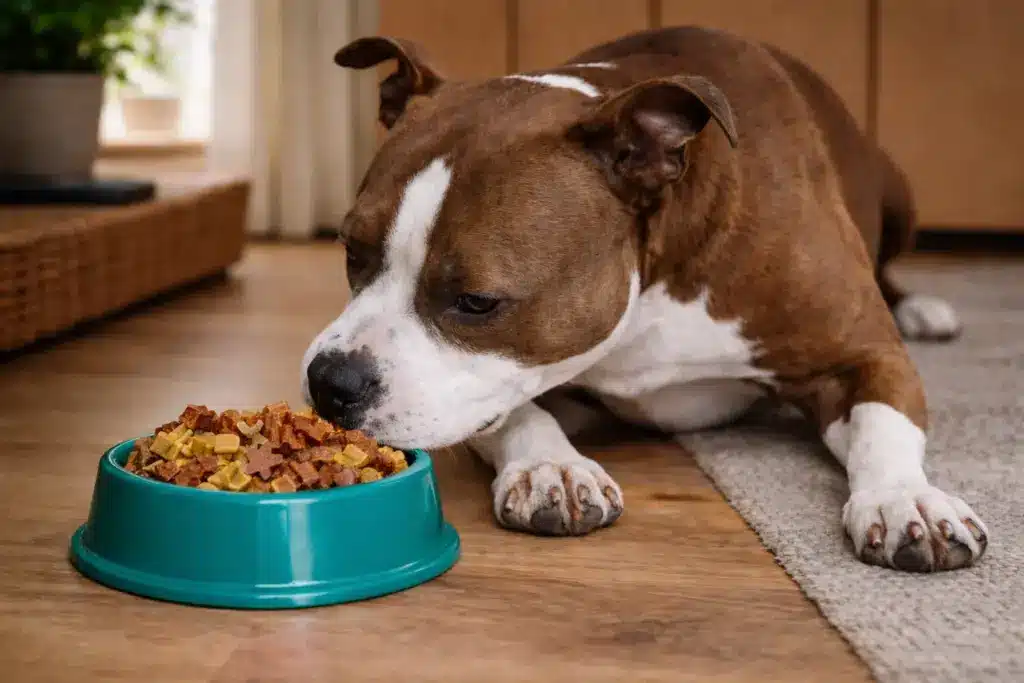
Pitbulls burn through energy like no other breed. You fill the bowl, and 30 seconds later, it’s as if it never existed.
But all that muscle and power needs the right fuel, not just any kibble off the shelf. The tricky part? Most generic dog foods fall short for a breed this active.
Wrong food often shows up as dry skin, itchy coats, low energy, or stomach trouble. And once those problems start, they are tough to reverse.
Over the years, treating pitbulls in my veterinary practice in Minnesota, I have seen this pattern repeat hundreds of times.
An owner comes in worried about constant scratching or low energy, and the fix often starts with what is in the food bowl.
Finding the best dog food for pitbulls does not have to feel like a guessing game, though.
I put together a breakdown of top-rated brands, the nutrients that actually matter for this breed, and simple feeding tips based on age and activity.
If you have a pitbull at home and want to make mealtime work harder for them, keep reading.
What Makes Pitbulls Different From Other Breeds?
Pitbulls are not your average dogs. They carry more lean muscle than most breeds, which means their bodies need more fuel to stay in top shape.
The American Pit Bull Terrier, Staffordshire Bull Terrier, and American Bully all fall under the pitbull umbrella, and each one shares a similar athletic build.
According to Pitbullinfo.org, pitbulls and bully breeds account for roughly 20% of the dog population in the United States, making them one of the most commonly owned breed groups in the country.
Pit bulls require 1 to 2 hours of daily exercise to manage their high energy levels, which helps burn calories and maintain muscle tissue.
However, they are also prone to health issues like hip dysplasia, skin allergies, and heart conditions.
Skin irritation from parasites like fleas can make allergy symptoms worse, so keeping up with natural flea and tick sprays matters just as much as diet.
In my clinic, skin problems and joint stiffness are the two most frequent complaints I hear from pitbull owners. Both are heavily influenced by diet.
The best dog food for pit bulls should provide a balanced mix of protein, fat, and micronutrients to address these concerns.
Key Nutrients Pitbulls Need in Their Diet
Feeding a pitbull requires attention to key nutritional areas for optimal health.
Protein is the single most important nutrient for a pitbull. According to the Association of American Feed Control Officials (AAFCO), adult dogs need a minimum of 18% protein in their diet.
However, for a muscular, active breed like a pitbull, I typically recommend formulas with at least 25-30% protein on a dry matter basis.
The 18% minimum is a floor, not a target. In practice, I have seen a noticeable difference in coat quality and energy between pitbulls fed at 20% protein versus those fed at 28% or higher.
Healthy fats, particularly omega-3 and omega-6 fatty acids, are vital for energy and supporting brain health, with sources like fish oil being ideal.
Additionally, vitamins and minerals, including glucosamine and chondroitin for joint support, are important due to the breed’s active lifestyle.
A quality dog food for pitbulls should incorporate these nutrients without synthetic fillers, ensuring strong muscles, a shiny coat, and healthy joints.
Top-Rated Dog Food Brands for Pitbulls
Choosing a brand can feel overwhelming with so many options on the market. The following picks stand out for ingredient quality, AAFCO compliance, and nutritional profiles suitable for pit bulls.
1. Ollie Fresh Dog Food
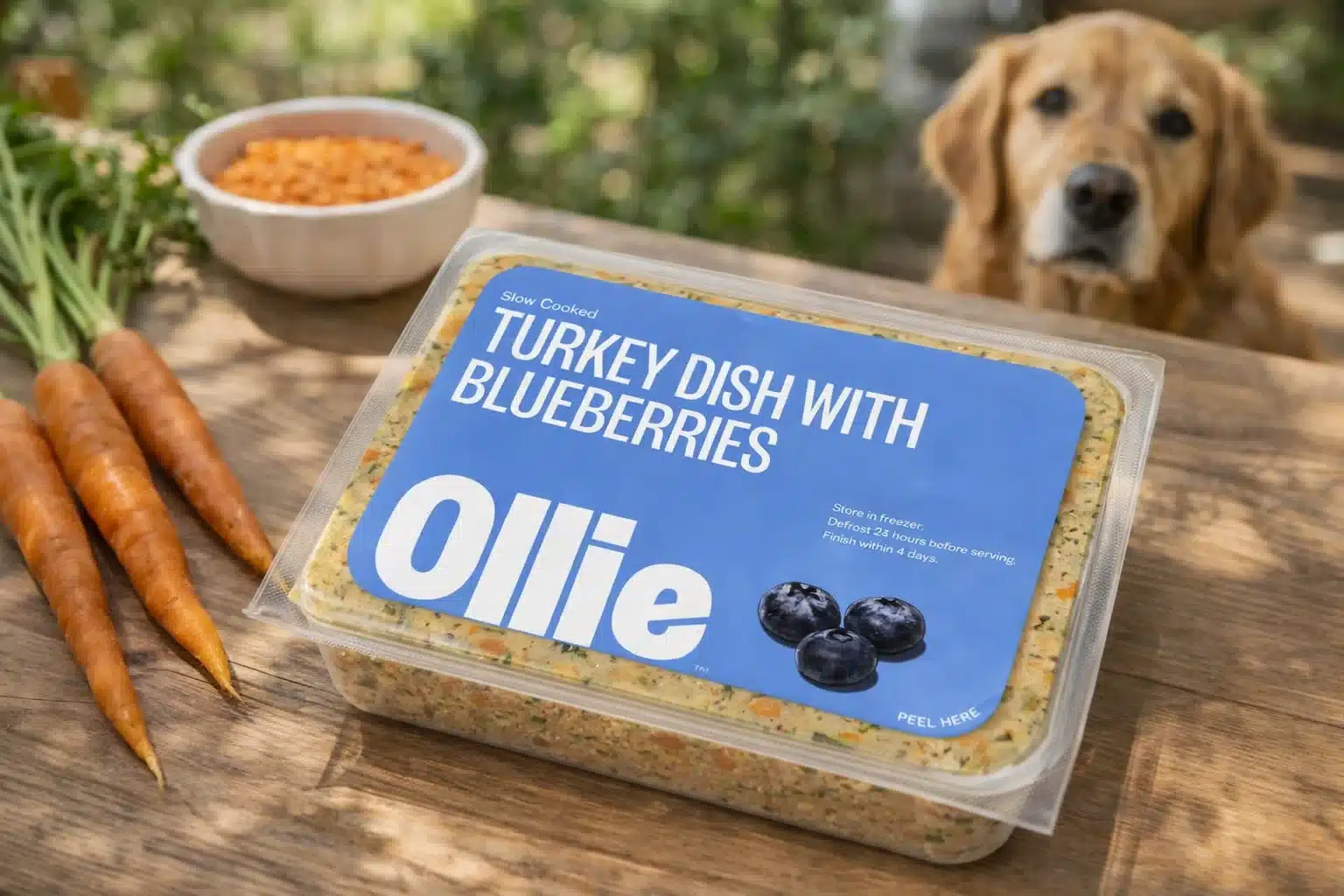
Ollie uses human-grade, minimally processed ingredients that are easier for pitbulls to digest.
The chicken recipe contains 37% protein and 11% fat on a dry matter basis, making it a strong match for muscular breeds. Meals arrive pre-portioned and fresh, which takes the guesswork out of serving sizes.
This is often the first brand I suggest to pitbull owners in my practice, especially when a dog comes in with recurring digestive complaints.
The short, recognizable ingredient list makes it easy to rule out triggers.
Pitbull owners frequently report improved digestion and shinier coats within the first few weeks. The best dog food for pitbulls with sensitive stomachs often starts with a formula like this one.
2. The Farmer’s Dog
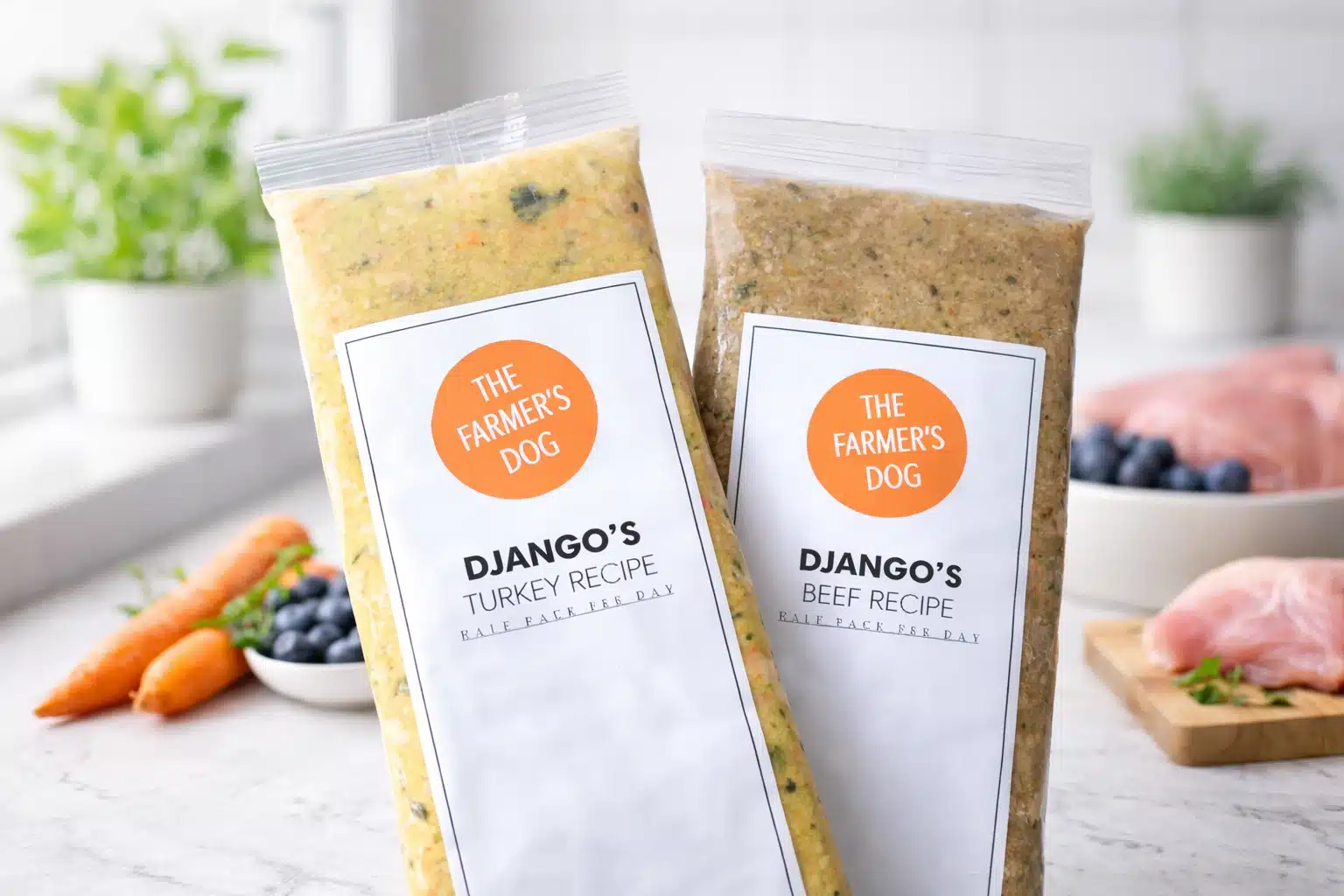
This brand delivers fresh-cooked, pre-portioned meals straight to your door, customized for your dog’s weight and activity level.
The pork recipe provides 36% protein and 28% fat, which is ideal for active pit bulls that burn through calories quickly. Board-certified veterinary nutritionists develop every recipe and ensure it meets AAFCO standards.
Customers often highlight better energy levels and improved stool quality after switching. The higher fat content makes it a solid choice for working or athletic pitbulls.
3. Annamaet Ultra
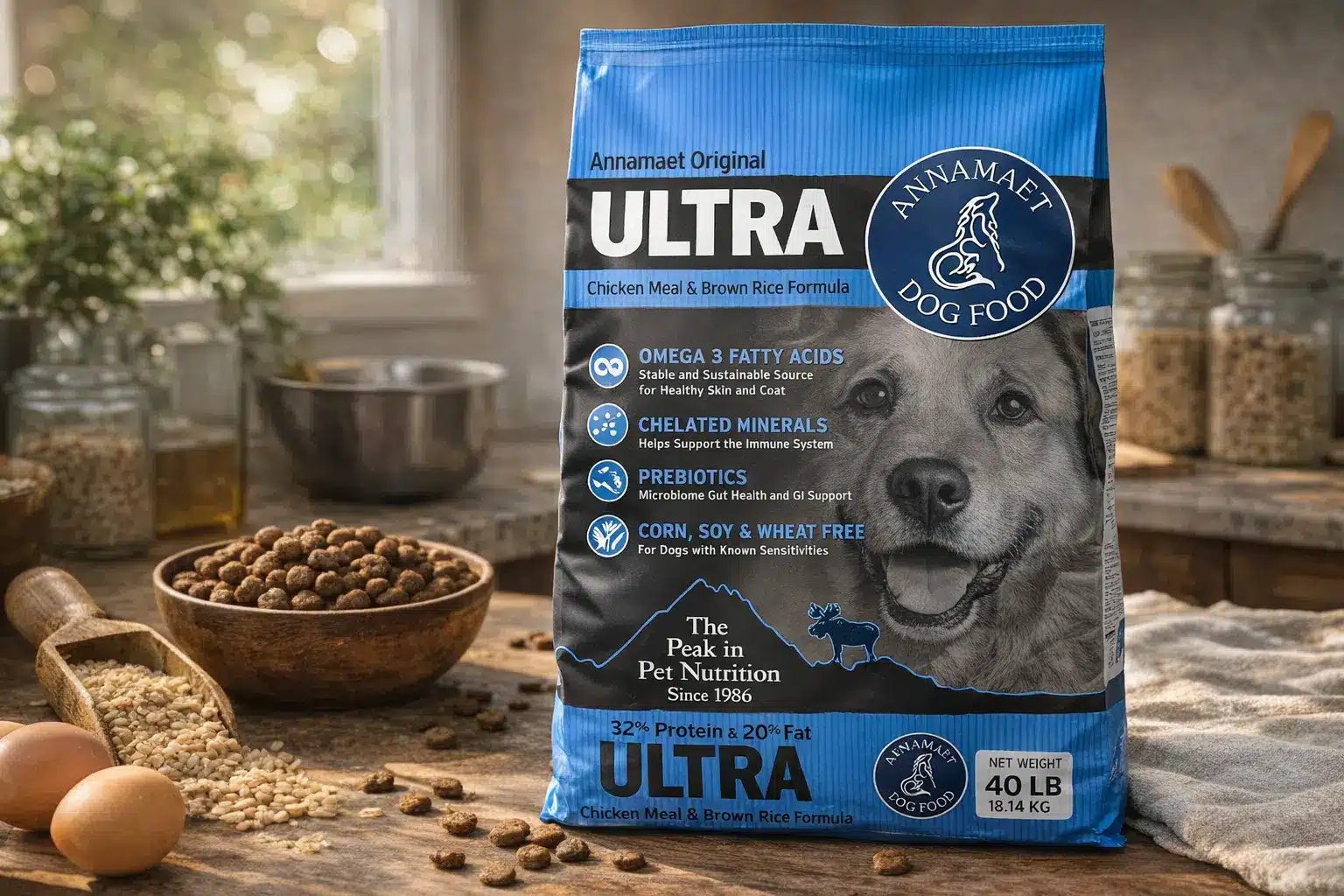
Annamaet Ultra is a high-performance dry kibble designed for active, muscular breeds.
Chicken meal and herring meal serve as the primary protein sources, providing concentrated amino acids for muscle repair.
It is more budget-friendly than fresh food options while still delivering strong nutrition.
Several pitbull owners I work with have used this as a long-term staple because the price point allows consistent feeding without cutting corners on quality.
This formula also includes omega fatty acids and probiotics, covering both skin health and digestion in a single bag.
4. Blue Buffalo Wilderness
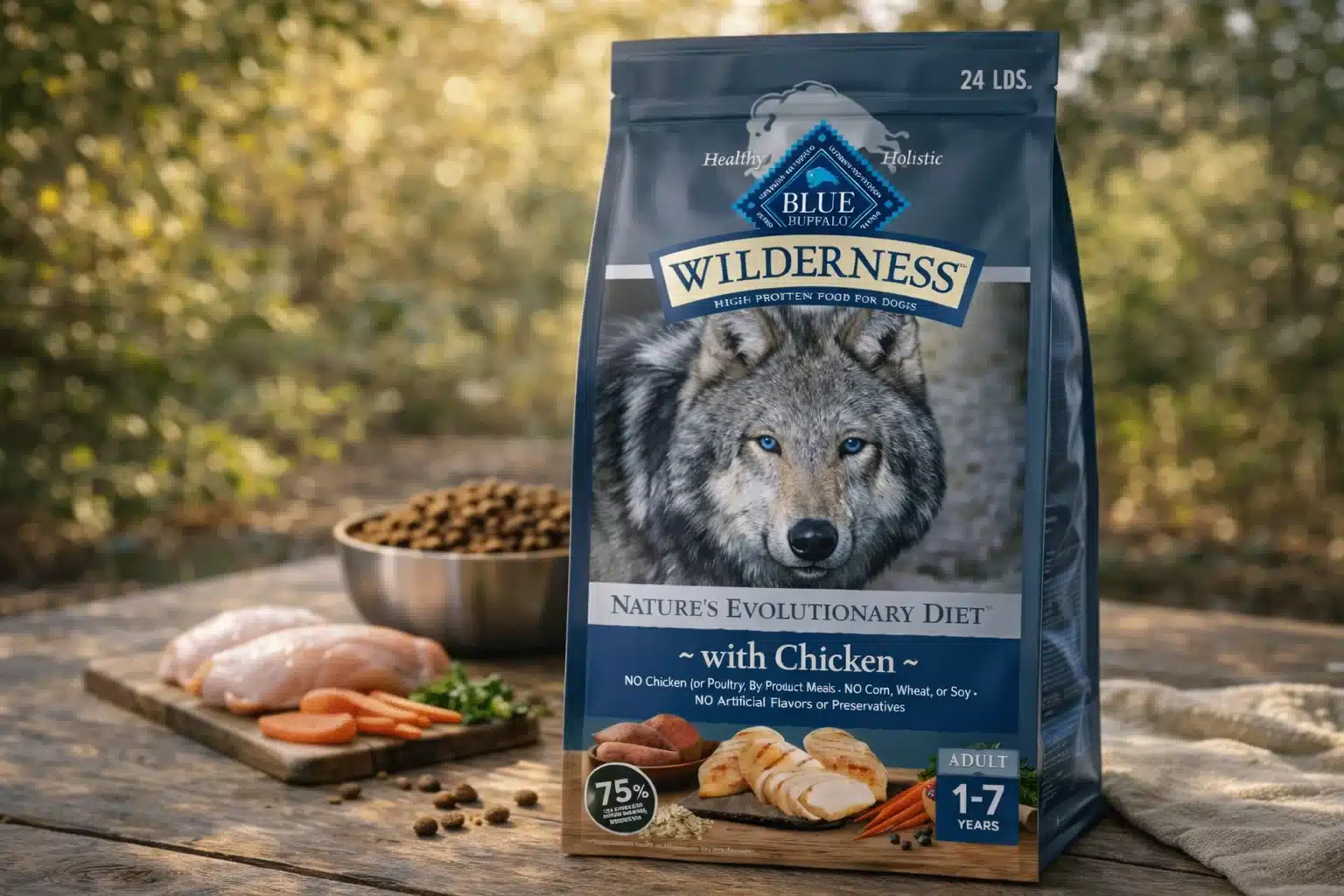
Blue Buffalo Wilderness puts real chicken as the first ingredient in a grain-free, high-protein formula.
It includes LifeSource Bits, a blend of antioxidants, vitamins, and minerals selected by veterinarians and animal nutritionists. The recipe avoids corn, wheat, soy, and artificial preservatives.
Many pitbull owners choose this brand for dogs with grain sensitivities or food allergies.
The protein-rich profile supports lean muscle maintenance, and the added glucosamine helps with joint support for heavier pitbulls.
5. Bully Max High Performance
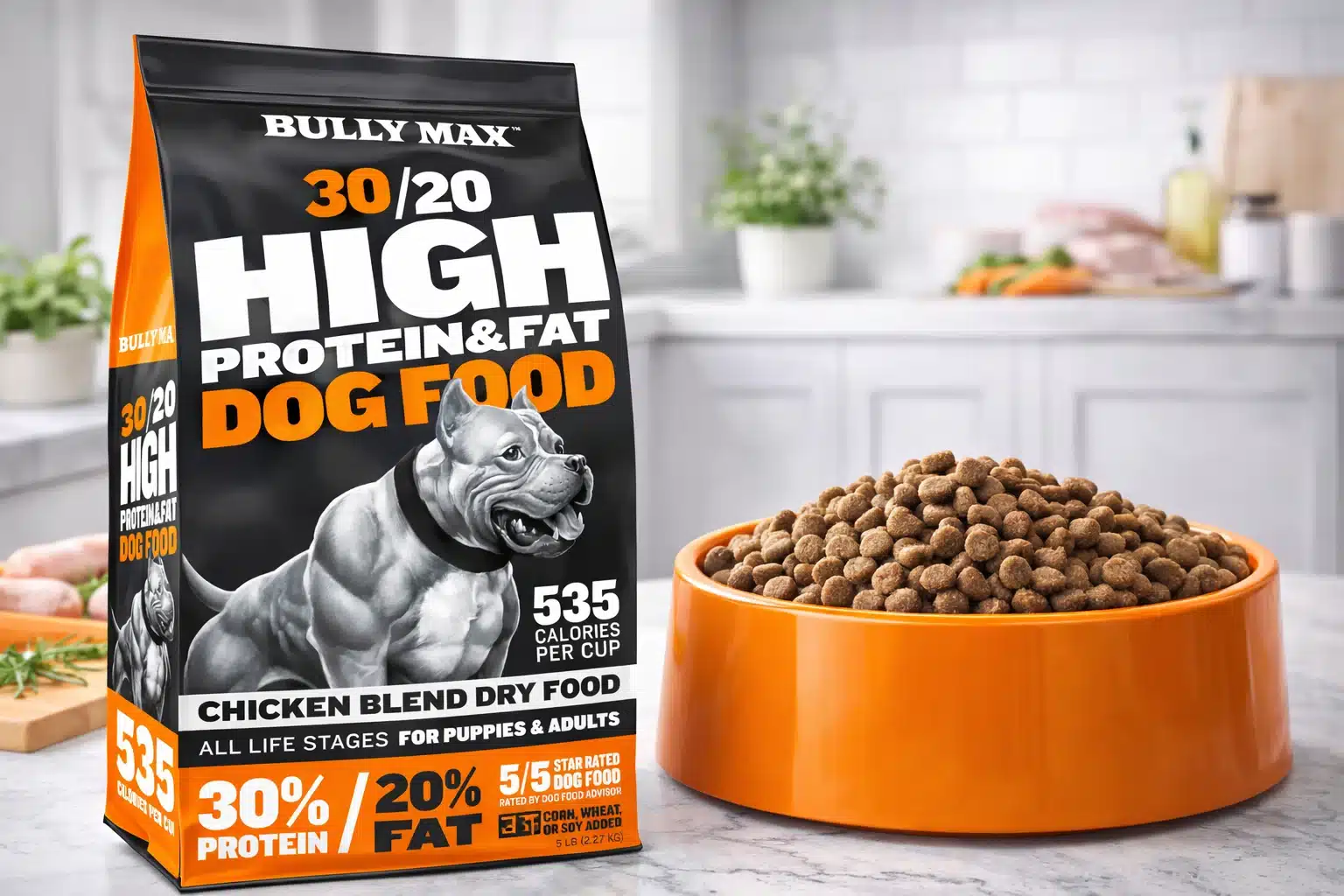
Bully Max was built specifically for bully breeds and high-performance dogs.
It packs 30% protein and 20% fat with zero corn, wheat, or soy. The formula includes glucosamine for joint health and probiotics for gut balance.
All ingredients are 100% natural and human-grade, which sets it apart from many mainstream kibble brands.
For pitbulls that train regularly or compete in weight pull or agility, this formula delivers the caloric density they need.
I have recommended it for working dogs in my care that were underperforming on standard adult kibble.
6. Purina Pro Plan Sport
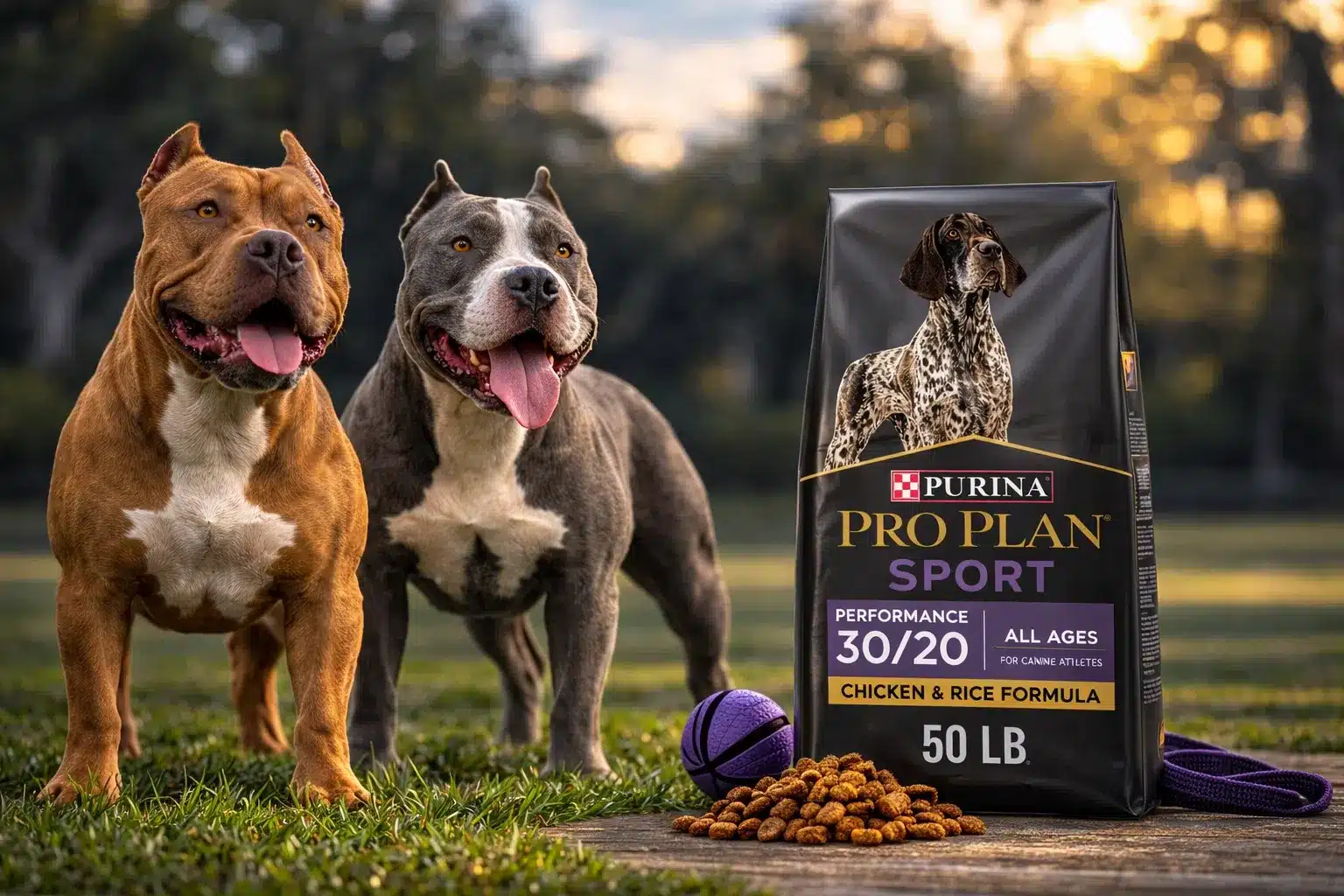
Purina Pro Plan Sport is designed for dogs with high daily activity levels. It delivers 30% protein and 20% fat to fuel sustained energy and support metabolic function.
The formula includes EPA and glucosamine for joint and muscle recovery after intense exercise.
It is widely available at pet stores across the U.S. and is more affordable than most fresh-food subscription services.
A strong pick for pitbull owners who need reliable, research-backed nutrition at a mid-range price.
7. Taste of the Wild High Prairie
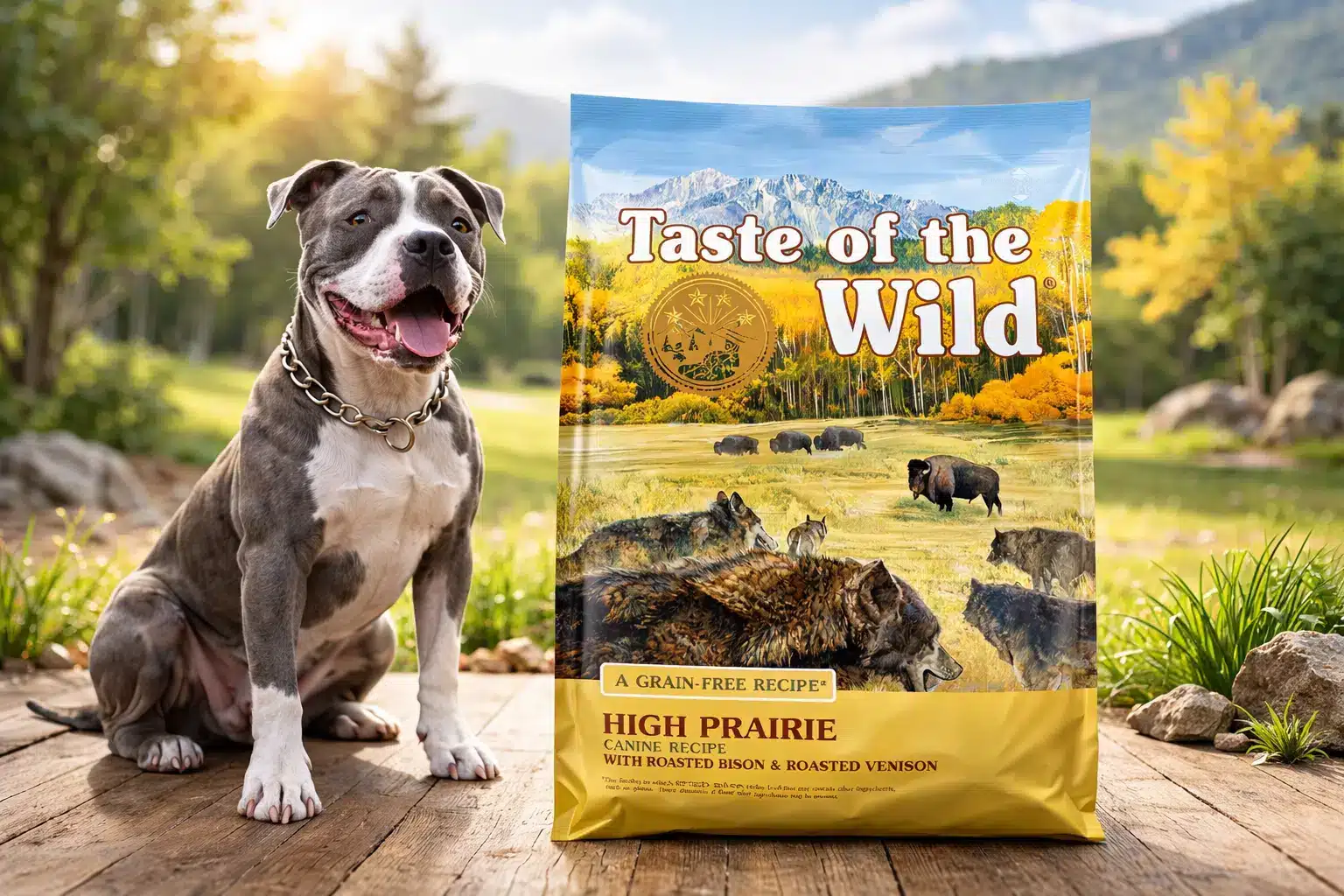
This grain-free formula features roasted bison and venison as novel protein sources, which are well tolerated by pitbulls with common food allergies to chicken or beef.
It contains proprietary K9 Strain Probiotics that support digestive health and nutrient absorption.
Sweet potatoes and peas provide natural, easily digestible carbohydrates for steady energy.
For pitbulls with suspected chicken or beef sensitivities, a novel protein like bison often results in visible improvement within 4 to 6 weeks, according to my clinical experience.
Customer reviews frequently mention less itching and firmer stools after the switch.
8. Wellness Complete Health Deboned Chicken and Oatmeal
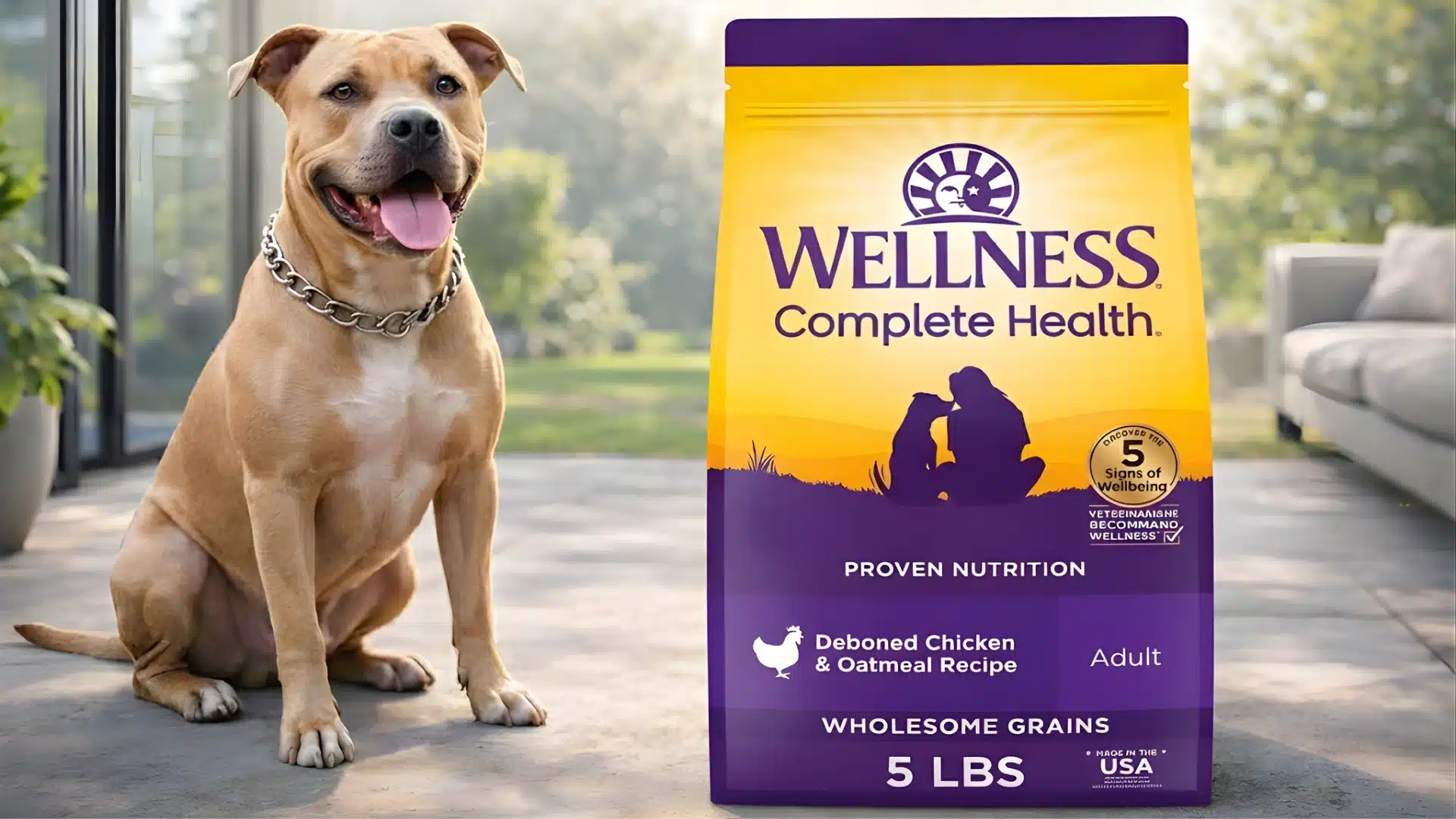
Wellness delivers a well-balanced blend of protein, fat, and carbs with deboned chicken and oatmeal as the lead ingredients.
The formula includes flaxseed for omega fatty acids, glucosamine for joint support, and probiotics for gut health.
It skips byproducts, fillers, and artificial flavors entirely. Antioxidant-rich foods like spinach and blueberries round out the recipe for immune health.
Pitbull owners appreciate the consistent stool quality and improved coat texture that come with regular feeding of this brand.
9. Diamond Naturals Skin and Coat
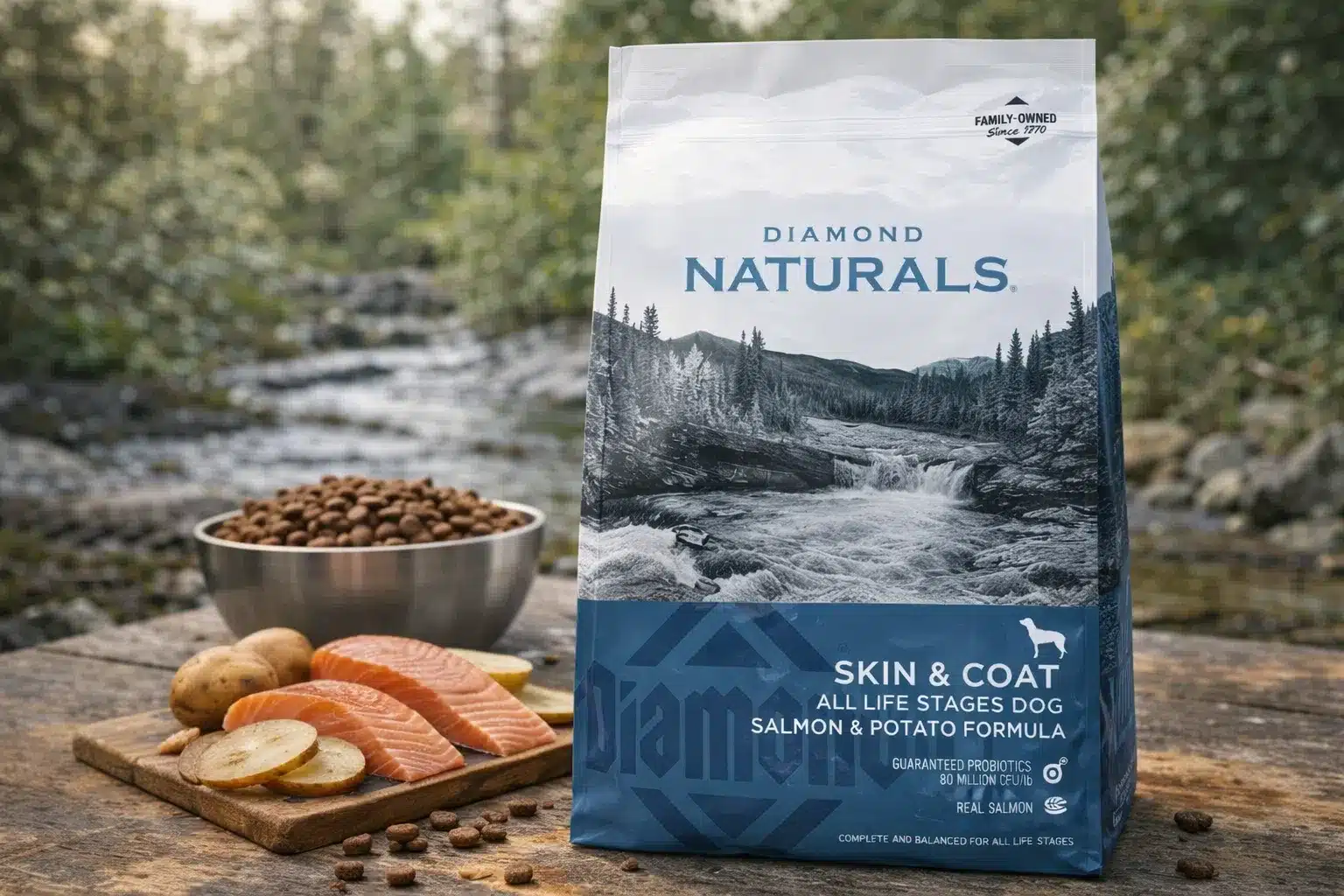
This dry formula is designed with wild-caught salmon as the number 1 ingredient, making it rich in omega-3 and omega-6 fatty acids.
It is a strong pick for pitbulls dealing with dry skin, allergic dermatitis, or dull coats.
The recipe also includes a blend of vegetables, prebiotics, and antioxidants that support digestion and immune function.
I often recommend salmon-based formulas like this one as a first step when a pitbull presents with chronic skin issues, but the owner is not ready to switch to fresh food.
It is also one of the more affordable options in its category, which makes compliance easier for long-term feeding.
10. Nulo FreeStyle High-Protein Kibble
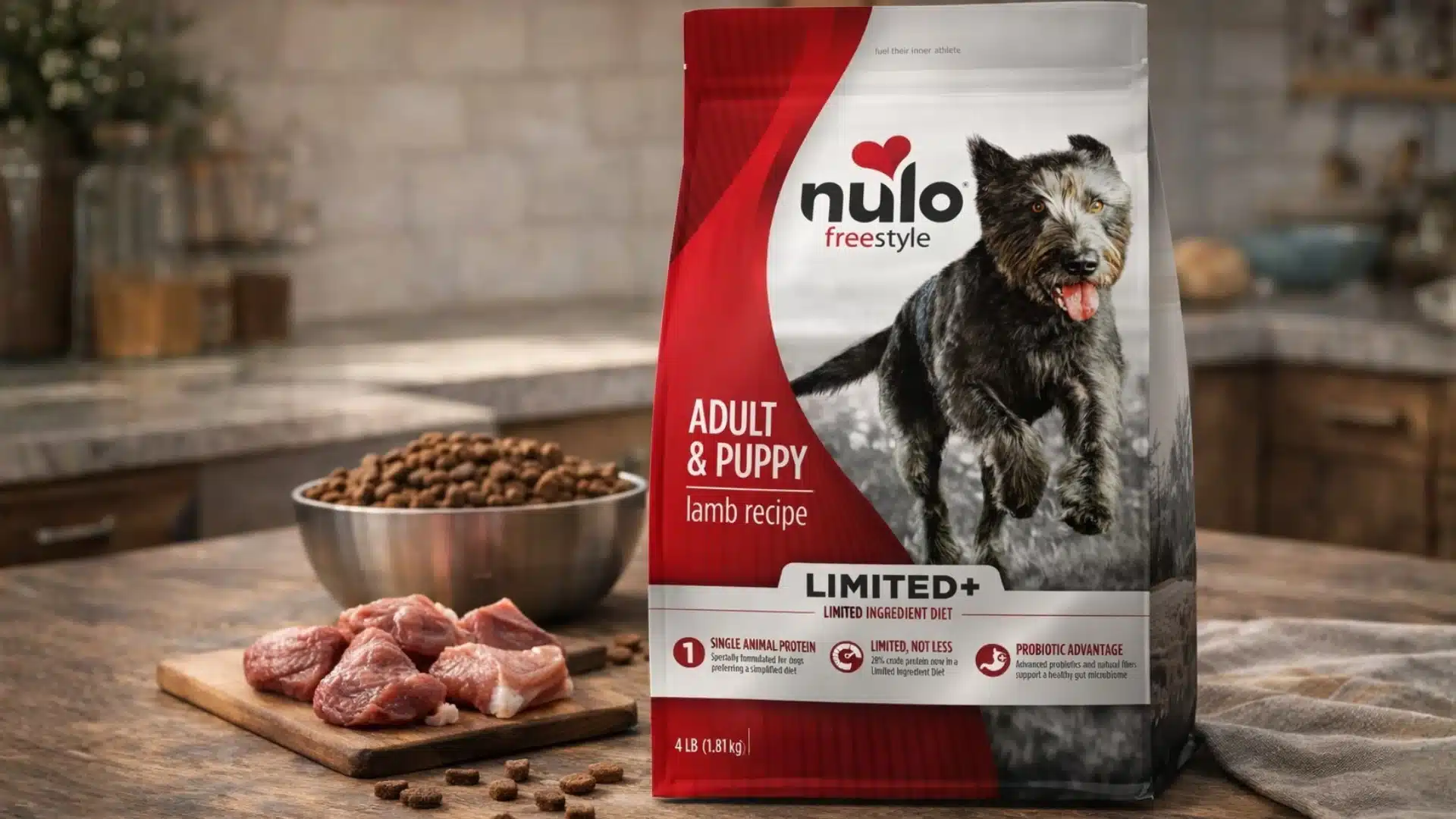
Nulo FreeStyle stands out for its high meat content and low-glycemic-index ingredients, which help maintain stable blood sugar and lean body weight.
The recipe includes deboned salmon, turkey meal, and menhaden fish meal as top protein sources.
It also contains DHA for brain and vision support, making it a solid choice for pitbull puppies and adults alike. Patented BC30 probiotics aid in nutrient absorption and digestive health.
Owners report fewer digestive issues and better energy levels after switching to Nulo.
11. Natural Balance Limited Ingredient Salmon and Brown Rice
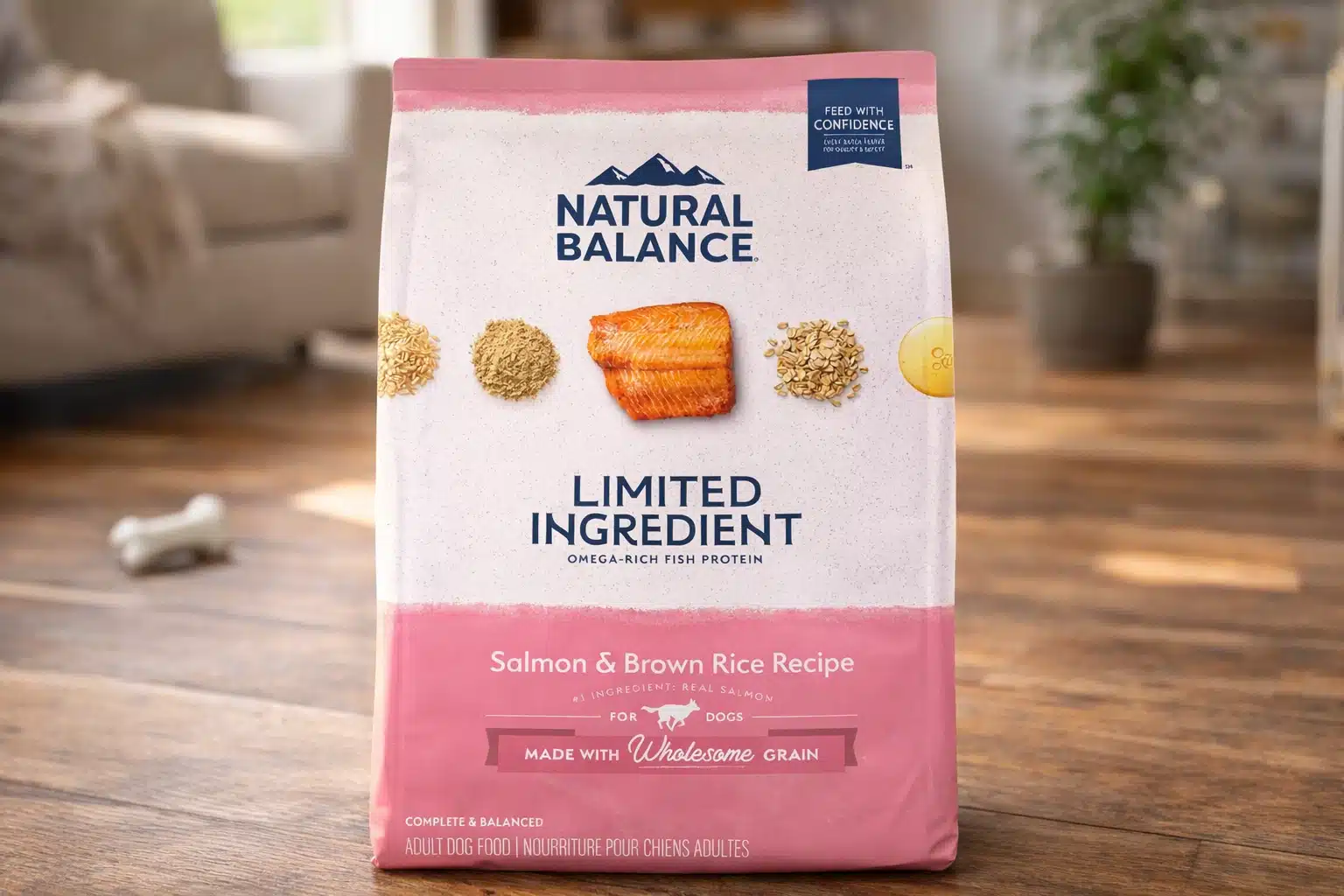
For pitbulls with food allergies or stomach sensitivities, Natural Balance offers a simplified recipe with fewer ingredients and a single animal protein source.
Salmon serves as the primary protein, paired with brown rice for easy digestion.
The limited ingredient list reduces the risk of triggering allergic reactions such as itching, ear infections, or loose stools.
This formula meets AAFCO standards for adult maintenance and works well for pitbulls on elimination diets. It is gentle yet nutritionally complete for daily feeding.
12. Hill’s Science Diet Adult Large Breed
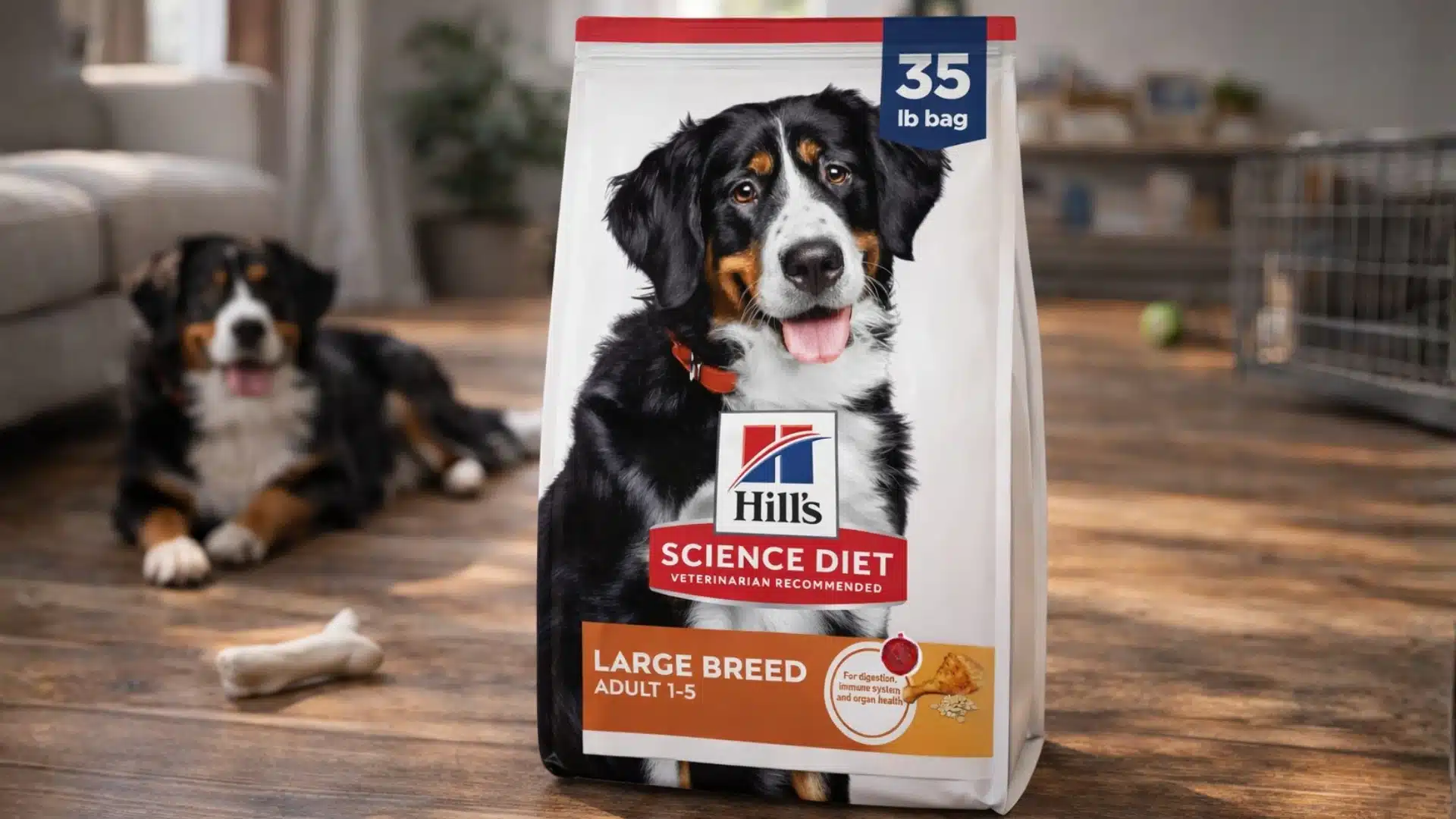
Hill’s Science Diet is backed by veterinary research and formulated specifically for large breed dogs over 55 lbs.
The recipe uses chicken as the first ingredient and includes natural glucosamine and chondroitin for joint health. It also provides a precise balance of calcium and phosphorus to support strong bones.
For pitbulls in the 60-80 lb range, a large-breed formula like this helps protect joints without adding excess calories.
It is one of the most commonly stocked brands in veterinary clinics, including mine.
13. Spot and Tango UnKibble
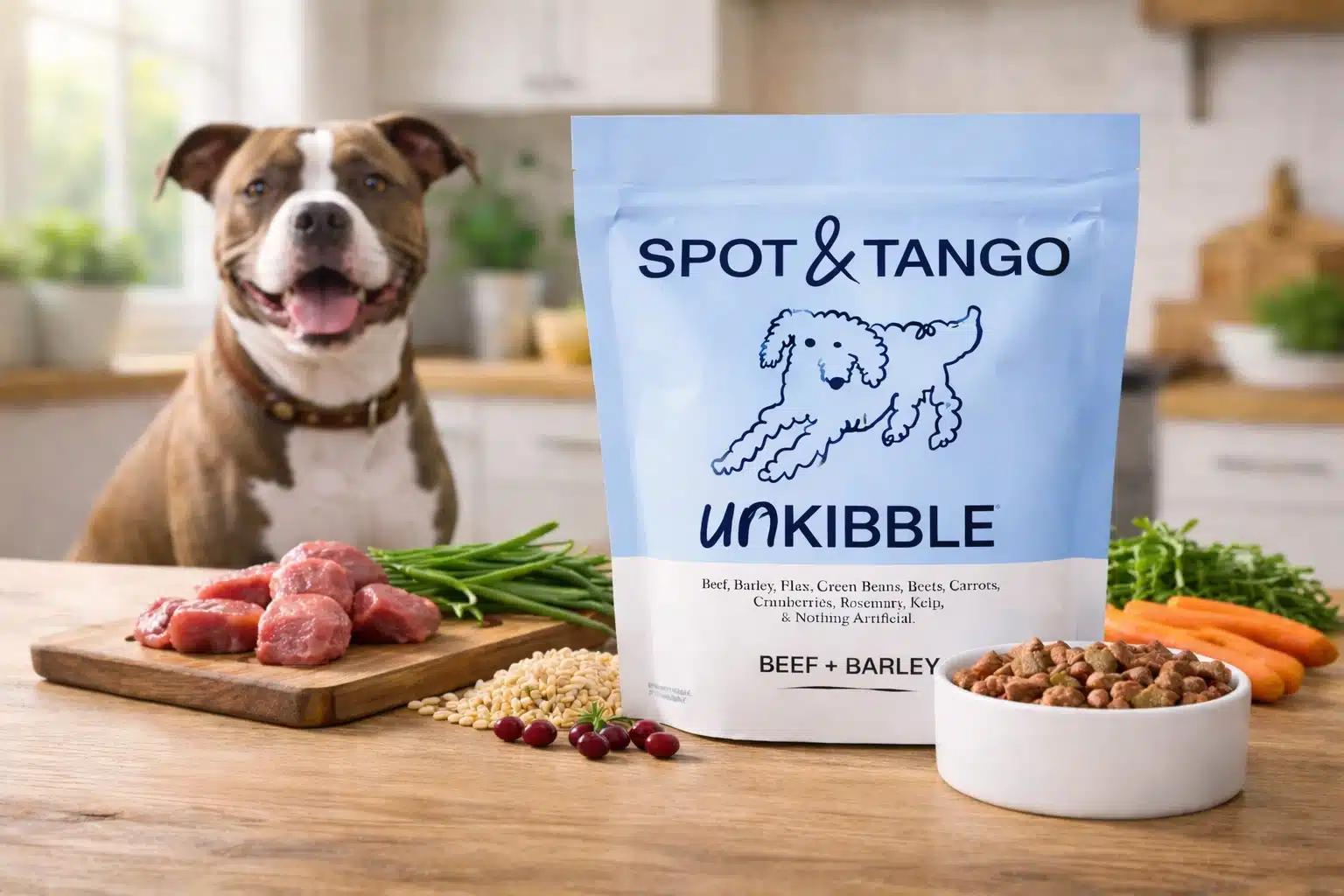
Spot and Tango takes a fresh approach to dry food with its UnKibble line, which is gently dried at low temperatures to preserve nutrients.
Recipes feature human-grade turkey, beef, or lamb, paired with vegetables such as spinach, carrots, and sweet potatoes.
Each meal plan is customized based on your dog’s breed, weight, and activity level. The food arrives with a custom scoop for precise portions.
Pitbull owners like the convenience of dry food, combined with the nutrient density closer to that of fresh meals.
Feeding Schedule and Portions by Age
Getting the right amount matters just as much as choosing the right brand. Overfeeding is one of the fastest paths to obesity in pitbulls, and underfeeding active dogs leads to muscle loss.
- Puppies (8 weeks to 12 months): Feed 3 meals per day, adjusting portions for high-energy puppies based on the feeding chart. Choose an appropriate crate size for stress-free mealtimes if crate training.
- Adults (1 to 7 years): Feed a moderately active 50 lb pitbull 2 meals per day, about 12 hours apart. They typically need 900 to 1,100 calories daily, while highly active pitbulls may require 1,200 to 1,500 calories.
- Seniors (7+ years): Feed senior pitbulls 2 meals a day with reduced portions to manage weight. If your vet notes joint stiffness or weight gain, consider a senior or weight management formula.
Always confirm portions with your veterinarian, especially during the puppy-to-adult transition period.
Foods and Ingredients to Avoid
Not all dog food is safe or healthy for pitbulls. Some ingredients do more harm than good over time.
- Common Allergens: Corn, wheat, and soy can trigger skin itching and digestive upset in pitbulls, leading to discomfort and health issues.
- Artificial Preservatives: Ingredients such as BHA, BHT, and ethoxyquin are linked to long-term health risks and provide no nutritional benefits to pit bulls.
- Meat Byproducts and Unnamed Protein Sources: These are low-quality fillers that lack essential amino acids needed for muscle maintenance in pitbulls.
- Excessive Carbohydrates: Foods that are high in white rice or potatoes but low in protein can lead to weight gain, especially in less active pitbulls.
- Added Sugars and Food Dyes: These ingredients are unnecessary and may result in hyperactivity or digestive issues in pitbulls.
I treated a 4-year-old American Bully with chronic ear infections and paw licking. His kibble contained corn gluten meal and unnamed “animal fat.” I switched him to a salmon-based, limited-ingredient formula, and within 6 weeks, his ear infections cleared up. Such improvements are common when adjusting diets.
Conclusion
Picking the best dog food for pitbulls takes a little time, but it makes a huge difference in your dog’s health and happiness.
I have covered the top nutrients above to look for, brands that stand out, foods to avoid, and feeding tips based on your pitbull’s age.
Focus on high-quality protein, healthy fats, and joint-supporting nutrients when comparing options.
Always check for the AAFCO statement on the label and choose a formula that matches your dog’s life stage and activity level.
Your pitbull counts on you to make the right choice at mealtime. Start by trying 1 of the recommended brands above and watch how your dog responds over the first few weeks.
If you found this post helpful, share it with a fellow pitbull owner or leave a comment below with your dog’s favorite food.
Frequently Asked Questions
Is Grain-Free Food Good for Pitbulls?
Grain-free food can benefit pitbulls with grain allergies, but it’s not necessary for all. Consult your vet before switching, as some grain-free diets have been linked to heart issues in certain dogs.
How Often Should I Feed My Adult Pitbull?
Most adult pitbulls do best with 2 meals per day, spaced about 12 hours apart. This helps maintain steady energy levels and prevents bloating.
Can Pitbulls Eat Raw Food?
Some pit bull owners have had success with raw diets, resulting in shinier coats and improved digestion. These diets should be balanced and follow safety protocols. Always consult a vet before starting.