You bring home a tiny Yorkie, full of hope, and within the first hour, your toddler is charging across the living room, squealing with excitement.
Your Yorkie freezes. You freeze. And suddenly the question you Googled at midnight feels very real: are Yorkies good with kids?
It is a fair thing to wonder. Yorkies are one of the most popular small dog breeds in the world, and families are drawn to them for good reason.
They are affectionate, portable, low-shedding, and packed with personality.
But their tiny frame and bold temperament mean they are not the right fit for every household.
This blog post covers everything you need to know, from how Yorkies behave around children to who this breed truly suits best.
Are Yorkies Good with Kids?
Yorkies can absolutely be good with kids when the home is calm, supervised, and built around a consistent routine.
Many enjoy sitting beside children, following them around the house, and joining short play sessions that do not involve chasing, grabbing, or lifting.
Because Yorkies are small and delicate, rough handling can hurt them or make them feel unsafe.
Loud squeals, sudden hugs, tail pulling, and fast running may lead to barking, hiding, or snapping.
The safest match is a family that supervises every interaction, teaches children how to touch the dog properly, and gives the Yorkie a quiet place to rest safely alone.
Are Yorkies Good Dogs Overall?
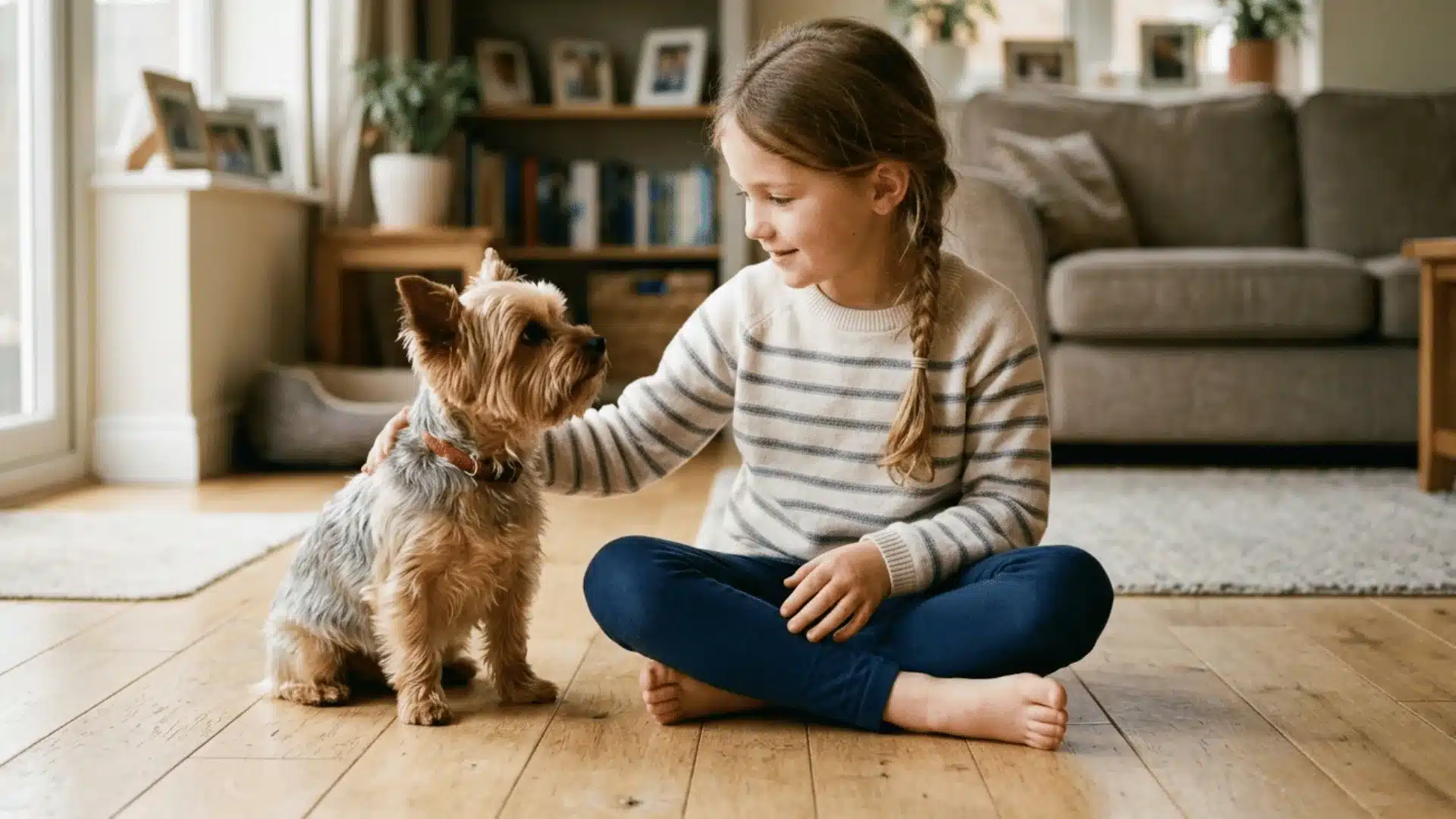
Yorkies are good dogs for owners who want a small companion with a big personality. They are smart, affectionate, loyal, and usually very attached to their family.
Many Yorkies enjoy being part of daily life, whether that means sitting nearby, following someone around the house, or joining short play sessions.
Their small size makes them a practical choice for apartments, but they still need attention, training, and exercise. Yorkies can bark often, act stubborn, and become bossy if boundaries are not clear.
Their long coat also needs regular brushing and grooming.
With early socialization, patient training, and gentle handling, a Yorkshire Terrier can be a loving, lively, and devoted dog.
Is a Yorkie a Good Family Dog: Pros and Cons
Before bringing a Yorkie home, it helps to see the full picture. Here is what families consistently love about the breed and what catches some off guard.
Pros
- Easy to manage in small homes: Yorkies usually weigh between 4 and 7 pounds, so they fit well in apartments, condos, and homes without a yard. They still need daily walks and playtime.
- Low shedding coat: Yorkies have a silky coat that sheds very little compared with many other breeds. This can be helpful for families who prefer less dog hair around the home, though regular grooming is still needed.
- Very loyal with family: Yorkies often become deeply attached to their people. They like being included in daily routines and usually enjoy sitting nearby, following family members, and getting attention.
- Long life expectancy: Many Yorkies live around 11 to 15 years. For families, that means the dog can be part of a child’s life during many important years of growth.
Cons
- Delicate body: Yorkies are tiny, so rough play, falls, or accidental stepping can seriously hurt them. Homes with toddlers need extra supervision.
- Can struggle when left alone: Yorkies are companion dogs and often want to be near their owners. Long hours alone may lead to stress, barking, or clingy behavior.
- Regular grooming is needed: Their coat can tangle if it is not brushed often. Families should be ready for brushing, bathing, trims, and basic coat care.
- Can become bossy without rules: Yorkies are confident little dogs. Without calm training and clear boundaries, they may bark too much, demand attention, or try to control the household.
Yorkie Breed Characteristics
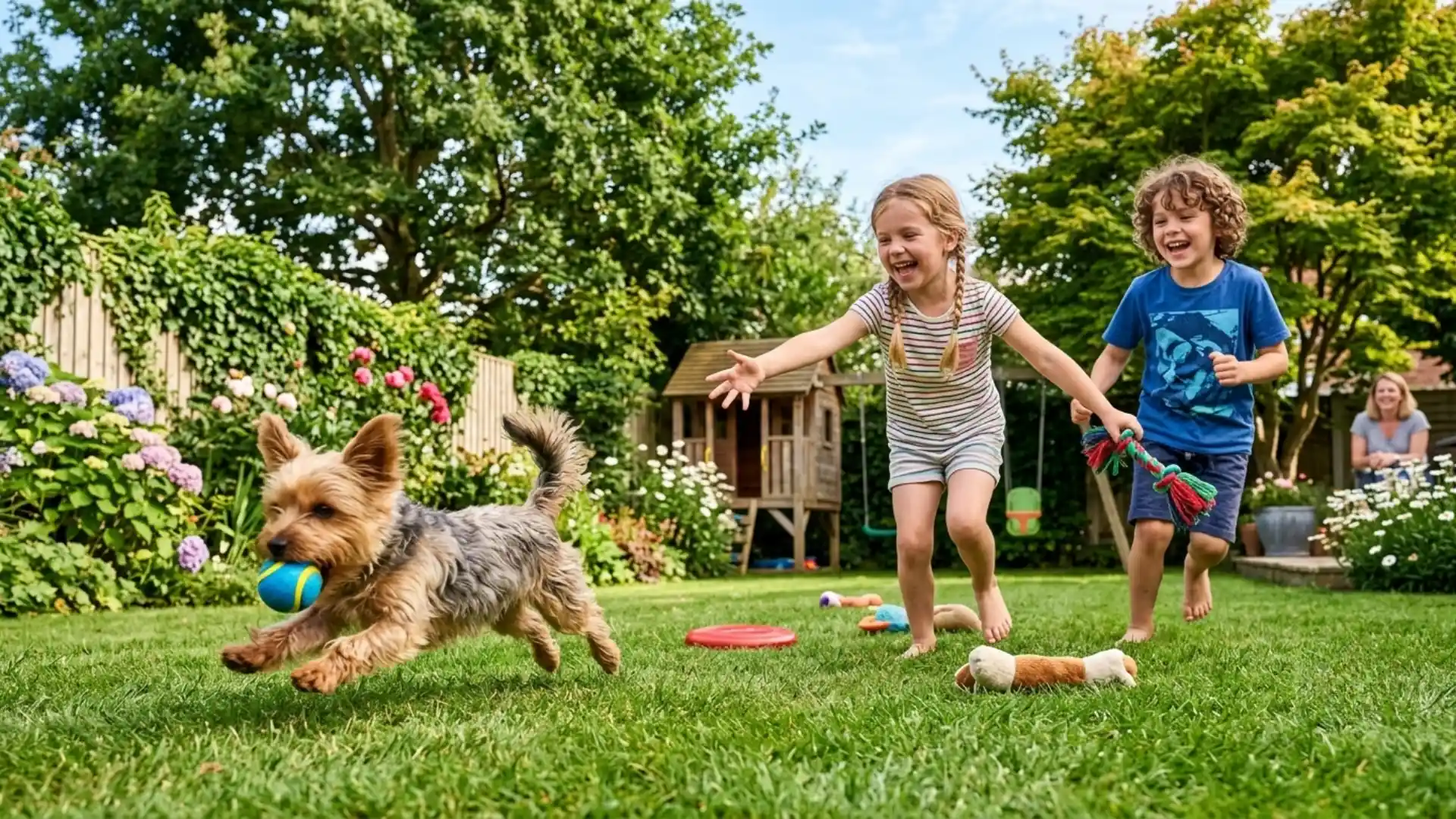
Yorkshire Terriers are small, bold, and full of personality with a silky, low-shedding coat and a lifespan of 11 to 15 years. Knowing their key traits helps families decide if this spirited breed is the right fit.
1. Temperament
Yorkies are bold, affectionate, and surprisingly confident for a dog that fits in a handbag. They are fiercely loyal to their families and tend to follow their favorite person from room to room.
Despite their toy size, they carry a true terrier spirit, alert, curious, and always ready to investigate something new.
They love attention and thrive when they feel like an active part of family life.
2. Size and Appearance
A fully grown Yorkie typically weighs between 4 and 7 pounds and stands around 7 to 8 inches tall. Their signature coat is long, silky, and fine, growing continuously, much like human hair.
Most Yorkies have a steel-blue and tan coloring that deepens as they mature.
Their compact build makes them easy to manage in small spaces, though it also means they need gentle handling from everyone in the household.
If you’re curious how that coat changes with different haircut styles, popular small dog breeds like the Yorkie are covered in more detail in our breed guide.
3. Intelligence and Trainability
Yorkies are sharp and quick to pick up on routines, cues, and household patterns.
They respond well to positive reinforcement and treat-based training, but their terrier stubbornness means consistency matters more than intensity.
Short, engaging training sessions work far better than long, repetitive ones.
Teaching basic commands early sets the tone for how a Yorkie behaves around children and guests for the rest of its life.
4. Health Considerations
Yorkies are generally healthy but carry a few breed-specific risks worth knowing. Dental disease is one of the most common issues in small breeds, making daily toothbrushing and routine veterinary cleanings essential.
Hypoglycemia, or low blood sugar, is a concern particularly in puppies, who need frequent small meals to stay stable.
Patellar luxation, a condition where the kneecap slips out of place, is also seen in the breed.
A consistent vet schedule and pet insurance go a long way in keeping a Yorkie healthy well into its teens.
Are Yorkies Aggressive?
Yorkies are not naturally aggressive, but they can develop defensive behaviors when they feel scared, overwhelmed, or poorly socialized.
Their terrier roots make them bold and reactive to sudden movements, loud noises, and rough handling. Which is why early training and calm household environments matter so much.
A well-socialized Yorkie raised with clear boundaries is typically gentle, playful, and warm with both family members and familiar visitors.
Aggression in Yorkies is almost always a response to stress or inconsistent handling rather than a core trait of the breed.
How to Introduce Your Yorkie to Your Kids
The first few introductions set the tone for the whole relationship. Getting them right takes a little patience, but it’s worth it.
- Start calm, not excited: Ask your child to sit quietly on the floor before the Yorkie is brought in. A low, still body is far less threatening to a small dog than a child bouncing toward them.
- Let the Yorkie approach first: Resist the urge to push the dog toward the child. Let the Yorkie sniff, back away, and come back on its own terms. That first self-directed approach builds confidence.
- Teach kids where to pet: The back and chest are safe zones. Avoid the head, tail, and paws until the dog is comfortable. Show children what gentle actually feels like before the Yorkie arrives.
- Keep early sessions short: Five to ten minutes is plenty for a first introduction. End on a calm note before either the dog or the child gets overstimulated.
- Never leave them unsupervised: Even a friendly, well-socialized Yorkie can snap if startled. Adult supervision during every interaction is non-negotiable, especially in the first few months.
Who Should Get a Yorkie?
Yorkies are a wonderful fit for the right family, but they’re not a one-size-fits-all breed. They work best for families with children aged 6 and older, singles or couples wanting a loyal companion, and people living in apartments or smaller homes.
If someone in the household has mild pet allergies, the low-shedding coat is a genuine bonus.
Owners who enjoy daily interaction, grooming, and training will find a Yorkie deeply rewarding. On the other hand, families with toddlers or very young children may find the dynamic genuinely challenging.
Busy households where the dog would be left alone for long hours are also not the best environment for this breed. Yorkies need time, attention, and gentle handling to thrive.
Conclusion
Yorkies are small in size but massive in heart. For the right family, they bring loyalty, laughter, and a whole lot of personality into everyday life.
They are not the easiest breed for households with very young children.
With early socialization, consistent training, and a calm environment, they can grow into deeply loving companions that children cherish for years.
The key is going in with realistic expectations. A Yorkie is not a hands-off pet.
They need your time, your attention, and your patience. Give them that, and they will give your family everything they have got.
If you are thinking about bringing a Yorkie home. Drop your questions in the comments below.
Frequently Asked Questions
At What Age Can a Child Safely Be Left Alone with a Yorkie?
Most experts recommend waiting until a child is at least 10 to 12 years old before unsupervised time with a Yorkie. Even then, the dog’s comfort level and temperament should guide the decision. Adult supervision is always the safest approach with any toy breed.
Do Yorkies Get Along with Other Family Pets Like Cats?
Yorkies can coexist peacefully with cats and other small pets when introduced gradually and socialized early. Their terrier instincts may make them reactive around smaller animals like hamsters or guinea pigs, so introductions with them need extra care and supervision.
Are Male or Female Yorkies Better with Children?
Both can be equally loving and child-friendly with the right training and socialization. Males tend to be slightly more affectionate and eager to please, while females can be a little more independent. Individual personality matters far more than gender when it comes to kids.