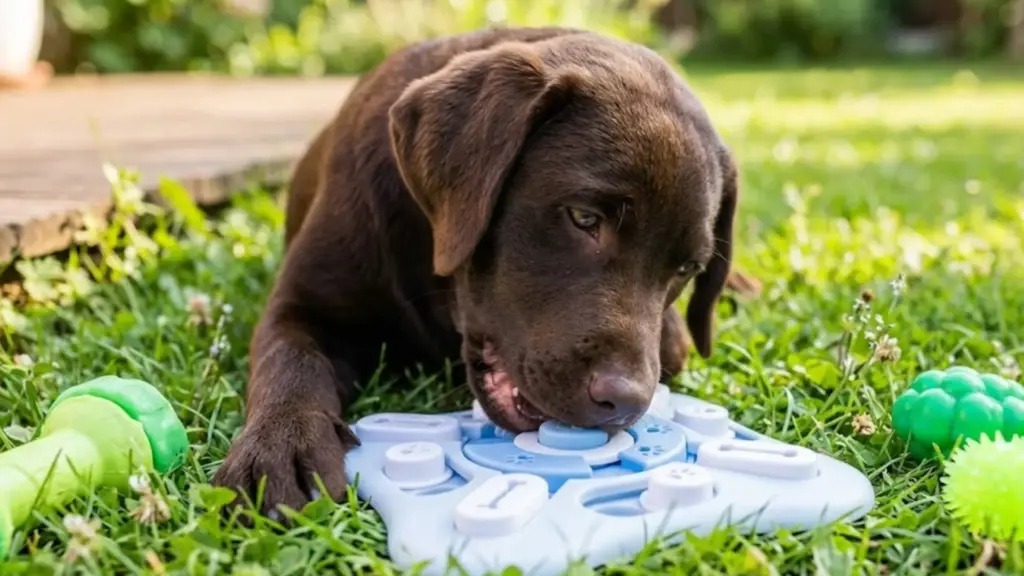
A couch cushion split open, a shoe missing its heel, or a trash can tipped over like a crime scene.
It is tempting to call it bad behavior, but most dogs are not plotting revenge while you are gone.
They are bored, understimulated, and looking for a job their instincts understand. Dogs are built to sniff, chase, paw, tug, lick, and solve small problems.
When nothing gives them that outlet, your furniture often becomes the activity. That is where interactive dog toys can change the day.
The right one turns treats, movement, scent, or sound into a mini puzzle your dog actually wants to solve.
Some toys calm anxious chewers. Some slow down fast eaters. Some keep clever dogs busy when a walk is not enough.
What Makes an Interactive Dog Toy Actually Worth It?
Not every interactive dog toy earns a place in your dog’s routine. Some are exciting for one afternoon and are ignored by the next morning.
A worthwhile toy usually gets three things right: difficulty, safety, and variety. If it is too easy, a clever dog solves it once and moves on.
If it is too hard, a beginner may give up or start chewing the toy instead. Adjustable puzzles are best because they grow with your dog’s confidence.
Size and durability matter too. A toy made for a small breed can become unsafe for a strong chewer or large dog, so choose non-toxic materials that match your dog’s weight and bite style.
Treat dispensing toys are often the easiest starting point, while puzzle boards and motion toys add new challenges. Rotate them so play stays fresh.
You can also explore toys that keep dogs busy for a broader look at what works across different play styles.
Best Interactive Dog Toys for Puzzle Play
Before choosing any toy, think about what your dog actually needs: calmer alone time, slower eating, more movement, or a harder puzzle. The best interactive dog toys are the ones that match your dog’s habits, not just the ones with the most features.
1. KONG Classic
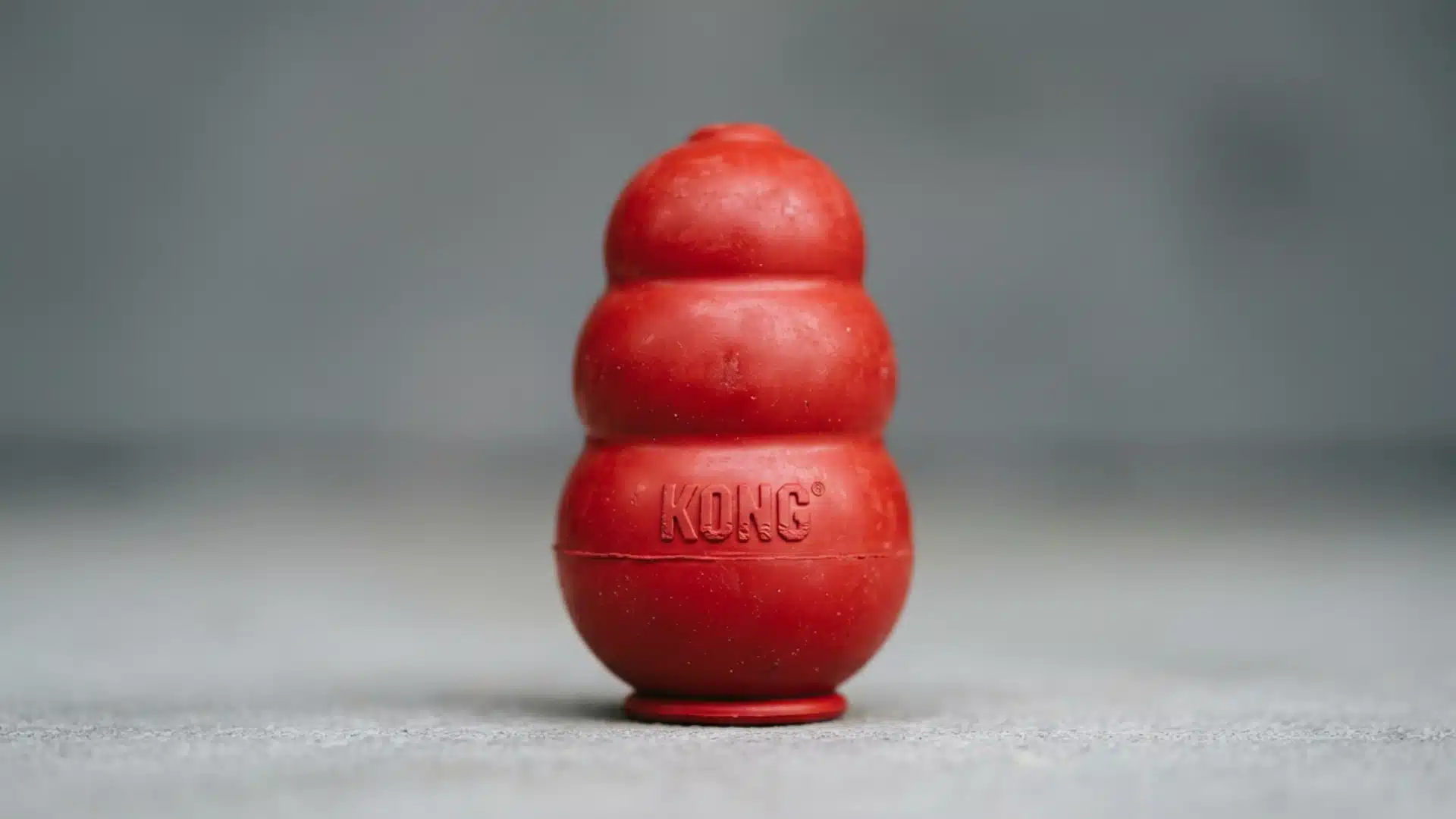
KONG Classic is a reliable pick for dogs that love chewing and food puzzles.
The hollow rubber center can be filled with treats, peanut butter, wet food, or frozen kibble, while the uneven shape adds an unpredictable bounce that keeps dogs engaged.
It comes in sizes XS through XXL, so dogs of all sizes can get a safer, easier-to-grip fit.
- Best for: Heavy chewers, anxious dogs, crate training, and fast eaters.
- Smart tip: Freeze it overnight with peanut butter and banana for longer play.
- Price: $10-$20
2. Outward Hound Hide A Squirrel Puzzle Plush
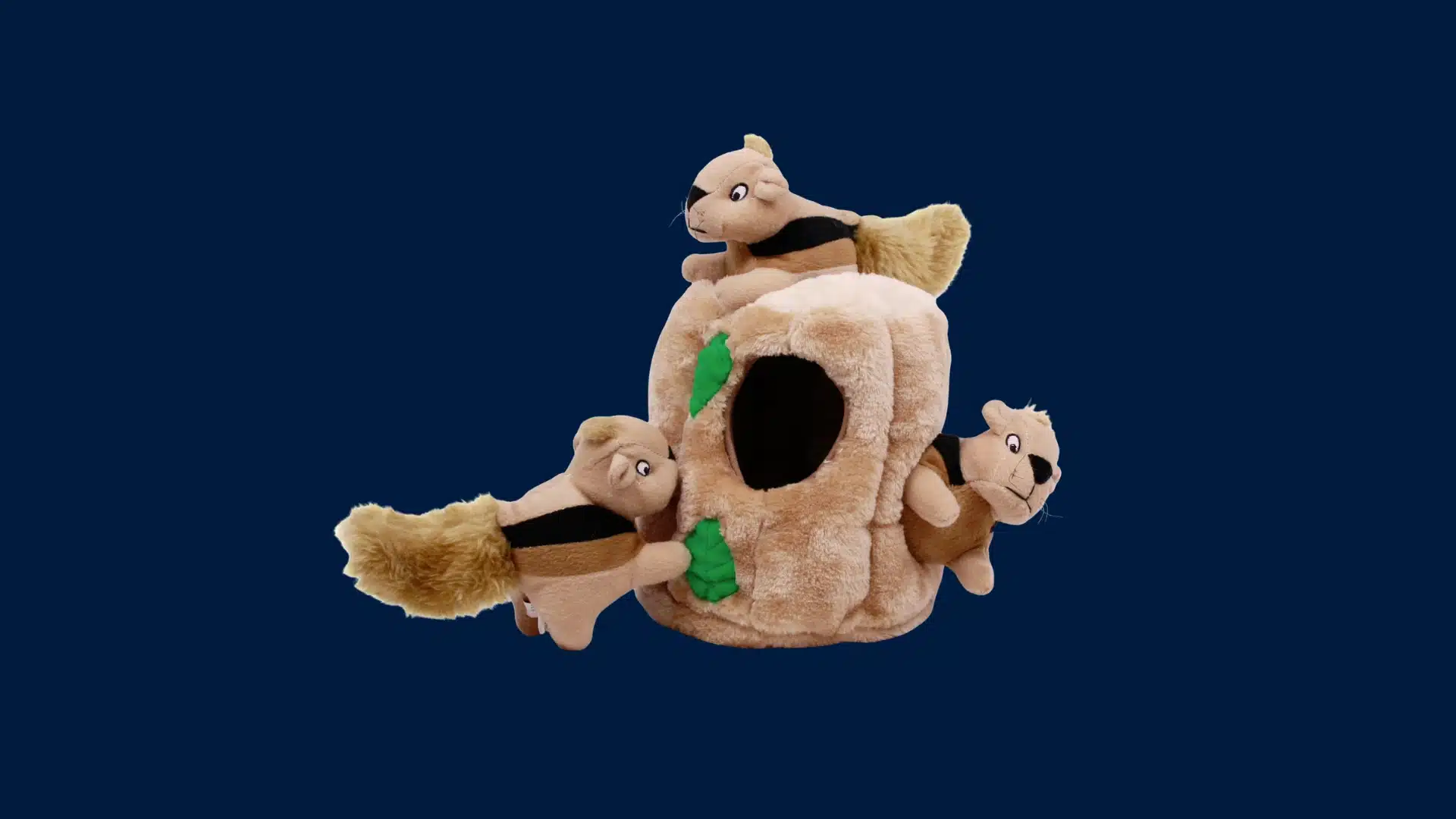
Outward Hound Hide A Squirrel Puzzle Plush taps into a dog’s prey drive with a soft tree trunk filled with squeaky squirrels.
Dogs dig, pull, and search to remove each squirrel, which makes play feel like a small hunting mission.
Replacement squirrels are sold separately, which helps keep the toy useful after wear.
- Best for: Toy-motivated dogs, high-prey-drive breeds, and dogs bored with food puzzles.
- Smart tip: Supervise chewers, as plush pieces can tear with rough use.
- Price: $12-$20
3. Nina Ottosson Dog Tornado Puzzle
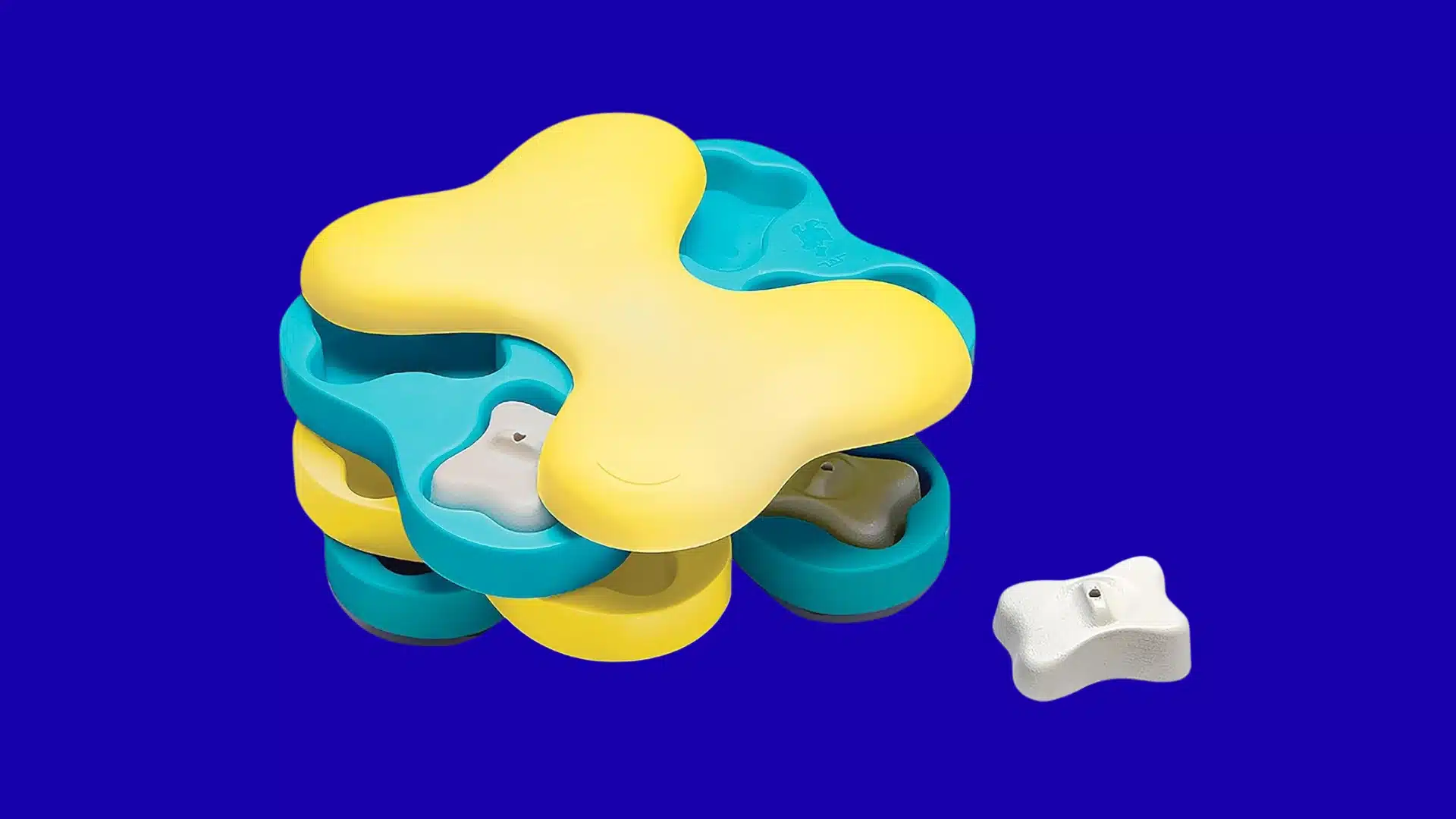
Nina Ottosson Dog Tornado Puzzle is a smart step up for dogs that already understand treat toys.
The rotating trays hide treats in layers, so dogs need to spin each section and use problem-solving skills to reach the reward. It works well as the next challenge after basic treat balls.
- Best for: Food-motivated dogs that have outgrown beginner puzzles, smart, high-energy breeds that pick up patterns fast.
- Smart tip: Hide treats in only a few compartments to keep the game less predictable.
- Price: $15-$25
4. KONG Wobbler Treat Dispenser

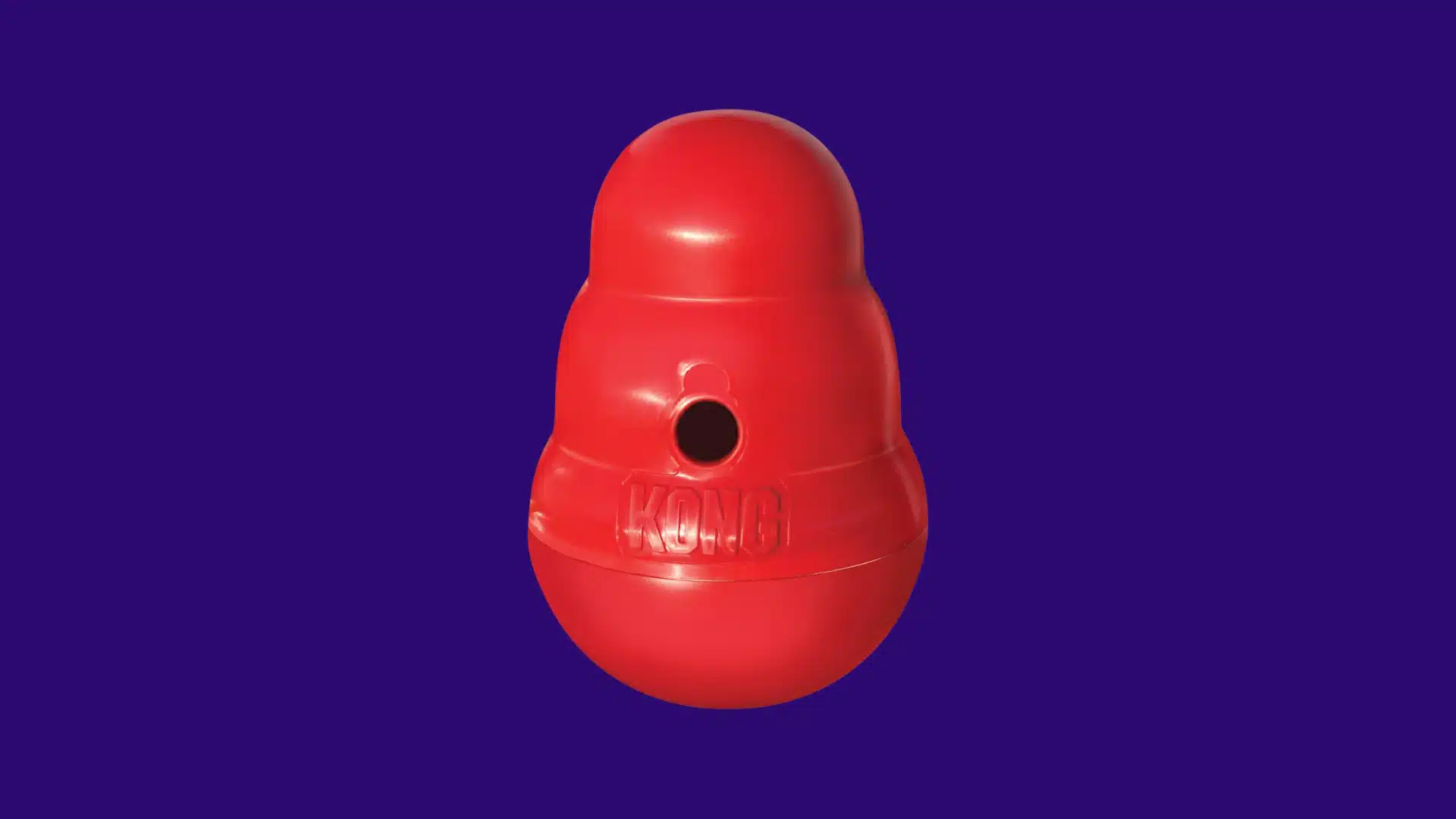
KONG Wobbler Treat Dispenser turns mealtime into a moving puzzle for dogs that eat too fast.
Its weighted base rocks, rolls, and pops back up as dogs bat it around, releasing kibble through a small opening.
Its sturdy build makes slower feeding feel active, rewarding, and more engaging every day.
- Best for: Fast eaters, medium to large dogs, and dogs bored with stationary puzzles.
- Smart tip: Use it as a meal bowl a few times a week for extra mental work.
- Price: $15-$22
5. Piggy Poo and Crew Rooting Snuffle Pig Mat
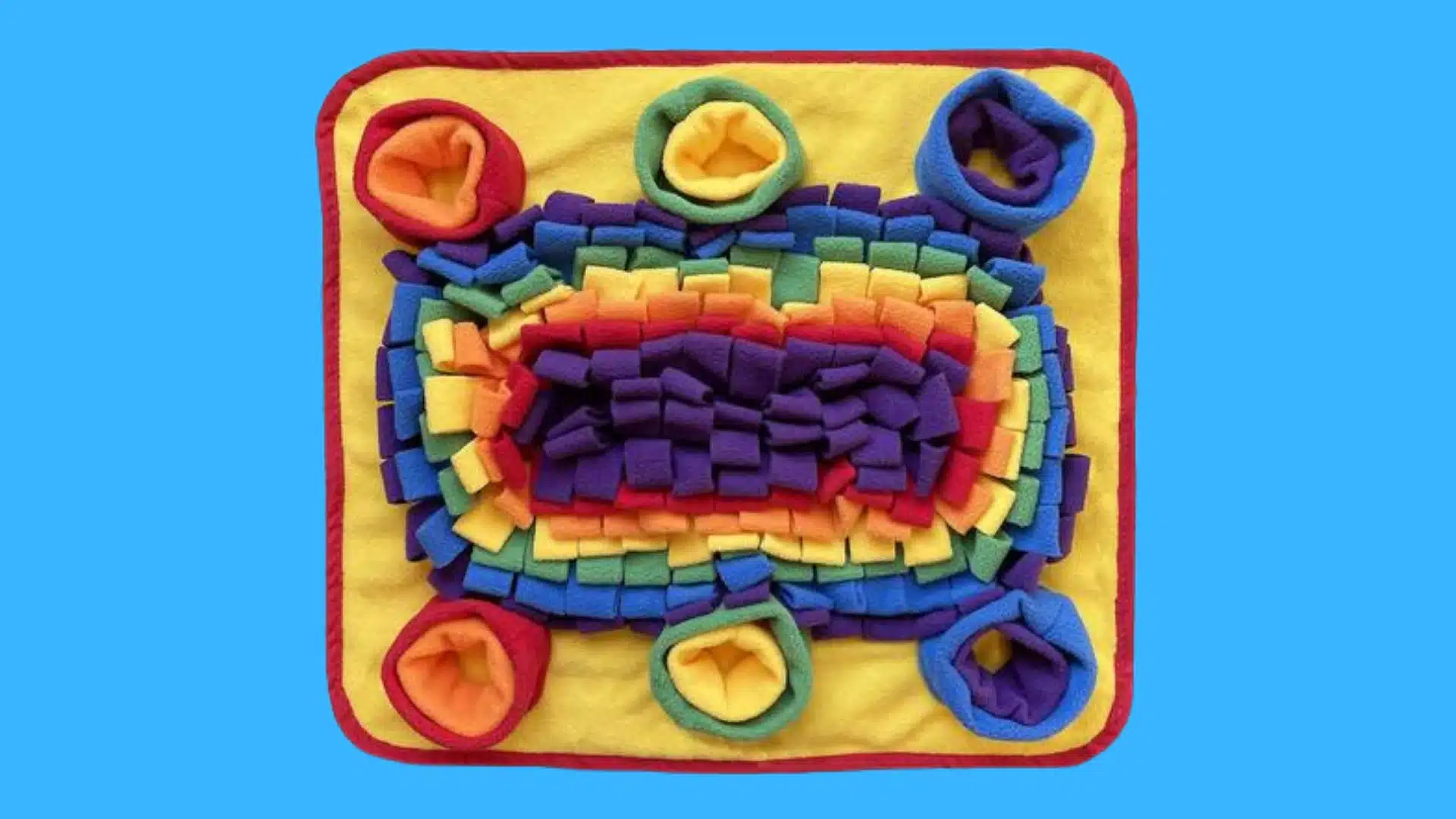
A snuffle mat offers dogs a simple nose-work game that feels calming and rewarding.
Scatter kibble or small treats through the fabric folds, and your dog will use scent to hunt for each piece rather than eat from a plain bowl.
Different sizes make it easy to match your dog’s space and feeding style.
- Best for: Anxious dogs, senior dogs, low-mobility dogs, and dogs new to enrichment.
- Smart tip: Wash it often, as crumbs can build up in the fabric folds.
- Price: $15-$35 depending on size
6. iFetch Interactive Ball Launcher
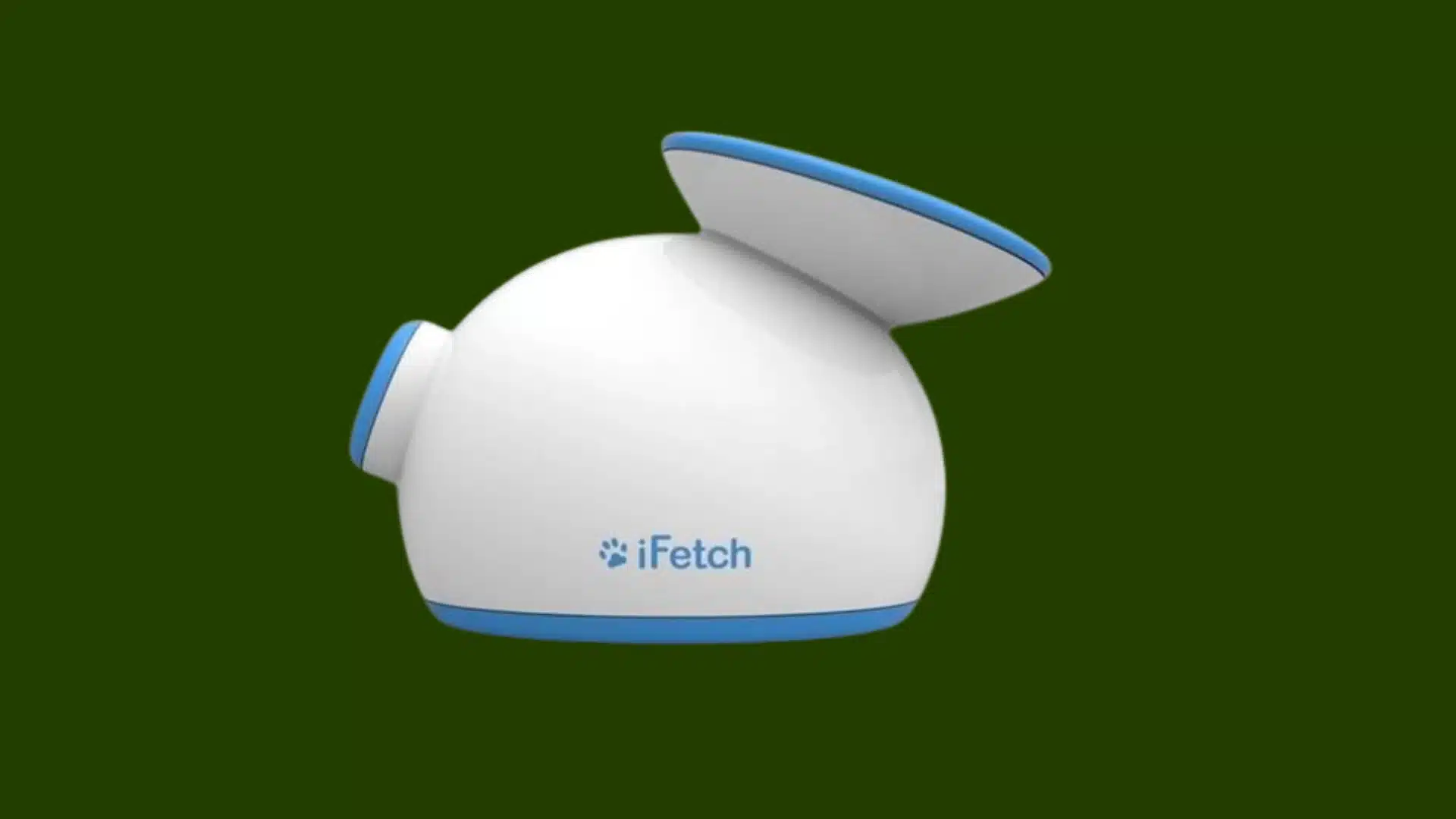
iFetch Interactive Ball Launcher helps fetch-obsessed dogs burn energy without constant throwing from an owner.
Dogs learn to drop the ball into the top opening, then the machine launches it for another chase, adding both movement and learning.
Different versions help match the launcher to indoor play, outdoor use, or ball size.
- Best for: high-energy dogs, fetch lovers, and owners with limited throwing time.
- Smart tip: Start on the shortest launch setting because some dogs dislike the sound.
- Price: $80-$129
7. Trixie Activity Flip Board
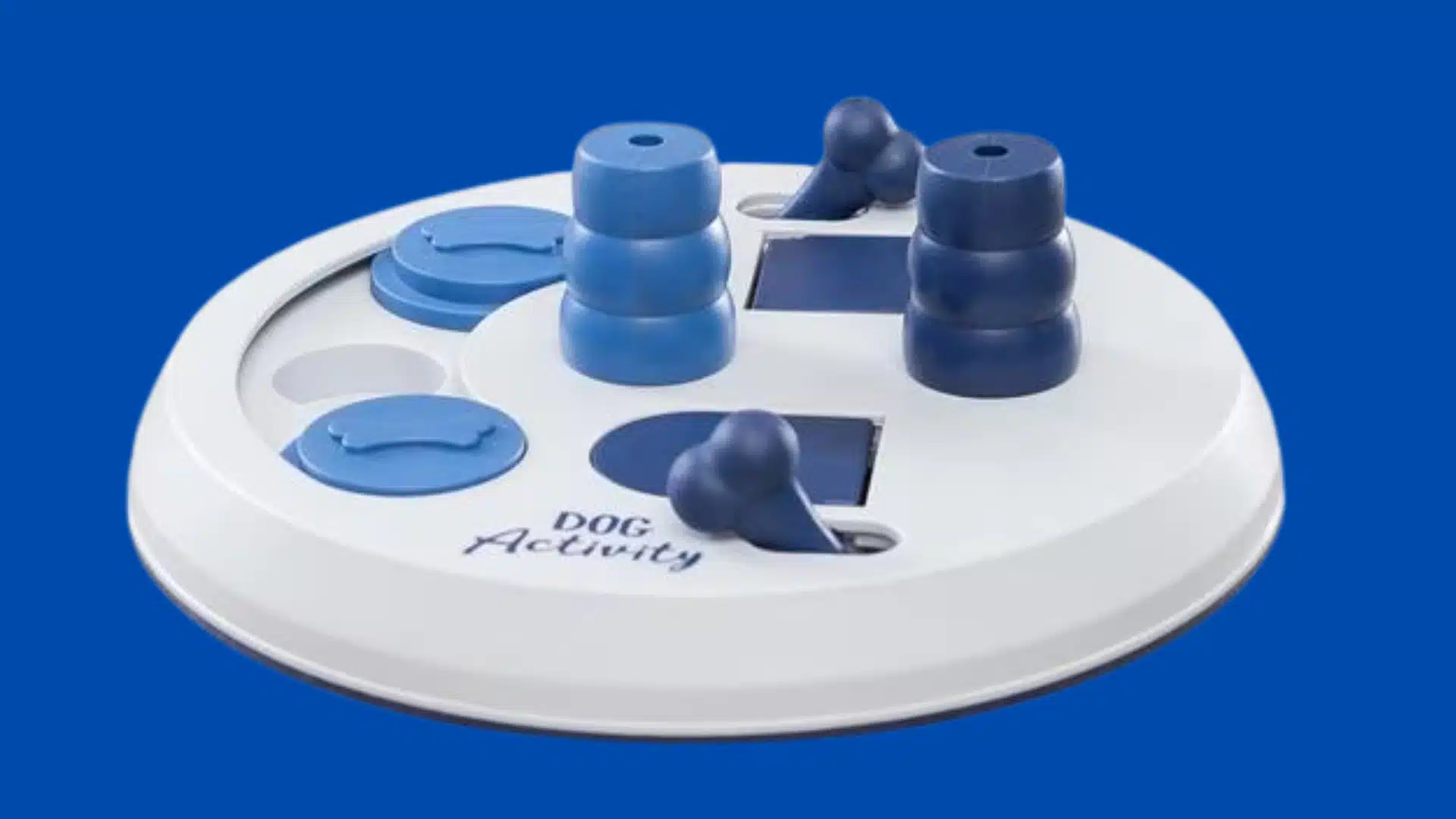
Trixie Activity Flip Board offers intermediate dogs several small tasks in a single flat puzzle.
Dogs flip cones, move sliders, and lift pieces to uncover treats, so the toy asks for more focus than a basic treat ball without feeling too difficult.
Its compact design makes it a convenient upgrade after simpler enrichment toys.
- Best for: Intermediate problem solvers and dogs that have mastered beginner treat toys.
- Smart tip: Let your dog win quickly at first, then make it harder later.
- Price: $7-$20
8. West Paw Toppl Treat Toy
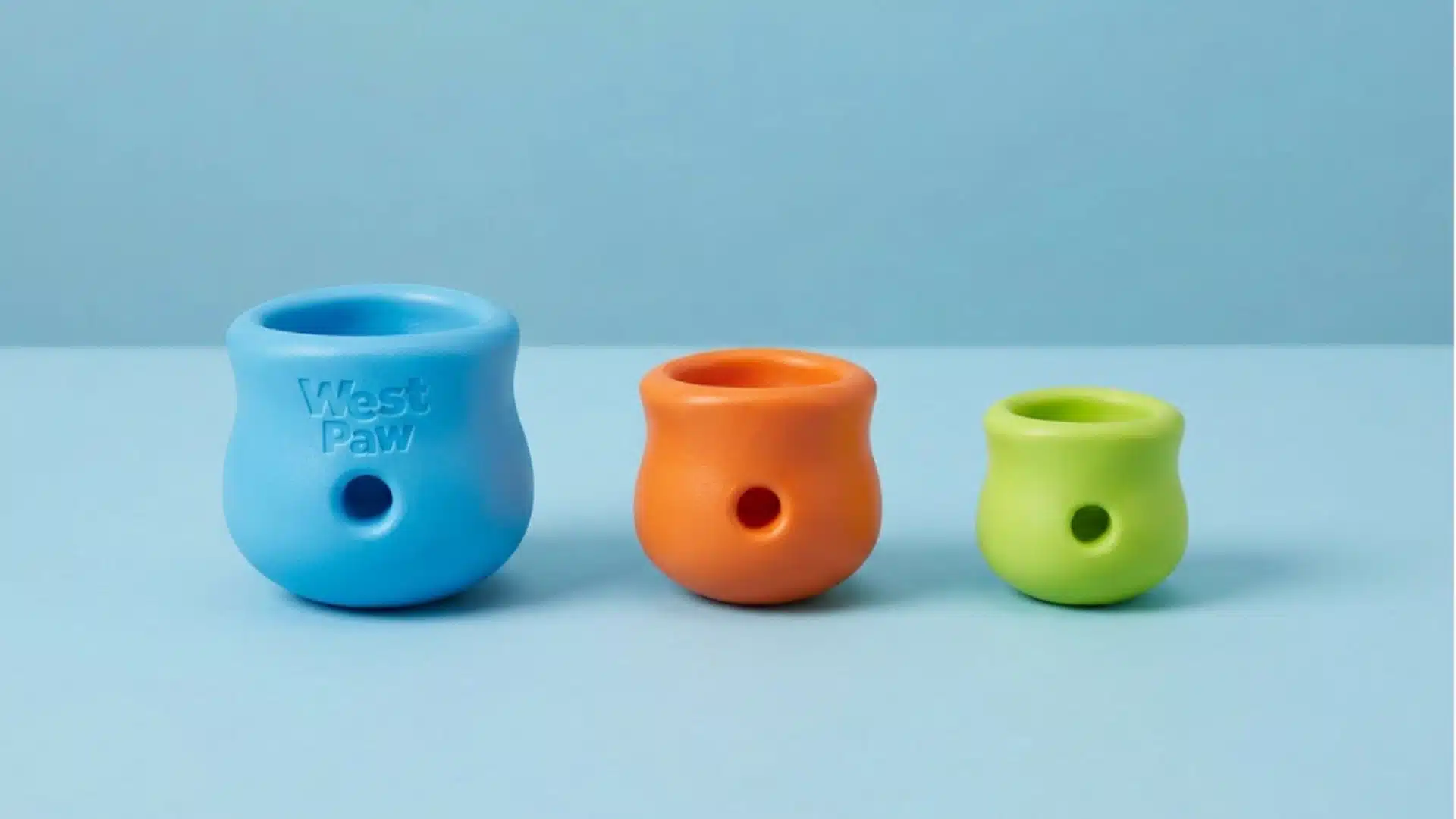
West Paw Toppl Treat Toy works like a stuffing toy, but the wide opening makes filling and cleaning easier.
You can pack it with kibble, yogurt, wet food, or soft treats, then freeze it for a slower challenge. Multiple sizes accommodate small and large dogs, and various stuffing styles at home.
- Best for: Dogs that like KONG toys, chewers who need variety, and owners who want easier cleaning.
- Smart tip: Connect two Toppls together once your dog needs a harder food puzzle.
- Price: $15-$30
9. Frisco Silicone Treat Lick Mat
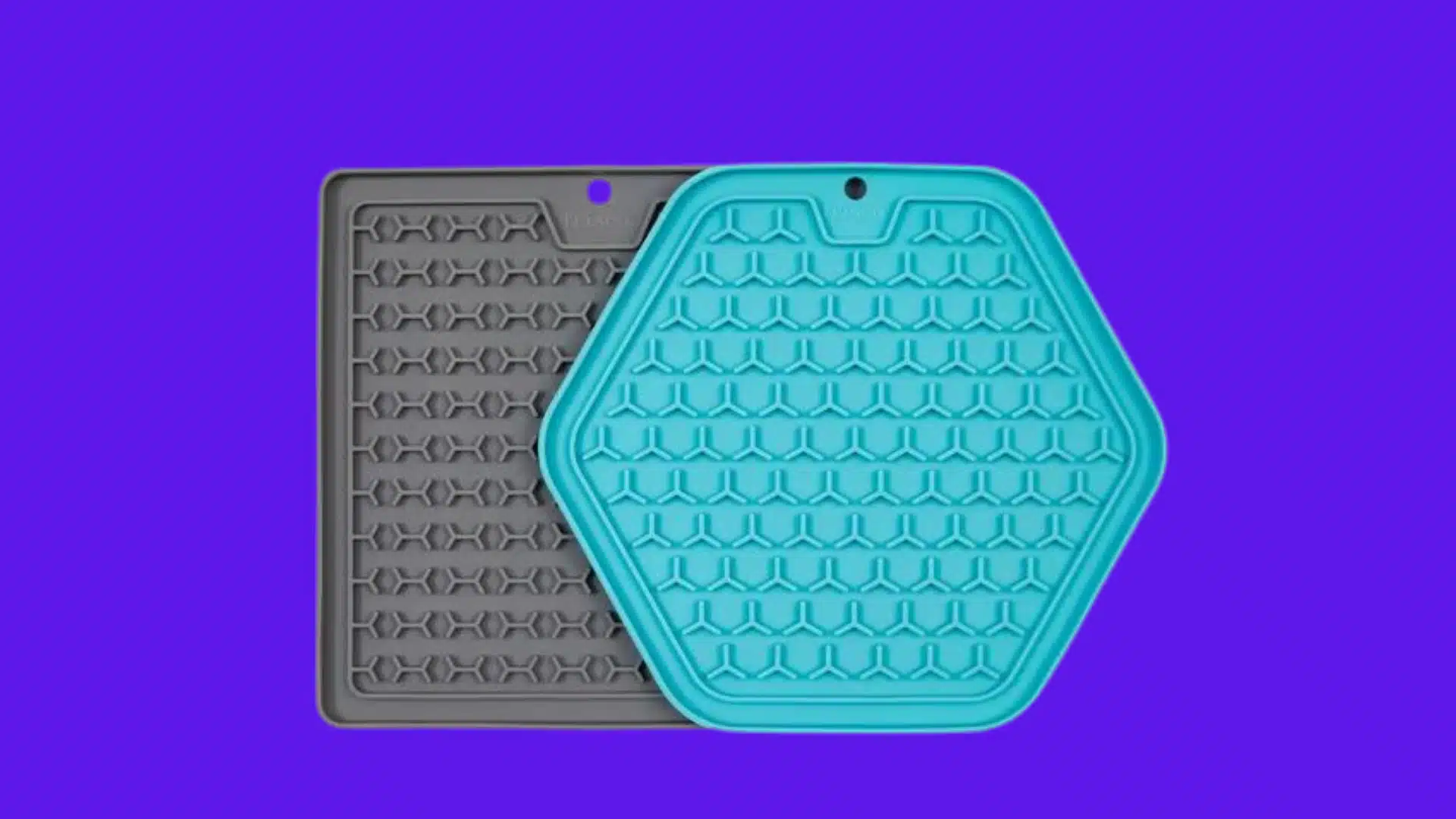
A lick mat gives dogs a quiet way to calm down through steady licking.
Spread peanut butter, plain Greek yogurt, mashed banana, or wet food across the textured grooves, and your dog works slowly across the surface instead of gulping food.
Different styles work for quick calming breaks or longer distraction sessions.
- Best for: Anxious dogs, bath time distraction, recovery days, and calm indoor enrichment.
- Smart tip: Freeze the mat after spreading soft food to extend the activity.
- Price: $10–$18
10. PetSafe Egg Cersizer Treat Dispenser
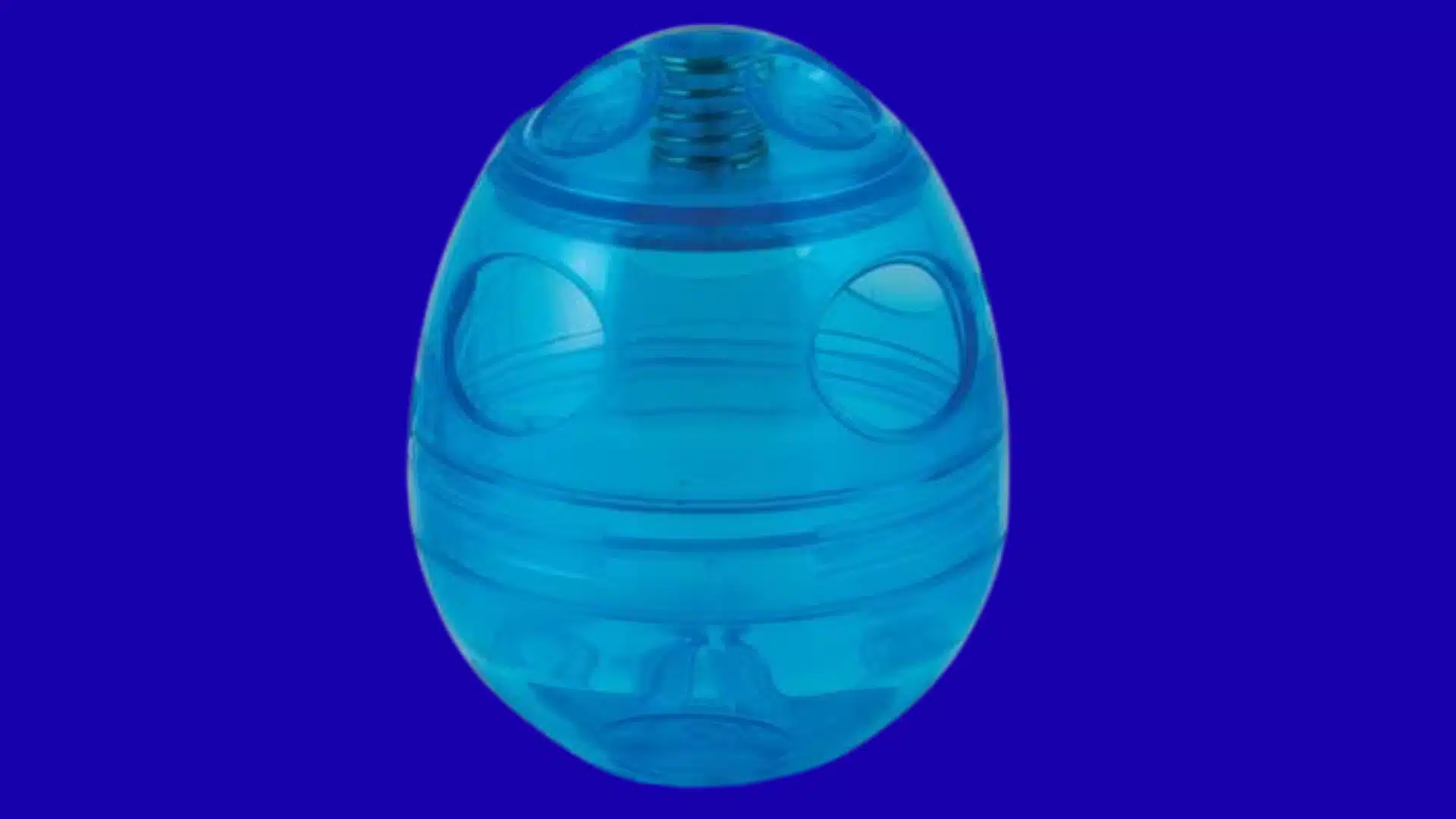
PetSafe Egg Cersizer Treat Dispenser is a beginner-friendly rolling toy for dogs new to puzzles.
The egg-shaped wobbler moves across the floor as dogs push it, and kibble drops through an adjustable opening, providing quick rewards.
Its adjustable design gradually helps build confidence before moving on to harder puzzle toys.
- Best for: Puppies, first-time puzzle users, and dogs needing an easy confidence boost.
- Smart tip: Begin with the widest opening, then tighten it once your dog understands.
- Price: $10-$15
11. Wobble Wag Giggle Ball
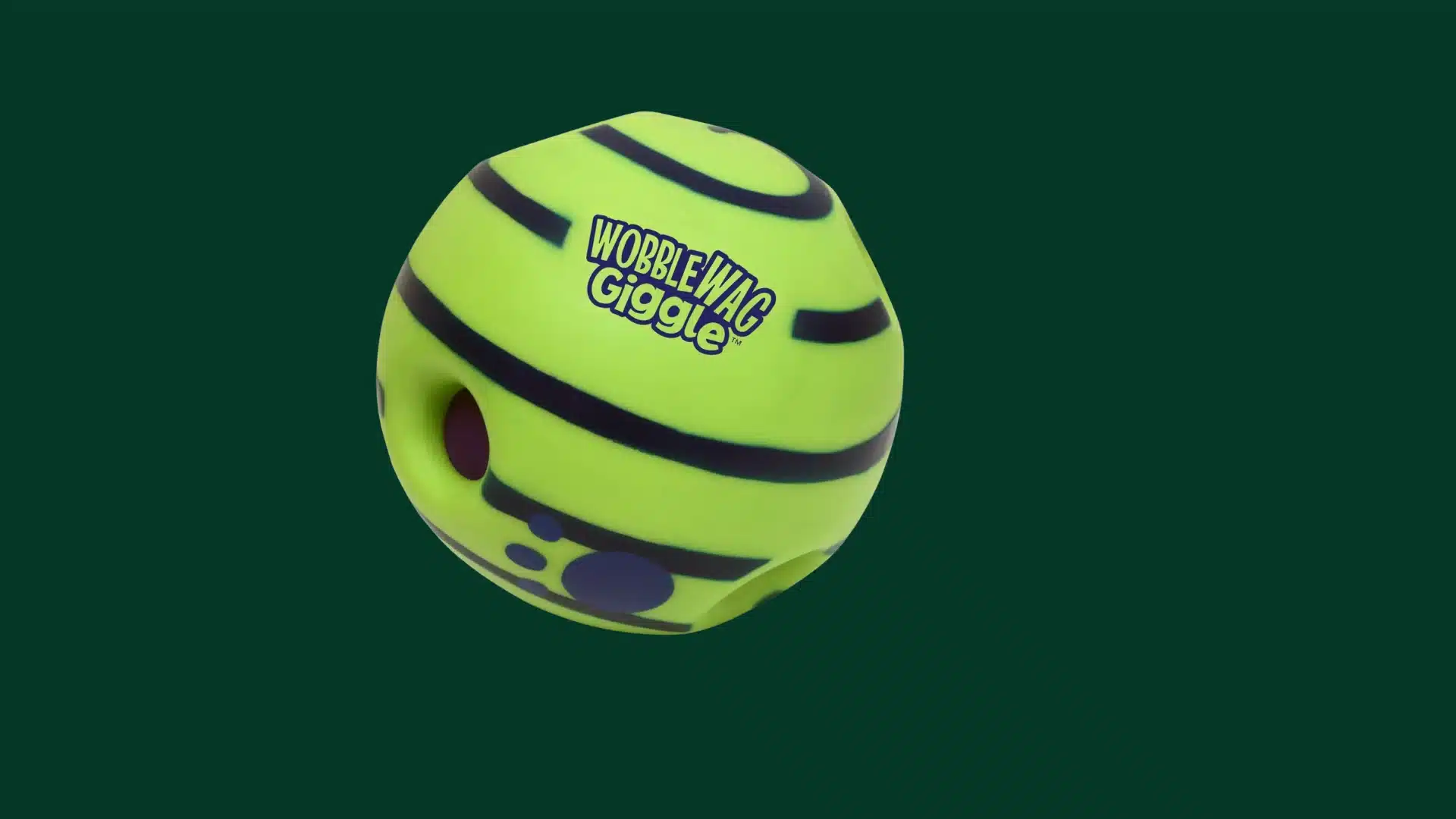
Wobble Wag Giggle Ball rewards movement with funny sounds instead of treats.
Internal tubes make noise as the ball rolls, shakes, or gets pushed across the floor, which can keep sound-motivated dogs interested even when no food is involved.
Its treat-free design suits dogs that enjoy noise, movement, and solo play.
- Best for: Sound-motivated dogs, independent play, and dogs that prefer toys over treats.
- Smart tip: Use it during daytime hours because the giggle sound can get loud indoors.
- Price: $12-$18
How to Choose the Right Toy for Your Dog’s Personality?
Choosing the right interactive toy starts with your dog’s personality, not the trendiest product. A toy should match how your dog thinks, moves, and relaxes. Use this as a starting point, then adjust based on how long your dog stays interested.
| Dog Personality | Best Toy Type |
|---|---|
| Food-motivated dogs | Treat dispensing toys or puzzle feeders |
| High-energy dogs | Motion toys, ball launchers, or tug toys |
| Anxious dogs | Snuffle mats or lick mats |
| Smart or stubborn dogs | Level 2 or higher puzzle boards |
| Senior dogs | Gentle flip puzzles or lick mats |
Signs Your Dog Needs More Mental Stimulation
Some dogs need more than walks and meals to feel settled. When their mind has nothing useful to do, boredom can show up through chewing, barking, pacing, or repeated habits.
These signs do not always mean disobedience. They often point to unmet mental stimulation.
- Chewing furniture, shoes, or household items when left alone
- Barking at walls, empty rooms, or nothing visible
- Pacing around the house or following you after a walk
- Struggling to settle, even after playtime
- Overgrooming, tail chasing, or repeated self-soothing habits
Adding mental enrichment gives your dog a healthier outlet for that restless energy.
Puzzle feeders, scent games, training sessions, and interactive toys can turn boredom into focused activity.
Paired with daily exercise, these small routines can reduce unwanted habits and help your dog feel calmer, busier, and more satisfied at home.
How to Introduce Interactive Toys Without Frustrating Your Dog?
Interactive toys work best when your dog understands the game before it becomes difficult. The goal is to make the first few sessions feel easy, rewarding, and fun instead of confusing.
A dog that wins early is more likely to stay curious and come back to the toy again.
- Start easy: Start with the easiest toy or lowest setting so your dog learns the game quickly and feels rewarded instead of confused or overwhelmed during the first session.
- Show the process: Tip the toy once and let a treat fall out while your dog watches, then allow them to try the same movement at their pace.
- Use better rewards first: Use high-value treats in the beginning so your dog stays interested, then switch to kibble once they understand how the toy pays out food rewards.
- Keep sessions short: Keep early puzzle sessions around ten to fifteen minutes so your dog stays engaged without getting tired, irritated, or tempted to walk away.
- Rotate the toys: Rotate two or three interactive toys through the week so the game stays fresh and your dog does not lose interest too quickly.
- End on success: Stop the session while your dog is still curious and happy, because ending with a win makes them more likely to return tomorrow.
Conclusion
The right interactive toy can turn a restless dog into a calmer, happier companion, and it does not take a major change in routine to see results.
A stuffed KONG before you leave, a snuffle mat during meals, or a puzzle board in the evening can give your dog a healthy job to focus on.
The best choice is the one that matches your dog’s habits, energy, and confidence level. Watch how they respond, then adjust from there.
Start with one toy from this list and let your dog show you what works.
Which interactive toy does your pup love most? Share it in the comments so other pet parents can find a perfect match too.
Frequently Asked Questions
Can Interactive Toys Help with Separation Anxiety?
Yes, interactive toys can help some dogs feel calmer during departures. Stuffed KONGs, lick mats, and slow treat toys give your dog something positive to focus on. For moderate or severe separation anxiety, they work best when paired with training and behavior support.
How Long Should My Dog Play with Interactive Toys Each Day?
Most dogs do well with two or three short sessions of 10 to 20 minutes. Mental work can tire a dog faster than a walk, so watch their body language. Stop if your dog seems frustrated, bored, or overly tired.
Are Interactive Dog Toys Safe for Unsupervised Play?
Some toys are safer than others. Hard rubber toys like KONG Classic or West Paw Toppl are often better for solo use. Plush toys, puzzle boards, and toys with small removable parts should be used while someone is nearby.