
Blueberries are one of those rare human snacks that feel almost too easy to share.
They are small, sweet, low in calories, and safe for most dogs when served the right way. That is why so many pet parents ask the same question: can dogs eat blueberries?
As a pet nutritionist, I always hear this same question more than almost any other fruit question. It deserves more than a one-word answer, and that’s exactly what this guide gives you.
That’s exactly what this blog means to cover.
You will learn the nutrients blueberries provide, their potential benefits for dogs, safe serving amounts, how to prevent choking, signs of digestive upset, and when to avoid feeding them.
Nutritional Breakdown of Blueberries for Dogs
Blueberries are mostly water, but what’s packed into the rest is worth paying attention to. Beyond the sweetness, they carry vitamins, minerals, and plant compounds that do real work for a dog’s health.
| Nutrient | Amount per 100 g |
|---|---|
| Calories | 57 |
| Water | 84 g |
| Carbohydrates | 14.5 g |
| Fiber | 2.4 g |
| Protein | 0.7 g |
| Fat | 0.3 g |
| Key vitamins | C, K, B6 |
| Minerals | Manganese, potassium, folate |
| Plant compounds | Anthocyanins, quercetin, resveratrol, pterostilbene |
For a dog, this profile makes blueberries a nutritious bonus to a complete, balanced diet. Regular dog food should always be the foundation.
The nutritional value of blueberries is best understood within the context of a dog’s overall nutritional needs and treat intake.
Can Dogs Eat Blueberries?
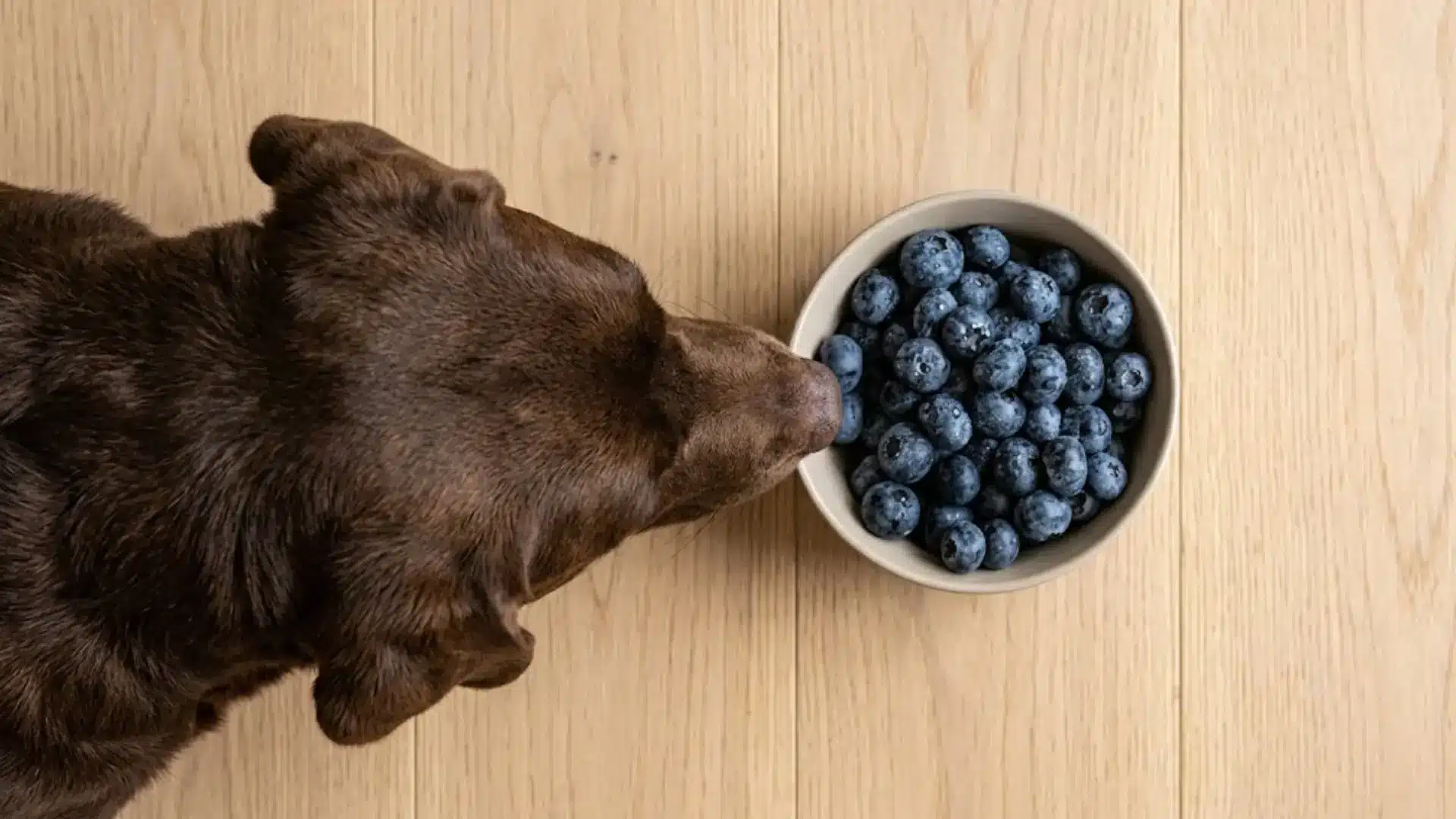
Yes, dogs can eat blueberries. They are non-toxic, suitable for most healthy dogs, and one of the better fruit choices you can make as a treat.
Fresh and frozen blueberries are both safe, as long as they’re plain with no added sugar, syrup, or flavorings.
Wild blueberries are also safe in principle, but they require confident identification.
Several wild berries look similar to blueberries and are toxic to dogs. If your dog has access to the garden, plain store-bought is always the safer default.
Blueberries are low in sugar compared to many other fruits, which puts them on the right side of the treat spectrum for most dogs, including those watching their weight.
Like all treats, they should stay within 10% of your dog’s daily calorie intake and complement a complete, balanced diet rather than replace any part of it.
Are Blueberries Bad for Dogs?

Blueberries are safe for most dogs, but three risks are worth keeping in mind. Their small, round shape makes them a choking risk for fast eaters and small breeds.
Halve or mash before serving if that sounds like your dog. Too many at once can also cause loose stools since the fiber adds up fast, so keep portions within the serving guide below.
For diabetic dogs, the natural sugar is worth a quick vet check before making blueberries a daily habit.
Wild blueberries require confident identification, as several toxic berries look similar. Store-bought is always the safer default.
Some dogs have sensitivities to certain fruits, including blueberries. If you’re introducing them for the first time, start with two or three berries and watch for these signs over the next 24 hours
Note: If your dog has a diagnosed health condition, check with your veterinarian before introducing any new food.
Health Benefits of Blueberries for Dogs
Blueberries bring more to the bowl than most people expect. When given in the right amounts, they offer genuine benefits for your dog’s health.
- Antioxidant protection: Anthocyanins and quercetin help neutralize free radicals, reducing oxidative stress that contributes to cell damage and accelerated aging in dogs.
- Brain health in senior dogs: Studies show that antioxidants added to a senior dog’s diet reduce the effects of cognitive aging. For older dogs showing signs of slowed thinking or confusion, blueberries are worth including regularly.
- Immune support: Vitamin C supports immune function and acts as a secondary antioxidant, helping the body manage inflammation more effectively.
- Digestive health: The fiber content supports healthy gut motility and consistency. Pair blueberries with other fiber-rich foods for dogs for a well-rounded snack routine.
- Cardiovascular support: Polyphenols, including resveratrol, support heart health and circulation. The same compounds that make blueberries good for humans apply at the appropriate scale for dogs.
- Weight management: At 57 calories per 100g and low in sugar, blueberries are a smart treat for dogs on a weight management plan.
- Hydration boost: Blueberries are about 84% water. A small handful on a warm day contributes to hydration in a way most dry treats don’t.
How Many Blueberries Can a Dog Eat?
Portion size depends on your dog’s size. The 10% treat rule applies across the board: all treats combined should stay within 10% of your dog’s total daily calorie intake.
I remind every client that this is cumulative. If your dog already gets training treats throughout the day, blueberries count toward that same 10%.
Pair blueberries with other nutritious snack ideas for dogs to rotate without going over budget.
| Dog size | Amount |
|---|---|
| Small (under 20 lbs) | 10 blueberries |
| Medium (20–60 lbs) | 20-25 blueberries |
| Large (60+ lbs) | 30-40 blueberries |
Unlike strawberries, blueberries are low enough in sugar and calories that daily feeding is reasonable within these limits.
How to Serve Blueberries to Your Dog
Blueberries are one of the easiest fruits to serve. No cutting, no peeling, no pits to remove. The preparation is minimal, but what matters is choosing the right form and knowing what to skip.
- Fresh blueberries: Rinse thoroughly under cool water before serving. Serve whole for medium and large dogs. Halve or mash for small breeds, puppies, fast eaters, and senior dogs with dental issues.
- Frozen blueberries: Plain frozen blueberries with no added sugar or flavoring are completely safe, and most dogs prefer them cold. A great warm-weather treat and easy to keep on hand.
- Lick mat: Mash a small handful of blueberries into a lick mat for an enrichment activity. The pureed texture removes any choking risk and keeps dogs occupied longer than a plain handful.
- Meal topper: Scatter a few fresh blueberries over your dog’s kibble to add variety and a mild natural sweetness. Works well for picky eaters who need a little extra motivation.
- Homemade treats: Blueberries blend well into dog-safe bakes. If you want to try something beyond plain fruit, our homemade dog treat recipes have a few ideas worth trying.
- Skip entirely: Blueberry muffins, pies, jams, canned versions in syrup with sweeteners, and any blueberry-flavored product. These often contain added sugar, xylitol, or other ingredients that are not safe for dogs.
Can Puppies Eat Blueberries?
Puppies can eat blueberries, but the same timing rules apply as with any fruit.
Their digestive systems are still developing, and treats that sit fine with an adult dog can cause real stomach upset in a younger pup.
Wait until your puppy is fully settled on solid food before introducing any fruit.
- Under 8 weeks: Milk only
- 8 to 12 weeks: Puppy food only, no fruit
- 3 to 6 months: 2 to 3 mashed blueberries, once settled on solid food
- 6 months and older: Follow small dog portions
The choking risk is higher with puppies than with adults. Always mash or halve blueberries for young dogs, even at the 3 to 6-month stage.
Start with just 2 berries, then watch for loose stools or any change in appetite over the next 24 hours. If everything looks normal, you can build it into the routine from there.
Can Dogs Eat Blueberries Every Day?
Yes, dogs can eat blueberries every day, and nutritionally, it’s one of the better daily treat habits you can build.
Blueberries are low in calories, relatively low in sugar, and rich in antioxidants. Their benefits may accumulate over time, especially for senior dogs, for whom cognitive aging research is most relevant.
The practical limit is portion size, not frequency.
As long as the daily amount stays within the serving guide above and fits inside the 10% treat allowance alongside any other treats your dog gets, daily blueberries are fine.
The one reason to occasionally rotate in other fruits is gut microbiome diversity. A varied diet, even at the treat level, supports a broader range of beneficial gut bacteria.
Blueberries as a rotation option, along with raspberries or watermelon, give your dog variety without complicating your routine.
Conclusion
Blueberries are about as close to a perfect dog treat as fruit gets. Low calorie, low sugar, easy to serve, and backed by actual research on cognitive aging and antioxidant protection.
Most dogs love them. They work as training treats, meal toppers, lick mat fillers, or just a handful handed over for no particular reason.
The rules are simple: plain, fresh, or frozen, portions matched to your dog’s size, and skip anything processed or flavored.
Do that, and blueberries are a genuinely good addition to your dog’s routine.
Ever thought, can dogs eat blueberries? Your dog’s first curious bite may be the cutest clue. Drop a comment below and let us know how they prefer them.
Frequently Asked Questions
Can Dogs Eat Dried Blueberries?
Only in very small amounts if plain with no added sugar. Drying concentrates the sugar significantly, so dried blueberries aren’t a good regular option. Fresh or frozen is always the better choice.
Do Blueberries Help with Dog Allergies?
Not directly. Quercetin in blueberries has some anti-inflammatory properties, but blueberries won’t treat or prevent allergic reactions. They’re a safe addition to an anti-inflammatory diet but not a substitute for a vet’s treatment plan.
Can Dogs Eat Blueberries with Yogurt?
Plain, unsweetened yogurt with blueberries is generally fine for dogs without lactose sensitivity. The combination is actually one of the better fruit-dairy snack pairings because plain yogurt provides probiotics that support gut health.