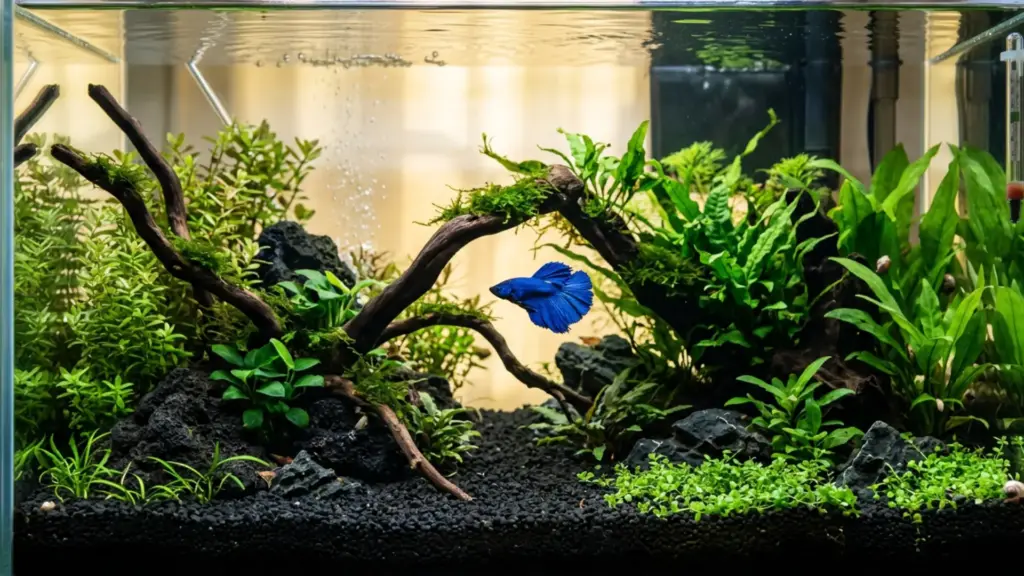
Betta fish tank setup starts with one small promise: giving that bright little fish more than a tiny cup. You saw him at the pet store.
Long fins, bold colors, and eyes that made him feel almost too aware for a fish. He looked beautiful, but that small plastic cup probably did not feel like home.
I know how easy it is to think a betta can live happily in a tiny space because that is how they are often displayed. The truth is that these fish need more than that.
They need room to swim, warm water, clean conditions, and places to rest. The good news is that creating a better home is not complicated.
This blog will go through the process in a simple, beginner-friendly way.
Essential Betta Fish Tank Equipment Checklist
Before bringing a betta home, make sure all essential equipment is ready. Every item plays a role in creating a stable environment with clean water, proper warmth, and enough comfort for healthy daily living.
- Tank with a lid: A snug lid is not a nice-to-have; it is the thing standing between your betta and the floor. Leave a small air gap between the water surface and the lid so he can breathe from above.
- Adjustable submersible heater: Betta fish are tropical and need water in the 77 to 82°F range. A heater with an adjustable dial gives you control when room temperature shifts with the seasons.
- Low-flow filter: Filtration removes ammonia and keeps the nitrogen cycle running. The “low-flow” part is especially important for bettas, which we cover in the next section.
- Thermometer: A heater does not guarantee accuracy. A separate thermometer, either a stick-on strip or a digital probe, tells you what the water temperature actually is.
- Substrate: Gravel or fine sand works. Substrate provides beneficial bacteria with somewhere to live, anchors plants, and makes the tank look like a real habitat rather than a glass box.
If you’re thinking about the fish you can add as tankmates down the road, a 10-gallon tank gives you more flexibility.
Betta Fish Water Parameters
Getting water chemistry right is just as important as the physical setup. Bettas are sensitive to ammonia spikes, pH swings, and temperature drops. Here are the target ranges to keep your tank stable.
| Parameter | Target Range | Why it matters |
|---|---|---|
| Temperature | 76-82°F (24-28°C) | Bettas are tropical; cold water slows metabolism, weakens immunity, and causes lethargy |
| pH | 6.5-7.5 | Neutral to slightly acidic is ideal; swings outside this range stress fish quickly |
| Ammonia | 0 ppm | Any detectable ammonia is harmful; it burns gills and fins |
| Nitrite | 0 ppm | Nitrite prevents blood from carrying oxygen; even low levels are dangerous |
| Nitrate | Under 20 ppm | The end product of a healthy cycle, manageable with regular water changes |
| Water hardness (GH) | 3-4 dGH | Soft to moderately soft water matches betta’s natural habitat in Southeast Asia |
How to Set up a Betta Tank
Setting up a betta tank is straightforward when done in the right order. Follow these steps to create a clean, stable, and comfortable home before introducing your fish.
Step 1: Set Up the Tank Before Buying Your Betta Fish
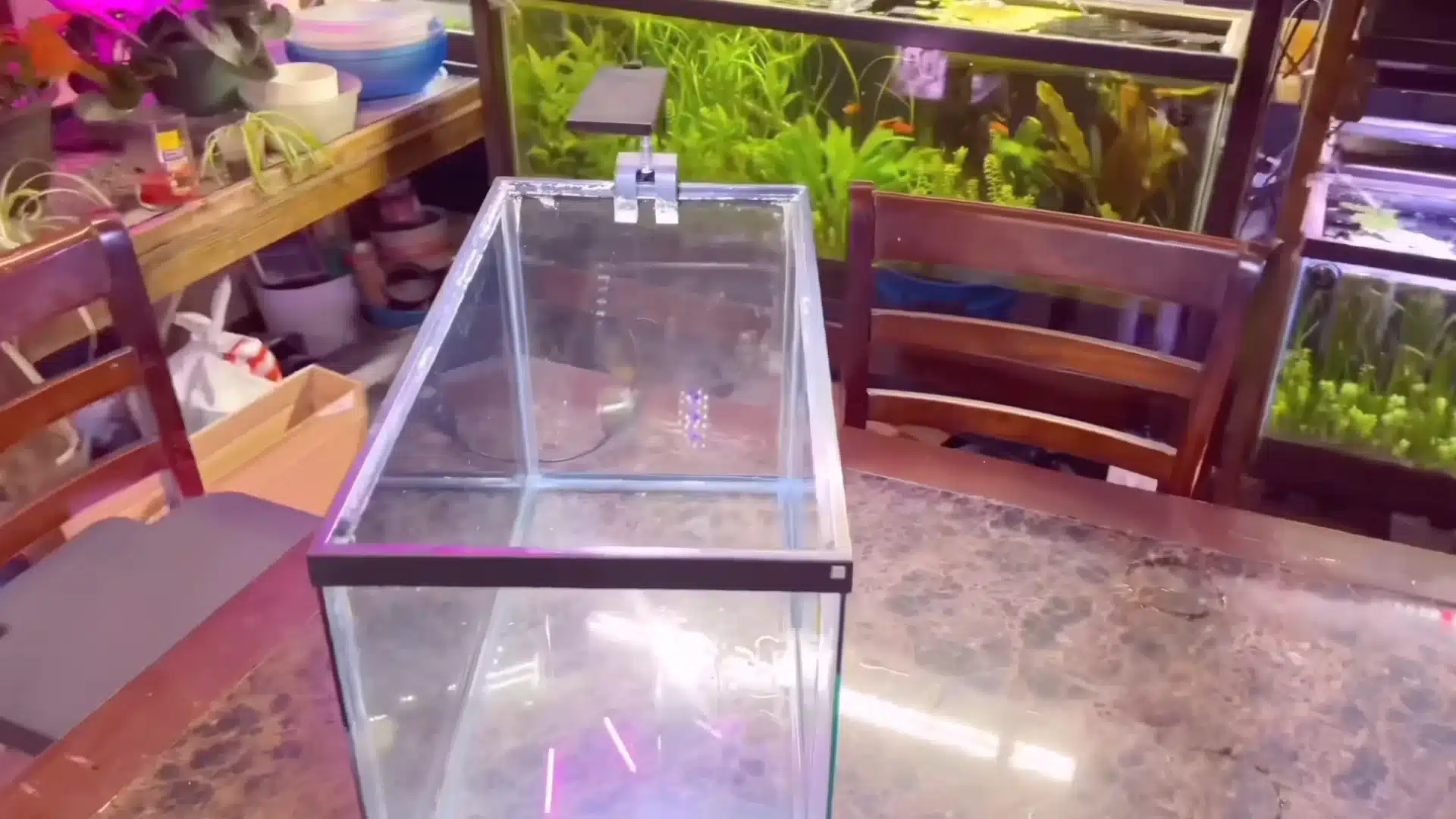
Before buying your betta, prepare the tank first so the fish enters a safe home. Choose an aquarium that holds at least 5 gallons, because bettas need stable water, swimming space, and room to rest.
Tiny bowls can make temperature and water quality harder to control. For beginners, an all-in-one tank is helpful because it often includes lighting and filtration areas.
Set everything up in advance, then bring your betta home once the aquarium is ready, clean, and properly prepared for long-term health.
Step 2: Add Sand or Gravel with the Right Depth
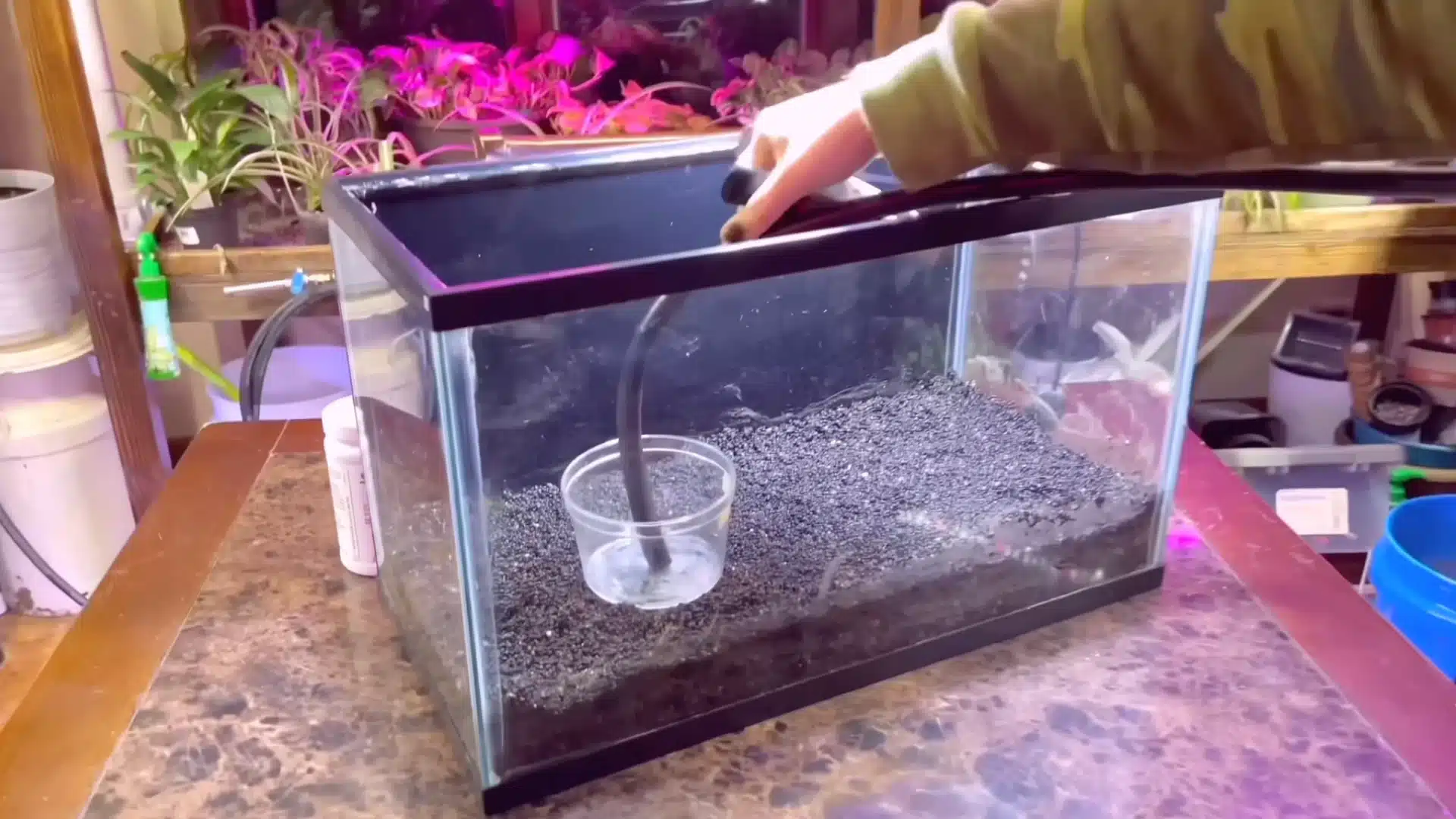
Adding substrate is one of the first steps in creating a comfortable environment for your betta fish. You can choose sand, gravel, or a plant-specific substrate based on the look you want for the aquarium.
While color and style are mostly personal preferences, the depth of the substrate is important if you plan to keep live plants.
Aim for about 2 to 3 inches to give plant roots enough room to grow properly.
Although standard sand and gravel do not provide nutrients, many beginner-friendly plants can still thrive with proper care and maintenance.
Step 3: Fill the Aquarium and Treat the Water
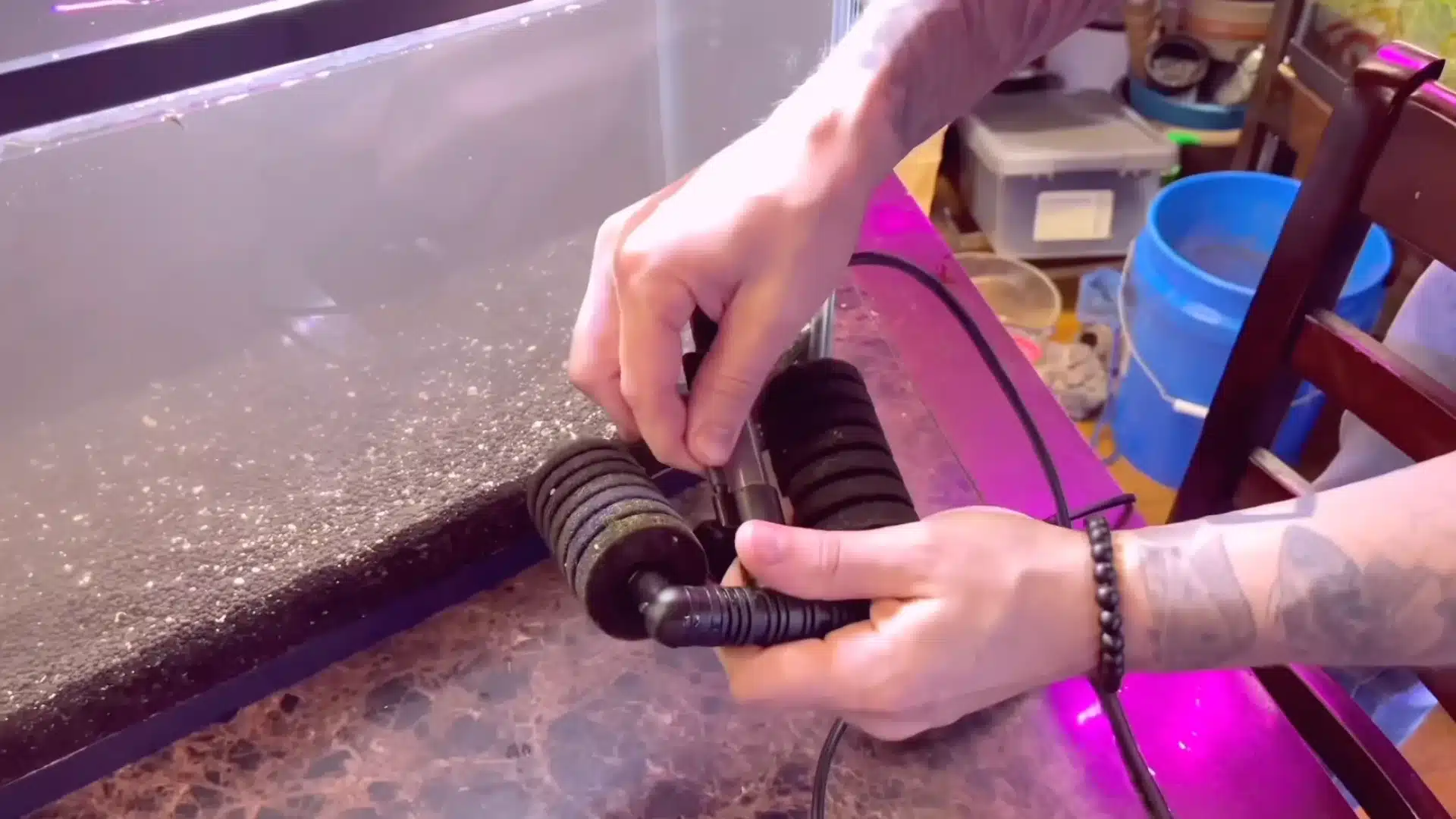
After adding the substrate, it is time to fill the aquarium with water. The recommendation is to use an aquarium water changer rather than buckets because it makes filling and draining the tank much easier.
Once the aquarium is full, treat the water with a dechlorinator if your home uses city water. Chlorine and other chemicals can be harmful to fish, making this step essential for their safety.
If you use well water, dechlorination may not be necessary, but city water should always be properly treated before use
Step 4: Install a Sponge Filter and Aquarium Heater
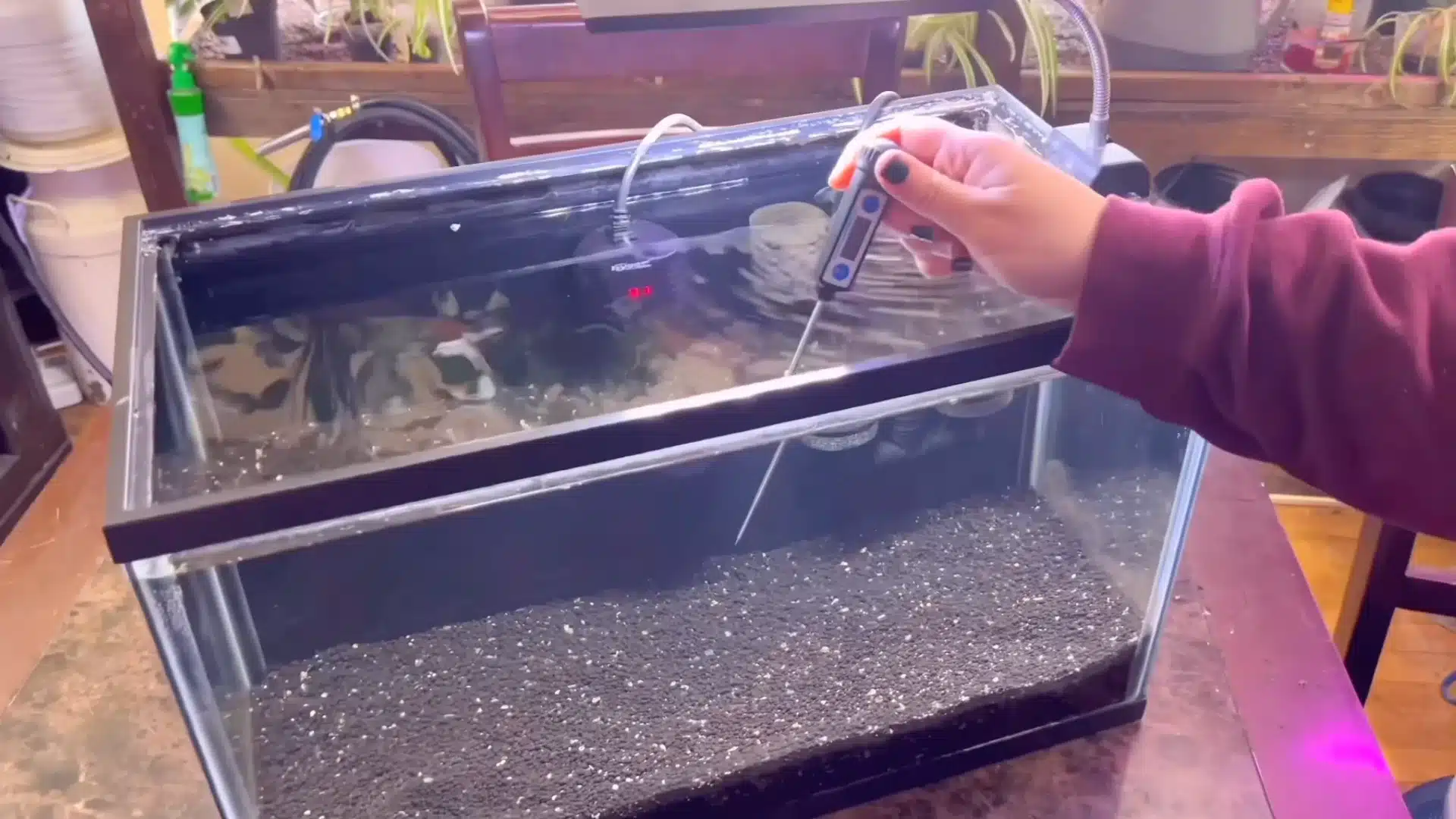
A sponge filter is often considered the best filtration option for betta fish because it provides gentle water flow that will not overwhelm them.
Strong currents from some hang-on-back filters can cause stress and make swimming difficult.
Since sponge filters operate with an air pump, both pieces of equipment should be installed before adding your fish. A reliable aquarium heater is equally important because bettas thrive in warm water.
Aim to maintain a temperature between 79 and 81 degrees Fahrenheit, and always verify it with a thermometer.
Step 5: Decorate the Tank with Live Plants and Lighting
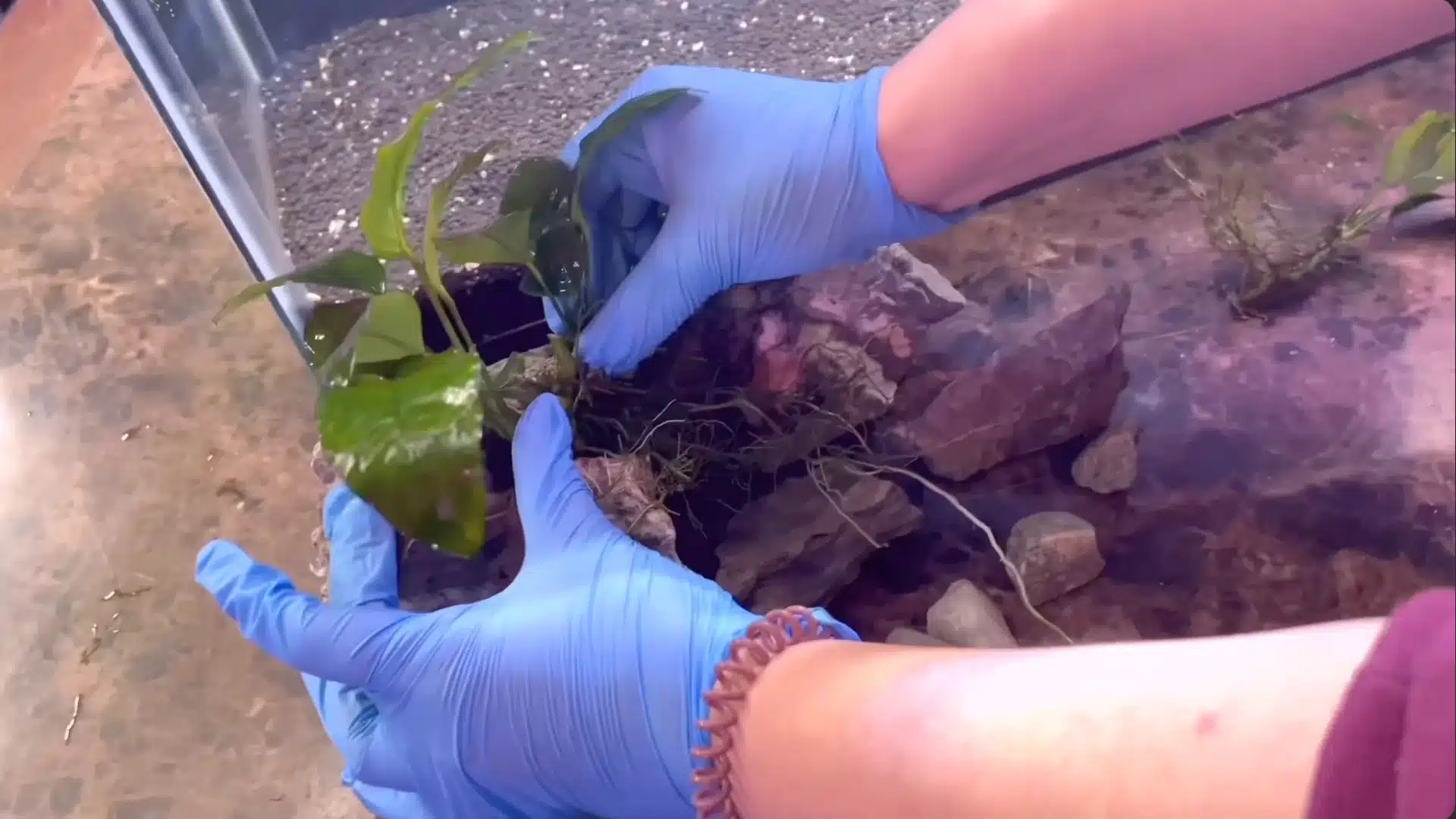
Decorating your aquarium is the stage where it begins to feel like a natural home for your betta fish.
While you can choose any style you like, it is highly recommended to include live plants, as they help create a balanced ecosystem and can reduce maintenance over time.
Anubias and Java fern are great beginner plants because they can be attached to rocks or driftwood. Add a good aquarium light to help them grow and make the tank look better.
Step 6: Cycle the Aquarium Before Adding the Fish
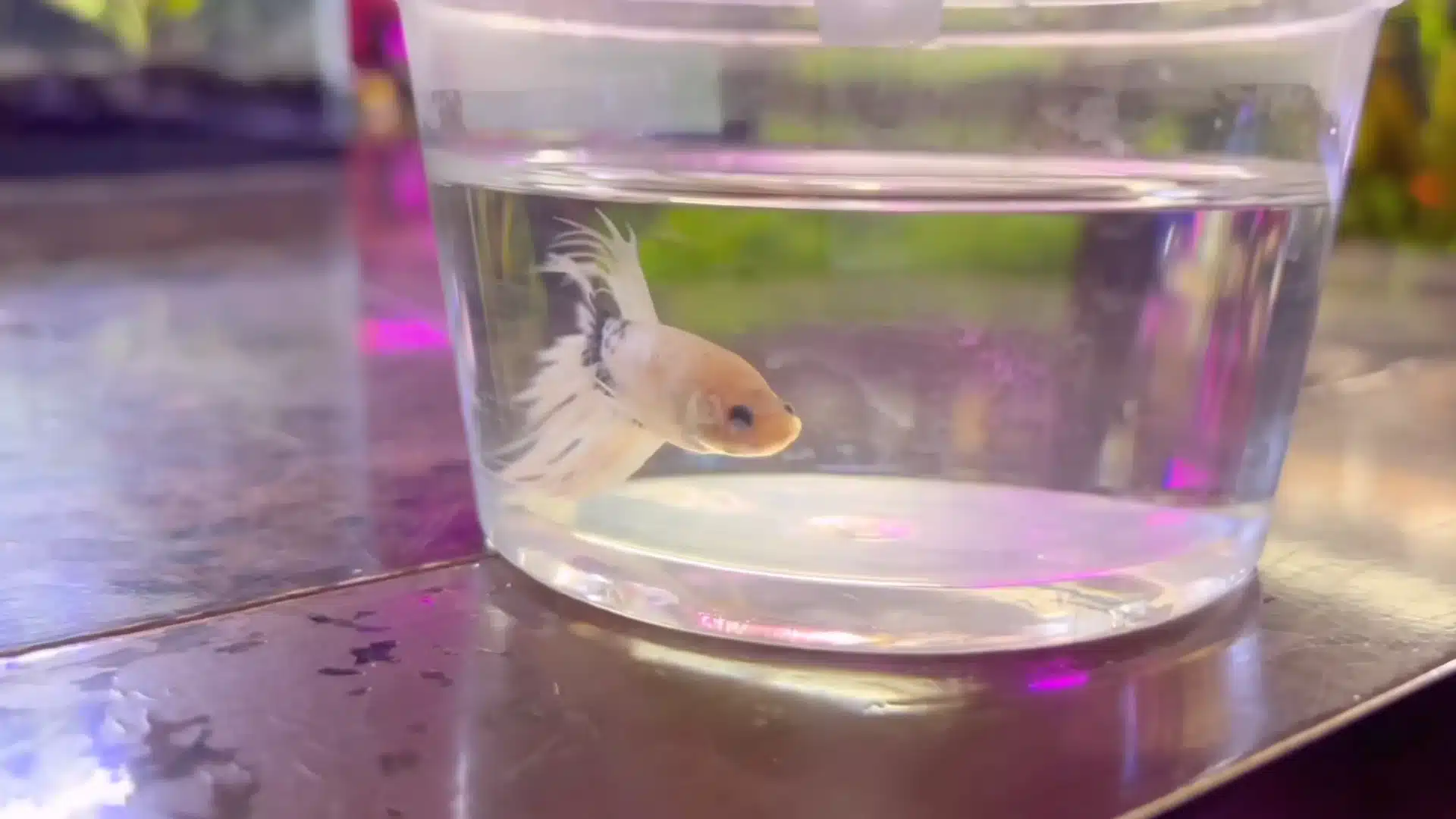
Cycling the aquarium is a crucial step that should never be skipped before introducing your betta fish.
During this process, beneficial bacteria develop and help break down harmful waste, keeping the water safe and healthy.
To monitor progress, use an aquarium test kit to regularly check ammonia and nitrate levels. The recommendation is to use an established sponge filter or filter media from a healthy aquarium to speed up the cycle.
Your tank is considered fully cycled when ammonia reads zero and nitrates are consistently present.
This tutorial is based on a helpful video by Chris with Palmer Aquatics. You can check out the original video on their YouTube channel here or watch it below.
How to Cycle a Betta Tank Before Adding Fish?
New tank syndrome kills many bettas in the first two weeks, and it’s preventable. Your betta produces ammonia through its gills and waste.
In a cycled tank, beneficial bacteria in the filter and substrate turn ammonia into nitrite, then nitrate. In a new, uncycled tank, those bacteria don’t exist yet, so ammonia spikes fast.
The safest option is a fishless cycle. Add pure ammonia (without surfactants), test every few days, and wait until ammonia and nitrite both read 0 ppm while nitrate is present.
This typically takes two to four weeks. You can speed things up by adding a small amount of gravel or filter media from an already-cycled tank.
If your betta is already in the tank, do a fish-in cycle with daily testing, light feeding, and water changes whenever ammonia or nitrite rises above 0.25 ppm.
Best Tank Size for a Betta Fish
Choosing the right tank size is one of the most important parts of a betta fish tank setup.
- A 5-gallon tank is the best starting point for most beginners because it gives your betta enough room to swim, rest, and act naturally.
- Smaller bowls may look easy, but they get dirty fast and are harder to heat and filter. In a small space, waste builds up quickly, which can stress your fish and harm the water quality.
- A larger tank also keeps the temperature more stable, so your betta stays more comfortable.
- If there is space and budget, a 10-gallon tank is even better. It gives more room for plants, hiding spots, and gentle swimming areas.
For long-term care, avoid tiny bowls and choose a proper heated, filtered tank.
Plants and Decorations that are Safe for Bettas
Bettas enjoy plants, hides, and cover. A bare tank can stress them, but sharp decor can tear their delicate fins. Keep every surface smooth and soft. Safe and easy plant options include:
| Plant | Why It’s Good for Bettas | Care Tips |
|---|---|---|
| Java fern | Hardy grows in low light, and broad leaves give your betta a place to rest. | Does not need CO2 or fertilizer. Attach to wood or rock. |
| Anubias | Slow-growing, sturdy, and great for betta resting spots. | Attach to driftwood or rocks. Do not bury the rhizome. |
| Hornwort | Fast-growing floating plant that gives cover and softens bright light. | Trim regularly when it becomes too full. |
For more inspiration on creative aquarium setups, our look at non-fish aquarium pets shows just how much life you can add to a simple freshwater tank.
Common Betta Tank Setup Mistakes to Avoid
Small setup mistakes can stress your betta fast. Avoid these common problems before they turn into poor water quality, illness, or fin damage.
- Using a bowl or vase: It usually has no heater, no filter, and very little water. Your betta may survive for a while, but cold water and ammonia can weaken him fast.
- Skipping the heater: Most homes stay around 68-72°F, which is too cool for bettas. Cold water can make them sluggish, dull, and more likely to get sick.
- Adding your betta too early: A tank needs to cycle before fish go in. If you add your betta too soon, ammonia can build up while you rush through emergency water changes.
- Running a strong filter: Bettas do not enjoy strong currents. If your fish gets pushed sideways or avoids the filter area, the flow is too strong.
Conclusion
A good betta fish tank setup is worth the wait. The cycling stage can feel slow, but it gives your fish a safer home from the first day they enter the tank.
Once the water is stable, the reward is easy to see. Your betta will glide through plants, rest near soft leaves, flare at his reflection, and inspect every corner as if it belongs to him.
That is the real payoff: a fish that looks active, comfortable, and full of personality. Keep the tank warm, clean, and calm, and the routine becomes simple over time.
Drop a comment below with your betta’s name, tank size, favorite plant, or setup idea.
Frequently Asked Questions
Can I Keep Two Betta Fish Together in the Same Tank?
Male bettas should not live together because they fight. Female groups are risky too, so separate tanks are usually the safest choice.
How Often Should I Do Water Changes in a Betta Tank?
Change 25 to 30 percent of the water once a week in a filtered, cycled tank. Always condition new water before adding it.
Do Betta Fish Need a Light in Their Tank?
Bettas do not need bright light, but they benefit from a steady day-and-night cycle. Keep tank lighting around 8 to 12 hours daily.