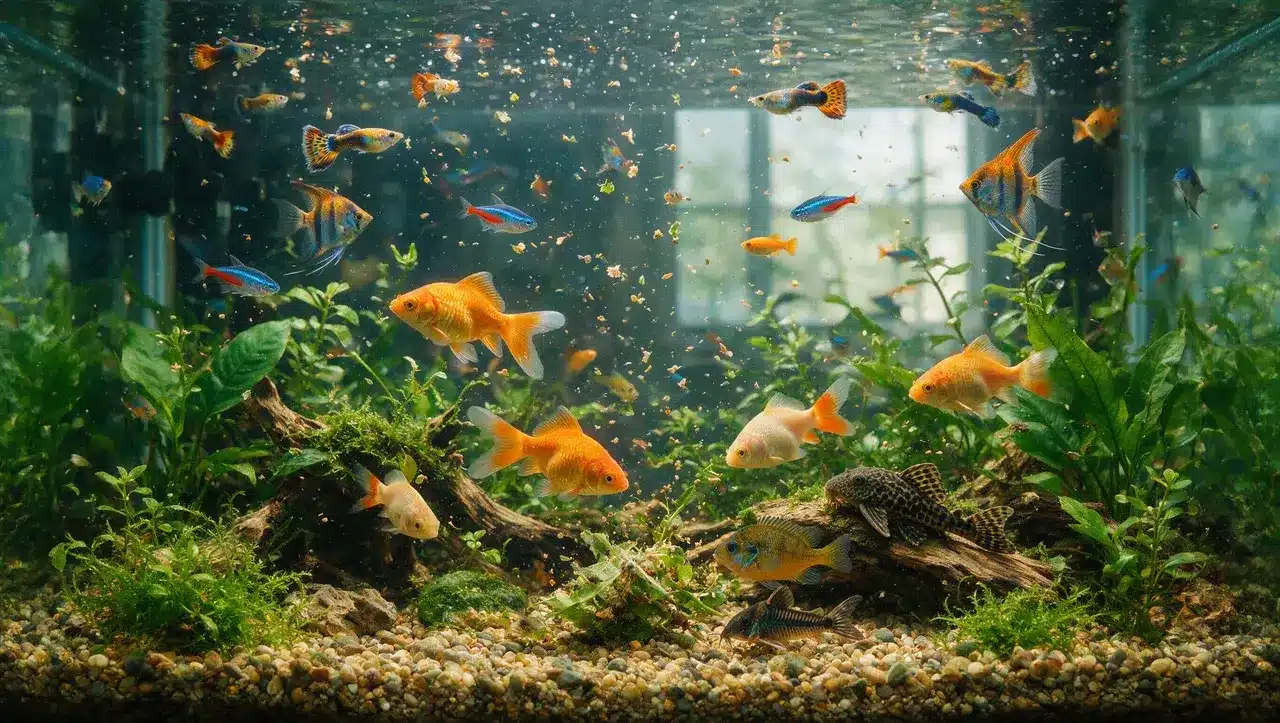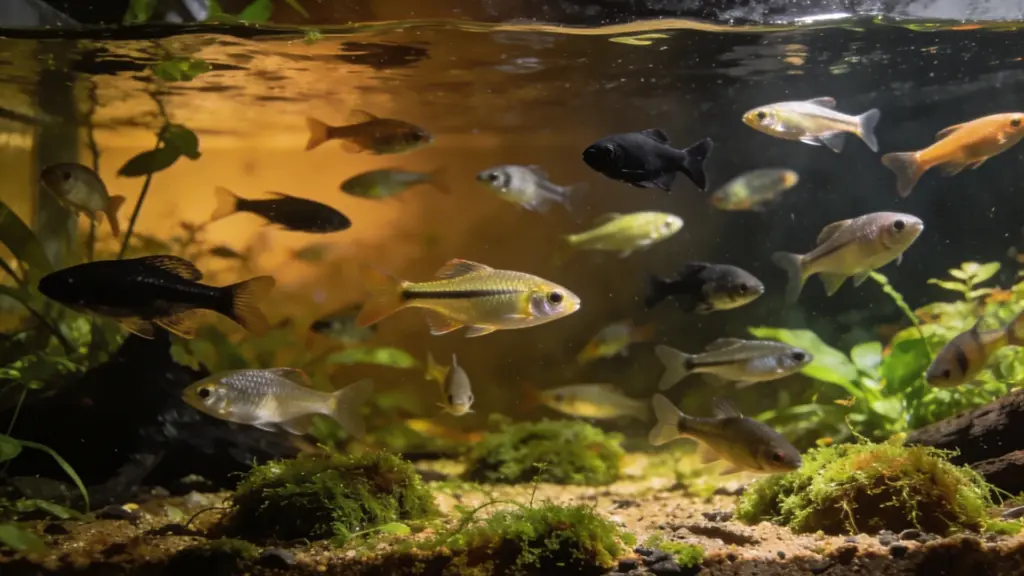
Your fish have been acting strangely. Maybe they’re darting around the tank, rubbing against the glass, or just looking a little off.
You grab your test kit, and there it is: pH at 8.2, while your tetras want something closer to 6.8. It’s a common situation, and the good news is it’s very fixable.
Learning how to lower pH in aquarium water doesn’t have to mean pouring mystery chemicals into your tank and hoping for the best.
There are natural, reliable methods that work with your aquarium’s biology rather than against it. This blog post covers every approach, from quick water changes to long-term solutions that keep your tank stable for good.
Why Your Aquarium pH Might Be Too High
High pH rarely shows up without a reason. Something in your tank’s chemistry is pushing alkalinity up, and identifying it makes the fix much more straightforward. The most common causes of high aquarium pH include:
- Hard tap water: Many municipal water supplies contain elevated calcium and magnesium, which naturally push pH upward. If your tap water tests above 7.5, it’s likely contributing to the problem.
- Calcium carbonate decorations: Limestone, coral gravel, and certain rocks release carbonates into the water over time. A quick vinegar test on any rock in your tank will bubble and fizz if limestone is present.
- Over-aeration: Too much surface agitation strips CO2 from the water quickly. Less CO2 means less carbonic acid, so pH climbs. Air stones are great for oxygenation, but they can work against you if they’re running too strong.
- Algae blooms: During daylight hours, algae and plants consume CO2 through photosynthesis. This reduces the water’s natural acidity and can cause pH to spike during the day.
- Chemical buffers: Some water conditioners and pH treatments actually raise alkalinity when overdosed. Check the labels on anything you’re adding to the tank regularly.
Removing the root cause is always the first step. Changing pH without addressing what’s driving it up means you’ll be chasing the same problem every week.
Signs Your Fish are Struggling with High pH
Fish can’t tell you when the water feels wrong, but their behavior gives it away quickly. High alkalinity puts real physiological stress on fish, suppressing their immune systems and making them more susceptible to infection.
Watch for these warning signs, especially in species that prefer softer, acidic water, like tetras, discus, angelfish, and the non-fish aquarium pets many hobbyists keep alongside them:
- Erratic swimming: Fish moving in unpredictable patterns, darting around randomly, or swimming at unusual angles.
- Flashing or rubbing: Fish scraping against decorations, substrate, or the tank glass. This is a response to skin irritation caused by high alkalinity.
- Lethargy: Unusually slow movement, sitting at the bottom, or hovering near the surface with minimal activity.
- Loss of appetite: Fish that suddenly stop eating, especially when food drops have always worked before.
- Faded color: Chronic stress from high pH degrades pigmentation over time in species known for vivid coloring.
High pH also makes ammonia more toxic in the water. That means a tank with a slight ammonia issue becomes significantly more dangerous when pH is elevated, so the two problems compound each other fast.
Note: The following is for informational purposes only and does not constitute veterinary advice. Consult a qualified professional if your fish show serious symptoms.
How to Lower pH in an Aquarium Using Natural Methods
Natural methods are the preferred starting point for most freshwater aquariums. They work gradually, hold stable, and mimic the tannin-rich, slightly acidic conditions that many tropical fish evolved in.
1. Peat Moss
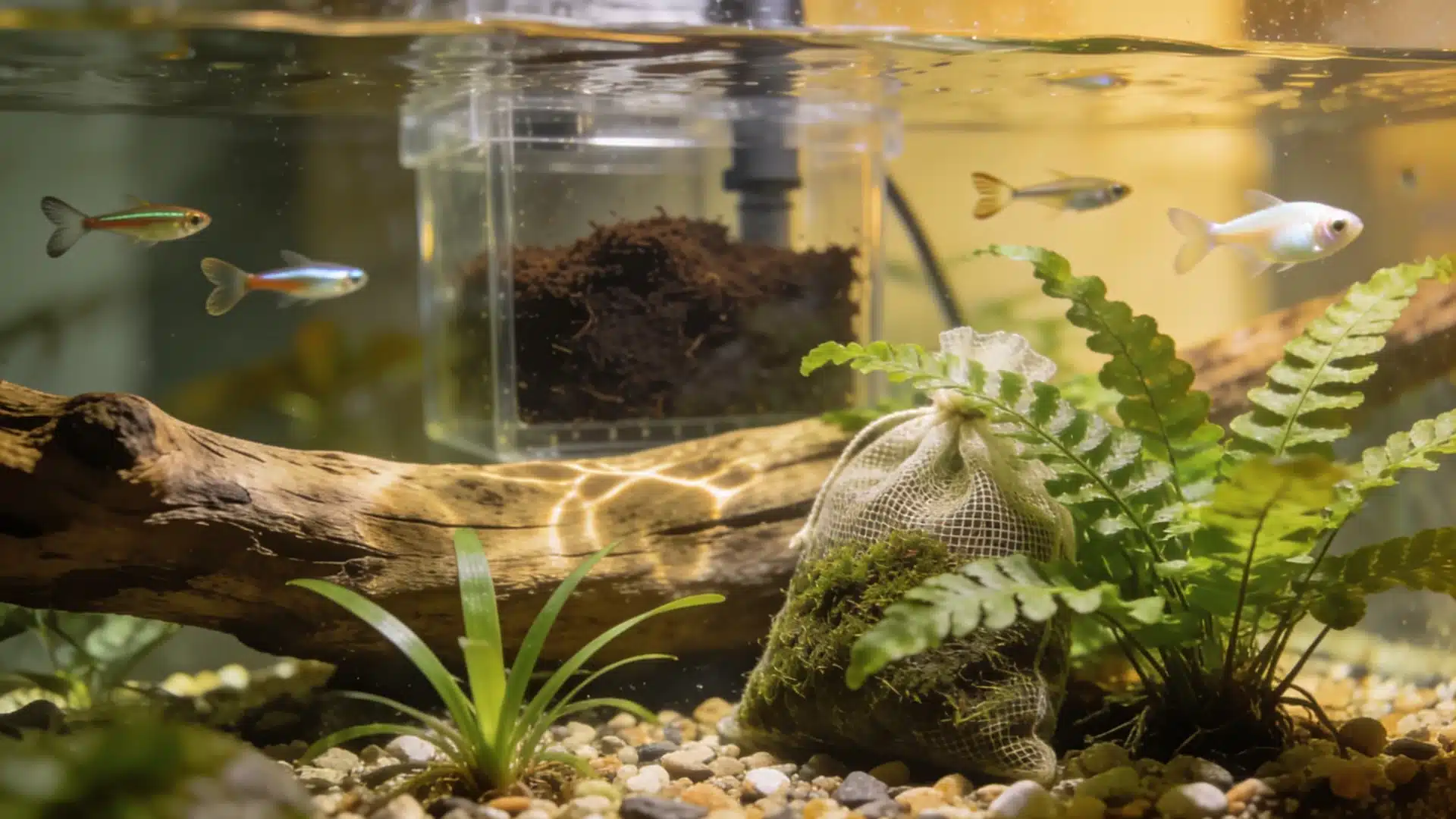
Peat moss is one of the most effective natural tools for lowering pH in a freshwater tank. It releases tannic acid and gallic acid into the water, which attack bicarbonates and gradually reduce both pH and water hardness. The process is slow and steady, which is exactly what you want. To use it:
- Place peat moss pellets or chunks in a mesh media bag.
- Add the bag directly to your filter compartment.
- Test pH every 2 to 3 days and add more if needed.
- Replace peat moss every 4 to 6 weeks as it loses effectiveness.
One thing to know: peat moss can tint your water a light brown or amber color.
It’s completely harmless and actually mimics the natural blackwater rivers many tropical fish come from, but if you have guests coming over and want crystal-clear water, soak the peat moss in a bucket for a few days first and do a water change before the big night.
2. Driftwood
Driftwood releases tannins into the water as it breaks down, creating a soft, slightly acidic environment. It’s also one of the most natural-looking additions you can add to a freshwater tank. A few things to keep in mind before dropping a piece in:
- Rinse the wood thoroughly to reduce the initial tannin dump.
- Boil it for one to two hours to sterilize and remove surface fungi.
- Use only aquarium-safe wood. Not all wood is safe for fish.
- Use a generous amount. One small piece won’t move the needle in a large tank.
The tannin release tapers off over time, so driftwood works best as a maintenance tool alongside other methods rather than a quick fix on its own.
3. Indian Almond Leaves
Indian Almond Leaves (Catappa leaves) are one of the easiest and most effective natural ways to lower pH and introduce beneficial tannins into an aquarium.
As the leaves decompose, they slowly release organic acids that gently soften and acidify the water while creating conditions similar to many tropical blackwater habitats. Additional benefits include:
- Natural antimicrobial and antifungal properties that may support fish health.
- A food source for biofilm and microorganisms that shrimp and fry feed on.
- Reduced stress levels for species that prefer tannin-rich environments.
- A simple, low-maintenance method that requires no special equipment.
Place a few dried leaves directly into the aquarium and allow them to break down naturally. Replace them every two to three weeks, or as needed.
The water may develop a light amber or tea-colored tint, which many aquarists appreciate for its natural appearance and blackwater aesthetic.
How to Lower pH in an Aquarium Quickly with Water Changes
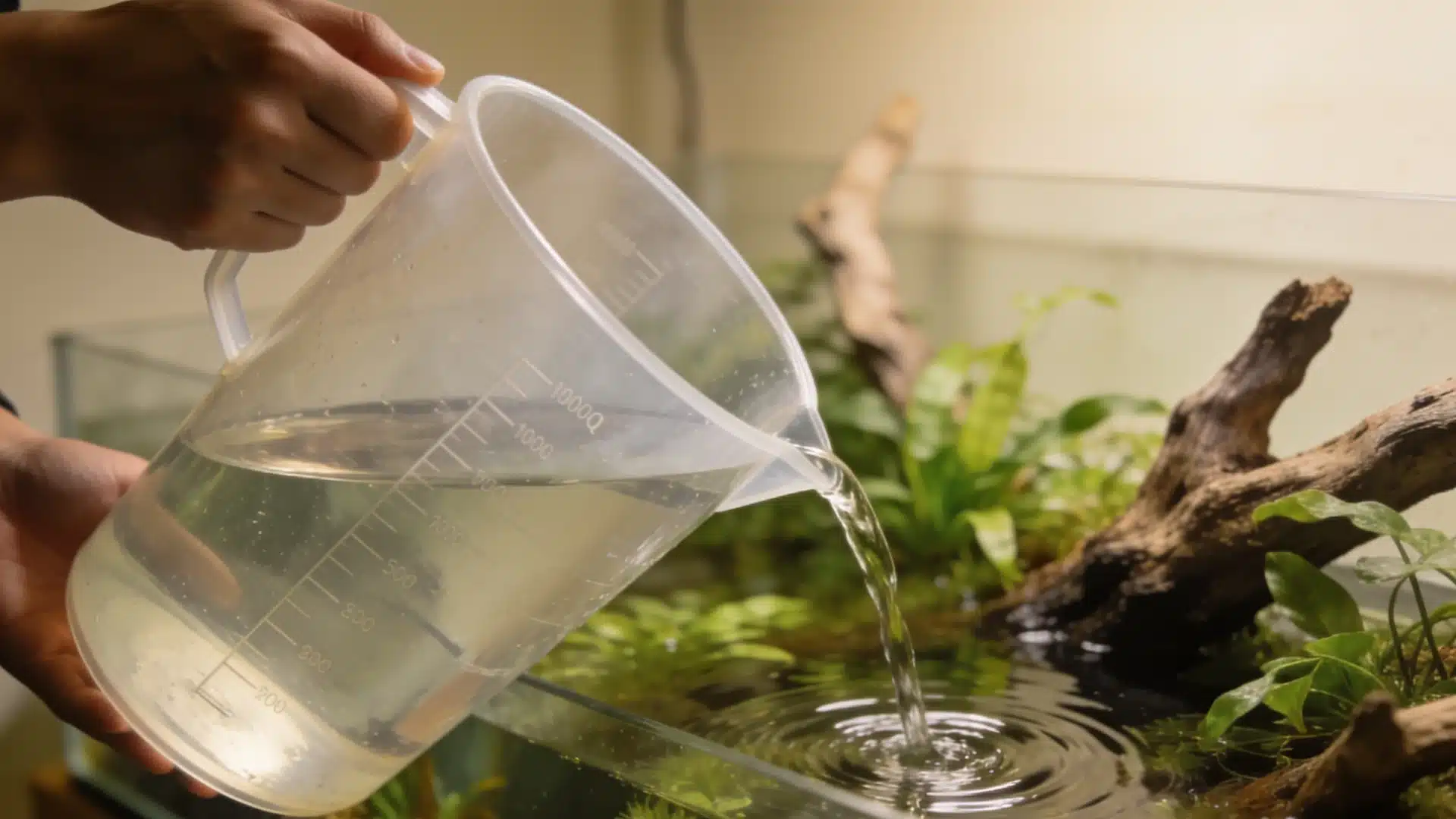
If your aquarium pH is rising quickly and you need to lower it precisely, a partial water change with reverse osmosis (RO) water is the most reliable method.
RO water has almost no dissolved minerals, so mixing it with tap water dilutes hardness and drops pH without additives. Replace 25–30% of your tank water with RO water during your regular change, then test the pH after each change.
Never do a full water swap, large, rapid changes shock fish even when chemistry looks ideal.
Rainwater is another option since it’s naturally soft and slightly acidic, but collect it away from rooftops or polluted areas and test it first.
If you keep mystery snails, remember they need pH 7.0–8.4 and hard water (GH 8–18); don’t lower pH too much, as acidic water can dissolve their shells.
How CO2 Injection Affects pH in Planted Aquariums
In planted tanks, CO2 injection is one of the most effective ways to lower pH because it works with the tank’s natural chemistry.
When CO2 dissolves in water, it forms carbonic acid, which directly lowers pH. The more CO2 present, the more acidic the water becomes. This is the same process that happens naturally in densely planted rivers and streams.
Two important rules for CO2 injection:
- Turn it off at night. Plants don’t photosynthesize in the dark. Without plants consuming CO2, levels can build up fast and cause a sudden pH crash overnight. This is one of the more common reasons fish are found dead in the morning in planted tanks.
- Run reverse-timer aeration after lights out. An airstone running at night replenishes oxygen for your fish while CO2 levels settle down. It’s a simple addition that makes a real difference in tank stability.
CO2 injection provides precise, consistent pH control in planted setups when properly managed. It’s not the right tool for a fish-only tank, but for planted aquariums, it’s hard to beat.
Using Commercial pH-Lowering Products Safely
Commercial pH-lowering products like Seachem Acid Buffer work by adding acidic compounds to the water that neutralize alkalinity. They’re effective, but they require careful dosing.
The biggest risk with chemical adjusters is going too fast. A change of more than 0.5 pH units in a short period can be fatal to fish and invertebrates, and even a gradual 0.25-unit shift warrants close observation.
When using chemical buffers:
- Test pH before dosing and record the reading.
- Dose conservatively, targeting no more than 0.2 to 0.3 units per day.
- Test 24 hours after each dose again before adding more.
- Never dose and leave. Check the tank daily during any active pH adjustment period.
Chemical products work best as a tool to fine-tune pH once natural methods have brought it close to your target range. Relying on them as a primary method creates an ongoing chemical dependency in the tank that can be harder to manage over time.
Note: This section is for informational purposes only and does not constitute veterinary or professional aquarium advice. Always follow manufacturer instructions carefully.
How to Maintain a Stable Lower pH Long-Term?
Getting pH down is one thing. Keeping it there is a different project. The real goal isn’t a perfect number on a test strip; it’s consistency.
A few practices that lock in long-term pH stability:
- Test weekly. A quick liquid test takes two minutes and catches problems before they become emergencies. Strip tests work in a pinch, but liquid kits are more accurate.
- Keep a consistent water change schedule. Regular 25-30% changes prevent waste buildup and keep the chemistry from drifting. Irregular or skipped changes cause nitrate and CO2 levels to fluctuate, destabilizing pH.
- Audit your hardscape. If pH keeps creeping up despite your efforts, drop a few drops of white vinegar on any rocks or substrate in the tank. Bubbling or fizzing means calcium carbonate is present and likely raising your pH.
- Avoid over-aeration. Surface agitation is good for oxygenation, but too much strips CO2 from the water and pushes pH up. Find a balance that keeps water movement present without turning the surface into a washing machine.
- Choose a pH-neutral substrate. Inert sand or aquarium gravel won’t influence your water chemistry the way crushed coral or dolomite does. If you’re setting up a new tank for soft-water species, this decision at the start saves a lot of adjustment work later.
I find that the aquarium owners who have the most consistent pH are the ones who test regularly and make small, frequent corrections rather than waiting for a big problem to develop.
It takes maybe ten minutes a week, but it makes an enormous difference in how stable the tank stays over months and years.
Conclusion
Keeping the right pH in your aquarium is less about chasing perfect numbers and more about removing the things that push it in the wrong direction.
Start by identifying what’s driving alkalinity up, whether that’s your tap water, the rocks in your tank, or too much surface agitation.
From there, natural methods like peat moss, driftwood, and Indian almond leaves handle the heavy lifting for most freshwater setups.
For faster corrections, partial water changes with RO water give you clean, predictable results without the risk of chemistry surprises. Whatever methods you choose, adjust gradually and test often.
Fish are far more forgiving of a pH that’s slightly imperfect than one that swings unpredictably.
Got a method that works especially well in your tank? Drop it in the comments below. We’d love to hear what’s working for your fish.
Frequently Asked Questions
Can I Use Vinegar to Lower pH in My Aquarium?
Yes, vinegar can temporarily lower pH, but it’s not a stable long-term solution. Natural methods like peat moss or RO water are safer and more consistent.
Does Boiling Aquarium Water Change the pH?
Boiling can slightly raise pH by removing dissolved CO₂. It won’t lower pH and isn’t an effective pH-adjustment method.
What Fish Need the Lowest pH Levels?
Discus, Cardinal Tetras, Apistogramma cichlids, and many wild South American fish prefer acidic water, typically between pH 5.5 and 6.8.
How Do I Lower pH in a Saltwater Aquarium?
Saltwater tanks should stay around pH 8.1–8.3. If pH is too high, improve ventilation and check equipment settings rather than using freshwater pH-lowering methods.