

You walk over to your betta’s tank and immediately notice something isn’t right.
Instead of swimming around or eagerly greeting you at feeding time, your fish is resting at the bottom, fins clamped tightly against its body, showing little interest in food or activity.
If this sounds familiar, water temperature could be the culprit. Temperature problems are one of the most common yet overlooked causes of stress and illness in betta fish.
Because bettas are tropical fish, they rely on consistently warm water to stay healthy, active, and comfortable. Even small temperature fluctuations can affect their behavior and immune system.
In this blog post, you’ll learn the ideal betta fish water temperature range, why it matters, and how to maintain it with confidence.
What is the Ideal Betta Fish Water Temperature?
Bettas come from warm, shallow waters in Southeast Asia, especially Thailand, Cambodia, Vietnam, and nearby regions. In the wild, they live in shallow streams, flooded rice paddies, and slow ponds where temperatures typically range from 76 to 86°F.
That history matters because their bodies are built for warmth. They’re ectotherms, meaning they can’t generate their own body heat. Whatever the water is, that’s what they are.
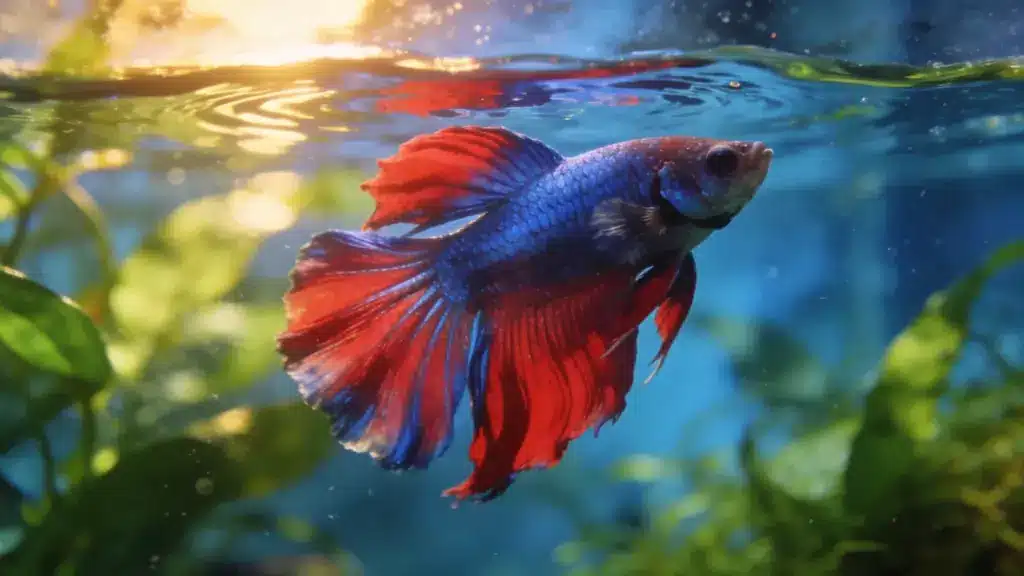
The ideal betta fish water temperature for a home tank sits between 76-82°F (24-28°C). Within that band, 78-80°F is where bettas genuinely thrive. They’re active, their colors stay vivid, their appetite is good, and their immune system works the way it should.
Here’s a quick reference for how temperature affects your betta:
| Water Temp | Fish State |
|---|---|
| 78-80°F (25.5-26.7°C) | Thriving: active, healthy, full color |
| 76-82°F (24-28°C) | Comfortable: normal function |
| 72-76°F (22-24°C) | Stressed: slower, appetite drops |
| Below 72°F (22°C) | Danger zone: immune failure, disease risk |
| Above 86°F (30°C) | Danger zone: oxygen depletion, heat stress |
Bettas are one of the most rewarding fish for a first tank, but their “easy fish” reputation often leads new owners to skip the heater. That’s where things go wrong.
Do Betta Fish Need a Heater?
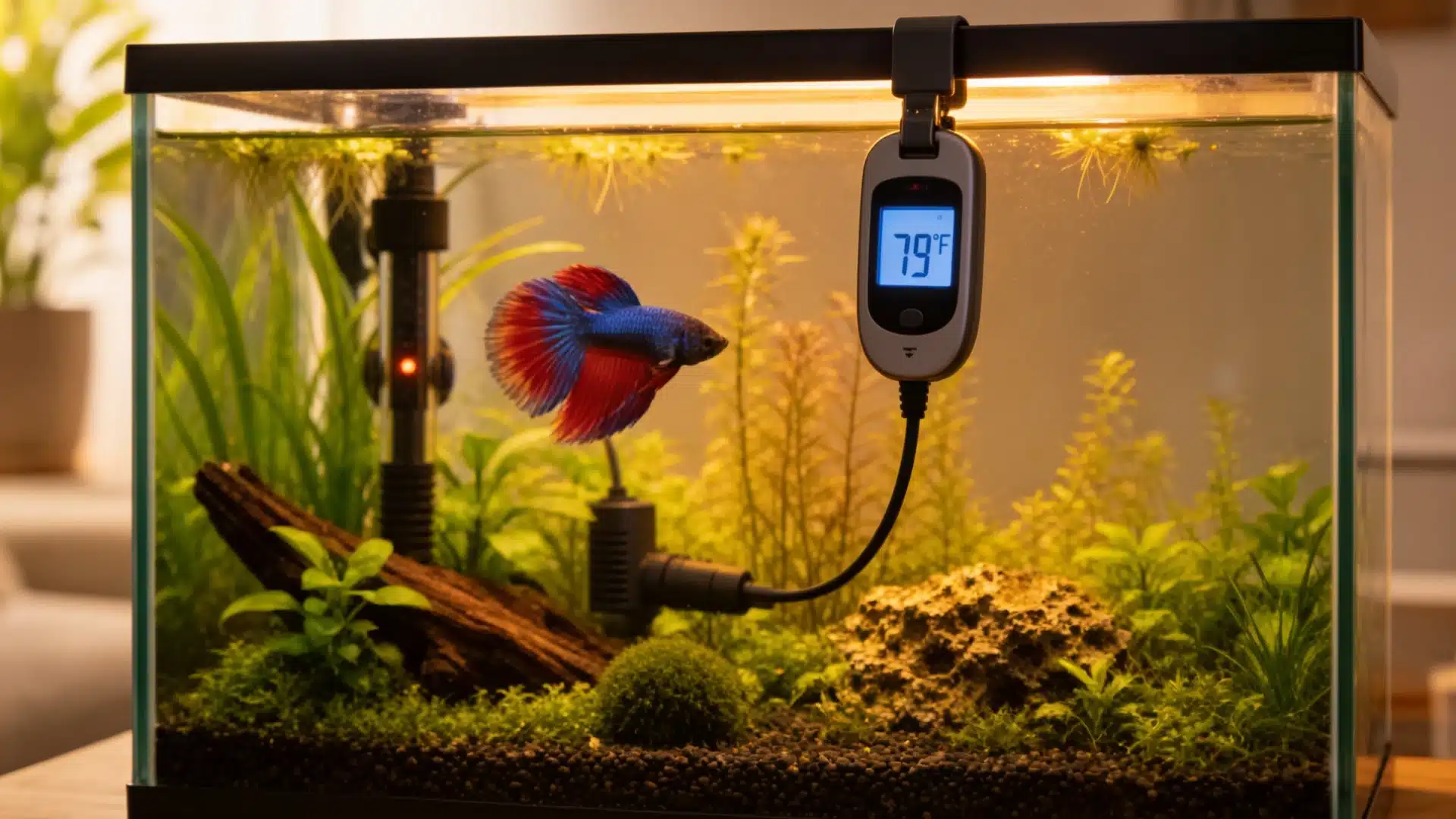
Yes, almost every betta tank needs a heater. The issue isn’t just room temperature; it’s temperature stability.
Most homes stay below the recommended 76–82°F range or experience daily fluctuations that can stress bettas.
A steady 77–80°F is far healthier than water that constantly fluctuates. Unless your home stays above 76°F year-round, including at night and in winter, a heater is essential.
Despite the common belief that bettas can live comfortably in unheated bowls, they are tropical fish that require warm, stable water to stay healthy and avoid illness.
For a 10-gallon tank setup, an adjustable submersible heater makes temperature management straightforward. The same principle applies to any betta tank, big or small.
What Happens When Betta Fish Water Temp is Too Cold
Cold water affects bettas in two ways: gradually and suddenly.
Gradual cooling slows their metabolism over days, leaving them lethargic and prone to infection. Sudden temperature drops, what’s known as temperature shock, can cause organ stress within hours.
Bettas have a very low tolerance for cold shock, according to research on the physiology of tropical freshwater fish. Their bodies can’t slow down into hibernation the way some coldwater fish can. They just begin to shut down.
Watch for these signs that your betta’s water is too cold:
- Lethargy and bottom-sitting: Your betta barely moves and rests on the substrate or near the bottom of the tank.
- Clamped fins: Fins held tight against the body instead of fanning out naturally.
- Loss of appetite: Little to no interest in food, even favorites like bloodworms.
- Faded color: The bright reds, blues, and purples start to look dull or washed out.
- Increased disease: Cold water suppresses the immune system, making ich, velvet, and fin rot much more likely.
If you notice several of these together, check the thermometer right away. Gradually raise the temperature by no more than 1-2°F per 12 hours to avoid shocking the fish further.
Note: This section is for informational purposes only and does not constitute medical advice. If your betta shows signs of illness, consult a qualified aquatic veterinarian.
Signs Your Betta Water is Too Hot
Hot water problems are less common than cold water problems, but they happen, especially during summer heat waves or when a heater malfunctions and runs too hot.
Above 86°F, water loses dissolved oxygen quickly, which is a real problem for a fish that needs to breathe. Bettas do tend to handle warmth better than cold, but there’s still a ceiling.
Signs your betta’s tank is overheating:
- Rapid gill movement: Gills pumping visibly fast, even when the fish is at rest.
- Gasping at the surface: Frequently coming up for air, more than usual.
- Erratic swimming: Uncoordinated movement, darting, or rubbing against tank walls.
- Faded or darkened color: Heat stress affects pigmentation just like cold stress does.
- Refusing food: Appetite drops sharply when the water is uncomfortably warm.
If the tank is too hot, don’t add ice directly; it can cause a shock. Move the tank to a cooler room if possible, or do a small partial water change with slightly cooler, temperature-matched treated water. Adjust gradually.
How to Maintain the Right Betta Fish Water Temp?
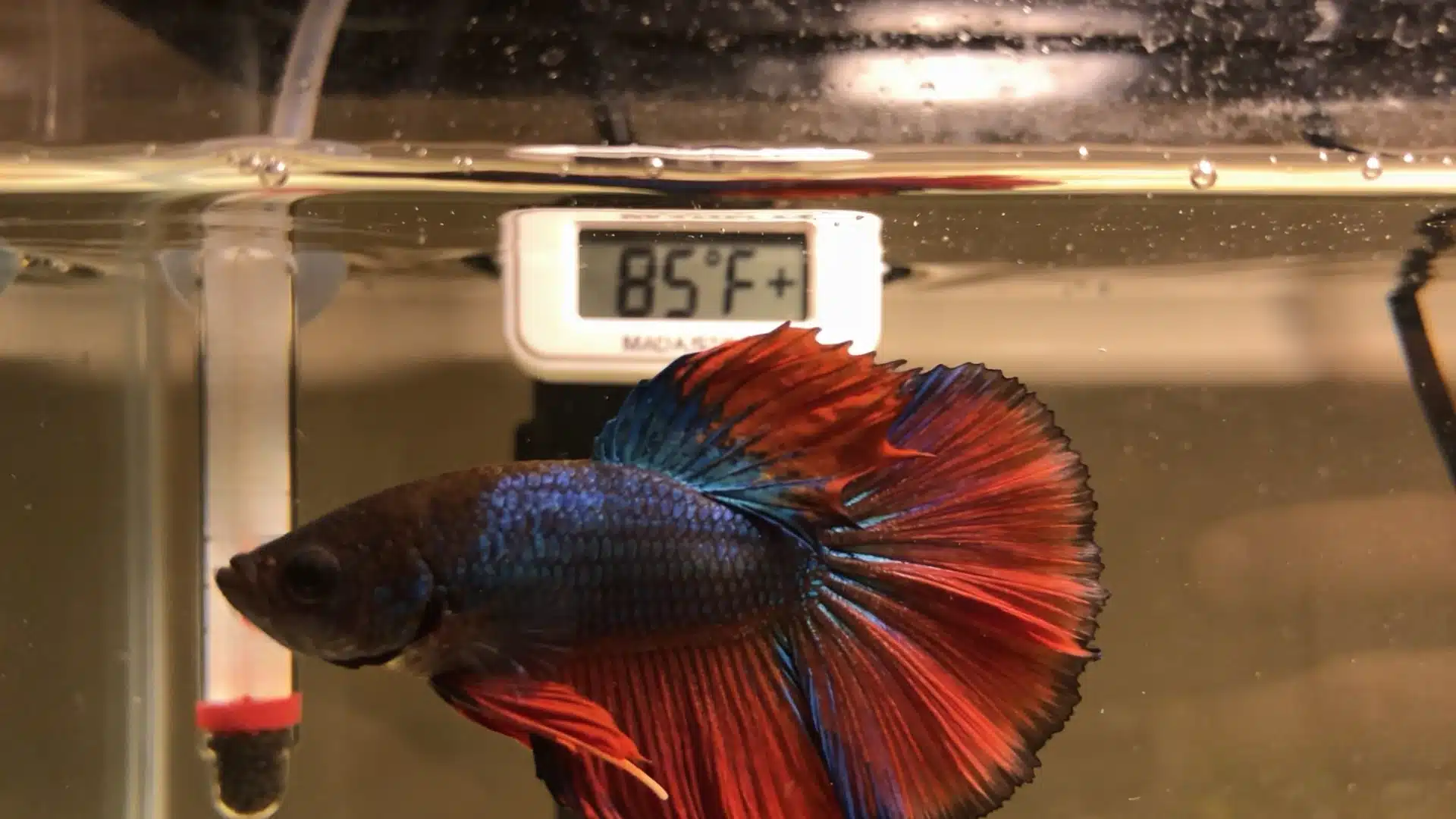
Getting the temperature right is mostly about having the right equipment and a simple daily habit. Here’s what that looks like in practice:
- Choose an adjustable submersible heater: Preset heaters are often inaccurate and run hotter than advertised. An adjustable heater lets you dial in the exact temperature and correct it if something drifts. A general rule is 3-5 watts per gallon of water, so a 5-gallon tank needs a 25W heater.
- Use a separate digital thermometer: Never rely solely on the dial on your heater. Heater thermostats fail, and when they do, your fish pays the price. A digital probe thermometer is more accurate than stick-on LCD strips and gives you a real-time reading.
- Place the heater near water flow: Position it close to the filter output so warm water circulates evenly through the tank. Avoid the substrate and corners where water flow is low.
- Check the temperature in the morning and evening: Room temperature changes between night and day, and so can your tank. A 30-second check each morning and evening catches problems before they become emergencies.
- Match water changes to tank temperature: When doing partial water changes, always test the replacement water before adding it. New water that’s even 5°F cooler than the tank can stress your betta.
Good aquarium temperature control comes down to the same principle for every tropical fish: stability matters more than hitting a perfect number. A betta doing well at a steady 77°F is healthier than one in a tank that swings between 74 and 81.
Common Mistakes that Cause Betta Water Temp Problems
We see these come up again and again, and most are easy to avoid once you know what to look for:
- Using a preset heater: Preset heaters are convenient but often run 2-4°F hotter or cooler than their label suggests. An adjustable model takes the guesswork out.
- Trusting only the heater’s built-in thermostat: The thermostat inside the heater is your second line of defense. A separate thermometer is your first. In my experience, the thermometer is the most underrated piece of equipment in any betta setup.
- Keeping bettas in small, unheated bowls: Small volumes of water heat up and cool down fast. A 1-2 gallon unheated bowl can swing 10°F or more in a single day.
- Temperature-shocking during water changes: Adding water that’s significantly warmer or cooler than the tank is one of the quickest ways to stress a betta. Always temperature-match new water before it goes in.
- Placing the tank near windows, vents, or air conditioning: Sun through a window can overheat a tank in hours. A nearby A/C vent can cool it down just as fast. Keep the tank in a stable, draft-free spot.
Conclusion
Temperature is one of the easiest parts of betta care to control, but it makes a huge difference to your fish’s comfort, energy, appetite, and overall health.
Once you have a reliable heater and a separate thermometer, keeping the right betta fish water temp becomes a simple daily habit rather than a constant worry.
A quick check in the morning or evening can help you catch small changes before they turn into stress or illness. In the end, your goal is simple: give your betta warm, steady water that feels close to the tropical environment he was made for.
If this helped, leave a comment with your betta tank setup or any temperature questions you still have. We’d love to hear what’s working for your fish.
Frequently Asked Questions
Can Betta Fish Live in Room-Temperature Water?
Yes, but only if the room keeps the tank between 76 and 82°F all year. Most homes fluctuate, so a heater is safer.
How Often Should I Check My Betta’s Water Temperature?
Checking once in the morning and once in the evening covers most situations. Room temperature fluctuates between day and night, and a quick daily check lets you catch a heater malfunction early before it affects your fish.
What Size Heater Do I Need for a 5-Gallon Betta Tank?
A 25-watt adjustable submersible heater works well for a 5-gallon tank, following the standard guideline of 3-5 watts per gallon. Look for a model you can adjust manually rather than a preset unit, since preset heaters can run inaccurately.
How Do I Slowly Raise My Betta’s Water Temperature without Shocking It?
Raise the temperature no faster than 1-2°F every 12 hours. Turn up the heater in small increments and recheck the thermometer before adjusting again. Sudden jumps, even upward, can stress the fish just as a rapid drop would.