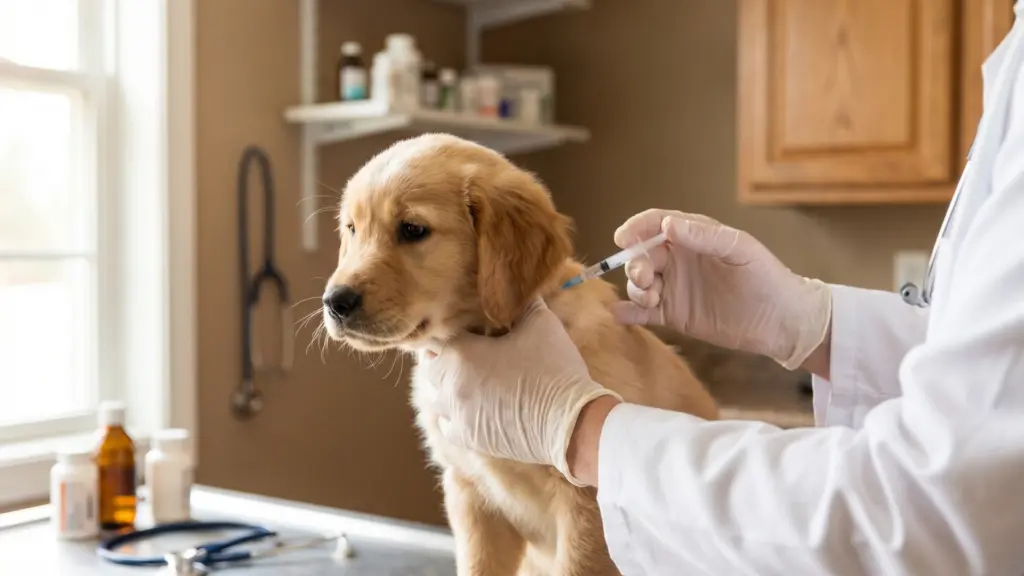
Your new puppy is finally home, and everything feels exciting until the first vet visit brings up vaccines, boosters, and shot schedules.
Many new owners ask the same question: what shots do puppies need? The answer is simpler than it may sound.
Puppy shots protect against serious diseases while the immune system is still growing.
Some vaccines are considered core, while others depend on lifestyle, location, and exposure to other dogs. Knowing when each shot is due can help avoid missed boosters and keep protection on track.
In this blog, I’ll explain the main puppy vaccines, the usual first-year schedule, and the key facts every new puppy owner should know before planning vet visits.
What Shots Do Puppies Need?
Puppies need several shots in the first year to protect them from serious diseases.
Most puppies start vaccines at 6 to 8 weeks old and get boosters every few weeks until about 16 weeks. The main puppy shots usually include distemper, parvovirus, adenovirus, and rabies.
Many vets also recommend leptospirosis, especially because it can spread through water, soil, and infected animal urine.
Some puppies may need extra vaccines, such as Bordetella, Lyme disease, or canine influenza, depending on where they live and how often they meet other dogs.
A puppy that goes to daycare, grooming, training classes, or dog parks may need more protection. Always follow a vet’s schedule because missed or early shots can leave gaps in protection.
Core Vaccines Every Puppy Needs
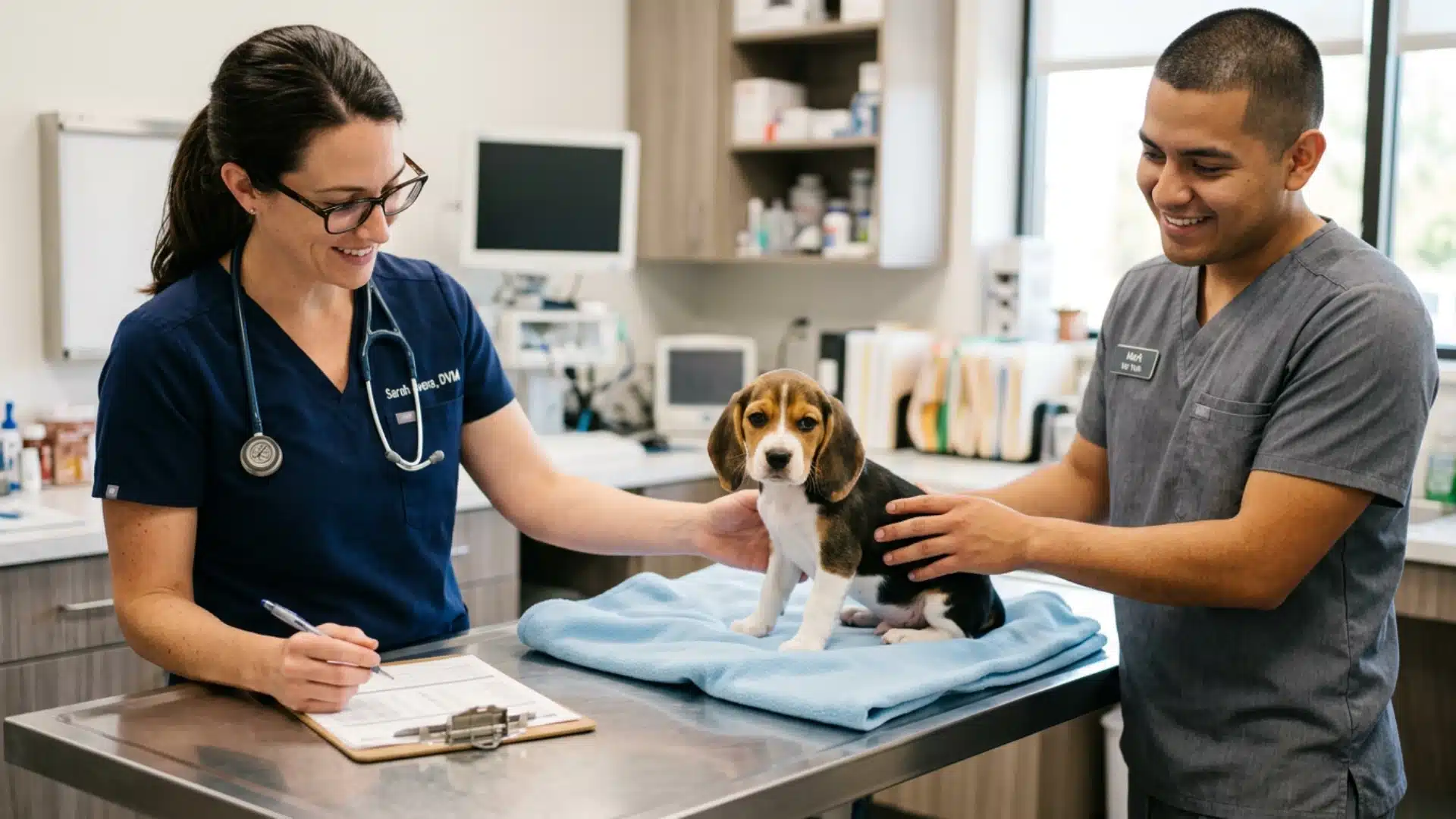
The core dog vaccine schedule protects against diseases that are widespread, highly contagious, or dangerous enough that every puppy needs protection.
These vaccines are recommended for all dogs, regardless of lifestyle.
Note: Always talk with your veterinarian before starting or changing your puppy’s vaccine schedule. Your puppy’s age, health, risk level, and local laws can all affect timing.
DHPP Vaccine
The DHPP vaccine is the combination shot your puppy receives throughout the puppy vaccine series.
It protects against distemper, hepatitis, parvovirus, and parainfluenza. Distemper can attack the respiratory system and brain. It is often fatal.
Parvovirus is one of the most dangerous diseases in puppies. In untreated puppies, mortality rates can be very high.
It spreads through infected feces and can survive for months on grass, soil, and other surfaces.
Hepatitis, caused by canine adenovirus, can damage the liver, kidneys, and eyes. Parainfluenza is a respiratory virus that can contribute to kennel cough.
Because one shot helps protect against all four diseases, this vaccine is often called a combination vaccine.
If you’d like a closer look at how each component works and what it protects against, you’ll often see this vaccine referred to as the 5-in-1 puppy vaccine, since it combines protection against five major canine diseases in a single series.
Rabies Vaccine
Rabies is legally required in most states. It is also one of the most serious diseases because it affects the nervous system, can spread to humans, and is fatal once symptoms appear.
Most puppies receive their first rabies shot between 12 and 16 weeks of age.
They usually need a booster one year later, then additional boosters every 1 to 3 years, depending on local laws.
Your veterinarian can confirm the exact timing based on your state rules, clinic records, and the vaccine type used.
Week-by-Week Puppy Vaccine Schedule for New Owners
This is what a typical first-year schedule looks like, following the full dog vaccination timeline recommended by most veterinary guidelines. Your vet may adjust timing based on your puppy’s breed, health status, or risk factors.
| Age | Vaccines |
|---|---|
| 6-8 weeks | First DHPP |
| 10-12 weeks | Second DHPP + optional lifestyle vaccines begin (Bordetella, Leptospirosis) |
| 14-16 weeks | Third/final DHPP + first Rabies vaccine + second dose of lifestyle vaccines if started |
| 12-16 months | One-year booster: DHPP, Rabies, and any applicable lifestyle vaccines |
Your puppy isn’t fully protected until about two weeks after their final round of shots. That timing matters for socialization plans, dog parks, and grooming appointments.
The schedule is spaced out deliberately.
As per the UC Davis School of Veterinary Medicine’s vaccination guidelines, one dose of a modified live virus vaccine every 3 to 4 weeks from 6 to 8 weeks of age, with the final dose no earlier than 16 weeks.
Does Your Puppy Need Non-Core Vaccines?
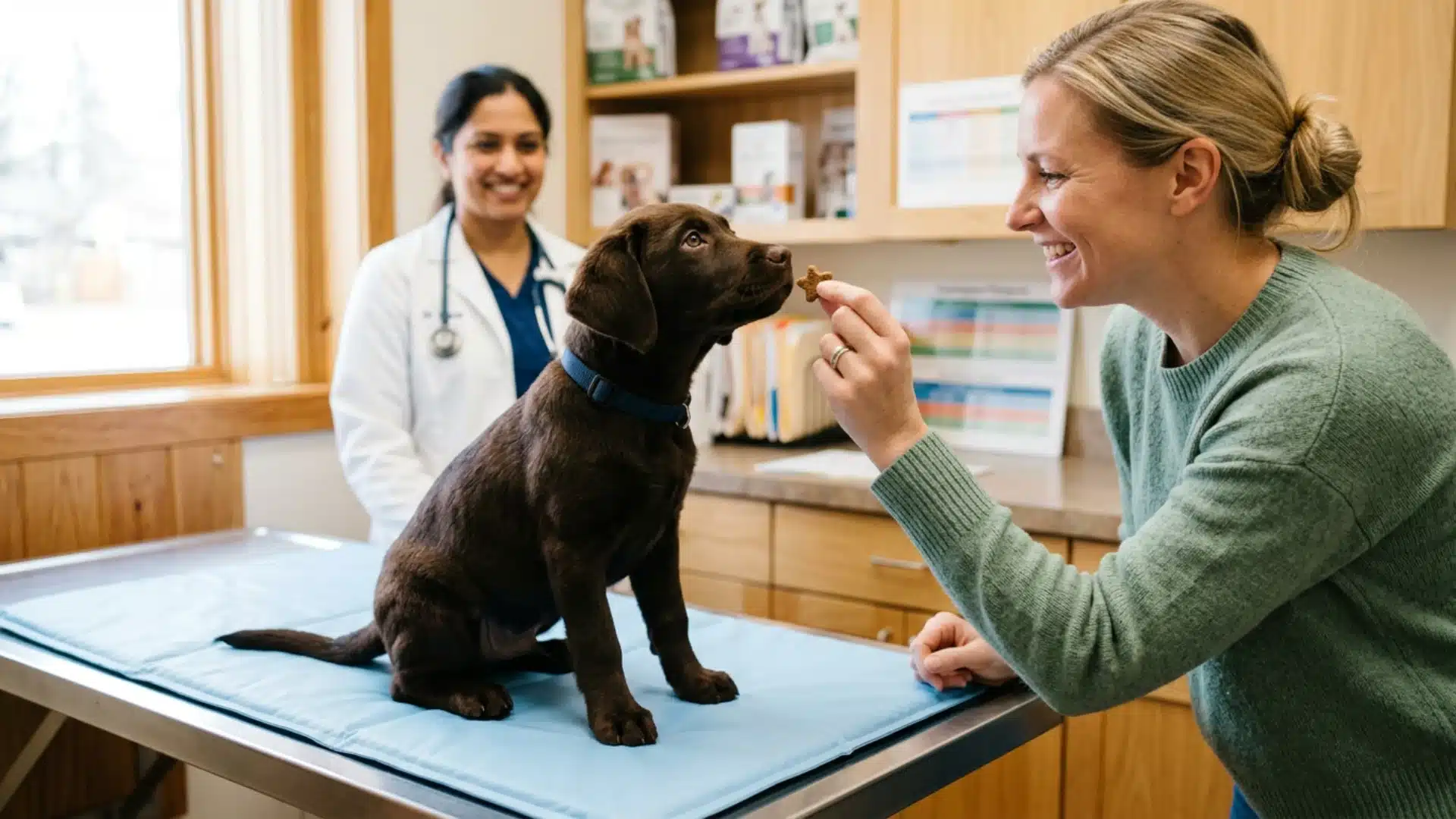
Non-core vaccines are not “optional” in the sense that they can be ignored.
They are optional because your puppy’s need for them depends on real-life risk factors, such as where you live, where your puppy goes, and what they may be exposed to. This is where a conversation with your veterinarian matters most.
1. Bordetella
Bordetella is often recommended for puppies that will be around many other dogs.
This includes daycare, boarding, grooming, dog parks, training classes, or puppy playgroups. It helps protect against one of the common causes of kennel cough, a contagious respiratory illness.
Some facilities may require this vaccine before allowing a puppy inside. Bordetella can be given as a nasal, oral, or injectable vaccine, depending on the clinic.
Your vet can tell you when to start it based on your puppy’s age and risk.
2. Leptospirosis
Leptospirosis protects puppies from a bacterial disease that can spread through contaminated water, soil, mud, or urine from infected animals.
It can affect the kidneys and liver, and it can also spread to people. Puppies that spend time outdoors, live near wildlife, walk in wet areas, or drink from puddles may have a higher risk.
Many vets now strongly recommend this vaccine for most dogs. Puppies usually need an initial shot and a booster a few weeks later, followed by regular boosters as advised by the vet.
3. Lyme Disease Vaccine
The Lyme disease vaccine may be recommended for puppies that live in or travel to areas where ticks are common.
Lyme disease spreads through infected tick bites and can cause fever, joint pain, tiredness, and other health problems.
Puppies that spend time in wooded areas, tall grass, parks, trails, or tick-heavy regions may benefit from this protection.
This vaccine does not replace tick prevention, so owners should still use vet-approved tick control. Your vet can decide if Lyme vaccination makes sense for your puppy’s lifestyle.
4. Canine Influenza
Canine influenza is a contagious respiratory illness that can spread quickly where dogs gather.
The vaccine may be recommended for puppies that go to boarding facilities, daycare, grooming salons, dog shows, training classes, shelters, or busy dog parks.
Symptoms can include coughing, fever, runny nose, and low energy. Some puppies only get mild signs, but others may become more seriously ill.
The vaccine may not prevent every infection, but it can reduce the risk and severity. Your vet may suggest it if local cases are reported.
When is a Puppy Fully Vaccinated?
A puppy is generally considered fully vaccinated about two weeks after completing the final core vaccine in the puppy series.
This is usually the third or fourth DHPP dose, often given around 14 to 16 weeks of age.
Before this point, your puppy may have some protection, but gaps can still remain while maternal antibodies fade.
The two-week period after the last core shot gives your puppy’s immune system time to build a stronger response.
Until your vet confirms full protection, avoid dog parks, pet store floors, and busy public areas where unvaccinated dogs may have been.
Safer socialization can still happen in clean, controlled spaces with healthy, vaccinated dogs.
What to Expect After Your Puppy’s Shots

For most puppies, vaccine reactions are mild. You may notice a quieter afternoon, a little less interest in food, mild soreness at the injection site, or a low-grade fever.
This usually means the immune system is responding, and these signs often clear within 48 hours.
Some intranasal vaccines, including certain Bordetella vaccines, can cause sneezing or a briefly runny nose for a few days. That can look worrying at first, but it usually improves on its own.
Call your veterinarian if symptoms seem more than mild, last longer than 48 to 72 hours, or if your puppy develops any of the following signs:
- Facial swelling or hives
- Persistent vomiting or diarrhea
- Difficulty breathing
- Extreme lethargy, such as not waking or not wanting to move
- Collapse
I recommend staying at the clinic briefly after your puppy’s shot, especially during their first vaccine visit.
Also remember that your puppy is not fully protected right away. Most puppies are considered fully protected about two weeks after their final core vaccine.
Why Puppies Need More than One Round of Shots?
Many new puppy owners feel confused when the vet recommends several vaccine visits within the first few months. The reason is maternal antibodies.
Puppies get early protection from their mother’s first milk, which helps guard them during the first stage of life. However, those same antibodies can also stop a vaccine from working the right way.
If a shot is given too early, the mother’s antibodies may block it before the puppy’s immune system can build its own protection.
Maternal immunity also fades at different times for every puppy, so there is no single perfect date for full vaccine response.
That is why vets give puppy shots in a series, usually a few weeks apart.
Each booster helps protect the puppy as the mother’s protection fades and the puppy’s own immune system takes over.
Missing or delaying shots can leave a puppy at risk during this important period.
Tips to Make Vet Visits Less Stressful
I’ve seen a lot of puppies come through the clinic, and the ones who handle vaccines the calmest are usually the ones whose owners showed up calm too. Dogs pick up on anxiety fast.
A few things that genuinely help:
- Bring High-Value Treats: Something your puppy doesn’t normally get. A tiny piece of chicken or a soft training treat can completely change how they feel about the exam table.
- Keep the Morning Low-Key: A calm car ride and quiet time before the appointment sets a better tone than a hyperactive rush out the door.
- Handle Your Puppy at Home: Get them used to having their paws touched, ears examined, and mouth gently opened. Puppies who are comfortable with handling are much easier to vaccinate.
- Stay Relaxed Yourself: I know it sounds obvious, but a nervous owner who holds the leash tightly sends a clear signal. Loose leash, calm voice, and your puppy will read you before they read the clinic.
- Ask Your Vet About Timing: If your puppy tends to be anxious, scheduling the first appointment of the day means less waiting-room time around other animals.
Conclusion
The first few months with a puppy can feel like a lot. You’re learning their personality; they’re learning the world; and somewhere in the middle of it all, you’re trying to keep track of what shots do puppies need.
But staying on schedule is one of the simplest ways to protect your puppy from serious diseases that are still out there.
In my experience, the hardest part is really those first few months of visits. Once your puppy finishes the series and gets their one-year booster, many core vaccines move to a three-year cycle.
And honestly? Those sleepy post-shot snuggles make the whole process a little easier.
If this blog helped, share it with another new puppy parent. Or drop a comment with your puppy’s age and where you are in the vaccine schedule.
Frequently Asked Questions
Can I Take My Puppy Outside Before They Finish All Their Shots?
Yes, but choose low-risk places. Your own backyard is usually fine if there have been no sick or unvaccinated dogs there. Avoid dog parks, pet store floors, and busy sidewalks until two weeks after the final core vaccine. Quiet, controlled outings can still help with socialization.
What Happens if My Puppy Misses a Scheduled Vaccine?
Call your veterinarian. If the delay is short, they may continue the series as planned. If too much time has passed, some vaccines may need to be restarted. Don’t skip the visit because you’re behind; your vet can safely adjust the schedule.
Are There Any Breeds that React Differently to Vaccines?
Some small-breed puppies, especially those under 10 pounds, may be more sensitive to vaccines. Certain breeds may also have unusual immune responses. If your puppy is very small or from a breed with known sensitivities, mention it before the first vaccine visit.
How Much Do Puppy Vaccinations Typically cost?
Costs vary by location, clinic, and vaccine type. Core puppy vaccine visits often cost around $75 to $100 per visit, but prices can be higher in urban or specialty clinics. Low-cost vaccine clinics, shelters, pet insurance, and wellness plans may help reduce expenses.