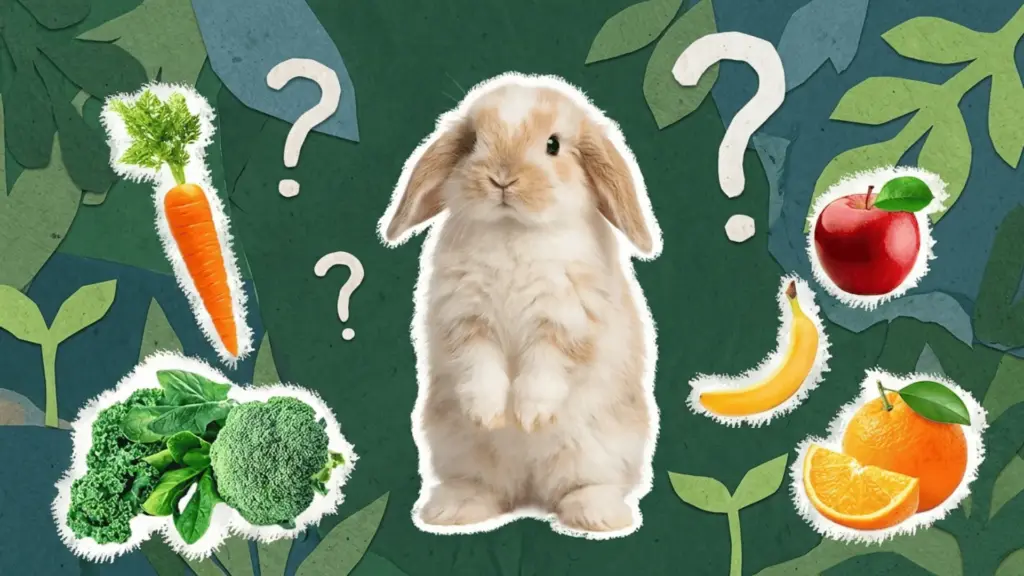
One wrong bite can turn a happy, hopping baby bunny into a very sick one, and that’s what makes feeding a young rabbit feel so overwhelming for new owners.
If you’ve recently welcomed a tiny rabbit into your home, you’re probably wondering whether you’re offering the right foods, introducing them at the right time, and avoiding anything that could upset their delicate digestive system.
The challenge is that baby rabbits undergo several nutritional changes in just a few months, and what works at one stage may not be suitable at another.
The good news is that once you understand how their dietary needs evolve, feeding becomes far less stressful.
This blog walks you through every stage of a baby rabbit’s feeding journey, helping you make confident choices that support healthy growth and long-term well-being.
What Do Baby Rabbits Eat in the First 4 Weeks?
For the first 3–4 weeks, baby rabbits rely entirely on their mother’s milk, which provides essential nutrients and antibodies needed to fight infections while their immune systems are still developing.
Mother rabbits usually feed their kits only once or twice a day, often at night, so a nest that appears abandoned is often not orphaned. Wild baby rabbits are usually best left undisturbed, as their mothers are likely nearby.
Kitten Milk Replacer (KMR) is commonly recommended for emergency orphan care, although feeding protocols vary and should always be supervised by a rabbit-savvy veterinarian or wildlife rehabilitator.
Cow’s milk and puppy formula can cause severe digestive issues and may be fatal. The formula should be warmed slightly and fed slowly with a small syringe while keeping the baby upright to prevent aspiration.
Because this stage is extremely delicate, even small mistakes can be dangerous. Always contact a rabbit-savvy veterinarian or wildlife rehabilitator for guidance.
Understanding Baby Rabbit Nutrition Basics
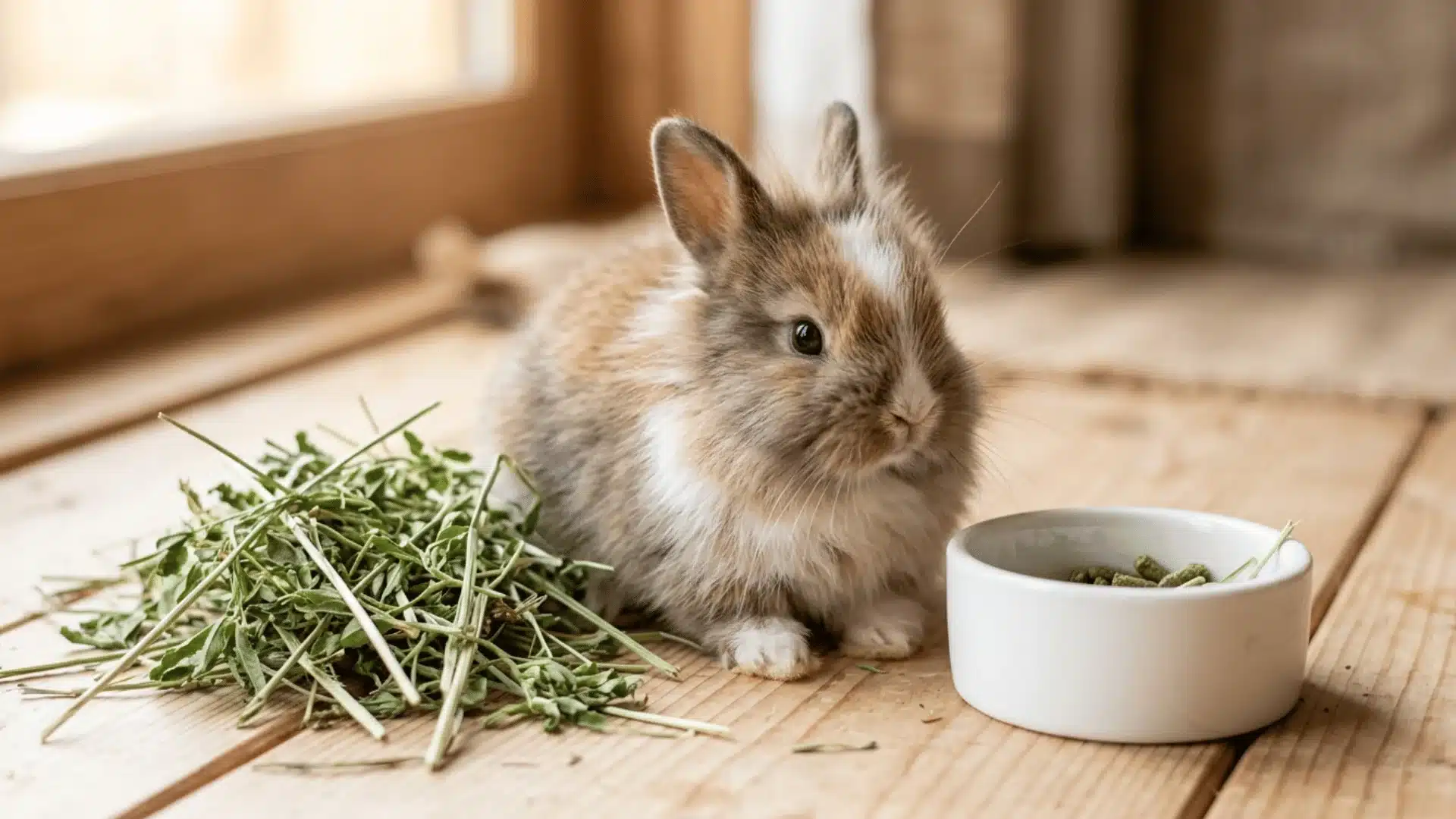
Baby rabbits grow quickly, so their diet must support bone growth, muscle development, digestion, and immunity.
Their gut bacteria are still forming, which makes sudden food changes risky. A young rabbit should not be switched to new hay, pellets, or greens all at once.
Unlimited high-quality hay is the foundation of their diet and provides the most important daily nutrient: fiber.
Fiber keeps the gut moving and helps prevent GI stasis. Protein supports tissue growth, while calcium helps build strong bones and teeth.
Alfalfa hay and alfalfa-based pellets are suitable for rabbits under six months because they provide more protein and calcium than adult foods.
Introduce any new food gradually over 7–14 days. Start with small amounts, watch droppings closely, and slow down or pause if stools soften.
Always provide unlimited fresh water. This keeps it short while making it slightly more robust.
When Can Baby Rabbits Start Eating Solid Food?
Around 3 weeks old, kits begin nibbling on whatever is nearby, often hay from the nest.
This is a normal, positive sign that their digestive systems are adapting to solid food, though milk remains their primary source of nutrition.
Between 3 and 4 weeks of age, you can offer small amounts of alfalfa hay near them. They may sniff, explore, and take a few bites. Introduce it gradually, as their stomachs are still very sensitive.
At this stage, the goal is simply to help them become familiar with solid food, not to replace milk.
Baby rabbits have much more delicate digestive systems than adults. Introducing new foods too quickly can upset the balance of beneficial gut bacteria, leading to gas, diarrhea, or other digestive problems.
If adopting a young rabbit, continue feeding the same diet it was already eating before making any changes.
What Do Baby Rabbits Eat at Different Ages?
The diet changes a lot in the first six months. Here is a clear breakdown by age.
- 0–3 weeks: Mother’s milk remains the primary source of nutrition. Around 2–3 weeks, kits may begin nibbling hay and their mother’s cecotropes as part of normal digestive development.
- 3–4 weeks: Milk remains the primary diet. Offer small amounts of alfalfa hay for exploration, allowing kits to nibble naturally without pressure or sudden dietary changes.
- 4–7 weeks: Mother’s milk continues as the main food source while hay intake gradually increases. Introduce tiny amounts of alfalfa pellets and keep all dietary changes slow.
- 7–8 weeks: Weaning begins as milk intake decreases and hay consumption rises. This stage is highly sensitive for digestion, so kits should remain with their mother.
- 8 weeks–6 months: Provide unlimited alfalfa hay and alfalfa-based pellets. Introduce leafy greens from around 12 weeks, one at a time, while monitoring stool consistency closely.
- 6 months and older: Gradually transition from alfalfa to timothy hay and adult pellets. Continue offering leafy greens daily to support balanced nutrition and digestive health.
A good bunny cage setup can also help you create a feeding area that makes this transition easier.
Best Foods for Baby Rabbits
Not all rabbit food is created equal, and what works for an adult bunny is not always right for a kit. Here is a breakdown of each food category, what to look for, and when to introduce it.
1. Hay
Hay should make up the largest part of a baby rabbit’s diet because it provides the fiber needed for healthy digestion and proper tooth wear.
For rabbits under six months, alfalfa hay is ideal since its higher protein and calcium content support rapid growth and bone development.
Around six months, gradually introduce timothy hay or orchard grass hay, which contain lower calcium levels and are better suited for maintaining long-term digestive and dental health.
2. Rabbit Pellets
Rabbit pellets are a useful nutritional supplement but should never replace hay as the main food source. For kits under six months, choose pellets made primarily from alfalfa meal and containing at least 18% fiber.
Look for simple ingredient lists with added vitamins and minerals. Avoid mixes containing seeds, dried fruit, artificial colors, or excessive fillers.
Growing rabbits under 6 months often receive free-choice alfalfa-based pellets, although some veterinarians recommend monitoring portions if hay intake decreases.
3. Fresh Greens for Older Baby Rabbits
Fresh greens can be introduced once a rabbit reaches 12 weeks of age, but they should be offered slowly and one variety at a time. Begin with small amounts and monitor for any digestive upset before increasing portions.
Good starter greens include romaine lettuce, cilantro, bok choy, dandelion greens, and small amounts of parsley.
While greens provide variety and nutrients, they should remain a supplement, with hay continuing to form the foundation of the diet.
You can explore which vegetables are safe as your rabbit gets older and you want to add more variety to their greens rotation. Carrots are high in sugar and should be an occasional treat only, not a daily green.
Foods Baby Rabbits Should Never Eat
Knowing what baby rabbits should never eat is just as important as knowing what they can eat, since even a small amount of the wrong food can lead to serious health problems.
- Avocado: Contains a compound called persin, which is toxic to rabbits and can be fatal even in small amounts.
- Chocolate: Contains theobromine, which rabbits cannot process. It can cause heart problems and seizures.
- Onion, garlic, leeks, and chives: These damage red blood cells and can trigger a condition called hemolytic anemia.
- Fruit seeds and pits: Apple seeds, peach pits, and plum pits contain cyanide compounds. Always remove seeds before offering any fruit.
- Iceberg lettuce: It offers very little nutritional value and may contribute to digestive upset if fed in large amounts. More nutritious leafy greens are a better choice.
- Dairy products: Rabbits cannot digest lactose at all after weaning. Dairy causes serious gastrointestinal distress.
- Bread, crackers, pasta, and cereals: High in carbohydrates and low in fiber. These disrupt gut bacteria and can cause dangerous digestive imbalances.
- Raw potatoes: High in starch and potentially toxic. Never feed potato peels either.
- Mushrooms: Mushrooms are not recommended for rabbits because they are not a natural part of their diet, and some wild varieties contain toxins that can be dangerous.
- Rhubarb: Highly toxic to rabbits. Even small amounts can cause kidney failure.
Sugar and processed human food in general are bad news. Rabbits are not omnivores. Their digestive systems are designed purely for plant fiber and have no way to handle sugars, fats, or preservatives the way other animals can.
If your rabbit eats any of the foods listed, contact your vet right away. Rabbits cannot vomit, so once something is swallowed, it stays in their system.
How Much Should You Feed a Baby Rabbit?
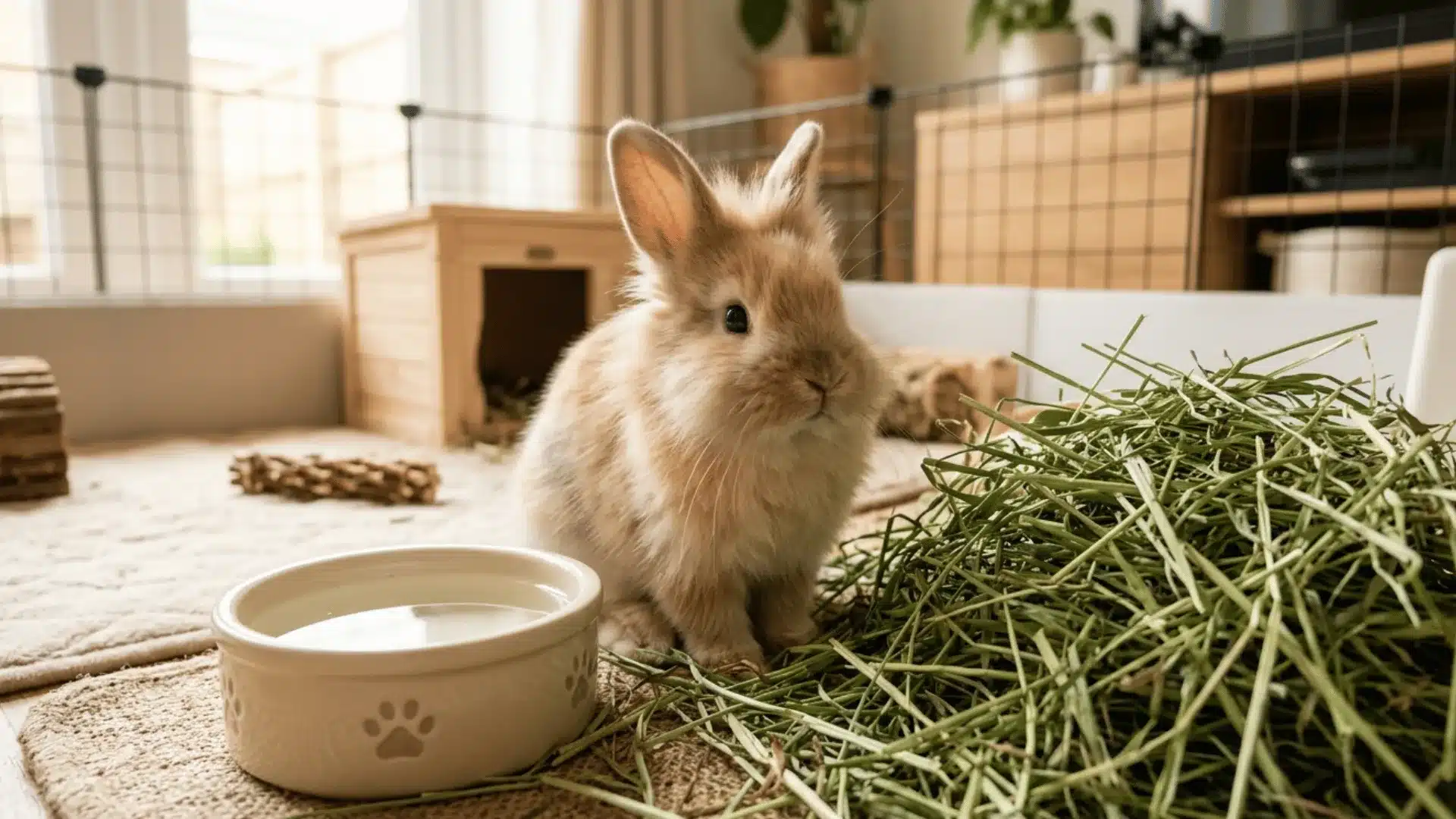
Hay should always be available in unlimited amounts, regardless of age. Rabbits graze continuously, and their digestive system depends on a constant supply of fiber to function properly.
For rabbits under 6 months old, alfalfa-based pellets can generally be offered freely (or in generous amounts) alongside unlimited hay to support rapid growth.
However, because pellets are highly appealing, some rabbits may eat them instead of hay.
Monitor your rabbit closely; if they begin ignoring hay, reduce pellet portions slightly to encourage more hay consumption.
After 6 months of age, pellets should be measured rather than free-fed. A common guideline for young adults is about ¼ cup of pellets per 5 pounds of body weight daily, though your veterinarian can recommend the best amount as your rabbit matures.
Fresh water is equally important and should always be available. Use either a bowl or a bottle, clean it daily, and monitor intake, as rabbits can drink surprisingly large amounts.
Once you have feeding sorted, getting litter training your rabbit set up properly can make the whole routine much easier.
Common Feeding Mistakes Rabbit Owners Make
Proper rabbit feeding prevents digestive issues, obesity, and dental problems. Focus on hay, introduce foods gradually, avoid early treats, and monitor droppings closely.
- Introducing vegetables too early: Baby rabbits under 12 weeks are not ready for vegetables. Early greens can disrupt gut bacteria, cause diarrhea, and lead to serious digestive issues. Introduce vegetables gradually after 12 weeks.
- Feeding too many pellets: Unlimited pellets can make rabbits ignore hay. Excess pellets contribute to soft stools, weight gain, and dental problems. Hay should remain the main food, with pellets offered moderately.
- Not providing enough hay: Hay is essential, not just bedding. Rabbits need constant access to fresh hay to support digestion and dental health. Running out can slow digestion and trigger dangerous gut stasis.
- Giving treats too soon: Baby rabbits do not need treats. Sugary commercial treats can upset gut bacteria, encourage picky eating, and reduce hay intake. Wait until six months before introducing treats.
- Ignoring digestive problems: Changes in droppings often signal health issues. Soft stools, diarrhea, or fewer droppings require attention. Contact a vet promptly if abnormalities persist or eating stops.
Conclusion
Feeding a baby rabbit may seem complicated at first, but it becomes much simpler once you understand their changing nutritional needs.
Start with the right foundation, introduce new foods gradually, and make hay the center of their diet as they grow. Small steps and patience go a long way in supporting healthy digestion and steady development.
The first six months are especially important, helping shape your rabbit’s long-term health and overall well-being. By providing proper nutrition and avoiding common feeding mistakes, you can give your bunny the best possible start in life.
If you have a baby rabbit at home, trust the process. Consistent care, a balanced diet, and a little patience will help them grow into a happy, healthy companion.
Have a baby bunny at home? Drop a comment below and tell us what stage they are at. We love hearing from rabbit families.
Frequently Asked Questions
Can Baby Rabbits Eat Carrots?
Not regularly, although rabbits are often associated with carrots, they are high in natural sugars. Baby rabbits under 6 months should focus on hay, pellets, and appropriate greens. Carrots should only be offered occasionally and in small amounts once the rabbit is older.
How Do I Know if My Baby Rabbit is Eating Enough?
A healthy baby rabbit should be active, steadily gaining weight, producing normal droppings, and eating hay regularly. If your rabbit becomes lethargic, stops eating, or produces very few droppings, contact a veterinarian immediately.
Why is My Baby Rabbit Having Soft Stools?
Soft stools can result from dietary changes, too many pellets, early introduction of vegetables, or digestive imbalance. Any persistent diarrhea in a baby rabbit should be treated as an emergency and evaluated by a veterinarian.