You can give your rabbit fresh hay, a clean cage, and perfect toys, but still miss one quiet health risk.
Rabbit vaccinations are confusing because the answer changes by country, disease risk, and whether your rabbit stays indoors or goes outside.
I know it feels odd because rabbits do not get vaccine reminders the same way dogs and cats usually do.
We will be telling you why rabbit vaccinations matter, whether rabbits need vaccines, which diseases they help prevent, and how often shots are needed.
You will also see vaccine types, booster timing, cost, side effects, missed shots, and simple home safety steps. Before getting into the details, let us start with the biggest question most bunny owners ask first.
Note: This guide is for informational purposes only. Always consult a licensed veterinarian before making any medical decisions for your rabbit.
Do Rabbits Need Vaccines?
Yes, many rabbits do need vaccines, but it depends on where they live and what risks are nearby. In the US, rabbit vaccines are not legally required like some dog and cat shots.
Still, many rabbit vets recommend the RHDV2 vaccine because this virus can spread fast and be deadly.
The tricky part is that indoor rabbits are not fully safe either. Stuff from outside can come in through shoes, clothes, hay, insects, or pet supplies.
So, a rabbit does not need to touch another rabbit to be at risk. That does not mean every rabbit needs the same plan. A rabbit in a high-risk area may need vaccination sooner than one in a low-risk area.
Understanding how these risks affect your rabbit’s long-term health helps you decide when to act rather than waiting for a problem to appear.
According to the USDA, RHDV2 had been documented in at least 14 states as of 2020, mainly on the West Coast and some southern states, and officials expect it to eventually become endemic in North America.
The best move is to ask a rabbit-savvy exotic vet what is right for your bunny.
The Diseases Rabbit Vaccines Protect Against
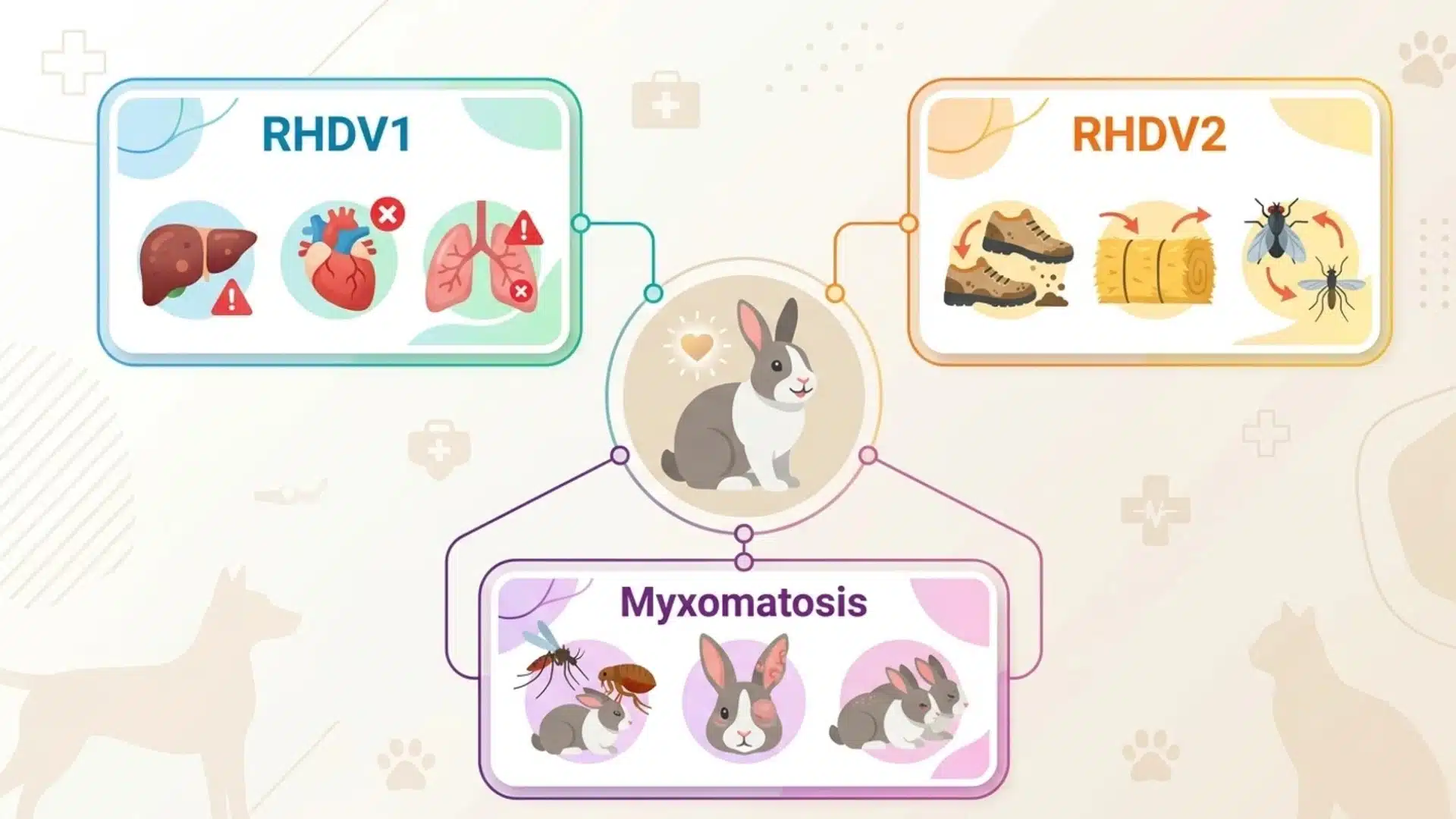
Rabbit vaccines mainly protect against serious viral diseases, especially Rabbit Hemorrhagic Disease (RHD) and Myxomatosis, being the two primary targets worldwide.
These diseases matter because they can spread quietly, move fast, and become dangerous before owners notice clear warning signs.
- RHDV1: This older strain attacks a rabbit’s liver and other organs and can cause sudden death. It is more established in Europe and parts of Asia, though cases have been reported in the US.
- RHDV2: This is the main vaccine concern in the US right now. It spreads through indirect contact with contaminated shoes, hay, insects, bedding, and shared rabbit spaces. Unlike RHDV1, it can also affect wild cottontail and jackrabbit populations, which increases the risk of spread.
- Myxomatosis: This disease spreads through biting insects like fleas, mites, mosquitoes, and flies. It causes swelling, fever, breathing trouble, and weakness. Recovery without intensive veterinary care is uncommon, and euthanasia is often the outcome in severe cases.
The point is not to scare rabbit owners. It is to show why vets take these vaccines seriously, especially in areas where outbreaks are already reported.
Types of Rabbit Vaccines: Core vs. Non-Core
Rabbit vaccines are usually grouped as core or non-core. Core vaccines are the main ones most rabbits need, based on common disease risk.
Non-core vaccines are used only in special cases, depending on the rabbit’s location, lifestyle, and health history.
Core Vaccines
Core vaccines are the ones rabbit-savvy vets recommend for most rabbits. In the US, this usually means the RHDV2 vaccine.
In the UK and Europe, many rabbits get a 3-in-1 vaccine that covers Myxomatosis, RHDV1, and RHDV2. These shots protect against diseases that can spread fast and become deadly.
Non-Core Vaccines (Situational)
Non-core vaccines are not needed for every rabbit. Some UK vets may use a separate RHDV2 booster with older vaccine plans.
In rare US cases, a vet may discuss rabies vaccination for rabbits with heavy wildlife exposure or unusual environmental risks.
This is not a normal routine shot, so your vet should guide that call based on local concerns.
Rabbit Vaccination Schedule: From First Shot to Booster
Rabbit vaccine timing depends on the vaccine used, your country, and your rabbit’s health. Your vet may adjust this plan, but this table gives a simple starting point.
| Rabbit Stage | Vaccine Step | What To Know |
|---|---|---|
| 5 to 7 weeks old | First RHDV2 shot or 3-in-1 shot | The vet checks your rabbit first and should not vaccinate a sick rabbit. |
| 8 to 10 weeks old | Second RHDV2 shot | In the US, this is usually given 21 days after the first shot. |
| Every 12 months | Annual booster | This keeps protection current and often fits into a yearly wellness visit. |
| High-risk areas | Possible 6-month booster | Some rabbits in active outbreak zones may need extra boosters if the vet recommends it based on current local disease reports. |
How Much Do Rabbit Vaccinations Cost?
Rabbit vaccination cost depends on your vet, your area, and whether the visit includes a full health check.
In the US, RHDV2 shots often cost less at rescue clinics than at full exotic vet offices.
- Community Clinics: These may charge around $30 to $50 per shot. Rescue-hosted vaccine events can also be cheaper.
- Full-Service Exotic Vets: These may charge around $50 to $125 per visit. Many clinics add a separate exam fee because the vet examines your rabbit before administering any vaccine.
- Microchipping: Some rabbits may need microchipping before vaccination, depending on local rules.
Price should not be the main deciding factor. A rabbit-savvy vet checks teeth, weight, temperature, and overall condition during the same appointment, which makes the visit worth more than just a quick injection.
What to Expect Before, During, and After Vaccination?

Getting your rabbit vaccinated is usually simple, but a little prep can make the vet visit less stressful for both of you.
1. Preparing Your Rabbit
Use a safe carrier with good airflow, and place soft bedding or hay inside so your rabbit feels calmer.
Do not use sprays, grooming products, or flea treatments before the visit unless your vet says so. Keep the ride quiet, and avoid sudden handling.
Rabbits stress fast, so the goal is simple: calm carrier, gentle trip, and no last-minute chaos.
2. At the Vet’s Office
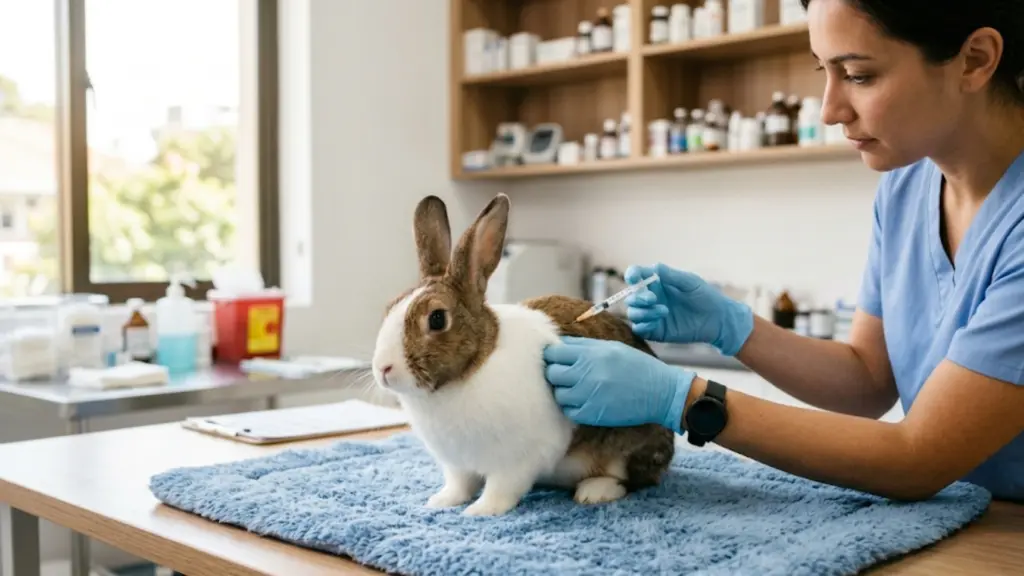
Your vet will usually check your rabbit’s temperature before giving the vaccine. This matters because sick rabbits should not get vaccinated until they recover.
The shot itself is quick, but many clinics watch rabbits for 15 to 30 minutes after it. That short wait helps catch rare reactions early, instead of sending you home guessing.
3. Normal Side Effects and When to Worry
Most rabbits handle vaccination well, and side effects are usually mild.
Your rabbit may seem quiet for a day, run a low fever, or have a small lump where the shot was given. These signs usually pass within 24 to 48 hours.
Call your vet if you notice:
- No eating: Your rabbit refuses food or hay after the shot
- Breathing trouble: Your rabbit breathes hard, fast, or with effort
- Heavy swelling: The shot area becomes large, painful, or keeps growing
- Long tiredness: Your rabbit stays weak or dull beyond 48 hours
What Happens If You Miss or Delay a Booster?
If you miss a rabbit booster, do not panic or avoid the vet because you feel guilty. This happens more often than people admit, and the best move is to book the next visit quickly.
A short delay may only need one booster to bring protection back up. A longer gap may mean your rabbit needs the full two-dose series again.
Your vet will decide this based on the vaccine used, your rabbit’s records, and how long it has been.
What to Do If Your Rabbit’s Vaccine Is Overdue?
Call your vet as soon as you notice the delay, especially if it has been more than 12 months since the last shot.
Some vaccines may still provide partial protection, but your vet will assess whether the primary series needs to be restarted based on the gap and vaccine type used.
Until your rabbit is fully covered again, keep them indoors and away from wild rabbits or unvaccinated rabbits.
Biosecurity: What Vaccines Can’t Do Alone
Vaccines help a lot, but they are not the whole safety plan. Some rabbit viruses can still spread through shoes, clothes, insects, hay, cages, and outdoor spaces.
So, biosecurity is basically the everyday stuff you do to lower risk at home.
- Shoes: Keep outdoor shoes away from your rabbit’s room or play area.
- Hay: Avoid hay from outbreak areas, especially during local disease reports.
- Insects: Use safe screens or netting if your rabbit spends time outside.
- Wild rabbits: Do not let your rabbit graze where wild rabbits visit.
- Cleaning: Wash hands, clean carriers, and avoid sharing supplies between rabbits.
Think of it like backup protection. Vaccines do the heavy lifting, but clean habits help block the random mix-ups that bring germs inside.
Keeping a clean and well-maintained living space for your rabbit is one of the most practical steps you can take alongside vaccination to reduce everyday disease risk.
When Should You Not Vaccinate Your Rabbit?
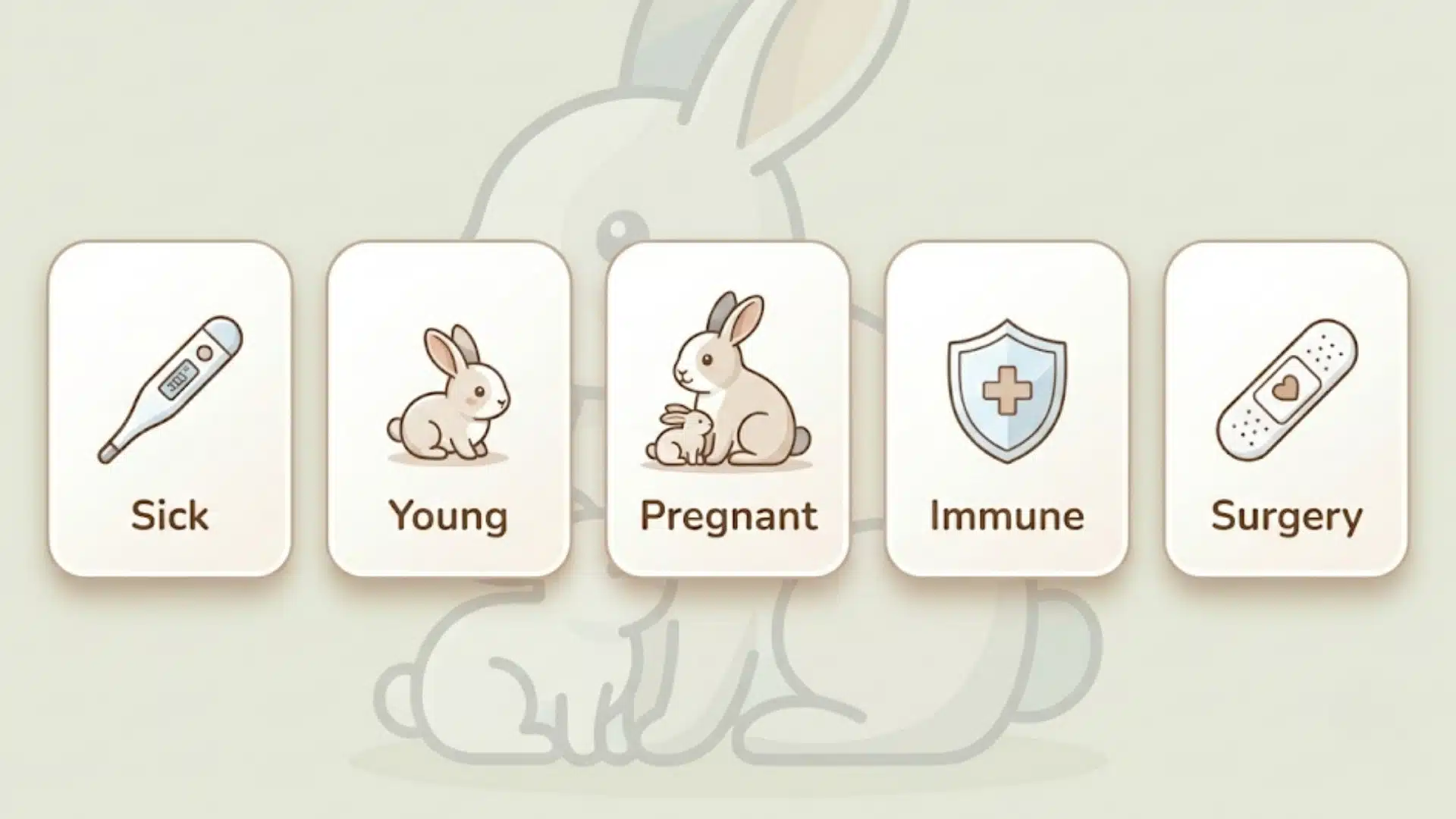
Most healthy rabbits can get vaccinated safely, but timing matters. If your rabbit has these conditions, it’s better to talk to a vet first before booking a vaccination appointment
- Sick rabbit: If your rabbit has a low appetite, fever, weakness, nasal discharge, diarrhea, or any active illness.
- Too young: Follow the minimum age for the vaccine your vet is using, because early shots may not work well.
- Pregnant or nursing: Ask your vet if waiting until after weaning is safer for the mother and babies.
- Immune problems: Rabbits on certain medicines may not respond well, so your vet may delay the shot.
- Recent surgery: Let your rabbit recover fully before booking the vaccine visit, especially after spay or neuter surgery.
These cases do not mean vaccines are bad. They just mean your rabbit may need better timing, closer care, or a custom plan from a rabbit-savvy vet.
Conclusion
Rabbit vaccinations can feel confusing at first, but the main idea is simple. Your rabbit’s vaccine needs depend on location, age, health, and local disease risk.
I would not treat indoor life as full protection, because germs can still come in through shoes, hay, insects, and supplies.
The best next step is to speak with a rabbit-savvy vet and ask about illnesses, boosters, side effects, and safe timing.
If your rabbit is already vaccinated, keep the booster date saved somewhere easy. If not, do not panic, just get proper advice and start the right plan.
Has your rabbit had vaccines yet, or are you still unsure what they need? Tell us, share with us in the comments below.
Frequently Asked Questions
Can I Vaccinate My Rabbit at Home?
No. Rabbit vaccines should be given by a licensed veterinarian. The vet checks your rabbit’s health before vaccination and watches for rare reactions afterward.
There are no approved over-the-counter rabbit vaccines that owners can safely give at home.
Are Rabbit Vaccines Safe for Spayed or Neutered Rabbits?
Yes. Spayed and neutered rabbits can receive vaccines safely. These procedures do not affect how the vaccine works. If your rabbit recently had surgery, most vets recommend waiting until recovery is complete before vaccination.
Do Bonded Rabbits Need Separate Vaccinations?
Yes. Each rabbit needs its own vaccine because protection does not pass from one rabbit to another. If you have a bonded pair or multiple rabbits, every rabbit should stay current on vaccinations.
Does Pet Insurance Cover Rabbit Vaccinations?
It depends on the policy. Some exotic pet insurance plans cover routine care, including vaccines and wellness exams. Others only cover illness or injury, so check your policy details before assuming vaccination costs are included.