You fall in love with a Cavapoo photo online. Those soft eyes, that teddy bear face. Then reality taps you on the shoulder: you sneeze around dogs. A lot.
The good news is that Cavapoos sit in a different category than most heavy shedders.
The more complicated news is that “hypoallergenic” is one of the most misunderstood words in dog ownership, and a lot of allergy sufferers have ended up disappointed because no one gave them the full picture upfront.
This blog post does that. We’ll cover the science behind dog allergies, how Cavapoo genetics actually affect your nose, what different coat types mean for allergy households, and everything else you need to know about this sweet, curious breed before bringing one home.
What Does Hypoallergenic Actually Mean?
Hypoallergenic means less likely to trigger allergies, not completely free of allergens. No dog breed is truly allergen-free.
Most people are not allergic to dog hair itself. The real culprit is a protein called Can f 1, found in a dog’s saliva, skin flakes, and urine.
This protein spreads through dander and sticks to fur, furniture, and clothing.
Dogs that shed less may release fewer allergen particles into the air, which is why some breeds are considered more allergy-friendly. Even then, reactions vary from one dog to another.
It’s worth knowing that two dogs of the same breed can produce very different amounts of Can f 1.
This is why a friend’s Cavapoo might not bother you at all, while another dog from the same litter might. Individual variation matters as much as breed type.
Are Cavapoos Hypoallergenic?

No, Cavapoos are not completely hypoallergenic, but they are often a better choice for people with mild dog allergies.
Their Poodle genetics give them a low-shedding coat that can help reduce the spread of dander and allergens around the home.
However, the Cavalier King Charles Spaniel side may increase shedding, so coat types can vary from one Cavapoo to another.
Some Cavapoos shed very little, while others may shed more like a typical family dog.
This is why allergy experiences differ between owners. Cavapoos may lower allergen exposure, but they cannot create an allergen-free environment.
People with severe allergies or asthma should spend time with the breed before adopting one.
Cavapoo Coat Types and Their Impact on Allergies
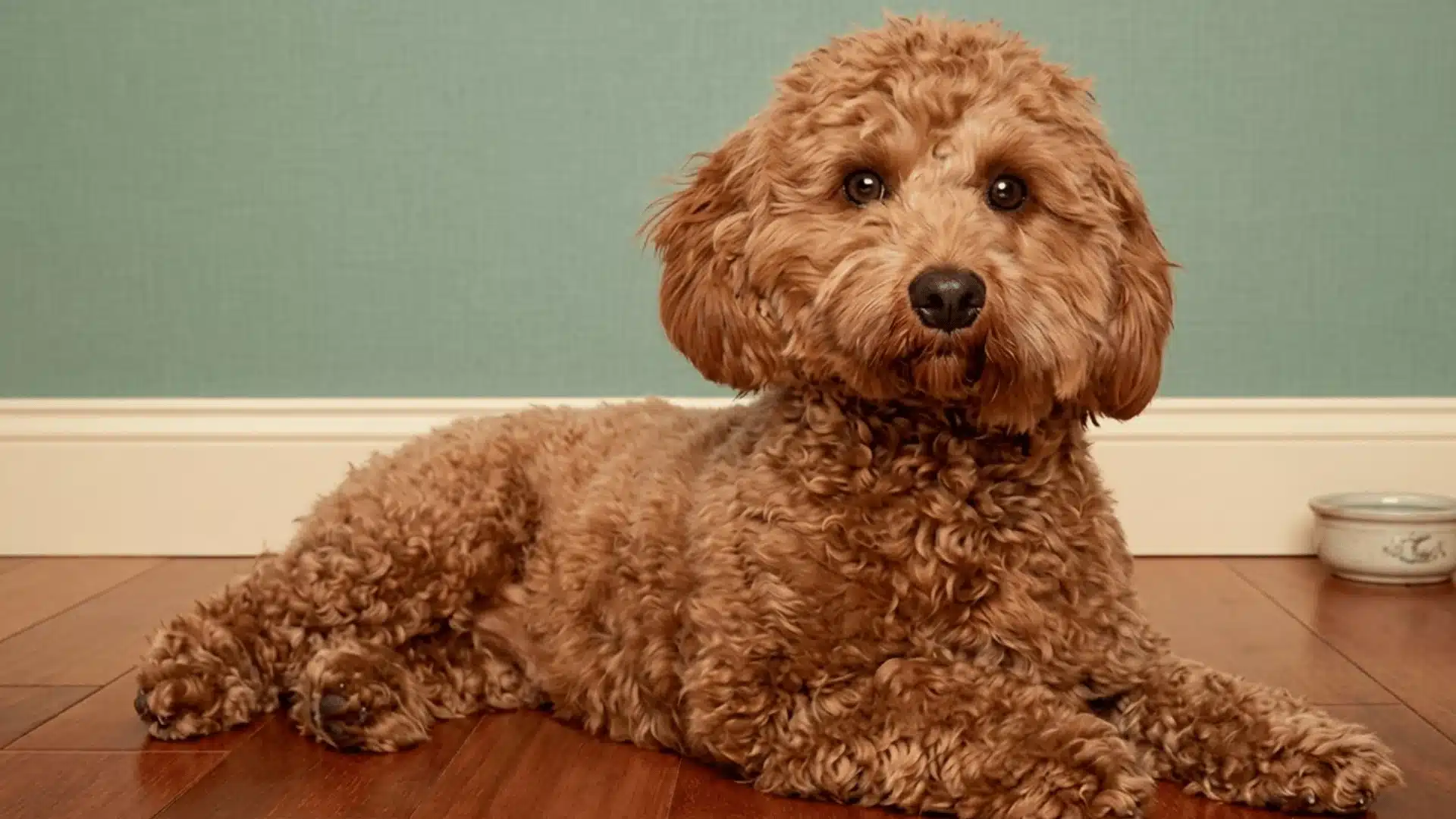
The coat tells you a lot about how allergy-friendly a specific Cavapoo will be. There are three main coat types:
1. Curly coat: This is the most Poodle-like coat and the lowest shedding of the three. Loose hair and dander stay trapped in the curls, which means fewer allergens floating through your air.
Curly-coated Cavapoos are generally the best choice for allergy sufferers. The trade-off is grooming: this coat mats quickly without daily brushing and needs a professional trim every six to eight weeks.
2. Wavy coat: The most common coat type in Cavapoos. It sheds moderately and sits in the middle for allergy-friendliness.
Many people with mild allergies do well with wavy-coated dogs as long as grooming is kept up consistently. It’s also more forgiving to maintain than a fully curly coat.
3. Straight coat: This coat takes after the Cavalier and sheds more than the other two. It’s not necessarily a dealbreaker, but if allergies are a serious concern, a straight-coated Cavapoo is the riskiest option of the three.
Understanding the Cavapoo’s parent breeds helps explain why coat outcomes vary so much from one puppy to the next.
F1 vs. Multigenerational Cavapoos and Allergy Differences
Not all Cavapoos are bred the same way, and the generation matters for allergy households.
An F1 Cavapoo is a first-generation cross: one purebred Poodle parent and one purebred Cavalier King Charles Spaniel parent. Their coats are less predictable.
Some F1 puppies from the same litter will be curly; others will be wavy or straight. This makes allergen risk harder to predict at the puppy stage.
A multigenerational Cavapoo (F1b, F2, or further back) has more Poodle genetics bred into the line. F1b Cavapoos, for example, are a cross between an F1 Cavapoo and a purebred Poodle.
This increases the likelihood of a low-shedding, curly coat and can make allergen management more consistent. If minimizing allergic reactions is a priority, an F1b or multigenerational Cavapoo is often the more reliable option.
Ask your breeder specifically about the generation and both parents’ coat types before choosing a puppy.
Cavapoo Grooming Requirements and Daily Care Needs

Cavapoos need regular grooming to keep their coat healthy and comfortable. Their soft hair can tangle easily, especially around the ears, legs, and chest, so brushing several times a week is important.
Many owners also schedule professional grooming every few months to help manage coat length and prevent matting.
Along with coat care, Cavapoos need routine ear cleaning because floppy ears can trap moisture, increasing the risk of infections.
Dental care is also important since small breeds are more likely to develop plaque buildup. Nail trimming should be done regularly to prevent discomfort while walking.
Overall, Cavapoos require moderate to high maintenance compared to many other small dog breeds.
Common Cavapoo Health Problems
Cavapoos are generally healthy and typically live 12 to 15 years with proper care. As a mixed breed, they benefit from some degree of hybrid vigor, but they can still inherit health tendencies from either parent line.
Health issues to be aware of include:
- Mitral valve disease: Inherited from the Cavalier side. This progressive heart condition is one of the most monitored concerns in the breed.
- Hip dysplasia: Can affect both parent breeds. Maintaining a healthy weight helps reduce stress on the joints.
- Eye conditions: Cataracts and dry eye appear in Cavapoos with some regularity.
- Ear infections: The floppy Cavalier ears trap moisture and are prone to otitis externa. Regular cleaning is not optional.
- Luxating patella: A kneecap that slips out of position, more common in smaller dogs.
Choosing a breeder who health-tests both parent dogs is the most effective way to reduce these risks. Ask for documentation, not just assurances.
Cavapoo vs Other Low-Shedding Dog Breeds
If you are comparing Cavapoos with other low-shedding breeds, this quick table highlights the main differences in shedding, grooming needs, temperament, and allergy friendliness.
Other small dog options worth exploring are covered in a separate guide if you’re still deciding on the right fit.
| Breed | Shedding Level | Grooming Needs | Temperament | Better for Allergy-Sensitive Owners |
|---|---|---|---|---|
| Cavapoo | Low to moderate | Moderate to high | Gentle, social, affectionate | Good option for mild allergies |
| Cockapoo | Moderate | Moderate | Energetic, playful, friendly | Depends on coat type |
| Goldendoodle | Low to moderate | High | Intelligent, active, outgoing | Better in curly-coated types |
| Maltipoo | Low | Moderate | Calm, affectionate, adaptable | Often suitable for smaller homes and allergy-sensitive owners |
Who is a Cavapoo Best Suited for?
Cavapoos can be a good match for people with mild dog allergies who want a friendly and affectionate companion.
Curly or wavy-coated Cavapoos are often easier to manage in allergy-sensitive homes, especially when regular grooming is part of the routine.
Spending time with the dog before adoption is important because allergy reactions can vary from one Cavapoo to another.
Families looking for a social, people-oriented pet usually do well with this breed. However, people with severe allergies or asthma should be more cautious since no Cavapoo is completely allergen-free.
Choosing a responsible breeder who understands coat genetics and health testing can also make a big difference when selecting the right puppy.
Tips for Managing Allergens at Home with a Cavapoo
If you’ve decided a Cavapoo is right for your home, there are practical steps that meaningfully reduce allergen load beyond just grooming the dog:
- Use a HEPA air purifier: A good HEPA filter catches airborne dander particles. Run one in the bedroom, especially since that’s where most people spend eight hours a day breathing.
- Wash bedding weekly: Dog bedding, your bedding, couch covers. Dander settles into fabric and builds up fast.
- Groom outdoors when possible: Brushing your Cavapoo inside shakes loose particles into the air. Taking it outside keeps that out of your living space.
- Vacuum with a HEPA-filter vacuum: Regular vacuums can recirculate dander rather than capturing it.
- Create at least one dog-free zone: Even one room where the dog doesn’t go gives your immune system a consistent break.
- Bathe your Cavapoo every two to four weeks: Regular bathing reduces the surface dander on its coat. Don’t overdo it, as too-frequent baths strip the skin’s natural oils and can worsen dander production.
Conclusion
Cavapoos are a genuinely good option for mild allergy sufferers, but they’re not a sure thing for everyone.
The coat type, generation, individual dog, and how consistently you manage grooming and cleaning all factor into how your allergies respond.
If you can, visit the specific dog you’re considering before adoption. Spend at least 30 minutes in the same indoor space and see how you feel.
That single step is more informative than any breed guide, including this one.
If you’ve lived with a Cavapoo and have allergy experience to share, drop it in the comments. Real-world feedback helps other readers make a better-informed decision
Frequently Asked Questions
Do Cavapoos Smell More than Other Breeds?
Cavapoos don’t have a stronger natural odor than most dogs, but their floppy ears and dense coats can trap moisture and develop a smell if not cleaned regularly.
Can You Be Allergic to a Cavapoo but Not a Poodle?
Yes, this is possible. Allergic reactions depend on a specific dog’s individual Can f 1 protein levels, not just breed type. A Poodle may produce lower levels of Can f 1 than a particular Cavapoo that inherited more Cavalier genetics
Is a Male or Female Cavapoo Better for Allergy Sufferers?
There’s no breed-level evidence that one sex is consistently better for allergy sufferers in Cavapoos. In other breeds, intact males can produce higher allergen levels through urinary proteins, but neutered males and females are generally comparable.