Sick cat symptoms can start with small changes. A cat may eat less, drink more, hide, sleep longer, stop grooming well, vomit, or use the litter box differently.
These signs can be easy to miss because cats often hide discomfort. That is why early attention matters. A small change today can be the first clue that your cat needs care.
I have seen this many times in practice. A cat parent comes in saying, “Something just feels off.” The cat is quieter, skipping meals, or no longer acting like itself.
After treating thousands of pets over the years, I have learned that this instinct is often right. Knowing the early signs of illness in cats can help you act sooner, before a minor concern becomes a bigger health problem.
Early Sick Cat Symptoms to Watch for
The first signs of a sick cat are often behavioral. You may not see a wound, a runny nose, or obvious pain. Instead, your cat may simply act differently.
Here are the early sick cat symptoms to watch for:
- Change in Appetite: Eating less can point to nausea, dental pain, fever, or stomach trouble. Eating much more than usual may also be a sign of illness, including thyroid issues, diabetes, or parasites.
- Unusual Thirst: Drinking more water than normal can be linked to kidney disease, diabetes, or thyroid problems. Drinking less, especially when low on energy, may indicate dehydration.
- Low Energy: A cat that skips playtime, sleeps in strange spots, or seems less responsive needs attention. One lazy day can happen. But low energy that lasts more than a day or is accompanied by other symptoms should be checked.
- Hiding or Sudden Clinginess: A sick cat may hide under the bed, stay in one room, or avoid people. Some cats do the opposite and become unusually clingy. Any sudden personality shift matters.
- Grooming Changes: A dull, greasy, or matted coat can mean your cat does not feel well enough to groom. Too much grooming in one spot may point to pain, itching, or skin irritation.
- Unusual Meowing: increased crying, yowling, or other strange sounds can indicate pain, stress, confusion, or illness. This is especially important in older cats, where extra vocalizing can be linked to thyroid or age-related issues.
Physical Signs Your Cat May Be Sick
Cats often hide pain, so small physical changes can matter. A change in breathing, weight, coat, mouth odor, or bathroom habits may be the first clear clue that something is wrong.
Some signs may appear mild at first, but they can quickly become serious. Watching your cat closely helps you spot problems early and gives your vet useful details during a checkup.
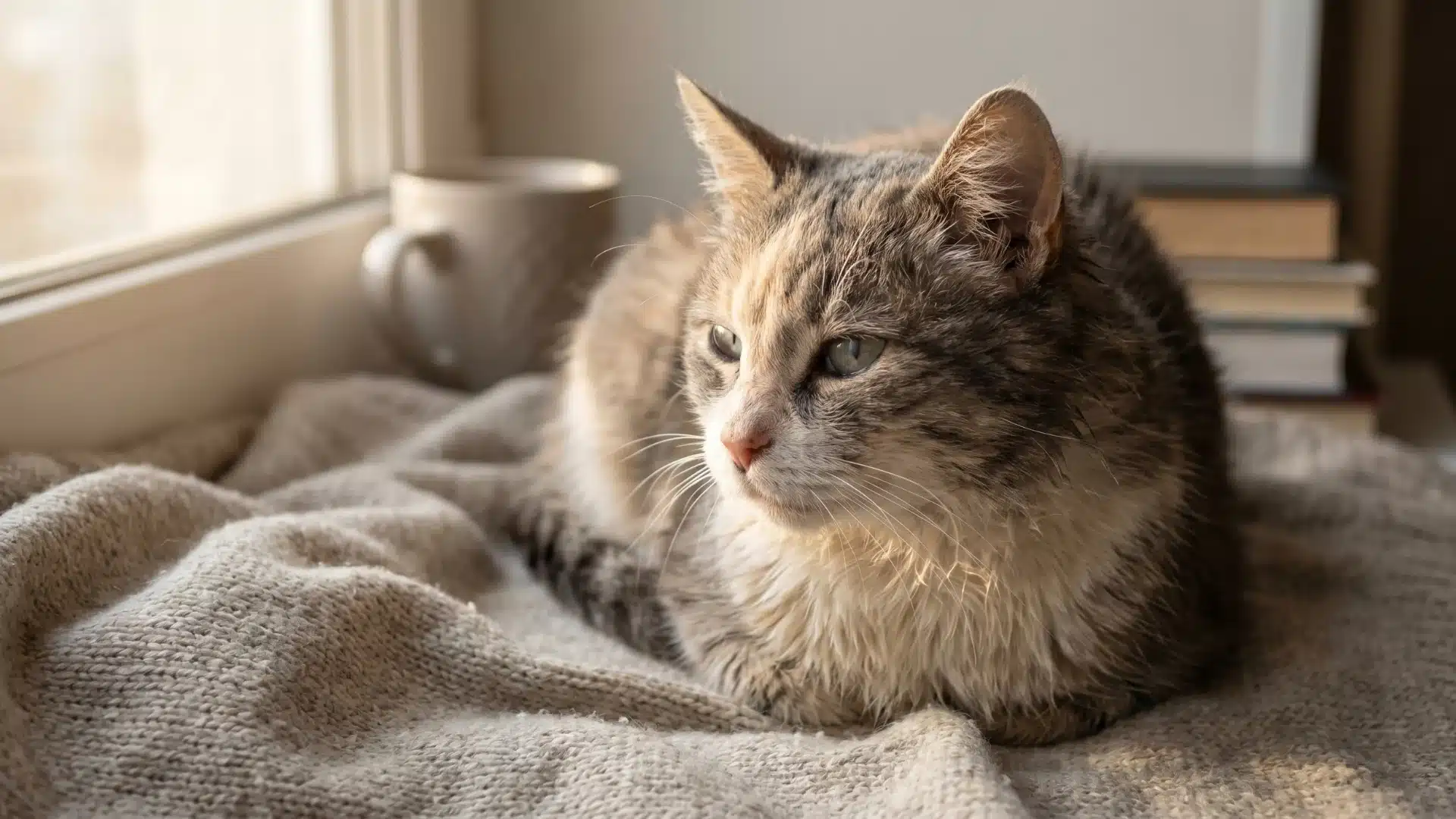
1. Vomiting or Diarrhea
An occasional hairball may not be a big concern, especially if your cat acts normal afterward. Repeated vomiting is different.
If your cat vomits several times, vomits without bringing up a hairball, or cannot keep food down, it may indicate stomach irritation, infection, food intolerance, parasites, or another health issue.
Diarrhea that lasts more than a day should also be taken seriously, especially if there is blood, a strong odor, weakness, or loss of appetite. Cats can become dehydrated faster than many owners realize.
Our guide on cat dry heaving explains what to watch for when a cat keeps retching, but nothing comes up.
2. Eye or Nose Discharge
Healthy cat eyes should look bright, clear, and clean. A small amount of sleep near the eye can be normal, but yellow, green, or white discharge may suggest infection or inflammation.
Squinting, redness, swelling, or a visible third eyelid can mean discomfort. Colored nasal discharge, sneezing, congestion, noisy breathing, or frequent nose-wiping may indicate an upper respiratory issue. Some cats may also eat less when they cannot smell food well.
Discharge from the eyes or nose can be a sign that something is wrong and should be checked if it continues.
3. Breathing Changes
Breathing changes should always be taken seriously. A healthy cat usually breathes quietly through the nose without much effort.
Open mouth breathing, panting, wheezing, coughing, or stretching the neck to breathe can be warning signs. Belly movement with each breath may also mean your cat is struggling.
These signs can be linked to asthma, heart problems, infection, fluid buildup, or another urgent issue. Cats in respiratory distress can worsen quickly.
If your cat is struggling to breathe, contact a veterinarian or emergency clinic right away.
4. Gum and Eye Color Changes
Your cat’s gum color is a fast health indicator. Press gently on the gums and release — color should return within two seconds. That’s a healthy capillary refill time.
- Pale or white gums may indicate anemia, blood loss, or shock.
- Yellow-tinted gums or eyes (jaundice) can point to liver disease, bile duct obstruction, or certain infections.
- Bluish or grayish gums signal a lack of oxygen, a medical emergency.
If the gum color looks wrong in any of these ways, do not wait. This warrants emergency care.
5. Weight Loss or Bloating
Weight changes can be easy to miss, especially in long-haired cats. Sudden weight loss, even when your cat still eats normally, may be linked to thyroid disease, diabetes, kidney disease, dental pain, or digestive illness.
A cat that feels thinner around the spine, hips, or ribs may need a checkup.
Bloating is also a concern. A swollen or tight belly can be caused by gas, fluid, constipation, worms, pregnancy, or a more serious internal problem.
High-quality cat nutrition supports long-term health, but sudden changes in body condition usually require more than just a food adjustment. A vet can help find the real cause before it gets worse.
6. Coat Changes or Hunched Posture
A cat’s coat can say a lot about how they feel. When a cat stops grooming well, the fur may look greasy, rough, flaky, or matted.
This can happen when a cat is in pain, weak, overweight, stressed, or ill.
Posture changes are also important. An arched back, hunched shoulders, a tucked belly, a stiff walk, or an awkward sitting position can indicate discomfort.
Some cats hide, sleep more, or avoid being touched when they are hurt. When coat and posture changes occur together, they often provide a clear clue that your cat is not feeling well.
7. Bad Breath or Drooling
Bad breath in cats is not always just a small dental issue. A sudden change in mouth odor can be a warning sign, especially if the smell is sweet, very strong, rotten, or ammonia-like.
Dental disease, infected gums, mouth ulcers, kidney problems, or diabetes can all affect breath odor.
Drooling is another sign to watch for, especially when it happens with pawing at the mouth, dropping food, chewing on one side, bleeding gums, or avoiding hard food.
Cats with mouth pain may still try to eat, but they often eat slowly or leave food behind.
Our cat dental health signs guide covers what healthy feline teeth and gums should look like.
What Your Cat’s Litter Box Can Reveal About Their Health
The litter box can reveal signs of a sick cat before they appear elsewhere. It may not be fun to check, but it can help you catch health problems early.
Changes in urine, stool, bowel habits, or bathroom frequency can point to pain, stress, infection, or a more serious issue. A quick daily look can give you important clues about your cat’s health.

1. Straining to Urinate
Straining to pee needs urgent attention, especially in male cats.
If your cat keeps visiting the litter box, squats for a long time, cries, licks the urinary area, or passes little to no urine, it may point to a urinary blockage. This can become life-threatening within 24 to 48 hours. Do not wait to see if it improves.
Even if a small amount of urine appears, your cat may still be in pain. Call a vet or emergency clinic right away.
2. Blood in Urine
Pink, red, or brown-tinged urine should never be ignored. It may signal bladder inflammation, infection, crystals, stones, or a possible blockage.
Blood can be hard to see if you use dark litter, so pay attention to clumps that look unusual or spots near the box
Your cat may also visit the box more often, cry while peeing, or lick the area more than usual. Since urinary problems can worsen fast, a vet check is the safest next step.
3. Going Outside the Litter Box
A cat that suddenly pees or poops outside the litter box is usually not being “bad.” This change often means something is wrong.
Pain, urgency, stress, arthritis, constipation, urinary issues, or trouble reaching the box may be involved. Notice where it happens. Peeing near the box can mean your cat tried but could not make it in time.
Avoid punishment, because it can add stress. Clean the area well and schedule a vet visit if the behavior is new or repeated.
4. Changes in Frequency
Using the litter box much more or much less than usual can be a warning sign. More frequent urination may point to diabetes, kidney disease, bladder irritation, or infection.
Less frequent urination or stool can suggest dehydration, constipation, pain, or blockage. Straining can also look similar, whether the problem is urine or stool, so it can be hard to tell at home.
Track what you see, including clump size and how often your cat goes, then let a vet confirm the cause.
Note: This section is for general awareness only and does not replace veterinary advice. If your cat is straining to urinate, not urinating, or acting unwell, contact your vet right away.
Emergency Cat Symptoms That Need Immediate Care
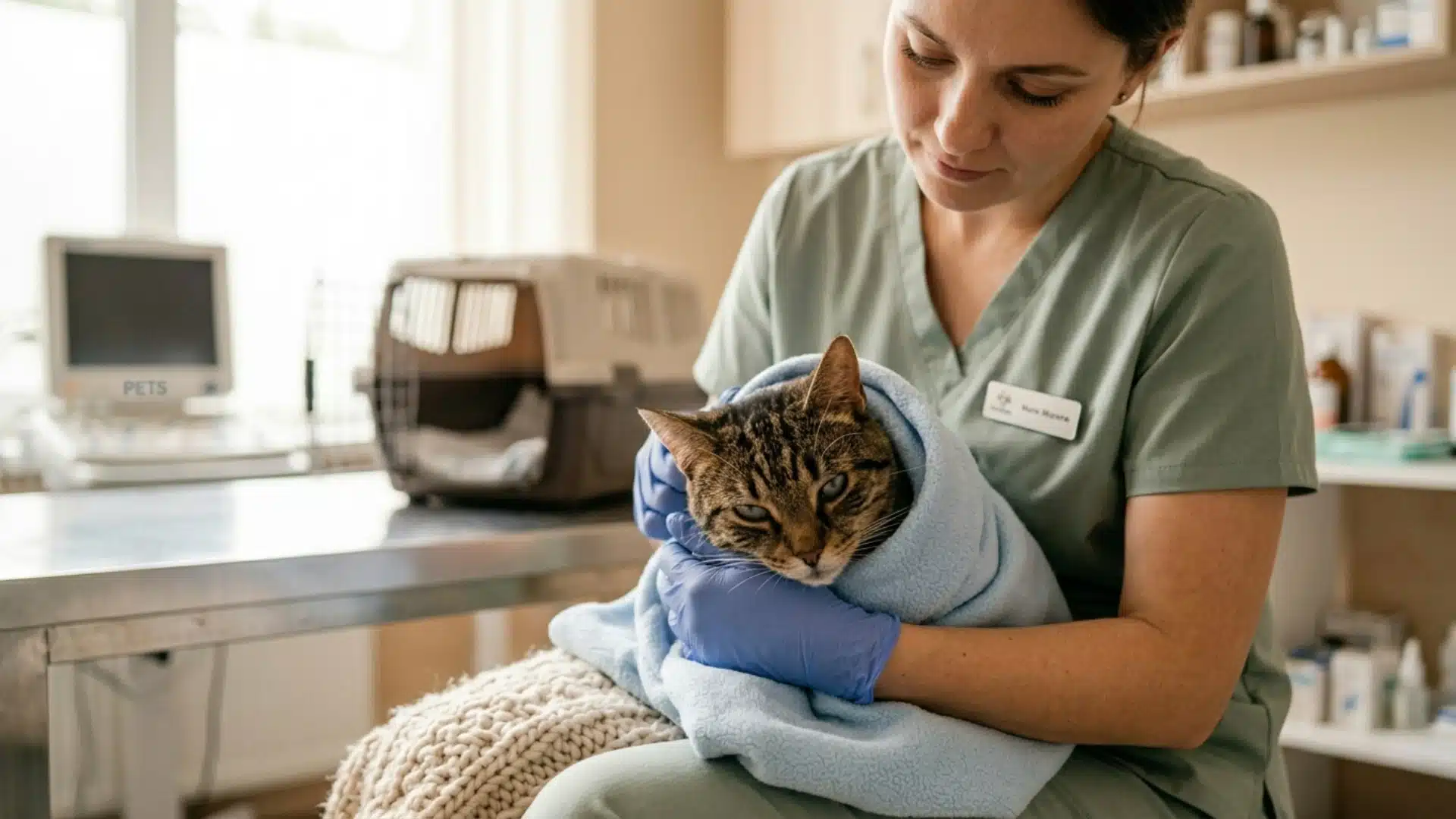
Some sick cat symptoms should not be watched at home. If your cat shows any of the signs below, call your vet or an emergency clinic right away. Go to the vet now if your cat has:
- Difficulty breathing, panting, or mouth breathing
- Collapse or trouble standing
- Straining to urinate with little or no output, especially in male cats
- Seizures or uncontrolled trembling
- Loud, nonstop crying that sounds like extreme pain
- Refusing all food for more than 24 hours
- A hard or swollen belly
- Sudden loss of coordination or walking in circles
Note: This list does not cover every emergency. If something feels seriously wrong, call your vet. Cats can decline quickly once symptoms become obvious, so it is safer to get professional help early.
Common Illnesses Behind Sick Cat Symptoms
Sick cat symptoms rarely appear on their own. They’re usually connected to an underlying condition your vet needs to identify. Knowing which illnesses are most common can help you describe what you’re seeing more clearly and understand what your vet may be looking for.
- Kidney disease: Kidney disease often affects older cats and may cause increased thirst, frequent urination, weight loss, vomiting, poor appetite, and low energy. Early bloodwork helps detect it sooner.
- Hyperthyroidism: Hyperthyroidism is common in cats over 10 and may cause weight loss despite strong appetite, increased thirst, restlessness, vomiting, poor coat condition, and louder vocalizing.
- Diabetes: Diabetes may cause cats to drink and urinate more than usual. Affected cats may also lose weight, develop hind leg weakness, or have a dull coat.
- Upper respiratory infections: Upper respiratory infections often cause sneezing, runny nose, watery eyes, and reduced appetite. Cats may stop eating when congestion affects their sense of smell.
- Dental disease: Dental disease can cause bad breath, drooling, food dropping, chewing on one side, and avoiding hard food. Ongoing dental pain may also lead to weight loss.
- Urinary tract disease (FLUTD): Urinary tract disease may cause straining, blood in the urine, frequent trips to the litter box, low urine output, or licking the area. Male cats need urgent care.
- Intestinal parasites: Intestinal parasites can cause weight loss, vomiting, diarrhea, bloating, or increased appetite. Some parasites are visible, but many need a fecal test to confirm.
How to Help Your Cat While You Wait for the Vet
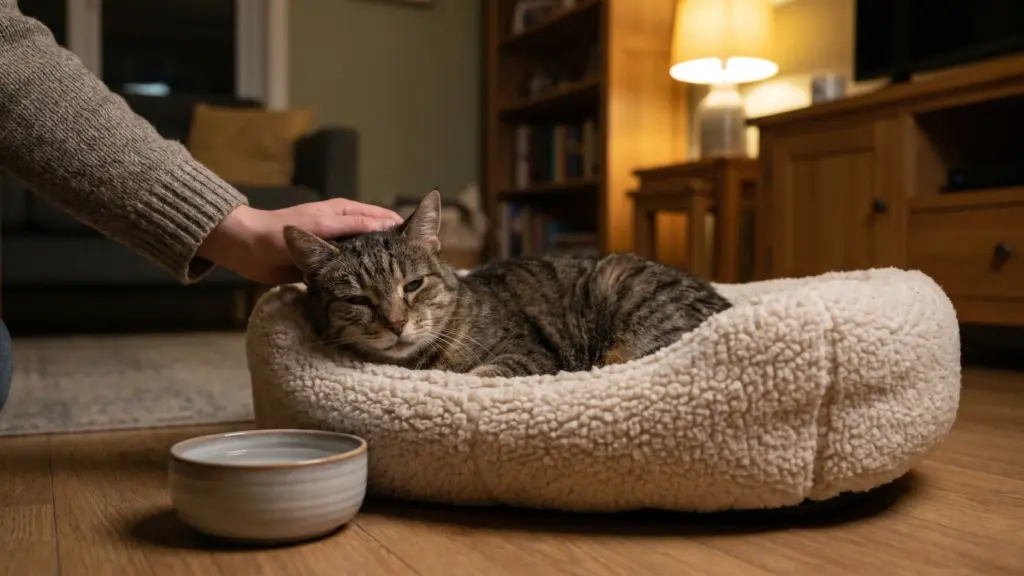
If your cat is not showing emergency symptoms and a vet visit is already booked, focus on keeping them calm and comfortable.
Keep food, water, and the litter box close to their resting spot so they do not have to move much. Let them stay in a quiet hiding place if that is where they feel safe.
Do not give human medicine. Common pain relievers like ibuprofen or acetaminophen can be toxic to cats. Routine veterinary care for cats is always safer than treating symptoms at home.
Keep the room calm and separate your cat from other pets if needed. Note appetite, litter box use, vomiting, behavior changes, and when symptoms started. These details can help your vet understand the issue faster.
How to Do a Quick Health Check at Home?
You don’t need medical training to do a basic health scan of your cat. A calm, systematic look takes about two minutes and can catch early changes before they become obvious. Do this weekly if your cat is a senior, or anytime something feels off.
- Eyes: Look for brightness and symmetry. Both pupils should be the same size. No squinting, redness, cloudiness, or discharge.
- Nose: They should be clean and slightly moist. No colored discharge, crusting, or repeated sneezing.
- Mouth and gums: Gums should be pink and moist, not pale, white, yellow, or bluish. Press gently on the gum and release; the color should return within two seconds. Check for bad breath or visible tartar buildup.
- Ears: Should be clean inside with no dark debris, strong smell, or scratching. Head-shaking or tilting can signal an ear problem.
- Coat and skin: Run your hands along the body. The coat should feel smooth and consistent. Check for bald patches, scabs, lumps, or areas your cat flinches away from.
- Body condition: Feel along the spine, ribs, and hips. You should be able to feel the ribs with light pressure but not see them prominently. Sudden thinning or a swollen belly are both worth flagging.
- Movement: Watch your cat’s walk. Stiffness, limping, reluctance to jump, or an unusual gait can all signal joint pain or injury.
- Litter box: Check clump size and frequency. Straining, blood, very small clots, or no output at all need immediate attention.
If you find something during this check, note it and call your vet. You don’t need to diagnose the problem yourself; your job is just to notice the change and describe it clearly.
Note: This home check is for general monitoring only and does not replace a veterinary examination. If anything concerns you, contact your vet.
Conclusion
You know your cat’s routine better than anyone. You notice when they skip their window spot, leave food behind, hide longer, or stop greeting you with their usual little sounds.
Those small changes may not seem serious at first, but they can be early signs your cat is not feeling well. Cats often hide discomfort, so your daily familiarity matters.
My take is simple: trust that “something feels off” feeling. Watch closely, note the changes, and call your vet if symptoms continue or worry you.
Have you ever noticed a small change before realizing your cat was unwell? Share the first sign you saw in the comments. Your experience may help another cat parent act sooner.
Frequently Asked Questions
Can a Cat Be Sick but Still Eat Normally?
Yes. Some health problems, such as early kidney disease, hyperthyroidism, or infections, may not affect appetite at first. Eating normally is a good sign, but it does not rule out illness if other symptoms are present.
How Do I Take My Cat’s Temperature at Home?
A normal cat’s temperature is usually 100.5°F to 102.5°F. A digital rectal thermometer gives the most accurate reading, but it may stress your cat. Pet ear thermometers can also help. Call your vet if the temperature is above 103°F or below 99°F.
Is It Normal for a Sick Cat to Purr?
Yes. Cats may purr when they are comfortable, but also when they are in pain, anxious, or trying to calm themselves. If purring comes with hiding, low energy, or reduced appetite, pay attention to the full picture.
How Long Can a Cat Go Without Eating Before It Becomes Dangerous?
A cat should not go without food for more than 24 to 48 hours. Not eating can lead to fatty liver disease, especially in sick or stressed cats. If your cat has not eaten for a full day, contact your vet.