Baby birds can be surprisingly hard to recognize at first glance.
Some look bald and fragile. Some look fluffy and awkward. Others look like tiny, scruffy versions of adult birds, but still cannot fly well.
I have had plenty of people come in worried after finding a small bird in the yard, and the first question is almost always the same: “Does it need help?”
Before you decide, look closer. The bird’s feathers, beak, size, and behavior can tell you more than you might expect, and this guide will help you read those clues without second-guessing every move.
Three Stages of Baby Bird Development
Before trying to identify a baby bird, check its growth stage first. Baby birds change quickly, and the same bird can look very different within just a few days.
Knowing the stage helps you understand whether the bird needs a nest, quiet space, or simply time to keep learning.
1. Hatchling
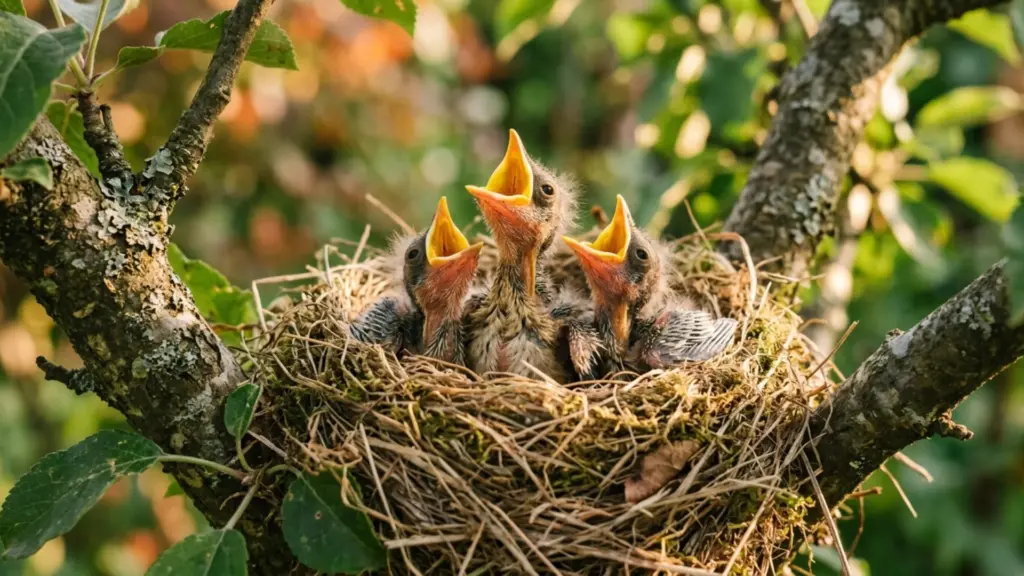
A hatchling is a baby bird that has just come out of the egg. Its eyes are closed or only slightly open, and its body is mostly bare skin with a few soft wisps of down.
At this stage, the bird cannot stand, grip, perch, or stay warm on its own. Most of its movement is limited to a weak open-mouthed feeding response.
If a hatchling is found outside the nest, it usually needs help quickly because it cannot survive on the ground for long.
The safest step is usually to place it back in the nest if the nest is nearby and easy to reach.
2. Nestling
A nestling is older than a hatchling, but it still belongs in the nest. Its eyes are open, and small, tube-like pin feathers may be visible on the body. These pin feathers later open into real feathers.
A nestling may bob its head, stretch its neck, grip weakly, or react when it hears a sound nearby. However, it is still not ready to hop around or fly.
If a nestling is on the ground, it has likely fallen from the nest. When possible, return it to the nest or place it in a safe substitute nest close to where it was found.
3. Fledgling
A fledgling has left the nest and is mostly feathered, but it is still learning how to fly. Its wings and tail may look short, and its colors can appear dull, patchy, fluffy, or speckled.
Fledglings can hop, walk, grip branches, and make short wing-assisted jumps. They may spend several days on the ground or in low branches while the parents continue feeding them nearby.
Hatchlings and nestlings usually need to be in a nest, while fledglings are often on the ground as part of the normal learning-to-fly stage.
This difference matters because many healthy fledglings are mistaken for birds that need rescue. In most cases, leave a fledgling alone unless it is injured, in danger, or close to traffic, pets, or people.
Visual Clues That Help Identify Types of Baby Birds
Once you know the bird’s stage, look at its features in this order. These clues are often more useful than trying to match one perfect photo.
- Beak Shape: Seed-eating birds like sparrows, cardinals, and finches usually have short, thick, coneshaped beaks. Insect-eating birds like robins and wrens often have longer, slimmer beaks.
- Gape Flange: This is the soft border around a baby bird’s mouth. It may appear yellow, orange, or white, and its color or width can help identify baby birds.
- Body Size: Compare the bird to something familiar. A hummingbird nestling may be smaller than a grape, while a baby crow can be close to a tennis ball.
- Feather Pattern and Color: Focus on patterns, not perfect color. Spotted breasts often point to young thrushes, while streaky brown feathers are common in sparrow chicks. Blue or gray hints may suggest a jay or bluebird.
- Eye Color: Many baby birds start with pale blue or gray eyes that darken over time. In American crows, this shift can help estimate age.
- Tail and Wing Length: Short wings and a stubby tail usually mean a recent fledgling. A tiny tail nub often means the bird left the nest only days ago.
How to Identify Common Baby Birds in Your Yard
These are the baby birds most often seen in yards, gardens, and sidewalks during spring and summer. Many juveniles look nothing like their parents, so focus on size, beak shape, color marks, and behavior.
1. American Robin
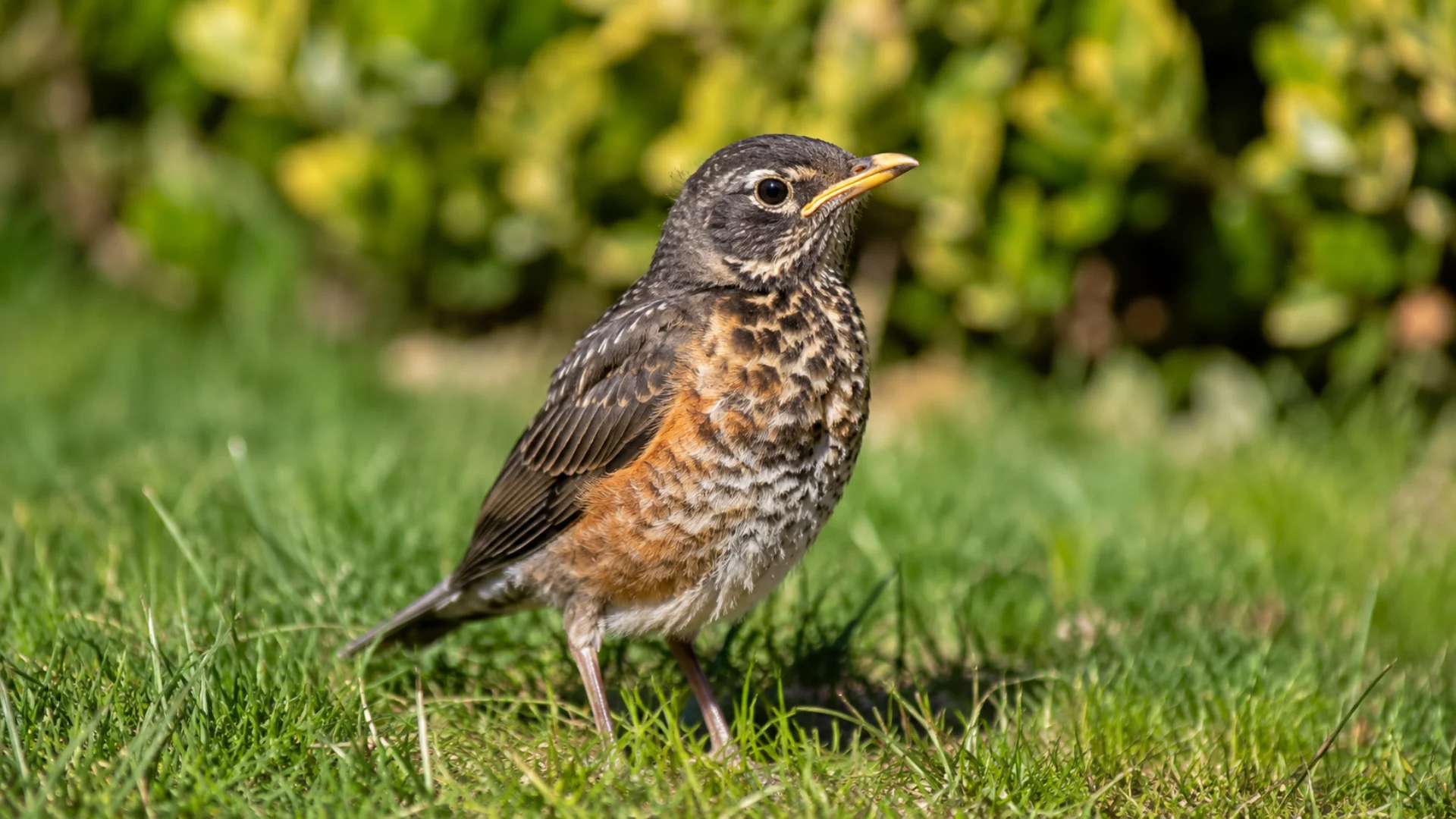
A juvenile robin has a speckled brown and cream breast instead of the adult’s orange-red chest. Its beak is bright yellow and appears large relative to its face.
Fledgling robins often spend their first couple of weeks hopping on the ground or hiding in low shrubs. A speckled, thrush-sized bird with a yellow bill is very likely a young robin.
Visual Clues:
- Speckled brown and cream chest
- Bright yellow bill
- Thrush-sized body
- Often hopping on grass or hiding in low shrubs
2. House Sparrow
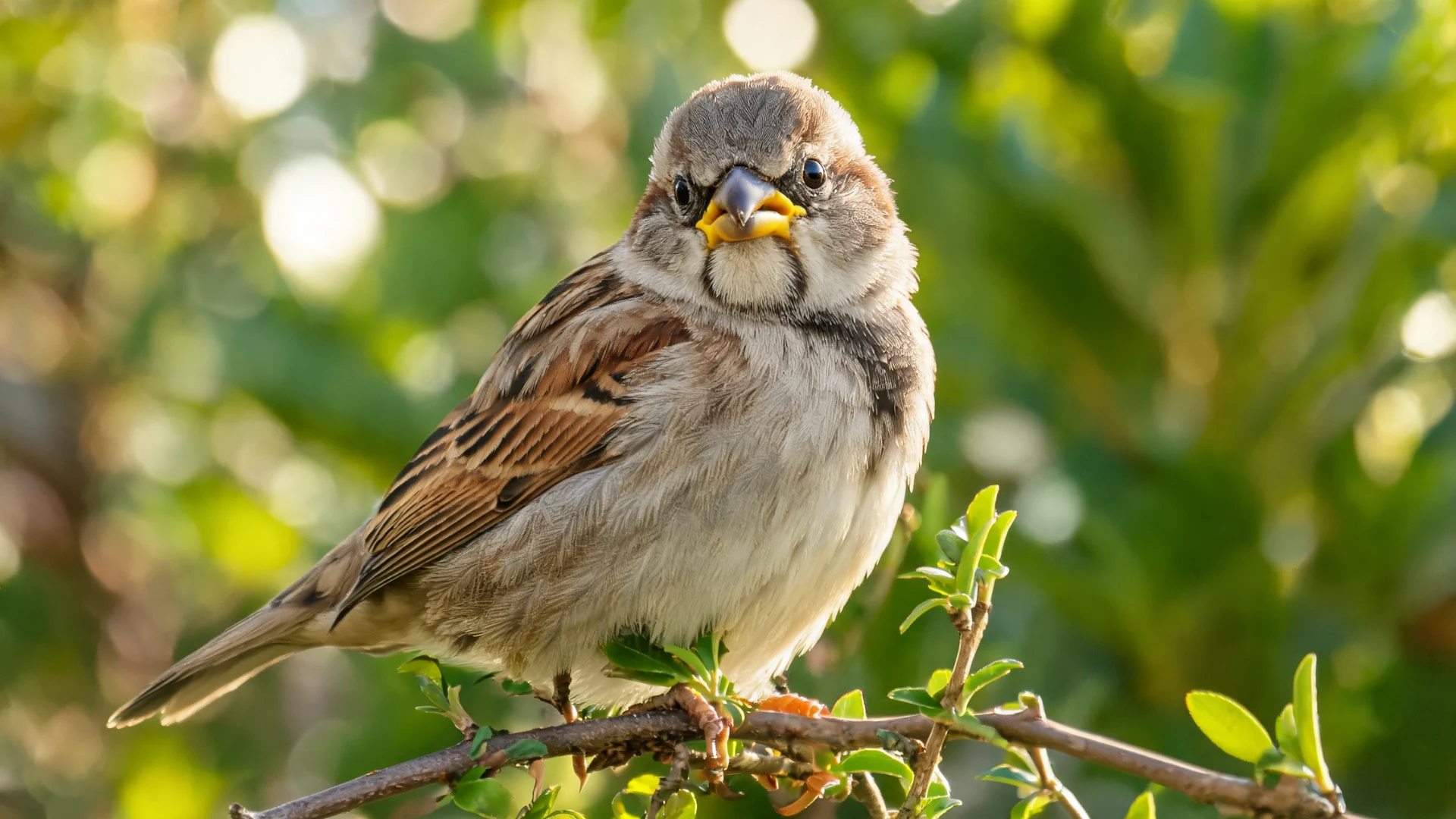
Baby house sparrows are small, streaky brown, and often have a wide yellow gape around the mouth. Fledglings look gray buff overall, with dark streaks on the back and wings.
They often move in noisy little groups after leaving the nest. Several small brown birds cheeping near a shrub are often young sparrows.
Visual Clues:
- Small, streaky brown body
- Wide yellow gap around the mouth
- Gray buff feathers
- Often seen in noisy little groups
3. Northern Cardinal
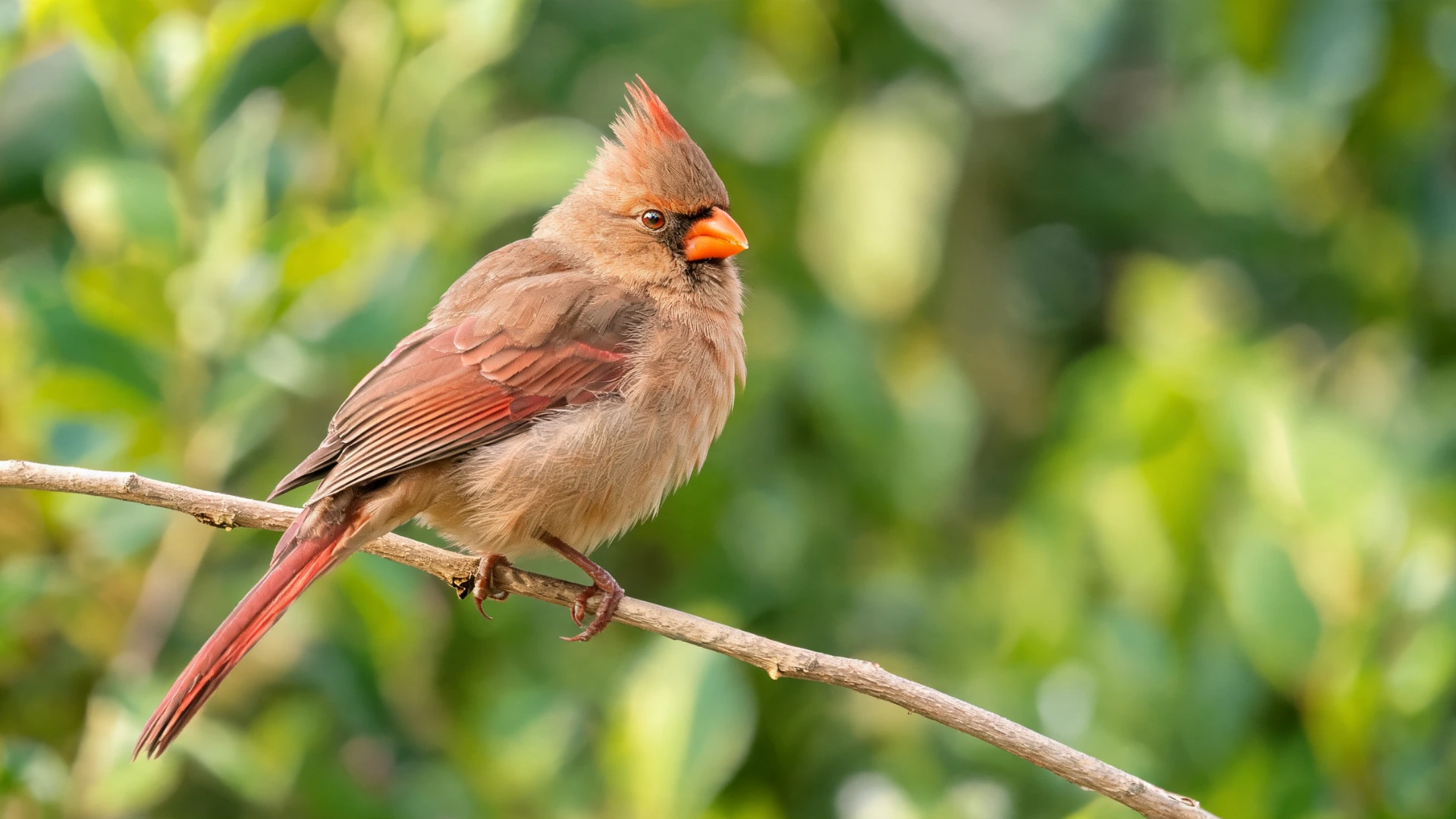
Baby cardinals do not turn bright red right away. Young cardinals look warm brown, with reddish hints in the wings and tail.
The early crest and thick orange beak are the best clues. Young males usually begin to show a stronger red color during their first autumn molt.
Visual Clues:
- Warm brown body
- Thick orange beak
- Small crest on the head
- Red hints on wings or tail
4. Blue Jay
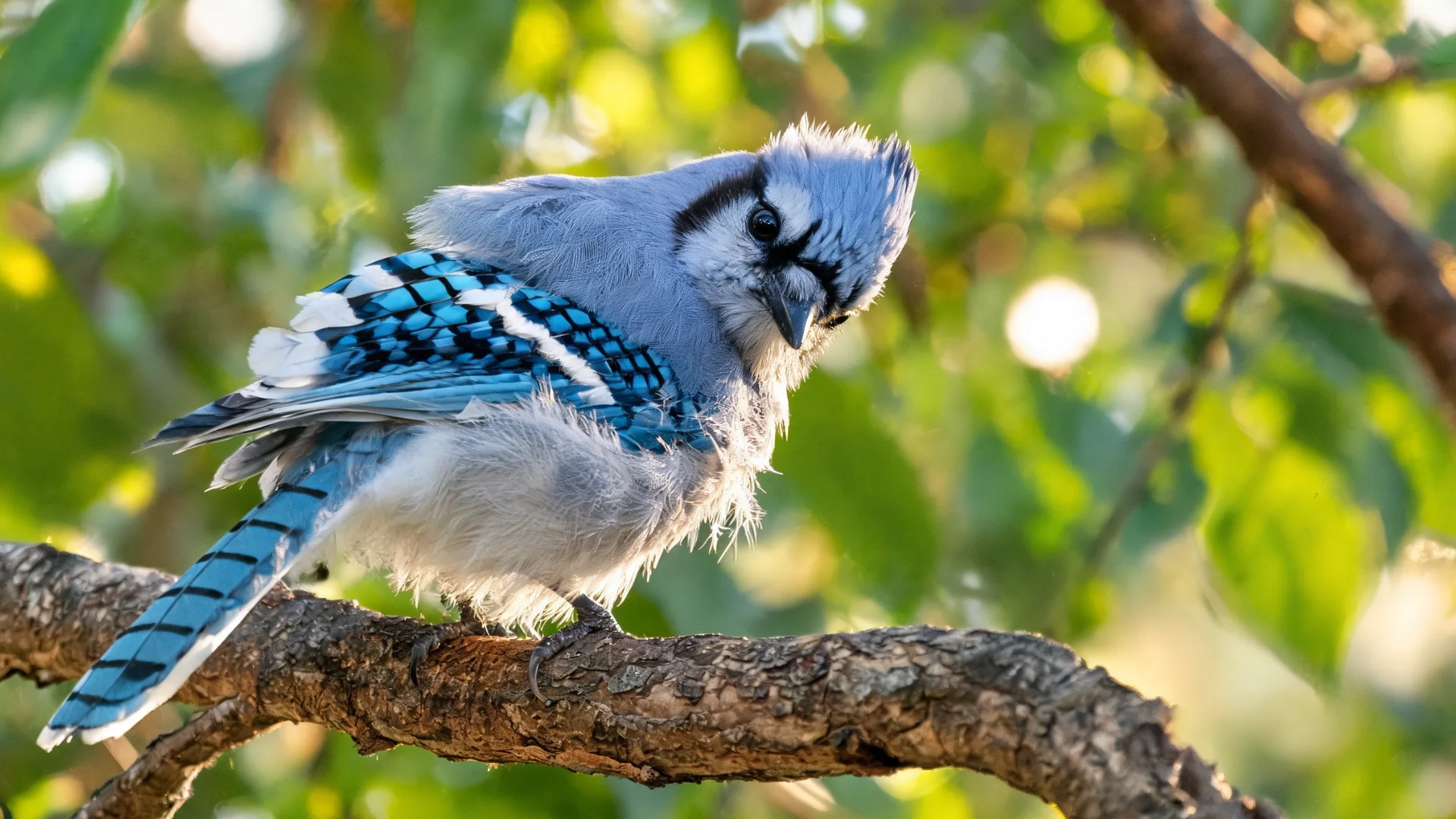
A juvenile blue jay looks like a smaller, fluffier version of the adult. The blue-and-black wing pattern is already visible, making this species easier to identify.
Young blue jays may look messy and may not yet have a strong head crest. The crest fills in within a few weeks.
Visual Clues:
- Fluffy, slightly messy look
- Blue and black wing markings
- Smaller than adult blue jays
- Crest may be short or not fully grown
5. Mourning Dove
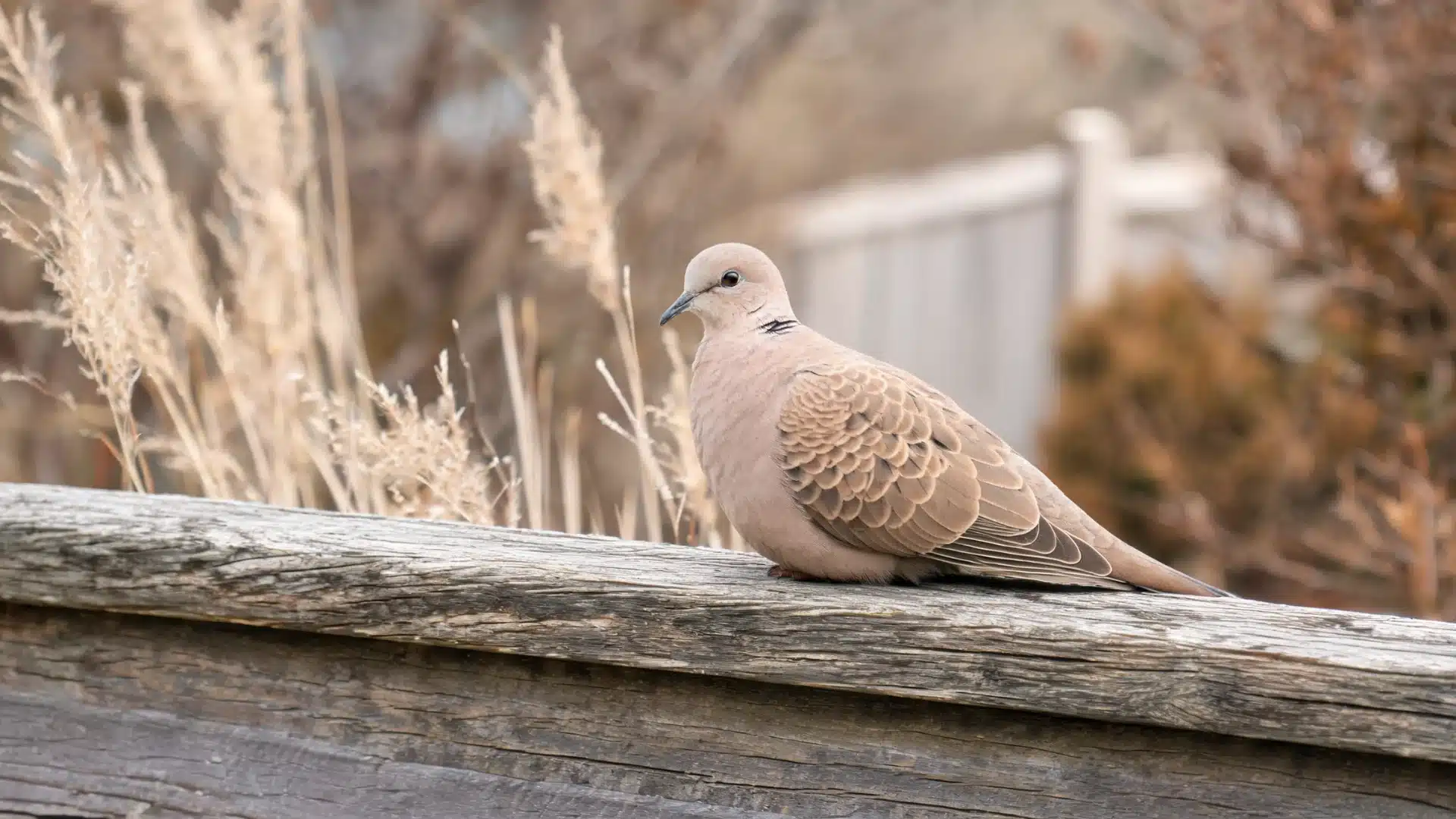
Young mourning doves leave the nest when they are already fairly developed. Juveniles look much like adults, with soft brown bodies and a slightly scaly wing pattern.
A small brown dove with leftover yellow down may need help, because fully downy dove or pigeon chicks should still be in the nest.
Visual Clues:
- Soft brown body
- Slightly scaly wing feathers
- Dove-shaped body
- Yellow down may mean it still needs the nest
6. American Crow
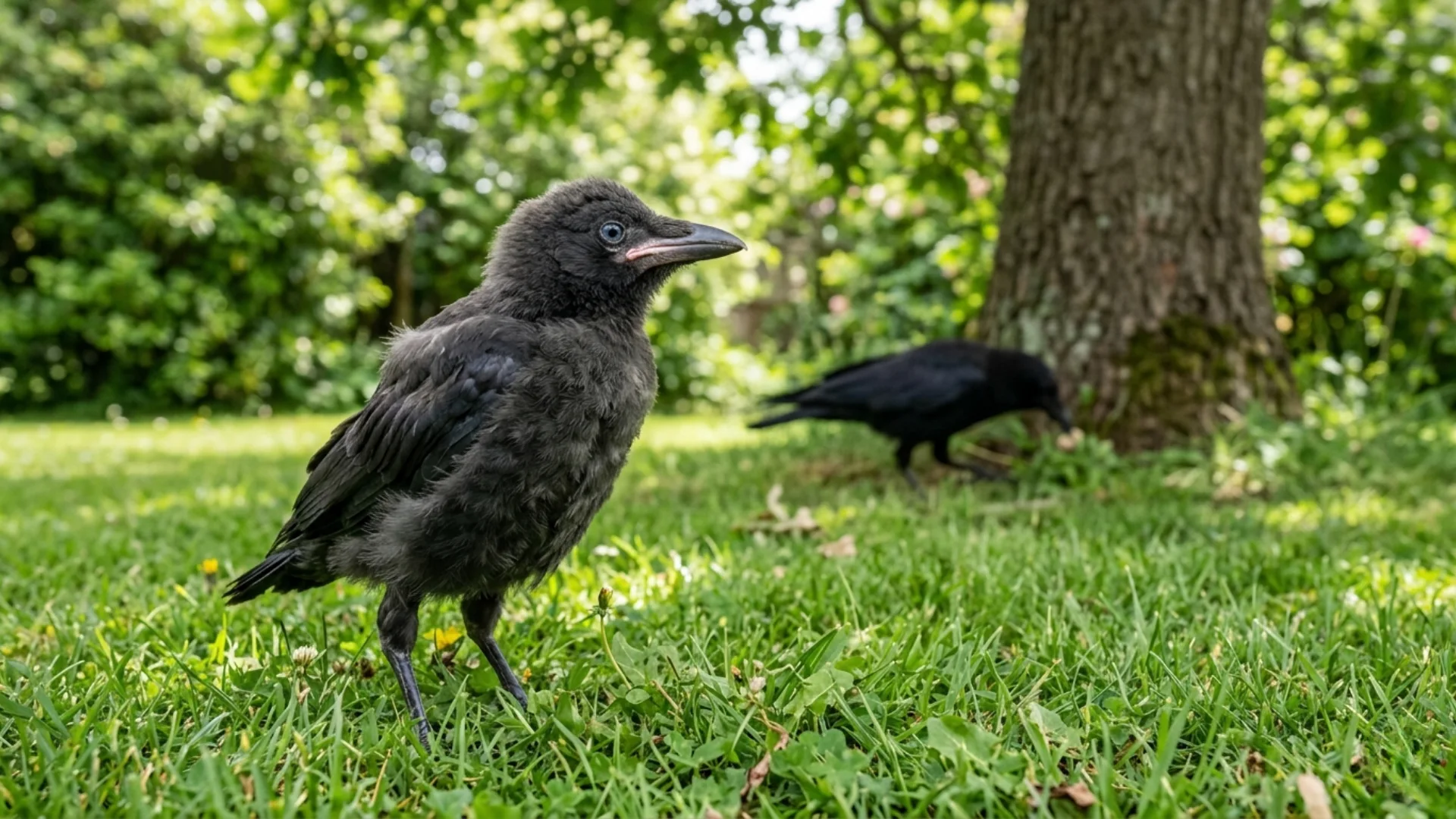
A fledgling crow is nearly adult-sized but looks shorter-tailed and fluffier. Its eyes may look blue-gray instead of dark brown, and the beak can have a pinkish base.
Baby crows are loud and usually have adult crows nearby. Those adults may call or dive if they think the young bird is in danger.
Visual Clues:
- Large black fledgling
- Blue-gray eyes
- Shorter tail than adult crows
- Loud calls with adult crows nearby
7. Eastern Bluebird
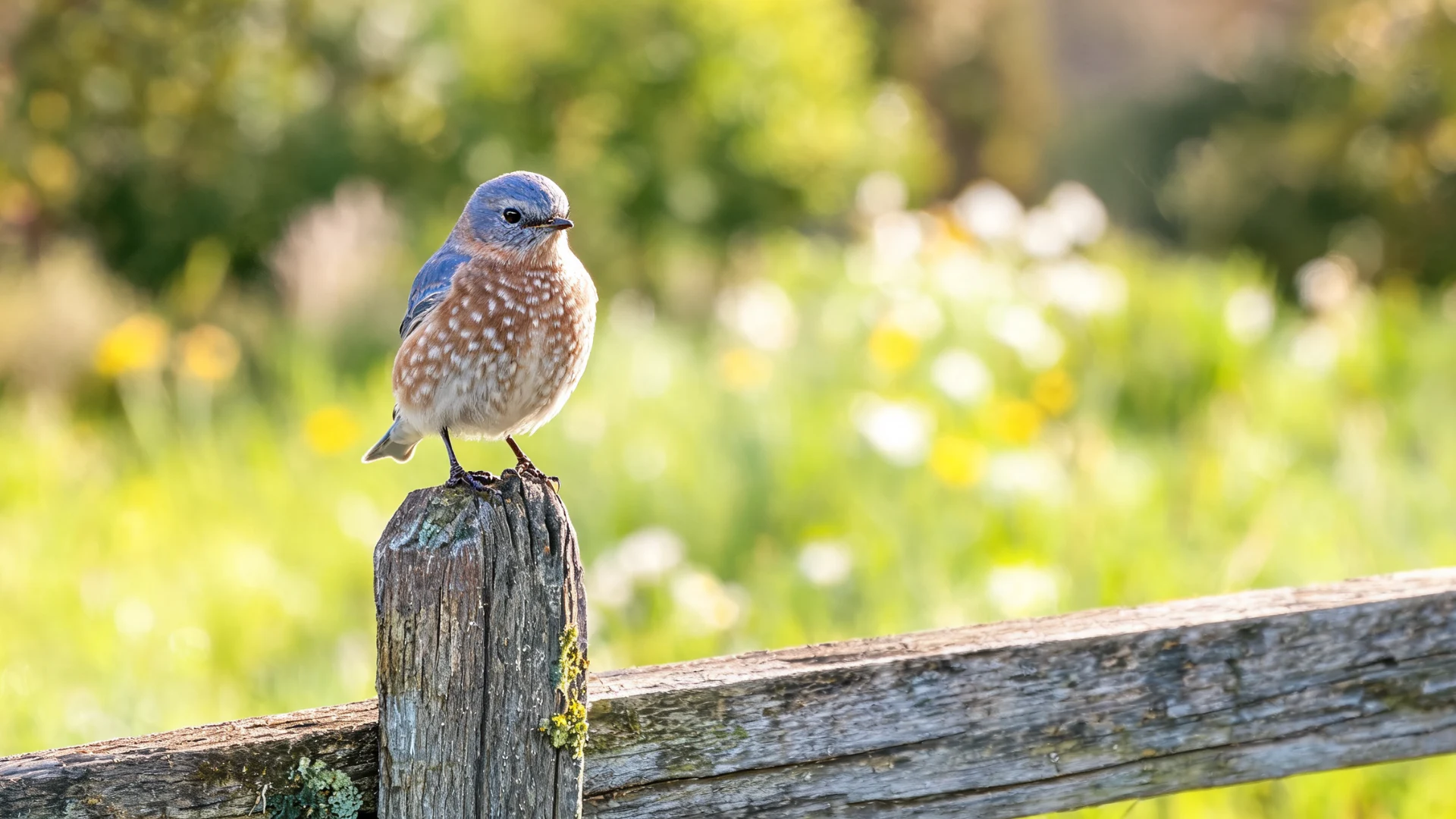
Juvenile bluebirds have brown and white spotted breasts, which can make them look a bit like young robins.
The key difference is size. Bluebirds are smaller, and young birds often show a faint blue-gray color on the wings or back.
Looking at the bird’s size, beak, feathers, and behavior together makes identification much easier.
Visual Clues:
- Brown and white spotted chest
- Small body, smaller than a robin
- Faint blue-gray wings or back
- Thrush-like shape but more compact
Baby Bird Identification Tips for Mobile Viewing
For quick baby bird identification, the Merlin Bird ID app from Cornell Lab of Ornithology is one of the easiest tools to use. It works on iOS and Android and can help identify birds through a photo, a few simple questions, or a sound recording.
For baby birds, the photo option is usually best. Open merlin.allaboutbirds.org, upload a clear image, and focus on the bird’s beak, size, feather pattern, and color marks.
For better ID photos:
- Get level with the bird when possible
- Take close shots of the beak, eyes, and chest
- Include something nearby for size
- Note the location, such as lawn, brush, tree, or water
Cornell Lab’s All About Birds galleries are also helpful because many species include juvenile photos. For pet bird owners, knowing about the types of pet birds can be useful.
Altricial vs Precocial Baby Birds: What’s the Difference?
Not every baby bird is bald, weak, or stuck in a nest. Some hatch ready to walk, follow their parents, and search for food. That difference comes down to two groups: altricial and precocial birds.
| Feature | Altricial | Precocial |
|---|---|---|
| At hatching | Blind, naked, completely helpless | Eyes open, downy feathers, mobile |
| Examples | Robins, sparrows, cardinals, jays | Ducks, geese, killdeer, quail |
| Parental care | Intensive for weeks | Guidance and protection, not feeding |
| When found on the ground | Usually needs help | Normal behavior |
A fluffy yellow or brown chick walking near water or a field is often okay. A bare, eyes-closed chick on the ground near a tree usually needs attention.
What to Do If You Find a Baby Bird
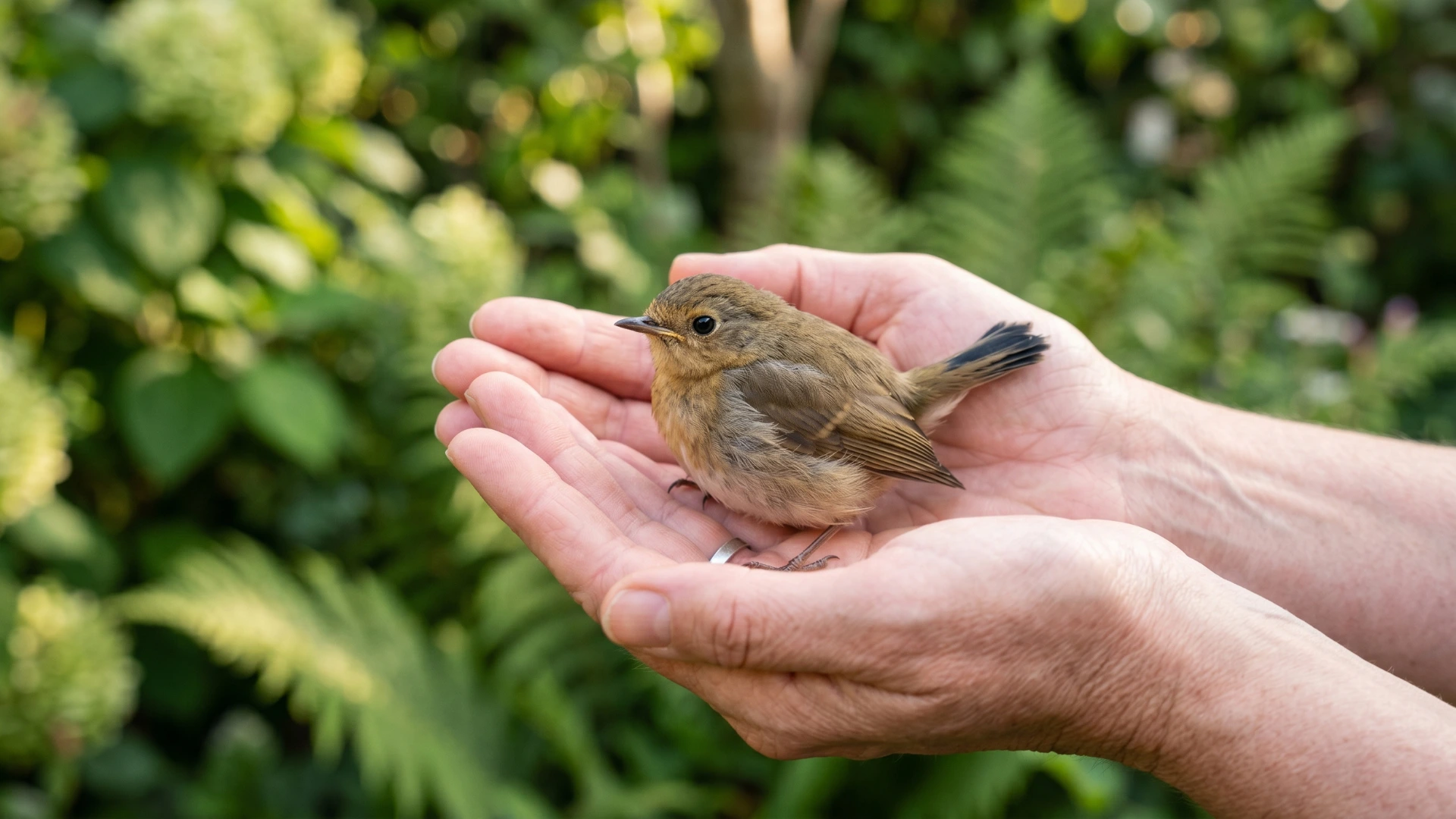
This is where baby bird identification really matters. The U.S. Fish and Wildlife Service says most baby birds found on the ground do not need human help. The real question is simple: is it a fledgling or a nestling?
If the bird is fully feathered, alert, and hopping, it is likely a fledgling. Leave it where it is. The parents are usually nearby, but they may not come back while people are standing close. Step back at least 30 feet, or watch from inside.
The Cummings School of Veterinary Medicine at Tufts University recommends waiting at least an hour before assuming the parents are not returning.
If the bird is a nestling or hatchling, meaning it has little or no feathers and cannot hop, look for the nest in nearby trees or shrubs.
It is often only a few yards away. Use clean hands to place the bird back in the nest. The idea that parents reject babies touched by humans is a myth for most birds.
A baby bird needs help right away if it has visible injuries, looks wet, cold, weak, or sunken-eyed, has been caught by a cat or dog, or is lying still and not responding.
In that case, contact a licensed wildlife rehabilitator. Do not give food or water, because the wrong care can make things worse.
You can find a licensed wildlife rehabilitator through the National Wildlife Rehabilitators Association or your state wildlife agency.
Conclusion
Once the difference between a nestling and a fledgling is clear, those “what do I do now?” moments feel less stressful. A tiny bird hopping through the grass may not be abandoned. It may simply be learning life outside the nest, with parents watching nearby.
That is why I always pause before stepping in. Most baby birds need space more than rescue.
Next time a young robin, sparrow, cardinal, blue jay, dove, crow, or bluebird appears in the yard, look at its feathers, beak, size, and behavior. Those clues tell the real story.
Share this guide with someone who has ever found a baby bird, and comment below with the one spotted in your yard lately.
Frequently Asked Questions
Can You Touch a Baby Bird without the Mother Abandoning It?
Yes. You can gently pick up a baby bird and place it back in the nest. Most birds recognize their young by sight and sound, not human scent. Keep handling short, be gentle, and return the bird as soon as possible.
How Long Does It Take for a Baby Bird to Fly?
Most songbird fledglings begin flying better within one to two weeks after leaving the nest. Smaller birds may improve within a few days. Larger birds, such as crows, often take longer. During this stage, parent birds usually stay nearby and keep feeding them.
What Do Baby Birds Eat?
Most baby songbirds eat insects and soft, high-protein foods brought by their parents. Even seed-eating birds often feed insects to their young because baby birds need fast growth. Precocial chicks, such as ducklings, start foraging soon after hatching. They may eat seeds, small insects, and aquatic plants.
Why Do Baby Birds Look So Different from Their Parents?
Baby birds often have dull, spotted, or streaky feathers for camouflage. This helps them stay hidden while they learn to fly and feed. A young robin’s spotted chest, for example, helps break up its shape in grass, shrubs, and uneven light. Most birds grow more adult-like feathers after their first molt.