

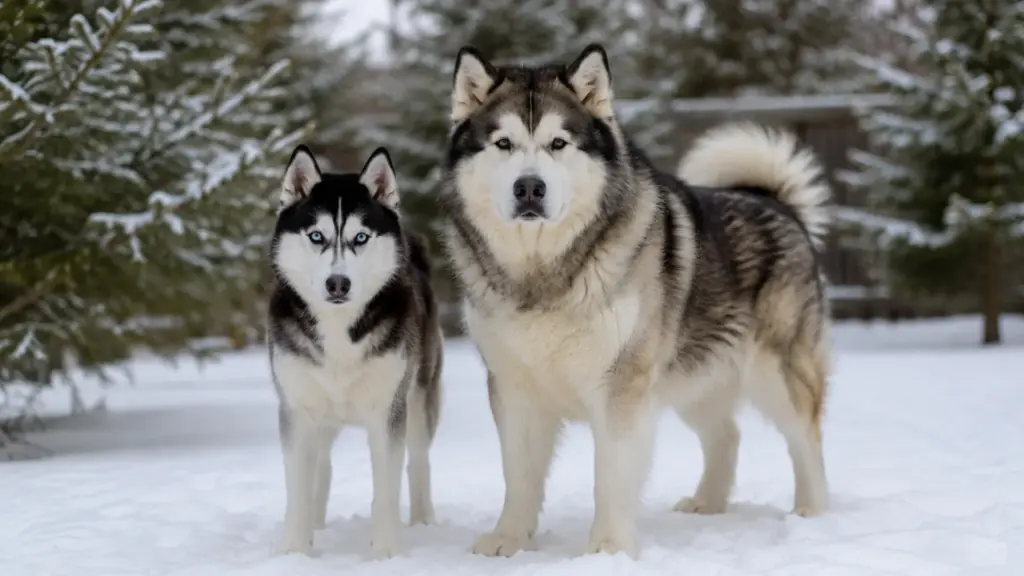
The difference between a Husky and a Malamute is easy to miss at first glance.
Both have thick double coats, sharp fox-like faces, pointed ears, and that striking wild Arctic look that turns heads wherever they go.
I get why so many dog lovers think they are almost the same. But once you spend time around them, the gap becomes clear.
One is lighter, faster, and full of restless energy, while the other is bigger, stronger, and steadier in nature. Their eyes, build, behavior, exercise needs, and training style all tell a different story.
So, before choosing between a Siberian Husky and an Alaskan Malamute, it helps to know what living with each breed is actually like.
Origin and History: Husky and a Malamute
A Siberian Husky vs Alaskan Malamute comparison often starts with looks, but the real differences show up in daily life.
A Husky is usually lighter, quicker, and more playful. It loves running, exploring, and being part of the action.
A Malamute is larger, stronger, and steadier. It was bred to pull heavy loads, so it has a powerful body and a calmer presence.
Siberian Huskies were bred by the Chukchi people of northeastern Siberia as a mode of transportation.
They were built to cover vast distances quickly on very little food, which is why every part of the Husky’s body is tuned for efficiency.
Alaskan Malamutes were developed by the Mahlemut Inuit people of Alaska.
Their job was different: haul heavy freight over shorter distances in brutal Arctic conditions. Strength and endurance mattered more than speed.
That working history still shapes the Malamute’s heavier build and steadier temperament today.
Size and Build of a Husky and a Malamute:
Standing next to each other, a Husky and a Malamute can look similar in height, but the real difference is weight and build.
Huskies reach 20 to 23.5 inches at the shoulder and weigh between 35 and 60 lbs, depending on sex. Malamutes stand 23 to 25 inches and typically weigh up to 85 lbs for males and around 75 lbs for females.
A Malamute at the same height as a Husky can weigh nearly double.
- Malamutes have broad chests, thick bones, and a powerful stance.
- Huskies are leaner, more compact, and quicker on their feet.
- Malamutes were built for heavy hauling.
- Huskies were built for speed and long-distance running.
That size gap matters in real life. A Malamute can pull heavy loads, while a Husky can run for hours without stopping. Both breeds were built for Arctic work, but their bodies tell two different stories.
If you are still figuring out sizing for a large-breed dog, a dog crate size charts a practical starting point before your new dog arrives.
Husky vs Malamute: Eye and Coat Signs
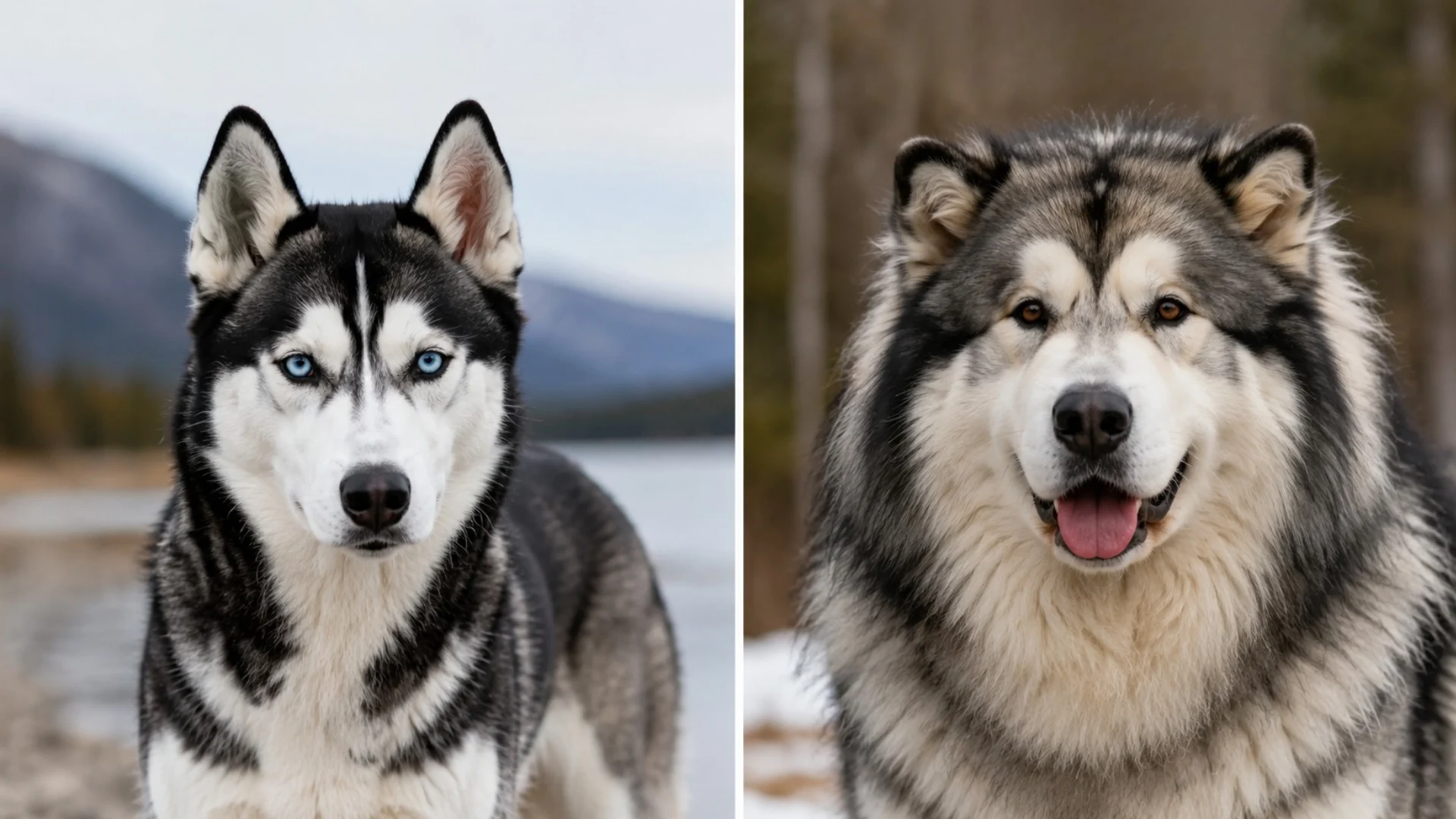
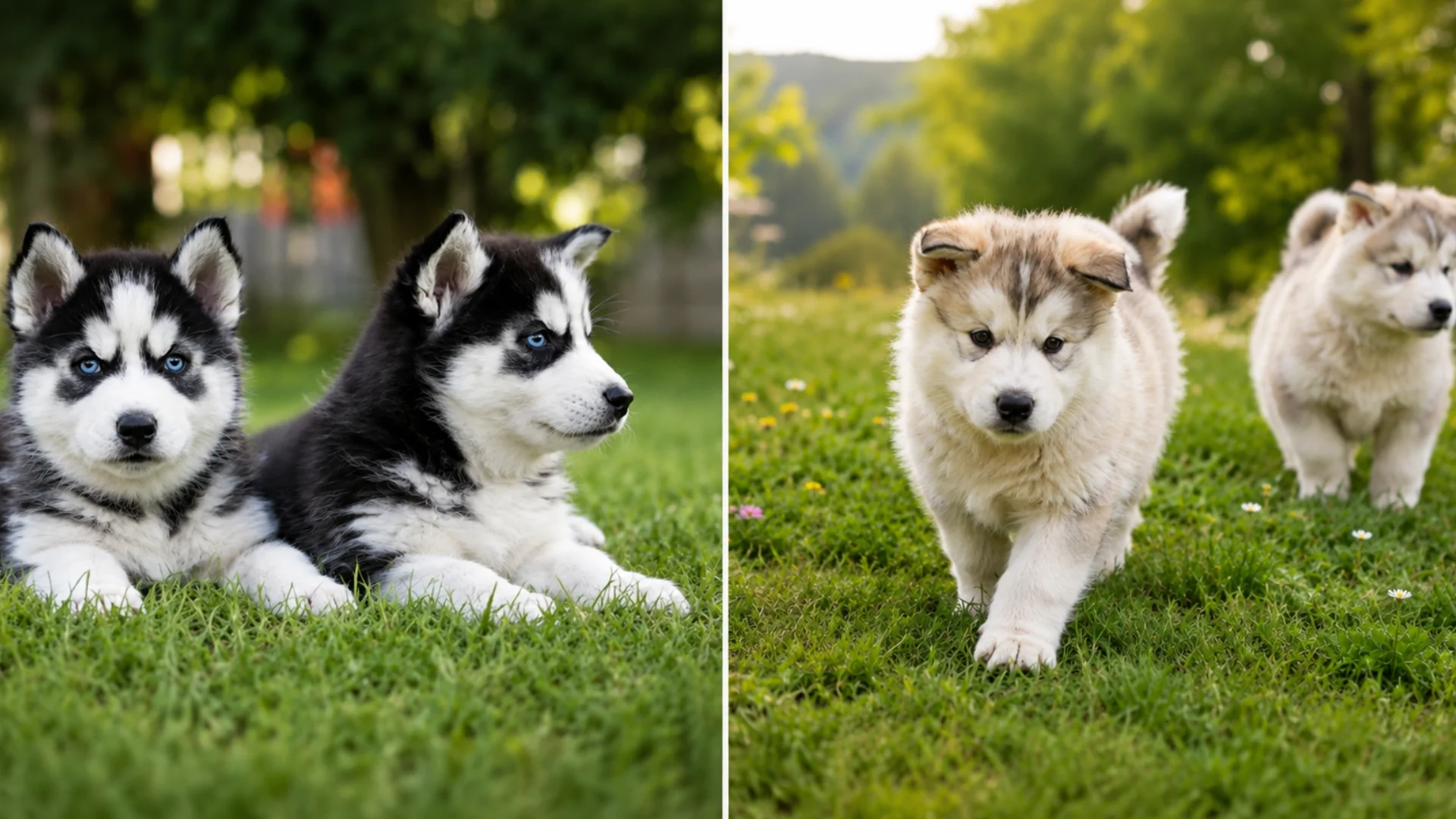
The eyes are a clear giveaway. Alaskan Malamutes always have brown eyes.
Siberian Huskies can have blue eyes, brown eyes, one of each, or parti-colored eyes with blue and brown in the same iris. So, if a dog has piercing blue eyes, it is not a Malamute.
Both breeds have dense double coats made for cold weather. Malamutes usually have a coarser outer coat and may show a classic monk’s cap marking.
Huskies come in more patterns, including all-white and piebald, with bolder face masks.
Both shed heavily, especially during coat blow season. Malamutes need more brushing, and neither breed should be shaved in summer.
Temperament: Playful Energy vs Steady Devotion
Siberian Huskies are social, energetic, and famously vocal. They greet almost everyone like a friend and often howl, whine, or talk back.
Alaskan Malamutes are calmer, more family-focused, and more reserved with strangers, settling indoors well after enough exercise.
Husky Personality Traits
Huskies are friendly, energetic, playful, vocal, independent, and people-loving dogs that enjoy attention, activity, and companionship throughout the day.
- Friendly with almost everyone, including strangers
- High energy throughout the day, not just in the morning
- Generally good with other dogs
Malamute Personality Traits
Malamutes are loyal, calm, strong, affectionate, family-focused, and reserved with strangers, often settling well indoors after proper daily exercise.
- Reserved with strangers, devoted to family
- High energy outdoors, calmer and more settled indoors
- Prone to same-sex dog aggression
Malamutes may not suit homes with cats, rabbits, or small dog breeds because their prey drive is strong. Pet compatibility needs careful thought before choosing one.
Are Huskies and Malamutes Easy to Train?
Both breeds are genuinely intelligent and genuinely stubborn. Getting comfortable with that combination is half the battle.
Huskies learn commands quickly but often decide whether following one is worth their energy. Short, varied training sessions work best. A bored Husky invents its own entertainment, rarely the kind you want.
Malamutes pick up skills, too, but their independence runs deeper. They need clear, calm authority from day one. If a Malamute senses uncertainty, it will fill the leadership gap itself.
Positive reinforcement, firm boundaries, puppy classes, and early socialization are essential for both breeds.
Neither breed suits first-time owners unless they commit to professional training support early.
Exercise Requirements: Siberian Husky vs Alaskan Malamute
Both dogs need roughly one to two hours of vigorous physical activity per day. What differs is the type.
| Activity type | Siberian Husky | Alaskan Malamute |
|---|---|---|
| Running/sprinting | Excellent fit | Possible, not ideal |
| Long-distance hiking | Great | Great |
| Biking/skijoring | Ideal | Manageable |
| Weight pulling/carting | Too light | Purpose-built for it |
| Swimming | Variable | Variable |
Huskies are endurance dogs. They were bred to run long distances, so a backyard alone is not enough. Without exercise, they can become destructive and may try to jump or dig through fences.
Malamutes need strength-based activity more than fast running. They enjoy hiking, pulling, and carrying weight.
Both breeds can live in smaller spaces, but only with daily exercise. These are not dogs you can skip for a day without problems.
Husky vs Malamute: Grooming and Shedding
If you want to avoid dog hair on your couch, car, and laptop keyboard, neither breed is your match. Both shed constantly, and during the twice-yearly coat blow, it feels more like a weather event.
Malamutes shed more overall. Their coarser, thicker coat needs brushing three to four times a week to control matting.
During coat blow, daily brushing is the only way to stay on top of it. Huskies are slightly lower maintenance.
Their finer coat mats less and needs brushing two to three times a week. Both breeds are naturally clean with little dog odor, which surprises most new owners.
Heavy outdoor use from both breeds also means staying on top of flea and tick protection, especially during peak seasons
Health and Lifespan: What Owners Should Know
Huskies usually live longer, around 12 to 15 years. Malamutes often live 10 to 14 years. Both are hardy working breeds, but each has health risks worth knowing before choosing one.
Common health concerns in Siberian Huskies include:
- Progressive retinal atrophy (PRA): A genetic condition that can lead to vision loss. Reputable breeders screen for it.
- Hip dysplasia: Less common than in larger breeds but still worth checking in parent dogs.
- Hypothyroidism: Seen in older Huskies and manageable with medication.
Common health concerns in Alaskan Malamutes include:
- Hip dysplasia: More prevalent than in Huskies, given the heavier build. Ask breeders for OFA certification on parent dogs.
- Day blindness (cone degeneration): A hereditary condition that affects vision in bright light. Genetic testing can identify carriers.
- Chondrodysplasia: A hereditary bone disorder that affects some Malamute lines.
Disclaimer: Consult a licensed veterinarian before making health decisions for your dog.
Which Breed Fits Your Family Better?
Both breeds can be great family dogs, but they suit different homes. Huskies fit active families because they are playful and social.
Malamutes are gentle and loyal, but their size and strength need more control. Both need supervision around small kids and care around smaller pets.
- Choose a Husky if your family is active and wants a playful, social dog.
- Choose a Malamute if your family has space and experience with large dogs.
- Supervise both breeds around small children.
- Be careful with cats, rabbits, and small pets.
In the end, the better choice depends on your home, time, and experience. A Husky may suit a busy, active household, while a Malamute may fit a calmer family that can handle a larger, stronger dog.
Can Huskies and Malamutes Live in Warmer Climates?
Both breeds are built for cold weather, but they can adapt to warmer climates with the right management.
Huskies handle heat slightly better than Malamutes because their coat is less dense. Malamutes can struggle in sustained heat due to their thicker, heavier coat.
In either case, always provide shade, fresh water, and air conditioning during hot months. Avoid exercising them during peak heat hours.
Morning and evening walks are safer. Neither breed should be shaved in summer, as the double coat also reflects heat when intact.
Conclusion
Huskies are social, fast-moving, and famously loud, always ready for adventure. Malamutes are powerful, deeply devoted, and stubbornly independent in the most endearing way possible.
Both breeds will test your patience daily, but they’ll reward it with loyalty and endless affection.
Both will steal your blankets, your spot on the couch, and your heart. Neither will ever let you forget you have a dog in the house.
If you are still unsure which one is right for you, spend time with both breeds before making a decision.
Visit a reputable breeder, connect with a local rescue, or ask an owner if you can walk one for an afternoon. The right fit will feel obvious.
Which breed are you leaning toward? Drop it in the comments.
Frequently Asked Questions
Can a Husky and a Malamute Live Together in the Same Home?
Yes, Huskies and Malamutes can live together successfully. However, they need careful introductions, consistent training, and close supervision. Same-sex pairs may be more challenging, especially with Malamutes.
Do Malamutes Bark More than Huskies?
No, Malamutes do not usually bark more than Huskies. Huskies are more vocal and tend to “talk” and howl frequently, while Malamutes prefer howling over barking.
Which Breed is Easier to Groom at Home?
Huskies are slightly easier to groom at home because their coats mat less often. Malamutes require more frequent brushing and tend to shed more heavily throughout the year.