Your dog stole a mustard-covered bite from your plate, and now your brain is acting like a tiny emergency siren.
I get why you are worried, because mustard feels harmless for us, rather than being tasty for us, but dogs handle sharp condiments differently inside their bodies.
Mustard may look like a tiny condiment problem, but it can irritate your dog’s stomach and cause real discomfort. A tiny lick usually is not a huge crisis, but bigger amounts can upset their stomach and cause messy symptoms.
I will be telling you whether mustard is safe for dogs, what health risks matter, and when you should call a vet.
But before worrying too hard, let us start with why dogs even go after mustard in the first place.
Why Do Dogs Want to Eat Mustard Anyway?
Dogs usually do not want mustard because it tastes good. Most times, they want the food sitting under it. Mustard has a sharp smell, and dogs notice strong smells way faster than we do.
If it is on a hot dog, burger, sandwich, or fries, your dog may think the whole thing is a snack worth stealing.
- They smell meat, bread, grease, or cheese first, and mustard just comes with it.
- They lick plates because leftover crumbs and sauce smell like bonus food.
- They grab dropped food during cookouts, dinners, or messy kitchen mix-ups.
- They may sniff trash, picnic tables, or wrappers because dogs are tiny food detectives.
So, mustard is usually not the main target. But once swallowed, it can still upset your dog’s stomach.
Can Dogs Eat Mustard?
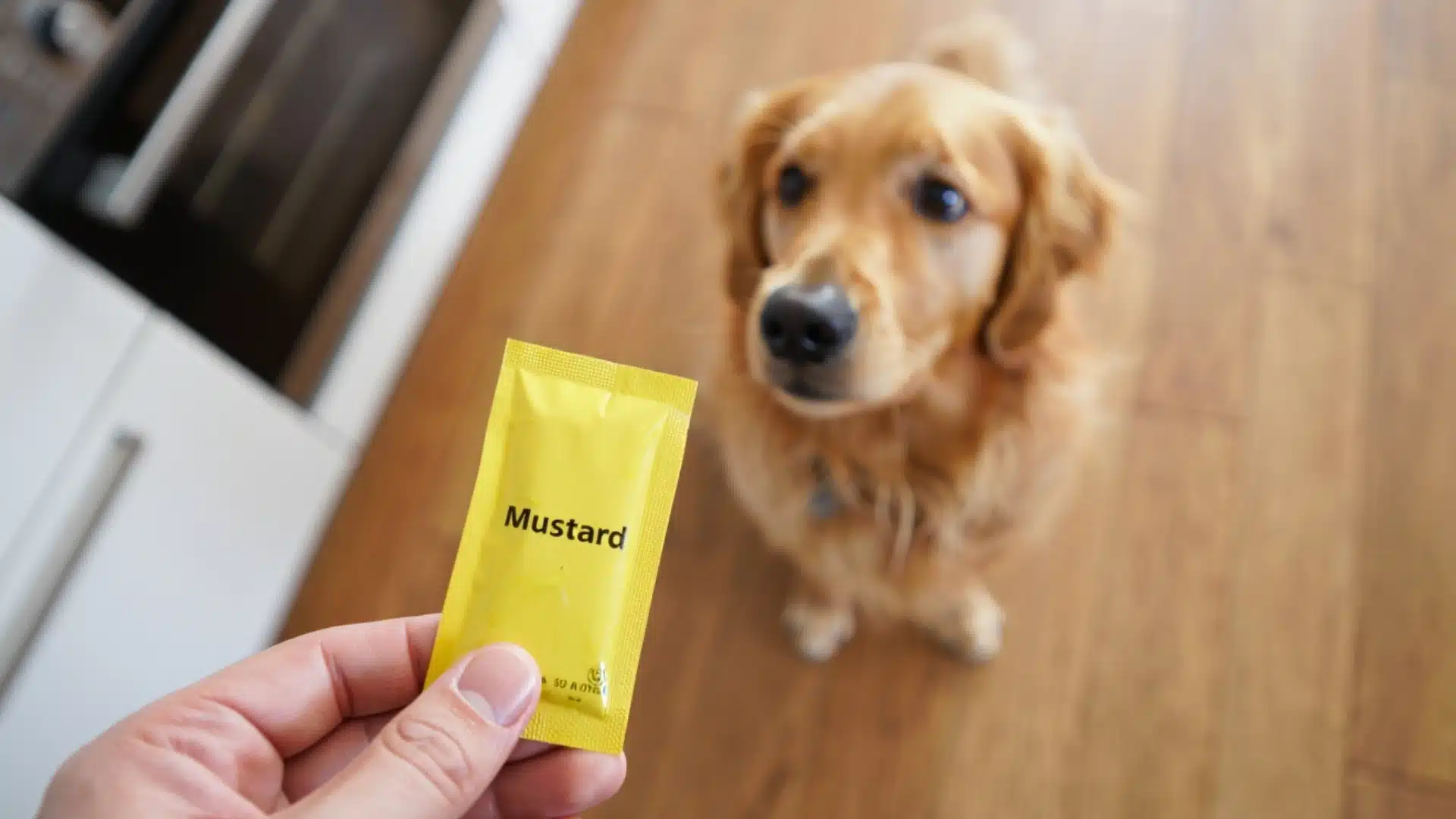
No, dogs should not eat mustard. Classic yellow mustard, Dijon, spicy brown, and whole-grain mustard are all best kept away from your pet entirely.
Mustard is made from mustard seeds, which contain glucosinolates. These compounds break down into isothiocyanates: natural chemicals that can irritate a dog’s gastrointestinal tract, leading to inflammation and discomfort.
Many commercial mustards also contain high levels of sodium, vinegar (which adds acidity), and sometimes harmful additives like onion or garlic powder, both toxic to dogs.
Understanding which everyday human foods pose risks to dogs can make a real difference when these accidents happen.
Dog poisoning symptoms every owner should know covers a wider range of household hazards and how to recognize when your pet needs urgent help.
Note: Raw mustard seeds carry a much higher concentration of glucosinolates than prepared condiment mustard, meaning seeds pose an even greater risk if your dog gets into a spice cabinet or cooking ingredients.
What Can Mustard Do to Your Dog?
Mustard can upset your dog’s stomach pretty quickly, especially when they eat more than a tiny lick from a plate or sandwich. A dog’s digestive system is much more sensitive than ours, so their body reacts faster.
1. Vomiting and Diarrhea
One of the most common problems is vomiting or diarrhea. Some dogs throw up within an hour, while others start showing symptoms later during the day.
Loose stools, stomach noises, and messy accidents around the house can also happen. Small dogs usually react harder because even a little mustard feels like a larger amount inside their body.
If vomiting keeps happening repeatedly, dehydration can become another problem pretty fast.
2. Belly Pain and Restless Behavior
Dogs with stomach pain often start acting strangely in very obvious ways.
Your dog may whine, pace around the room, stretch oddly, or keep changing sleeping positions because their stomach feels uncomfortable.
Some dogs curl their body tightly or avoid being touched around the belly area. You might also notice them looking tired and annoyed, almost like they regret stealing your hot dog five minutes earlier.
3. Drooling and Mouth Irritation
Mustard has a sharp and spicy taste, so some dogs react by drooling a lot after eating it.
They may lick their lips constantly or rub their face against furniture because their mouth feels irritated. Strong mustard flavors can also bother the throat slightly, especially in smaller dogs.
While this usually passes within a few hours, heavy drooling combined with vomiting should not be ignored by owners.
4. Loss of Appetite and Low Energy
Dogs dealing with stomach irritation often stop eating for several hours because food suddenly feels unappealing.
Even treats may get ignored for a while, which usually surprises most owners instantly. Some dogs also become lazy, sleepy, or less playful because their stomach feels uncomfortable and heavy.
If your dog refuses food for too long or looks unusually weak, calling a veterinarian is the safer move.
5. Dehydration Risk
Dehydration can happen when vomiting or diarrhea continues for too long. This is more serious for small dogs, puppies, and older dogs.
Watch for dry gums, heavy tiredness, sunken eyes, or your dog refusing water after several messy episodes. That is not a wait-and-see moment anymore.
If your dog keeps losing fluids, call your vet quickly. Dehydration can sneak up fast, and it can make a mustard mistake much more dangerous.
How to Recognize If Your Dog Ate Mustard?
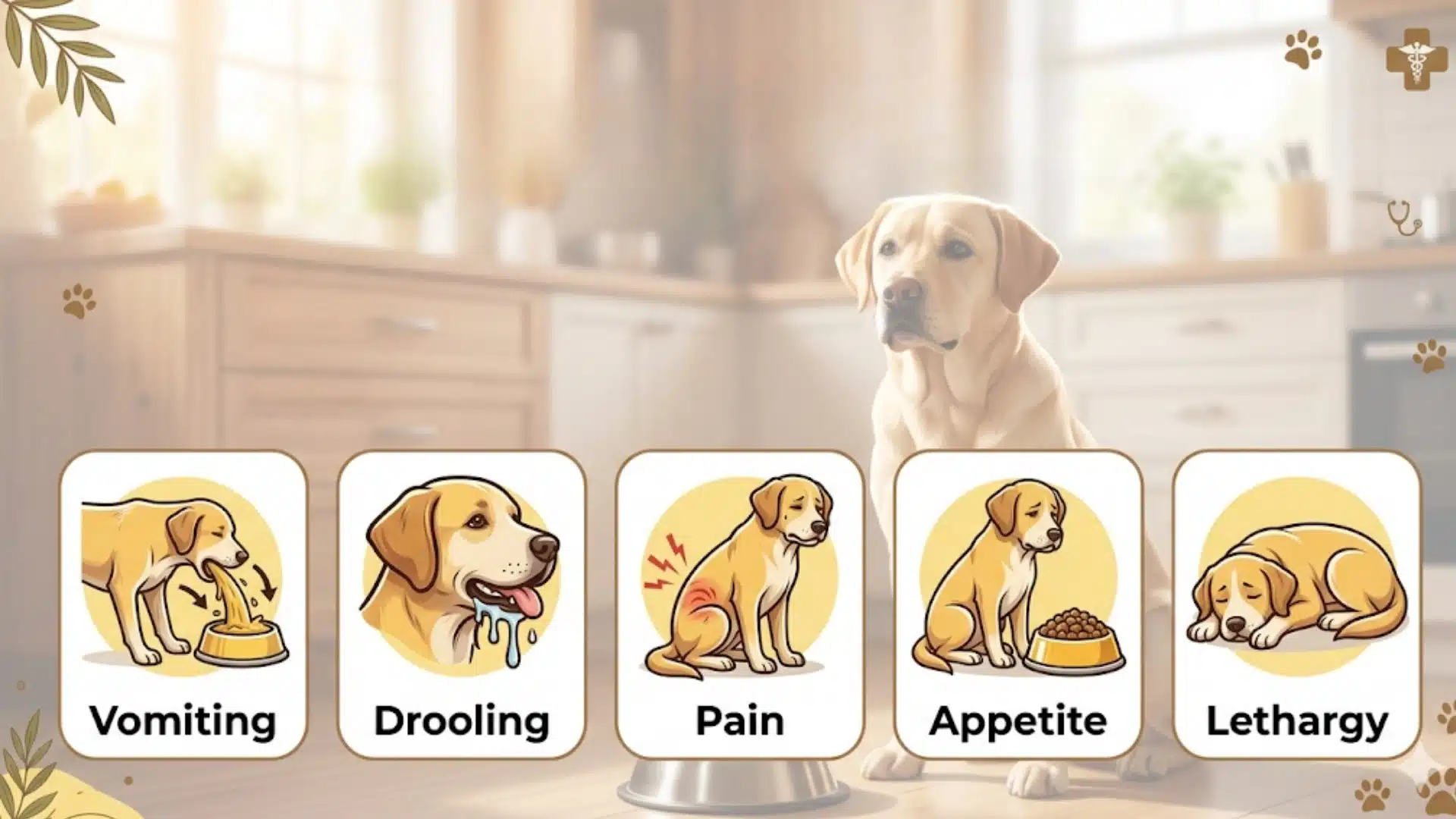
Sometimes the biggest clue is not the empty mustard packet nearby. It is your dog suddenly acting weird after snack theft repeats again.
Most dogs start showing symptoms within a few hours after eating mustard. Some reactions stay mild, while others can get messy pretty fast.
- Vomiting or loose diarrhea: Mustard can irritate the stomach and intestines, so your dog may throw up or need bathroom trips.
- Excessive drooling: The sharp taste can bother their mouth, making them drool more or lick their lips again and again.
- Belly pain: Your dog may whine, stretch oddly, pace around, or avoid lying down because their stomach feels uncomfortable.
- Loss of appetite: An upset stomach can make your dog ignore food, even when you offer their favorite treat.
- Low energy: Some dogs become sleepy, dull, or less playful when the stomach irritation feels stronger than expected.
What Should You Do Right After Your Dog Eats Mustard?
First, move your dog away from the area so they cannot lick or eat more mustard.
Then note the time, mustard type, and rough amount eaten, because your vet may ask these details. Check the label for risky ingredients like garlic powder, onion powder, or xylitol.
Offer small amounts of fresh water to help your dog stay hydrated, but do not force them to drink.
Monitor your dog closely for the first 24 hours. Mild symptoms from a small lick often pass quickly, but note the frequency and severity.
If you notice your dog is experiencing vomiting and diarrhea beyond this one incident, it may indicate an ongoing sensitivity worth discussing with your veterinarian.
How Much Mustard is Dangerous?

One tiny lick of mustard is usually not a panic moment. Your dog is not doomed because they tasted a small smear from your plate.
But one teaspoon or more can become a real stomach problem, especially for small dogs, puppies, or dogs with sensitive bellies.
That amount can trigger vomiting, diarrhea, drooling, belly pain, or a sad couch potato mood for hours.
A bigger amount, like a full mustard packet or a spoonful, is where things get more serious. At that point, you should stop guessing and call your vet for advice.
Small dogs under 20 pounds face the highest risk from mustard, where even one teaspoon may cause stomach problems, while medium and large dogs usually show milder symptoms unless they eat much larger amounts.
So, if your dog accidentally licked a drop, breathe first. Watch them closely, offer water, and keep mustard away next time. If they ate more than a lick, treat it like a real issue.
One Exception: When Mustard Can Be a Savior
This may sound weird, but a very tiny number of dog owners have used mustard in the past to make their dog throw up after eating something dangerous.
The idea was simple. Since mustard irritates the stomach, some people believed it could trigger vomiting fast enough to remove harmful food before it caused bigger problems.
Old pet forums and random internet advice still mention this trick sometimes. But the ASPCA (Animal Poison Control Center) and most veterinary toxicologists advise against home emesis methods.
Safer, more effective options like 3% hydrogen peroxide, administered only under direct veterinary guidance, are preferred when inducing vomiting is truly necessary.
When to Visit a Veterinarian?

While many mustard incidents are mild, certain situations require prompt veterinary care. Do not wait and see if your dog shows these red-flag symptoms:
- Repeated vomiting or diarrhea lasting more than a few hours.
- Blood in vomit or stool.
- Signs of severe pain or bloating.
- Extreme lethargy, weakness, or collapse.
- Symptoms of dehydration (dry gums, sunken eyes, reduced skin elasticity).
- Any ingestion of large amounts, especially in small breeds or puppies.
- If the mustard contained other toxic ingredients (onion, garlic, xylitol, etc.).
If you need immediate guidance, contact the ASPCA Animal Poison Control Center at (888) 426-4435. This is a 24/7 resource staffed by veterinary toxicologists.
A consultation fee may apply, but it can save valuable time in an emergency.
Call your vet or an emergency clinic ahead of time when possible. Provide details like your dog’s weight, breed, approximate amount eaten, and time of ingestion.
This helps them prepare the best treatment. Having pet insurance or knowing your nearest 24-hour clinic brings extra peace of mind.
Real Stories from Dog Owners
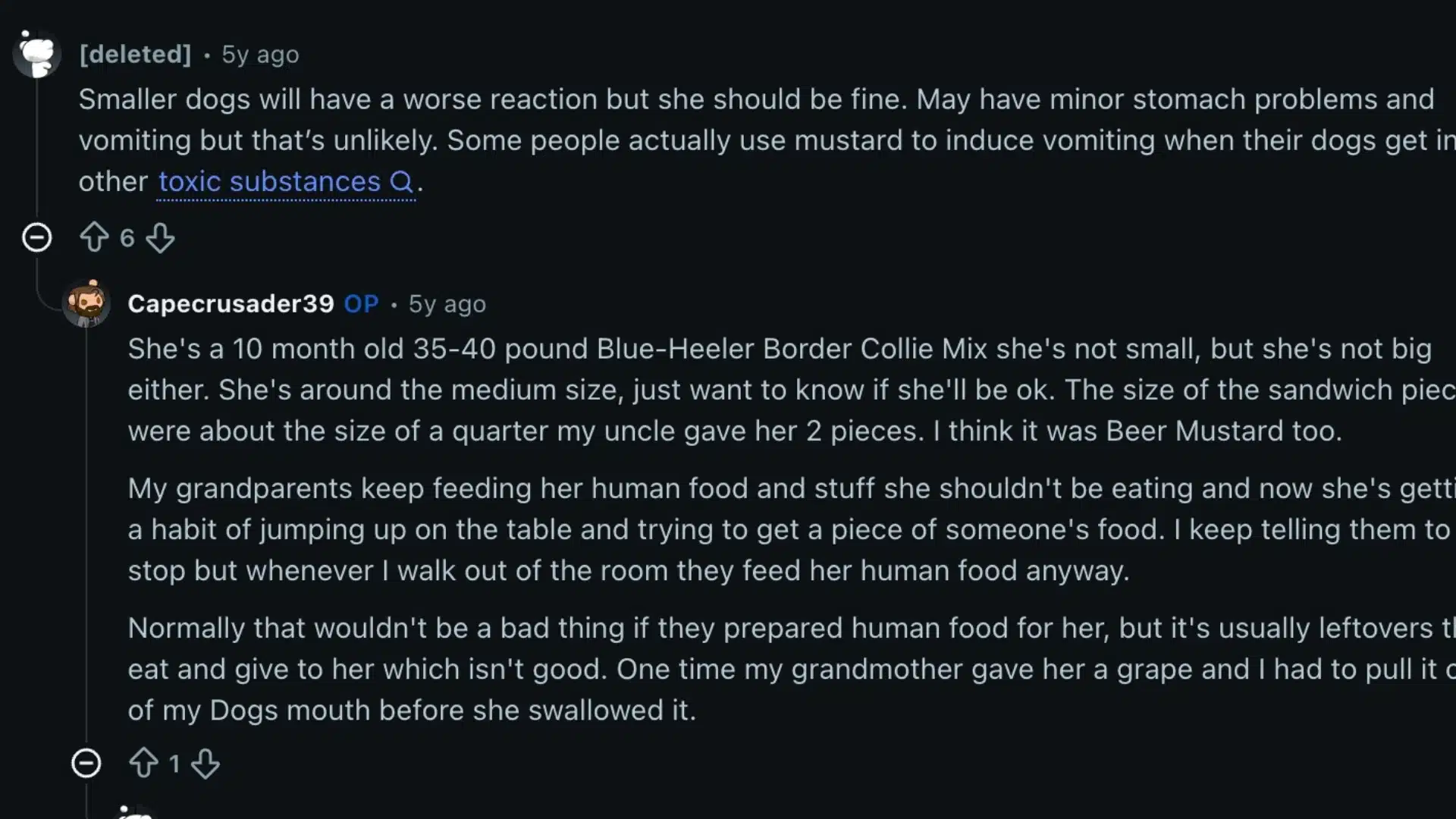
One worried dog owner on Reddit shared that their dog accidentally ate a few sandwich pieces covered with beer mustard, and panic kicked in almost immediately.
The owner explained that the dog was a medium-sized Blue Heeler and Border Collie mix, around 35 to 40 pounds.
People in the replies quickly tried calming them down, saying such a small amount would probably only cause mild stomach upset or temporary diarrhea.
Another person mentioned that mustard becomes more concerning in larger amounts, especially for smaller dogs.
A few dog owners also shared funny but relatable stories about dogs eating random gross things outside without problems, then suddenly getting sick from tiny food changes at home.
The overall response stayed pretty calm, with most people agreeing that one tiny mustard accident usually does not turn into a serious emergency.
Safe Alternatives to Mustard for Dogs
If you want to add flavor and excitement to your dog’s meals without the risks of mustard, try these safe, dog-friendly options:
- Plain Pumpkin Puree: Adds mild flavor, fiber, and supports healthy digestion.
- Xylitol-free Peanut Butter: Most dogs love a tiny smear; use sparingly as a treat.
- Low-Sodium Bone Broth (onion-and garlic-free): Makes meals more appealing and hydrating.
- Plain Unsweetened Yogurt: Provides probiotics and a creamy texture in small amounts.
- Cooked Plain Chicken or Turkey: A high-value topper that is digestively gentle and protein-rich. Serve with no seasoning, sauces, or added salt.
Remember, human foods should only make up a small portion of your dog’s diet: high-quality dog food remains the foundation.
If you are exploring broader options for keeping your dog’s diet varied and balanced, our guide on healthy and safe treats for dogs is a great place to start.
These alternatives offer taste and nutrition without irritating your dog’s stomach.
Conclusion
Food scares feel worse when your dog acts completely normal while you are standing there, wondering if something bad will happen later.
Dogs are fast around food, and honestly, most owners go through at least one random kitchen panic at some point.
The good thing is that a small mistake does not always turn into a disaster, especially when you react calmly and pay attention early.
After moments like this, most people simply become more careful with sandwiches, picnic food, dipping sauces, and leftovers around curious dogs.
Sometimes, one sneaky bite is enough to remind you that dogs will happily eat first and think about consequences absolutely never.
What is the weirdest food your dog has ever stolen from your plate or kitchen counter? Tell us, share with us in the comments below.
Frequently Asked Questions
Does Mustard Affect Dogs Differently Based on Their Breed?
Yes, some breeds may react harder because they already have sensitive stomachs. Bulldogs, French Bulldogs, and German Shepherds can get stomach upset faster than some bigger working dogs.
Still, breed is not the only thing that matters. Your dog’s age, size, health, and past food reactions matter too.
Can Mustard Interact Badly with My Dog’s Daily Medication?
It can, especially if mustard causes vomiting, diarrhea, or stomach irritation. That may affect how well some medicines stay in the body or are absorbed properly.
Dogs taking heart medicine, antibiotics, or pain medicine need extra care. If your dog takes daily medication and eats mustard, call your vet for advice.
How Long Does the Smell of Mustard Stay on a Dog’s Breath or Fur?
The smell can stay for several hours, and sometimes it may linger into the next day. Mustard has a sharp scent, so owners often notice it on breath or fur.
You can use dog-safe toothpaste, fresh water, or a dental treat to help reduce the smell.
Can I Use Mustard in Homemade Dog Treats or Recipes?
No, mustard should not be added to homemade dog treats. Even a small amount can irritate your dog’s stomach and offer no real benefit.
Some online recipes use unsafe flavor ideas, so do not trust every pet treat post. Stick with simple, dog-safe ingredients instead.
Will My Puppy Grow Out of Wanting to Eat Mustard as It Gets Older?
Not always. Puppies are curious, but adult dogs can still steal food when they get the chance. Hoping they grow out of it usually does not work well.
Teaching a strong leave it command and keeping counters clear is safer than waiting for better manners.