Seeing extra fur on the floor is one thing. I know it feels more worrying when bald patches, red skin, or nonstop scratching show up, too.
Hair loss in dogs can occur for simple reasons, such as seasonal shedding, but it can also signal fleas, allergies, infections, stress, or hormonal problems.
That is why I always suggest looking beyond the missing fur. When a dog losing hair comes with itching, flaky skin, sores, smell, or licking, there may be something deeper going on.
In this blog, you will learn the common causes of hair loss in dogs, the symptoms that often show up with it, what hair loss in different body areas can mean, and when it is better to call a vet instead of waiting it out.
Is Hair Loss in Dogs Always a Problem?
Hair loss in dogs is not always a problem. Some shedding is normal, especially when the weather changes or when a dog has a thick coat.
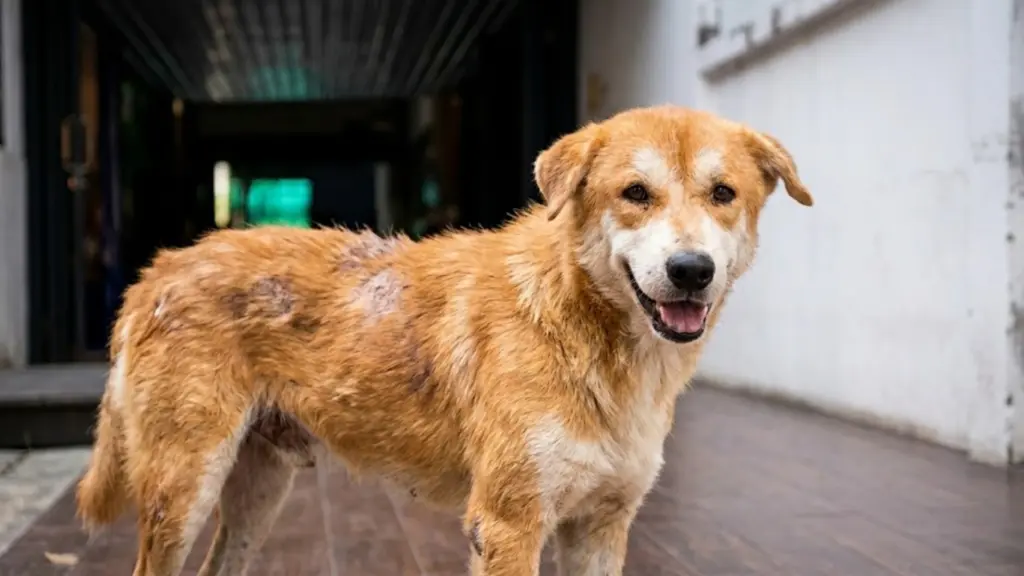
In normal shedding, loose fur comes out evenly, and the skin usually looks clean and calm. Hair loss can appear as bald patches, thin spots, or uneven areas where the coat does not grow back well.
Bald spots matter because they can point to itching, licking, fleas, allergies, mites, or infection.
Loose fur on your couch may just be shedding, but missing hair in one clear area usually needs a closer look. The skin can tell you a lot, too.
Redness, flakes, scabs, sores, dark patches, or a bad smell can mean there is more going on than simple shedding. If the skin looks irritated, the hair loss should not be ignored.
Common Causes of a Dog Losing Hair
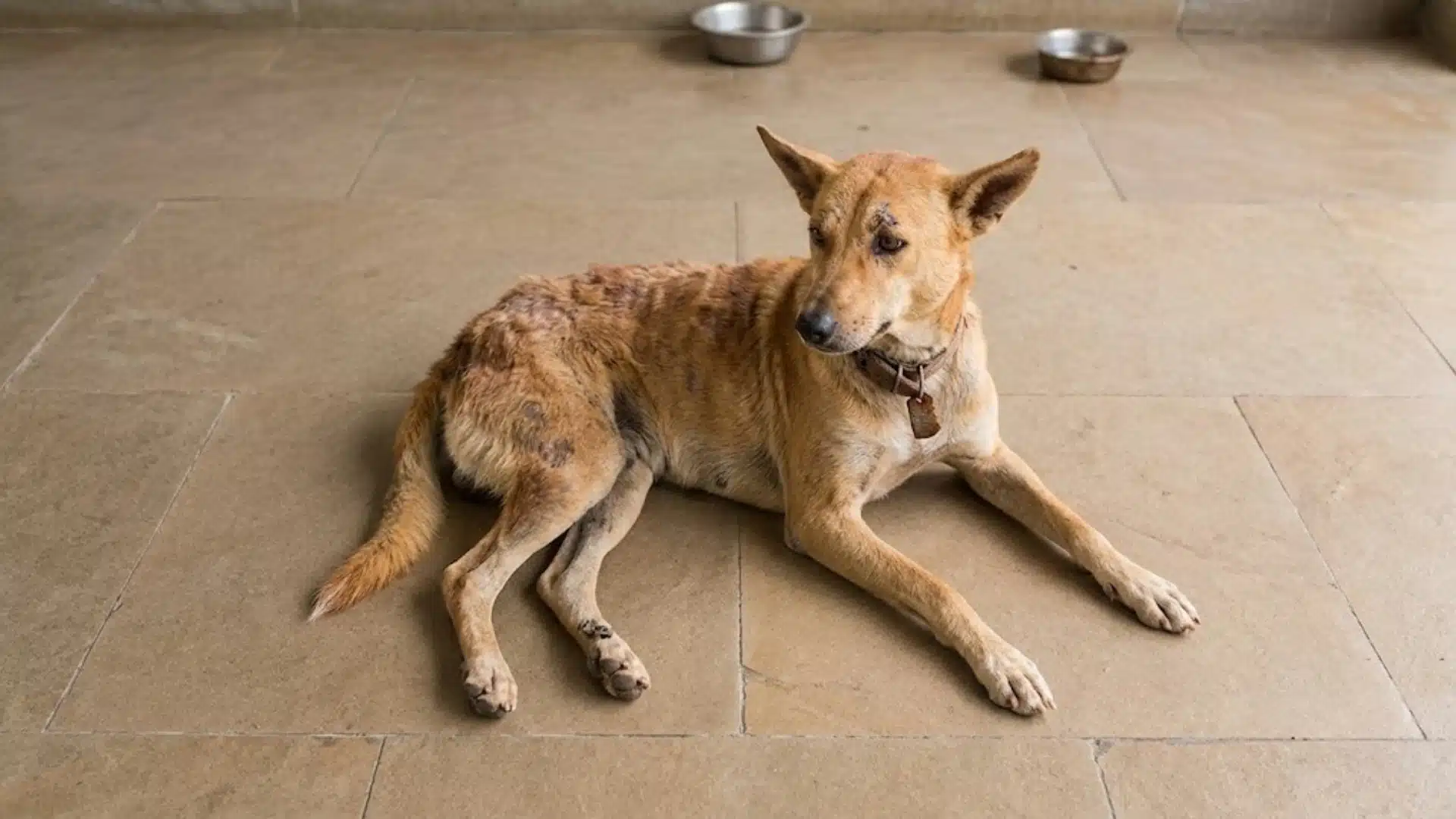
Hair loss can come from skin trouble, parasites, diet, stress, or deeper health changes. The pattern often gives the first useful clue.
1. Flea Allergies And Parasites
Fleas are among the most common causes of dogs scratching, biting, and chewing at their skin. Some dogs react badly to flea saliva, so even a few bites can cause strong itching.
This often leads to hair loss near the tail, lower back, belly, or thighs. Mange mites can also cause patchy hair loss, scabs, and sore skin.
Hair loss around the ears, face, and eyes may also point to mites. Parasites can spread fast, so early care helps stop the irritation from getting worse.
A regular flea and tick routine can help reduce the risk, and some owners also look into natural flea and tick spray as part of basic coat care.
2. Skin Allergies
Skin allergies can make a dog itch even when fleas are not the problem. Food can trigger it, but grass, dust, pollen, and mold are also common causes.
Allergies often show up through paw licking, ear scratching, belly redness, and repeated rubbing against floors or furniture.
The skin may look pink, warm, or irritated. Over time, constant licking and scratching can break the hair and leave thin spots. Some dogs also get ear trouble or skin infections along with allergies.
3. Hormonal Issues
Hormonal problems can cause hair thinning without much itching. Low thyroid levels may make the coat look dull, thin, or slow to regrow.
Cushing’s disease can also lead to hair loss, thinner skin, and changes in the body. One common clue is matching hair loss on both sides of the body, often along the belly, sides, or back legs.
Since this type of hair loss usually comes from inside the body, creams or shampoos alone may not help much.
4. Skin Infections
Skin infections can cause hair loss, redness, flakes, sores, and a strong smell. Bacterial infections may show up as bumps, scabs, or moist patches on the skin.
Yeast infections can make the coat feel greasy and may cause a musty odor. Ringworm, a fungal infection, can cause round bald spots with flaky skin.
Infections often get worse when a dog keeps scratching or licking the area. Treatment depends on the cause, so guessing at home can make the problem last longer.
In my clinic, I have seen ringworm spread to other dogs and even to family members before an owner realized what they were dealing with.
If you see round, scaly bald patches, do not wait to get them checked. Infections often get worse when a dog keeps scratching or licking, which breaks down the skin barrier further.
If crusting or odor appears, a guide on yeast infection and crusty dog skin may help owners understand what signs to watch.
5. Poor Diet or Coat Health Problems
A weak coat can sometimes point to a poor diet or missing nutrients. Dogs need the right balance of protein, fats, vitamins, and minerals to support healthy skin and hair growth.
When the coat lacks support, it may look dry, dull, brittle, or thin. The skin may also become flaky.
Some dogs take longer to regrow hair after shedding, clipping, or skin irritation. Diet is not always the cause, but it can make existing skin and coat problems harder to recover from.
6. Stress, Anxiety, or Over-Grooming
Stress and anxiety can lead to repeated licking, chewing, or rubbing. Over time, this can wear down the hair and create bald patches.
The paws, legs, belly, and tail area are common spots because they are easy to reach. Some dogs over-groom when bored, nervous, or left alone for long periods.
The skin may become red, sore, or thick from constant contact. Since this hair loss comes from behavior, the trigger also needs attention, along with the skin damage.
7. Pressure Spots or Friction
Pressure and friction can cause hair loss in areas that rub against hard surfaces. This is often seen on elbows, hips, chest, or hocks.
Large dogs and dogs that sleep on hard floors may develop thin hair, thick skin, or calluses in these spots.
The area may look dry or rough, but it may not itch much. Soft bedding can help reduce pressure. If the skin cracks, bleeds, swells, or starts to smell, it may need vet care.
Symptoms that Often Come with Hair Loss in Dogs
Hair loss in dogs often appears with other signs on the skin or in behavior, which can help narrow down the possible cause faster.
- Itching: Constant scratching, paw licking, or chewing can point to allergies, fleas, mites, or skin irritation.
- Redness: Inflamed, flaky, crusty, or irritated skin may appear when the skin becomes damaged or infected.
- Baldness: Some dogs develop small bald spots, while others gradually lose fur across larger body areas.
- Odor: A strong smell or an oily coat may suggest yeast growth, a bacterial infection, or an unhealthy buildup of skin.
- Darkening: Skin may become darker, thicker, rougher, or shinier after long-term irritation.
- Behavioral Changes: Low energy, restlessness, nonstop licking, weight changes, or visible discomfort may happen alongside hair loss.
What Hair Loss Location Can Tell You
The area where hair loss appears can offer useful clues, since different health and skin problems tend to affect certain parts of the body more often.
| Hair Loss Location | Possible Cause | Common Signs |
|---|---|---|
| Near the tail or lower back | Flea allergy, skin irritation | Scratching, chewing, red skin |
| Around the eyes, ears, or face | Mange, ringworm, and allergies | Patchy fur loss, flaky skin, crusts |
| Belly or inner legs | Environmental allergies, contact irritation | Excess licking, pink skin, itching |
| Paws or legs | Paw licking, grass allergies, anxiety | Stained fur, irritated skin between toes |
| Both sides of the body | Hormonal imbalance, thyroid issues, Cushing’s disease | Even thinning, slow regrowth, and little itching |
How to Tell Normal Shedding from Hair Loss
Normal shedding usually spreads evenly across the coat instead of leaving clear bald patches or thin spots. Many dogs shed more during seasonal changes, especially breeds with thick or double coats.
In normal shedding, the skin underneath still looks clean, calm, and healthy without redness, sores, flakes, or irritation.
The fur may appear all over furniture and floors, but the coat itself should still look full overall. Another helpful sign is behavior.
Dogs that shed regularly are usually not scratching, chewing, or licking nonstop. Excess itching often points to allergies, parasites, or skin problems instead of simple shedding.
Hair growth also matters. With normal shedding, the coat grows back naturally over time and keeps a healthy texture.
If fur does not regrow well, or if the skin starts changing color or texture, the problem may be more than regular shedding.
When Dog Losing Hair Needs Vet Attention
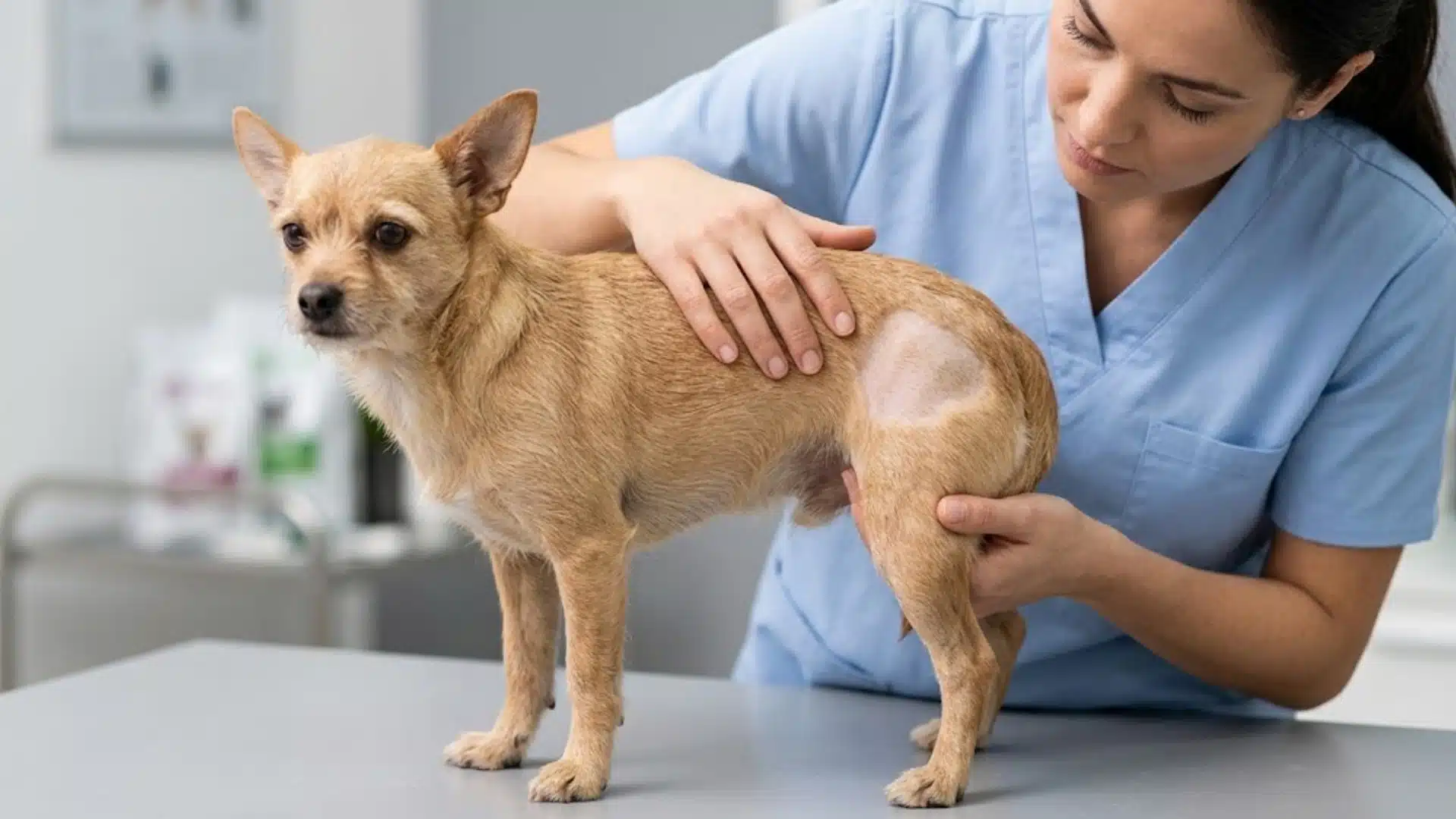
Some hair loss problems should not be ignored, especially when the skin starts looking painful or the symptoms spread quickly.
Sudden bald patches can point to parasites, infections, allergies, or health conditions that need proper treatment.
Severe itching is another warning sign, as nonstop scratching and chewing can damage the skin and worsen infections over time.
Open sores, bleeding, or raw patches may happen when irritation becomes too strong. Red, swollen, or painful skin can also suggest inflammation or infection that may not improve without medical care.
In some cases, hair loss appears along with tiredness, weight changes, or unusual thirst. These signs can sometimes be linked to hormone problems like low thyroid levels or Cushing’s disease.
Fast-spreading hair loss is also important to watch closely, since some skin conditions can worsen quickly if left untreated for too long.
Conclusion
Hair loss in dogs can occur for many reasons, including allergies, fleas, skin infections, hormonal problems, poor diet, stress, or repeated licking.
Some cases are mild and linked to normal shedding, while others may point to a deeper health issue that needs attention.
That is why it helps to look closely at the skin, the location of the hair loss, and other symptoms such as itching, redness, odor, flakes, or behavioral changes.
In many cases, a dog losing hair becomes easier to understand once the full pattern starts coming together.
Fast-spreading bald spots, painful skin, bleeding, a strong odor, or nonstop scratching should never be ignored, as these signs may require proper treatment from a vet before the condition worsens.
Has your dog ever had unusual hair loss or skin problems? Share your experience or questions in the comments below.
Frequently Asked Questions
Can Certain Dog Breeds Lose More Hair than Others?
Yes, some breeds naturally shed more because of their coat type. Double-coated breeds like Huskies, German Shepherds, and Golden Retrievers usually shed more heavily during seasonal coat changes than short-haired breeds.
Does Weather Affect Hair Loss in Dogs?
Yes, weather changes can affect how much fur a dog sheds. Many dogs lose more hair during spring and fall as their coat adjusts to changing temperatures and daylight levels.
Can Frequent Bathing Cause Hair Loss in Dogs?
Bathing too often or using harsh shampoos can dry out the skin and weaken the coat. This may lead to irritation, breakage, or increased shedding over time, especially in dogs with sensitive skin.