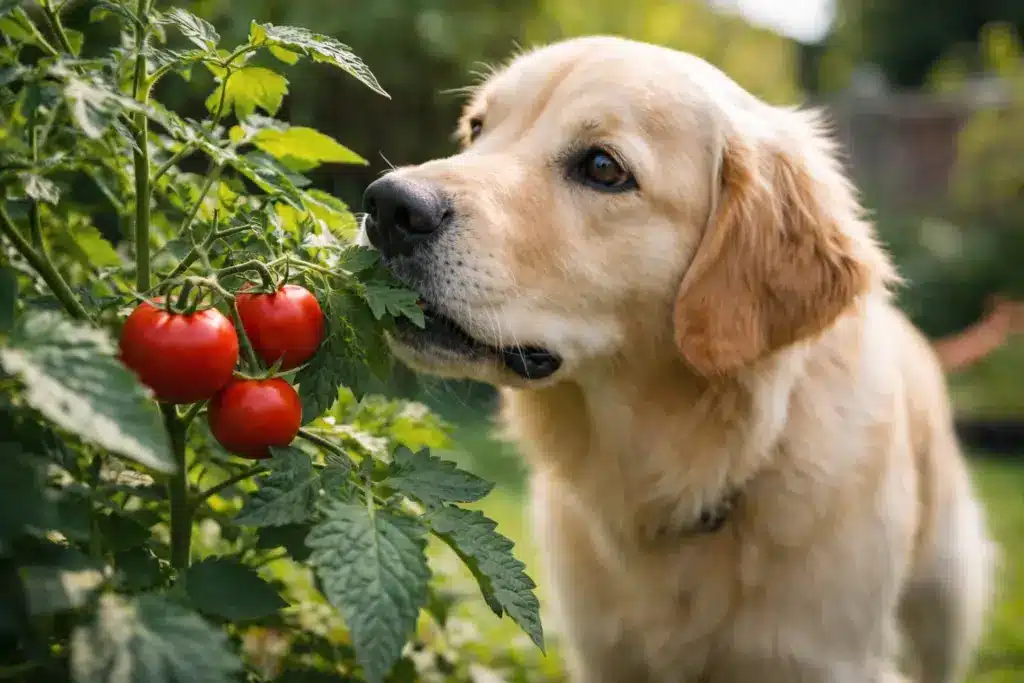
Some foods seem harmless until a dog grabs a bite, and suddenly, you are stuck wondering if it is safe or a bad idea. Tomatoes are one of those foods.
Many dog owners see mixed opinions online, which only makes the question harder to answer. One post says tomatoes are fine. Another says they are dangerous.
The truth sits somewhere in the middle. Whether tomatoes are bad for dogs is not a simple yes or no, because the answer depends on the type of tomato and the part of the plant involved.
Ripe red tomatoes are not the same as green tomatoes, stems, or leaves. Some parts are far more likely to cause trouble than others.
In this blog, readers will learn what is safe, what should be avoided, what symptoms to watch for, and what to do if a dog eats the wrong part.
Are Tomatoes Bad for Dogs?
The short answer is that tomatoes can be bad for dogs in certain situations, but they are not always harmful.
Ripe red tomatoes are usually safe when given in small amounts, and a small piece once in a while is unlikely to cause any serious issue for most dogs.
The concern begins with unripe green tomatoes and the green parts of the plant, such as stems and leaves, because they contain higher levels of tomatine, which can upset a dog’s system and lead to symptoms like vomiting, diarrhea, weakness, or stomach discomfort.
This is why the type of tomato plays a big role in its safety.
The amount also matters, since even ripe tomatoes can cause mild stomach upset if eaten in large quantities, while small portions tend to be easier for dogs to handle.
One thing I always tell owners: a dog who snags a cherry tomato off the counter is a very different situation from a dog who has been sneaking around in the garden and chewing on the vines.
Same plant, very different risk level. If you’re not sure which scenario you’re dealing with, that distinction matters more than anything else.
Why Tomato Plants are Toxic to Dogs
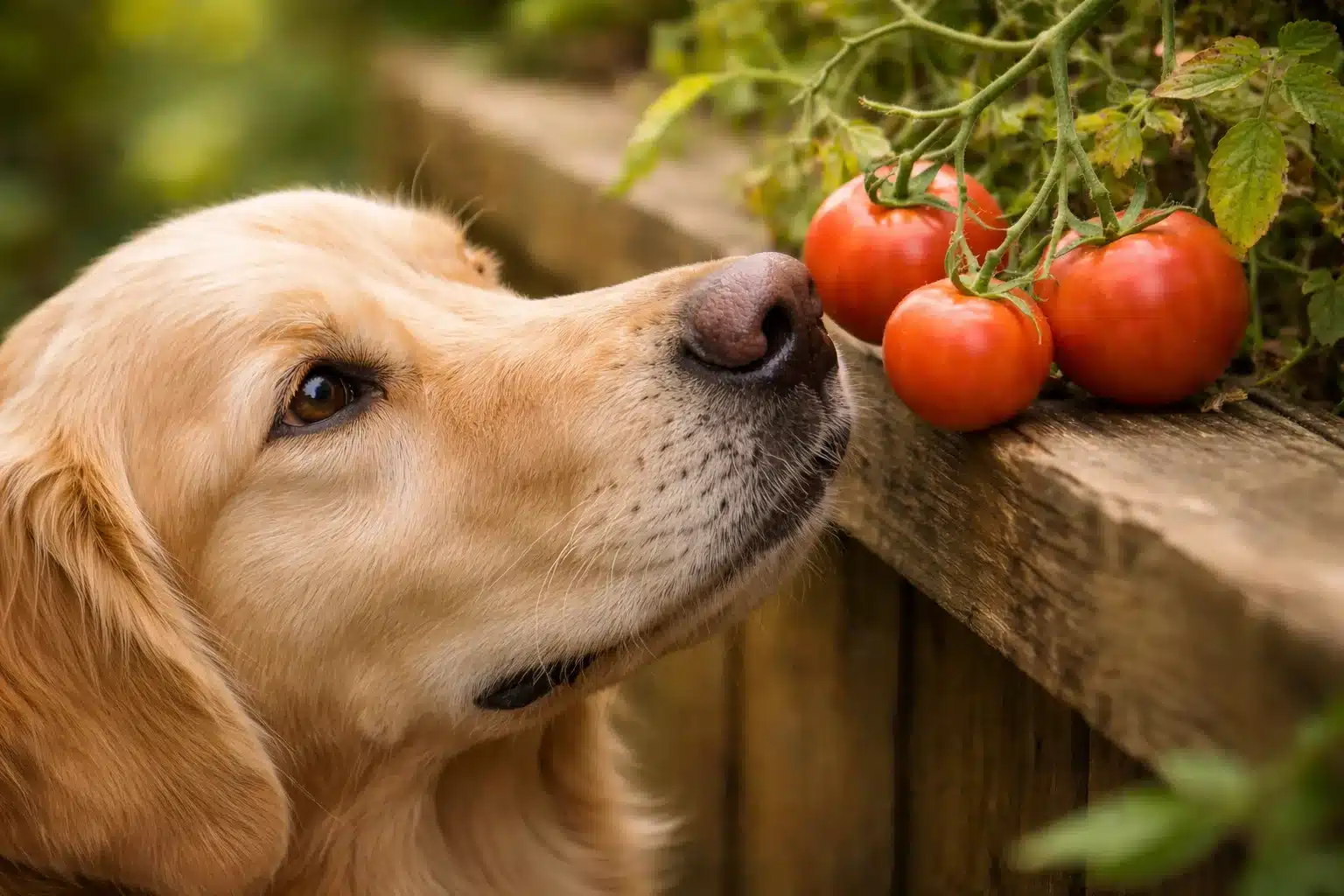
Tomatoes belong to the nightshade family, alongside potatoes and eggplant. Tomatine and its relative solanine are what make the green parts of tomato plants toxic to dogs, not the red fruit itself.
A large dog that chews on one leaf is unlikely to show more than mild stomach upset. But a small dog, a puppy, or a dog that ate a significant amount of plant material is at real risk of tomatine poisoning.
In my experience working with vet clinics over the years, it’s almost always small breeds and puppies that come in with actual symptoms, and it’s almost always after they got unsupervised time in a garden.
One thing that often gets overlooked: if your tomato plants were treated with pesticides or fertilizer, that can actually be a bigger concern than the tomatine. Always mention that to your vet if you’re calling in.
What Reddit Dog Owners are Saying
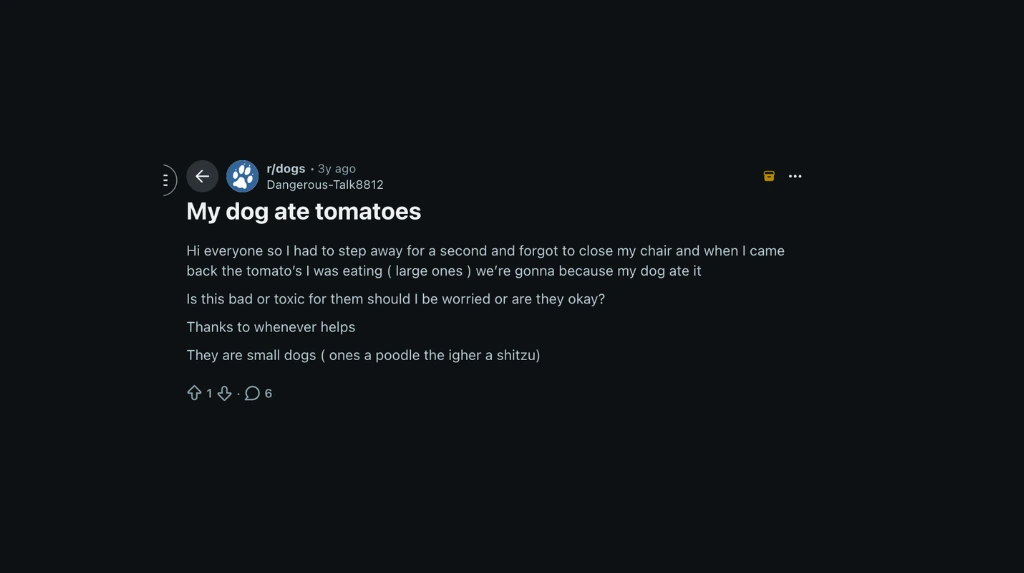
If you spend any time in dog communities on Reddit, you’ll quickly notice that the “my dog ate a tomato” post comes up more often than you’d expect, and the responses are almost always the same. Most owners panic first and research second.
The general consensus among experienced dog owners in these threads is reassuring: a bite or two of ripe tomato is not an emergency, but the moment stems, leaves, or green tomatoes are involved, the tone shifts fast.
A lot of people in these communities mention they had no idea the plant itself was the real danger, not the fruit.
Several owners have shared that their dogs raided the garden repeatedly before anyone thought to fence it off.
What stands out most is how many people wish they had known this beforehand rather than finding out mid-panic at 10 p.m. with a vet’s after-hours line on hold. It’s a good reminder that a little prep goes a long way.
Signs a Dog May Not Handle Tomatoes Well
Some dogs react differently to certain foods, and tomatoes can cause mild to serious issues, so it helps to watch for clear warning signs early.
- Vomiting: may happen soon after eating tomatoes, especially if unripe parts were consumed, and can repeat if the dog’s stomach continues to feel irritated or unsettled
- Diarrhea: loose or frequent stools can show the digestive system is not handling the tomato well, and this may last for a short time or continue if irritation remains
- Drooling: excess saliva can point to nausea or discomfort, and it may appear along with lip licking or a lack of interest in food after eating tomatoes
- Tiredness: lower energy levels than usual can be a sign that something feels off, and the dog may rest more, avoid activity, or seem less responsive than normal
- Weakness: trouble standing, walking, or maintaining balance may appear in more serious cases, especially if a larger amount or harmful plant parts were eaten
- Stomach pain: signs can include restlessness, whining, pacing, or a hunched posture, as the dog tries to cope with discomfort or irritation in the stomach area
Tomato-Based Foods Dogs Should Avoid
Not all tomato-based foods are safe for dogs, and in most cases, the added ingredients are the real reason these foods should be avoided.
Plain, ripe tomatoes are very different from processed foods made for human taste. Tomato sauce is often cooked with salt, spices, and sometimes onion or garlic, which can be harmful to dogs.
Ketchup may seem harmless, but it usually contains sugar, salt, and preservatives that are not suitable for a dog’s diet.
Salsa is another risky option because it often includes onions, garlic, and spices that can irritate a dog’s stomach or cause more serious issues.
Pizza toppings that include tomatoes are also not a good choice, especially when mixed with cheese, oils, and seasoning.
Canned tomato products can contain high levels of salt and added ingredients. In most cases, it is not the tomato itself, but what is added to it that creates the problem.
The rule of thumb I give owners: the more a tomato has been processed for human taste, the less appropriate it is for a dog.
Plain and ripe is fine in small amounts. Anything with a sauce, seasoning, or dip is a different story.
What To Do if a Dog Eats the Wrong Part of a Tomato Plant
If a dog eats the wrong part of a tomato plant, staying calm and acting quickly can help reduce the risk of serious issues.
Start by checking how much was eaten and which parts of the plant were involved, since green tomatoes, leaves, and stems pose a higher risk.
Once you know this, remove access to the plant right away to prevent further eating. Keep a close eye on the dog for any symptoms, such as vomiting, diarrhea, weakness, or unusual behavior, over the next several hours.
If the dog has eaten leaves, stems, unripe tomatoes, or a large amount of them, it is best to call a vet for guidance, even if symptoms have not yet started.
Smaller dogs need extra caution because even a small amount can affect them more than it would larger dogs.
Safe Treat Ideas Instead of Tomatoes
There are plenty of simple and safe options that can replace tomatoes, giving dogs a tasty snack without the risk of stomach upset or harmful ingredients.
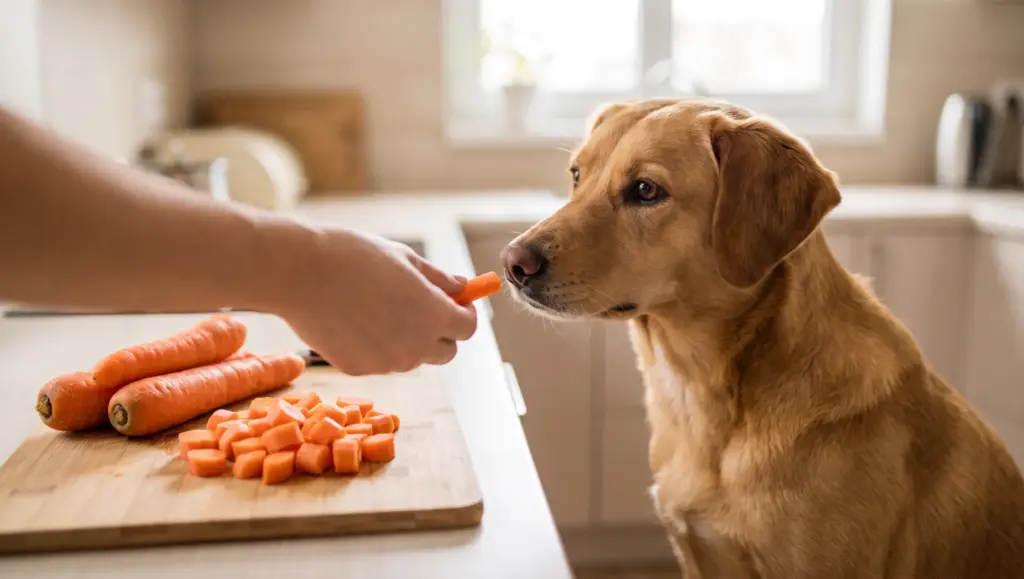
- Carrots: a crunchy and low-calorie snack that many dogs enjoy, while also supporting dental health and providing vitamins that help with overall well-being
- Cucumbers: light, hydrating, and easy to digest, making them a good option for dogs that need a refreshing treat without extra calories or strong flavors
- Apple slices without seeds: naturally sweet and full of fiber, but always remove the seeds and core before serving to avoid any harmful effects
- Blueberries: small, soft, and packed with antioxidants, making them a great bite-sized treat that is easy to serve and usually well accepted by dogs
- Plain pumpkin: gentle on the stomach and often used to support digestion, especially helpful for dogs that deal with occasional stomach issues
Conclusion
In simple terms, tomatoes are not always harmful to dogs, but they are not a treat to give without thought, either.
Ripe tomato flesh is usually the least risky form, especially when served plain and in a small amount.
The bigger concern comes from green tomatoes, stems, leaves, and tomato-based foods that often contain salt, onion, garlic, or other ingredients that do not suit dogs well.
Whether tomatoes are bad for dogs depends more on the form and amount than many people expect.
This blog covered the safe side of ripe tomatoes, the parts that can cause trouble, the warning signs to watch for, foods to avoid, and better treatment options to choose instead.
Has a dog ever eaten tomatoes in your home and caused a scare? Share your thoughts or story in the comments below.
Frequently Asked Questions
Can Dogs Be Allergic to Tomatoes?
Yes, some dogs can have an allergic reaction to tomatoes, even if it is not very common. Signs may include itching, skin irritation, swelling, or digestive issues after eating even a small amount.
Can Puppies Eat Tomatoes Safely?
Puppies have more sensitive stomachs than adult dogs, so it is better to avoid giving them tomatoes. Even small amounts can upset their digestion or cause discomfort.
Do Cooked Tomatoes Change the Risk for Dogs?
Cooking tomatoes does not fully remove the compounds found in unripe or green parts, and most cooked tomato foods include added ingredients, which can make them unsafe for dogs.