Hamster diets can get confusing fast, especially with so many fruits and vegetables being called safe online. Some foods look harmless but still need care when served.
Portion size matters. Frequency matters too, as even a healthy snack can turn into a problem when it is given the wrong way.
That is why many owners end up searching for whether hamsters can eat celery while also trying to figure out what else belongs in a hamster’s diet.
A good diet is not just about one vegetable. It is about balance, variety, and knowing which foods work as small treats and which ones should be avoided.
In my veterinary practice, I see many well-meaning hamster owners who rely on a single “safe foods” list they found online, without considering frequency or balance.
This blog covers celery, safe serving tips, common feeding mistakes, and a wider list of foods that fit well into a hamster’s diet.
Is Celery Safe for Hamsters?
Yes, hamsters can eat celery, but only in small portions. It can be a light snack now and then, not something that should show up in the food bowl every day.
Celery has a lot of water, so a tiny piece is usually more than enough for one feeding.
It also has some fiber, which may seem helpful, but too much at once can be hard on a hamster’s small digestive system.
Large amounts may lead to loose stool, gas, or general stomach trouble. That is why celery works best as an occasional treat instead of a regular part of the diet.
It should always be washed well and cut into very small pieces before serving. Plain celery is the only safe way to offer it. Seasoned, cooked, or mixed celery dishes are not a good choice for hamsters.
How Much Celery Can a Hamster Eat?
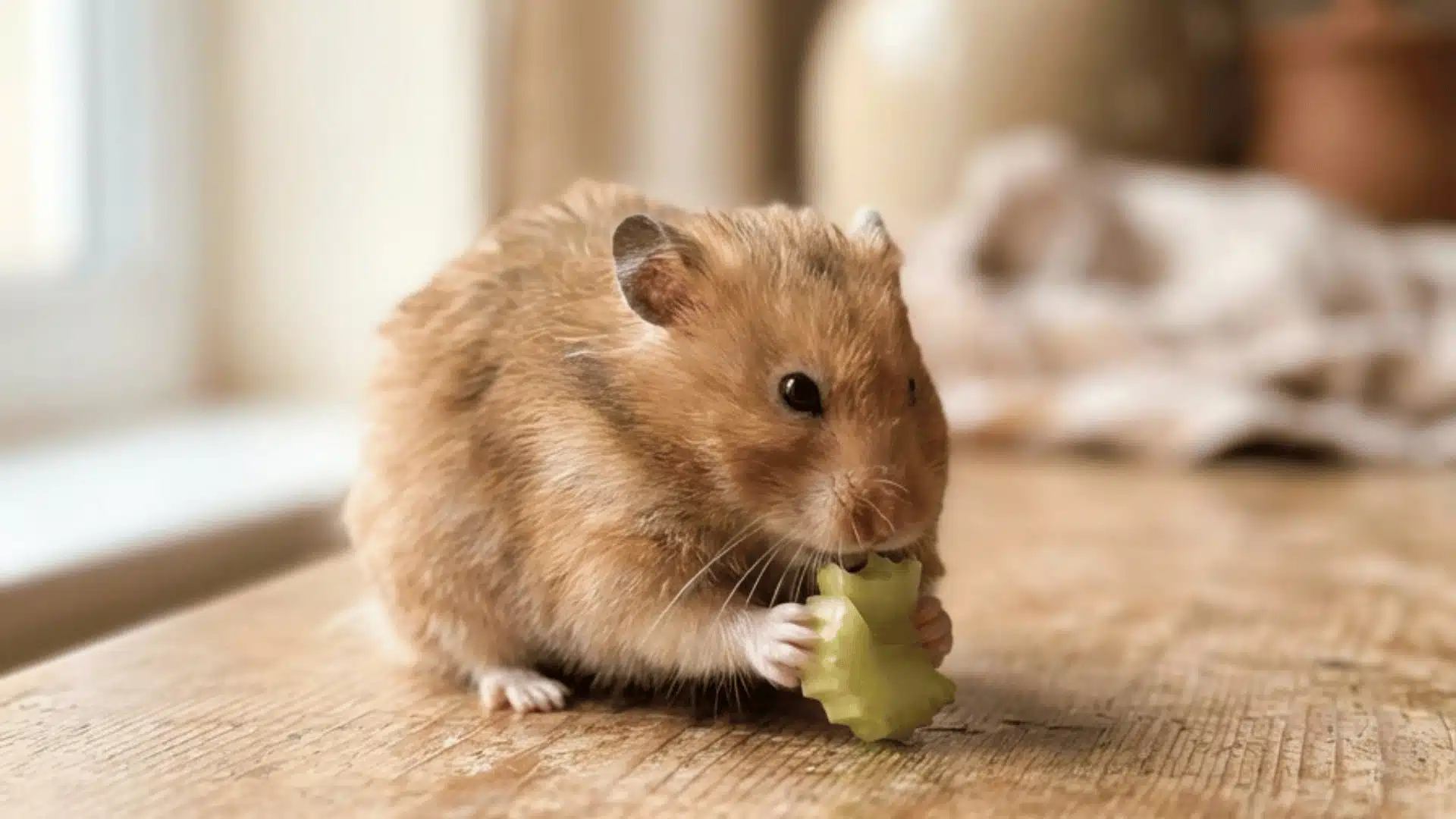
A hamster should only get a very small, bite-sized piece of celery at a time. Think of it as a treat, not a regular food item in the diet.
One or two tiny pieces are enough for a single serving, and anything more than that can be too much for such a small animal.
It is best to offer celery only occasionally, not every day. Giving it too often can upset the balance of their diet and may lead to digestive issues over time.
Portion size can also change based on the type of hamster. Syrian hamsters can handle slightly larger pieces, while dwarf hamsters need much smaller portions due to their size.
If you are still learning the basics of hamster care and diet, starting with a full care guide can help you set the right feeding routine from day one.
Watching how your hamster reacts after trying celery for the first time can help you decide the right amount for future feedings.
Safe and Unsafe Foods for Hamsters
A simple comparison of foods that help maintain a hamster’s health and those that may cause harm, making it easier to plan a balanced daily diet.
| Category | Food Type | Examples | Notes |
|---|---|---|---|
| Safe Foods | Fresh Vegetables | Carrot, cucumber, broccoli | Serve in small portions and wash properly before feeding |
| Safe Foods | Fruits | Apple, banana | Give in small amounts due to natural sugar content |
| Safe Foods | Grains and Seeds | Oats, sunflower seeds, millet | Provide energy and support natural eating habits |
| Safe Foods | Store-bought Food | Hamster pellets or mixes | Should be the main part of the daily diet |
| Foods to Avoid | Toxic Foods | Onion, garlic, chocolate | Can cause serious health issues or poisoning |
| Foods to Avoid | Sugary and Processed Food | Candy, biscuits, sugary snacks | May lead to weight gain and other health problems |
| Foods to Avoid | Sticky or Hard Items | Sticky sweets, very hard nuts | Can cause choking or dental problems |
Benefits of Celery for Hamsters
Celery can be a light and refreshing snack for hamsters when given in small amounts, offering a few simple nutritional perks without adding too much to their diet.
- Hydration support: High water content helps keep hamsters hydrated, especially in warm conditions or when they are not drinking enough water regularly
- Low calories: Makes it a safe treat option without increasing the risk of weight gain when served in controlled portions
- Light fiber content: Supports basic digestion and helps keep the gut working without being too heavy on the stomach
- Chewing activity: Crunchy texture helps keep teeth engaged, which supports natural wear and prevents overgrowth
- Vitamin content: Contains small amounts of vitamins like vitamin C and K, which can support overall health in minor ways
Risks of Feeding Celery to Hamsters
Celery is generally safe in small amounts, but it can still cause a few issues if it is not prepared properly or fed too often.
- Stringy texture: Long celery strings can be difficult to chew and swallow, which may increase the risk of choking or cause discomfort while eating
- Upset stomach: High water content can lead to soft stools, mild diarrhea, or bloating if a hamster eats too much at once
- Overfeeding issues: Giving large portions too often can replace a balanced diet and reduce intake of more important nutrients
- Pesticide residue: Unwashed celery may contain chemicals or dirt that can harm your hamster if not cleaned properly before serving
- Mold risk: Celery spoils quickly, and any leftover pieces in the cage can grow mold, which may lead to health problems if eaten later
How to Feed Celery to Hamsters
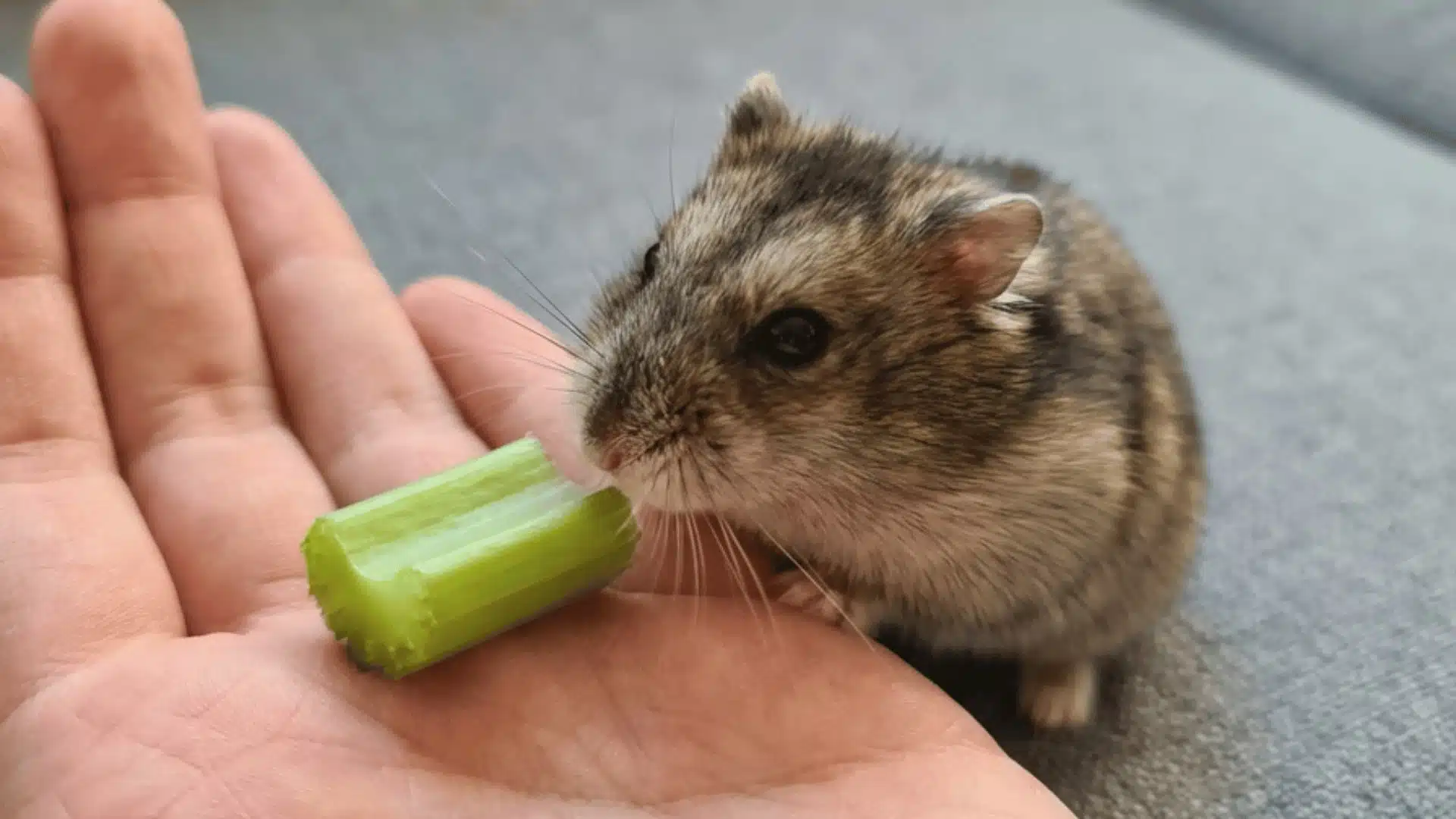
Feeding celery the right way helps avoid common problems and keeps it safe as a treat. Start by washing the celery well under clean running water so any dirt or chemicals are removed before it reaches the food bowl.
Once cleaned, the celery should be cut into very small, bite sized pieces so it becomes easy for a hamster to chew without any struggle.
I recommend introducing celery, or any new vegetable, on its own rather than alongside several other new foods at once.
Another step that should not be ignored is removing the stringy fibers from the stalk. These thin strings can be hard to chew and may lead to choking if they are left on.
Gently pulling them off makes the celery safer to eat. Portion control is just as important as preparation.
Only a small piece should be offered at a time, and it should not be given every day. Feeding celery once or twice a week works well as part of a balanced diet.
Building a Healthy Diet for Your Hamster
A healthy diet for a hamster depends on balance rather than feeding just one type of food.
A proper mix usually includes store-bought pellets as the base, along with small portions of fresh vegetables, fruits, and grains.
This combination helps cover different nutritional needs without overloading the digestive system. It is also important to understand the difference between staple food and treats.
Staple food, such as hamster pellets or mixes, should make up most of the daily diet since it is designed to provide complete nutrition.
Treats like fruits or certain vegetables should only be given occasionally and in small amounts.
Keep in mind that dietary needs can also vary depending on the breed you have; different hamster breeds have different temperaments and energy levels, which can influence how much variety they need in their diet.
Variety plays a key role in keeping a hamster healthy and active.
Offering different safe foods in rotation prevents boredom and ensures a wider range of nutrients, which supports overall well-being over time.
Conclusion
Feeding celery to hamsters is simple when done the right way, with small portions and proper preparation to avoid common issues like choking or stomach upset.
While it can be a light and refreshing treat, it should never replace a well-balanced diet that includes pellets, fresh vegetables, grains, and occasional fruits.
Understanding whether hamsters can eat celery helps build better feeding habits and prevents overfeeding or poor food choices.
A mix of safe foods keeps your hamster active, healthy, and satisfied over time. Paying attention to what they eat daily makes a big difference in their overall health and behavior.
What foods does your hamster enjoy the most in its diet? Let me know in the comments below.
Frequently Asked Questions
Can Baby Hamsters Eat Celery?
Baby hamsters should not be given celery. Their digestive system is still developing, and watery foods can cause stomach issues or diarrhea.
Can Celery Change a Hamster’s Behavior?
Celery does not directly affect behavior, but overfeeding watery foods may cause discomfort, which can make a hamster less active or irritated.
Can Hamsters Store Celery in Their Cheeks?
Yes, hamsters may try to store celery in their cheek pouches, but wet foods can spoil quickly, so it is better to give small amounts and remove leftovers quickly.