A fish tank is more than a glass box with water and fish. With the right setup, it can become a small world that catches attention the moment someone walks into the room.
A well-decorated aquarium adds color, character, and depth. It also creates a better environment for fish to swim, hide, and move around naturally.
That is why many aquarium owners like to give their tanks a creative theme instead of leaving them plain. Many people look for unique fish tank decorations when they want their aquarium to stand out.
The right pieces can turn a simple tank into something that feels natural, artistic, or even playful, depending on the theme.
This guide will share creative decoration ideas, theme-based setups, and simple tips to help design a fish tank that looks interesting while still staying safe for the fish.
Why Fish Tank Decoration Actually Matters
A well-decorated aquarium does more than just look good. I have noticed it changes how fish behave, feel, and move inside the tank in a big way.
Decorations create natural hiding spots that many fish rely on. Species like bettas, tetras, and loaches feel more relaxed when they have caves, plants, or driftwood to move into.
This helps reduce stress and keeps them more active and comfortable. Many hobbyists look for unique fish tank decorations to recreate natural habitats.
Fish tend to adjust better when their surroundings match where they come from, whether that is a river, lake, or reef.
A well-designed tank also adds character to a room. It turns a simple aquarium into something that naturally draws attention without feeling overdone.
Unique Fish Tank Decorations: Creative Theme Ideas
Below are several creative theme ideas that can change a simple aquarium into a visually striking setup while still keeping the environment comfortable and engaging for fish.
1. Miniature Medieval Castle Village
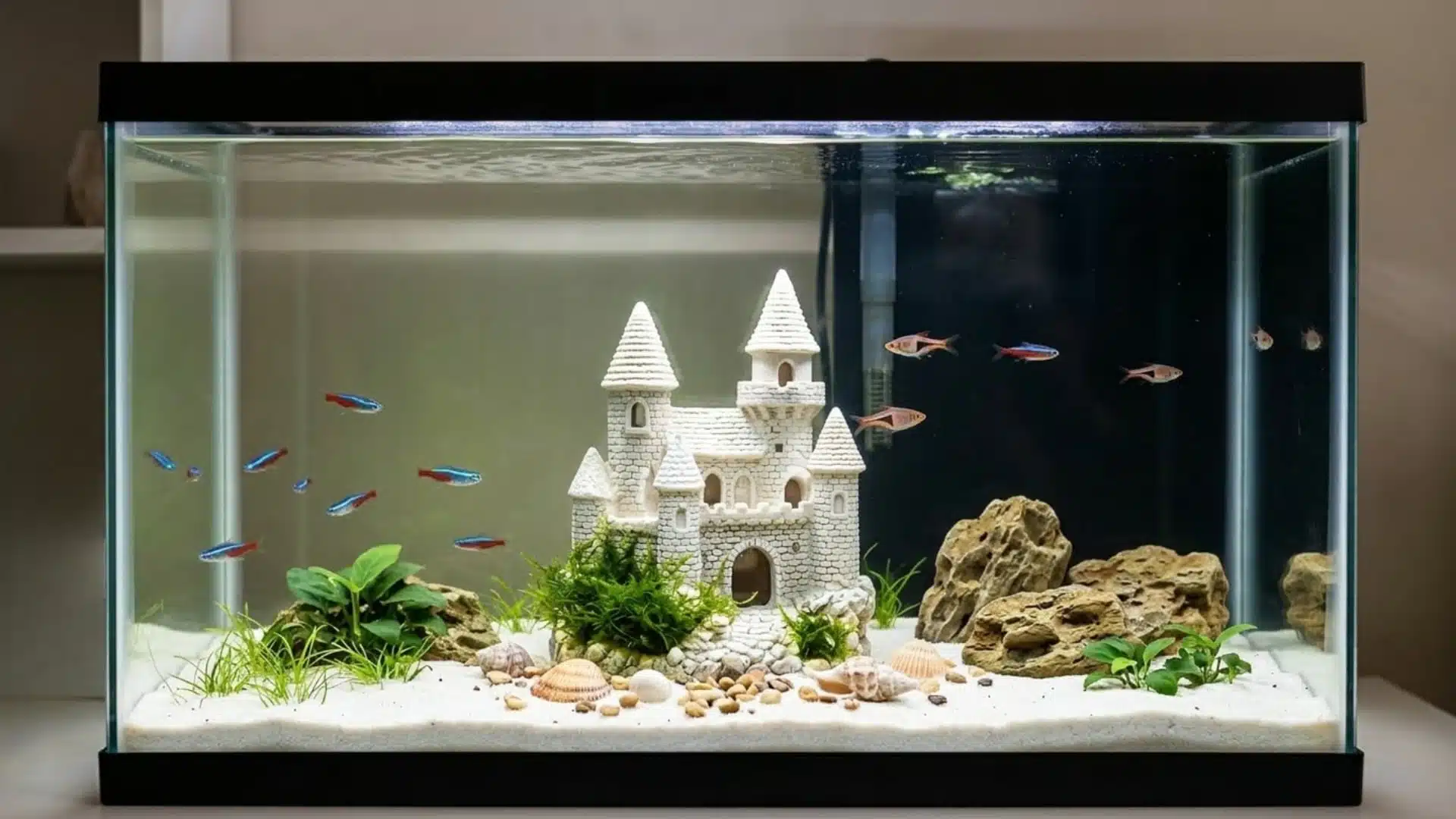
A small white stone castle instantly becomes the centerpiece of the aquarium. The tall cone-shaped towers and arched doorways give it a classic storybook feel that stands out without trying too hard.
A clean sandy base keeps the layout simple, while smooth pebbles and a few seashells add natural texture.
Green plants placed around the edges soften the structure. I like how small fish moving around the walls and openings make the setup feel like a quiet, living kingdom.
2. Underwater Pirate Shipwreck
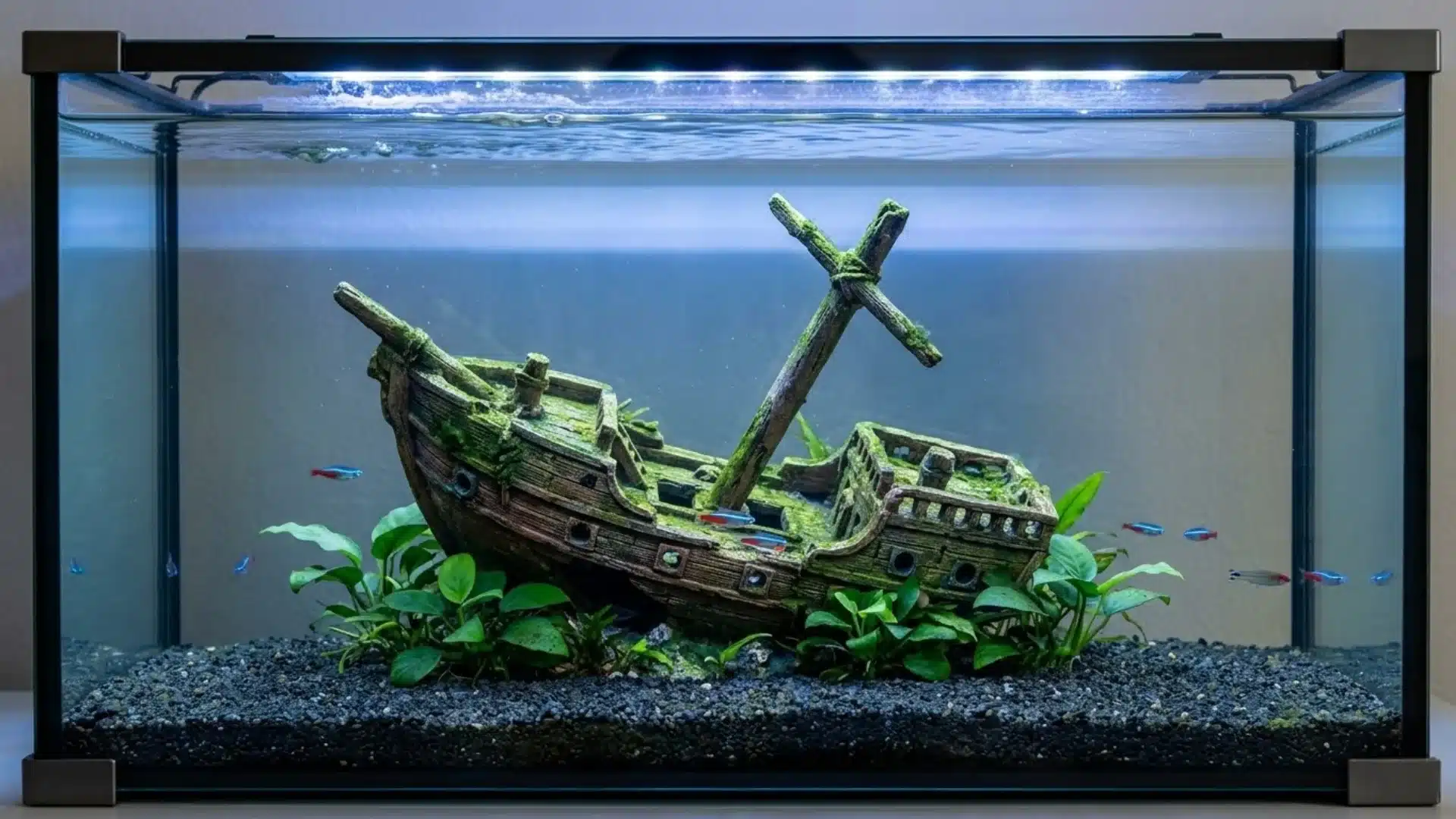
A pirate shipwreck brings a strong sense of story into the tank. The broken wooden frame, tilted structure, and aged details create a scene that feels like something lost long ago.
Dark substrate adds contrast and depth, while green plants around the base keep it balanced.
The openings in the ship allow fish to swim through freely, adding movement. I find this setup interesting because it feels dramatic at first, but settles into a natural look over time.
3. Shallow Pebble River Bed
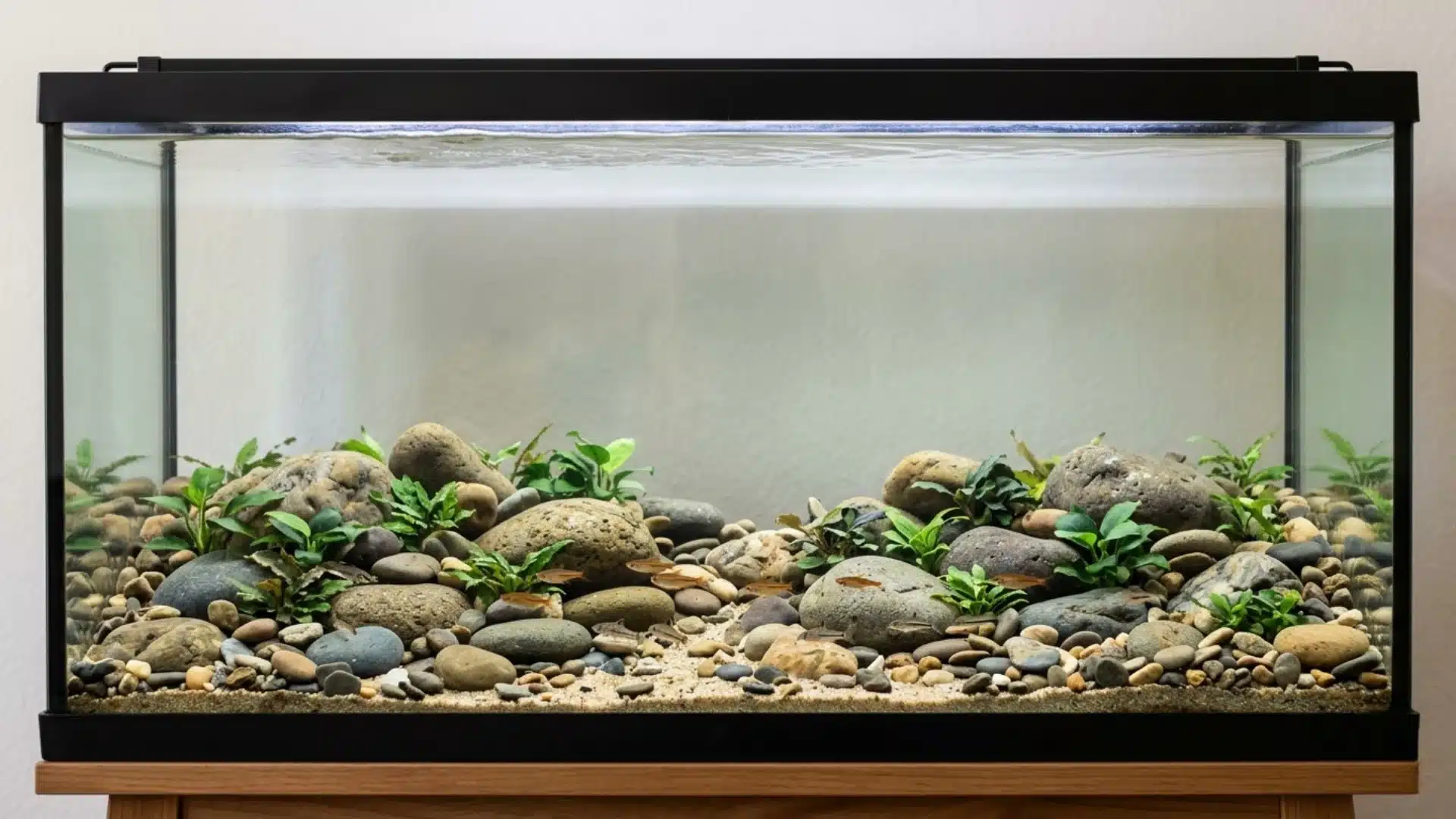
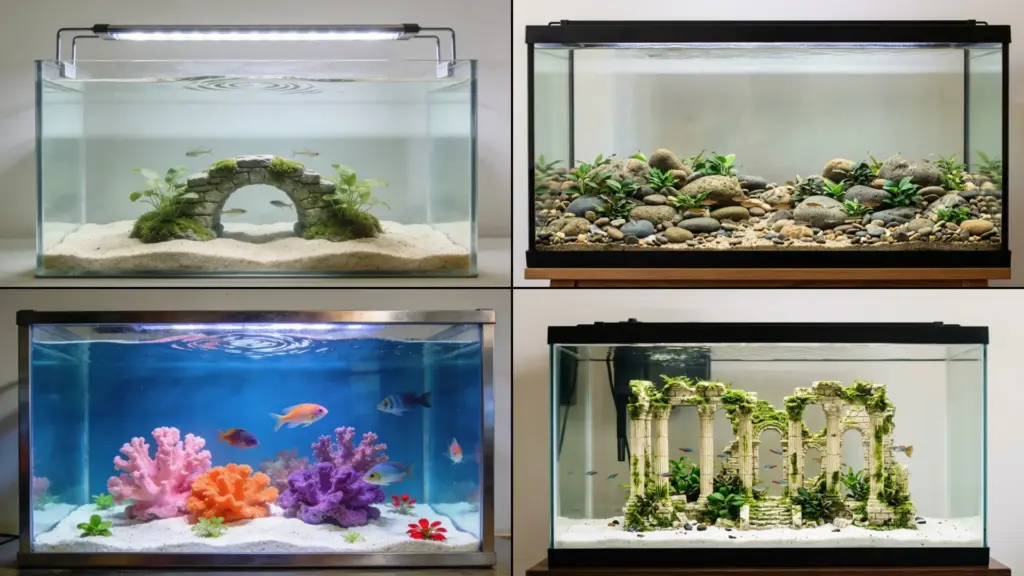
This theme focuses on simplicity and realism. Smooth river stones and mixed pebbles cover the entire base in different sizes, creating a natural flow across the tank.
Fine sand fills the gaps and adds a soft contrast between the stones. Low-growing plants placed carefully between rocks bring a subtle touch of green.
Fish moving close to the substrate make the scene feel calm and grounded. Just remember that pebble and sand substrates need regular attention; learning how to clean a fish tank properly will keep this setup looking its best.
4. Abandoned Stone Bridge
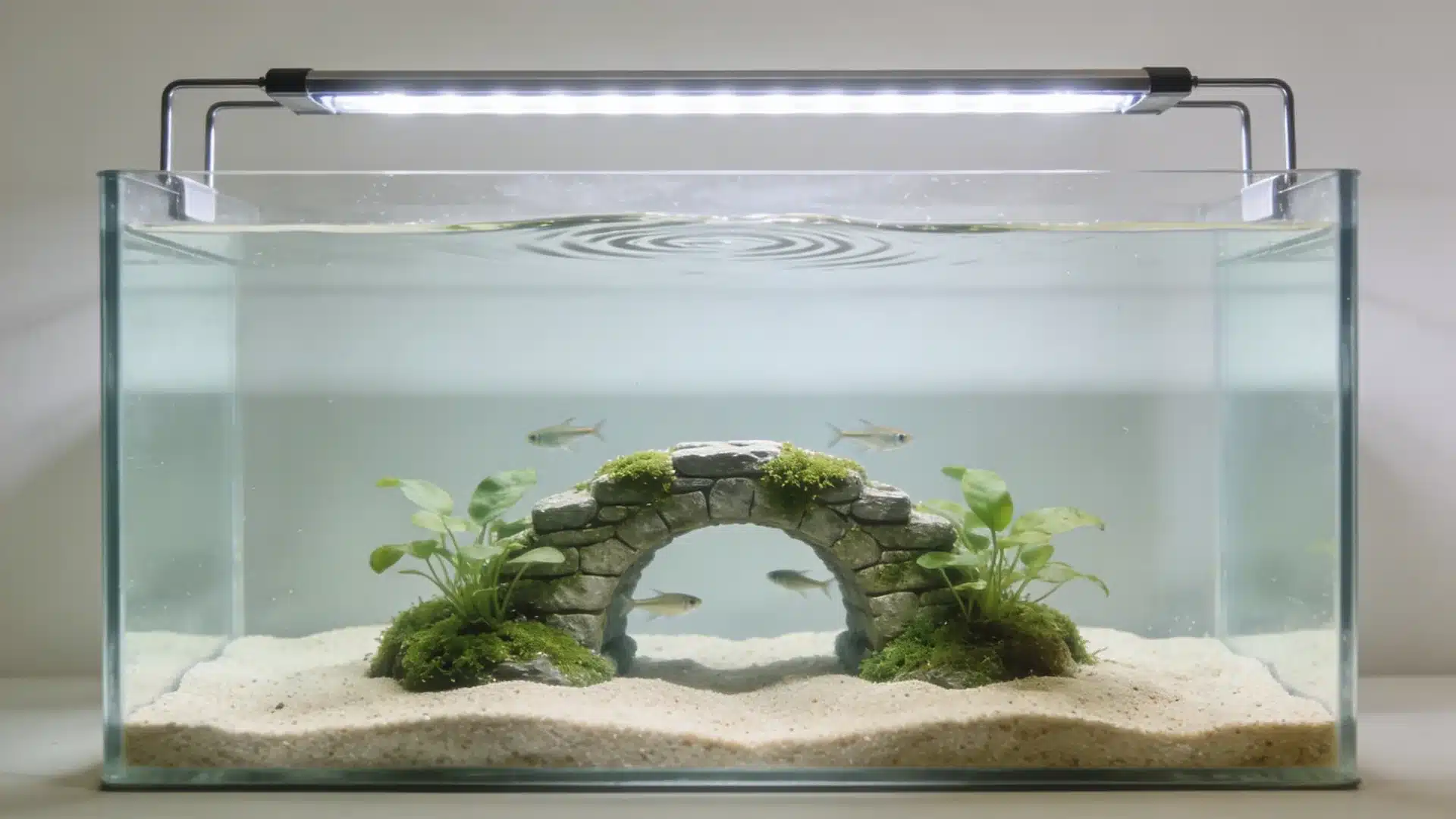
A single stone bridge can completely define the look of the aquarium. The curved arch creates a natural pathway that draws attention without needing extra elements.
Moss growing along the surface adds an aged and slightly forgotten feel. A sandy base keeps everything clean and balanced.
A few simple plants around the edges add life without crowding the space. I feel this setup works well because fish swimming through the arch bring motion while keeping the scene calm and natural.
5. Ancient Roman Ruins
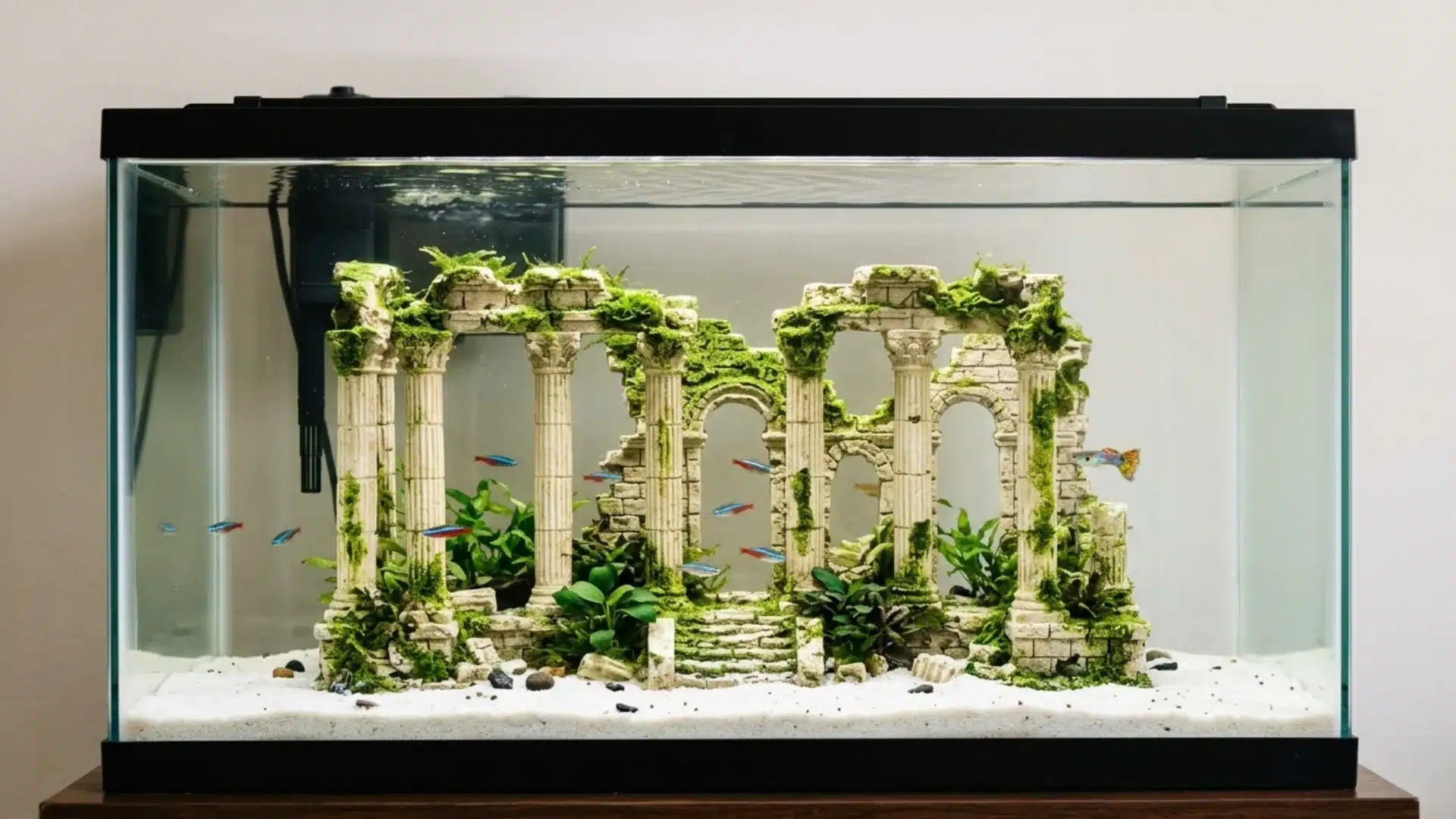
Ancient Roman ruins add structure and depth to the aquarium. Tall columns, broken archways, and stone textures create a layout that feels strong yet calm.
The white sand base helps highlight the details of the ruins. Moss and plants growing through cracks give it a natural, aged look.
Open spaces between the structures allow fish to move freely. The entire setup feels like a preserved piece of history that still has life moving through it.
6. Dense Jungle Undergrowth
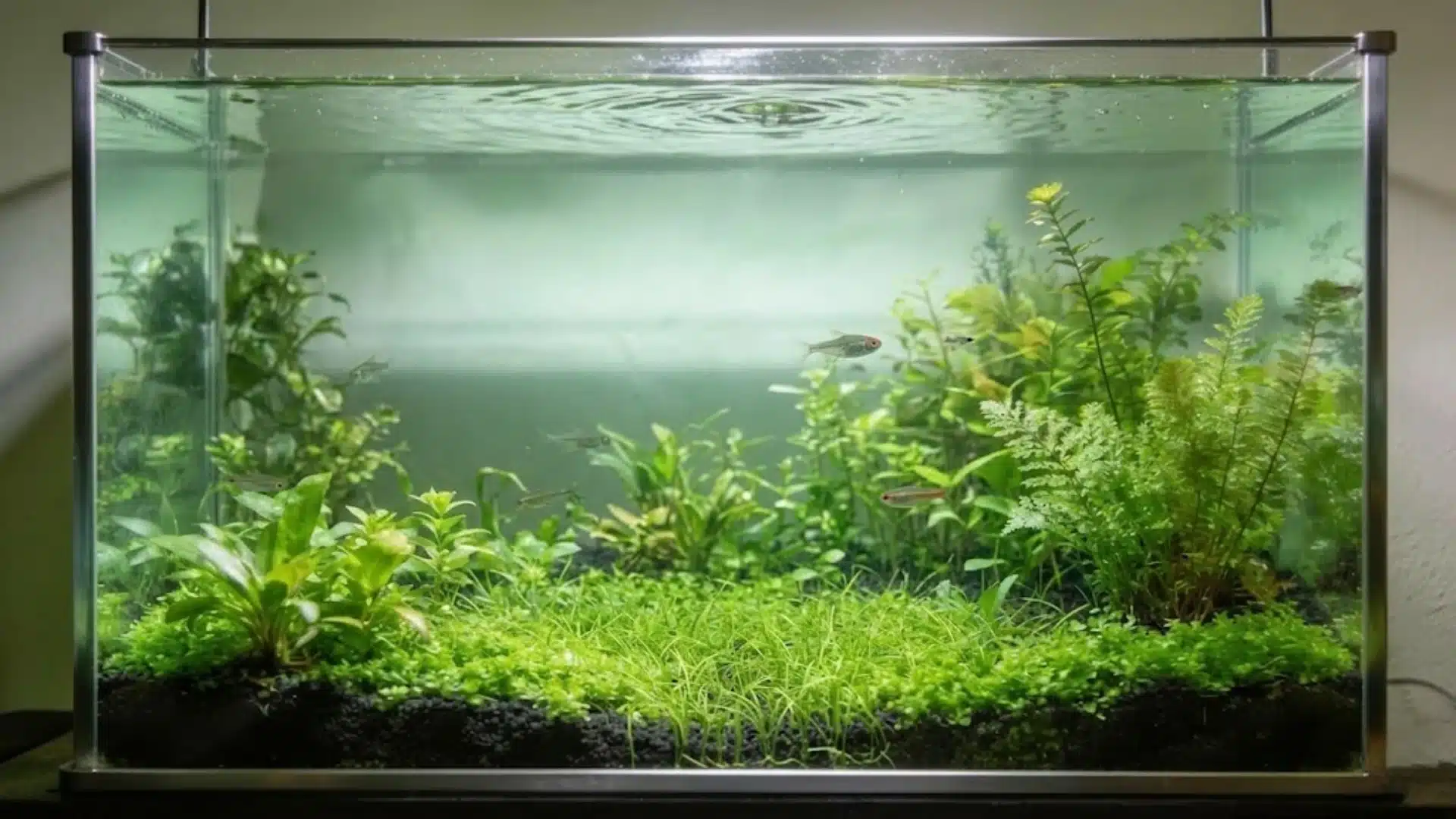
This setup is all about fullness and natural depth. Thick green plants cover the base and rise in layers, creating a rich and immersive look.
The darker substrate helps the greenery stand out even more. There is no single focal point, which makes the entire tank feel connected.
Fish moving through the plants bring constant motion and energy. It feels slightly wild, but still balanced, making the aquarium look alive from every angle.
7. Coral Reef Paradise
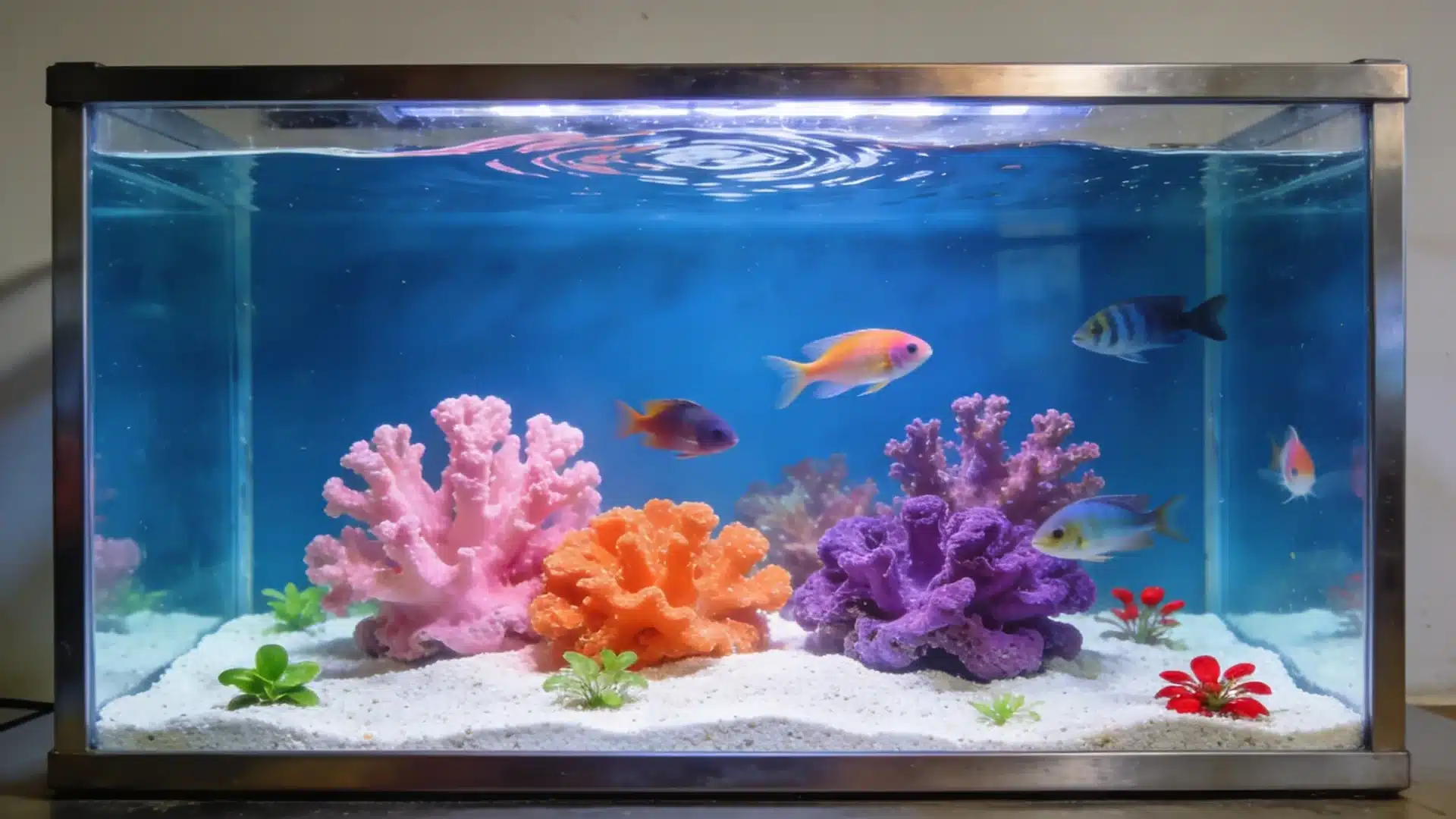
A coral reef theme brings instant color and energy into the tank. Bright coral shapes in pink, orange, and purple create a strong visual contrast against the white sand base.
The layout feels full but stays clean when spaced properly. I think small details like sea elements add texture without making it cluttered.
Fish swimming between the coral structures keep the scene active. It is a lively setup that always feels bright and visually engaging.
8. Hobbit Hole Village
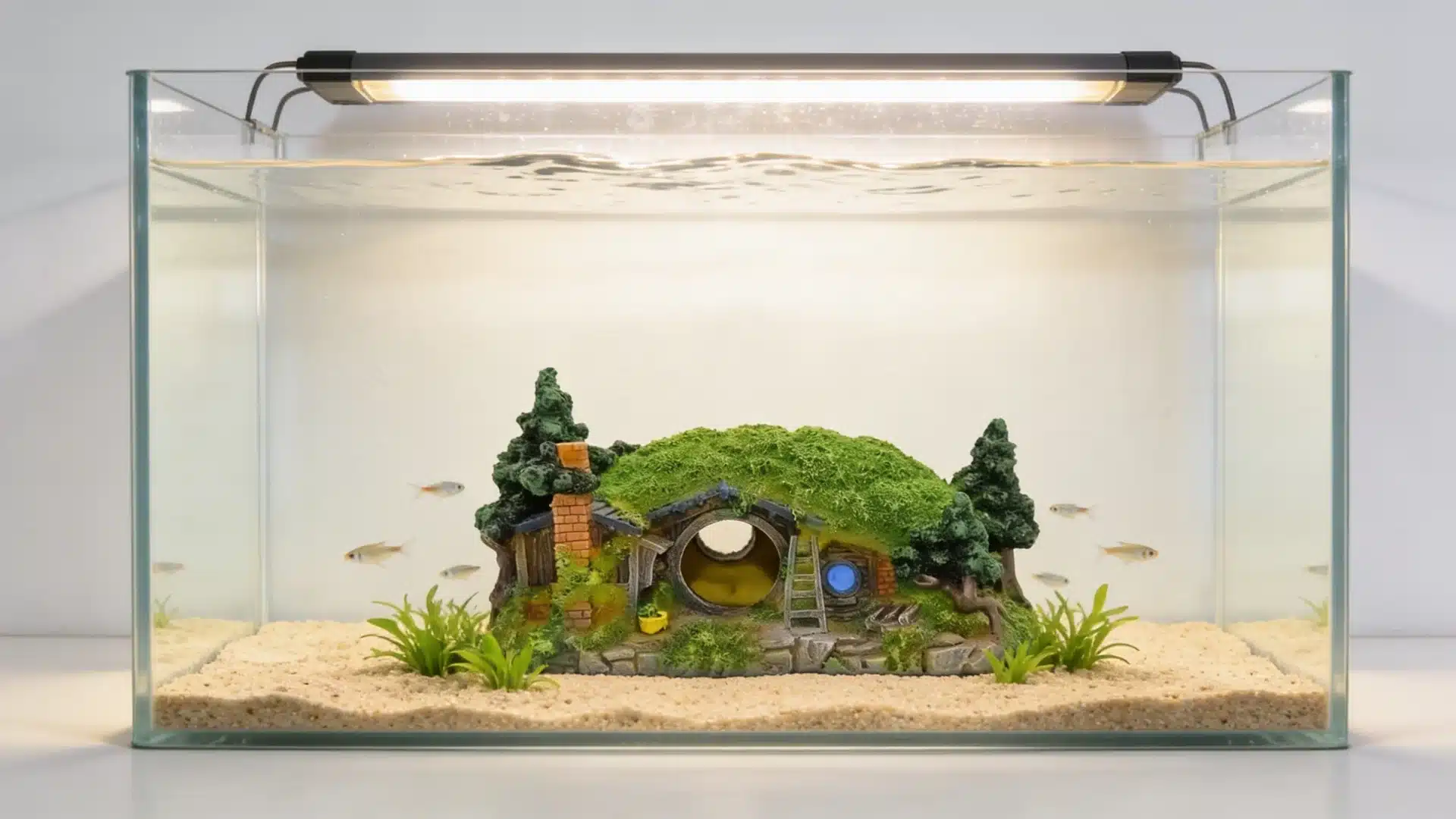
This theme creates a cozy and inviting atmosphere inside the aquarium. A small, round door house built into a green mound becomes the main focus.
Moss textures and soft greenery make the setup feel warm and natural. The sandy base keeps everything simple and clean.
Small details around the structure add charm without overwhelming the layout. Fish swimming across the front bring gentle movement and make the whole scene feel like a quiet, hidden place.
9. Flooded Bamboo Forest
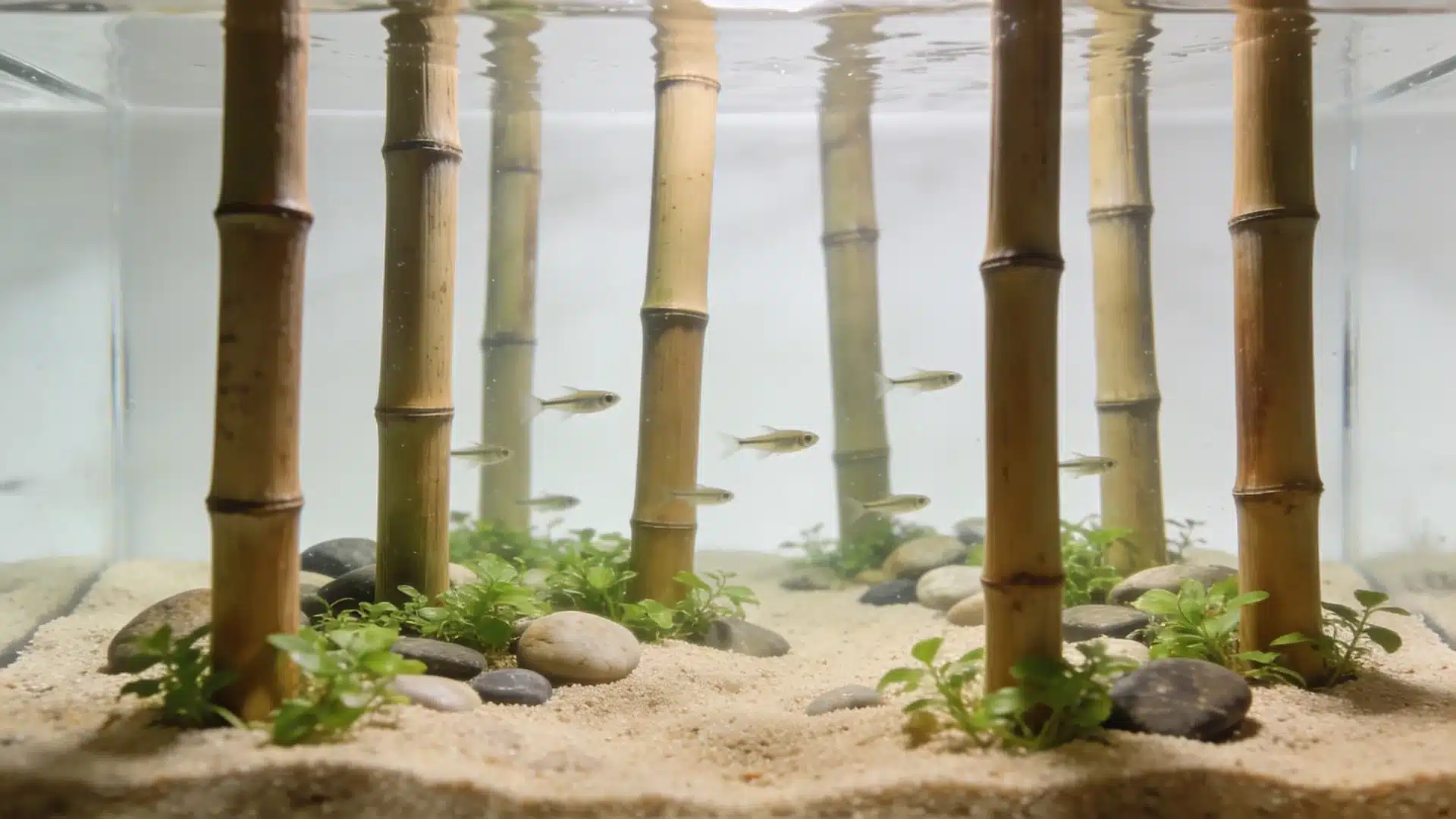
A bamboo forest setup gives the aquarium a clean and structured look. Tall bamboo stalks arranged in clusters create strong vertical lines that add height to the tank.
A sandy base with smooth stones keeps the layout natural and balanced. Small plants around the base add subtle detail without making the space feel crowded.
Fish moving between the stalks creates a calm sense of motion. I find this setup especially relaxing because it feels open, peaceful, and easy to look at for long periods.
Tips for Choosing Safe Fish Tank Decorations
Choosing the right decorations is not only about style. Safe items protect fish, maintain water quality, and help the aquarium stay healthy and balanced.
- Avoid sharp edges: Decorations with rough or pointed edges can injure fish while swimming. Smooth surfaces reduce the risk of scratches and damaged fins.
- Use aquarium-safe materials: Only select decorations made for aquariums. Certain plastics, paints, or metals can release harmful substances into the water.
- Keep enough swimming space: Leave open areas between decorations so fish can move freely. Overcrowding the tank can stress fish and limit their natural movement.
- Clean decorations before use: Rinse new decorations with clean water before placing them inside the tank. This helps remove dust, residue, and packaging particles.
- Choose stable decorations: Heavy or well-balanced items prevent tipping or shifting. Stable pieces keep the aquarium layout safe and avoid accidental damage inside the tank. Porous decorations like driftwood and rocks can also encourage algae growth if not managed correctly.
Common Fish Tank Decoration Mistakes to Avoid
Decorating an aquarium can be exciting, but certain mistakes can affect both the appearance of the tank and the comfort of the fish inside.
- Overcrowding the tank: Filling the aquarium with too many decorations reduces swimming space. Fish need open areas to move comfortably and maintain natural behavior.
- Mixing too many themes: Combining several decoration styles can make the tank look messy and confusing. A single theme keeps the aquarium visually balanced.
- Ignoring fish behavior and space needs: Different fish require different environments. Some need hiding spots while others prefer open swimming areas.
- Using non-aquarium safe items: Objects not designed for aquariums may release harmful substances into the water and affect fish health.
- Blocking water flow: Large decorations placed incorrectly can restrict filter flow and reduce water circulation inside the tank.
Conclusion
A themed fish tank can change the entire look of an aquarium. With the right layout, decorations, and lighting, the tank starts to feel like a small world under water.
From ancient ruins and shipwrecks to peaceful gardens and colorful reefs, each theme adds its own mood and story.
Thoughtful decoration also helps fish feel comfortable while keeping the tank visually balanced. That is why many hobbyists look for unique fish tank decorations when designing their aquarium.
Trying new layouts, plant placements, and creative ornaments can make the setup feel fresh over time.
Which theme from this list would you like to try in your aquarium next? Share your thoughts or your own tank ideas in the comments below and start the conversation today.