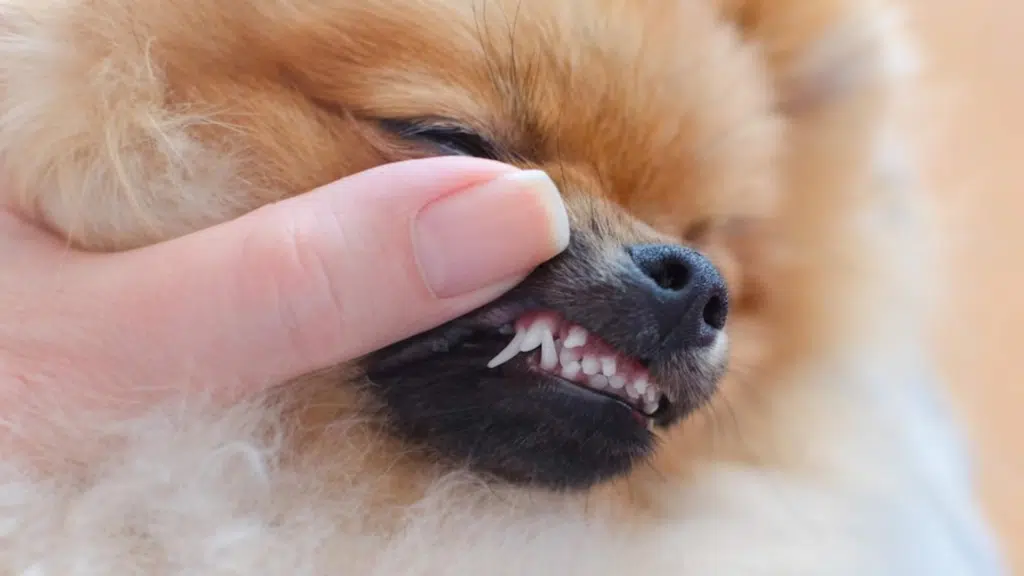
When do puppies start teething is something most new dog owners wonder about pretty fast.
If you’ve got a puppy at home, you might notice more chewing, more biting, and a lot of curiosity with their mouth. That’s usually the start of the teething stage.
Teething is when a puppy’s teeth begin to come in, and later, when the baby teeth fall out, and adult teeth take their place.
This can make their gums feel sore, so they look for things to chew to feel better. Knowing the teething timeline matters because it helps you understand what’s normal and what needs attention.
It also helps you pick the right toys, protect your hands and furniture, and stay calm during the bitey days. In this blog, you’ll learn the puppy teething ages, the main stages, and when teething usually ends.
When Do Puppies Start Teething?
Most puppies start teething in the first few weeks of life. The first stage usually begins around 3 to 4 weeks old, when the baby’s teeth start pushing through the gums.
At this age, the teeth are small and sharp, and they slowly come in over the next few weeks. Inside the mouth, the gums may feel a little sore as the teeth break through.
Puppies may not chew a lot yet, as older pups do, but you can still notice small changes.
Common early signs include more mouthing during play, nibbling on soft items, and wanting to chew on their littermates.
You might also see them paw at their mouth or seem slightly fussy during feeding. These early signs are usually mild but easy to spot.
Puppy Teething Timeline by Age (Stage-by-Stage)
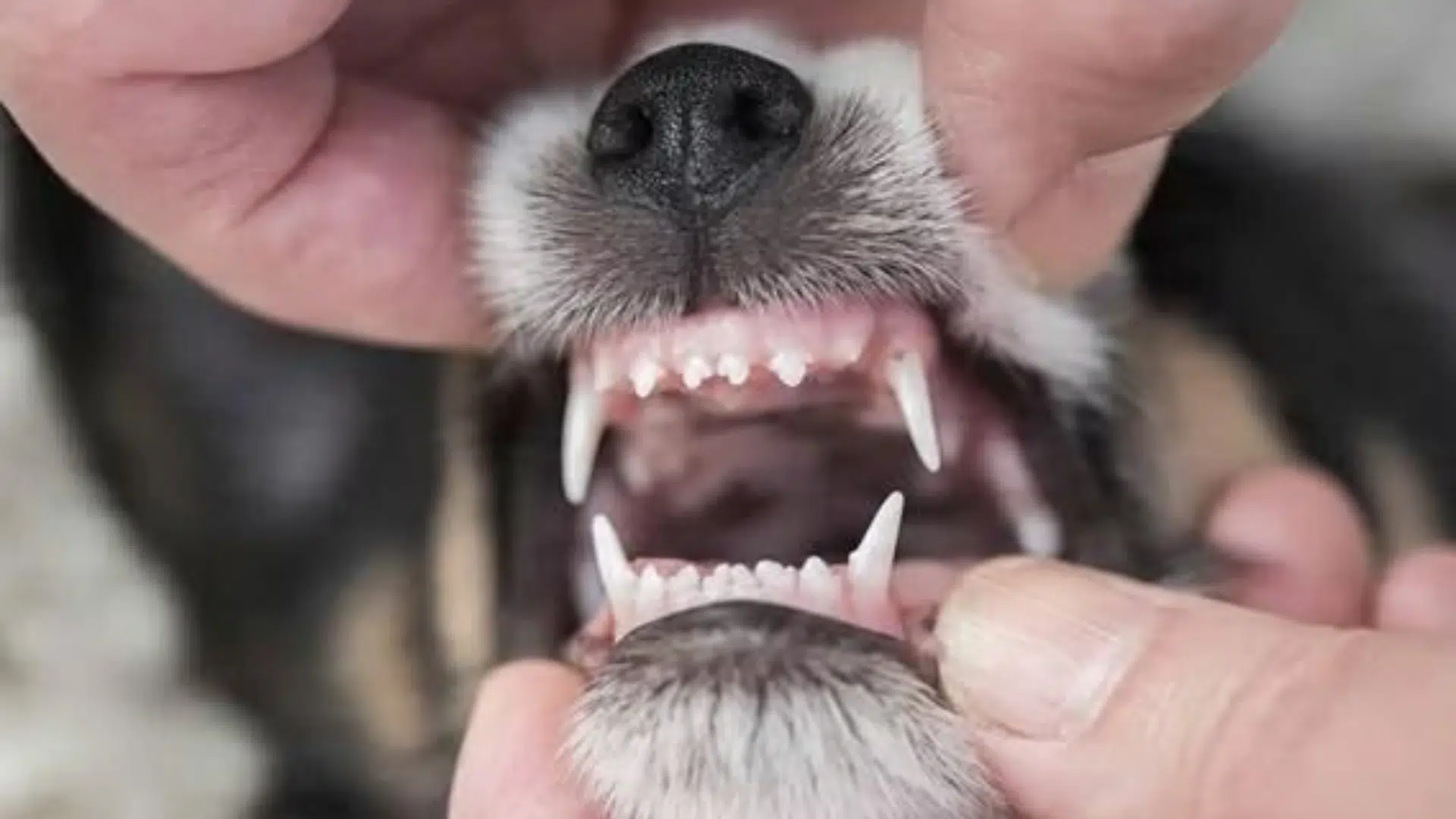
Puppy teething happens in clear stages, and each age range brings new changes. Here’s what to expect as teeth come in and swap out.
1. 3-4 Weeks: Baby Teeth Start Coming In
The first baby teeth usually start showing between 3 and 4 weeks. These tiny teeth begin to push through the gums, and the mouth starts to change fast.
Puppies at this stage are still very young, so the signs can be subtle. They may mouth more during nursing or play.
You might see them nibble on littermates or gently chew soft things nearby. They are still learning how to use their mouth. Most of the chewing is light and not too intense yet.
2. 4-8 Weeks: Full Set of Baby Teeth
Between 4 and 8 weeks, most puppies get a full set of baby teeth. These teeth are sharp, and they help puppies start eating more solid food.
During this stage, chewing and biting become more noticeable. Puppies often explore everything with their mouth, including hands, toys, and blankets.
They may bite more during play because they are curious and excited. This is also when many puppies start learning bite control through play with their littermates and gentle guidance.
3. 3-4 Months: Adult Teeth Start Replacing Baby Teeth
Around 3 to 4 months, adult teeth begin replacing baby teeth. This is when baby teeth may start falling out, sometimes without you even noticing.
The gums can feel sore during this time, so puppies may chew more often to get relief. You might find tiny teeth on the floor or stuck in a toy.
Chewing also becomes stronger as the jaw grows and the urge to bite increases. Puppies may seem more restless and may try chewing harder items.
4. 4-6 Months: Most Adult Teeth Come In
From 4 to 6 months, most adult teeth come in, and the chewing stage can feel intense. Puppies often have loose teeth during this time, which can make them want to gnaw more than usual.
Their chewing habits may change fast, and they may go from soft chewing to strong biting.
Some puppies will chew furniture edges, shoes, or anything they can grab. This stage needs plenty of safe chew toys to keep them busy and protect your home.
5. 6-8 Months: Teething Ends for Most Puppies
By 6 to 8 months, teething ends for most puppies, and the adult teeth are usually fully in place. At this point, the gums feel better, and the urge to chew often starts to settle down.
Puppies may still chew sometimes, but it is usually more for play or boredom, not soreness.
Biting also starts calming down when training is consistent, and the mouth feels normal again. You may notice fewer nips during play and less random chewing around the house.
Signs Your Puppy Is Teething
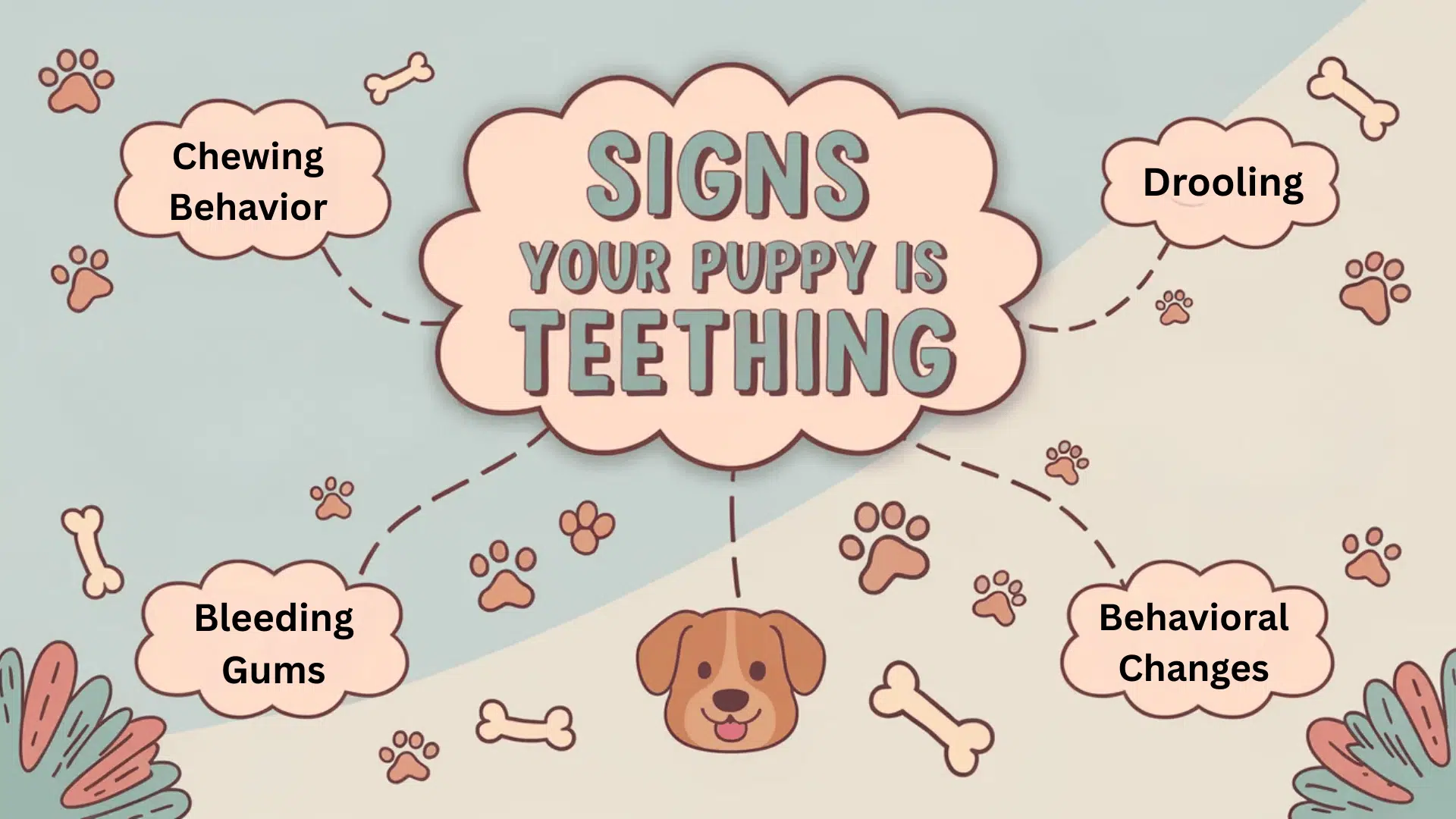
Teething can look different for every puppy, but there are a few common signs that show their teeth are coming in or changing.
1. Chewing Behavior
Chewing is one of the biggest signs of teething. Puppies chew because it helps ease the sore feeling in their gums.
You may notice them biting toys, furniture corners, shoes, or even your hands during play. Some puppies chew more in the morning or after naps when they have extra energy.
The chewing may also feel stronger than before. Giving safe chew toys can help a lot. It keeps them busy and helps protect things around the house.
2. Drooling
Many puppies drool more while teething, especially when their gums feel tender. You might see wet spots on their bedding, toys, or even on your clothes after they play.
Some puppies also have stringy drool or a slightly messy mouth. Drooling can increase when they are chewing a lot or when a new tooth is about to break through.
In most cases, this is normal and goes away once teething slows down. If the drooling is heavy with a bad smell, it’s worth checking.
3. Bleeding Gums
Mild bleeding gums can happen during teething, and it can look a little scary at first. You may notice small red spots on a chew toy or a tiny bit of blood near the mouth.
This usually happens when baby teeth are loosening or when adult teeth are coming in. The gums can be sensitive, so chewing can cause light bleeding.
It should not be heavy or last long. If the bleeding keeps coming back or looks serious, a vet check is a good idea.
4. Behavioral Changes
Teething can affect your puppy’s mood and behavior. Some puppies get more fussy, clingy, or restless because their mouth feels uncomfortable.
Others may become extra bitey during play, even if they were calm before. You might also notice less focus during training or more whining at times.
Sleep patterns can change, too, since sore gums can make it harder to settle. These changes are usually temporary. With patience, toys, and simple routines, most puppies feel better as teething moves along.
When Do Puppies Stop Teething?
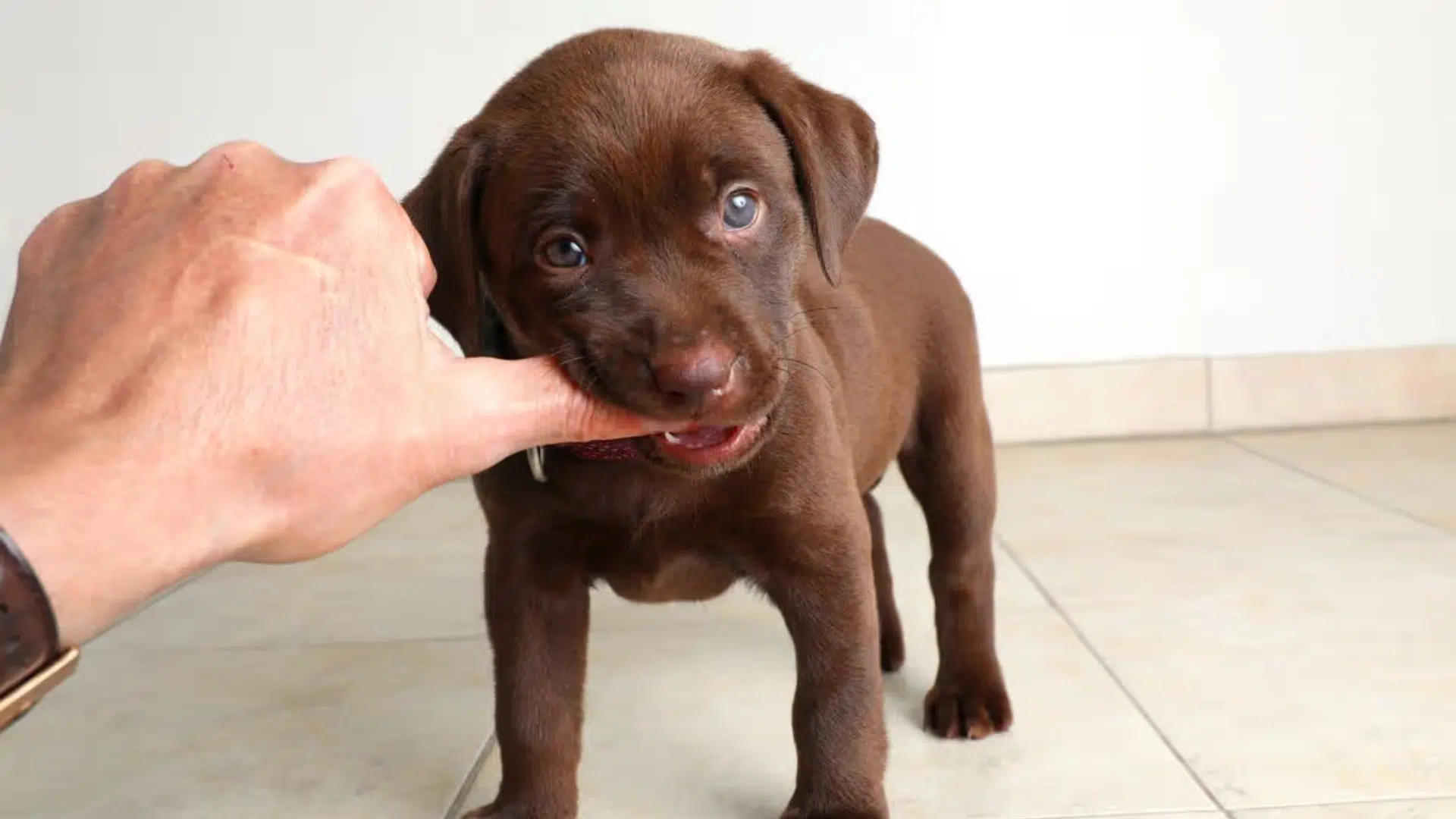
Most puppies stop teething around 6 to 8 months old, once their adult teeth are fully in. One clear sign that teething is finishing is that you stop finding loose baby teeth or tiny tooth marks on toys.
Your puppy’s gums may also look less red, and they may seem more relaxed during play. Chewing usually changes, too. It becomes less frantic and less constant.
Instead of biting everything in sight, puppies start chewing only when they feel like playing or when they are bored. Biting often improves as well.
The sharp, painful nips tend to fade, and your puppy may use a softer mouth.
You may still see some chewing habits stay, but it should feel more normal and easier to manage. If heavy chewing continues past this stage, it may be a habit, not teething.
When Teething Needs a Vet Visit
Most puppy teething signs are normal, even if they feel annoying. Normal behaviors include chewing more than usual, biting during play, mild drooling, and sometimes a small amount of gum bleeding.
You may also see your puppy act a little fussy or restless, especially when new teeth are coming in. These signs often come and go and improve with safe chew toys and time.
But some signs are not normal and should be watched closely. Red flags include strong pain that does not settle, bad breath that smells sharp or rotten, and refusing food or water.
Swollen gums that look very angry or bleeding that keeps happening can also be a concern.
Fever-like signs, such as low energy, shaking, or acting weak, are not typical teething symptoms. If you notice these, it’s best to contact a vet.
Quick Tips to Help a Teething Puppy
Teething can be a tough stage, but a few simple habits can make it easier and keep your puppy busy in a safe way.
- Safe chew toys: Pick puppy-safe rubber toys and soft chews that are made for teething, so they don’t hurt the gums or break teeth.
- Cold relief options: Offer a chilled chew toy or a cold, damp cloth for a few minutes to help soothe sore gums and calm chewing urges.
- Protect your furniture: Keep shoes and loose items out of reach, block off problem areas, and give your puppy a toy right away when they start chewing.
- Rotate chew choices: Switch toys every couple of days so your puppy stays interested and doesn’t get bored and start chewing random things.
- Reduce nipping fast: When your puppy bites, stop play for a moment, stay calm, and redirect to a toy so they learn what is okay to chew.
Conclusion
When do puppies start teething can feel like the start of a messy little phase, but it’s also a normal part of growing up.
Some days, your puppy will chew everything, bite more during play, and act a bit cranky. That can be frustrating, but it doesn’t mean you’re doing anything wrong.
With the right chew toys, a few cold options, and calm training, you can get through it without losing your mind. The best part is that teething doesn’t last forever.
Once those adult teeth settle in, most puppies get a lot easier to handle, and their biting usually slows down, too. Stay patient, keep redirecting, and celebrate the small wins as you go.
What’s been the hardest part of teething for you so far? Leave a comment and tell me how old your puppy is right now!