
The moment you start paying closer attention to your dog’s health, you realize that food plays a much bigger role than simply filling a bowl each day.
Muscle tone, coat shine, and even mood can all be traced back to what is inside that diet.
Many pet owners assume all proteins are the same, yet not every source delivers the same quality, digestibility, or balance of essential amino acids.
Standing in front of shelves packed with options can feel overwhelming, especially when every brand promises optimal nutrition.
Understanding what truly makes the best protein for dogs is not about trends or marketing claims, but about learning how different protein sources support your dog’s body.
This blog covers different protein sources for dogs and how to choose the most suitable option for your friendly companion.
Why is Protein Important for Dogs?
Protein is one of the most important nutrients in a dog’s diet because it supports nearly every function in the body.
It helps build and maintain strong muscles, which is especially important for growing puppies, active adult dogs, and aging pets that need to preserve muscle mass.
It also plays a key role in strengthening the immune system and repairing tissues after daily activity or injury. Enzymes and hormones are also made from protein.
When choosing the best protein for dogs, quality matters more than just quantity.
Additionally, when dogs receive the right amount of high-quality protein, they tend to have better energy levels, improved recovery, and a stronger overall condition.
How to Evaluate Dog Protein Quality?
Not all proteins offer the same benefits, so understanding quality is important when choosing the best protein for dogs.
Complete proteins contain all essential amino acids that dogs cannot produce on their own, and most animal sources like chicken, beef, fish, and eggs meet this requirement.
Incomplete proteins, often from plant sources, may lack one or more essential amino acids.
Digestibility also matters because it determines how well a dog’s body can absorb and use the nutrients.
When reading dog food labels, check that a named meat such as chicken or salmon appears as the first ingredient instead of vague terms like meat by-products.
Also, review the guaranteed analysis to ensure the protein percentage supports your dog’s age and activity level.
Top Animal-Based Best Protein Sources for Dogs

These proteins support muscle growth, energy, immune health, and coat condition. Each source offers different benefits, so the right choice depends on your dog’s age and activity level.
1. Chicken
Chicken provides about 8 to 9 grams of protein per ounce. It is lean and highly digestible, which is why it is often included in dog food formulas.
It is lean, easy to digest, and packed with essential amino acids that support muscle maintenance and tissue repair.
Chicken also provides important nutrients such as B vitamins and phosphorus, which help with energy production and bone strength.
Chicken is considered the best protein for dogs because it is lower in fat than many red meats, and it works well for adult dogs that need weight control.
2. Beef
Beef is a rich and hearty protein source that many dogs enjoy. It contains high levels of iron and zinc, which support healthy blood cells, immune function, and overall vitality.
Beef contains roughly 7 to 8 grams of protein per ounce and delivers essential amino acids.
Because it is more calorie-dense than lean poultry, it is often a good fit for active, athletic, or working dogs that burn more energy each day.
When properly portioned, beef can be the suitable protein for dogs that need extra strength and stamina to support their lifestyle.
3. Fish
Fish, especially salmon, are known for its high omega-3 fatty acid content. These healthy fats support skin health, reduce itching, and promote a shiny coat.
Fish is also highly digestible, providing about 6 to 7 grams of protein per ounce.
In addition to protein, fish offers natural anti-inflammatory benefits that can help dogs with joint discomfort or skin issues.
Because of these added health advantages, many pet owners view fish as the best protein for dogs with allergies or coat concerns.
4. Turkey
Turkey is another lean protein that delivers approximately 8 to 9 grams of protein per ounce.
It contains complete amino acids and is slightly lower in fat than chicken, which makes it helpful for weight management.
Turkey is often included in limited-ingredient diets because it is less likely to trigger common food sensitivities. Its mild flavor and digestibility make it a safe choice for dogs with delicate stomachs.
For pet owners looking for variety without adding excess fat, turkey can be the best protein for dogs that need balanced nutrition and gentle digestion support.
5. Eggs
Eggs are often called a perfect protein because they have a high biological value, meaning a dog’s body can absorb and use most of the nutrients they provide.
Eggs also offer healthy fats, vitamins, and minerals that support skin, coat, and overall wellness.
They are easy to digest when cooked properly. One large egg contains about 6 to 7 grams of protein total, which equals roughly 5 to 6 grams of protein per ounce.
In moderation, eggs can be a good source of protein for dogs needing an added boost of high-quality nutrition.
6. Duck
Duck is a rich, flavorful protein food for dogs that works well for active breeds and picky eaters.
It delivers about 5.6 to 6 grams of protein per ounce, depending on the cut and whether the skin is included. Duck also provides healthy fats that support skin and coat health.
Many pet owners choose duck as the best protein for dogs with sensitivities to common proteins like chicken or beef.
The slightly higher fat content makes it energy-dense, so portion control matters. Cooked, unseasoned duck without bones is the safest way to serve it.
7. Turkey
Turkey is a lean and highly digestible protein food for dogs, offering roughly 7 to 8 grams of protein per ounce when cooked and skinless.
It supports muscle maintenance, weight control, and overall strength.
Because it is lower in fat than many red meats, turkey is often recommended for dogs that need a balanced, lighter diet. It also contains important nutrients like selenium and B vitamins.
Always serve plain, fully cooked turkey without skin, bones, or added seasoning to keep meals safe and healthy.
8. Lamb
Lamb can be the best protein for dogs, providing about 6 to 7 grams of protein per ounce when cooked.
It is often included in limited ingredient diets, especially for dogs with food sensitivities. Lamb supplies essential amino acids that help maintain strong muscles and healthy tissues.
It also contains zinc and iron, which support immune function and energy levels.
Since lamb can be higher in fat, portion size should match your dog’s activity level. Serve it cooked, plain, and free of bones.
9. Venison
Venison is a lean, novel protein food for dogs that contains approximately 7 to 9 grams of protein per ounce, depending on the cut.
It is lower in fat than many traditional red meats, making it a good choice for weight management plans.
Venison is often recommended for dogs with allergies because it is less commonly used in standard pet diets.
It provides iron and B vitamins that support energy and red blood cell production. Offer cooked, unseasoned venison and avoid bones for safety.
Plant-Based and Supplementary Proteins for Dogs
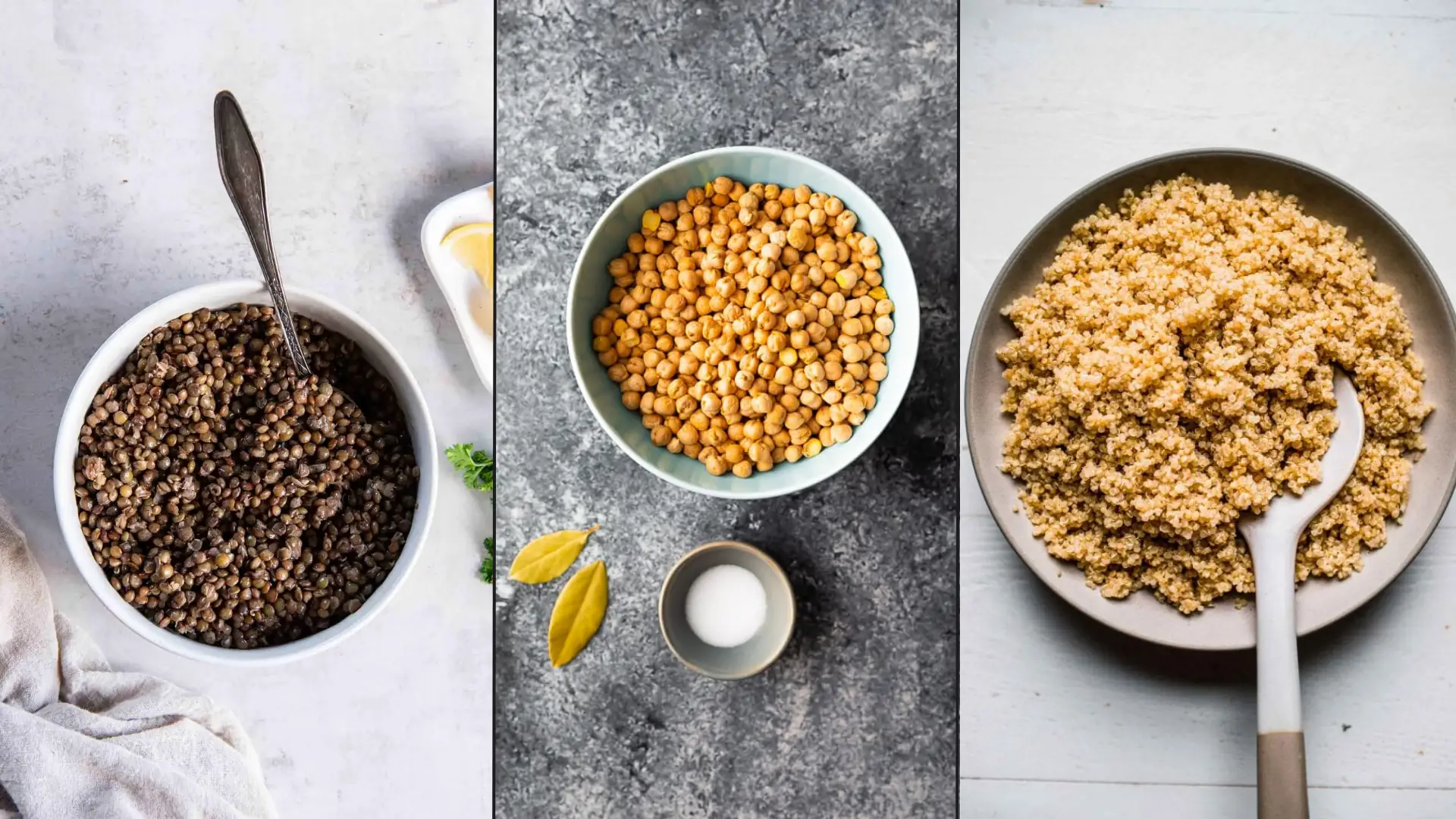
While animal sources are usually considered, plant-based ingredients can still play a helpful role in balanced diets. They are commonly used in grain-free or limited-ingredient formulas.
10. Lentils
Lentils are another popular plant-based protein found in many dog food formulas.
They are rich in protein and fiber, which can support digestive health and help dogs feel full longer. It also provides minerals like iron and magnesium that support healthy blood flow.
On their own, cooked lentils provide about 2.5 grams of protein per ounce.
However, when combined with animal proteins, lentils can help create a balanced and nutritious meal for adult dogs.
11. Chickpeas (Garbanzo Beans)
Chickpeas are often added to dry kibble as a source of both protein and carbohydrates.
Chickpeas also include important nutrients like folate and manganese, and contain roughly 2 to 2.5 grams of protein per ounce.
While they are not typically the best protein source for dogs by themselves, they can support overall protein intake when paired with meat-based ingredients.
Some dogs digest chickpeas well, but portion size matters. Too much may cause mild digestive upset, so balanced formulas are important.
12. Quinoa
Quinoa stands out among plant proteins because it is considered a complete protein.
This means it contains all essential amino acids, which is uncommon for plant sources that contain approximately 1 to 1.5 grams of protein per ounce.
Quinoa provides fiber, magnesium, and antioxidants that support overall health.
Although animal protein is still often viewed as the best protein for dogs, quinoa can be a strong supporting ingredient in certain diets.
13. Soy
Soy is a high-protein plant ingredient that contains essential amino acids and is often used to increase total protein content in dog food.
It can support muscle maintenance and provide about 4 to 5 grams of protein per ounce.
However, some dogs may be sensitive to soy, which can lead to digestive issues or skin irritation. Because of this, soy may not always be the suitable protein for dogs with allergies.
Still, in well-formulated diets and for dogs without sensitivities, soy can serve as the best protein for dogs.
Animal vs Plant Protein for Dogs
When choosing the best protein for dogs, both animal and plant sources can provide protein, but they differ in amino acid profile, digestibility, and overall nutritional value.
| Factor | Animal Protein | Plant Protein |
|---|---|---|
| Amino Acid Profile | Complete proteins with all essential amino acids | Often incomplete, may lack one or more essential amino acids |
| Digestibility | Highly digestible and easily absorbed | Varies, sometimes harder to digest |
| Biological Value | Higher biological value, more usable nutrients | Lower biological value |
| Allergy Considerations | Some dogs may react to common meats | Can be useful in limited-ingredient or special diets |
| Overall Suitability | Considered the suitable protein for dogs in most life stages | Supportive rather than a primary protein source |
How to Choose the Best Protein for Dogs?
Choosing protein for dogs depends on age, lifestyle, and health needs. Puppies need higher protein levels to support growth, muscle development, and strong bones.
Adult dogs require balanced protein to maintain muscle and overall health.
Senior dogs benefit from moderate, highly digestible protein to help preserve muscle without overloading their system.
Working or highly active dogs need more protein to fuel energy and recovery, while less active dogs may need controlled amounts to prevent weight gain.
Allergies and sensitivities should also guide the choice of proteins.
Some dogs react to common proteins like chicken or beef, so novel options such as duck, venison, or lamb may help.
In some cases, a veterinarian may recommend an elimination diet to identify triggers.
Conclusion
The food you choose each day directly shapes your dog’s energy and long-term well-being.
That is why selecting the best protein for dogs is more than just picking a popular ingredient.
High-quality, complete proteins supply the essential amino acids dogs need to maintain strong muscles, healthy organs, and a resilient immune system.
Animal-based options such as chicken, beef, fish, turkey, and eggs often deliver reliable nutrition and strong digestibility.
Still, the right protein depends on your dog’s age, activity level, and any sensitivities. Puppies, active adults, and senior dogs all have different needs.
Taking time to match the protein source to your dog’s lifestyle makes a real difference.
What protein works best for your dog? Drop your thoughts or experiences in the comments and join the conversation.