You’re just petting your dog like any normal day, running your hand along their fur, when suddenly you feel it.
A small, weird bump. It wasn’t there before. Your mind jumps straight to worst-case thoughts, and yeah, panic kicks in a bit. If you’re dealing with a tick under dog skin, you’re not alone.
This happens more often than most dog owners expect, and the good news is it’s usually manageable at home if you act the right way.
Take a breath. You don’t need to guess or risk hurting your dog. You just need the right steps, and that is exactly what you are about to get.
In this blog, you’ll learn how to tell if it’s actually a tick, how to remove it safely, and what to do next to keep your dog protected.
What Does a Tick Under a Dog’s Skin Look Like?
A tick under a dog’s skin usually shows up as a small bump that feels like a pea when you run your fingers over it. It can be easy to miss at first, especially if your dog has thick fur.
The color often ranges from grey to brown or even black, depending on how long it has been attached and how much it has been fed.
According to the American Kennel Club (Canine Health Foundation), ticks are known carriers of several diseases, which makes early detection even more important.
In some cases, you might notice slight movement when you look closely or when you gently touch the area.
Ticks tend to hide in warm, less visible spots on your dog’s body.
When checking a tick on a dog, pay close attention to the ears, neck, under the collar, between the paws, armpits, groin, belly, base of the tail, and under the tail.
These hidden areas provide ticks with shelter and make them harder to spot during routine checks.
Understanding how quickly a tick embeds also helps. After landing on fur, a tick typically spends the first couple of hours finding a good attachment point.
It then begins inserting its mouthparts within the next several hours and becomes securely embedded by the 10 to 24 hour mark.
By 24 to 48 hours, it may appear visibly engorged from feeding.
This timeline matters because many tick-borne diseases require the tick to be attached for at least 36 to 48 hours before transmission can occur, so catching it early greatly reduces your dog’s risk.
Difference Between: Tick vs Skin Tag vs Scab
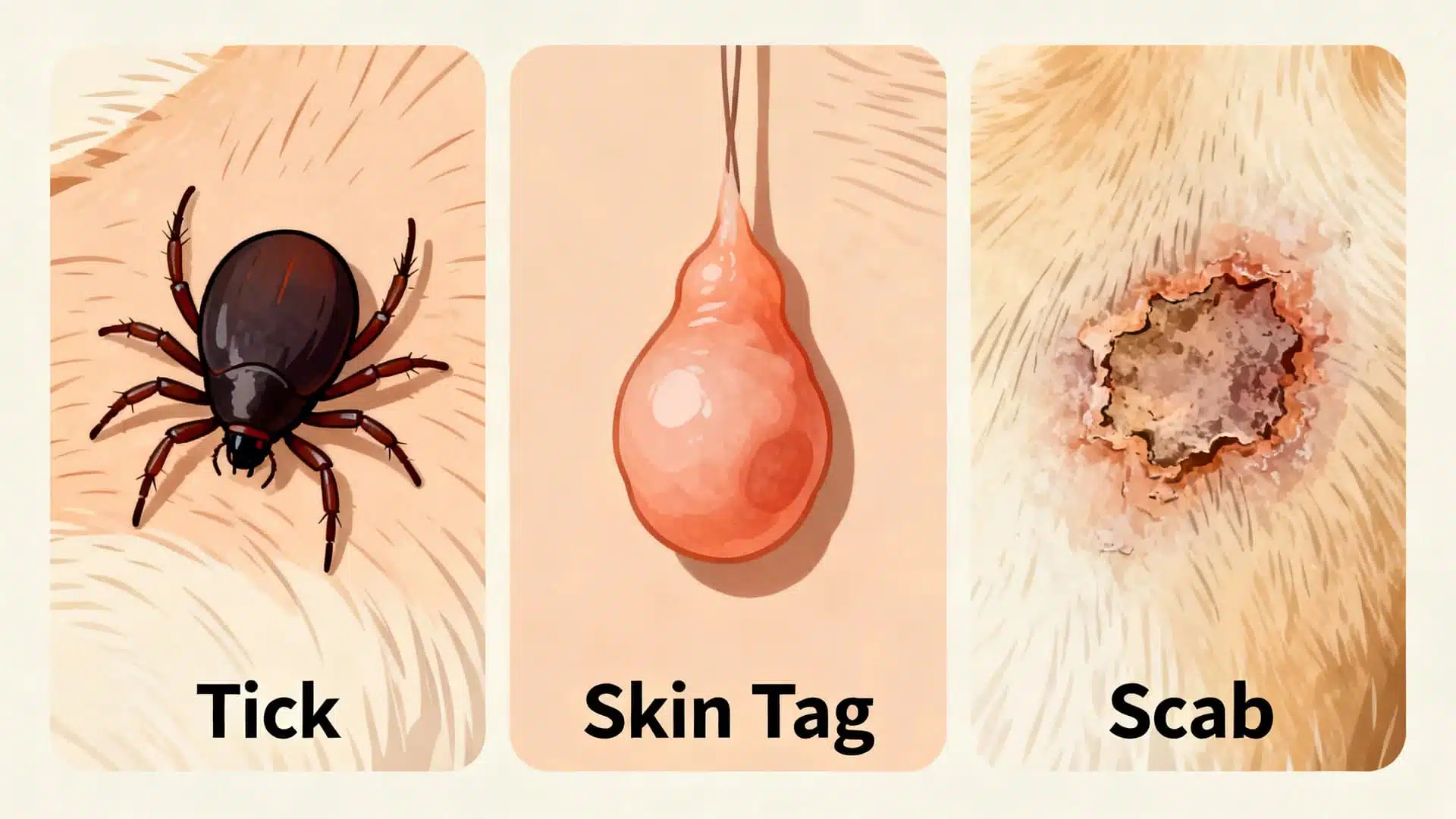
At first, all three can look similar, but a closer look makes it easier to tell exactly what you are dealing with.
1. Tick
A tick has a rounded body and stays attached firmly at one specific point on your dog’s skin, almost like it is anchored in place.
If you part the fur and look closely, you may notice tiny legs near the front, which is a clear sign that it is a parasite.
Its color can range from brown to black or grey, and as it feeds, the body often swells, making it feel tighter and more raised.
2. Skin Tag
A skin tag usually matches your dog’s natural skin color, so it blends in more easily than a tick. Skin tags do not have legs or any defined structure like a tick.
It feels soft and slightly flexible, often hanging off the skin rather than being tightly attached at a single bite point.
They remain stable in size and shape over time and do not react or move when touched or examined.
3. Scab
A scab has a dry, rough, crusty texture that feels very different from that of both ticks and skin tags.
It usually forms after a minor injury such as a scratch, bite, or irritation on the skin. The color can vary from reddish to dark brown as it heals.
Scabs lie flat against the skin, have no visible body or legs, and will gradually fall off as the underlying skin recovers.
Signs Your Dog Has a Tick Under Skin
These are common physical and behavioral signs that suggest a tick may be attached to your dog’s skin.
- Scratching or licking: Your dog keeps focusing on one spot repeatedly to ease irritation, often returning to the same area throughout the day
- Redness or swelling: The skin around the bite looks inflamed, slightly raised, and may feel warmer than the surrounding normal skin
- Low energy: Your dog may seem less active, sleep more than usual, or show reduced interest in play, especially if irritation is bothering them
- Minor bleeding: A small spot of bleeding may appear when the area is touched, scratched, or if the tick gets slightly disturbed
- Small bump: You may feel a pea-like lump under the skin while petting, which often stands out more clearly when you part the fur and check closely.
Tick bites on dogs can sometimes lead to more serious illness if the tick was carrying a disease.
Watch for signs like fever, joint stiffness, loss of appetite, or unusual fatigue in the days following removal, as these may indicate a tick-borne condition such as Lyme disease, Anaplasmosis, Ehrlichiosis, or Rocky Mountain Spotted Fever.
Early veterinary attention makes a significant difference in recovery outcomes for these conditions.
Gather the Right Tools Before Removing a Tick
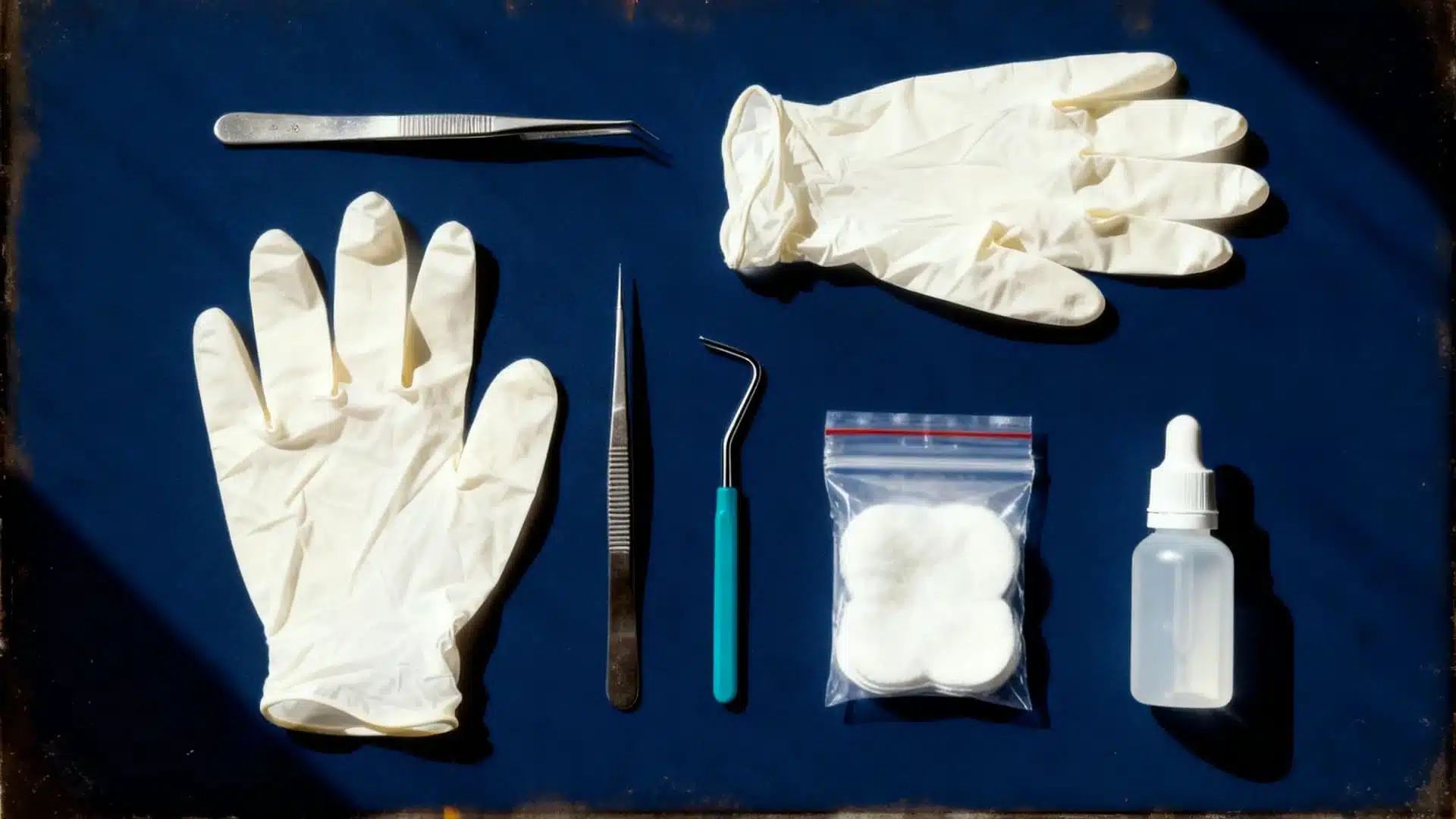
Before removing a tick from your dog, it is important to prepare the right tools to ensure the process is safe and effective.
Wearing gloves helps protect your hands and reduces the risk of contact with harmful bacteria. Fine tip tweezers can be used, but a dedicated tick removal tool, such as a tick hook, is often more reliable.
These tools are designed to grip the tick near its mouthparts and remove it cleanly without squeezing the body, reducing the risk of leaving parts behind.
You should also keep an antiseptic solution and a cotton pad ready to clean the area after removal.
A small sealable containeror zip lock bag is useful for storing the tick if identification or testing is needed later.
How to Remove a Tick Safely?
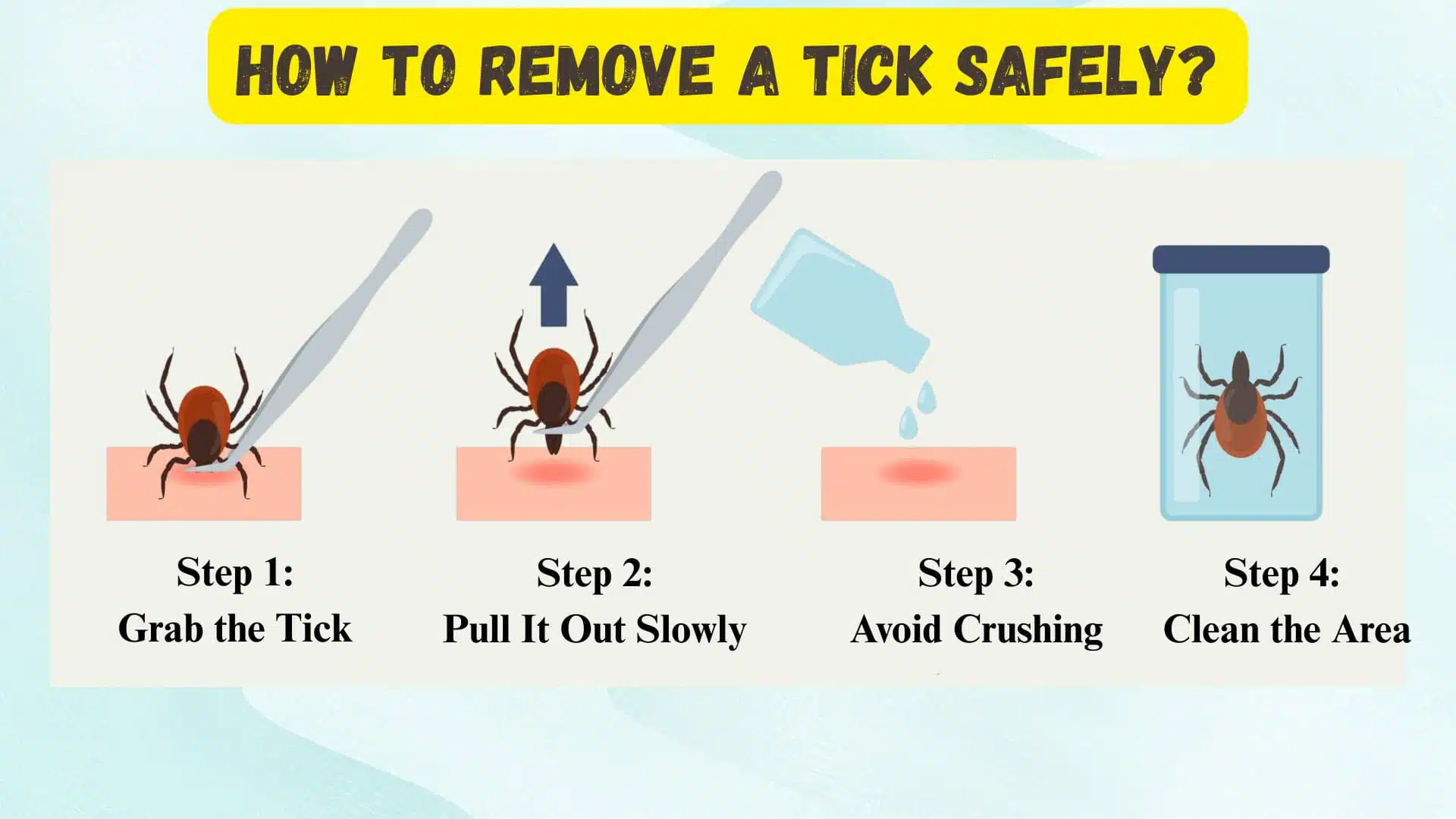
Follow these simple steps to safely remove a tick without hurting your dog, avoid infection risks, and ensure no part remains behind.
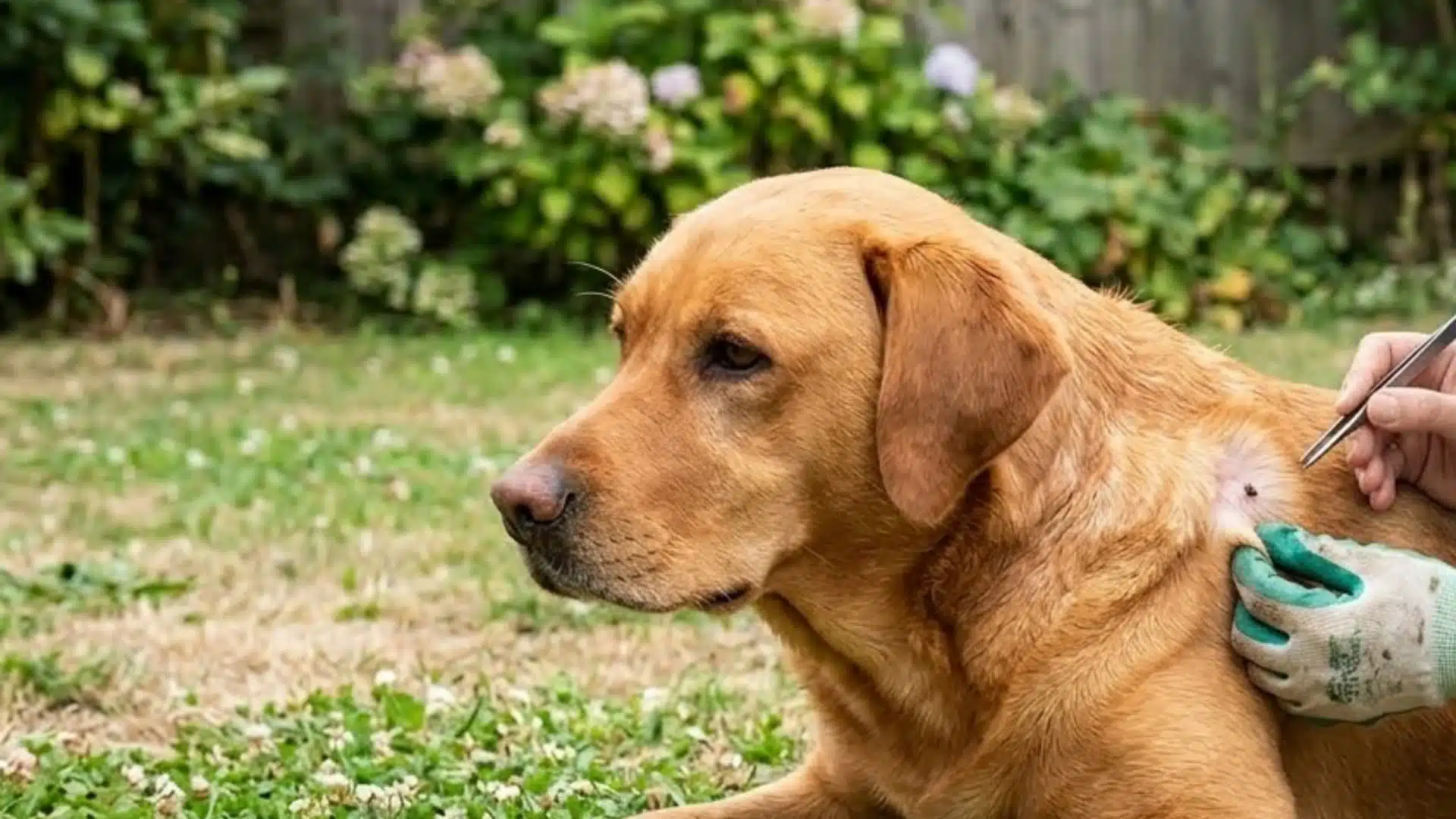
1. Grab the Tick
Use fine-tip tweezers to firmly hold the tick as close to your dog’s skin as possible, right at the point where it is attached.
This step is critical because grabbing too far from the base can cause the tick’s body to break, leaving parts embedded in the skin. Keep your hand steady and your dog as calm as possible.
Position the tool carefully so you can remove the entire tick in one controlled motion without slipping or losing grip during the process.
2. Pull it Out Slowly
Once you have a firm, secure grip, slowly pull the tick out with a straight, steady motion. Avoid twisting, jerking, or applying sudden force, as this can cause the tick to tear apart.
A slow, controlled pull helps ensure the tick comes out completely, including the mouthparts.
Taking your time here reduces the risk of skin irritation, infection, or complications that can happen if parts are left behind.
3. Avoid Crushing the Tick
While removing the tick, make sure you do not squeeze or crush its body.
Applying too much pressure can cause the tick to release harmful bacteria or infected fluids into your dog’s bloodstream, increasing the risk of disease transmission.
Focus on a gentle but firm grip near the base, not on the body. Staying patient and controlled during this step is key to safe and effective tick removal.
4. Clean the Area
After the tick is fully removed, thoroughly clean the affected area with a pet-safe antiseptic solution.
This helps reduce the risk of infection and keeps the skin protected as it begins to heal. Gently wipe the area without scrubbing too hard, as the skin may be sensitive.
Also, wash your hands properly and disinfect the tweezers or tool used. Monitor the spot over the next few days for any signs of redness or swelling.
Do not crush or dispose of the tick in a bin. Instead, place it in a small container filled with isopropyl alcohol and seal it.
If your dog develops symptoms in the days after removal, your vet may want to examine or test the tick to determine the species and what diseases it may have carried.
After removal, the bite site will often appear as a small red bump, similar to a mosquito bite. This is normal and usually resolves within a few days.
If the redness spreads, the area becomes warm to the touch, or you notice discharge forming, contact your vet.
Tick Removal Mistakes You Should Avoid
Avoid these common mistakes that can make tick removal unsafe or increase the risk of infection for your dog.
- Using oil or alcohol first: Applying these before removal can irritate the tick, causing it to release harmful bacteria into your dog’s skin, increasing infection risk
- Burning the tick: Using heat may seem effective, but it stresses the tick and can trigger it to release infected fluids into the bite area
- Squeezing the tick: Pressing or crushing the body can push bacteria or toxins directly into your dog’s bloodstream, raising the chance of disease transmission
- Twisting during removal: Twisting can cause the tick’s head or mouthparts to break off and remain stuck under the skin, leading to irritation
- Pulling too fast: Using sudden force instead of a slow pull increases the risk of incomplete removal and may damage the surrounding skin
What If the Tick Head Stays Inside?
If the tick’s head stays inside your dog’s skin, do not panic, as this can happen during removal and is often manageable.
Avoid trying to dig it out with sharp tools or your nails, as this can cause more irritation or even lead to infection.
Instead, gently clean the area with an antiseptic to keep it safe and reduce bacterial buildup. Over the next few days, monitor the spot closely for signs like redness, swelling, pus, or increased sensitivity.
In many cases, your dog’s body will naturally push the remaining part out as the skin heals.
However, if the area becomes more irritated, painful, or does not improve, visiting a vet is the safest option.
When You Should See a Vet?

While many ticks can be handled at home, there are certain situations where visiting a vet becomes important for your dog’s safety.
If the tick is deeply embedded in the skin and you are unable to remove it fully, forcing it out can lead to pain or infection.
Keep a close watch on your dog’s overall condition. Signs like fever, weakness, loss of appetite, or unusual tiredness may indicate a reaction or a tick-borne illness.
Named tick-borne illnesses, such as Lyme disease, Anaplasmosis, Ehrlichiosis, and Rocky Mountain Spotted Fever, can all develop after a tick bite on your dog and may present with similar early symptoms.
Prompt veterinary diagnosis ensures the right treatment is started before the condition worsens.
Also, examine the bite area carefully. If you notice swelling, redness, warmth, discharge, or worsening irritation, it may indicate the area is infected.
In such cases, timely veterinary care helps prevent complications and ensures proper treatment.
Tick Prevention Tips for Your Dog
These are practical prevention steps that help reduce the risk of ticks attaching to your dog and keep them protected long term.
- Regular grooming checks: Inspect your dog’s coat and skin after walks to catch ticks early before they attach or spread
- Use prevention products: Apply vet-approved tick treatments like spot-ons, collars, or oral meds to keep ticks away effectively
- Avoid tall grass areas: Limit your dog’s exposure to places where ticks are commonly found, especially during warmer months
- Keep surroundings clean: Maintain your yard by trimming grass and removing debris where ticks can hide and multiply
- Check after outdoor time: Always run your hands over your dog’s body after outings to spot any unusual bumps quickly
- Check yourself too: Ticks can transfer from your dog’s coat to your clothing or skin. After checking your dog, inspect yourself as well, particularly if you walked through wooded or grassy areas together
Conclusion
Dealing with a tick under a dog’s skin can feel stressful at first, especially when you are unsure what you are looking at or how to handle it safely.
The good news is that once you understand how to identify it, remove it properly, and monitor your dog afterward, the situation becomes much more manageable.
Acting early can prevent discomfort and reduce the risk of infections or tick-borne issues. Make it a habit to check your dog regularly and follow simple prevention tips to keep them safe.
If you have faced this before or still feel unsure, drop your comments below and share your experience or questions.
Frequently Asked Questions
How Long Can a Tick Stay on a Dog?
A tick can stay attached for several days while feeding. The longer it stays, the higher the risk of irritation or disease transmission, so early removal is important.
Do Ticks Fall off on Their Own?
Yes, ticks can fall off after feeding, but waiting for them to do so is not recommended. Removing them early reduces the chances of infection and discomfort.
Can Indoor Dogs Get Ticks?
Yes, ticks can enter homes through clothing, other pets, or outdoor items. Even dogs that stay indoors are not completely risk-free.
How Soon After a Tick Bite Can a Dog Get Sick?
Most tick-borne diseases require the tick to be attached for at least 36 to 48 hours before transmission can occur. This is why prompt removal is so important. Even so, monitor your dog for symptoms like fever, lethargy, or joint stiffness for several weeks after any tick bite.
Is a Tick Hook Better Than Tweezers for Dogs?
Tick hooks are generally considered the safer option. They are designed to grip the tick’s mouthparts without compressing the body, which reduces the risk of the tick releasing fluids during removal. Fine-tip tweezers work well too, but a tick hook makes the process easier, especially for wriggly dogs or ticks buried in thick fur.
What Diseases Can Tick Bites on Dogs Cause?
Common tick-borne diseases in dogs include Lyme disease, Anaplasmosis, Ehrlichiosis, and Rocky Mountain Spotted Fever. Symptoms vary but often include fever, fatigue, loss of appetite, and joint pain. If you suspect your dog has been infected after a tick bite, consult your vet promptly for testing and treatment.