Poodles are smart, emotionally tuned-in dogs, and that combination works against them the moment you walk out the door.
Some of the most distressed dogs I see are poodles whose owners had no idea the anxiety started long before the front door closed.
Poodle separation anxiety is one of the more misread conditions in canine behavior, and the early signs are easy to miss until the problem is already entrenched.
If your poodle barks when you grab your keys, follows you from room to room, or chews furniture every time you leave, this guide is for you.
Below are the real signs, safe alone-time limits by size, and soothing strategies that hold up in practice.
What is Poodle Separation Anxiety?
It is a stress response that occurs when a poodle is left alone or separated from its primary owner.
Signs include barking, whining, destructive chewing, pacing, and house soiling.
This condition is driven by the breed’s strong emotional attachment and high intelligence, which makes them sensitive to changes in routine and environment.
Without proper management, symptoms may worsen over time.
However, it can be managed with consistent training, gradual desensitization, structured daily routines, and, in more severe cases, guidance from a veterinarian or animal behaviorist
Do Poodles Get Separation Anxiety More Than Other Breeds?
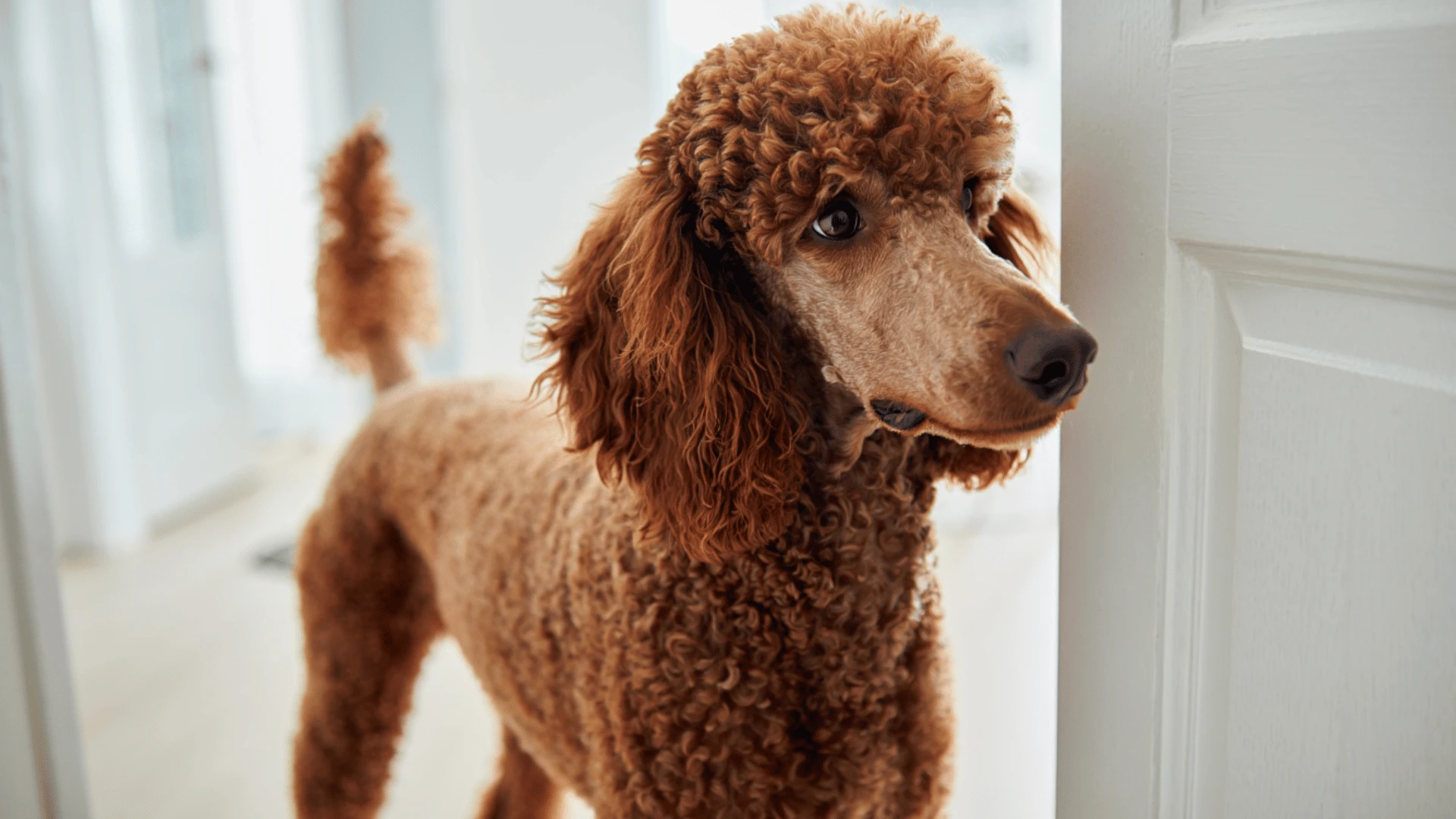
Yes, and there is a clear reason. Well, Poodles rank among the most emotionally intelligent dog breeds.
They read body language, pick up on tonal shifts in your voice, and form deep attachments fast.
That responsiveness makes them great companions, and also makes them more vulnerable to separation distress than most breeds.
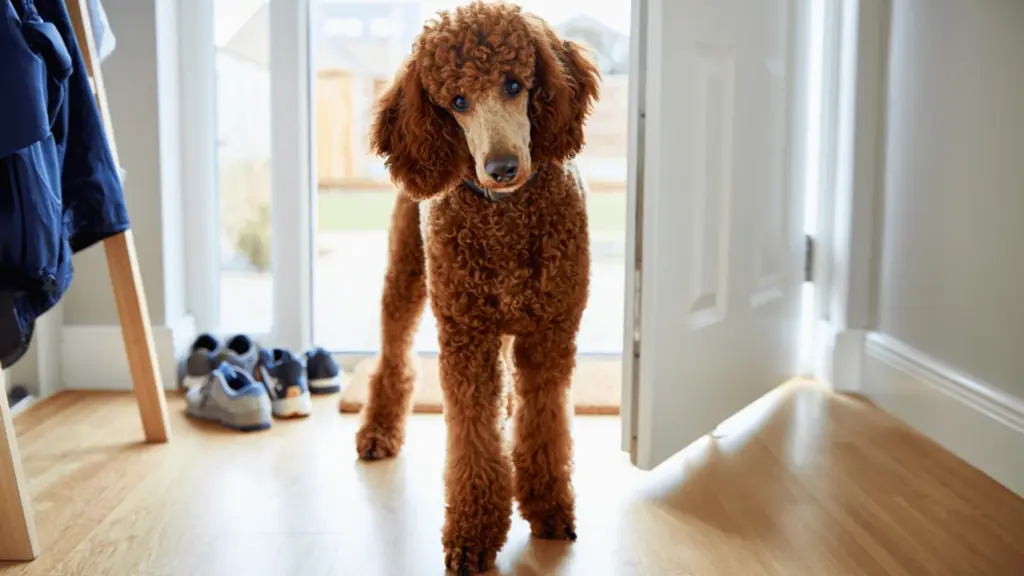
A poodle quickly decodes your routine: shoes on, keys picked up, bag by the door. The stress response kicks in before you have said goodbye.
Keeping up a consistent grooming schedule can actually serve as a routine anchor for anxious poodles.
Predictable appointments and at-home grooming sessions give them a sense of structure, reducing baseline stress.
What Are the Signs of Separation Anxiety in Poodles?
The symptoms usually fall into two windows: the pre-departure phase and the alone phase. Knowing the difference helps you catch things early.
- Pre-Departure Signs: Watch for pacing, yawning, trembling, clinginess, or refusal to eat while preparing to leave. These signals show anxiety starts before departure, not after.
- Alone-Phase Signs: Look for barking, howling, destructive chewing, house accidents, or escape attempts soon after leaving. These behaviors confirm distress when the dog is alone.
- Use a Pet Camera: A camera reveals actual behavior during absence. Observations often differ from assumptions, helping identify triggers and severity more accurately.
- Physical Stress Indicators: Chronic stress may show as overgrooming, a patchy coat, or poor condition despite a proper diet. Regular care helps detect these changes early.
How Long Can a Poodle Be Left Alone?
Size and age both matter here. Toy poodles are more sensitive to long stretches alone than standard poodles, and puppies need far more frequent check-ins than adults. These are the general guidelines I share with owners in my practice:
| Poodle Type | Adult (Max Alone Time) | Puppy (By Age) |
|---|---|---|
| Toy Poodle | 4 to 6 hours | 1 hour per month of age, max 4 hours |
| Miniature Poodle | 5 to 6 hours | 1 hour per month of age, max 5 hours |
| Standard Poodle | 6 to 8 hours | 1 hour per month of age, max 6 hours |
Leaving a toy poodle alone for eight hours without a midday check-in is a setup for anxiety to worsen over time. If your schedule demands long days away, a dog walker or trusted neighbor midday is a practical solution, not a luxury.
Pairing consistent feeding times and a balanced daily diet with your departure routine creates a predictable rhythm that genuinely lowers your dog’s baseline anxiety.
When to Involve a Veterinarian?
If your poodle is injuring itself trying to escape, losing significant weight, or showing no improvement after six to eight weeks of consistent training, that is a clinical picture, not a training gap.
A veterinarian may discuss short-term anti-anxiety support alongside behavior modification. Medication lowers anxiety enough that training actually sticks.
Your primary vet can refer you to a board-certified veterinary behaviorist if needed.
I have seen poodles improve dramatically within 4 to 6 weeks when owners consistently commit to low-drama departures and pre-departure enrichment.
The cases that stall almost always involve owners who do the training for a few days, see a small improvement, and relax back into old habits. Consistency is not optional with this breed.
What Do Poodle Owners Say About Managing Separation Anxiety?
Across active threads on Poodle Forum, one of the largest online communities of poodle owners, a few clear patterns emerge.
Owners who paired frozen Kongs with low-drama departures and a consistent daily routine reported the most noticeable reductions in anxious behavior.
The pet camera came up repeatedly, with several owners noting they expected chaos and found their dog had settled and gone to sleep once the routine held.
Tips That Actually Work for Poodle Separation Anxiety
Targeted, easy-to-follow methods that help reduce poodle separation anxiety by creating calm routines and positive associations with being alone.
- Practice Low-Drama Departures: Leave without emotional goodbyes. Avoid hugging, talking, or lingering. Calm exits reduce stress signals and help your poodle view departures as routine instead of something to react to.
- Build Independence Before It’s Needed: Practice short separations at home. Step away for a few minutes, return calmly, and gradually increase the time. This builds confidence and reduces fear of being alone.
- Use Mental Stimulation Before You Leave: Offer puzzle toys or a frozen treat before leaving. This shifts focus from your departure to a rewarding activity, reducing anxiety and unwanted behavior.
- Create a Calm, Defined Space: Set up a consistent area with familiar items, such as a blanket and toys. This gives your poodle a secure place to relax when alone.
- Desensitize Departure Cues Gradually: Repeat actions like picking up keys without leaving. This breaks the association between cues and departure, lowering pre-leaving anxiety.
Conclusion
Poodle separation anxiety is manageable in most cases, but it takes consistency, patience, and a willingness to change some of your own habits first.
The dogs that improve fastest are almost always the ones whose owners stopped making big deals out of goodbyes, built daily mental exercise into the routine, and stuck to a predictable schedule week after week.
Start with the basics: low-drama departures, a defined calm space, and pre-departure enrichment, and you will likely see a measurable shift within a few weeks.
If the anxiety is severe or is not responding to behavioral work alone, do not wait it out.
A conversation with your vet early is far easier than reversing entrenched panic behavior months down the line.
Have you tried any of these strategies with your poodle? Drop your experience in the comments below.
Frequently Asked Questions
At What Age Does Separation Anxiety Start in Poodles?
It can appear as early as 8 to 12 weeks, when a puppy first experiences alone time. It can also develop in adult dogs after major life changes, like a move or a new work schedule. Sudden shifts in routine are usually the trigger, not age alone.
Do Two Poodles Help with Separation Anxiety?
Sometimes, but not reliably. A companion dog can ease loneliness, but it won’t resolve anxiety rooted in attachment to the owner. Some poodles are so bonded to one person that a second dog brings no real comfort. Address the underlying anxiety training regardless of whether you add another pet.
Should I Crate My Poodle for Separation Anxiety?
It depends on the dog. A crate introduced as a positive space can feel secure and calming. For others, confinement intensifies the panic. Observe how your poodle reacts to the crate during low-stress moments at home; that reaction tells you whether it’s helping or hurting.