


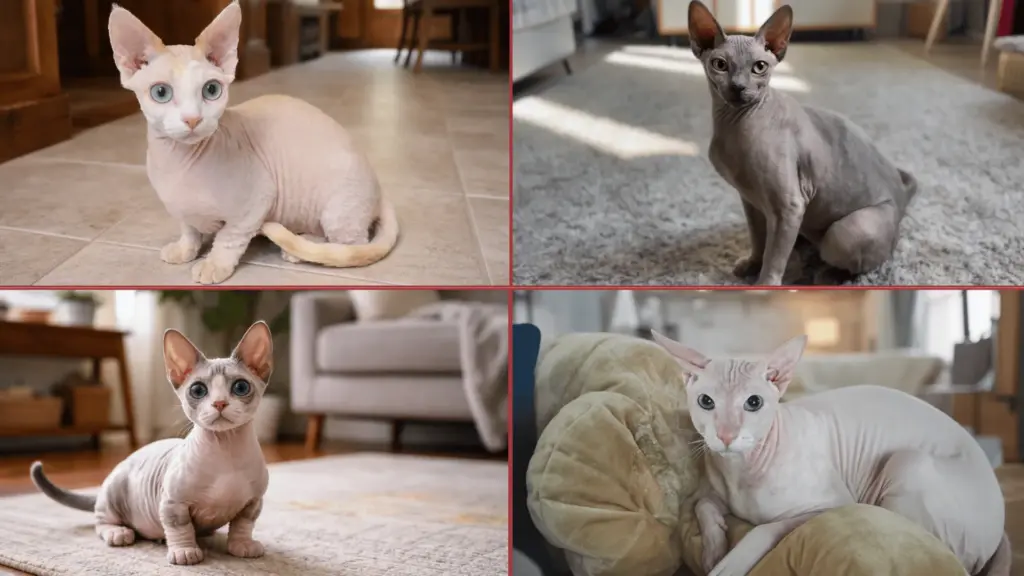
A warm, velvety cat jumps onto your lap, presses its little suede-hot body against your arm, and starts purring like a tiny motorcycle.
Zero fur sticks to your clothes. That’s everyday life with hairless cat breeds. And yes, they’re every bit as addictive as they sound.
These bald beauties have exploded in popularity lately, gracing celebrity feeds and melting hearts worldwide. From the iconic Sphinx to rare gems most people have never heard of, hairless cats come in a surprising variety.
In this blog, you’ll read about the recognized hairless cat breeds, see exactly how they differ, and get a side-by-side comparison table. You will also learn the real day-to-day care routine that keeps their skin flawless and their hearts happy.
Why Choose a Hairless Cat Breed?
Hairless cat breeds attract attention for more than their striking look. Many people assume a hairless cat is completely hypoallergenic, but that is not entirely accurate.
According to the American College of Allergy, Asthma and Immunology, allergies are triggered by proteins in saliva and skin, not just fur.
Still, bald cats often release less loose dander into the air, which may make symptoms easier to manage for some families.
Beyond allergies, these cats are known for being deeply affectionate and highly social. They crave interaction, follow their owners from room to room, and often greet guests confidently.
With no shedding on furniture and a one-of-a-kind appearance, hairless cat breeds easily become both loving companions and natural conversation starters.
Best Hairless Cat Breeds
Not all hairless cat breeds look or behave the same. Some are completely bald, others carry a light peach fuzz, and a few even grow partial coats.
1. Sphynx
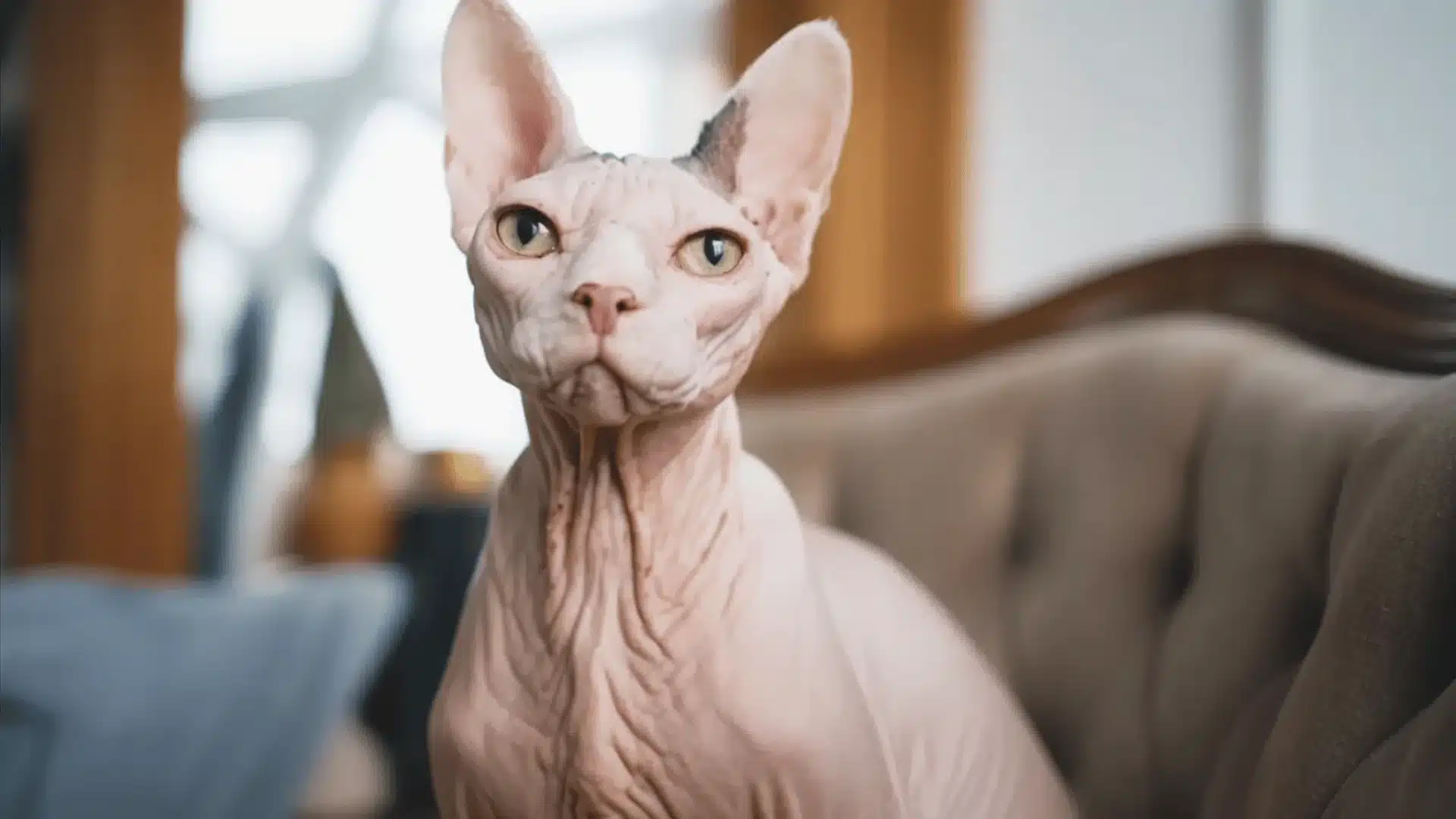
When people think of a hairless cat, the Sphynx usually comes to mind first. They originated in Canada in the 1960s.
This medium-sized cat has a fine layer of peach fuzz that feels warm and velvety to the touch. Sphynx cats are extremely affectionate and tend to follow their owners everywhere.
They dislike being left alone and thrive in homes where someone is around most of the day. They typically get along well with kids and other pets.
With their large eyes and oversized ears, they have a bold, unforgettable look.
2. Peterbald
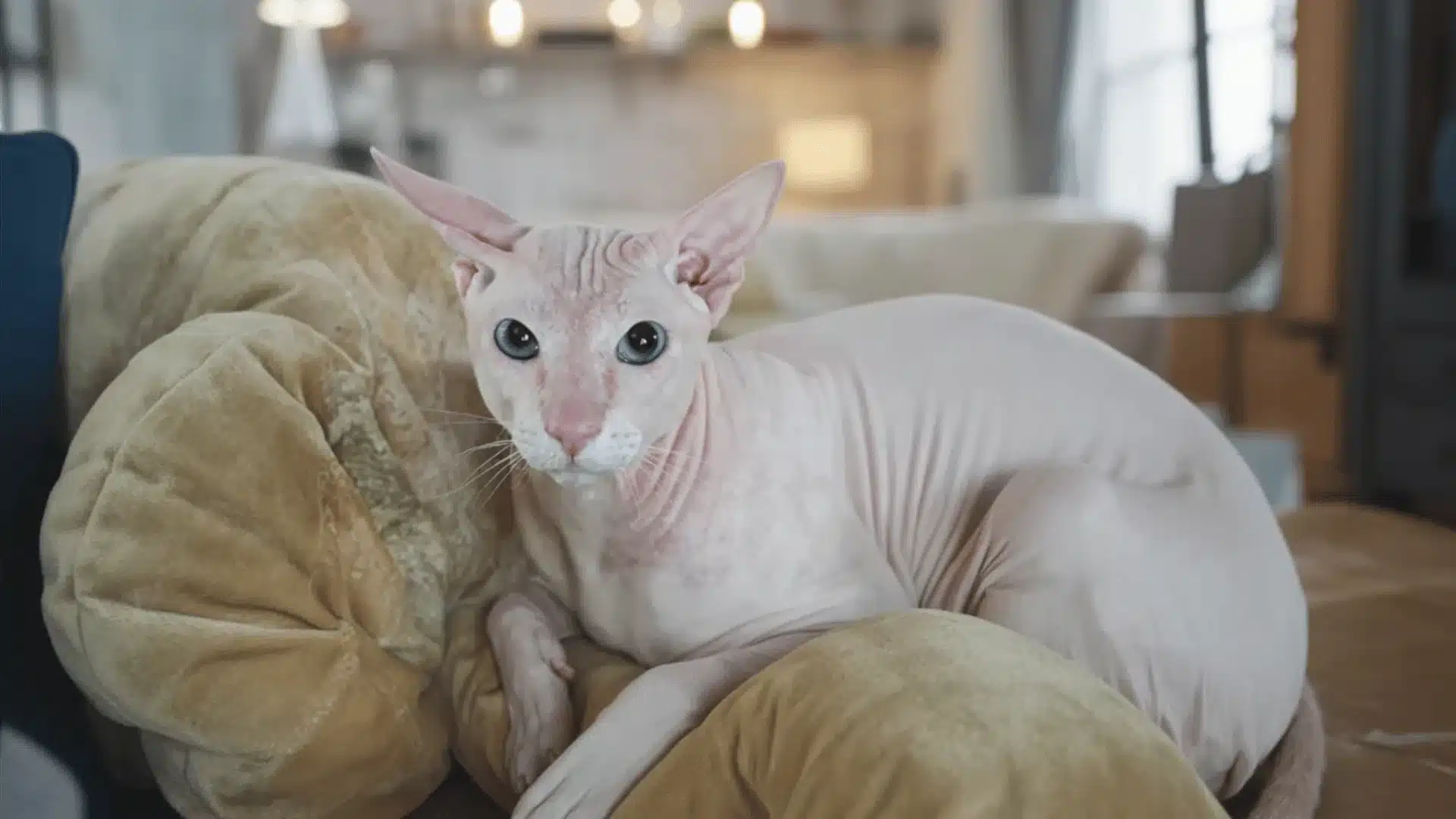
The Peterbald comes from St. Petersburg, Russia, and carries a long, slim oriental body type. What makes this breed unique is its coat variety.
Peterbalds can be completely bald, have a chamois-like fuzz, or even sport a short brush coat. They are highly intelligent, vocal, and form deep bonds with one person in the household.
Peterbalds do well in multi-pet homes and love interactive toys. If you prefer a sleek, graceful cat with a curious personality, this breed is a perfect fit.
3. Donskoy
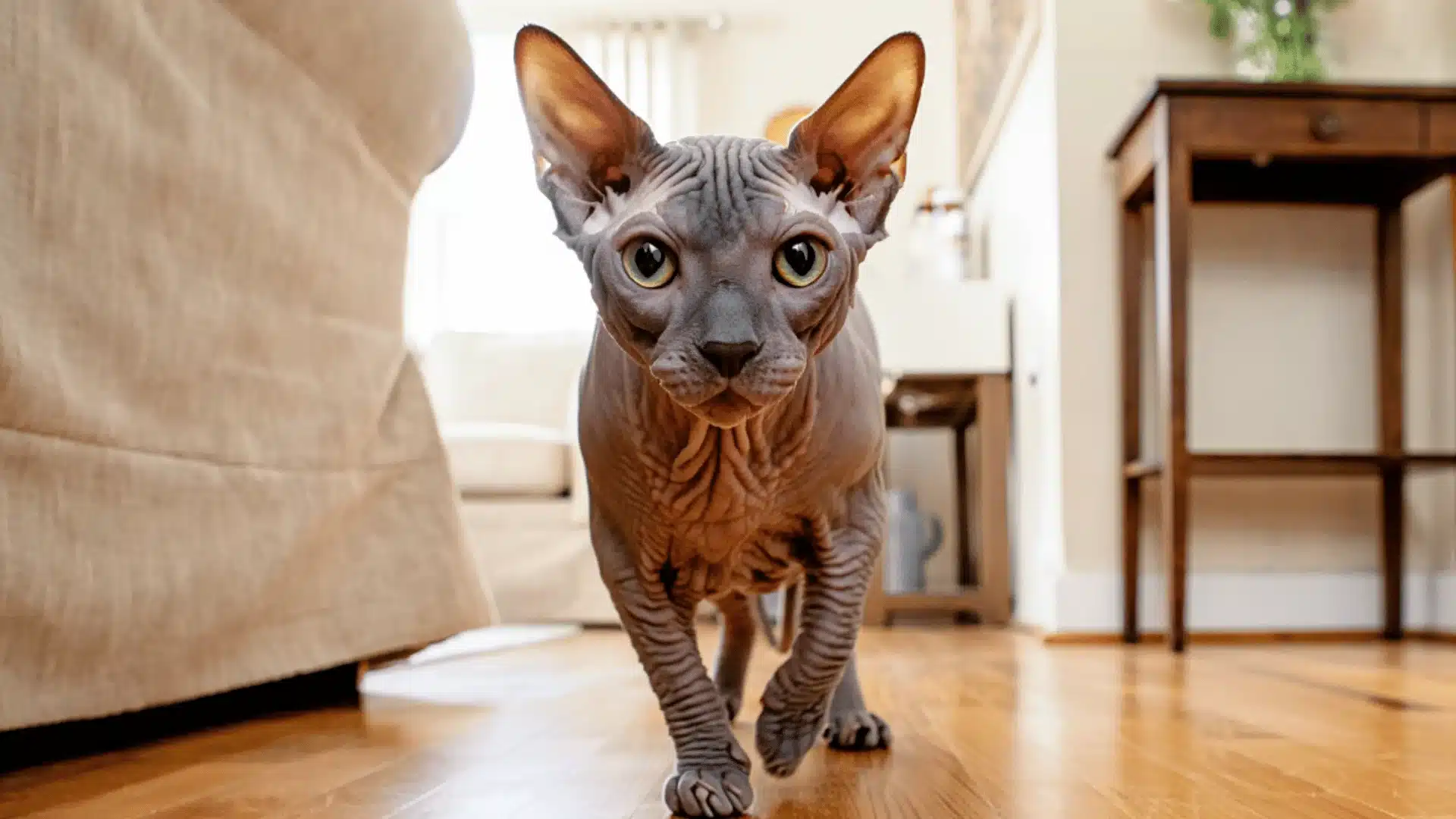
The Donskoy, also known as the Don Sphynx, is a separate breed from the Sphynx despite the similar look. It originated in Rostov-on-Don, Russia.
Unlike the Sphynx, the Donskoy’s hairlessness comes from a dominant gene. These cats have a muscular body and wrinkled skin that often feels slightly rubbery.
These cats have a sturdy, muscular build with wrinkled, rubber-like skin. They are loyal, gentle, and easy to train.
They tend to develop a winter coat of fine fuzz that sheds again in warmer months. A solid choice for first-time hairless cat owners.
4. Bambino
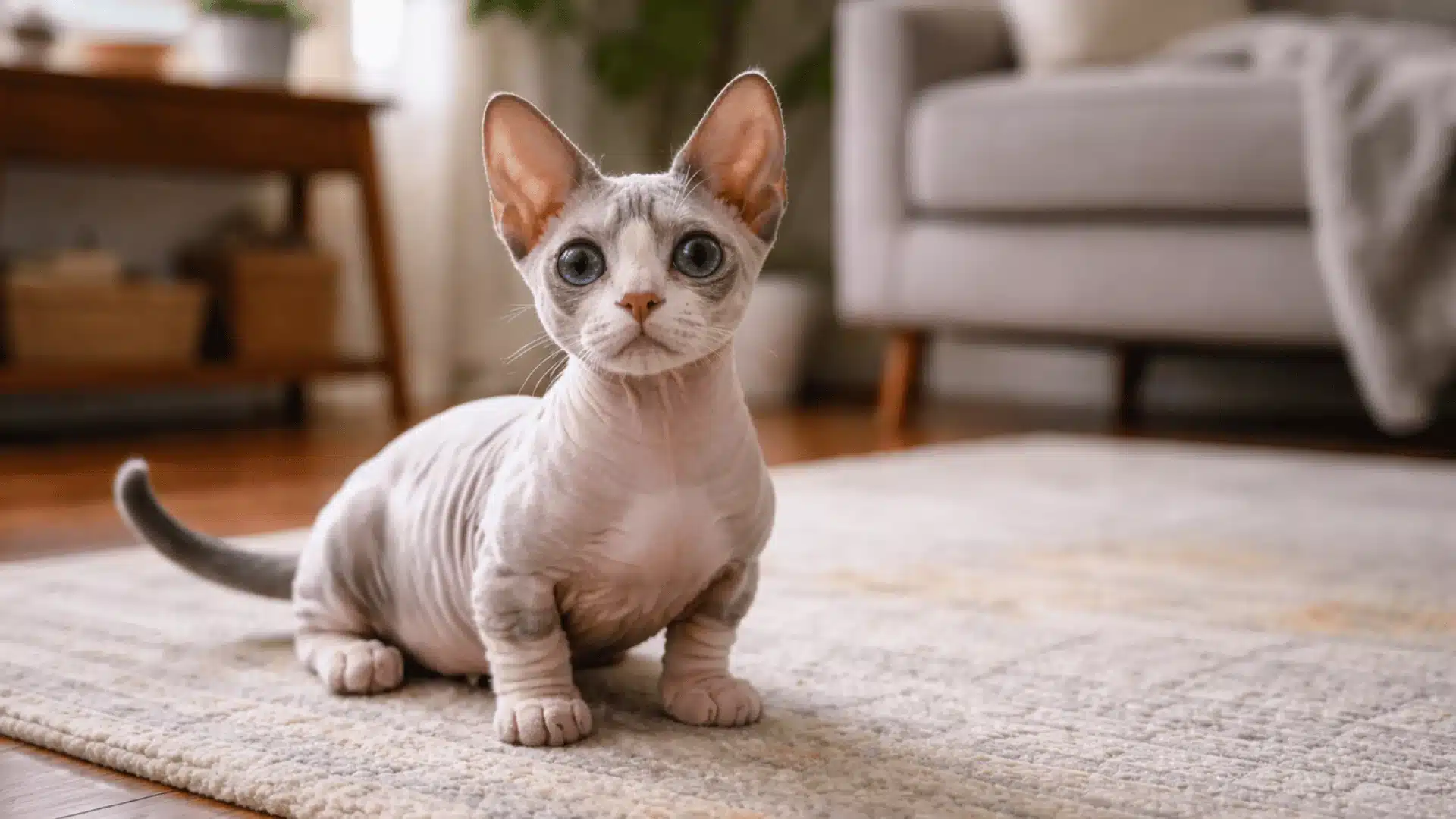
The Bambino is a cross between the Sphynx and the Munchkin, giving it a hairless body with short legs. Despite those tiny limbs, Bambinos are surprisingly fast and playful.
They often keep a playful, kitten-like personality well into adulthood. These cats crave attention and prefer homes where they are not left alone for long hours.
Because of the short-leg trait, some breed registries debate their classification, so researching ethical breeders is important before choosing this breed.
5. Elf Cat
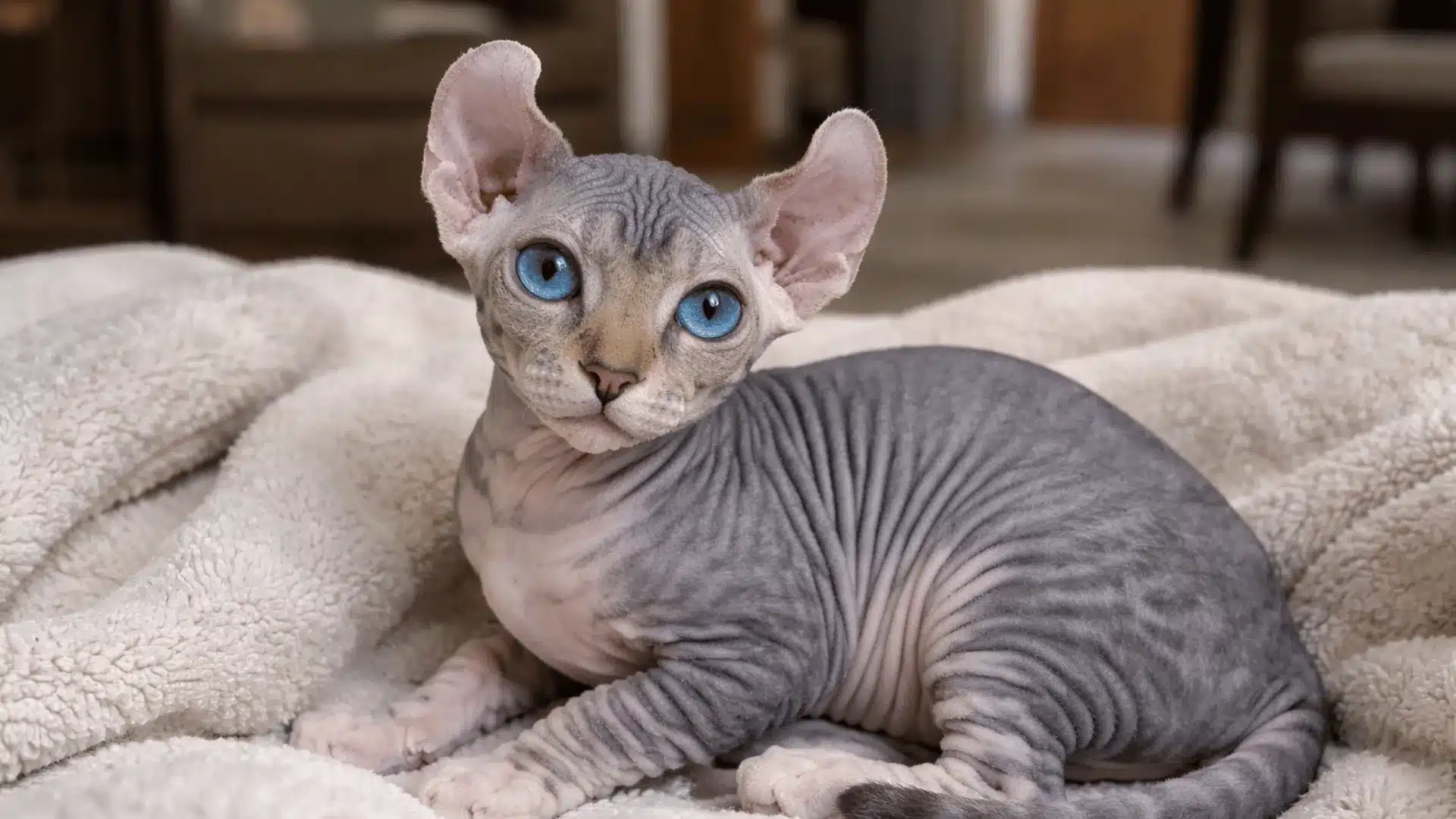
Take a Sphynx and cross it with an American Curl, and you get the Elf cat. This breed is a hairless cat breed with distinctive backward-curling ears.
Elf cats are social butterflies who thrive in busy households with children and other pets. Their personality leans playful and mischievous, and they enjoy climbing to high spots.
This breed is still relatively new and not yet recognized by major registries, so finding a reputable breeder takes extra effort. Their unique appearance makes them stand out instantly.
6. Ukrainian Levkoy
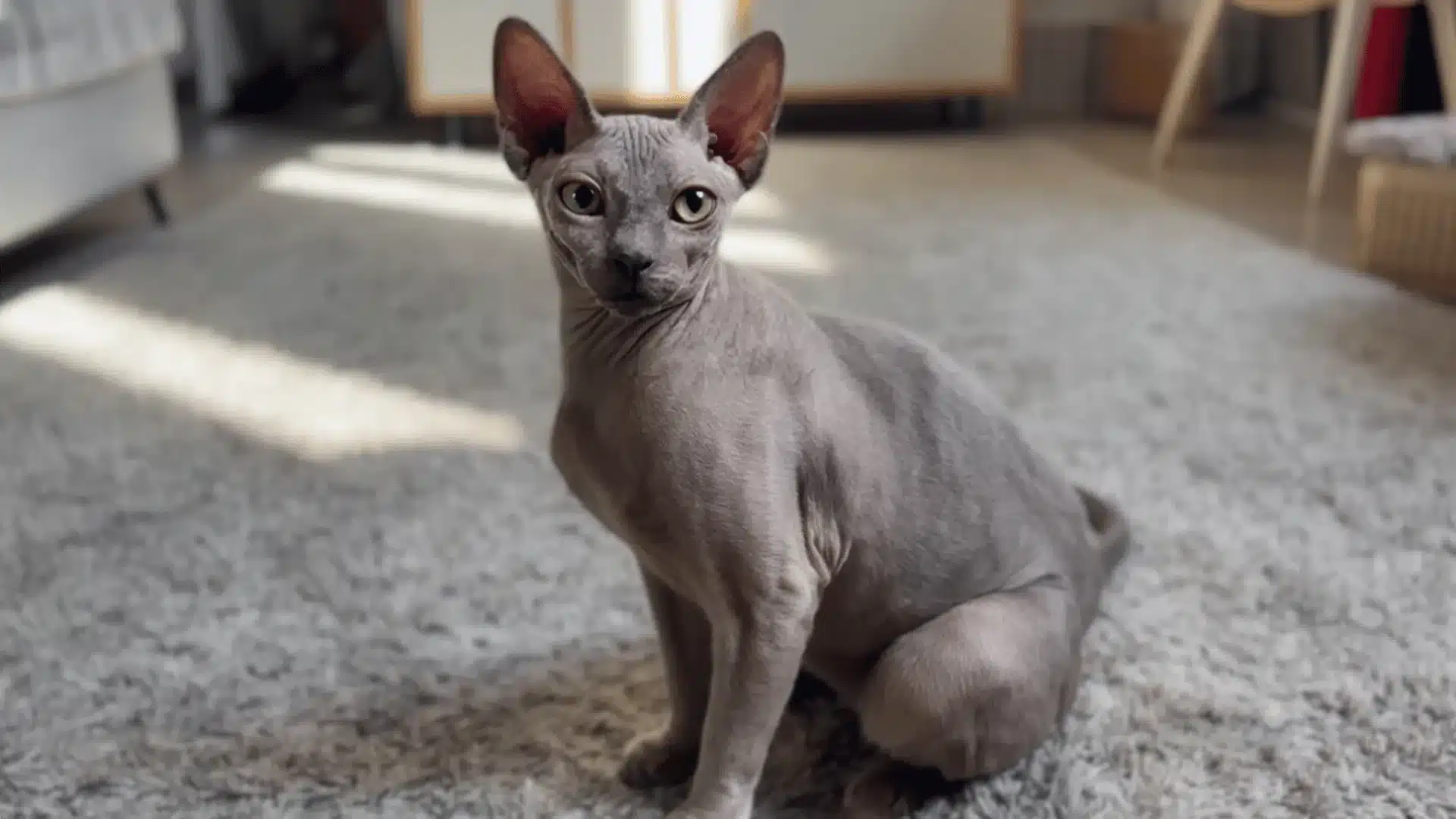
The Ukrainian Levkoy stands out with its inward-folding ears and angular face, giving it an almost dog-like appearance.
It was developed in Ukraine by crossing Donskoy cats with Scottish Folds. This breed is calm, friendly, and adapts well to apartment living.
Levkoys are patient with children and rarely aggressive. They remain extremely rare outside Eastern Europe, so availability in the USA is limited.
If you can find one from a responsible breeder, expect a laid-back, affectionate companion that bonds quietly but deeply.
7. Minskin
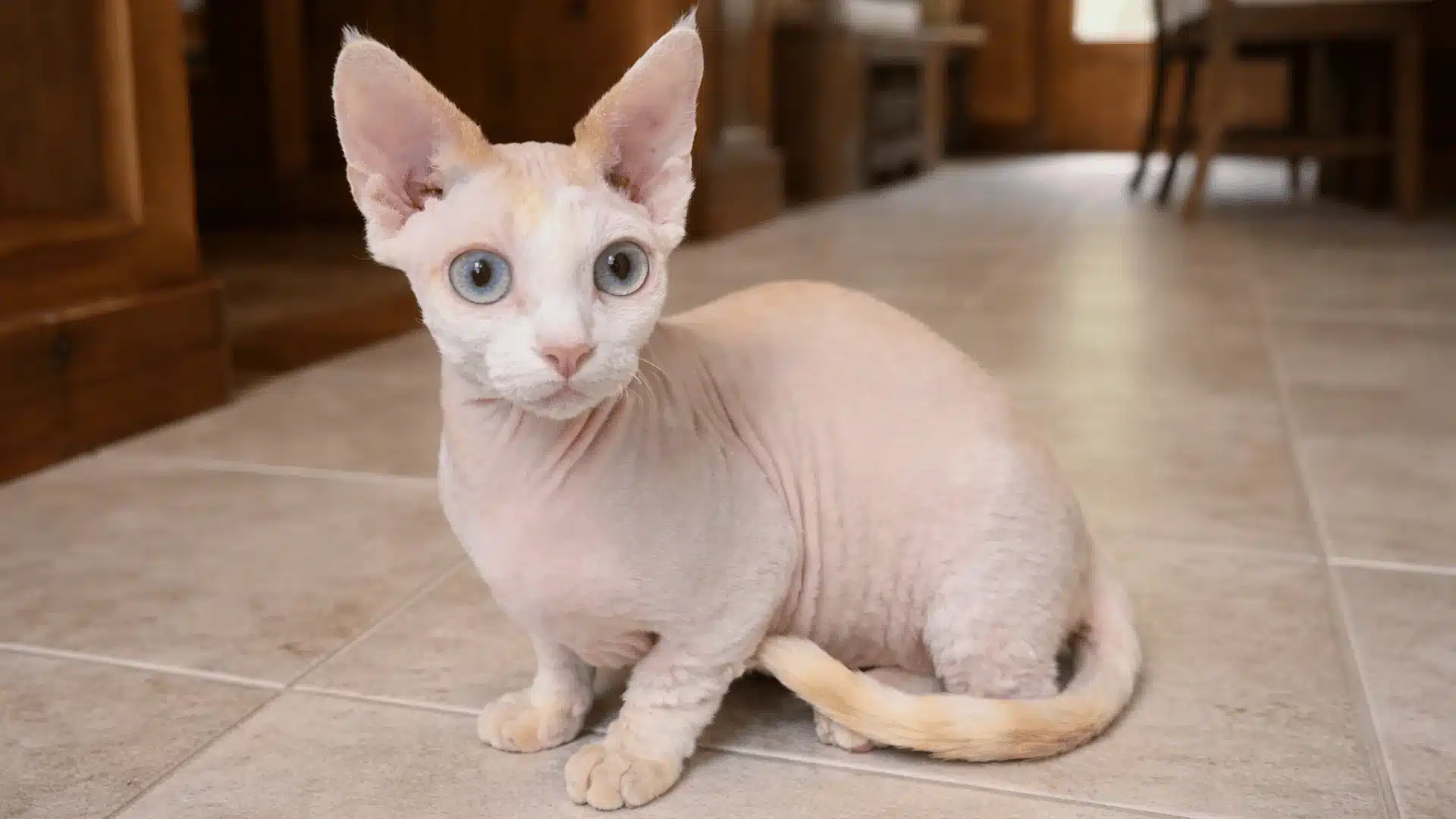
The Minskin blends genetics from four breeds: Munchkin, Sphynx, Burmese, and Devon Rex.
These cats are small, short-legged, and usually have sparse body hair with slightly thicker fur on their ears, nose, tail, and feet.
Minskins are outgoing, curious, and get along with virtually everyone. Their small size makes them suitable for apartment living.
This breed is still in development and classified as a “preliminary new breed” by TICA, so breeders are limited but growing steadily each year.
8. Kohana
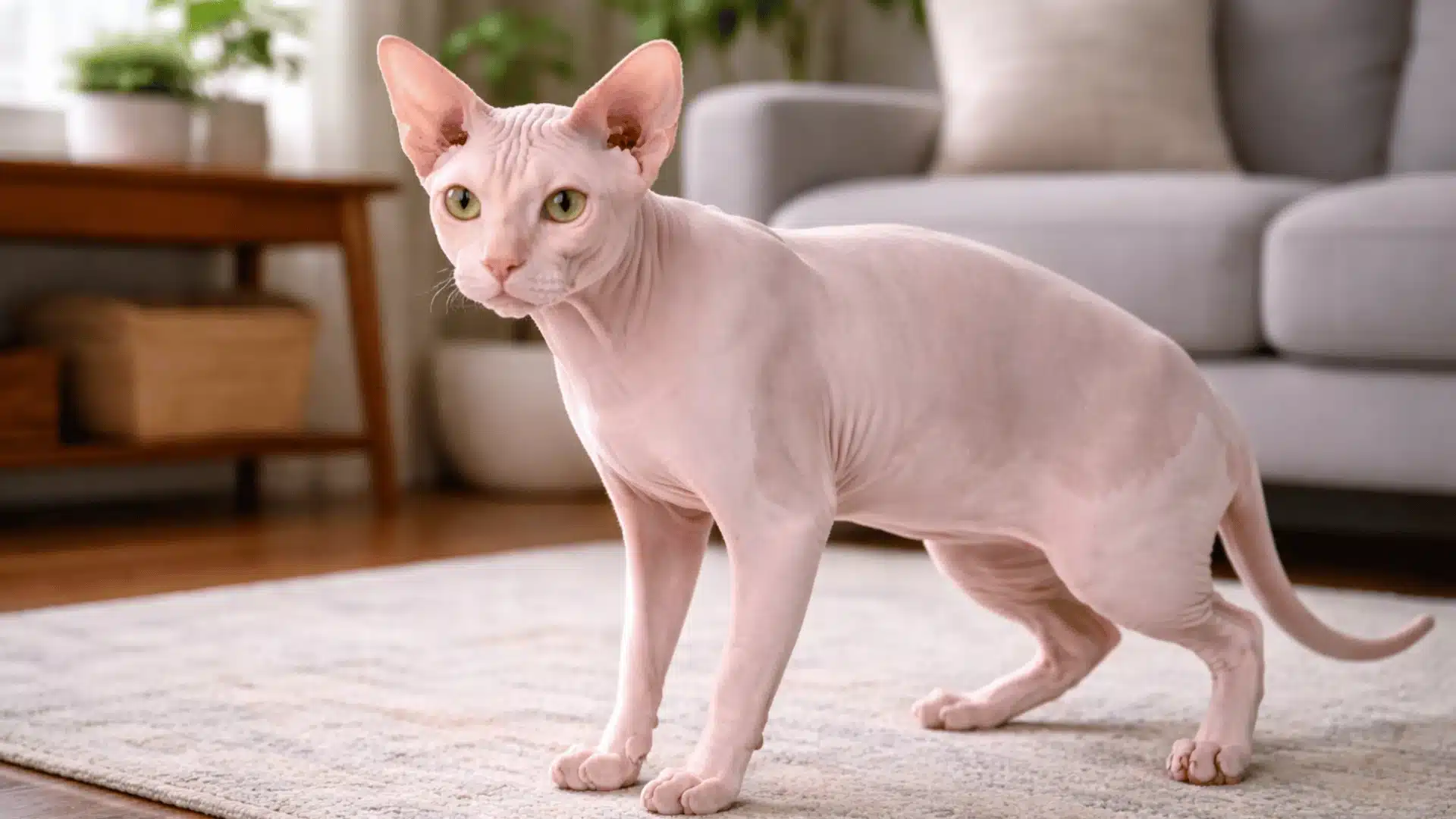
The Kohana is one of the rarest hairless cats in the world. Unlike other breeds, they lack hair follicles entirely, which gives their skin a smooth, rubber-like feel.
Originally from Hawaii, Kohana cats are extremely rare, with very few known worldwide. They are described as gentle and calm, but finding one is highly unlikely.
No major registry currently recognizes the breed, making it more of an interesting rarity than a practical choice for adoption.
9. Lykoi
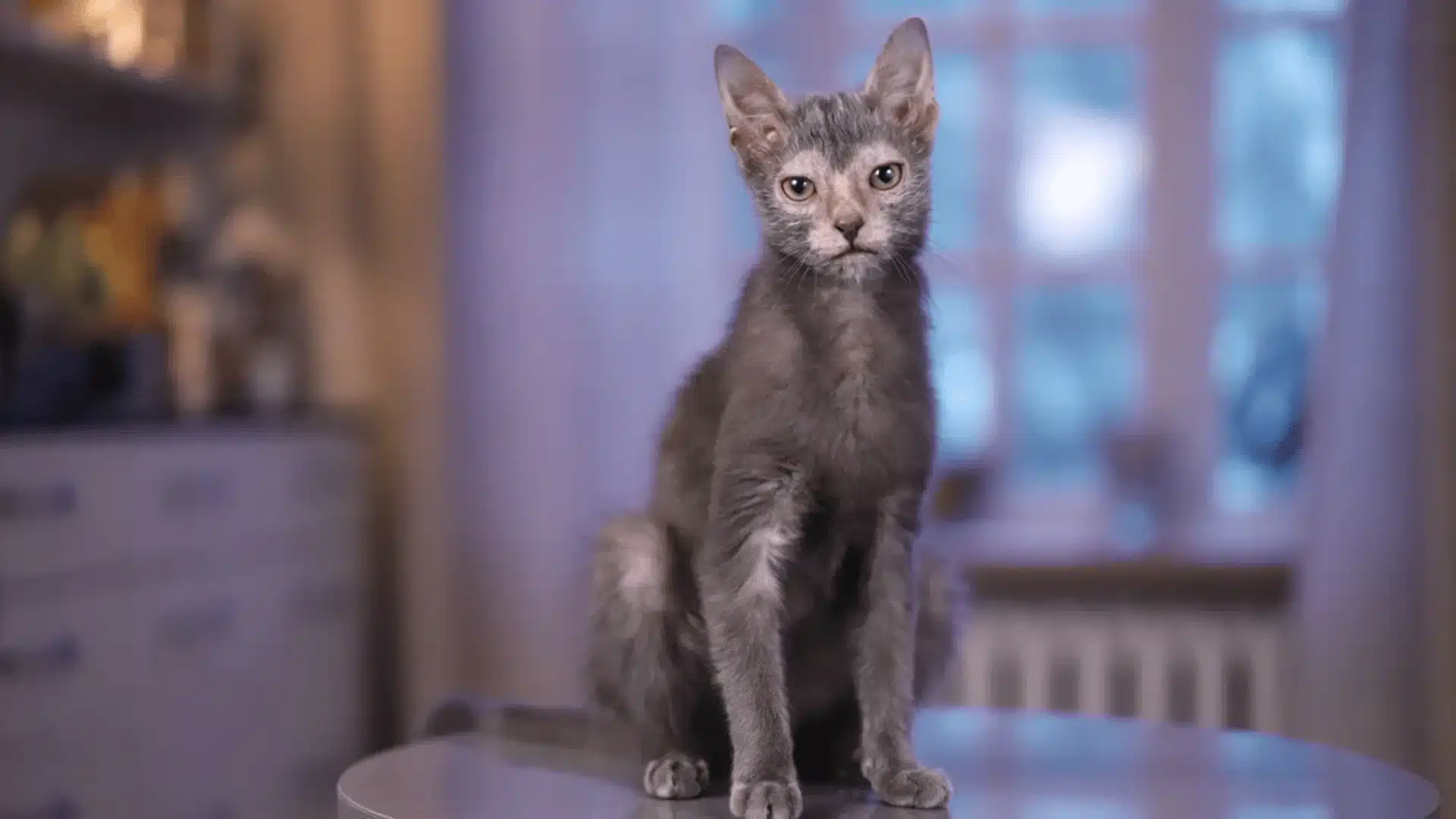
The Lykoi is not fully hairless but has a naturally patchy coat that creates a “werewolf” appearance.
Named after the Greek word for “wolf,” this breed has sparse fur around the eyes, nose, and ears. Lykoi cats are active, intelligent, and often display playful hunting instincts.
Their coat may shed completely and regrow with seasonal changes. They are a good fit for owners who appreciate a unique look but still want a cat with some fur.
Owning Hairless Cat Breeds (Pros and Cons)
Owning a hairless cat can be incredibly rewarding, but it also comes with unique responsibilities. Here’s a simplified look at the key advantages and challenges.
| Category | Pros | Cons |
|---|---|---|
| Shedding | No fur on furniture or clothes | Weekly baths are needed for oily skin |
| Temperament | Very affectionate and people-focused | May develop separation anxiety |
| Allergies | Lower Fel d 1 levels than many breeds | Not fully hypoallergenic |
| Appearance | Unique, eye-catching look | Skin needs frequent cleaning |
| Health | Healthy with proper breeding | Risk of HCM and skin issues |
| Temperature | Love cuddling and warmth | Sensitive to cold and heat |
| Cost | 12–16 year lifespan | Higher purchase and care costs |
Personality Traits of Hairless Cats
Bald cats carry personalities far bigger than their furless bodies suggest.
Despite their unique appearance, most hairless cats are extremely affectionate and form strong bonds with their owners. They often demand lap time and love curling up under blankets to stay close and warm.
As natural heat-seekers, they are constantly drawn to sunny windowsills, heated bedding, and the warmth of human bodies. These cats are also highly social and interactive, thriving in homes with people, children, or even other pets.
Many can open doors, fetch toys, and solve simple puzzle games, keeping themselves entertained while surprising their families.
Are Hairless Cat Breeds Good for First-Time Owners?
Hairless cat breeds can absolutely work for first-time owners, but they do require more hands-on commitment than a typical coated cat.
Their daily and weekly maintenance, along with a higher-calorie diet, are all part of the routine.
For someone willing to put in that effort, the reward is a deeply bonded, affectionate companion unlike any other pet.
The Donskoy and Sphynx tend to be the most forgiving breeds for beginners. Both are patient, adaptable, and respond well to consistent routines.
Breeds like the Bambino or Elf cat may need a bit more experience due to their specific health considerations.
A good starting point is to connect with breed-specific communities on Reddit forums or with local TICA-registered breeders, who can walk you through care expectations before you commit.
Talking to current owners gives a more realistic picture than any breed profile can fully capture.
Tips to Take Care of Hairless Cat Breeds
Hairless cat breeds need a different care routine than coated cats. Skin care, temperature control, and nutrition all play key roles in keeping bald cats healthy.
- Bathe Weekly: Use Malaseb or baby shampoo to remove natural oil buildup from skin
- Moisturize Skin Between Bath Days: Apply coconut oil or cat-safe wipes to prevent dryness and cracking
- Apply Cat-Safe Sun Protection Daily: UV-blocking clothing or pet sunscreen prevents painful sunburn outdoors
- Maintain Indoor Temperatures Between 72 and 78°F: Hairless cats rely on environmental warmth to regulate their body temperature.
- Screen Annually for Hcm Disease: Sphynx and Donskoy carry a higher heart disease risk
- Feed 20–30% Extra Calories Daily: Hairless cats burn extra energy and need high-protein food year-round
Conclusion
Hairless cat breeds are not just pets; they are full-time companions that redefine what cat ownership feels like. Their need for warmth, attention, and hands-on care creates a bond most cat owners never expect.
Unlike coated breeds that often value independence, bald cats actively seek connection, making them ideal for people who want a deeply interactive relationship with their pet.
The right breed depends on your lifestyle, living space, and how much time you can dedicate to grooming and companionship.
Whether it is a loyal Sphynx or a rare Ukrainian Levkoy, the key is choosing a breed that fits your daily routine, not just your aesthetic preferences.
Have you already decided which hairless cat breed suits your home? Drop your pick in the comments. I’d love to hear your thoughts!