Most dog treats look healthy on the outside but hide low-quality ingredients inside. What you feed your dog daily matters more than you might think.
As a certified pet nutritionist with over a decade of experience advising dog parents, I’ve seen firsthand how a simple ingredient swap can make a genuine difference in a dog’s energy, digestion, and even mood.
Homemade treats are one of the easiest places to start, and peanut butter banana dog treats are the recipe I recommend most often to clients who are just getting started.
Dog owners are starting to rethink what goes into their pet’s snacks, and store-bought treats are slowly losing their appeal.
With growing awareness around hidden additives and low-quality ingredients, many are switching to simple, homemade options they can trust.
If you’re here for the recipe, jump straight to it. It takes about 20 minutes and uses three ingredients you likely already have.
If you want the full picture, safety tips, health benefits, variations, and storage guidance, read on.
Why Peanut Butter Banana Dog Treats Are Popular?
Dog owners are becoming more careful about what they feed their pets, and that shift is pushing homemade options into the spotlight.
According to the American Pet Products Association, spending on pet food and treats has grown steadily year over year, with natural and homemade options driving much of that interest.
Peanut butter banana dog treats fit perfectly into this trend because they use simple, easy-to-control ingredients without hidden preservatives or artificial additives.
Social media has accelerated this shift; quick, three-ingredient recipe videos circulate constantly, and dog owners trust recommendations from other pet parents.
On top of that, making treats at home is far more budget-friendly compared to premium packaged options. You get better quality, more control, and noticeable savings, all in one go.
This same DIY mindset is reshaping other areas of dog care, too, like homemade flea and tick spray for dogs, another simple, ingredient-controlled alternative to store-bought products.
Are Peanut Butter and Bananas Safe for Dogs?
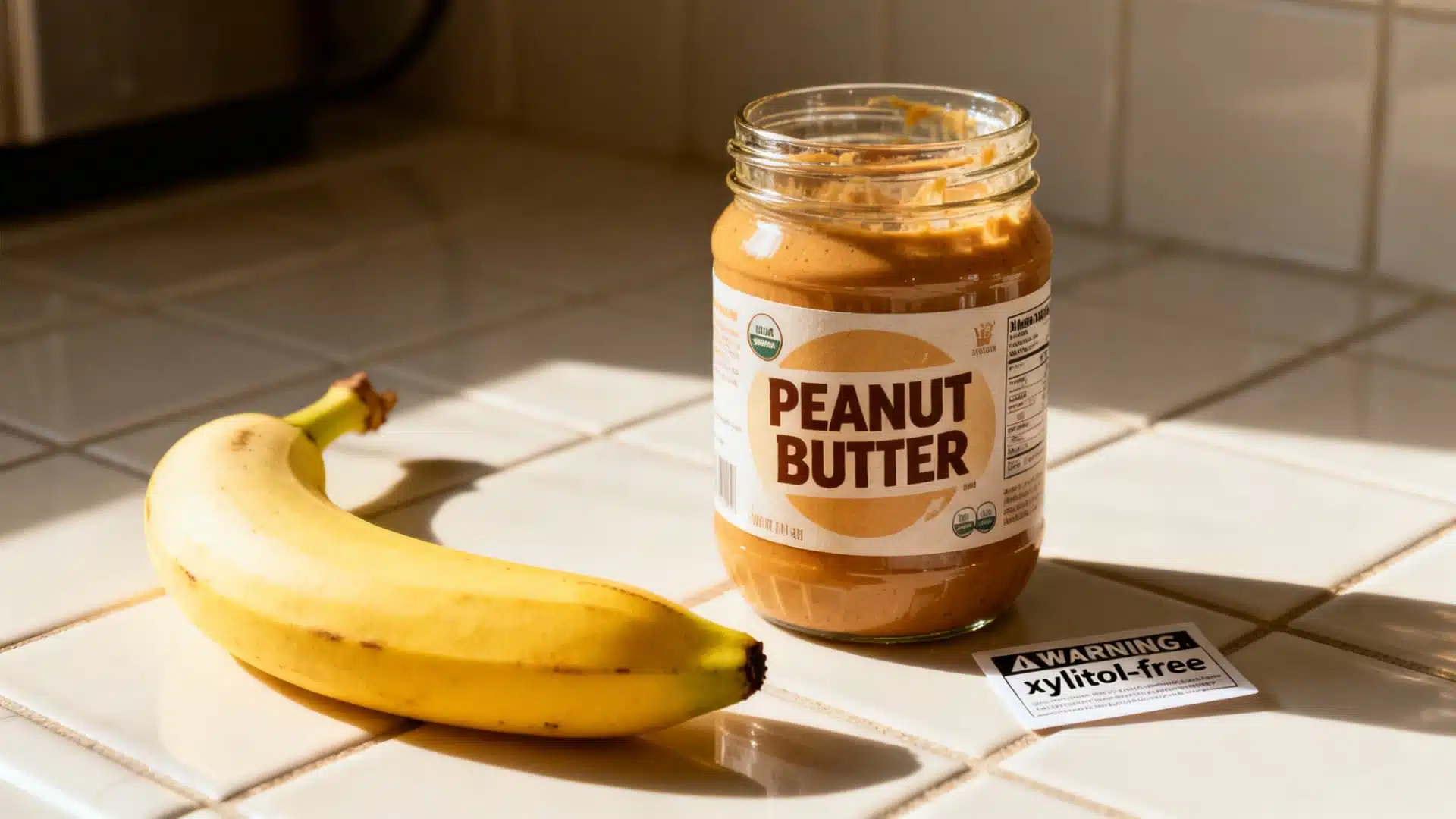
Yes, peanut butter and bananas are safe for dogs, but only when used correctly. Peanut butter should always be xylitol-free, as this sweetener is toxic and can be dangerous even in small amounts.
Xylitol can cause rapid insulin release in dogs, leading to hypoglycemia, seizures, or liver failure. Always read the label, even on “natural” brands, as some reformulate without warning.
Always check the label before using it in any recipe. Bananas are generally safe, too, but portion control matters.
They contain natural sugars, so too much can lead to weight gain or stomach upset. When given in moderation, both ingredients offer solid nutritional value.
Also worth noting: banana peels are not toxic, but they are difficult to digest and can cause intestinal blockages; always peel them completely before use.
Bananas provide fiber and potassium, which support digestion and muscle function, while peanut butter adds healthy fats and a bit of protein, making these treats both tasty and beneficial.
One thing I always tell clients: if your dog is on medication, particularly thyroid medication or MAO inhibitors, check with your vet before introducing high-fat treats regularly. It’s a quick conversation that can prevent an avoidable issue.
Health Benefits of Peanut Butter Banana Dog Treats
These treats are not just tasty; they also bring real nutritional value that supports your dog’s overall health when given in the right amount.
- Supports digestion: Bananas are a natural source of fiber and, according to the AKC, are sometimes recommended by vets as a digestive-friendly treat. Bananas add natural fiber that helps regulate bowel movements and keep your dog’s digestive system running smoothly.
- Provides energy for active dogs: Peanut butter offers healthy fats that give a steady energy boost, especially useful for playful or highly active dogs.
- Helps with coat and skin health: The fats in peanut butter can contribute to a shinier coat and healthier skin over time.
- Good option for training rewards: Their taste makes them highly motivating, helping reinforce positive behavior during training sessions.
- Balanced nutrition boost: Together, these ingredients provide a mix of fiber, potassium, and healthy fats for overall well-being.
Note: Treats should make up no more than 10% of your dog’s total daily caloric intake. A small homemade treat made from this recipe runs approximately 25–35 calories, depending on size, which is useful to know if you’re managing a dog’s weight.
Basic Peanut Butter Banana Dog Treat Recipe
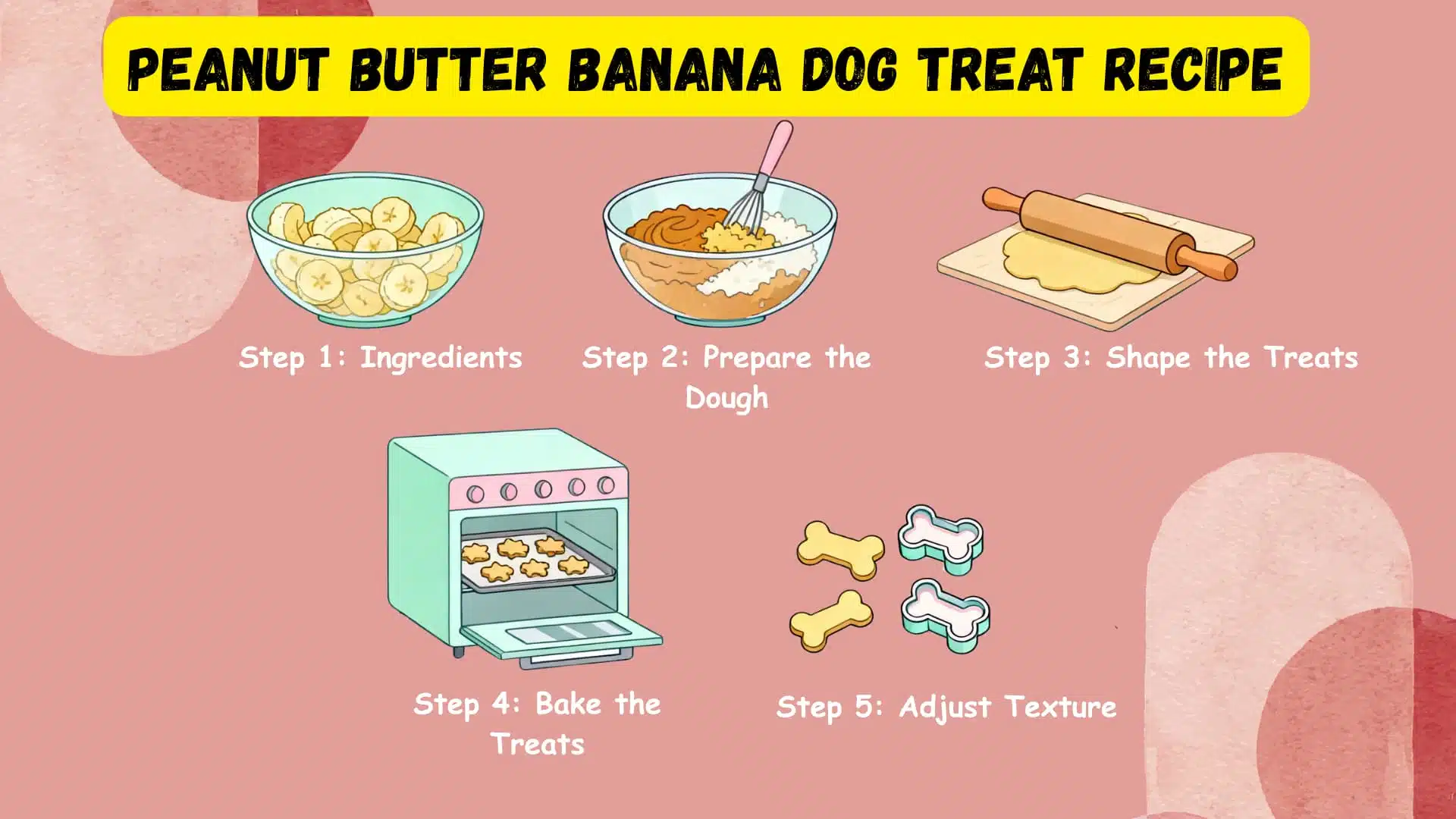
This simple recipe is perfect for beginners and takes minimal time, effort, and ingredients to make healthy treats your dog will enjoy.
Step 1: Ingredients
You only need three basic ingredients that are easy to find and safe for dogs.
Use one ripe or overripe banana; the browner the peel, the sweeter and easier it is to mash, which improves dough consistency. Half a cup of xylitol-free peanut butter and one cup of oats or oat flour.
For dogs with wheat sensitivities, rolled oats are naturally gluten-free, but you can also substitute almond flour or rice flour at a 1:1 ratio for a grain-free option.
Make sure the peanut butter label is clean and free from harmful additives. These ingredients create a balanced, easy-to-work dough.
Step 2: Prepare the Dough
Start by mashing the banana in a bowl until smooth with no large chunks. Add the peanut butter and mix until fully combined.
Gradually stir in the oats until the mixture forms a soft dough. Dough troubleshooting: If the dough is too sticky to roll, add oats one tablespoon at a time.
If it crumbles and won’t hold together, a teaspoon of water or an egg yolk will help it bind. Natural peanut butter tends to make stickier dough than processed brands; account for this when adjusting.
Step 3: Shape the Treats
Lightly dust a surface with oats or flour and roll out the dough evenly. Keep the thickness based on your preferred texture later.
Use cookie cutters or simply slice into small bite-sized pieces. For training treats, aim for about ½ inch in size.
For larger dogs or occasional rewards, 1–1.5 inch shapes work well. Place the shaped treats onto a baking tray lined with parchment paper, leaving a little space between each piece for even baking.
Step 4: Bake the Treats
Preheat your oven to 350°F (180°C), then place the tray inside. Bake the treats for around 12 to 15 minutes, depending on their size and thickness.
Keep an eye on them during the last few minutes to avoid overbaking. Once done, remove them from the oven and allow them to cool completely before giving them to your dog.
Cooling is not optional; serving warm treats can cause digestive upset in sensitive dogs.
Step 5: Adjust Texture
The final texture depends on how you bake them. For softer treats, ideal for senior dogs, puppies, or dogs with dental issues, keep them slightly thicker and bake for 10 to 12 minutes.
For crunchier treats, roll the dough thinner and bake for up to 18 minutes. You can also leave them in the oven after turning it off to dry out further.
Easy Variations to Try at Home
Once you get comfortable with the basic recipe, you can tweak it in simple ways to add variety, improve nutrition, and keep your dog interested.
1. Oatmeal Peanut Butter Banana Treats
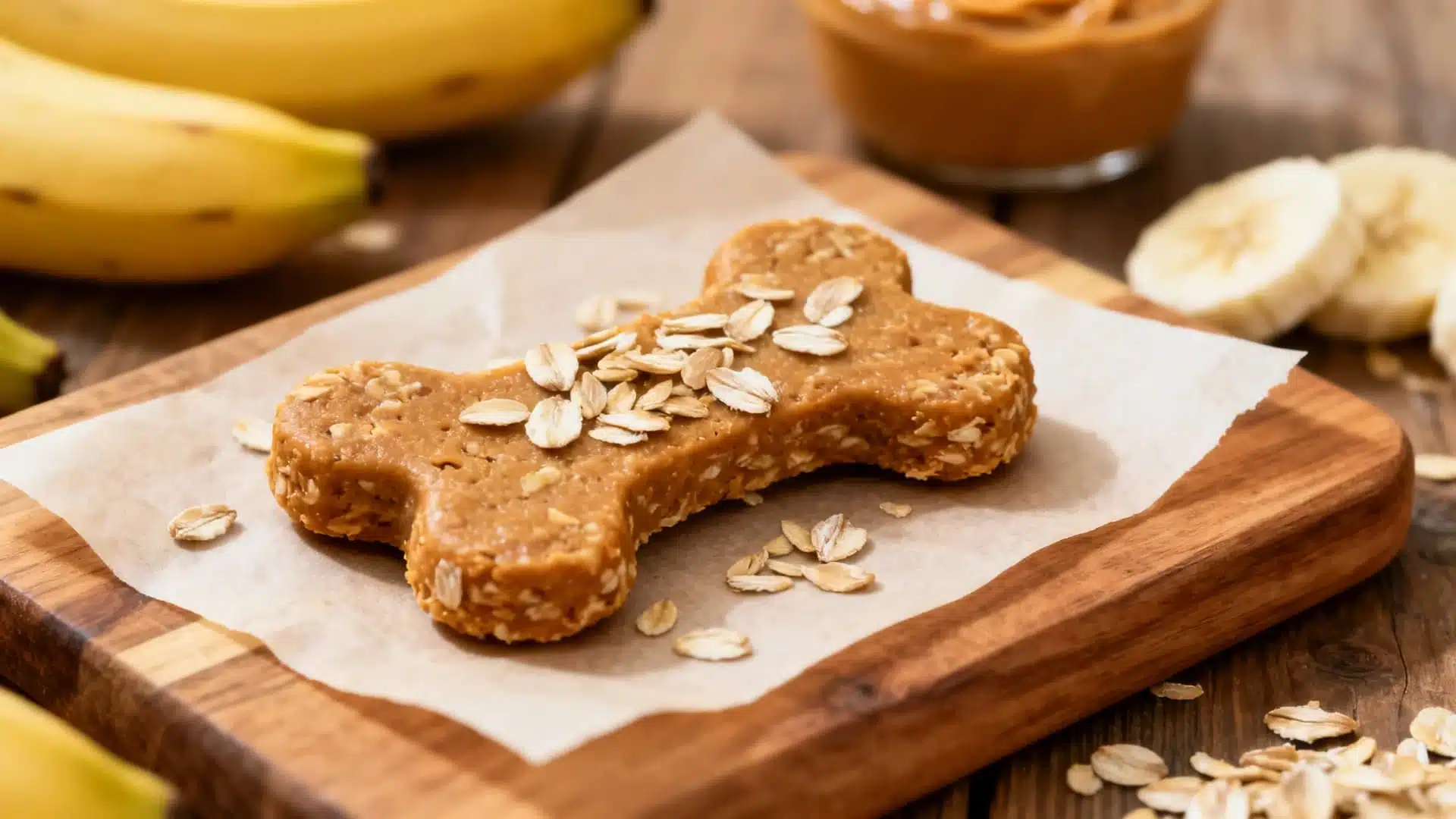
This variation builds on the base recipe by increasing the oat content, making the treats more filling and slightly denser.
Oats add extra fiber, which can support better digestion and keep your dog satisfied for longer. You can also grind oats into a finer flour if your dog prefers a softer texture.
This is also a good option for dogs with mild wheat allergies, since oats are naturally wheat-free (just confirm your oat brand is not processed in a wheat facility if sensitivity is severe).
2. Frozen Peanut Butter Banana Bites
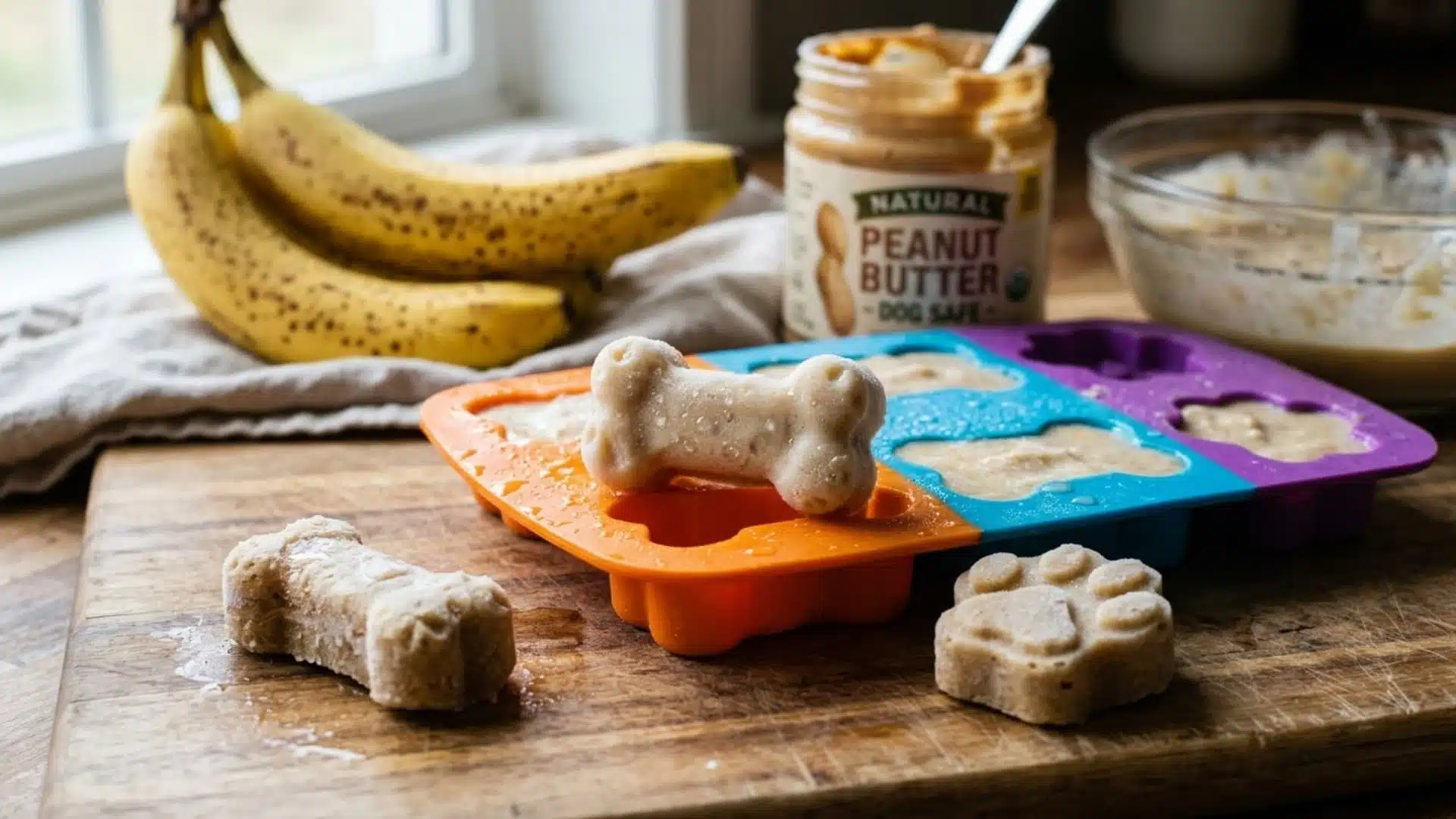
These are perfect for a no-bake option, especially during hot weather. Just blend banana and peanut butter, pour the mixture into small molds, and freeze until solid.
A tablespoon of plain Greek yogurt (unsweetened, no artificial sweeteners) added to the blend gives it a creamier texture and a small probiotic boost, a tip several of my clients have found helpful for dogs with occasional loose stools.
The result is a cool, soothing treat that works well for teething puppies or dogs that need something refreshing.
3. Pumpkin Peanut Butter Banana Treats
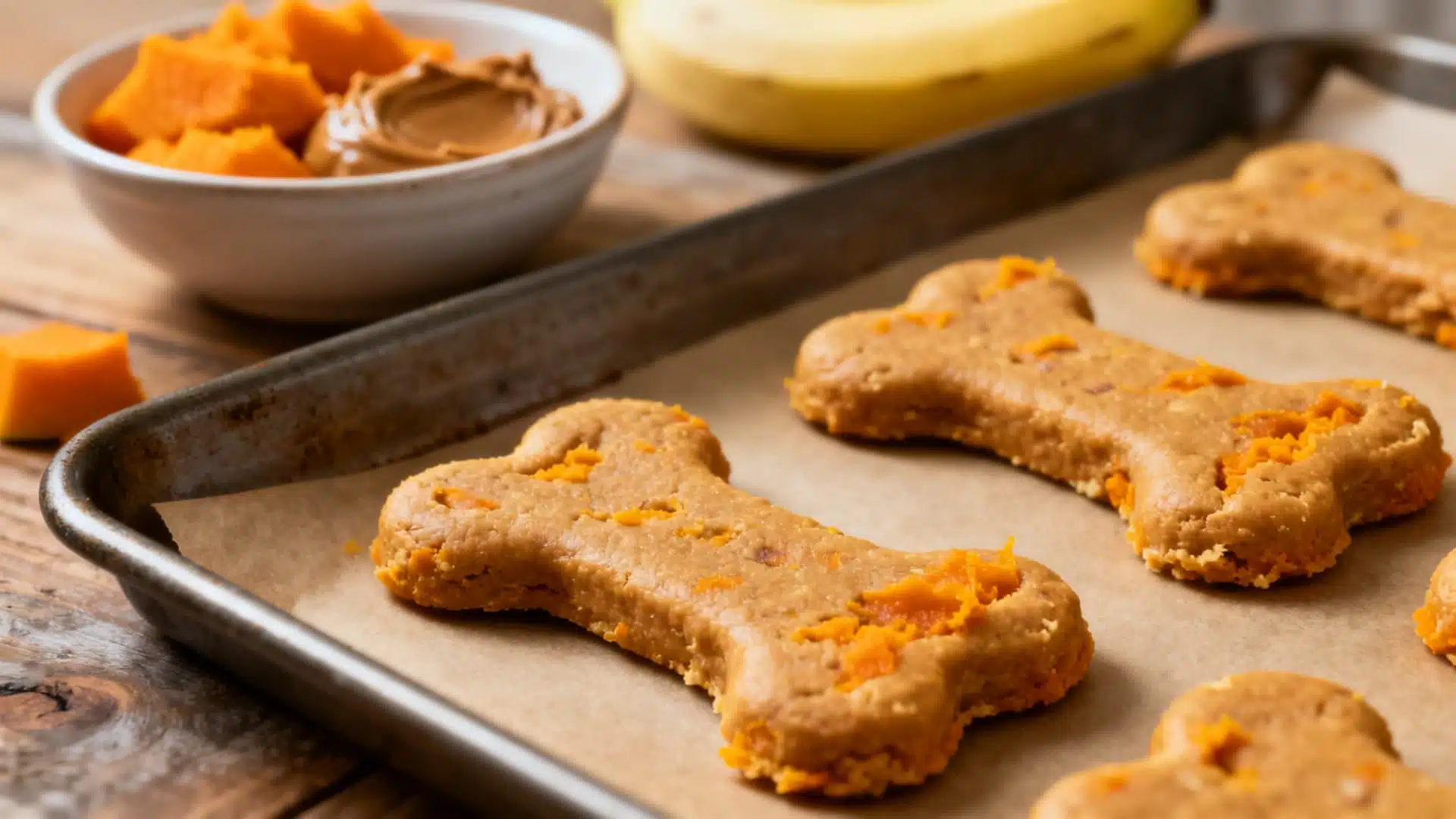
Adding pumpkin puree to the mix boosts the digestive benefits of these treats.
Canned plain pumpkin, not pumpkin pie filling, which contains spices and sugars, is one of the most well-documented home remedies for mild dog digestive upset.
I’ve recommended it professionally for years. It also adds a softer texture and a slightly richer taste.
Just mix a small amount into your base recipe and adjust oats if needed to maintain the right dough consistency.
Common Mistakes to Avoid
Small mistakes can turn healthy treats into risky ones, so paying attention to ingredients, portions, and preparation makes a big difference for your dog’s safety.
- Xylitol use: Always avoid peanut butter containing xylitol, as it is toxic and can cause serious health issues in dogs. Double-check brands like Jif, Skippy “Natural,” and store-brand “natural” peanut butters; formulations change. Brands consistently safe as of this writing include plain Smucker’s Natural and Laura Scudder’s, but always verify the current label.
- Overfeeding: Even healthy treats should be limited, as excess can lead to weight gain and digestive problems.
- Baking consistency: Incorrect baking time or thickness can result in treats that are too hard or undercooked.
- Ignore allergies: Some dogs may react to oats or peanut butter; monitor for any unusual symptoms after feeding.
- Poor storage: Improper storage can cause treats to spoil quickly and become unsafe for consumption.
How Often Can You Give These Treats?
Peanut butter banana dog treats should be given in moderation, not as a meal replacement.
As a general rule, I advise my clients that treats should not exceed 10% of your dog’s total daily calories. For small dogs, 1 to 2 small treats per day is enough, while medium dogs can have 2 to 3.
Larger dogs can handle 3 to 4, depending on activity level. Portion size also depends on your dog’s breed and build.
Smaller breeds have significantly lower calorie needs than larger ones, so even one extra treat can push them over their daily limit.
These treats work best as occasional rewards rather than regular food.
They are especially useful during training sessions, as their taste helps reinforce positive behavior.
I’ve recommended this recipe to multiple clients who were struggling to find training treats their dogs would reliably work for.
The peanut butter scent is strong enough to hold a dog’s attention even in distracting environments. Just keep portions controlled and adjust based on your dog’s diet and activity level.
Homemade vs Store-Bought Dog Treats: Quick Comparison
Choosing between homemade and store-bought treats depends on your priorities, including control over ingredients, budget, and how much time you can realistically invest in preparation.
| Factor | Homemade Treats | Store-Bought Treats |
|---|---|---|
| Ingredients | Full control, simple and clean | Often includes preservatives and fillers |
| Cost | Lower long-term cost | Higher, especially premium brands |
| Freshness | Made fresh in small batches | Longer shelf life with additives |
| Convenience | Requires time and effort | Ready to use instantly |
| Customization | Easy to adjust for diet needs | Limited options for specific needs |
Storage Tips to Keep Treats Fresh
Proper storage helps maintain freshness, prevents spoilage, and ensures your homemade dog treats stay safe and tasty for longer without losing their texture or quality.
- Room temperature: Store in an airtight container for up to 3 days, only if your home environment is cool and dry.
- Refrigeration: Keeps treats fresh for 7 to 10 days, maintaining texture and preventing early spoilage.
- Freezing: Best for long-term storage, lasting up to 2 to 3 months without losing quality. Freeze in a single layer on a baking sheet first, then transfer to a zip-lock bag to prevent clumping.
- Shelf life check: Always label batches with dates to track freshness and avoid feeding expired treats.
- Spoilage signs: Look for mold, a bad smell, or texture changes before giving your dog treats. If in doubt, throw it out; the ingredients are inexpensive enough that a fresh batch is always the safer call.
Conclusion
Peanut butter banana dog treats are a practical, nutritionist-approved way to give your dog a healthier snack without relying on packaged options.
With three core ingredients, flexible variations, and clear guidance on safety and storage, they’re a recipe worth adding to your regular rotation.
From years of working with dog owners on canine nutrition, one thing stands out: the simplest advice matters most. Know exactly what’s in your dog’s food.
These treats let you do exactly that. If you have a dog with a specific health condition, a weight issue, or a known sensitivity, it’s always worth a quick conversation with your vet before introducing any new treat, even a homemade one.
If you try making peanut butter banana dog treats at home, share your experience, tips, or variations in the comments below.