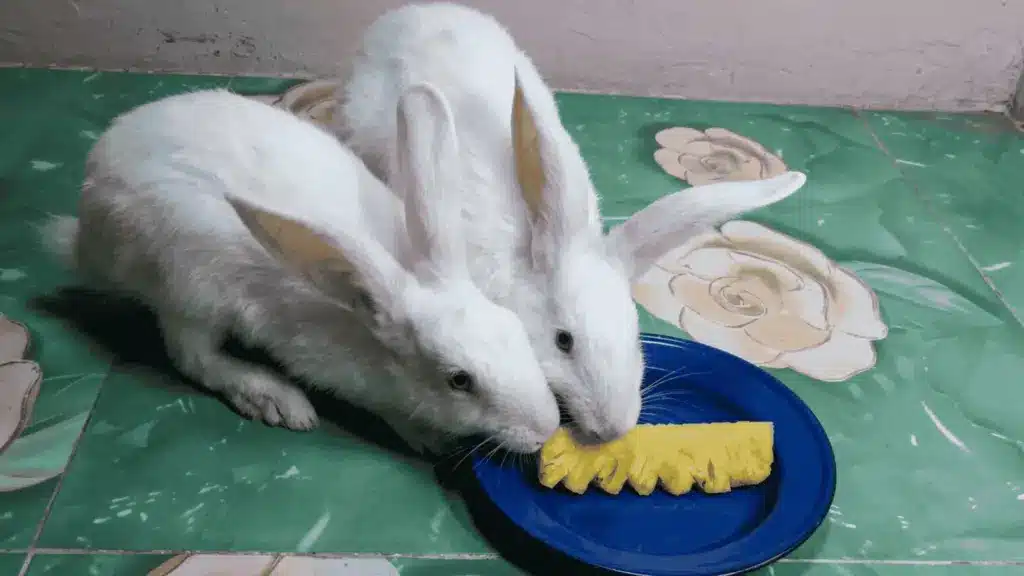
A sweet slice of pineapple can be tempting to share, especially when a curious rabbit hops over during snack time.
Many rabbit owners pause and ask a simple question before offering fruit: can rabbits eat pineapple?
While pineapple is not harmful in very small portions, it is not a regular part of a rabbit’s diet. Rabbits depend mainly on hay, fresh leafy greens, and clean water to keep their digestion stable.
Fruits like pineapple contain natural sugar, which means they should only appear as an occasional treat.
Understanding the right portion, safe preparation, and possible digestive reactions is important for responsible feeding.
This blog post explains whether pineapple is safe for rabbits, how much is appropriate, and which parts should always be avoided.
Can Rabbits Eat Pineapple?
Yes, rabbits can eat pineapple, but only in small amounts. Pineapple should always be treated as an occasional snack, not a daily food.
A rabbit’s diet relies mainly on hay, fresh leafy greens, and clean water, with fruit offered only from time to time.
Pineapple contains natural sugars that can upset digestion if given too often or in large pieces. When fed correctly, a small bite can be safe for healthy adult rabbits.
It should never replace core foods or be used to add bulk to meals. Understanding proper portions and timing helps prevent stomach issues.
With the right approach, pineapple can fit into a balanced feeding routine without causing harm. This guidance supports calm feeding choices for rabbit care.
Why is Pineapple Considered a Treat for Rabbits?
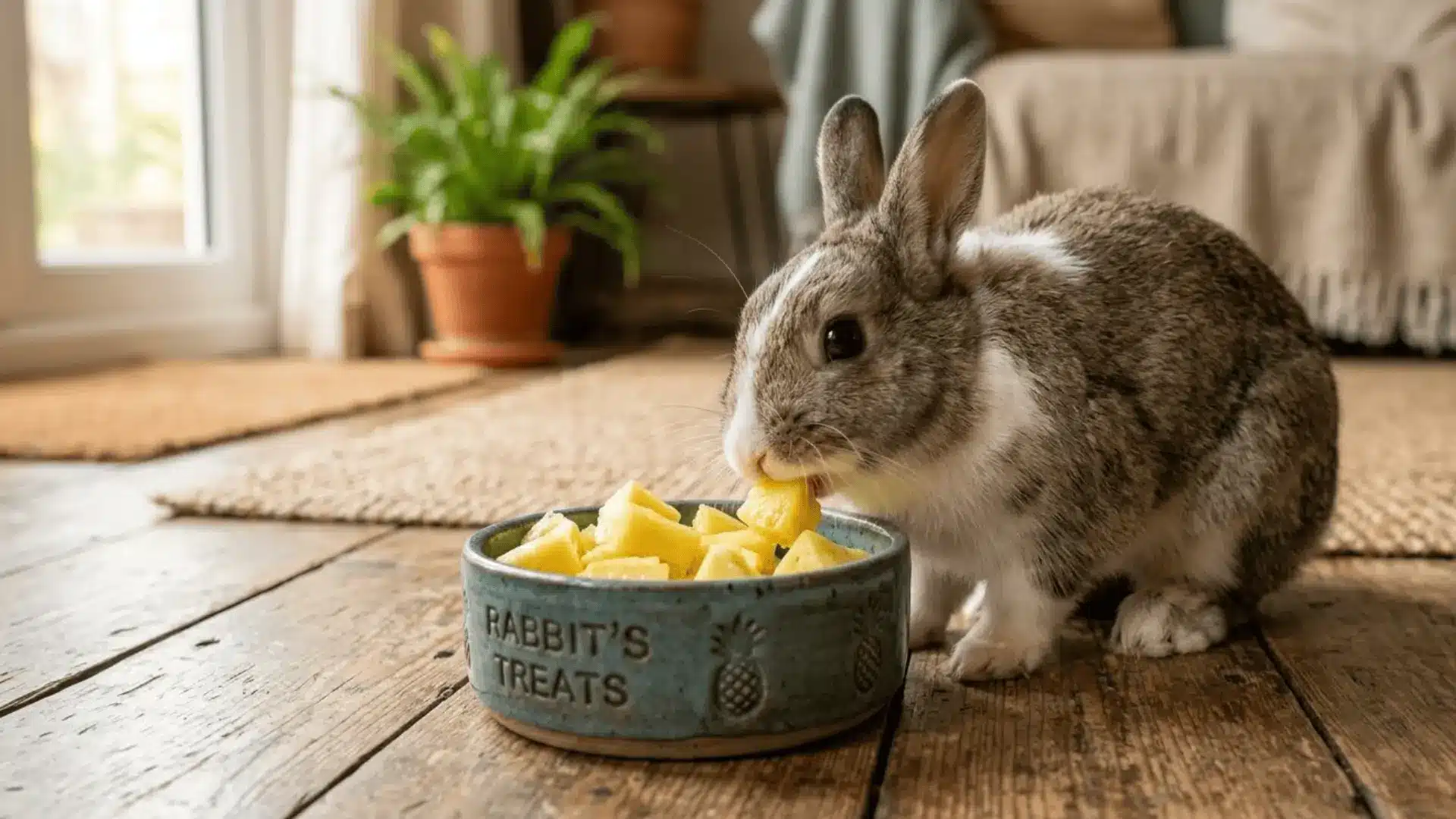
Pineapple is considered a treat for rabbits because it contains higher levels of natural sugar than foods meant for daily feeding.
A rabbit’s diet is structured around hay as the main food source, supported by fresh leafy greens and water. These foods provide the fiber needed for proper digestion and dental care.
Pineapple does not offer that fiber balance, so it cannot replace core diet items. When given too often, sugary foods can interfere with normal gut function.
For this reason, pineapple fits best as a rare addition that adds variety without changing how a rabbit’s digestive system is supported on a daily basis.
Nutritional Value of Pineapple for Rabbits
Pineapple contains several nutrients, though only small amounts benefit a rabbit’s diet.
A small portion provides vitamin C, which supports normal body functions, and vitamin B6, which helps with metabolism and energy use.
Pineapple also contains potassium, a mineral involved in muscle and nerve function. Fresh pineapple is about 85 percent water, so a tiny piece can add a little moisture during treat time.
However, pineapple also contains natural sugars such as fructose, which rabbits cannot process in large quantities.
Too much sugar can disturb the balance of bacteria in a rabbit’s digestive system.
Pineapple also contains very little fiber, which rabbits rely on for proper digestion, making it unsuitable as a regular food source.
Possible Benefits of Pineapple for Rabbits
These points explain the small ways pineapple may add moisture and variety, while keeping the focus on hay and leafy greens as the main foods in a rabbit’s diet.
- Hydration: Pineapple contains a high percentage of water, so a small piece can add a little moisture to a rabbit’s diet during treat time.
- Flavor Variety: The natural sweetness offers a different taste compared to hay and leafy greens, giving rabbits an occasional change in flavor.
- Food Enrichment: The soft texture of fresh pineapple provides a different chewing experience compared to dry hay or crunchy vegetables.
- Scent Attraction: The strong fruity smell of pineapple may encourage curious rabbits to investigate or nibble during treat time.
- Diet Awareness: These benefits remain small and do not replace the nutritional importance of hay and leafy greens in a rabbit’s daily diet.
Risks of Feeding Pineapple to Rabbits
Feeding pineapple to rabbits can cause problems when portions are too large or offered too frequently. Understanding these risks helps maintain stable digestion and healthy feeding habits.
- Digestive Upset: Too much pineapple can disturb a rabbit’s sensitive digestive system. This may appear as soft stools, irregular droppings, or mild stomach discomfort.
- High Natural Sugar: Pineapple contains natural sugar that rabbits do not need in large amounts. Frequent servings can place stress on digestion and reduce interest in hay.
- Portion Control Issues: Even a few extra bites can exceed the small sugar amount a rabbit can handle safely. Large pieces increase the chance of stomach imbalance.
- Diet Disruption: Mixing fruit with regular meals, such as greens or pellets, can interfere with normal feeding habits and digestive balance.
- Overfeeding Risk: Most problems occur when pineapple is offered too often or in large portions. Keeping servings small and occasional helps avoid these issues.
How Much Pineapple Can Rabbits Eat Safely?
Rabbits should only receive pineapple in very small portions due to the natural sugar content. A safe serving is one small cube of fresh pineapple, about 1 teaspoon in size (roughly 1 to 2 cm).
This small piece is enough to give a rabbit a taste without stressing the digestive system.
Pineapple should not be offered more than once or twice per week. Feeding it more often can add too much sugar to a rabbit’s diet and may lead to soft stool or reduced appetite for hay.
The fruit should always be plain, fresh pineapple flesh with the skin and core removed. It should also be offered separately from regular meals, not mixed with greens or pellets.
If pineapple is being offered for the first time, start with half a teaspoon and observe the rabbit’s droppings and eating habits over the next 24 hours.
Which Parts of Pineapple are Unsafe for Rabbits?
Rabbits should only eat the soft flesh of fresh pineapple. The skin is too tough and difficult to chew, which can cause choking or digestive strain.
The core is very fibrous and hard, making it difficult for rabbits to digest. Pineapple juice shouldalso be avoided, as it contains concentrated sugar without fiber.
Processed forms such as canned pineapple, dried pineapple, or pineapple in syrup are not suitable because they contain added sugars and preservatives.
Sticking to a small piece of fresh pineapple flesh helps reduce unnecessary risks and keeps feeding simple and safe.
Signs Your Rabbit May Not Tolerate Pineapple
If any of these signs appear, stop all treats immediately and return the diet to hay and leafy greens only.
- Soft Stools: Soft or loose stools appearing after pineapple is offered often indicate the digestive system reacting to excess sugar.
- Appetite Loss: Reduced interest in hay or regular meals can signal stomach discomfort affecting normal eating behavior.
- Low Activity: Lower activity levels or unusual stillness may occur when a rabbit feels unsettled after eating something that did not sit well.
- Dropping Changes: Changes in droppings, such as smaller size, irregular shape, or inconsistent output, can indicate a digestive imbalance.
- Stomach Discomfort: Signs such as sitting hunched or appearing unsettled may show that the rabbit is experiencing stomach discomfort.
Conclusion
Rabbits can enjoy pineapple, but the key lies in moderation and careful feeding. A rabbit’s diet should always center on hay, leafy greens, and fresh water, with fruit kept as a small occasional snack.
When pineapple is offered in tiny portions and not too often, most healthy adult rabbits can enjoy it without upsetting their digestion.
Paying attention to portion size, preparation, and how a rabbit reacts after eating helps prevent common stomach issues.
Simple habits like offering only fresh pineapple flesh and limiting frequency make a big difference in keeping digestion stable.
Treat time should add a little variety while still respecting the diet rabbits rely on every day.
Has your rabbit ever tried pineapple? Did it love the taste or ignore it completely? Drop a comment below and share your bunny’s snack story.