It often begins with a small but unsettling change, maybe your dog turns away from their food, vomits unexpectedly, or develops loose stool that leaves you anxious.
In those moments, concern quickly turns into late-night searches and quiet questions about: what is a bland diet for dogs, and if it could truly help settle a sensitive stomach.
Many pet owners feel helpless watching their usually energetic companion seem uncomfortable or withdrawn.
The reassuring truth is that the right bland food for dogs can gently calm the digestive system, reduce irritation, and give the body time to recover without adding more stress.
This blog covers detailed instructions on how to prepare a bland diet, foods to avoid, and when to visit a vet, to help you and your dog through a temporary setback.
What Is a Bland Diet for Dogs?
A bland diet for dogs is a simple, easy-to-digest meal plan used to help calm an upset stomach.
It usually includes plain, low-fat foods that are gentle on the digestive system. Many pet owners turn to bland food for dogs to reduce stress on the digestive tract.
This is especially helpful when the stomach lining is irritated from vomiting or diarrhea.
Plain foods like boiled chicken and white rice are gentle and less likely to trigger further inflammation. For vomiting, small portions of soft food are easier to absorb and reduce nausea.
For diarrhea, white rice has a binding effect that helps firm loose stool, while low-fat levels decrease intestinal stimulation.
According to the Blue Cross, always consult with a veterinarian on how long a dog should be put on a bland diet, but it should not be for a prolonged period of time.
Best Ingredients for Bland Food for Dogs
When preparing meals to soothe digestive discomfort, choosing the right ingredients matters. The goal is to keep everything simple, low in fat, and easy to digest to calm the stomach.
- Boiled Skinless Chicken: Lean, easy-to-digest protein that supports healing without adding excess fat, seasoning, or stomach irritation.
- White Rice: Soft, low fiber carbohydrate that helps firm loose stool and provides gentle, steady digestive support.
- Lean Ground Turkey: A light protein alternative to chicken when fully drained of fat and cooked plainly without oil.
- Boiled Potatoes: Plain, peeled potatoes offer a mild carbohydrate option for sensitive stomachs and temporary digestive recovery.
- Plain Pumpkin Puree: Natural fiber source that helps regulate digestion, improve stool consistency, and ease mild constipation.
How to Prepare a Bland Diet for Dogs?
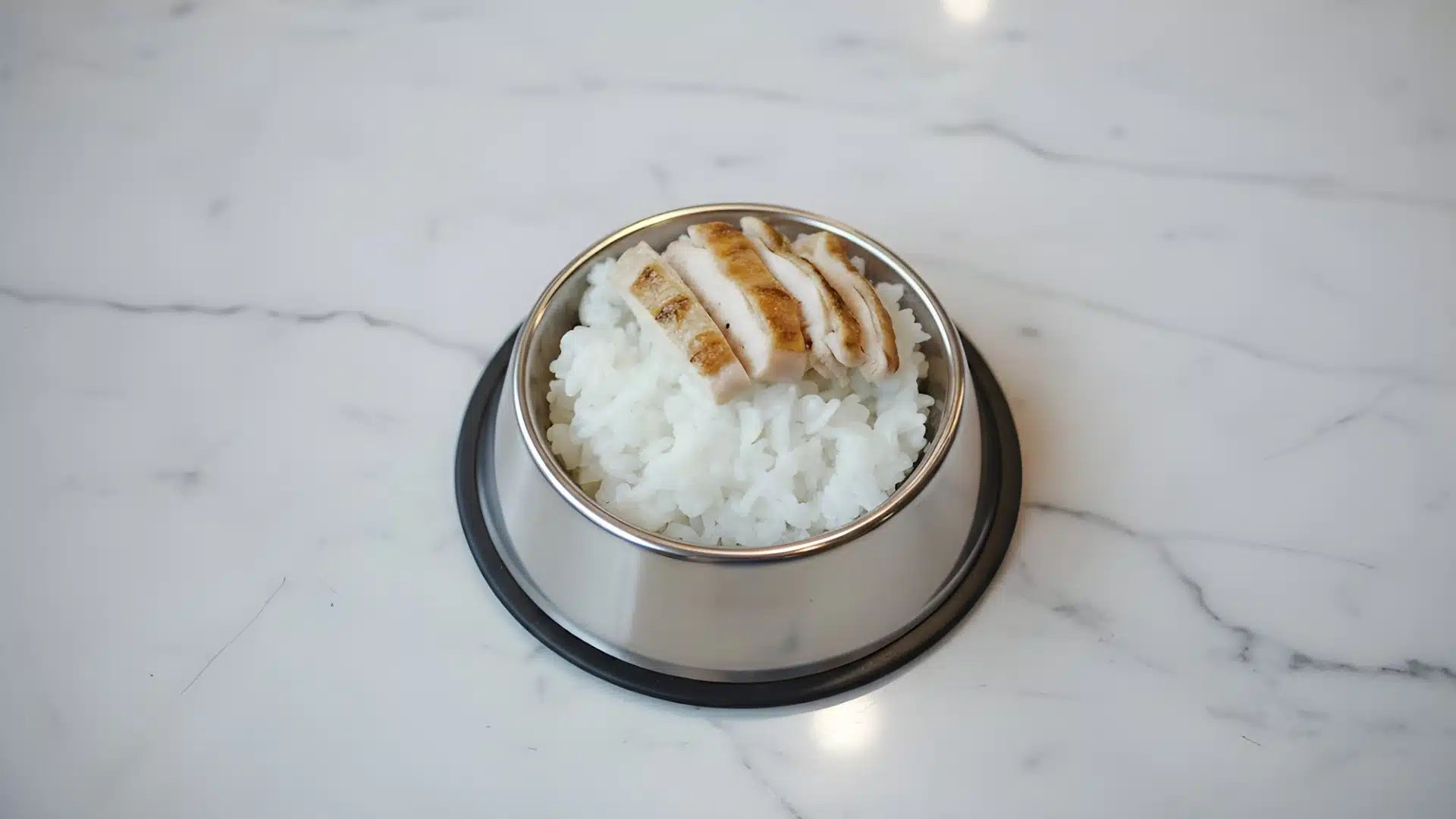
The key is to cook everything thoroughly, avoid added fats or seasonings, and serve the food in the correct balance. Following proper instructions will help you prepare it safely and correctly.
1. Choose Lean Protein
Start by selecting a lean protein source such as boneless, skinless chicken breast or extra lean ground turkey.
Always remove the skin, visible fat, and bones before cooking. Fat can trigger further stomach irritation, especially in dogs with diarrhea or vomiting.
Keep the ingredients simple and fresh, and avoid pre-seasoned or flavored meats.
Plain protein is the foundation of effective bland food for dogs and helps the digestive system recover without added stress.
2. Boil the Protein
Place the chicken or turkey in plain water and boil it until fully cooked. Do not add salt, oil, butter, garlic, or spices, since even small amounts can irritate the digestive system.
The internal temperature should reach 165°F to ensure it is safe.
Once cooked, drain the water and let the meat cool slightly before shredding it into small, bite-sized pieces. Smaller pieces are easier to digest and mix well with rice.
Proper cooking is essential when preparing bland food, especially for pets already dealing with nausea or diarrhea.
3. Cook White Rice
White rice is preferred because it is low in fiber and easy on the stomach. Measure one cup of uncooked white rice and cook it according to package directions, using only water.
It should be soft and slightly sticky, and slightly overcooked rice is perfectly fine for food for dogs.
Soft rice helps bind loose stool and provides gentle energy.
One cup of uncooked rice usually makes about three cups cooked, which is enough for most small to medium dogs for a day when mixed with protein in the proper ratio.
4. Mix in Proper Ratio
Once both ingredients are ready, combine them in a two-part rice to one-part protein ratio, which is widely recommended by veterinary professionals.
For example, mix two cups of cooked rice with one cup of cooked chicken.
This balance keeps the meal low in fat while still providing protein for recovery. If stools remain very loose, slightly increase the rice portion.
If they begin to firm up, you can gradually adjust. Maintaining this ratio supports digestion without overloading the stomach.
5. Let it Cool Before Serving
Before serving, allow the mixture to cool to room temperature. Hot food can irritate an already sensitive stomach and may discourage your dog from eating.
Once cooled, divide the daily portion into three or four small meals instead of one large serving.
Veterinary guidance often suggests feeding about one-third to one-half of your dog’s normal meal size per serving during recovery.
Smaller, more frequent meals make bland food for dogs easier to tolerate and help reduce the chances of further vomiting.
How Much Bland Food to Feed a Dog?
Most dogs recover fast and do better when their daily food amount is divided into three to four small servings. Feeding the right amount is just as important as choosing the right ingredients.
| Dog Size | Portion Guidelines (Per Meal) | Feeding Schedule |
|---|---|---|
| Small Dogs (under 20 lbs) | ¼ to ½ cup per meal | Morning, Midday, Evening (3 small meals) |
| Medium Dogs (20–50 lbs) | ½ to 1 cup per meal | Morning, Midday, Evening, Optional late snack (3–4 small meals) |
| Large Dogs (over 50 lbs) | 1 to 1½ cups per meal | Morning, Midday, Evening (3 evenly spaced meals) |
How Long Should a Dog Stay on a Bland Diet?
A dog should stay on a bland diet for a short period, usually two to three days, depending on how quickly symptoms improve.
The purpose of bland food for dogs is to calm the stomach and allow the digestive system to reset, not to replace a balanced long-term diet.
If vomiting stops and stools begin to firm within 24 to 48 hours, you can start slowly transitioning back to regular food.
This should be done gradually over several days by mixing small amounts of normal food into the bland meals.
A bland diet is meant to be temporary support, not a long-term feeding solution, and dogs should return to their regular balanced diet once symptoms improve.
Foods to Avoid When Feeding a Bland Diet
When feeding a dog during stomach recovery, it is just as important to know what not to include.
Bland food should stay simple and free from ingredients that can irritate the digestive system.
Avoid adding salt, butter, oil, spices, or sauces, and fatty meats such as bacon or seasoned ground beef, as their high-fat content can trigger further stomach distress.
Do not include dairy products like milk or cheese, since many dogs have trouble digesting lactose.
Raw foods are not recommended during this time because they are harder to process. Even certain vegetables that are high in fiber can increase gas and discomfort.
Keeping meals plain and minimal helps the stomach heal faster and reduces the risk of ongoing digestive issues.
Warning Signs That Require a Vet Visit
While mild stomach upset can often improve with rest and bland food, some symptoms signal a more serious problem. It is important to monitor your dog closely during recovery.
- Persistent Vomiting: Vomiting that continues for more than 24 hours or happens repeatedly throughout the day without improvement.
- Blood in Stool or Vomit: Red streaks or dark, tar-like stool can indicate internal bleeding or serious digestive complications.
- Severe Lethargy: Extreme weakness, unusual drowsiness, lack of response, or refusal to move or eat normally.
- Signs of Dehydration: Dry gums, sunken eyes, sticky saliva, or reduced skin elasticity when gently pinched and released.
- Abdominal Pain or Bloating: Whining, tense belly, pacing, restlessness, or visible swelling of the abdomen that seems painful.
Conclusion
Bland food for dogs is a short-term approach that focuses on simple, gentle meals that allow the digestive system to rest and recover.
What is a bland diet for dogs, and how to prepare it, gives pet owners a clear and calm plan of action because every dog responds a little differently.
Properly prepared bland food can ease irritation, reduce loose stool, and support steady hydration while the gut resets.
It is not meant to replace a balanced diet, but it can be a helpful bridge for mild digestive issues.
Always keep an eye on symptoms and energy levels. If problems continue or worsen, a veterinarian should step in for guidance.
Have you used any other method before to help your dog in distress? Drop a comment below and share what worked for your pup.