Bringing home a new fish feels exciting, but it can also make a new owner nervous.
The bag is floating, the tank looks ready, and one question keeps coming up: how long to acclimate fish before letting them swim free?
I’ve seen fish arrive looking completely fine only to crash within 24 hours, and in most of those cases, acclimation was skipped or cut short.
That small waiting period can feel longer than expected, especially when the fish is pacing, hiding, or breathing fast. Still, those quiet minutes matter.
A fish is not just moving into a new tank; it is adjusting to a whole new world of temperature, water chemistry, light, sounds, and movement.
Rushing that step can turn an exciting first day into a stressful one.
Why Do Fish Need Time to Acclimate?
Fish need time to acclimate because the water in the transport bag is often different from the water in the aquarium.
Differences in temperature, pH, hardness, and other water conditions can put fish under stress if they are moved too quickly.
A sudden change may cause shock, weaken their immune system, or even lead to health problems.
Acclimation gives fish time to adjust gradually to their new environment, making the transition much safer. It also helps reduce stress caused by transportation, handling, and changes in surroundings.
Many fish owners find that taking a little extra time during this step leads to healthier and more active fish after introduction.
A slow and careful acclimation process can improve survival rates and help fish settle into their new tank with fewer problems.
How Long to Acclimate Fish?
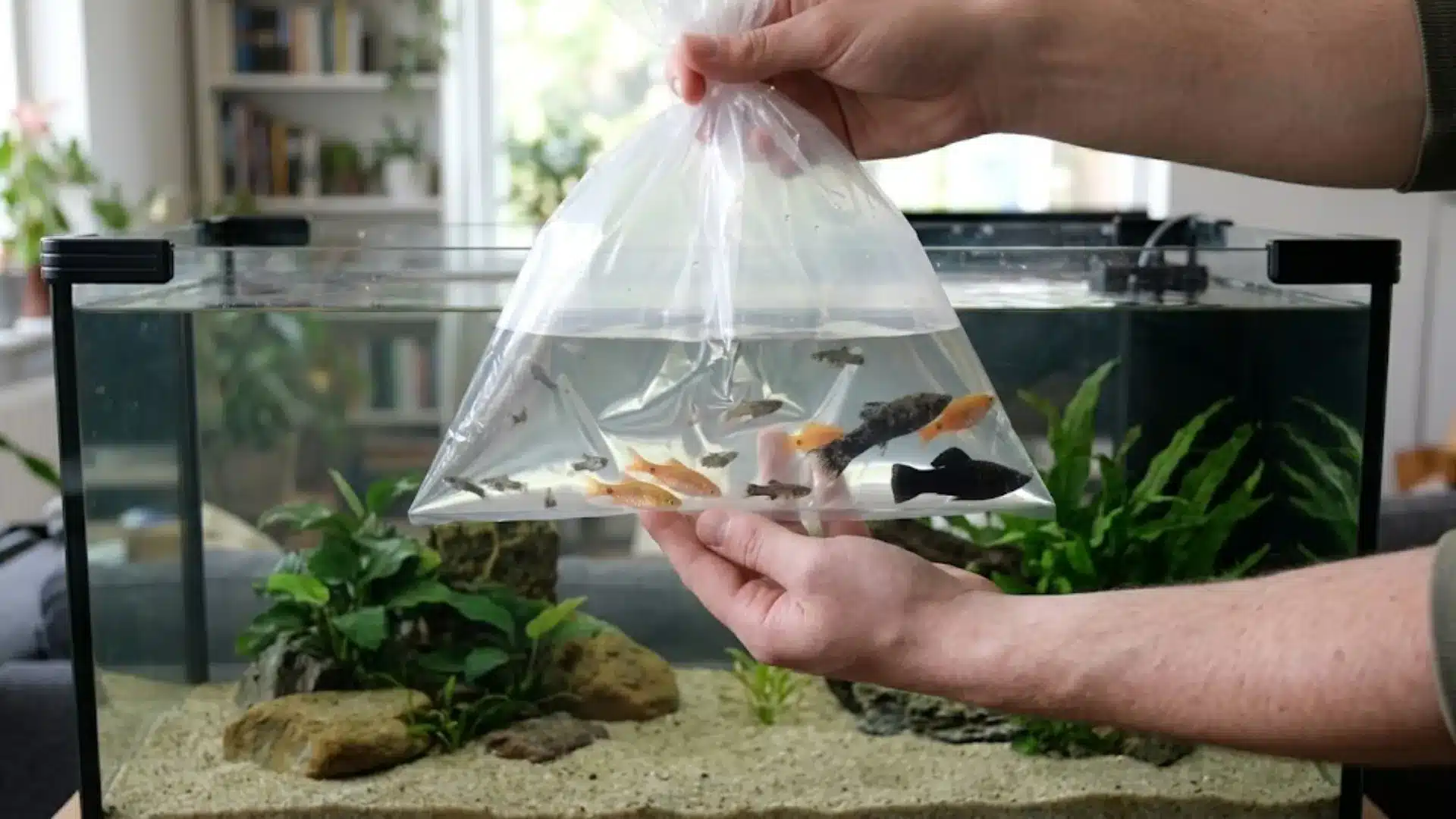
The ideal acclimation time depends on the type of fish and the difference between the bag water and the aquarium water.
Most fish owners recommend acclimating freshwater fish for about 20 to 30 minutes, which is usually enough time to match the temperature and slowly introduce tank water.
More sensitive species, such as discus, shrimp, or saltwater fish, may need 45 minutes to an hour or longer.
The goal is not to follow an exact timer but to help fish adjust gradually to their new environment. Rushing the process can increase stress and make it harder for fish to settle in.
Many experienced aquarium keepers agree that spending a little extra time on acclimation is better than moving fish too quickly, especially when introducing them to a new tank for the first time.
Types of Acclimation Methods
There are common ways fish owners acclimate new fish before adding them to an aquarium: the floating method and drip acclimation.
1. Floating Method
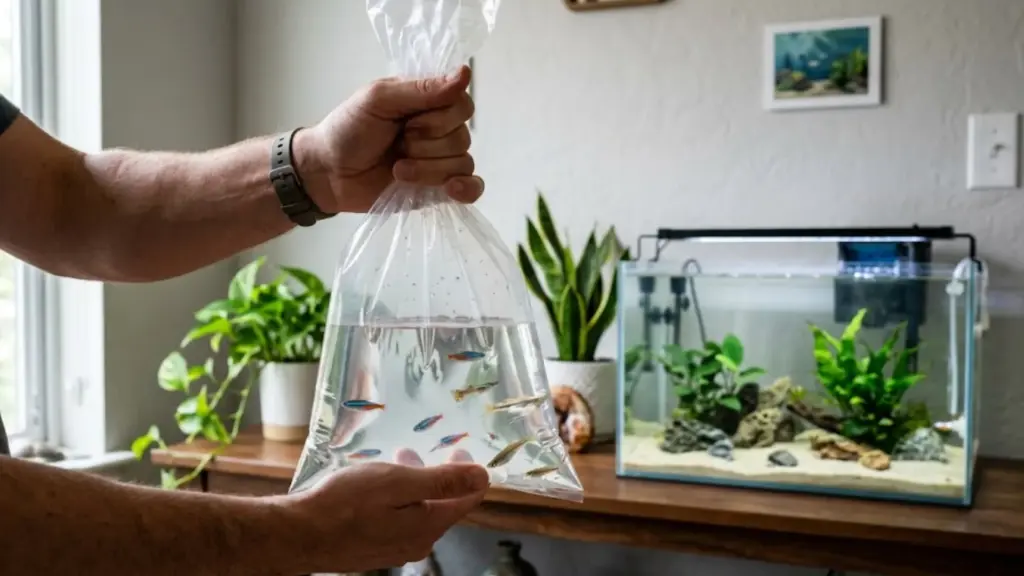
The floating method is the most common acclimation technique for beginner fish keepers. It usually takes about 20 to 30 minutes and works well for many freshwater fish.
Start by placing the sealed transport bag in the aquarium and letting it float for 15 to 20 minutes.
This allows the water temperature inside the bag to match the tank temperature.
After that, add small amounts of aquarium water to the bag every few minutes for another 10 to 15 minutes. Once finished, gently transfer the fish into the tank without pouring the bag water into the aquarium.
2. Drip Acclimation
Drip acclimation is a slower method that gradually mixes aquarium water with the water in the transport bag.
It typically takes 45 minutes to 1 hour, although some fish owners may extend it to 90 minutes for very sensitive species. A small tube is used to slowly drip tank water into a container holding the fish and bag water.
This helps fish adjust to changes in pH, hardness, and other water parameters at a steady pace.
Drip acclimation is often recommended for shrimp, saltwater fish, and other delicate species that can be stressed by sudden water changes.
3. Plop and drop
Plop and drop is the fastest method and is specifically designed for fish that arrive shipped in breather bags.
Breather bags allow gas exchange during transit, which means ammonia and carbon dioxide can build up in the water over time.
When you open an old bag and slowly add tank water, you risk a rapid pH spike that turns the ammonia toxic.
For shipped fish, float the sealed bag for 15–30 minutes to equalize temperature, then net the fish directly into the tank without adding any bag water at all.
It sounds abrupt, but the risk from ammonia-spiked bag water often outweighs the benefit of a slower process.
Freshwater vs Saltwater Fish Acclimation
Freshwater and saltwater fish both need acclimation, but saltwater fish usually need more time because they are more sensitive to water changes.
After getting your fish acclimated and settled, keeping the tank clean becomes the next priority for keeping new arrivals healthy.
| Factor | Freshwater Fish | Saltwater Fish |
|---|---|---|
| Acclimation Time | 20 to 30 minutes | 45 to 60 minutes |
| Best Method | Floating method | Drip acclimation |
| Sensitivity | Lower | Higher |
| Main Focus | Temperature adjustment | Water chemistry adjustment |
| Stress Risk | Moderate | Higher |
Does the Type of Fish Matter?
Yes, the type of fish matters because some fish handle change better than others.
- Hardy freshwater fish like guppies, mollies, platies, and goldfish usually adjust faster and may only need 20 to 30 minutes of acclimation.
- More sensitive fish, such as discus, neon tetras, bettas, and many saltwater fish, often need a slower process.
- Shrimp and other invertebrates are even more delicate, so many fish owners prefer drip acclimation for 45 minutes to an hour or longer.
The fish’s size, stress level, travel time, and original water conditions can also affect the process. A safe approach is to go slower when unsure.
Taking extra time helps reduce shock and gives the fish a better chance to settle into the tank calmly.
If you’re still building your tank and deciding which fish to keep, this blog covers beginner-friendly fish species and which ones are easiest to care for and least sensitive to water changes.
What Experienced Fish Keepers Say About Acclimation Time
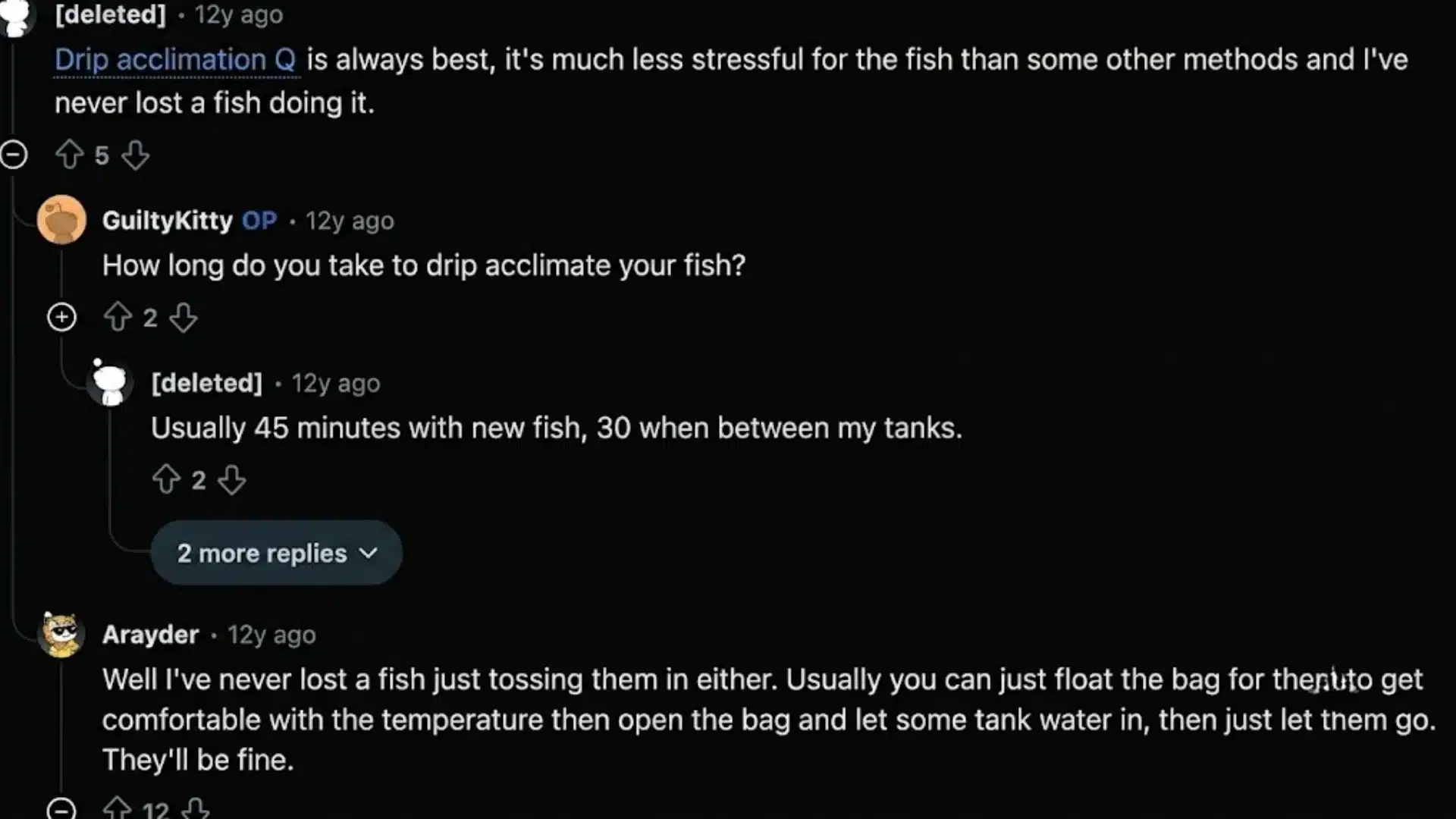
Many Reddit fish owners seem to agree that acclimation should be slow, but not stressful for the fish.
In one discussion, a hobbyist shared a process that takes around 1 to 2 hours, starting with floating the bag, keeping the lights off, and adding small amounts of tank water every 10 to 15 minutes.
Another owner said drip acclimation usually takes about 45 minutes for new fish and 30 minutes when moving fish between their own tanks.
The main advice is to avoid the “dump and shock” method, especially when the store water and tank water have different pH or temperature levels.
Owners also warn against adding store water to the tank. For delicate fish, shrimp, or crabs, most recommend going even slower and giving them extra time to settle before turning the lights back on.
Signs Your Fish Is Stressed During Acclimation
Fish may show signs of stress while adjusting to a new tank. Watching their behavior during acclimation can help you spot problems early and make the transition safer. If you notice any of the following signs, slow down the process and avoid sudden changes.
- Rapid Breathing: Fast gill movement can indicate stress caused by changes in temperature or water conditions.
- Erratic Swimming: Sudden darting, swimming in circles, or crashing into objects may be a sign of discomfort or shock.
- Clamped Fins: Fins held tightly against the body often suggest that the fish is stressed or feeling unsafe.
- Loss of Color: Faded or dull colors can occur when a fish is struggling to adjust to its new environment.
- Staying Motionless: Remaining in one spot for long periods or hiding excessively may signal stress or exhaustion.
- Gasping Near the Surface: Spending too much time at the water surface can indicate difficulty adapting to water conditions or oxygen levels.
Common Mistakes Fish Owners Warn About
Fish acclimation is simple, but small mistakes can stress fish quickly. Most owners recommend moving slowly, keeping water clean, and avoiding rough handling.
- Skipping Acclimation: Adding fish straight to the tank can cause shock from sudden temperature or water changes.
- Rushing the Process: Moving too fast gives fish little time to adjust, which can increase stress and health risks.
- Adding Bag Water: Store water may carry waste, parasites, or chemicals that should not enter your aquarium.
- Acclimating Too Long: Keeping fish in poor bag water too long can expose them to rising ammonia levels.
- Ignoring Temperature: Different water temperatures can shock fish, even when the tank looks clean and safe.
- Rough Handling: Chasing, squeezing, or dropping fish can cause injury and make acclimation more stressful.
Conclusion
Knowing how long to acclimate fish can make the first day in a new tank much less stressful for both the fish and the owner.
A careful acclimation period gives fish time to adjust, breathe easier, and settle into unfamiliar water without sudden shock.
The best timing may not be the same for every fish, which is why many owners rely on patience, observation, and past experience.
Some fish adjust in 20 minutes, while others need closer to an hour. What matters most is giving each fish a safe start instead of rushing the move.
Have you tried the floating method, drip acclimation, or another approach? Share your experience in the comments below so other fish owners can learn what worked best for your tank.
Frequently Asked Questions
Can Fish Survive Without Acclimation?
Some hardy fish may survive, but skipping acclimation increases stress, shock, and health risks after entering the new tank.
Should Aquarium Lights Stay Off During Acclimation?
Yes, keep aquarium lights off during acclimation. Dim lighting helps reduce stress, keeps new fish calmer, and makes the tank feel safer.
Can I Feed Fish Right After Acclimation?
It is better to wait a few hours before feeding. New fish often feel stressed after moving and may ignore food at first.