Ever looked at your fluffy cat and thought, “You would look like royalty with a mane”? That playful idea is exactly why the lion cut has become such a loved grooming style for cats with thick or tangled coats.
It can turn an everyday pet into a tiny jungle king while also making brushing, shedding, and mat control easier for many owners.
But there is more to this look than a shaved body and a fluffy face.
From classic styles to softer trims, bold tail poms, breed-based ideas, and aftercare tips, this blog post walks through the best ways to choose a style that looks cute and keeps your cat comfortable. Before booking a groomer, here is what to know.
What Does a Lion Cut Cat Look Like?
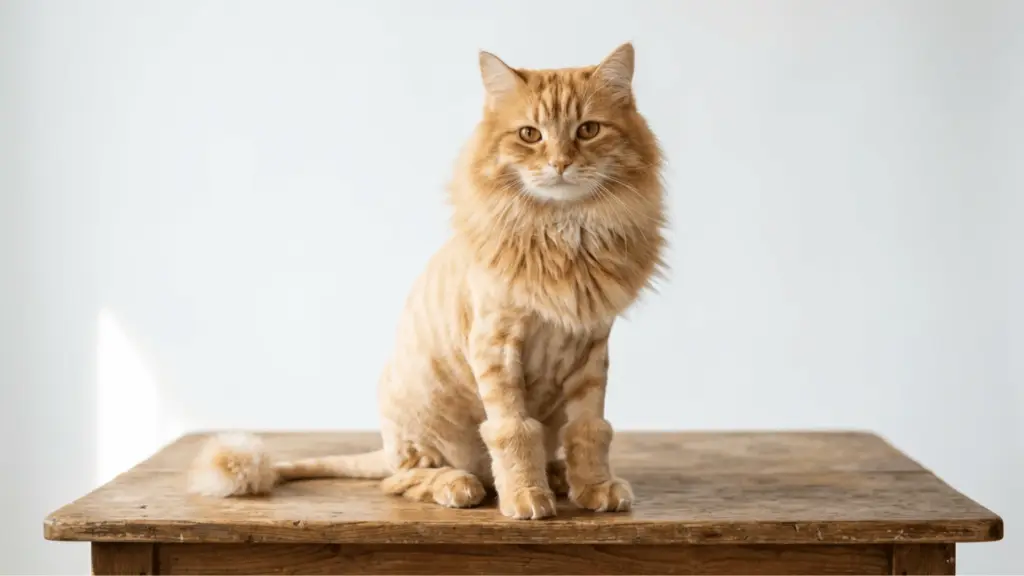
A lion cut gives a cat a shaved body with a full, fluffy mane around the head and shoulders, short fur “boots” on the lower legs, and a tail pom-pom left at the tip.
The mane should follow the shoulder line naturally, blending into the shaved body without a harsh edge.
The look is dramatic yet polished. Long-haired cats appear sleeker and more compact, while thick-coated breeds often seem lighter and more energetic after grooming.
The shaved areas reveal the cat’s true body shape, which can be surprising beneath all that fur. A quality lion cut depends on balance and symmetry.
The mane should be full and rounded, the boots even on all four legs, and the tail pom proportionate to the tail length.
Cats with severe matting may need a simpler version at first, as damaged fur can limit styling options.
Lion Cut Cat Grooming: Step-by-Step Method
A lion cut cat needs careful grooming, proper handling, and balanced trimming to keep the style neat while protecting sensitive skin.
- Check the coat and skin: Look for mats, tangles, redness, bumps, or sensitive spots before grooming starts. Matted fur needs extra care because it can pull tightly on the skin.
- Keep the cat calm: Place the cat on a stable surface and handle it gently. Short breaks can help if the cat feels nervous or starts moving too much.
- Clip the body short: Trim the body coat from the shoulders to the back legs while avoiding a shave that is too close to the skin.
- Leave the lion mane: Keep the fur around the head, neck, and shoulders longer to create the classic lion cut cat look.
- Shape the legs and tail: Leave fur on the lower legs for small boots and keep a fluffy pom at the end of the tail.
- Brush during regrowth: Brush the coat regularly as it grows back to prevent new mats and keep the next grooming session easier.
Popular Lion Cut Cat Styles and Ideas
This is where it gets interesting. “Lion cut” is actually an umbrella term. There are some recognized style variations, and a good groomer can customize almost any of them to suit your cat’s coat and your preferences.
1. Classic Full Lion Cut
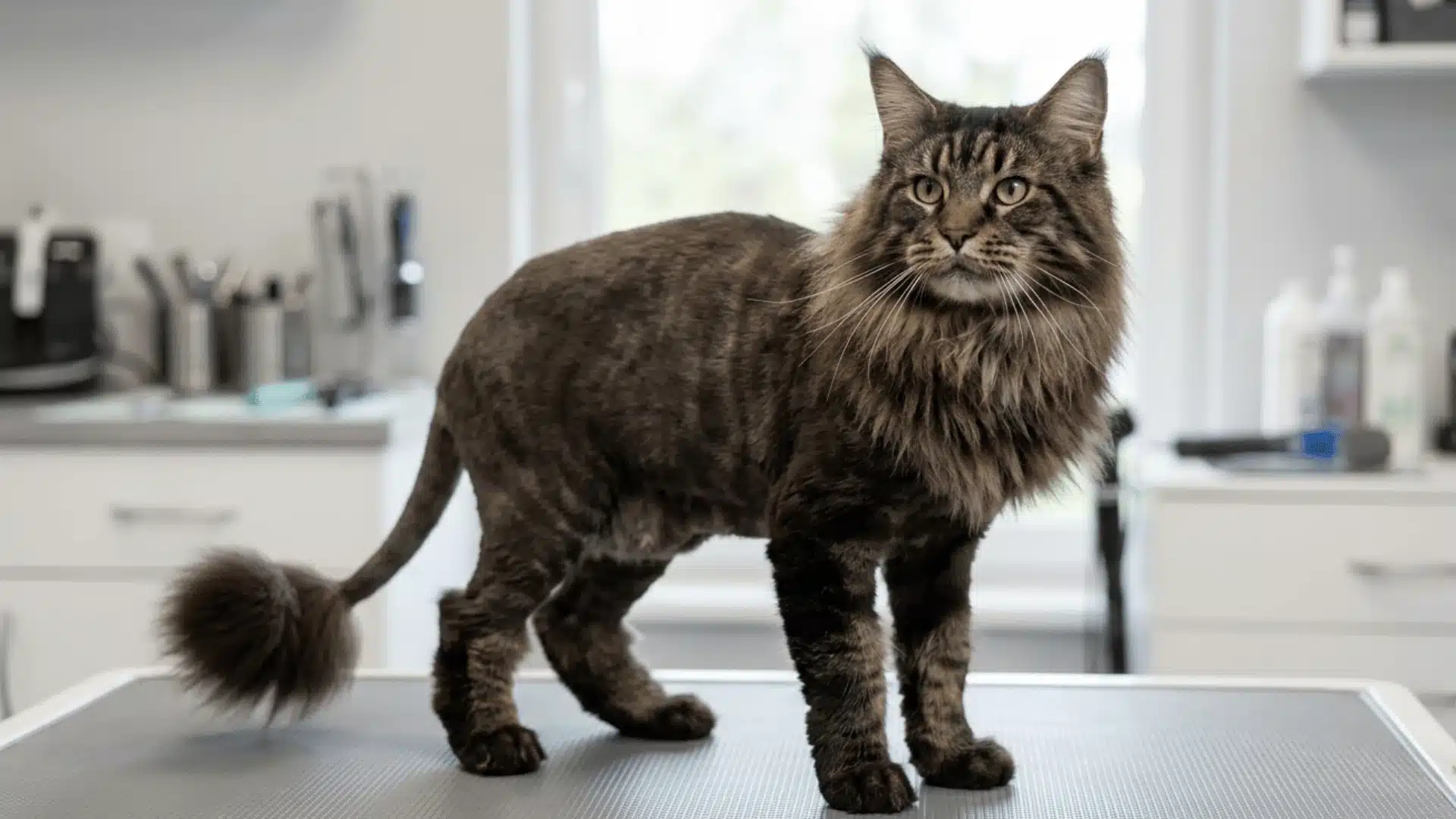
The classic full lion cut is the most recognizable and widely requested variation. In this style, the body is shaved close while a full mane is left around the head, neck, and shoulders.
Fur is also retained on the lower legs to create “boots,” and the tail ends with a rounded pom.
The result is a balanced, lion-like appearance that works particularly well for long-haired cats with healthy coats and calm temperaments.
2. No-Mane Lion Cut
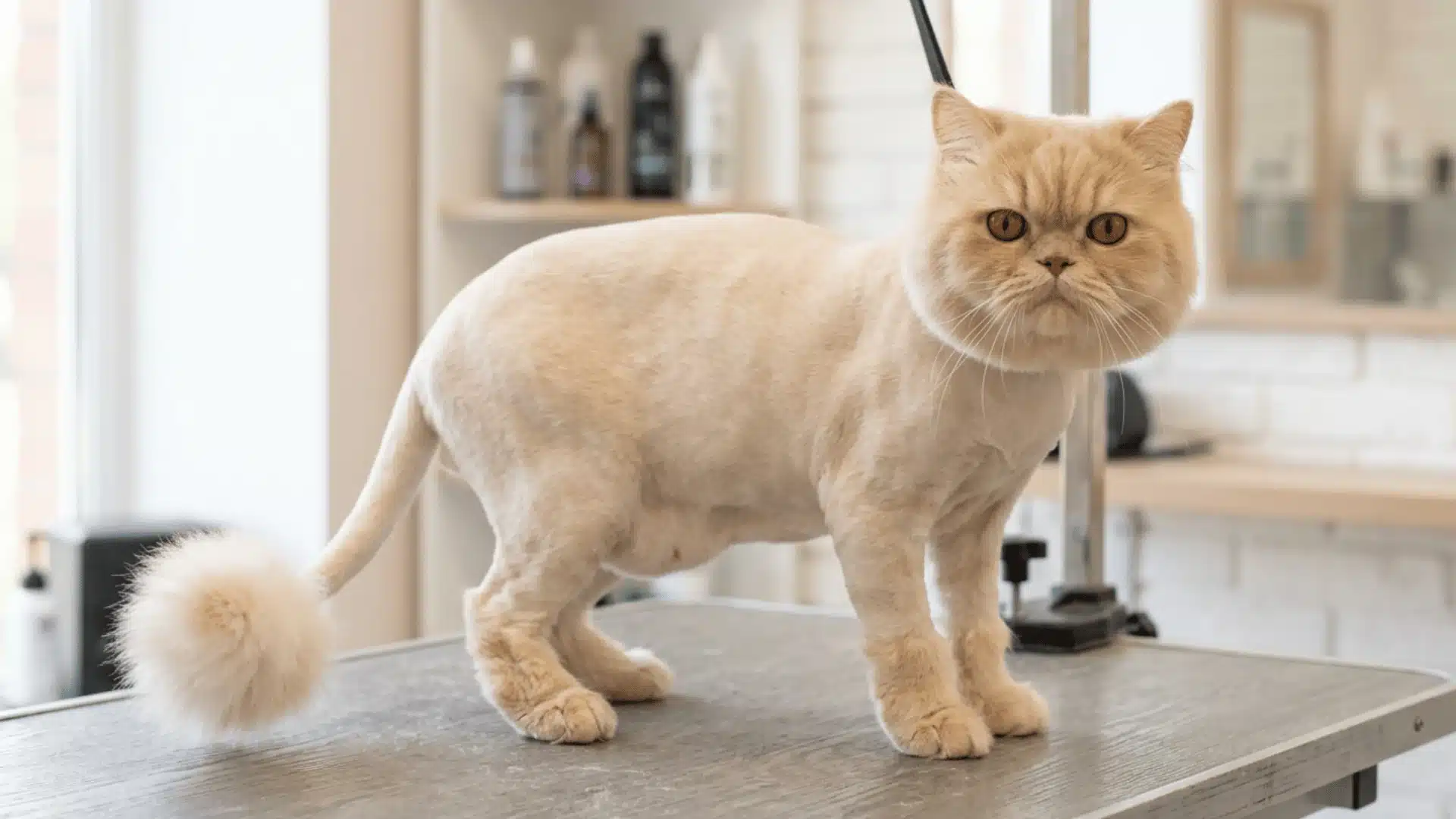
This cut creates a sleek and uniform appearance by extending the shave behind the ears and across the neck.
This variation is often chosen when severe matting affects the bib or neck area, making it difficult to preserve a traditional mane.
While it lacks the dramatic lion effect, it offers easier maintenance and a cleaner overall look. Many cats appear younger and more streamlined after this style is completed.
3. Asian Lion Cut
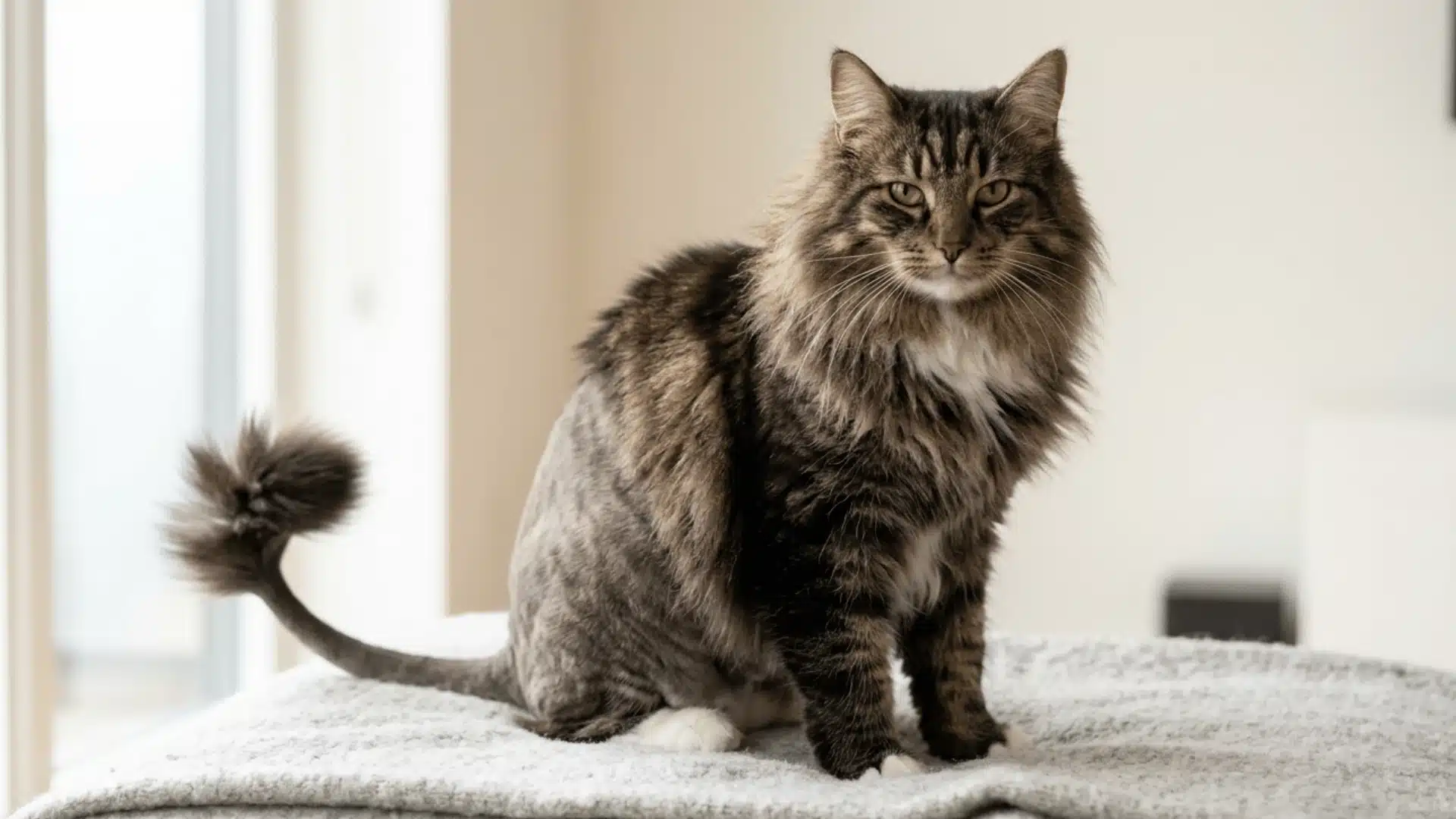
This cut features a longer, fuller mane that extends beyond the shoulders and toward the middle of the body.
This added fur coverage creates a more dramatic silhouette while also providing extra warmth around the chest and upper torso.
It is a popular choice for senior cats or those living in cooler climates. The style combines practicality with a bold, elegant appearance that closely resembles a majestic lion.
4. Mini Lion Cut
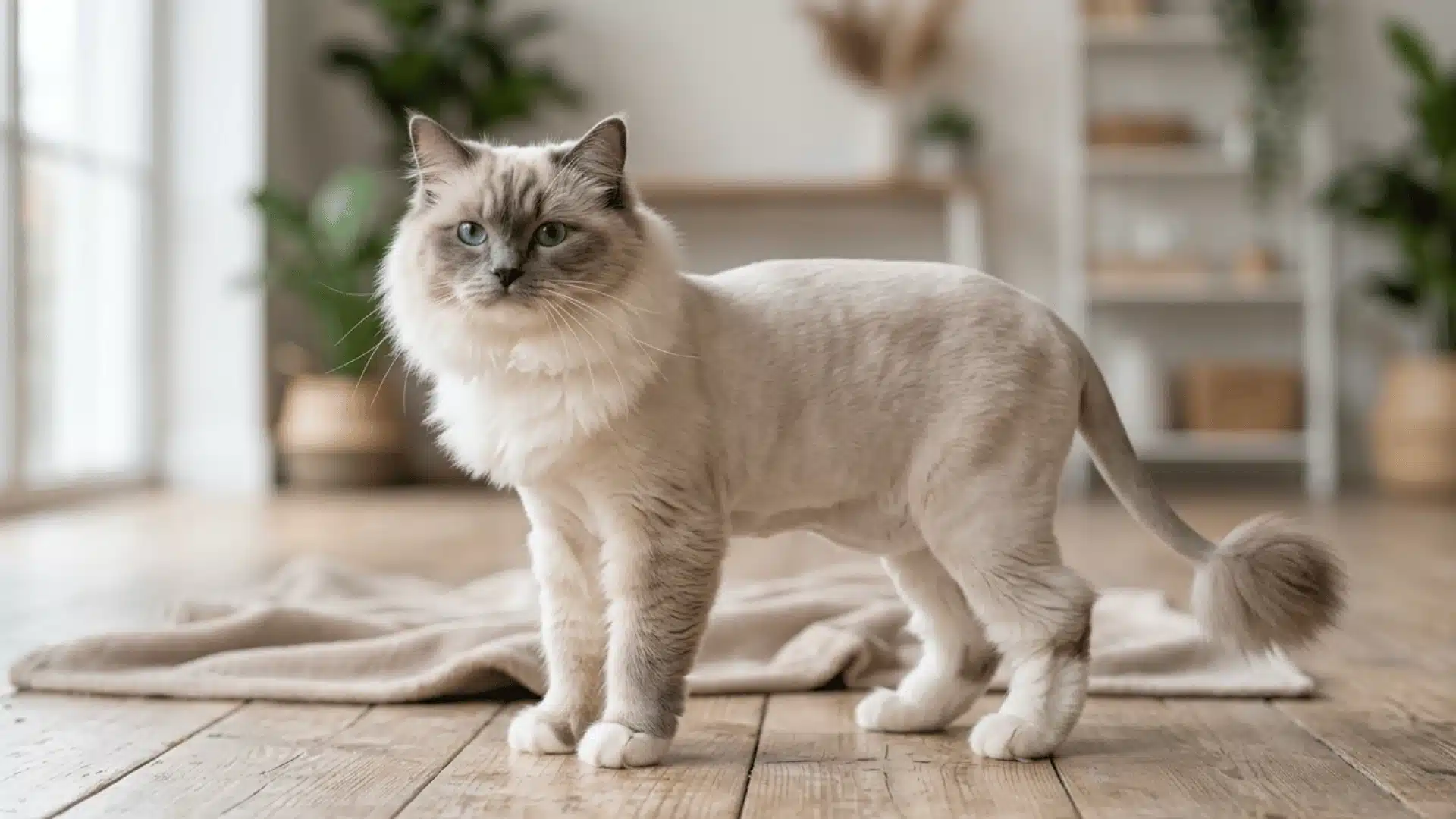
The mini lion cut is a softer and more understated version of the traditional lion style.
Instead of a large mane flowing over the shoulders, the longer fur is concentrated around the back of the neck, creating a subtle collar effect.
This variation works well for cats with thinner neck fur or owners who prefer a less dramatic transformation. It delivers the lion-cut aesthetic while maintaining a more natural appearance.
5. Mohawk Lion Cut
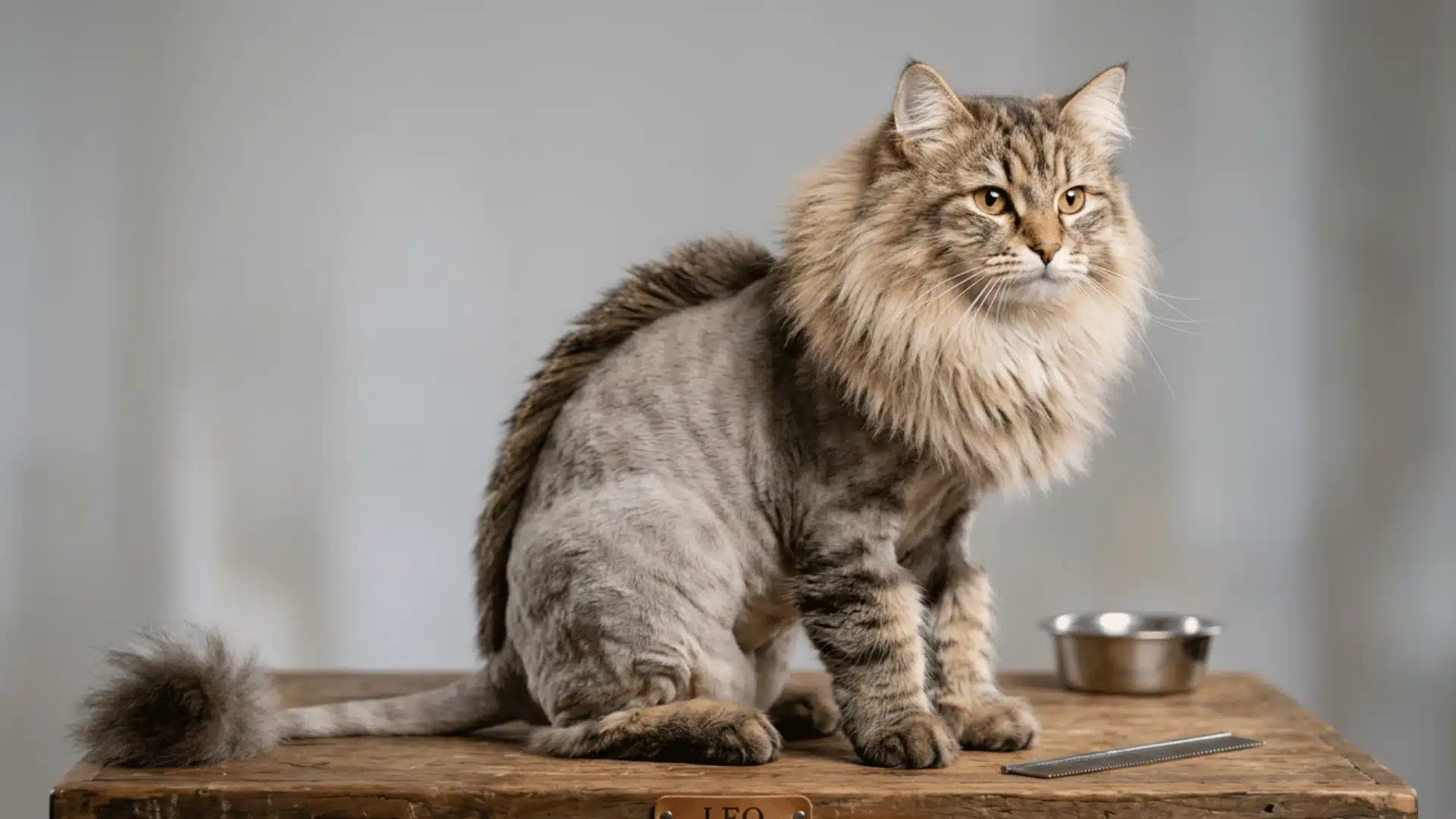
This takes the classic lion-cut body and adds a strip of longer fur running down the center of the back.
This distinctive ridge creates a bold Mohawk effect that gives the cat a unique and eye-catching look. Because the design requires careful shaping and symmetry, it demands more grooming time and precision.
It is best suited for relaxed cats that can remain still during detailed grooming sessions.
6. The Tigon Cut
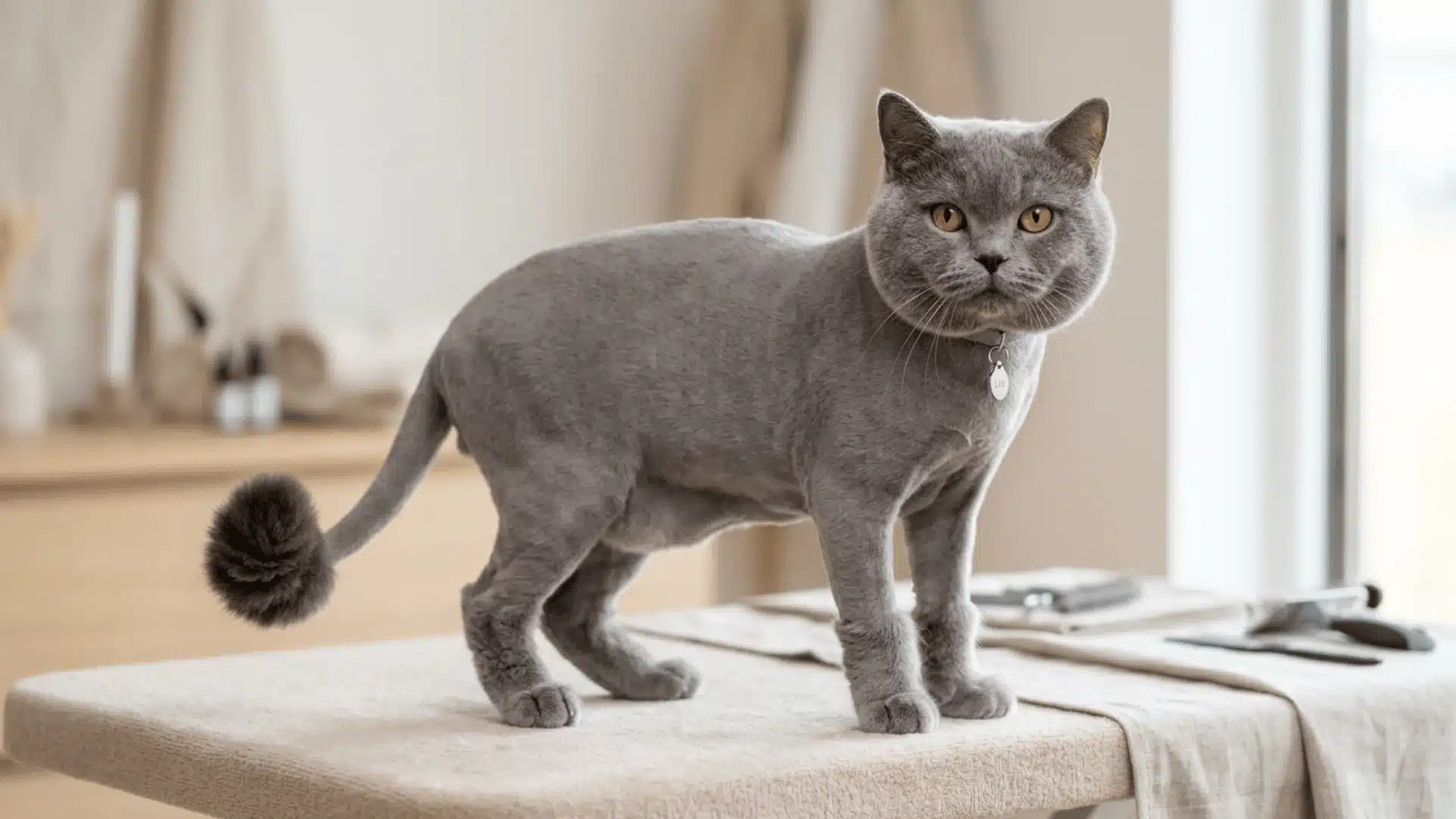
The Tigon is a creative hybrid style that combines elements of both lion and tiger-inspired grooming. The body follows the traditional lion-cut pattern, but no mane is left around the neck.
Instead, the groomer shapes the head into a neat, rounded form that creates a softer appearance.
This variation is particularly appealing for short-haired cats, where a full mane may appear disproportionate or fail to achieve the desired visual balance.
7. Dragon Cut
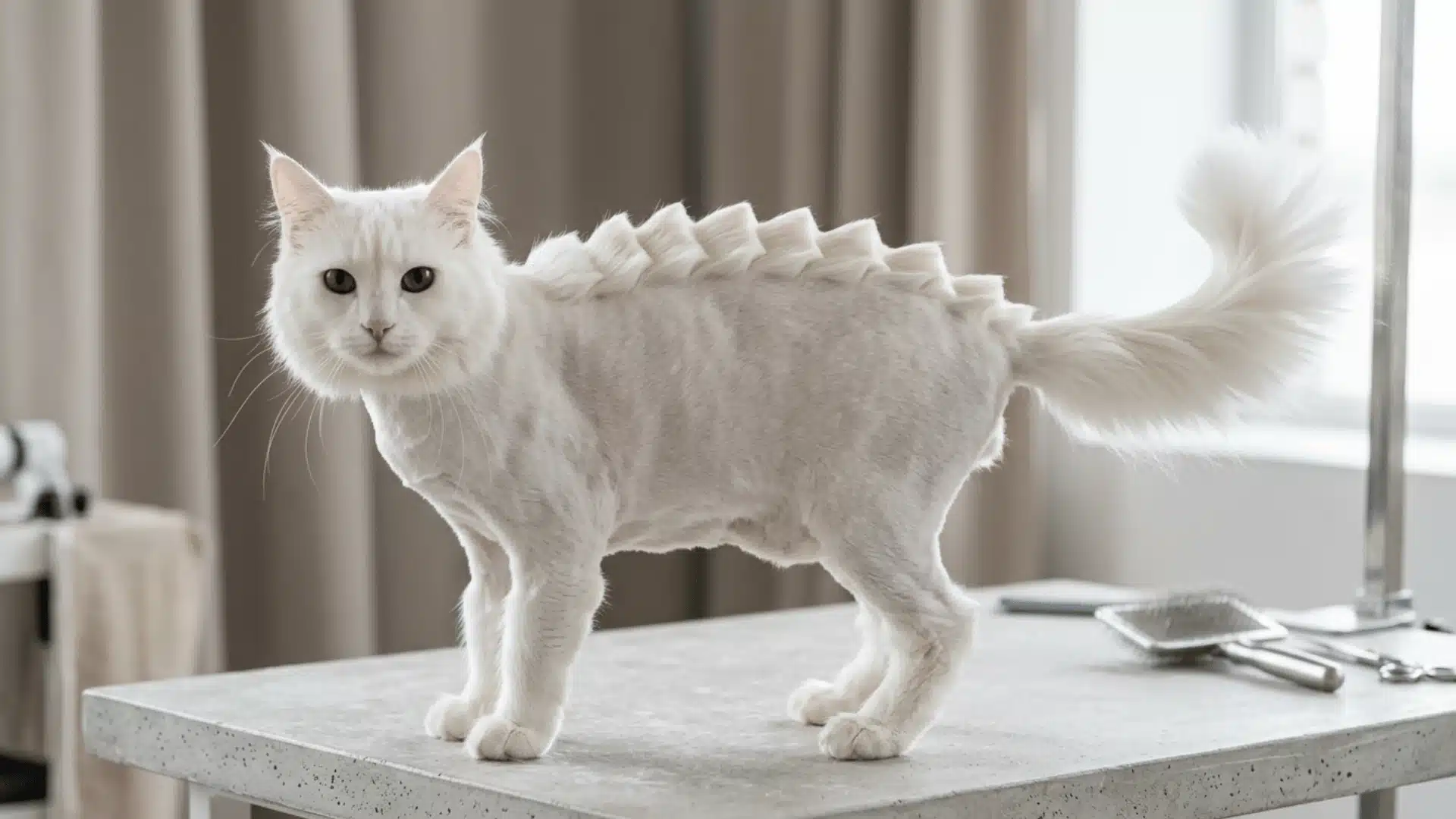
This cut, also known as the dino cut, is one of the most striking specialty cat grooming styles available.
Rather than leaving a mane, the groomer preserves a raised ridge of fur along the spine to resemble the plates of a dinosaur.
The dramatic look has gained significant popularity on social media due to its uniqueness. Achieving this design requires precision grooming and a patient, easygoing cat that tolerates extended sessions.
Which Cat Breeds Look Best in a Lion Cut?
Long-haired breeds get the most out of this style because they have enough fur to form a real mane. Short-haired cats can get modified versions, but the mane effect is far less dramatic.
| Breed | Best lion cut style | Regrowth time | Notes |
|---|---|---|---|
| Persian | Classic full lion | 8 weeks for notable length | Dense coat creates a dramatic mane. High-maintenance to brush without regular cuts. |
| Maine Coon | Classic full lion or Asian lion | 10–12 weeks | A large frame produces an enormous mane. Slower regrowth means fewer appointments. |
| Ragdoll | Mini lion or classic | 8–10 weeks | Silky coat creates an elegant mane rather than a fluffy one. A calm temperament makes grooming easier. |
| Himalayan | Classic full lion | 8 weeks | Color pointing means mane and boots often differ from the shaved body, creating an interesting visual contrast. |
| Norwegian Forest Cat | Classic full lion or Mohawk | 10–12 weeks | Dense double coat and large frame produce a big, wild mane. |
| Short-haired breeds | Tigon or Velvet cut | 6–8 weeks | Full mane not achievable. Tigon or Velvet gives the body style without forcing a mane. |
Creative Lion Cut Ideas and Customization Options
A lion cut is more like a starting point than a fixed style. Most groomers who specialize in cats will let you mix and match details to get a look that fits your cat’s personality and coat type.
- Mane length: Short mane at the back of the neck, standard mane to the shoulder blades, or extended mane past the shoulders. Longer manes are warmer and more dramatic. Shorter ones are easier to maintain between grooming sessions.
- Boot height: Boots can stop just above the paw, at the elbow, or at the hock. Higher boots mean more leg fur and a slightly warmer cat. Lower boots give a cleaner, more defined look.
- Tail style: The classic pom-pom, a longer plume left on the last third of the tail, or a full natural tail left untouched. Full tails work well on cats who are touchy about their tail being handled.
- Velvet length: Instead of a close shave, the groomer uses a blade that leaves a soft, velvety texture rather than bare skin. Good for cats with sensitive skin or owners who want less dramatic contrast between the mane and body.
- Colored tail pom: Some groomers offer semi-permanent pet-safe color on the tail tuft. It lasts a few weeks and is popular for holidays or just for fun.
Bring a reference photo to the appointment. Most experienced cat groomers have seen every combination and will tell you honestly if a specific look is achievable with your cat’s coat rather than attempting it and having it look off.
Pros and Cons of a Lion Cut
A lion cut can make grooming easier and give a cat a bold, playful look, but it also comes with comfort, skin, and regrowth considerations that every owner should understand first.
| Pros of a Lion Cut | Cons of a Lion Cut |
|---|---|
| Helps remove mats and tangles from long or thick coats | Can expose sensitive skin if the body is shaved too close |
| Makes daily coat care easier for owners | Some cats may feel colder after losing coat coverage |
| Can reduce loose fur around the house. Cats prone to heavy shedding often see the biggest improvement when the coat is short | Light colored cats may be more prone to sun sensitivity |
| May help reduce hairballs because the cat swallows less fur during self-grooming | The grooming process can stress anxious or senior cats |
| Gives the cat a cute and creative lion-like appearance | Coat regrowth can take several months, depending on breed and health |
| Works well for cats that struggle with heavy shedding or frequent matting | The coat may look uneven or feel different during the regrowth stage |
| Allows creative style options, such as a classic mane, mini mane, Mohawk, or dragon cut | It should be done by an experienced cat groomer, not with home scissors near mats |
Cat Lion Cut Aftercare Tips
After a lion cut, your cat needs gentle care, warm resting spots, skin checks, and sun protection while the coat begins growing back slowly again.
- Skin check: Monitor your cat’s skin for redness, irritation, bumps, or sensitivity during the first few days after the lion cut.
- Warm bedding: Provide soft blankets, cozy beds, and warm resting areas because your cat may feel cooler after losing much of its coat.
- Sun protection: Keep your cat away from direct sunlight, especially if it has pale skin or light colored fur, since shaved areas can burn more easily.
- Gentle handling: Pet and hold your cat carefully while the skin adjusts. Some cats may react differently because the shaved areas feel more exposed.
- Regular brushing: Brush the coat as it grows back to prevent tangles, reduce loose fur, and make the next grooming session easier.
Is a Lion Cut Right for Your Cat?
A lion cut is right for a cat when the coat is thick, tangled, or hard to brush every day. Long-haired cats that mat around the belly, chest, or back legs often benefit because shorter fur makes daily care easier.
It can also help older, overweight, or less flexible cats that cannot clean their back half well. Indoor cats may adjust better because they are protected from direct sun, cold wind, and rough outdoor surfaces.
A lion cut may not suit outdoor cats, cats with skin sores, very thin coats, severe anxiety, or medical issues. In those cases, speak with a vet or trained feline groomer before booking.
When in doubt, speak with an experienced feline groomer or vet before booking a lion cut. A quick check can help you avoid stress, skin irritation, or a grooming result that does not suit your cat’s needs.
Conclusion
A lion cut is one of the rare grooming styles that combines practicality with personality.
Beyond helping manage matting, shedding, and coat maintenance, it gives owners the chance to choose a look that complements their cat’s breed, coat type, and temperament.
From the Classic Full Lion to creative options like the Mohawk, Tigon, or Dragon Cut, there’s far more variety than most people expect.
The key is selecting a style that keeps your cat comfortable while achieving the appearance you love.
Before booking an appointment, talk with an experienced feline groomer, bring reference photos, and discuss what’s realistic for your cat’s coat and lifestyle.
Have you tried a lion cut on your cat, or is there a style from this blog post you’d love to try? Share your thoughts and experiences in the comments below.
Frequently Asked Questions
How Much Does a Lion Cut Cost for a Cat?
Prices vary by location, coat condition, and grooming salon. Most professional lion cuts range from $60-$150+, with heavily matted cats often costing more due to the extra grooming time required.
Can a Lion Cut Help Reduce Shedding Around the House?
A lion cut won’t stop shedding entirely, but it can reduce the amount of loose fur accumulating on furniture and clothing while the coat is shorter.
What Should I Show My Groomer Before Requesting a Lion Cut?
Bring reference photos of the exact style you want. Lion cuts can vary significantly in mane length, boot height, and tail styling.