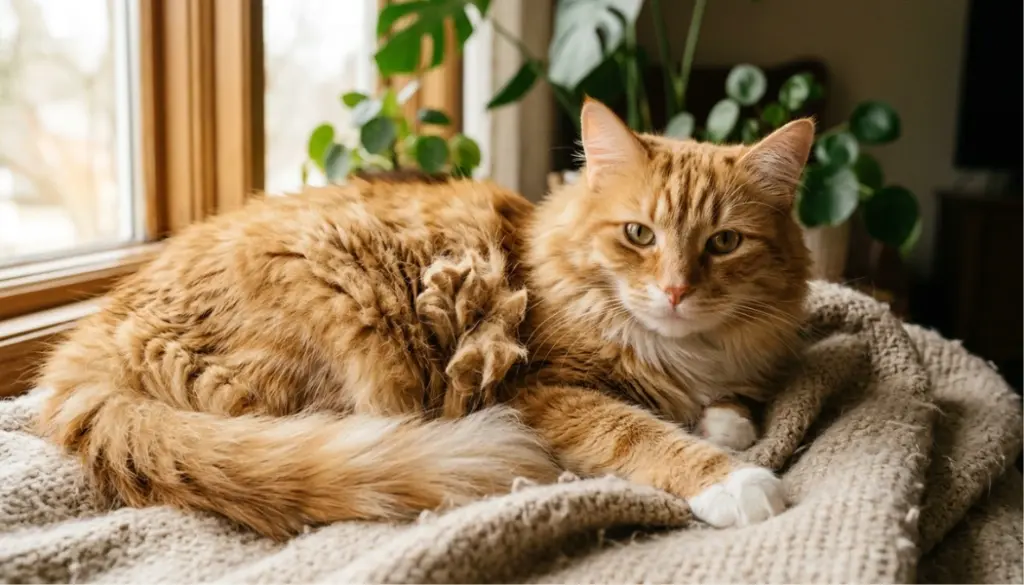
You usually find matted cat hair by accident. One second, your cat is purring under your hand. The next, your fingers hit a hard knot tucked under the coat like a hidden pebble.
Your cat stiffens, you panic a little, and suddenly a simple cuddle turns into a grooming mystery.
Mats can look harmless from the outside, but they can pull on the skin, trap dirt, retain moisture, and make your cat sore enough to avoid being touched.
They can also grow fast if the coat keeps shedding into the same tangled spot. The tricky part is knowing when a mat can be handled gently at home and when it needs professional help.
Before reaching for scissors, it is worth understanding what caused the tangle and how to remove it without hurting your cat.
What is Matted Cat Hair?
Matted cat hair is a tight clump of fur caused by loose dead hairs getting trapped in the coat. As the clump grows, it collects skin oils, dirt, dead skin, and debris.
A small tangle can turn into a hard knot that sits close to the skin and pulls when the cat walks, stretches, or grooms.
A tangle and a mat are not the same. A tangle is usually soft enough to loosen with a comb and patience. A mat feels firm, resists brushing, and can hurt if pulled.
Tight mats can also hide irritated skin underneath. Large mats, painful mats, or mats flat against the skin should be handled by a groomer or vet, not forced out at home with scissors or rough brushing.
What Causes Matted Cat Hair?
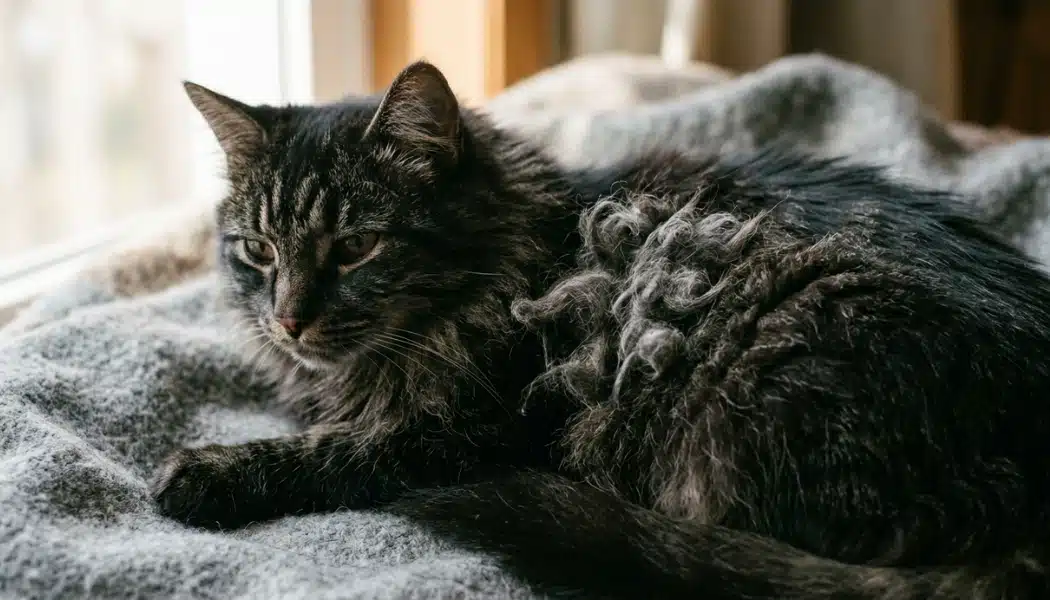
Matted cat hair usually forms when loose fur gets trapped, tightens, and mixes with oil, dirt, or dead skin. The most common causes are simple, but they can become painful if ignored.
- Shedding without brushing: Dead fur stays in the coat and tangles with live hair.
- Long or dense coats: Thick or long fur traps loose hair more quickly, especially during shedding seasons.
- High-friction areas: Mats often form behind the ears, under the legs, on the belly, and beneath collars.
- Aging or poor mobility: Senior or overweight cats may struggle to groom the back, hips, and tail base.
- Health problems: Arthritis, dental pain, allergies, thyroid issues, fleas, or skin irritation can reduce grooming.
Sudden matting, heavy shedding, or a greasy-looking coat can indicate an underlying health issue.
Best Tools to Get Mats Out of Cat Fur at Home
The right grooming tools can make small, loose mats easier to handle without pulling your cat’s skin or causing stress.
| Tool | How It Helps | Best Used For |
|---|---|---|
| Wide-Tooth Comb | Gently loosens the outer edges of a mat without pulling excessively on the fur. | Small, loose mats and early tangles. |
| Dematting Comb | Helps separate and break apart soft mats with minimal force when used carefully. | Loose knots that are not tight against the skin. |
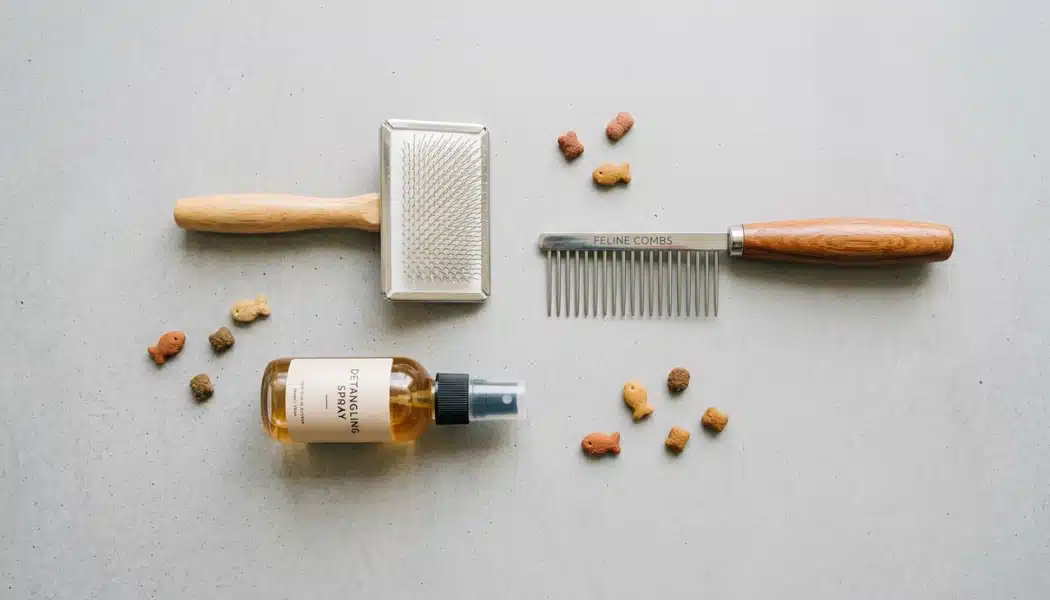
| Slicker Brush | Smooths the coat after a mat has been loosened and removes loose hair that can contribute to future tangles. | Finishing grooming and preventing new mats. |
| Cat-Safe Detangling Spray | Softens the fur and reduces friction, making mats easier to work through with a comb. | Light tangles and dry or static-prone coats. |
How to Get Mats Out of Cat Fur
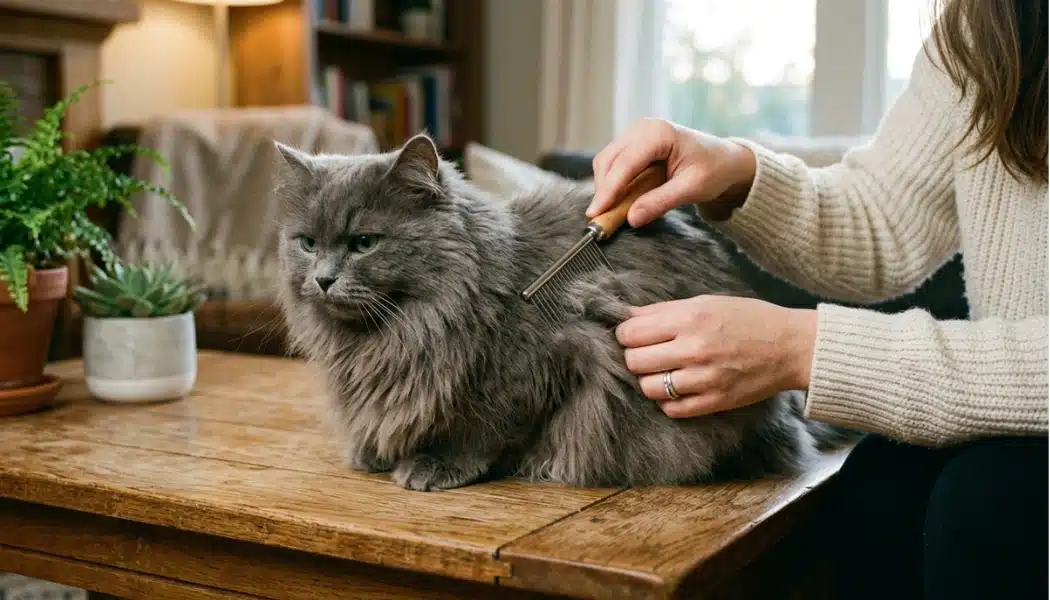
Removing mats safely takes patience, the right tools, and careful handling to keep your cat calm and protect the skin throughout grooming sessions.
1. Choose the Right Time
Start when your cat is calm, not during play, hunger, or stress. A good time is after feeding, resting, or a short play session.
Place your cat on a stable surface with a towel underneath for grip. Keep treats nearby, but do not force your cat to stay. If your cat walks away, let the session end.
A relaxed cat is less likely to twist, bite, or pull away while you handle the matted area.
2. Check the Mat Before Touching It
Look closely at the mat before using any tool. A small, loose mat that moves away from the skin can often be handled at home.
A hard mat, a mat larger than a coin, or a mat sitting flat against the skin should not be pulled.
Check for redness, swelling, bleeding, odor, or wet skin around the area. If any of these signs appear, call a groomer or vet before trying to remove it.
3. Soften the Fur First
Use a small amount of cat-safe detangling spray on the matted area, then wait about one minute. Do not soak the coat, because wet fur can tighten some mats and make them harder to remove.
Avoid human conditioner, oil, or lotion, as these can irritate your cat’s skin or leave residue in the coat.
Once the fur feels slightly softer, use your fingers to separate only the loose outer edges of the mat.
4. Hold the Fur Near the Skin
Before combing, place two fingers between the mat and your cat’s skin. This helps reduce pulling and protects the skin from direct pressure.
Hold the fur gently at the base while working on the outer edge of the mat. Never yank the knot or push the comb straight through it.
Start from the tip of the mat and work in very small sections. If your cat flinches or turns away, stop right away.
5. Comb Slowly and Finish Gently
Use a wide-tooth comb to loosen small sections of the mat, always combing away from the skin. Once the knot starts to break apart, smooth the area with a slicker brush to remove loose fur.
Give treats during the process so your cat connects grooming with something positive.
Keep each session short, especially with nervous cats. If the mat does not loosen within a few minutes, stop and contact a groomer.
Important: If a mat is tight against the skin, very large, or causing discomfort, avoid pulling or cutting it out at home. In these cases, professional grooming or veterinary assistance is usually the safest option.
How to Prevent Matted Cat Hair
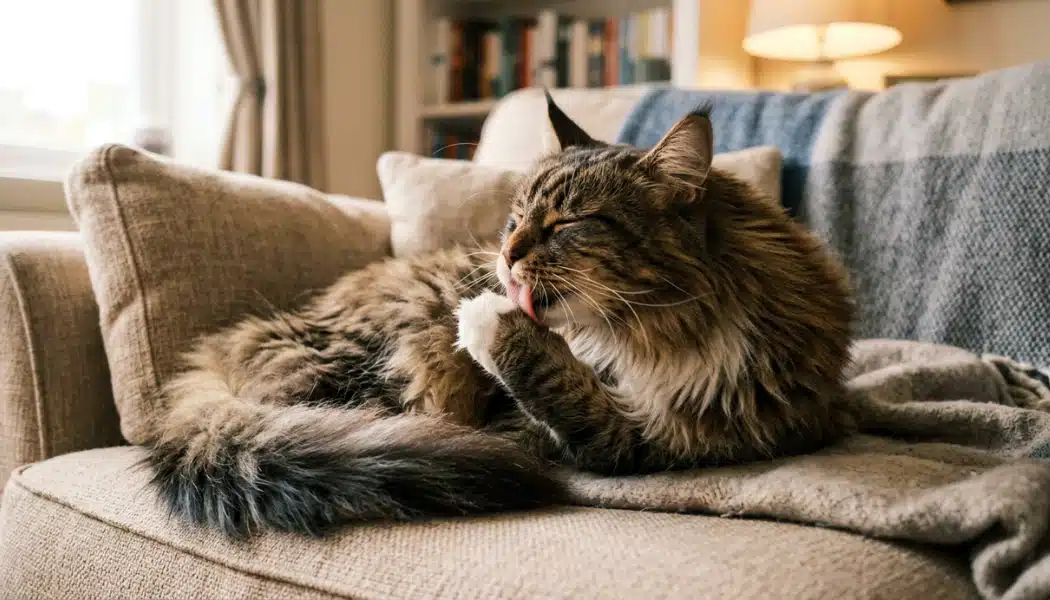
Preventing mats is easier than removing them, and a steady grooming routine keeps loose fur from tightening into painful knots.
- Brush long-haired cats daily: Their coats trap loose fur quickly and need regular care.
- Brush short-haired cats weekly: Once or twice a week, remove dead hair before it tangles.
- Check high-friction areas: Focus on the belly, armpits, behind the ears, collar area, and tail base.
- Use the right tools: Start with a slicker brush, then use a wide-tooth comb or undercoat rake.
- Avoid surface brushing only: Mats often start under the top coat, where trapped fur collects.
- Check collars weekly: Collar friction can cause neck mats. Choosing the right collar can reduce rubbing and matting.
A few consistent minutes of grooming can prevent painful mats and make coat care easier for both of you.
The Role of Nutrition and Supplements in Coat Health
Coat health starts with nutrition, not just brushing. Cats need animal-based protein because fur is made mostly from keratin, and weak protein intake can leave the coat brittle or thin.
Omega-3 and omega-6 fatty acids also support skin moisture and coat flexibility, which can reduce tangles that turn into mats.
Wet food, water fountains, and extra water bowls can help cats with dry skin due to low hydration.
Diets heavy in fillers or poorly tolerated proteins may cause dullness, oiliness, itching, or coat changes, especially after a food switch.
Senior cats or cats with arthritis may benefit from vet-approved omega or joint supplements, but ask a vet before starting one.
Dental pain can also reduce grooming, so consistent at-home cat dental care supports both oral comfort and coat condition.
Aftercare and Monitoring Your Cat’s Recovery
After a mat is removed, check the skin because it may be tender from pulling and trapped moisture.
- Soothe irritated skin: If the area looks red or warm, use only a vet-approved wipe or spray. Avoid human creams.
- Watch for infection: Check daily for spreading redness, swelling, odor, discharge, or excessive licking.
- Restart grooming slowly: Use short, gentle sessions in areas your cat accepts before brushing the problem spot again.
- Track repeat mats: Notice where mats return. Repeated matting in one area may indicate pain, limited mobility, skin issues, or weight problems.
- Book follow-up care: If the skin was broken, infected, painful, or severely irritated, let a vet confirm healing.
Breeds Most Prone to Matted Cat Hair
Some cat breeds are more likely to develop mats because their coats are long, dense, layered, or prone to friction in certain areas.
| Cat Breed | Why Mats Form Easily | Areas to Check Often |
|---|---|---|
| Persian | Long silky fur and a dense undercoat can mat quickly without daily brushing. | Belly, chest, legs, and behind the ears |
| Maine Coon | Heavy fur can trap loose hair, especially during shedding seasons. | Under the legs, belly, tail, and chest |
| Norwegian Forest Cat | A thick, layered coat can hide mats under the top layer of fur. | Back legs, belly, neck, and tail base |
| Ragdoll | Soft semi-long fur can knot where the coat rubs during movement. | Collar area, armpits, chest, and belly |
| Siberian | A triple-layer coat sheds heavily and can tangle within a few days. | Hips, tail base, belly, and underarms |
| Turkish Van | Semi-long fur is easier to manage but can still mat in high-friction spots. | Neck, armpits, belly, and tail area |
Common Mistakes to Avoid When Removing Cat Mats
Mat removal should be slow and gentle. These mistakes can cause pain, skin injury, or more fear during future grooming.
- Using scissors near the skin: Cat skin can hide under a tight mat and cut easily. Use a groomer if trimming is needed.
- Pulling the mat: Yanking hurts, damages skin, and makes cats resist grooming. Hold the fur at the base and work slowly.
- Using human products or oils: Human conditioner, coconut oil, and olive oil can irritate skin, leave residue, and attract debris.
- Ignoring stress signals: Growling, flat ears, tail swishing, biting, or trying to leave means stop.
- Handling large mats at home: Tight, painful, skin-level, or wide mats need a groomer or vet.
If the mat feels unsafe to move, professional removal is the kinder choice for your cat.
When Your Pet Needs a Groomer or Vet
Call a professional groomer when a mat is larger than a coin, hard, close to the skin, spread across a wide area, or located near the armpit, belly, groin, or tail base. These spots are easy to injure at home.
Groomers have safer tools, proper clippers, and experience handling painful mats. For severe long-haired matting, a short shave or lion cut may be the most humane option.
Call a vet if the skin under the mat looks red, broken, swollen, wet, smelly, or painful.
Sudden matting, reduced grooming, low appetite, hiding, limping, or behavioral changes can also indicate arthritis, dental pain, skin infection, parasites, or another health problem.
Recurring mats in the same areas should be checked instead of repeatedly brushed out.
Conclusion
Finding a mat in your cat’s coat is easy to dismiss until you feel how tight it sits against the skin. That small knot is often the first sign that grooming, comfort, or health needs attention.
The best response is calm, not forced. Watch your cat’s reaction, protect the skin, and know when the safest choice is a groomer or vet.
A smooth coat is more than looks. It helps your cat move, rest, and groom without pain. Build the habit now, before small tangles turn into bigger problems.
Have you handled matted cat hair before? Share what helped, what failed, and what you learned so another cat parent can avoid the same mistake.
Frequently Asked Questions
Can Matted Cat Hair Go Away on Its Own?
No. Matted cat hair does not loosen or disappear without help. Mats usually tighten as more loose fur, dirt, and skin oils collect inside the knot. The longer a mat stays in place, the more it can pull on the skin and cause pain. Early removal is always easier, safer, and less stressful for your cat.
Can You Cut a Matted Cat’s Hair with Scissors?
No. Cutting mats with scissors at home is risky because the cat’s skin can be hidden directly under the tangled fur. One small slip can cause a cut or wound. If a mat is tight, large, painful, or close to the skin, let a groomer or vet remove it with proper clippers.
Should You Use Oil to Remove Cat Mats?
It is better not to use coconut oil or olive oil on cat mats. These oils can leave sticky residue, attract dirt, irritate sensitive skin, and sometimes make the mat harder to comb out. Use a cat-safe detangling product only if your vet or groomer recommends it.