You’re standing in the pet food aisle, flipping over a bag and squinting at the guaranteed analysis panel. It says 26 percent crude protein.
The bag next to it says 18 percent, yet costs twice as much.
Now you are stuck thinking which one is actually better, and whether the difference even matters for your dog.
This confusion is extremely common among pet parents. Protein in dog food sounds simple at first, but labels quickly make it harder to understand what you are really buying.
Here, I will break it down clearly. You will learn how much protein is in dog food. You will understand how much your dog actually needs.
You will also learn how to judge true quality rather than relying on a single number on the pack. I will help you choose confidently.
Why Protein Matters So Much in a Dog’s Diet?
Protein isn’t just one nutrient; it’s the foundation of nearly everything happening inside your dog’s body.
When your dog eats, the protein in their food gets broken down into amino acids.
Those amino acids go to work building and repairing muscle, producing hormones and enzymes, supporting immune function, growing a healthy coat, and helping wounds heal.
Well, every dog needs essential amino acids that their bodies simply can’t produce on their own; those have to come from food.
If the diet consistently falls short, the body starts pulling from muscle tissue to compensate.
That’s the last place you want it pulling from. Low protein over time quietly chips away at your dog’s strength, coat, and immune response, often before you notice anything is wrong.
How Much Protein is in Dog Food?
Wet, dry, and raw foods all report protein differently, and comparing them at face value is where most pet parents go wrong.
| Dog Food Type | Label Protein % (As-fed) | Moisture Content | What It Actually Means | Smart Picks |
|---|---|---|---|---|
| Dry Dog Food (Kibble) | 18% to 32% | Around 10% | Low moisture makes protein numbers reliable and easy to compare. | Great for convenience. Don’t cheap out, try Orijen Original. |
| Wet / Canned Food | 7% to 13% | 70% to 80% | Protein is diluted by water. On a dry-matter basis, it can match kibble. | Good for picky eaters or hydration. Best mixed with kibble. |
| Raw / Fresh Food | 10% to 15% | High (similar to wet) | Once moisture is removed, protein is very high. Closest to a natural diet. | Top-tier if budget and storage allow. Try Heads Up For Tails Fresh Meals. |
The bottom line here: never compare protein content in dog food across different types based on the label number alone. It’s like comparing the weight of a wet sponge to a dry one. You have to level the playing field first.
How Much Protein Does Your Dog Need?
There’s no universal number that works for every dog; protein needs shift throughout a dog’s life, and feeding a puppy the same way you’d feed a senior is one of the most common nutritional mistakes pet parents make.
Here’s how to think about each stage honestly.
1. Puppies
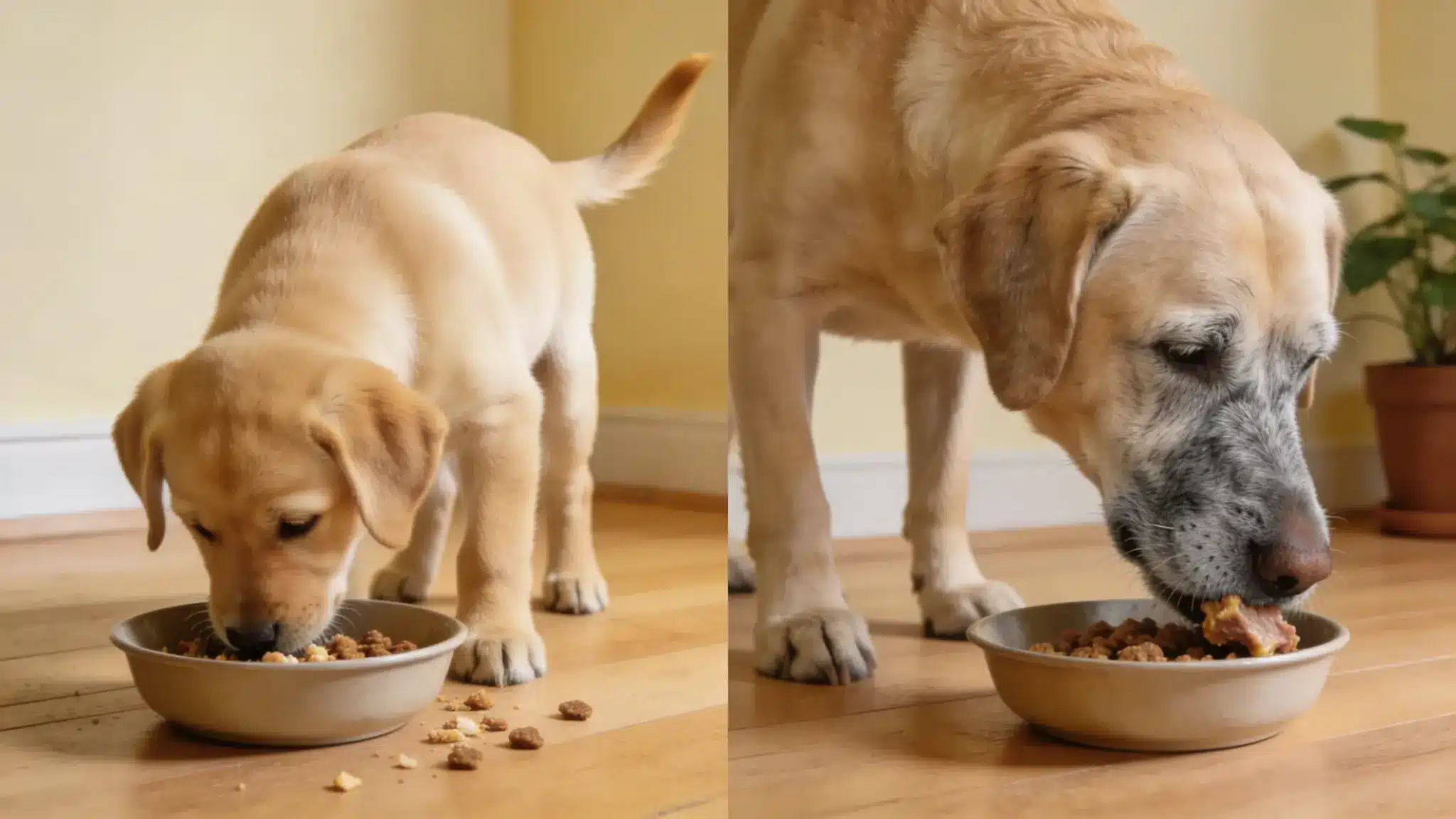
Puppies are building everything from scratch: muscle, bone, organ tissue, and immune defenses. Their protein requirements are higher than those of adult dogs.
AAFCO sets the minimum at 22.5% crude protein on a dry matter basis for growth, but most quality puppy foods run 25–30% to properly support that rapid development.
Animal protein should be leading the ingredient list of the puppy food, not corn, soy, or wheat. Puppies especially need the full range of essential amino acids, and plant-based sources don’t reliably deliver that complete profile.
2. Adult Dogs
Adult dogs need at least 18% crude protein on a dry-matter basis, per AAFCO guidelines. But 18% is a floor, not a target.
Most good-quality adult foods sit between 22–28%, providing active dogs with what they need without unnecessary excess.
Activity level matters here more than most labels acknowledge. A 50-pound dog who runs with you daily has very different protein needs than a 50-pound dog who mostly naps on the couch.
Higher activity means more muscle turnover, which means more dietary protein is needed to maintain it.
3. Senior Dogs
Many well-meaning pet parents genuinely get it wrong here. There’s a persistent belief that older dogs should eat less protein to protect their kidneys.
For healthy seniors, that’s not what the research shows. In fact, many senior dogs need more protein than adults, not less, because aging bodies become less efficient at using it.
Most veterinary nutritionists now recommend 25–28% crude protein for active seniors, with a focus on highly digestible animal sources.
The kidney concern is real, but it only applies to dogs with diagnosed kidney disease. For a healthy senior dog, cutting protein can actually accelerate muscle loss, which shortens the quality of life.
4. Pregnant and Nursing Dogs
Healthy protein needs peak here. AAFCO recommends a minimum of 22.5%, but many vets suggest feeding a quality puppy formula during this period, since the higher amino acid content better supports both the mother and her developing puppies.
How to Actually Read a Dog Food Protein Label?
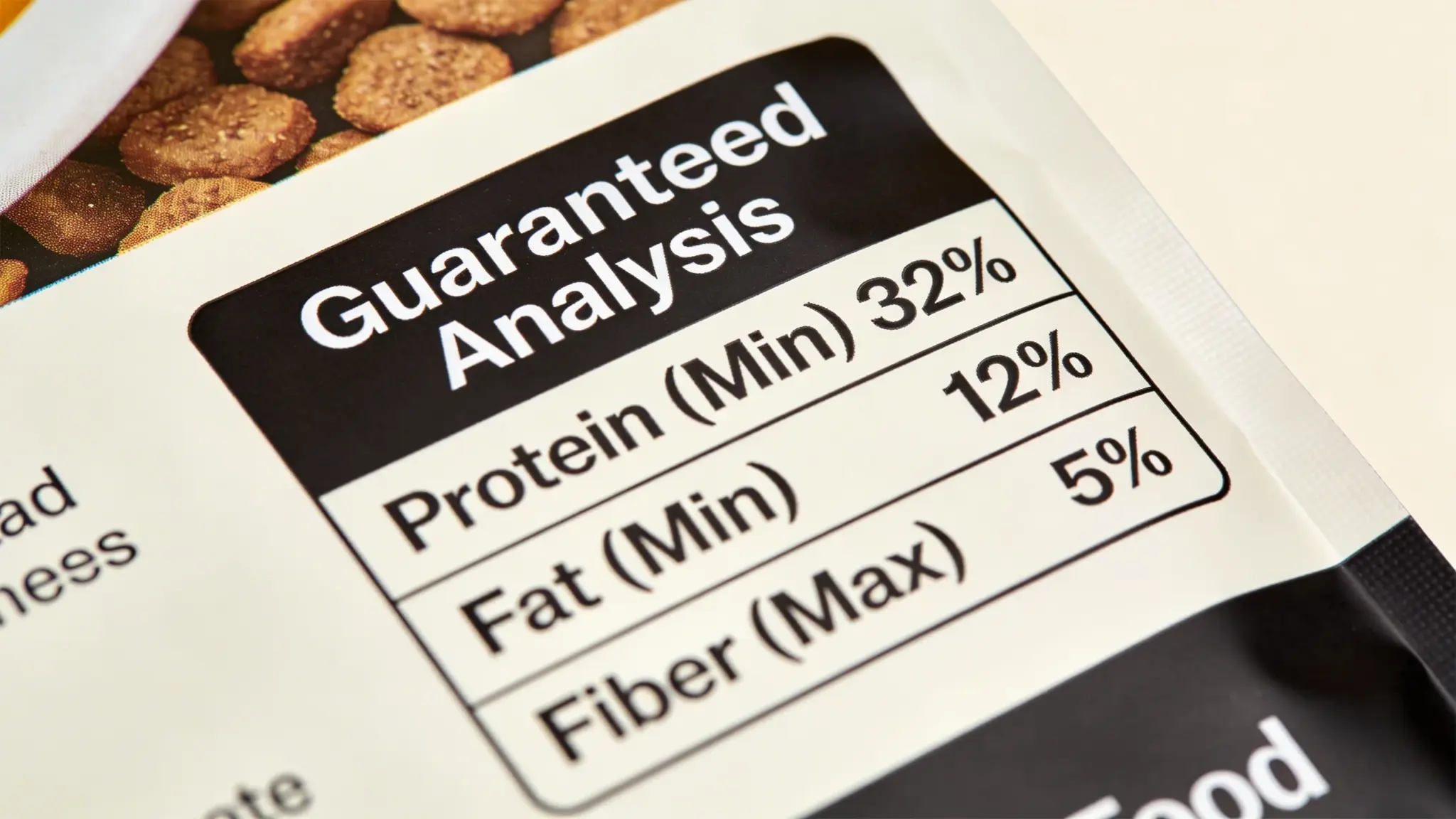
The guaranteed analysis panel on every bag can tell you something, but not everything. There are two things worth understanding before you trust any number you see: what “crude protein” actually means, and how to convert label percentages into a real, fair comparison.
What “Crude Protein” Really Means?
Crude protein is not actual protein. It is an estimate based on nitrogen content.
This is something most pet food brands won’t spell out for you in your “how much protein is in dog food” quest: crude protein doesn’t measure the amount of animal protein in the food. It measures nitrogen and then estimates protein levels from that.
Why does this matter? Because nitrogen comes from multiple sources. Yes, meat protein, but also grains, plant-based proteins, and certain additives.
A food can show a high crude protein percentage while being built largely on corn gluten or soy, not the chicken or beef you’re picturing when you see that number.
The label won’t tell you the difference. That’s why the ingredient list matters just as much as the protein percentage, and I always tell clients to read both together.
How to Calculate Dry Matter Protein?
This is the step most pet parents skip, but it’s the only way to fairly compare protein in dog food across different types. Don’t let the math put you off. It’s four simple steps.
- Find the moisture percentage on the label (e.g., 75%)
- Subtract from 100 to get dry matter: 100 − 75 = 25
- Divide the listed protein by that number: 10 ÷ 25 = 0.40
- Multiply by 100: 40% protein on a dry matter basis
So a canned food listing 10% protein with 75% moisture actually delivers 40% protein once the water is removed. That’s more than a kibble showing 26% protein, which works out to roughly 29% dry matter protein.
The wet food wins, even though the label made it look like it was losing.
How to Compare Two Bags of Dog Food?
Here’s something practical. Say you’re looking at two adult foods side by side:
Food A (Dry Kibble): 26% crude protein, 10% moisture.
Food B (Wet/Canned): 9% crude protein, 78% moisture
At face value, Food A appears to be the clear winner. But run the dry matter calculation:
- Food A: 26 ÷ 90 × 100 = 28.9% dry matter protein
- Food B: 9 ÷ 22 × 100 = 40.9% dry matter protein
Food B has much more protein.
Now, even though it’s the right pick, it still comes down to cost, ingredients, and what your dog will actually eat. But you’d never know any of that was worth discussing if you’d stopped at the label number.
Is High-Protein Dog Food Actually Bad for Dogs?
For healthy dogs, no. The idea that high protein causes kidney damage in healthy dogs has been studied repeatedly, and the evidence doesn’t support it.
A healthy dog’s kidneys handle and excrete excess protein without any strain. Where the concern is legitimate is in dogs who already have diagnosed kidney or liver disease.
In those cases, a lower-protein, highly digestible diet is appropriate and should be managed by a vet, not something to self-prescribe based on a blog.
For the average healthy adult dog, the more relevant concern with very high-protein formulas is caloric density. High-protein foods tend to pack more calories.
A sedentary or overweight dog eating a 35%+ protein kibble isn’t getting extra health benefits; they’re often just getting extra calories, which creates a different set of problems.
The sweet spot for most healthy adult dogs is 22–28% quality animal protein. Active and working dogs can go higher. Lower-energy dogs probably don’t need to.
Signs Your Dog May Not Be Getting Enough Protein
Most pet parents don’t connect these symptoms to diet, but they’re worth knowing. If you’re seeing one or two of these regularly, it’s worth a conversation with your vet before making any changes on your own.
- Dull, thinning coat: About 25–30% of a dog’s daily protein goes toward skin and coat. Poor coat quality is often one of the earliest signs that something is off nutritionally.
- Visible muscle loss: If your dog is losing definition, especially around the hindquarters and spine, dietary protein is one of the first things to look at.
- Low energy or slow recovery after exercise: Protein drives muscle repair. Dogs that tire easily or take a long time to bounce back may simply not be getting enough.
- Slow wound healing: Amino acids are critical for tissue repair. Dogs on chronically low-protein diets heal more slowly after cuts, injuries, or surgery.
- Getting sick more often: Antibodies are proteins. A diet that consistently under-delivers on protein can quietly weaken immune response over time.
What Are the Dog Owners Saying?
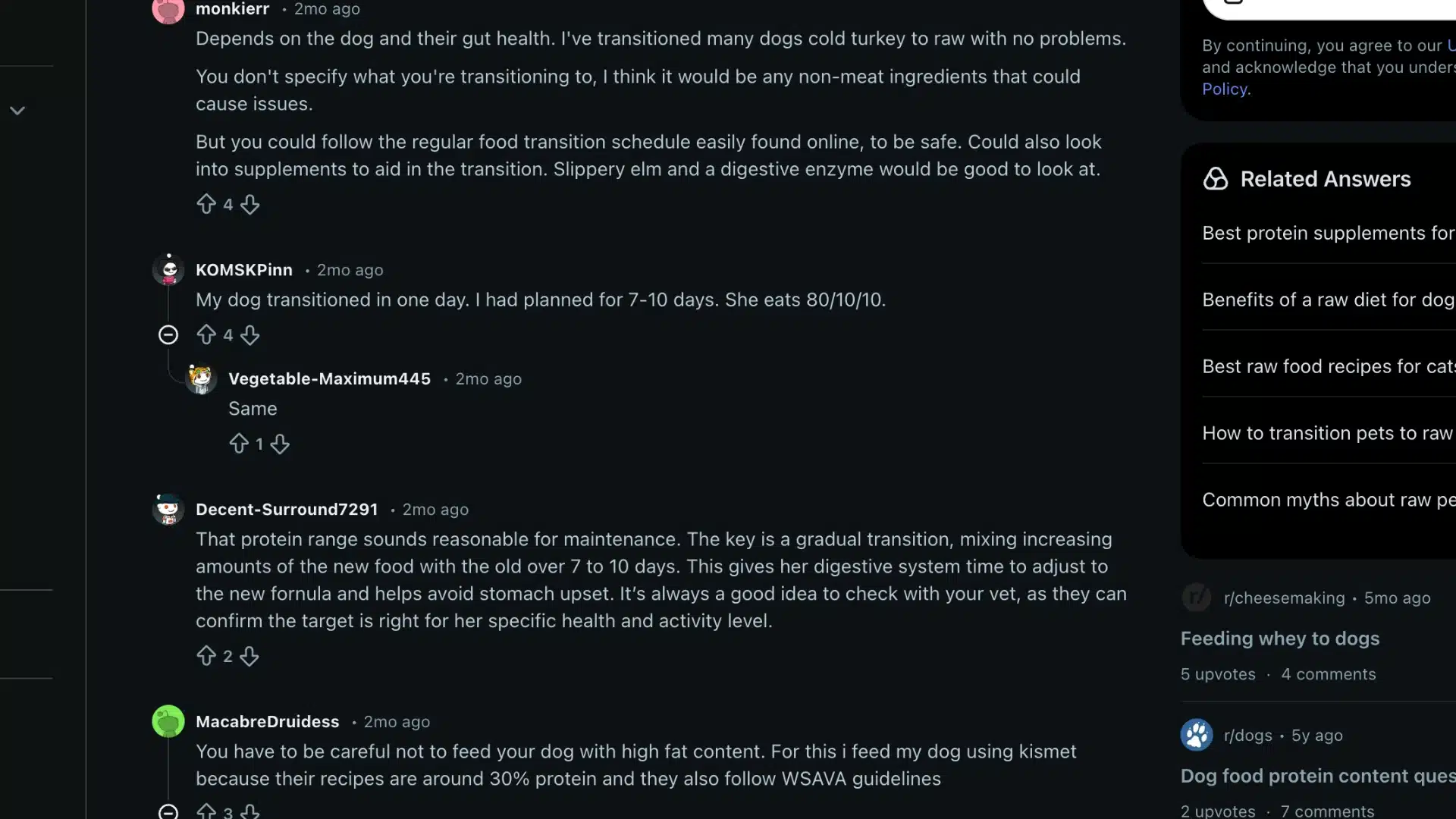
If you want a more honest perspective, Reddit threads around “how much protein is in dog food” are surprisingly revealing. Here’s what I usually see the dog owners discussing.
Many question whether higher protein always means better health, especially for less active or older dogs.
Some share experiences of switching foods and noticing changes in coat quality, energy levels, or digestion. Others debate plant versus animal protein sources, often pointing out that label percentages can be misleading.
There is also a common concern about overpaying for premium brands that may not deliver better results. Overall, most owners agree that protein quality matters more than just the number on the label.
The discussion lines up with what I generally see in practice. The takeaway is simple: the number alone is rarely the full story, and most experienced owners eventually shift focus beyond it.
Conclusion
Protein in dog food is one of the most important things on any label, and also one of the most misunderstood. The percentage alone doesn’t tell you how much protein is in dog food.
The source matters. The food type determines how you read the number. Your dog’s needs shift at every life stage.
What actually makes a difference: choose a food where a named animal protein leads the ingredient list, run the dry matter calculation when you’re comparing types, and match the protein level to your dog’s age and agility.
The choice is not based on whatever the feeding chart on the bag suggests. When in doubt, a conversation with a veterinary nutritionist is worth more than anything printed on the packaging.
Your dog can’t read the bag. You can. That’s the whole advantage.
Frequently Asked Questions
Can Too Much Protein Make a Dog Hyperactive?
No, this is a persistent myth. Hyperactivity in dogs is linked to behavior, environment, and breed temperament, not dietary protein. There’s no solid research connecting the two.
Is Grain-Free Dog Food Higher in Protein?
Not necessarily. Grain-free foods often swap grains for legumes like peas and lentils, which can push up the crude protein number without improving the quality of animal-based protein. Always check the ingredient list, not just the percentage.
Should I Choose a Food Based on the First Ingredient Alone?
It’s a useful starting point, but not the full picture. Ingredients are listed by pre-cooking weight, so a meat ingredient listed first might drop in the final list once moisture is accounted for. Look at the first five or six ingredients together to get a better read.