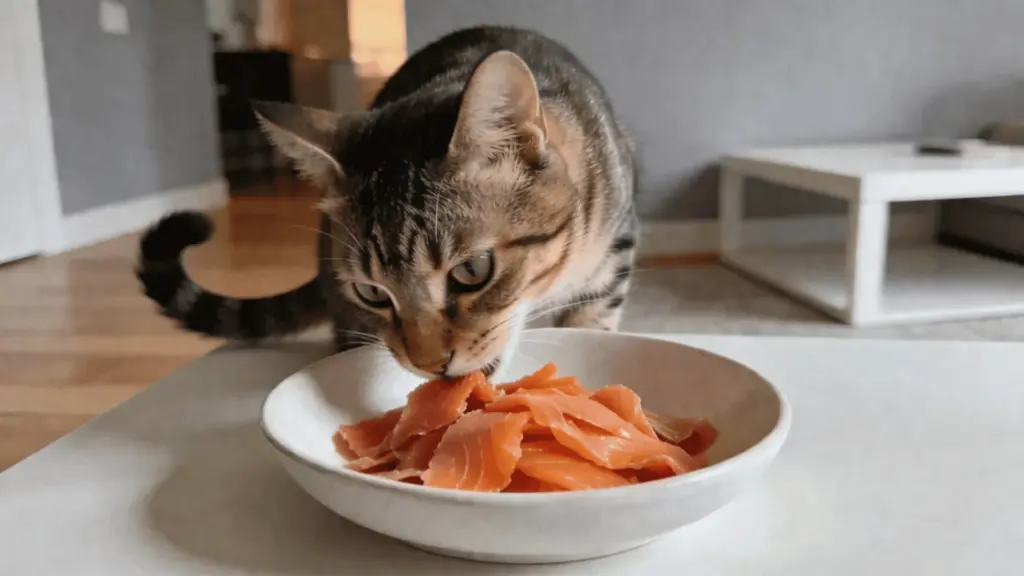
Your cat is eyeing your smoked salmon like it’s the most important thing in the room. You break off a small piece; it seems harmless enough, right?
After all, cats love fish, and salmon is practically a staple in pet food.
But here’s the thing: smoked salmon is a very different product from the plain cooked fish found in your cat’s bowl.
The curing and smoking process of salmon changes it into something your cat’s body isn’t well-equipped to handle.
It dramatically raises the sodium content, introduces preservatives, and often adds seasonings that range from irritating to outright toxic for cats.
A single serving that seems small to you can deliver nearly 30 times your cat’s recommended daily sodium intake.
This blog covers exactly why smoked salmon is risky for cats, which cats face the greatest danger, what to do if your cat has already eaten some, and the safest ways to still give your cat the nutritional benefits of salmon without the health consequences.
Everything here is grounded in veterinary guidance and current nutritional research.
What Is Smoked Salmon?
Smoked salmon is raw salmon that has been salt-cured and then processed using one of two methods: hot-smoking or cold-smoking.
What most people don’t realize is that smoked salmon is fundamentally a preserved, shelf-stable food product, not fresh fish.
Hot-smoking cooks the salmon at temperatures above 120°F, giving it a flaky, firm texture similar to baked fish.
The heat kills most harmful bacteria, but the extended salt-curing process still loads the fish with sodium levels far beyond what any cat should consume.
Cold-smoking processes the fish at temperatures below 90°F, never reaching a temperature high enough to fully cook it. This is the silky, translucent variety found on bagels and charcuterie boards across the US.
Because it remains essentially raw, it can harbor live Listeria and Salmonella, posing an additional bacterial risk in addition to the sodium and preservative concerns.
In both cases, the problem is never the salmon itself.
It is the curing process, wood smoke compounds, and commercial preservatives that transform a healthy fish into a heavily engineered human food product, one that feline biology simply isn’t equipped to handle.
Can Cats Have Smoked Salmon? Here’s What Vets Say!
No, smoked salmon is not recommended for cats. The veterinary consensus is clear: while a tiny accidental nibble from an otherwise healthy adult cat is unlikely to result in an emergency, intentionally or regularly feeding smoked salmon poses real and documented health risks.
| Type of Salmon | Safe for Cats? |
|---|---|
| Plain baked or poached salmon (no seasoning) | Yes, occasional treat |
| Salmon-based cat food (AAFCO-compliant) | Yes, regular diet |
| Hot-smoked salmon (plain, no additives) | Tiny accidental bite, monitor closely |
| Cold-smoked salmon or lox | No, bacterial risk + extreme sodium |
| Smoked salmon with garlic, onion, or spices | No, potentially toxic |
| Regular or large amounts of any smoked salmon | No, sodium poisoning risk |
The natural benefits of salmon, its omega-3 fatty acids, its high-quality protein, and its vitamin B12 and D content are largely overshadowed in the smoked form by an overwhelming sodium load, chemical preservatives, and potentially toxic flavoring agents.
Key Reasons Why Salmon is Dangerous for Cats
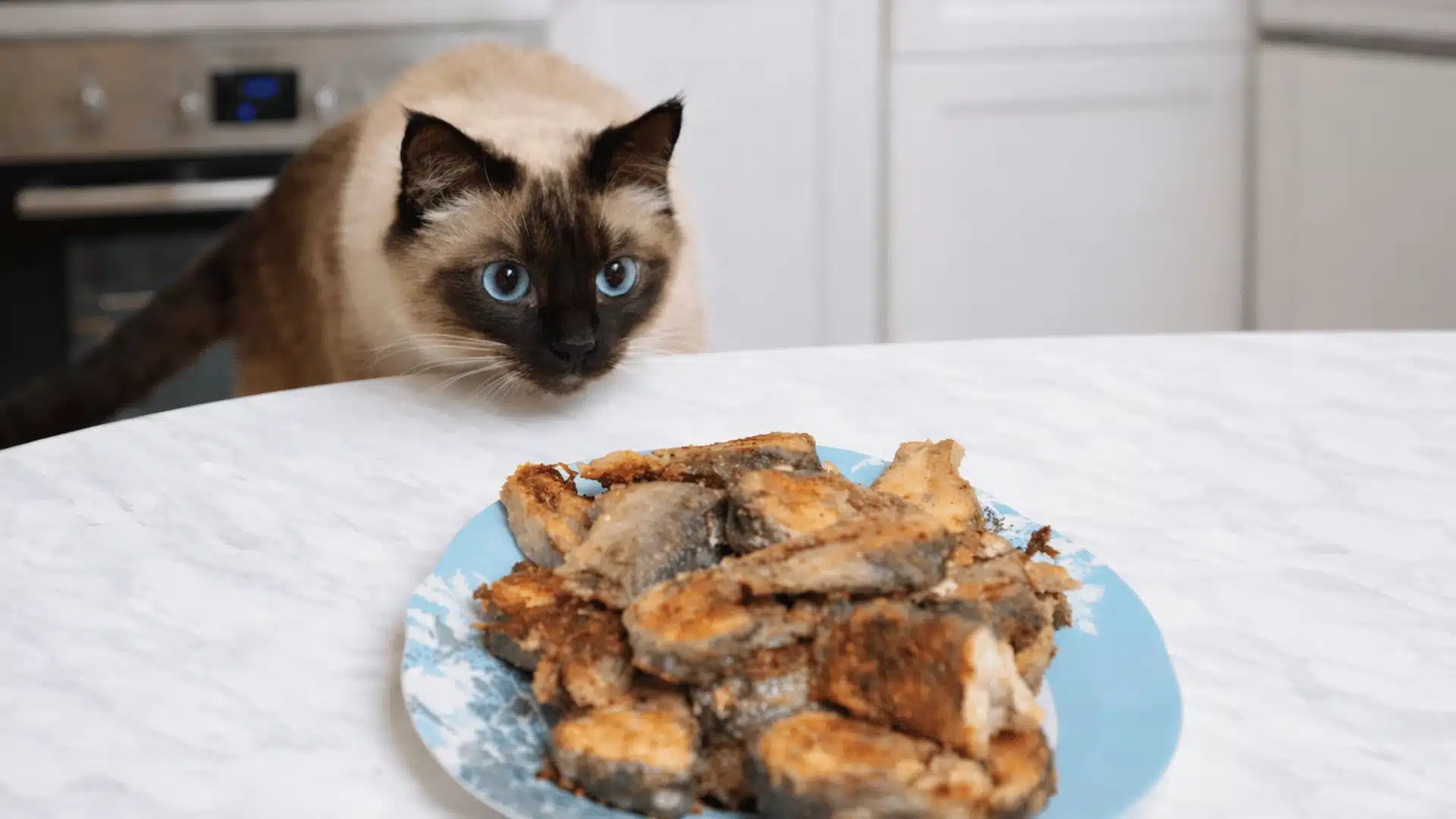
Understanding the specific risks helps you make informed decisions and recognize warning signs early if your cat does get into your smoked salmon.
1. Dangerously High Sodium Content
A typical adult cat needs only around 42mg of sodium daily. Even a small 20g piece of smoked salmon delivers around 240mg, nearly six times the recommended intake.
Excess sodium forces the body to pull water from cells, causing dehydration and increased urination. In severe cases, it overwhelms the kidneys, leading to sodium ion poisoning.
Early symptoms like restlessness, excessive drinking, and wobbly gait are often mistaken for unrelated issues.
2. Harmful Additives, Preservatives, and Seasonings
Most commercial smoked salmon contains garlic and onion, both toxic to cats even in small amounts. These Allium-family ingredients contain organosulfides that damage red blood cells, causing Heinz body anemia.
Symptoms like pale gums, weakness, and rapid breathing may not appear for several days after ingestion, making it easy to miss the connection.
Always read the ingredient label carefully and call your vet if allium ingredients are present.
3. Carcinogen Exposure from The Smoking Process
The WHO classifies processed and smoked meats as Group 1 carcinogens due to compounds like PAHs and HCAs formed during smoking. These chemicals are linked to DNA damage and tumor formation.
Cats face a higher relative dose per kilogram of body weight than humans do, and their unique metabolism can increase their chemical susceptibility.
While a single bite isn’t an immediate crisis, regular smoked salmon consumption carries a meaningful long-term cancer risk.
4. Heavy Metals and Mercury Accumulation
Salmon absorbs environmental contaminants like mercury, PCBs, and dioxins from its habitat. Cats accumulate these heavy metals faster than humans do due to their smaller organ mass, making the toxic effects more severe.
Mercury poisoning in cats can cause tremors, loss of coordination, and cognitive impairment. Farmed salmon may carry higher PCB levels depending on feed composition.
Cats already on fish-heavy diets face even greater cumulative exposure when smoked salmon is added on top.
5. High Fat Content and Pancreatitis Risk
Smoked salmon is calorie-dense, with roughly 20 calories per cubic inch, mostly from fat. While the fat is largely healthy omega-3s, the overall fat load can trigger weight gain in less active indoor cats.
More seriously, high-fat foods are a known trigger for pancreatitis, a painful and potentially dangerous pancreatic inflammation.
Cats with a prior history of pancreatitis are especially vulnerable and should never be given smoked salmon without explicit veterinary approval.
What to Do if My Cat Eats Smoked Salmon?
If your cat snatched a small nibble or devoured an entire portion, acting quickly and methodically can make a significant difference in keeping your feline safe. Here is a clear, step-by-step action plan to follow.
- Step 1: A tiny nibble (under 5g) is a low-risk monitor for 12–24 hours. A moderate amount (10–20g) exceeds safe sodium limits, so consider calling your vet. A large amount (50g+) requires immediate veterinary contact, even if your cat appears completely fine.
- Step 2: Read the full ingredient list carefully. If it contains garlic, onion, or their powders, call your vet immediately, as allium toxicity can be life-threatening. If it’s plain smoked salmon with no toxic additives, the main concern is high sodium; proceed with monitoring.
- Step 3: Offer fresh, clean water right away to help flush out excess sodium. Don’t force your cat to drink; keep water freely available. If reluctant, try a small amount of low-sodium chicken or fish broth with no garlic or onion.
- Step 4: Never make your cat vomit without first consulting a vet. Unlike dogs, it is not a safe home remedy and can cause serious harm. Never use hydrogen peroxide or any emetic; always call your vet or poison helpline first.
- Step 5: Watch for early signs like vomiting, diarrhea, or lethargy. Intermediate signs include excessive thirst, tremors, or restlessness, all of which indicate sodium toxicity. Severe symptoms, pale gums, disorientation, labored breathing, or seizures need immediate emergency veterinary attention without delay.
Note: If any of these symptoms appear, even mild ones, contact your veterinarian promptly. Do not wait to see if things improve on their own.
Safe Ways to Give Your Cat the Benefits of Salmon
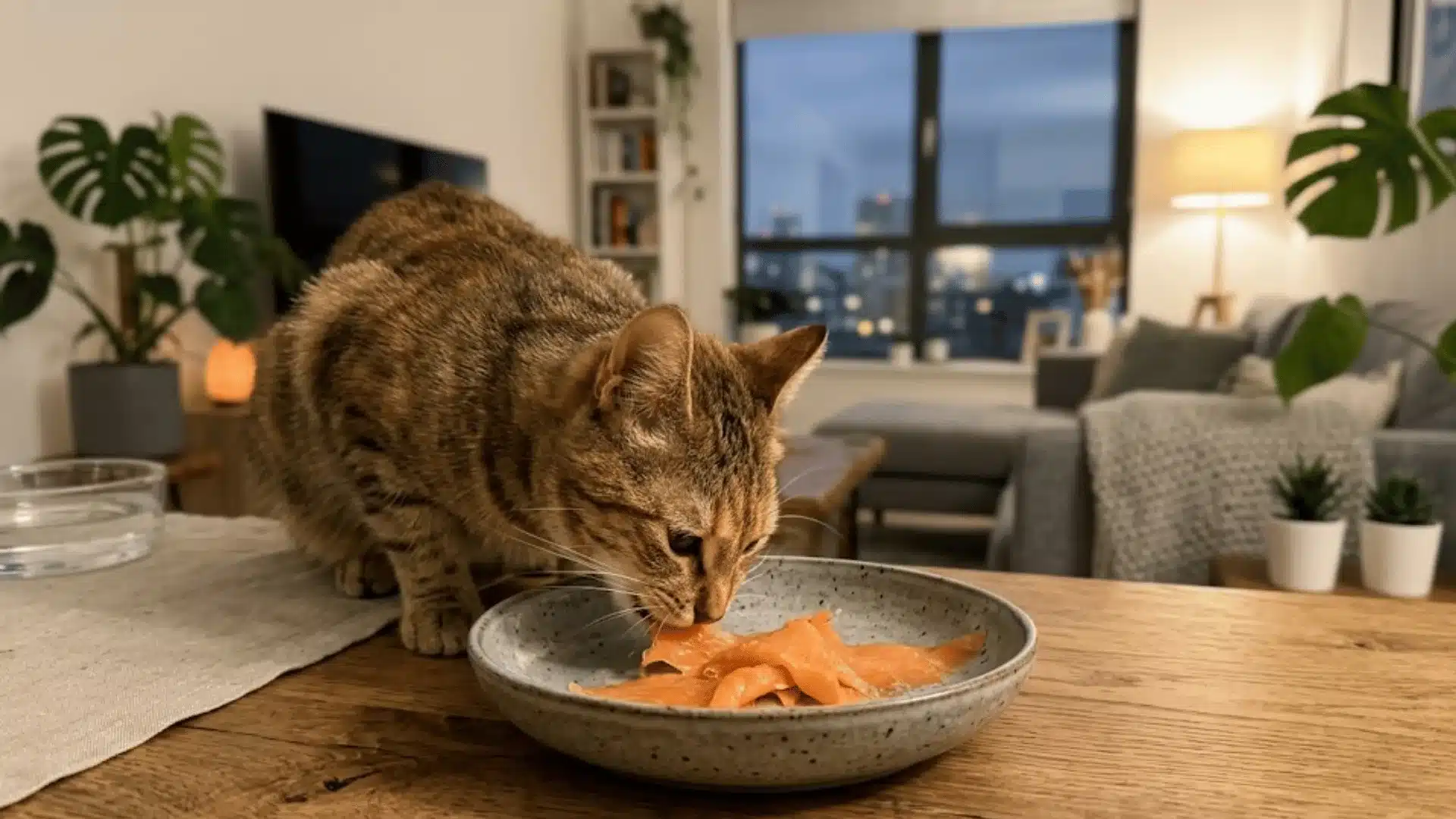
Your cat doesn’t need smoked salmon to enjoy everything salmon has to offer.
The three options I recommend most consistently in my practice each deliver the full nutritional value of salmon, the protein, the omega-3s, and the B vitamins without any of the processing risks.
The most wholesome starting point is plain home-baked or poached salmon.
A fresh fillet cooked in plain water with zero seasoning delivers bioavailable omega-3 fatty acids that actively support brain function, reduce inflammation, and keep skin and fur soft and shiny.
Cool it completely, flake it into small pieces, and remove every bone carefully before serving. Understanding how often to feed your cat will help you work salmon treats into the right rotation without disrupting their daily nutritional balance.
No more than 2–3 times per week, keeping treats under 10% of daily calories.
For everyday convenience, a premium AAFCO-compliant salmon-based wet cat food works just as well. Look for real salmon listed as the first ingredient, complete and balanced nutrition, and a formula free from artificial additives and fillers.
Wet options offer the added benefit of boosting daily water intake, especially valuable for cats prone to urinary or kidney issues.
Pure salmon oil is the third option, and honestly, one of the most underused tools I see in feline nutrition. Drizzled over regular food at 1/4 to 1/2 teaspoon daily, visible improvements in coat and skin typically appear within two to four weeks.
Always confirm the dosage with your vet if your cat is on any medication.
What to Always Avoid when Feeding Cats Smoked Salmon
Regardless of how much your cat loves the smell of smoked salmon, these five rules should never be compromised.
- Smoked, cured, or lox varieties: Do not give these to your cat, as the curing and smoking process loads them with sodium, preservatives, and potential bacterial contamination.
- Human-grade canned salmon: Never share it with your cat, since even water-packed varieties contain sodium levels far above what a cat’s kidneys can safely process.
- Seasoned salmon of any kind: Never add salt, spices, herbs, or condiments before offering salmon, as ingredients like garlic and onion are outright toxic to cats.
- Salmon with bones left in: Do not skip deboning, as small fish bones are a serious choking hazard and can splinter, causing painful internal GI perforation.
- Salmon as a meal replacement: Never substitute it for complete cat food, since salmon alone lacks taurine, essential vitamins, and the balanced nutrient profile your cat requires daily
Conclusion
Smoked salmon sits in a category of human foods that look harmless but behave very differently inside a cat’s body.
The sodium alone is disqualifying for most cats, and when you factor in additives, bacterial risk in cold-smoked varieties, and the carcinogenic compounds from the smoking process, the case for avoiding it is clear.
The encouraging part is that your cat doesn’t need any of it. Plain salmon, quality cat food, or salmon oil gives full fish nutrition without risks
When it comes to human foods and your cat, the guiding principle I use in my practice is simple: if it was processed for human taste preferences, it almost certainly wasn’t designed with feline biology in mind.
Your vet is always the best person to consult before making changes to your cat’s diet.
Has your cat ever sneaked a bite of smoked salmon? Tell us what happened in the comments, and let us know if your vet had anything to say about it!
Frequently Asked Questions
Is Smoked Salmon Worse than Canned Tuna for Cats?
Both are high in sodium and unsuitable for regular feeding. However, smoked salmon carries additional risks that canned tuna typically does not, including potential toxic additives like garlic and onion, carcinogenic compounds from the smoking process, and the risk of live bacteria in cold-smoked varieties.
What Fish Can Cats Safely Eat?
Plain, cooked, boneless, unseasoned fish, including salmon, cod, tilapia, and haddock, is safe as an occasional treat for most healthy adult cats. Always cook the fish thoroughly (no raw or cold-smoked varieties), remove all bones, and avoid any seasoning.
Is It Safe if I Rinse Smoked Salmon Before Giving It to My Cat?
No. Rinsing smoked salmon under water removes some surface salt but does not meaningfully reduce the sodium content embedded deep in the fish tissue during the curing process. Rinsing also does not eliminate preservatives, chemical additives, or live bacteria present in cold-smoked varieties.