

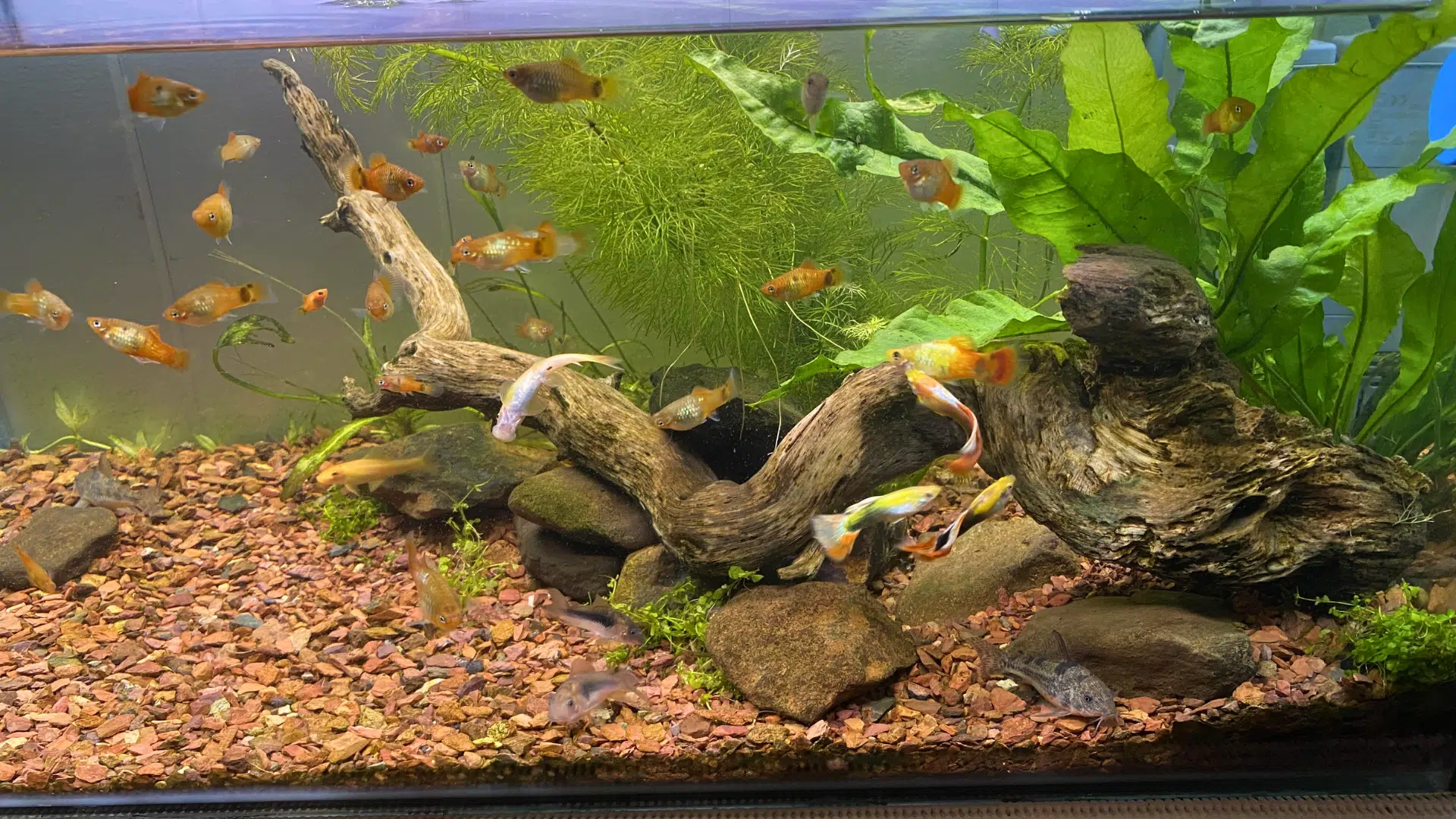
If you want a beautiful, healthy aquarium without spending hours on upkeep, you’re in the right place.
This guide covers the best low-light aquarium plants that grow easily, look great, and bring your tank to life without needing CO2 injection or specialty gear.
These plants don’t need fancy lighting or constant attention, making them perfect for beginners out those who prefer a simple setup.
In this list, I’ll show you plants that:
- Grow well even in dim light
- Don’t need added CO₂
- Stay neat with little trimming
I’ve tried many of these plants myself, and they’ve all done well with minimal care. You’ll see how a few simple choices can turn your aquarium into a calm, green space without much work.
What Counts as Low Light for Aquarium Plants?
Low light in a planted aquarium is defined as a PAR (Photosynthetically Active Radiation) range of 15 to 30 µmol/m²/s at the substrate level.
This is the minimum range where hardy, undemanding plants can photosynthesize without the need for CO2 injection.
For context, a standard 5,500-6,500K LED over a 12-inch tank usually falls within this range at moderate intensity. Anything below 15 µmol is generally too weak to support healthy plant growth.
Which Low-Light Plant Fits Your Tank Size?
Choosing the right plant depends on your tank size, as larger tanks allow taller and more spread-out plants while smaller tanks benefit from compact, low-maintenance options.
| Tank Size | Recommended Plants | Placement |
|---|---|---|
| Under 10 gallons | Anubias Nana, Java Moss, Marimo Moss Ball, Bucephalandra | Foreground or attached to hardscape |
| 10–29 gallons | Java Fern, Cryptocoryne Wendtii, Dwarf Sagittaria, Water Sprite | Foreground to midground |
| 30–55 gallons | Amazon Sword, Vallisneria Spiralis, Hornwort, Water Wisteria | Midground to background |
| 55+ gallons | African Water Fern, Anubias Barteri, Ludwigia Repens, Anacharis | Background or full layout |
Low Light Aquarium Plants that Don’t Need CO₂
These plants are great if you want a natural-looking aquarium with little effort. They grow well in dim light, need no CO₂, and are easy to care for year-round.
1. Anubias Nana
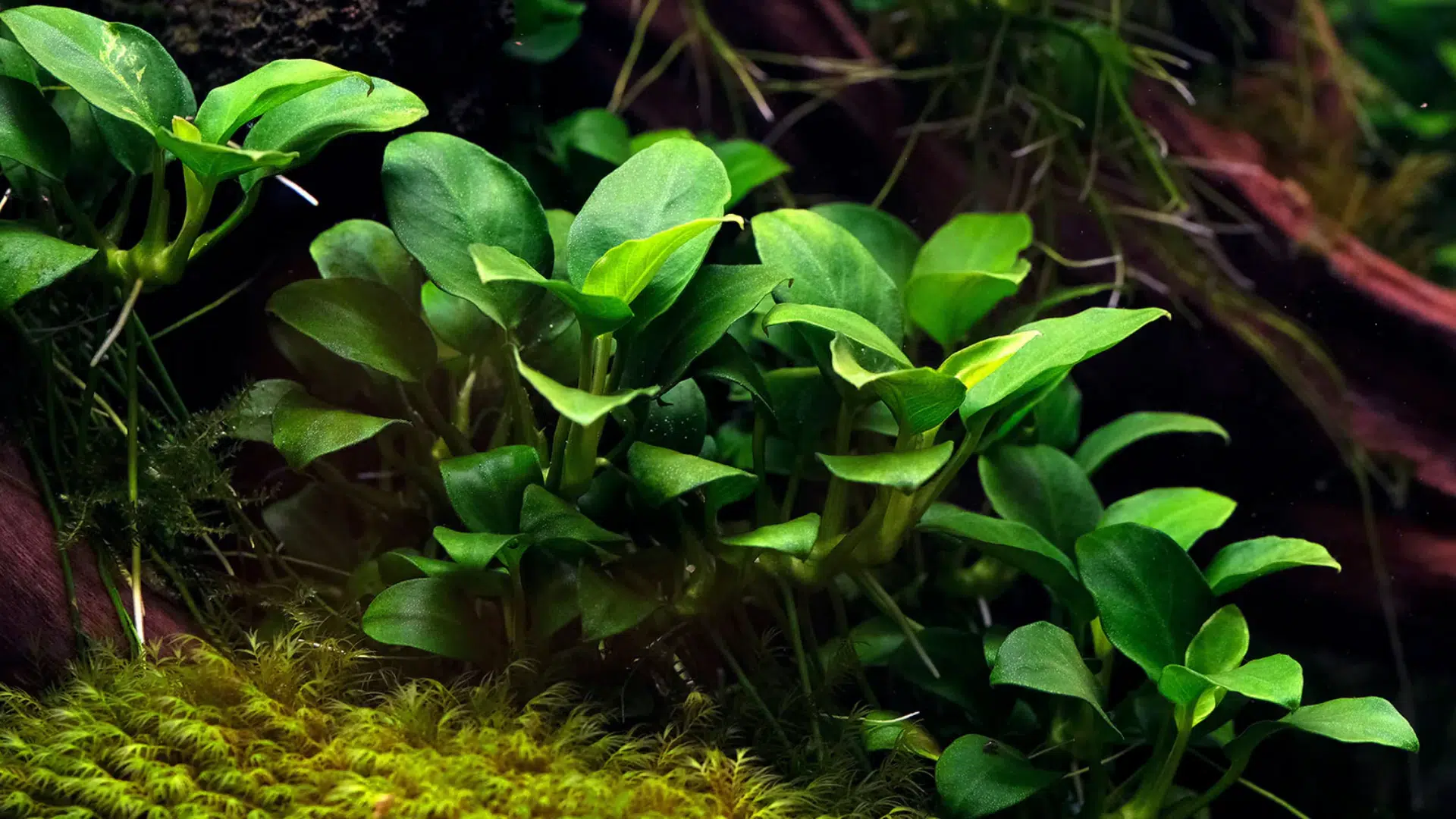
I likeAnubias Nana because it’s one of the easiest and most reliable plants to keep. It grows slowly and stays compact, making it great for small or medium tanks.
You can attach it to rocks, driftwood, or decorations instead of planting it directly in the gravel.
Be sure to keep the rhizome above the substrate to avoid rot. It handles low light well and adjusts to different water setups without much trouble.
I like how it adds deep green color and texture without constant trimming or extra equipment.
2. Java Fern (Microsorum Pteropus)
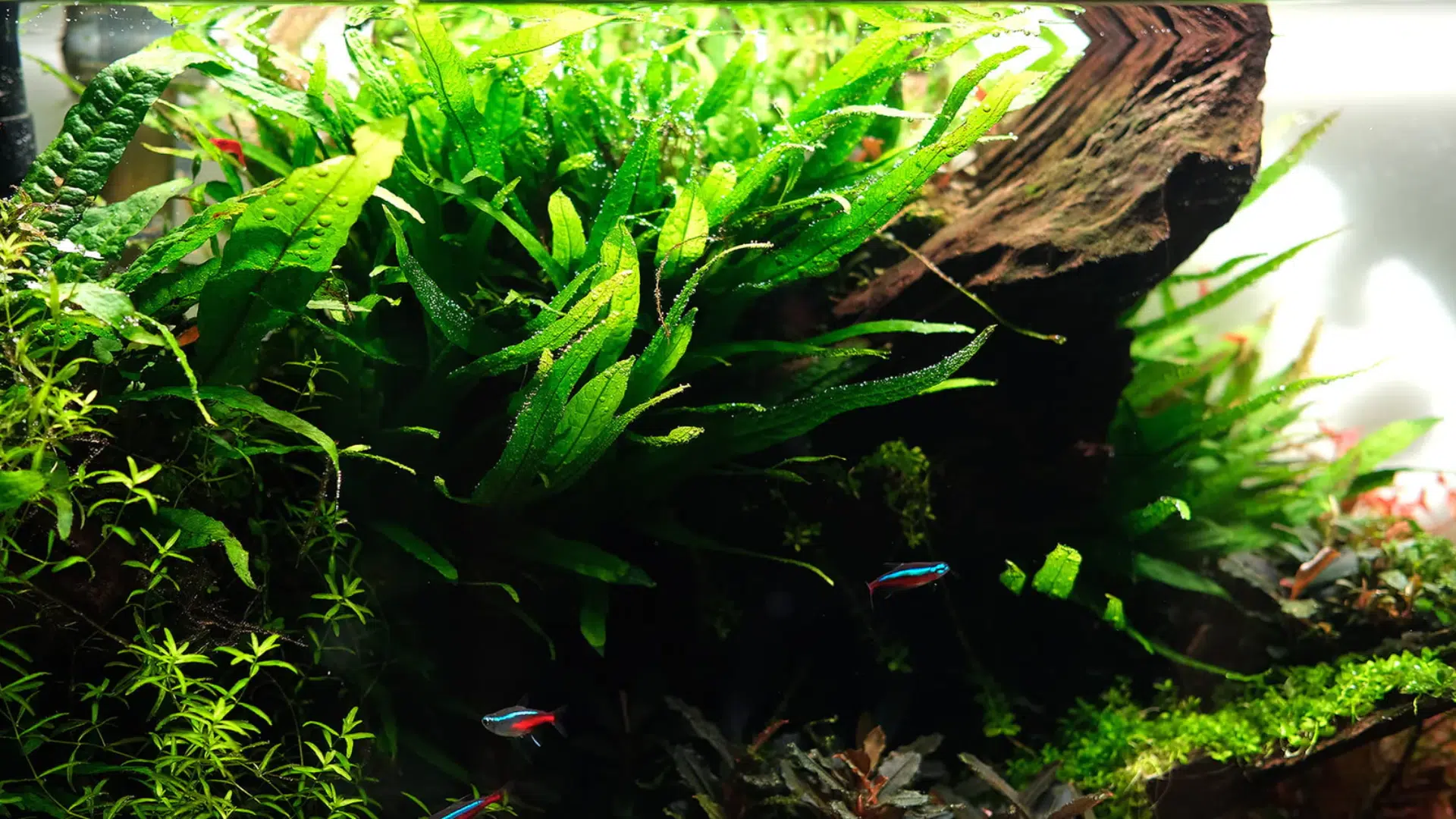
These low-light aquarium plants are a classic choice for aquariums with limited lighting. It’s tough, undemanding, and grows steadily even without CO₂ or nutrient-rich soil.
I attach it to driftwood or stones and let it anchor itself naturally. Over time, it produces baby ferns that you can replant or share.
It’s perfect for shaded areas of the tank, where many plants won’t do well.
The broad green leaves give your fish places to hide and make your setup look fuller and more natural.
3. Cryptocoryne Wendtii
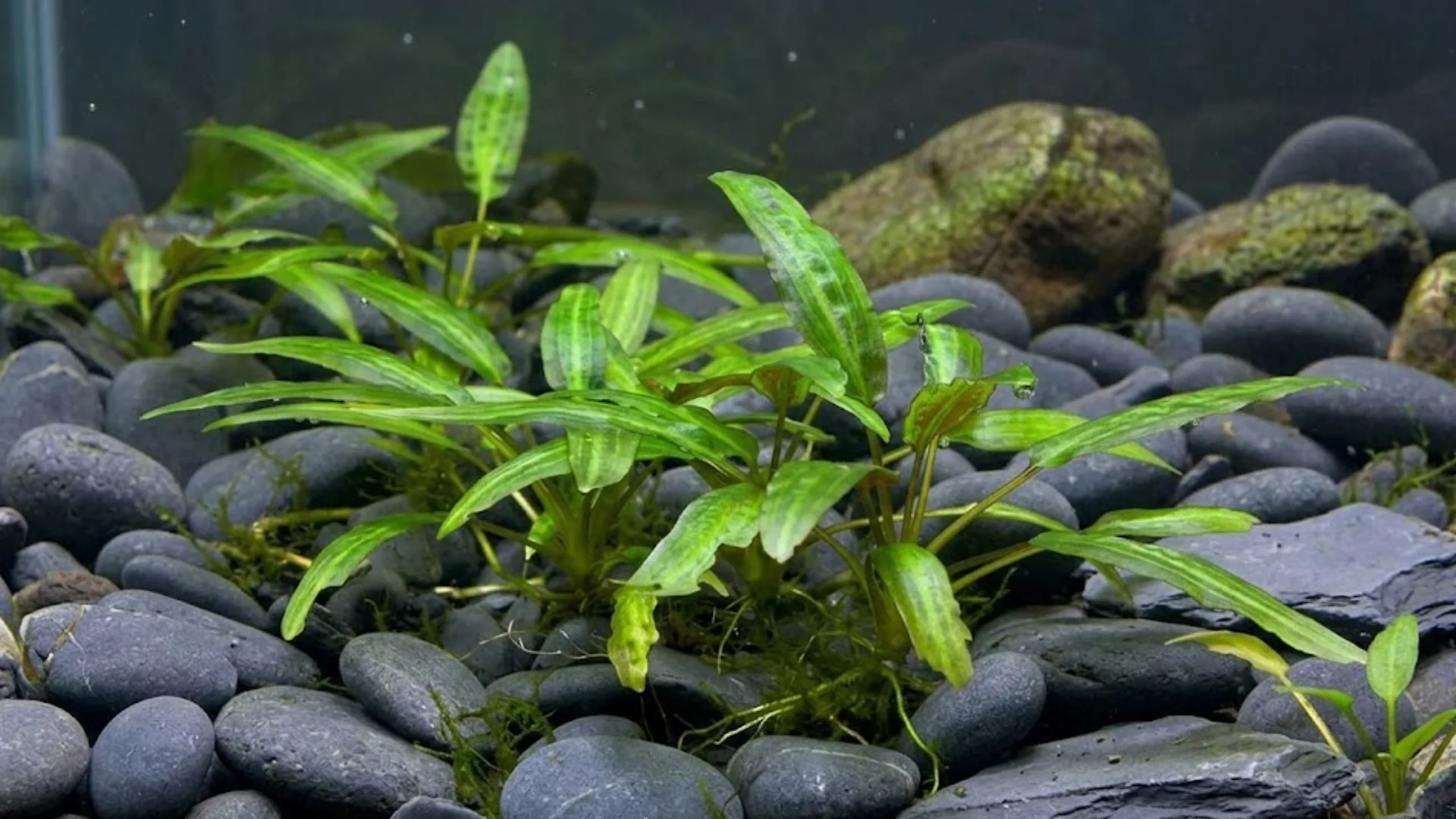
If you want something sturdy and dependable, Cryptocoryne Wendtii is a great pick. I’ve used it in several tanks, and it always adjusts after a short settling period.
It grows easily in low light and doesn’t need CO₂. You can plant it directly in gravel or sand, and it comes in nice colors like green, brown, and bronze.
When added to a new tank, the leaves might melt back, but new ones will appear once it settles. It’s an easy way to give your aquarium a healthy, balanced look with little care.
4. Amazon Sword (Echinodorus Amazonicus)
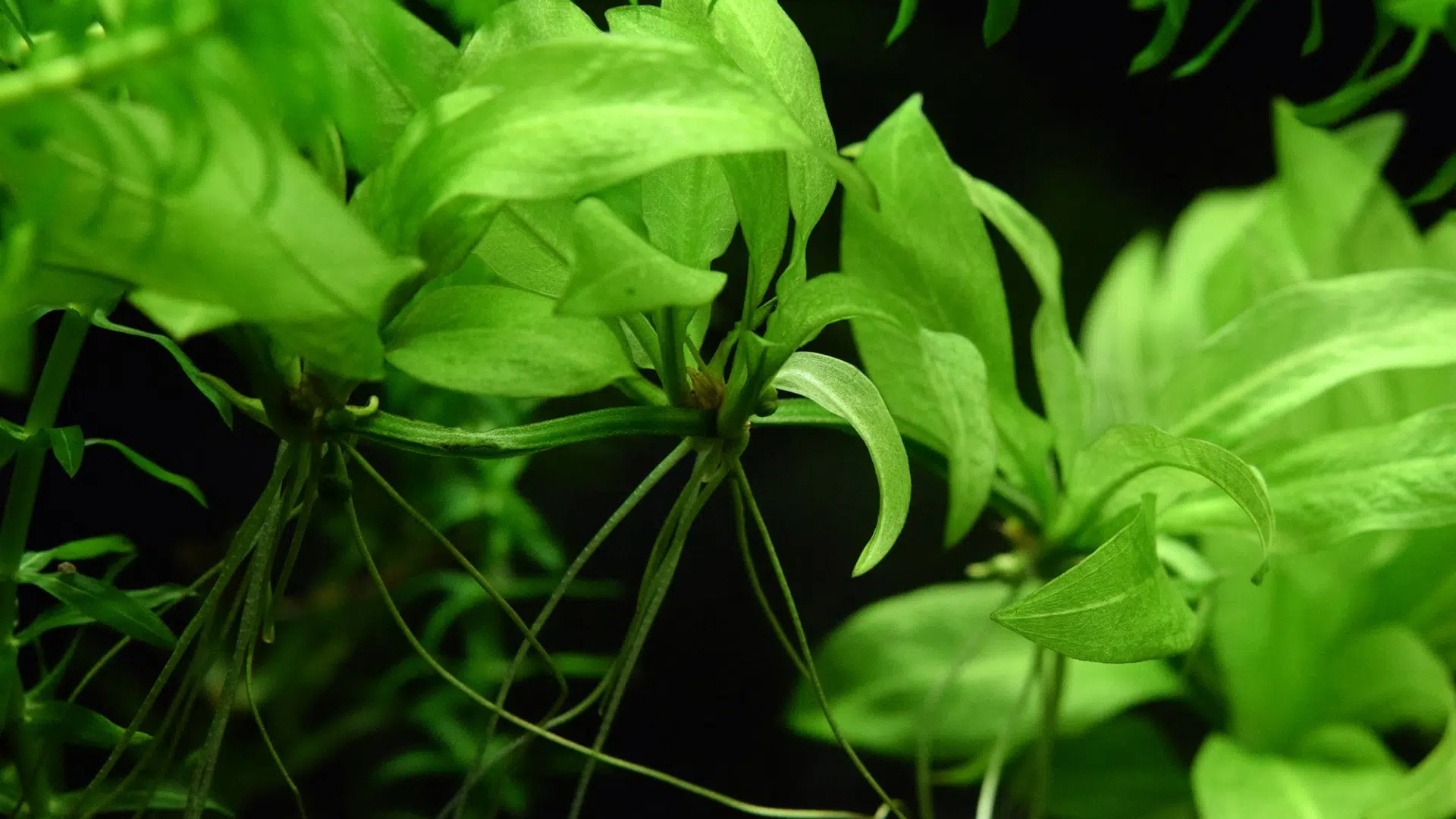
The Amazon Sword is a strong, low-maintenance plant that works well as a centerpiece. I like it for larger tanks because its broad leaves fill space and give a natural background.
It grows well in moderate light and doesn’t need CO₂, but it does appreciate a nutrient-rich substrate or root tabs.
Older leaves can be trimmed when they fade. I’ve noticed that consistent water changes help keep it green and healthy.
If you want a bold plant that’s simple to care for, this one’s a great fit.
5. Java Moss (Taxiphyllum Barbieri)
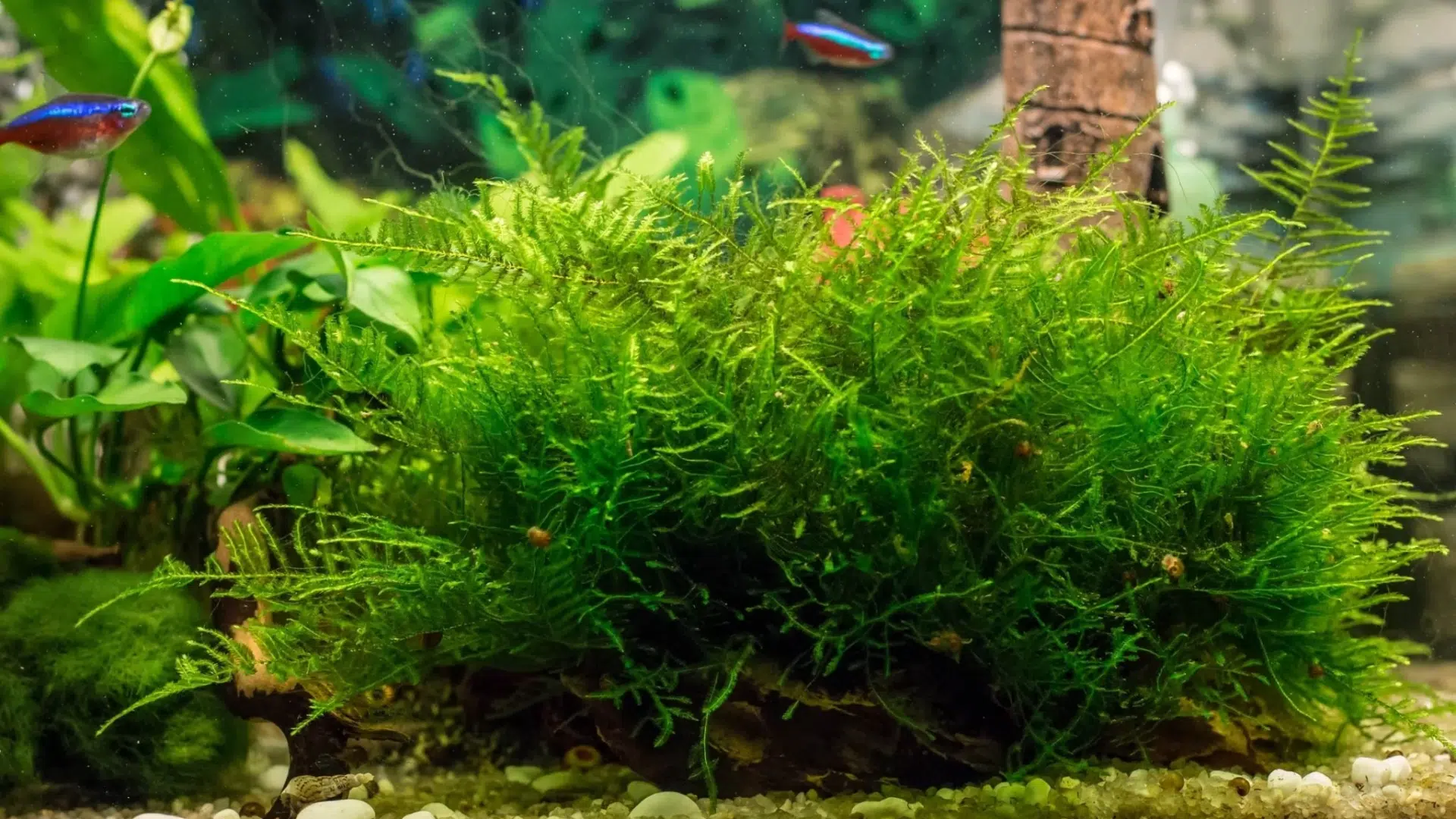
Java Moss is one of the low-light aquarium plants you can grow. It does well in almost any tank, no matter the light or setup. I often use it to cover driftwood, create moss walls, or carpet the bottom of the tank.
It grows quickly, so I trim it now and then to keep it neat. This plant also helps clean the water by trapping debris and absorbing extra nutrients.
It’s especially popular in shrimp tanks because it gives them shelter and a safe space to feed.
If you’re thinking about adding some of these shrimp and small tank inhabitants to your setup, Java Moss is one of the best plants to have in place first.
6. Marimo Moss Ball (Aegagropila Linnaei)
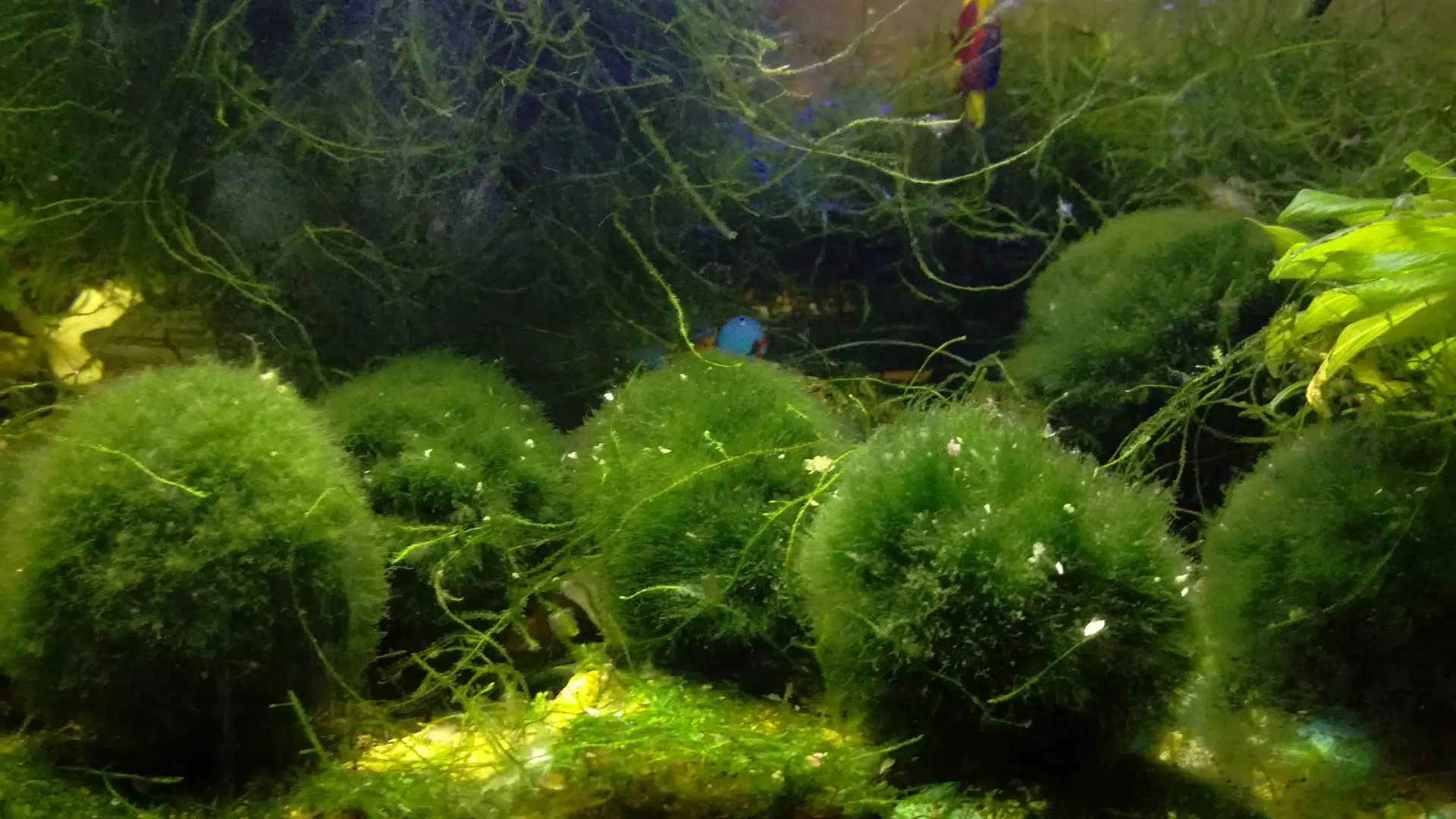
Marimo Moss Balls are fun, low-care plants that look like soft green spheres.
They’re actually a type of algae that grows slowly in low light and helps keep your water cleaner by absorbing waste.
I like to turn them every few days to keep their shape even. They’re perfect if you want something unique that doesn’t need trimming or special treatment.
Safe for all kinds of fish and shrimp, they add a gentle, natural touch to any aquarium without adding to your workload.
7. Hornwort (Ceratophyllum Demersum)
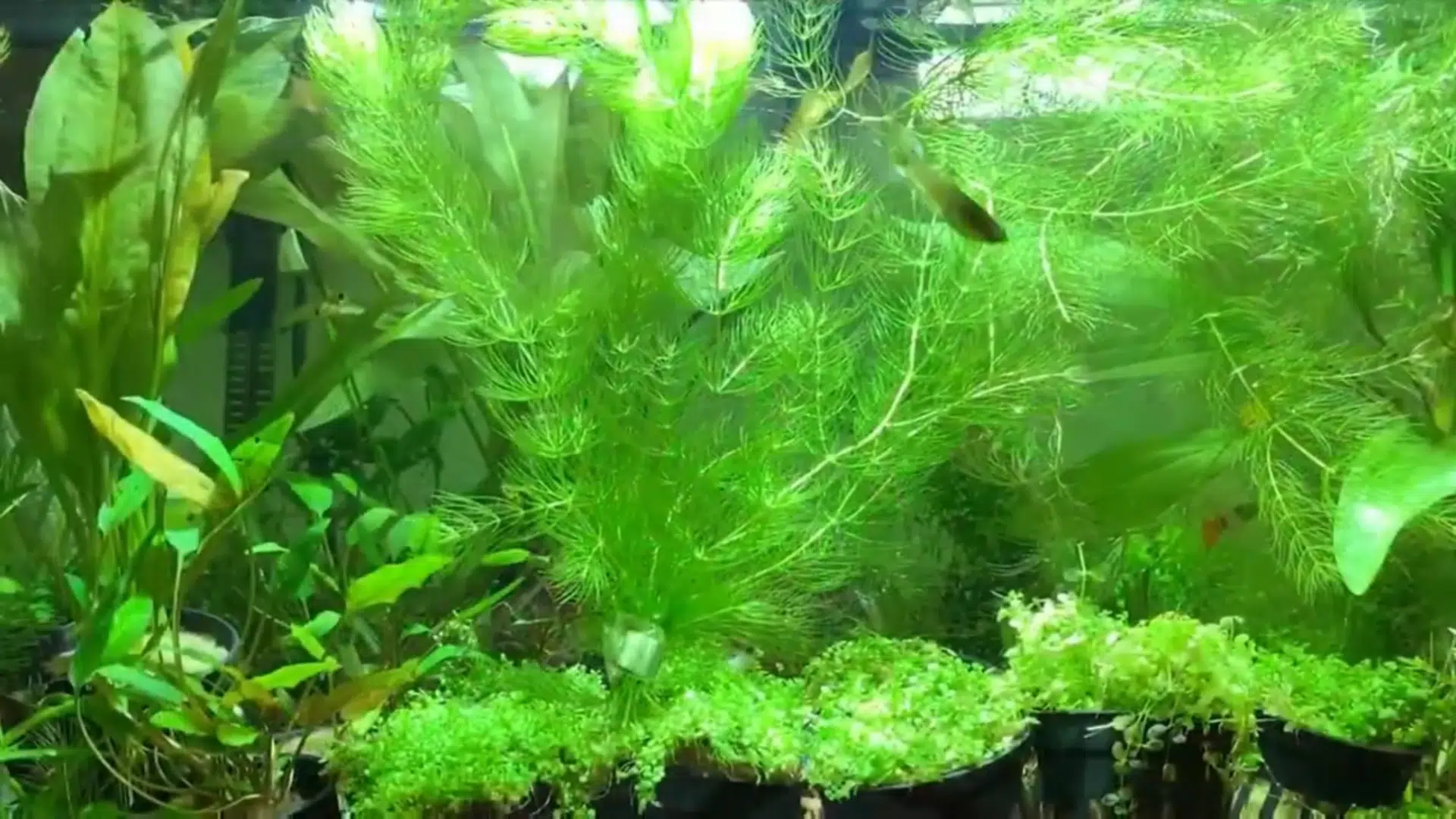
Hornwort is one of the low-light aquarium plants to care for if you want quick, noticeable growth without CO₂. I like how it adapts to almost any tank setup; it can float freely or be anchored in the substrate.
It grows fast, which helps absorb extra nutrients and limits algae. You may need to trim it occasionally to keep it tidy.
Its fine, feathery leaves give fish and shrimp plenty of hiding spots. If you’re looking for a hardy plant that helps clean your tank naturally, Hornwort is a great choice.
8. Water Wisteria (Hygrophila Difformis)
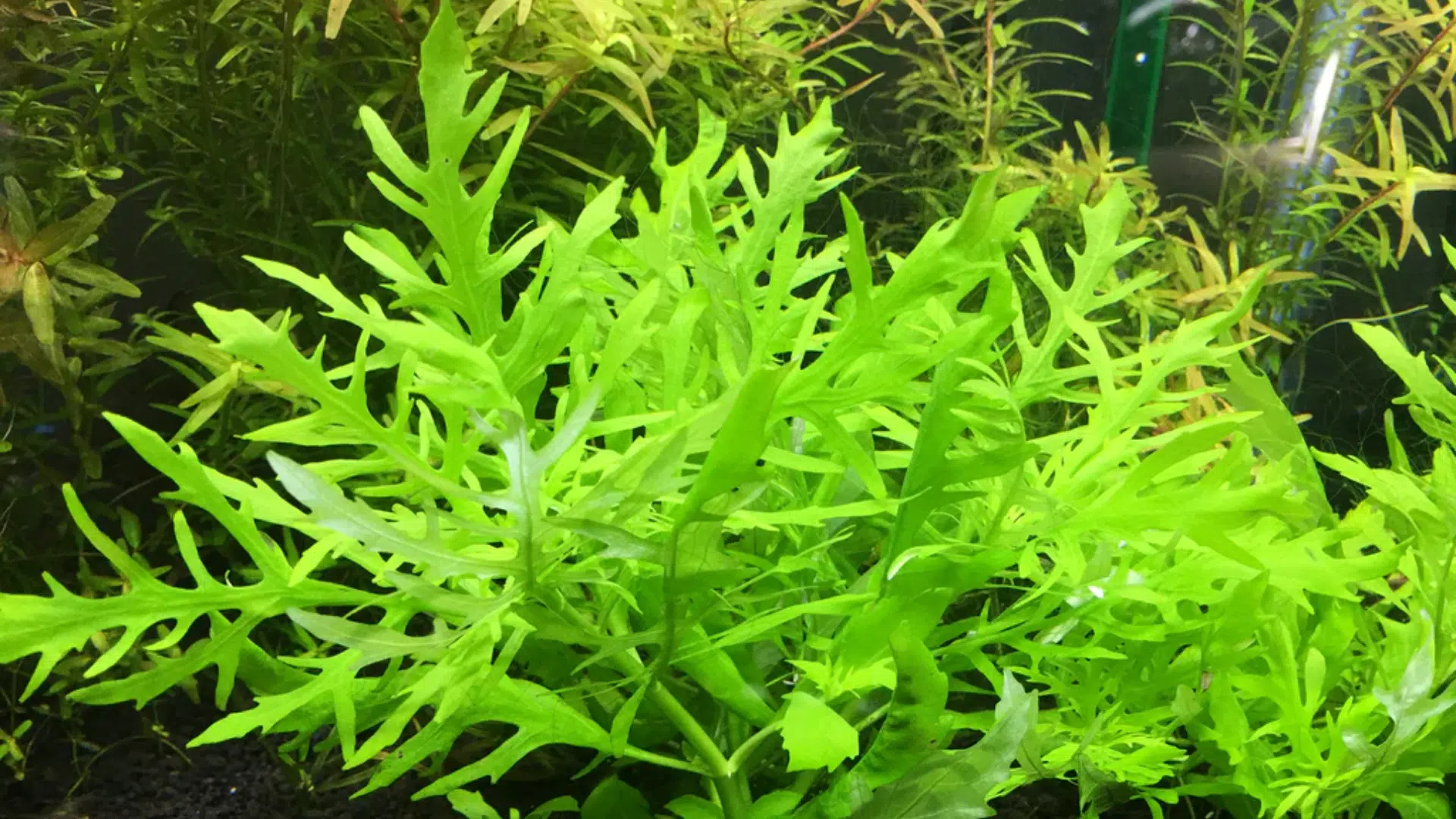
Water Wisteria is a flexible, low-light plant that adds a fresh, green look to your aquarium. I like it because it can grow rooted or floating, depending on your setup.
It grows fairly fast even without CO₂, so you’ll want to trim it now and then to keep it from crowding other plants.
Its lace-like leaves look great and help soak up excess nutrients from the water. It’s also helpful for controlling algae and providing shelter for small fish.
This plant is perfect if you want quick results without much work.
9. Anubias Barteri
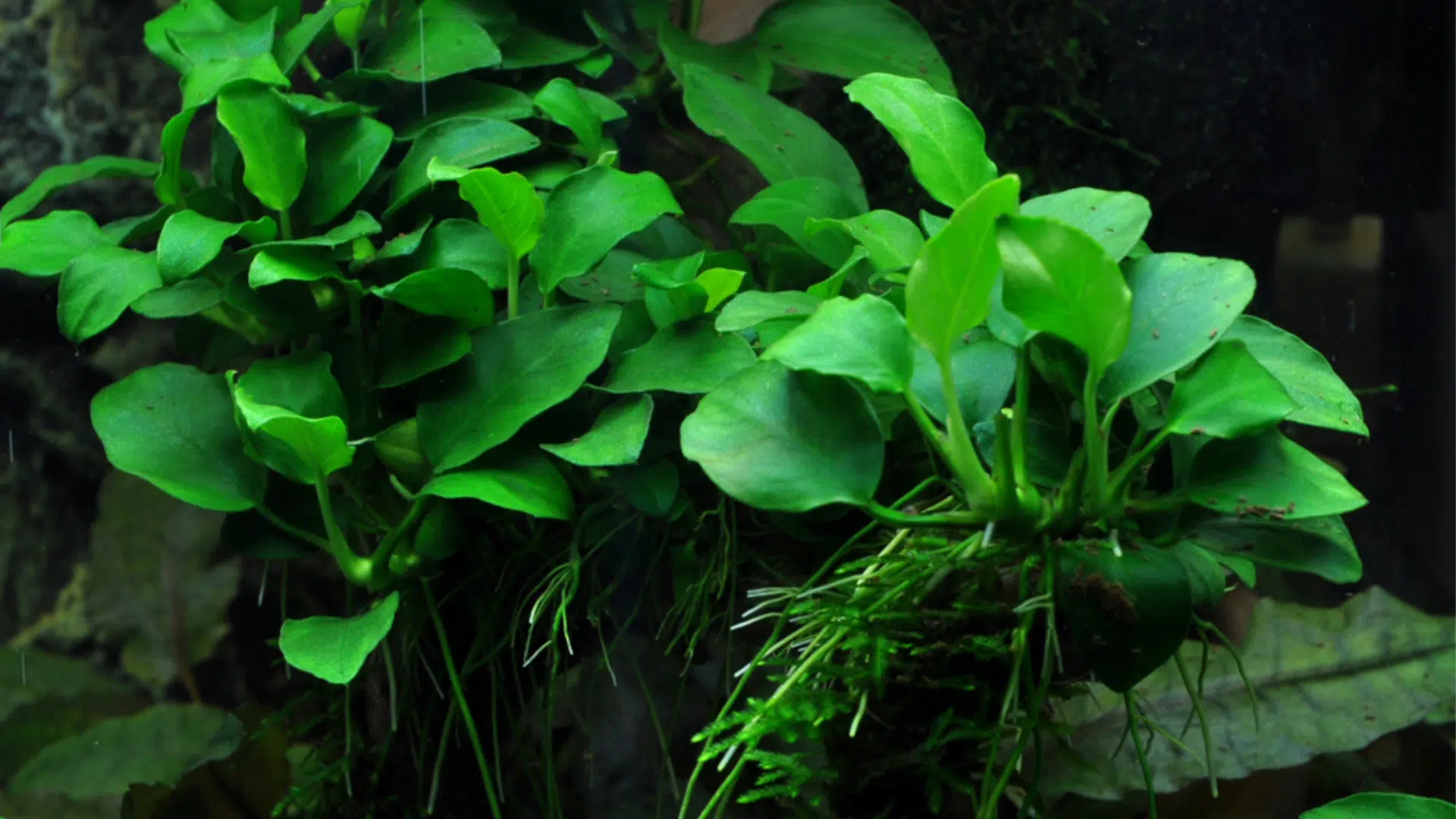
Anubias Barteri is a larger version of Anubias Nana and just as easy to care for. I attach it to rocks or driftwood since its roots can rot if buried too deeply.
It grows slowly, which means you don’t have to trim it often. Its broad, dark green leaves stay clean and healthy in low light, making it ideal for shaded areas.
Fish don’t usually nibble on it, which helps it stay in good shape.
If you want a sturdy, low-maintenance plant that adds texture and depth, this one works well.
10. Bucephalandra
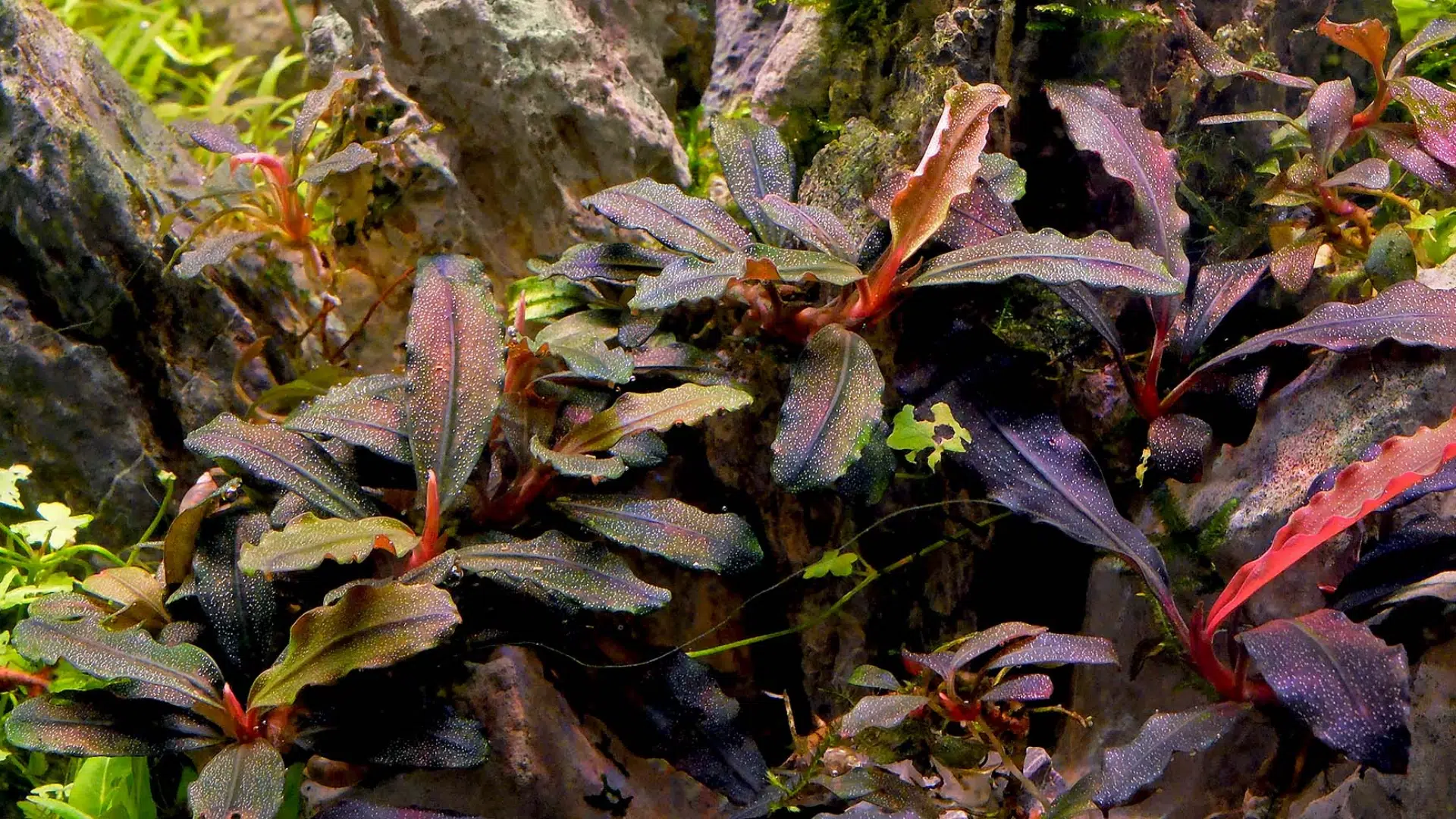
Bucephalandra is one of my favorite low-light aquarium plants because it adds variety without needing special care. It attaches easily to driftwood or rocks and grows slowly, similar to Anubias.
The leaves come in different shapes and shades of green, blue, or bronze, depending on the variety.
I’ve found that it adjusts well to most tanks, even without CO₂.
Keep the water stable and avoid burying the rhizome. Over time, it spreads gently and gives your aquarium a rich, natural look with very little effort.
11. Vallisneria Spiralis
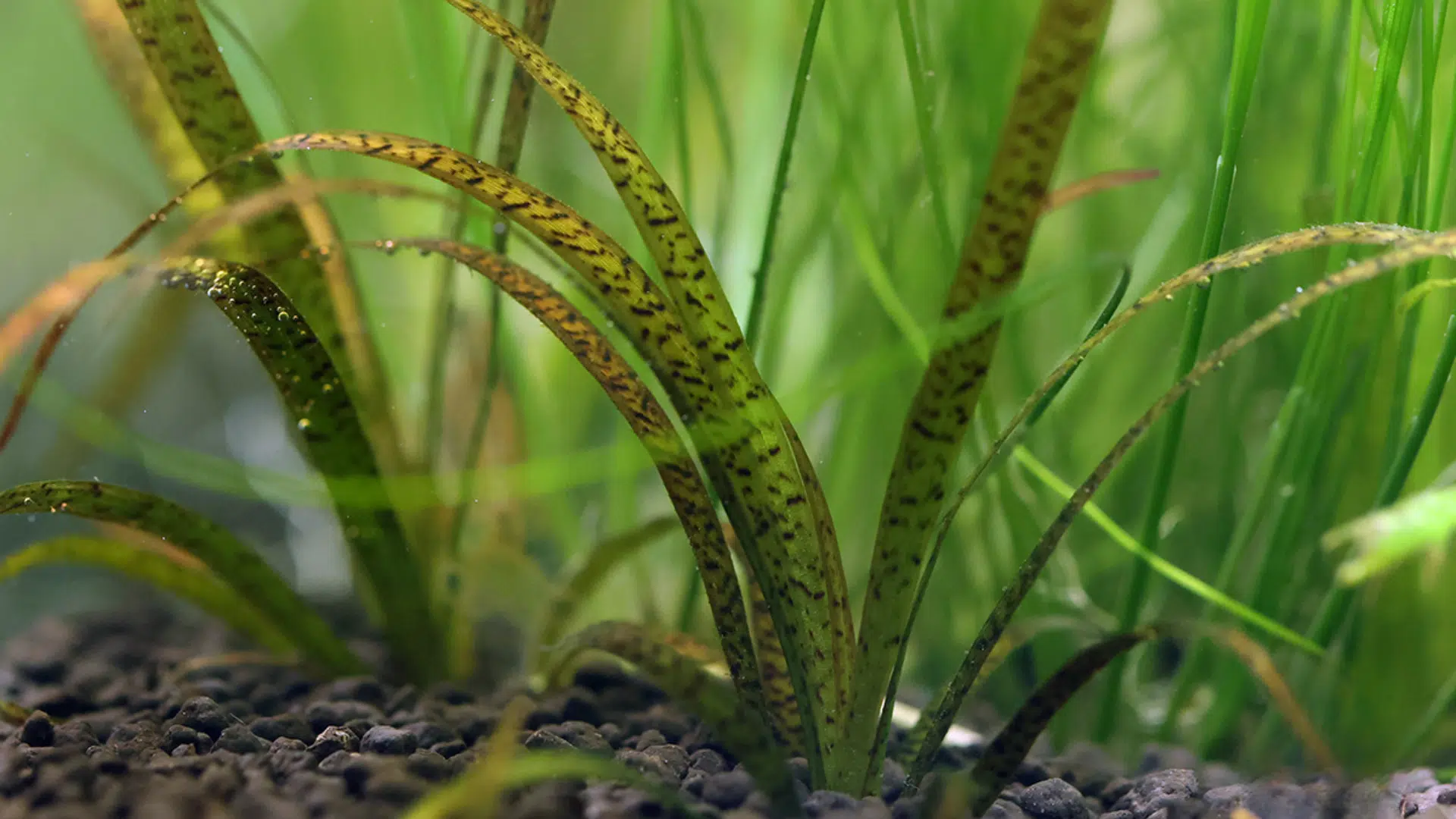
Vallisneria Spiralis is a strong background plant that’s perfect for filling space in taller tanks. It grows long, ribbon-like leaves that reach the surface and sway with the water current.
I like how easy it is to plant; it grows well in sand or gravel without CO₂. Once settled, it spreads through runners, so you’ll have new plants before long.
You can trim the leaves if they get too long. It’s simple, sturdy, and adds movement and depth to any aquarium.
12. Dwarf Sagittaria (Sagittaria Subulata)
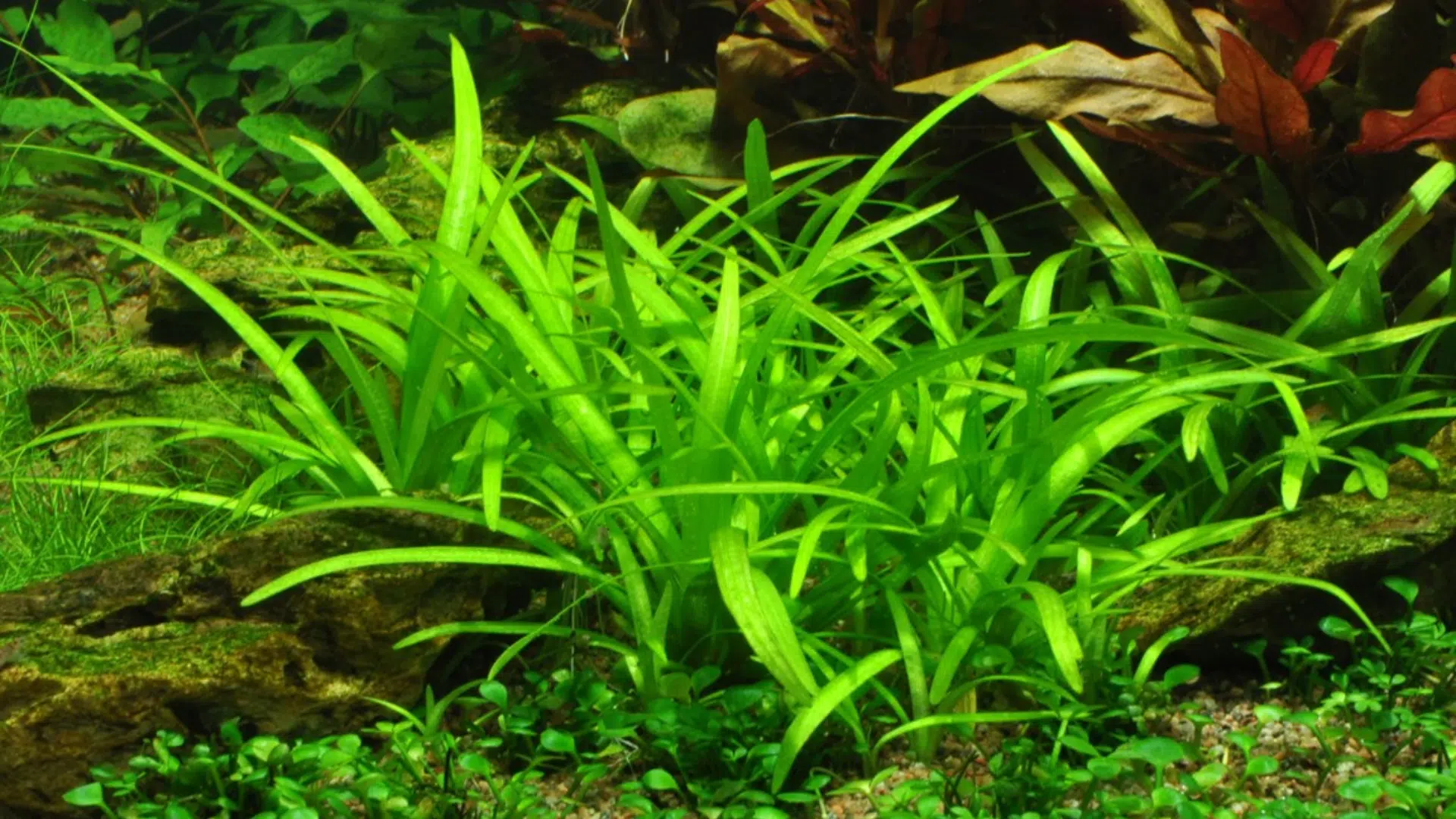
Dwarf Sagittaria is great if you want a green carpet effect in a low-light tank. It stays small and grows evenly, which makes it ideal for the front of the aquarium.
I plant it in small groups to help it spread faster. It doesn’t need CO₂ and grows fine in regular gravel or sand.
You might see small runners forming after a few weeks, which means it’s settling well. It’s easy to maintain and gives your aquarium a clean, natural base without much work.
13. Cryptocoryne Lucens
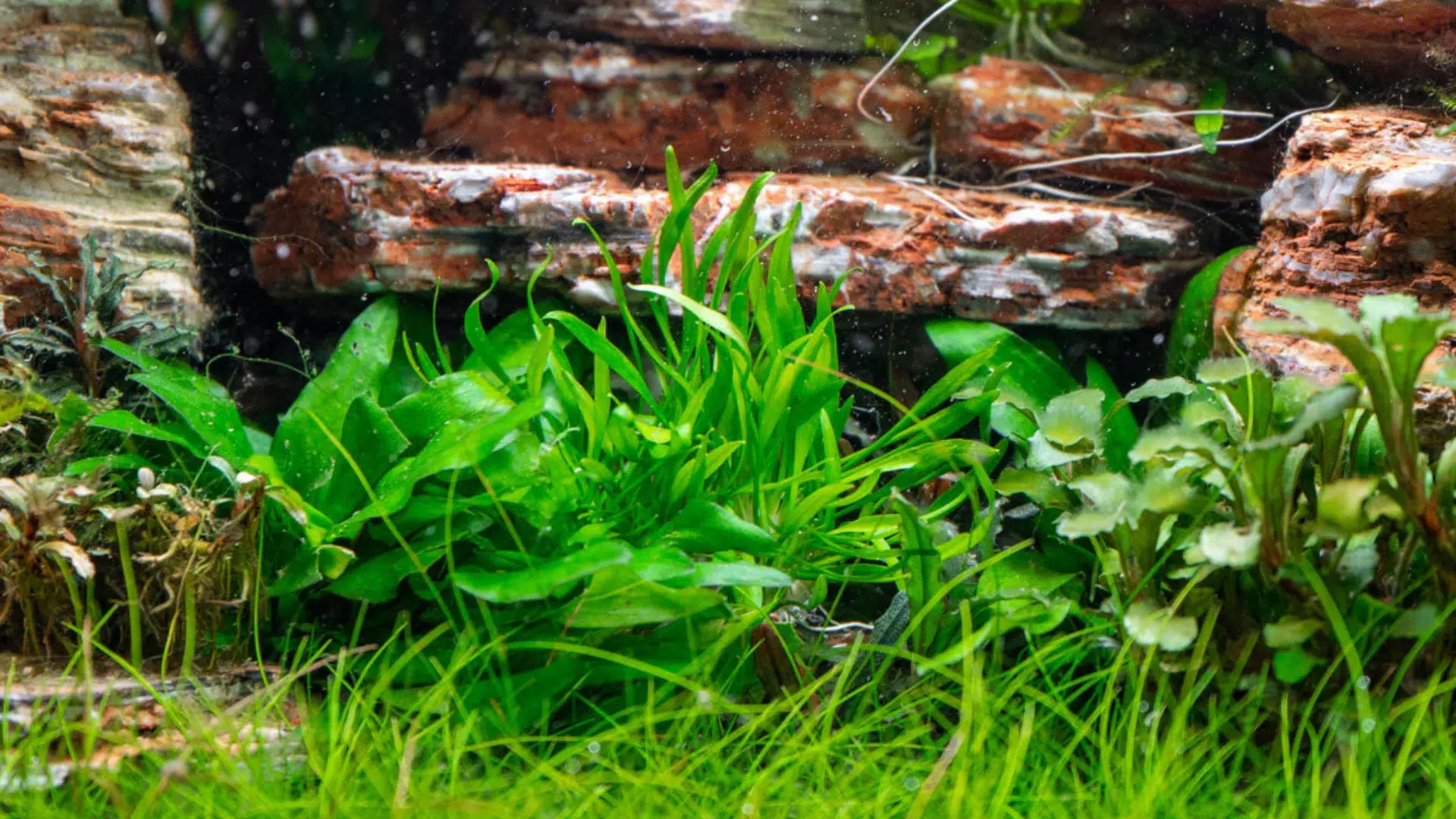
Cryptocoryne Lucens is a compact, low-maintenance, low-light aquarium plant that fits nicely in the front or middle of the tank.
I like using it because it stays neat and doesn’t grow too tall. It does well in low light and doesn’t need added CO₂ or strong filtration.
You can plant it in gravel or sand, and it will slowly spread by sending out runners.
The narrow green leaves give your aquarium a soft, tidy look. It’s a reliable choice if you want steady growth without frequent trimming or special care.
14. African Water Fern (Bolbitis Heudelotii)
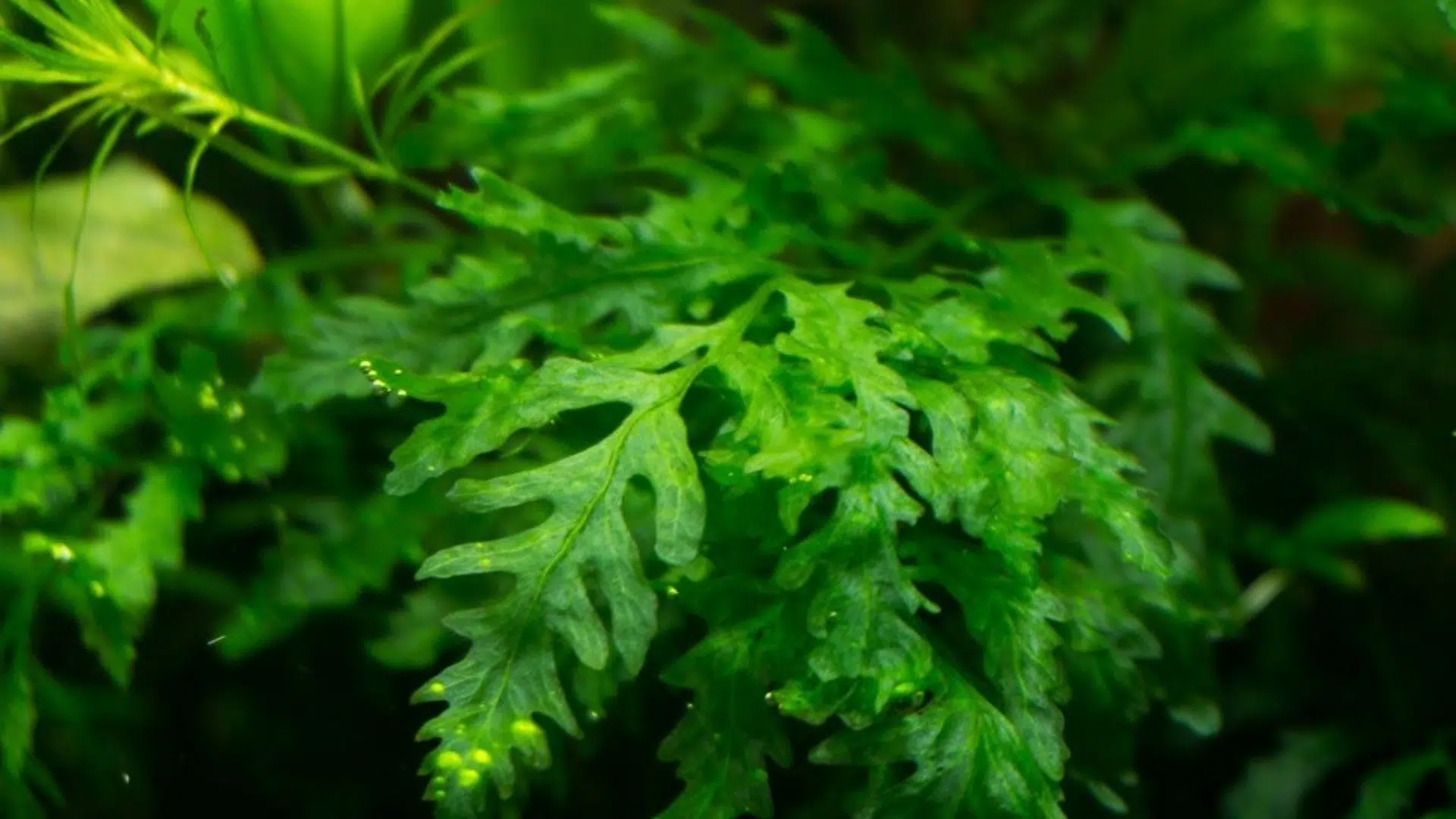
African Water Fern is a slow-growing plant that brings a natural, leafy look to any aquarium. I usually attach it to driftwood or rocks instead of planting it in the substrate, since its rhizome can rot if buried.
It prefers gentle water flow and low to moderate light, which makes it perfect for shaded tanks.
It doesn’t need CO₂, and once it adjusts, it stays healthy for years with little effort. The fern’s deep green leaves move softly with the current, adding calm movement to your setup.
15. Pothos (Epipremnum Aureum) – Partially Submerged Option
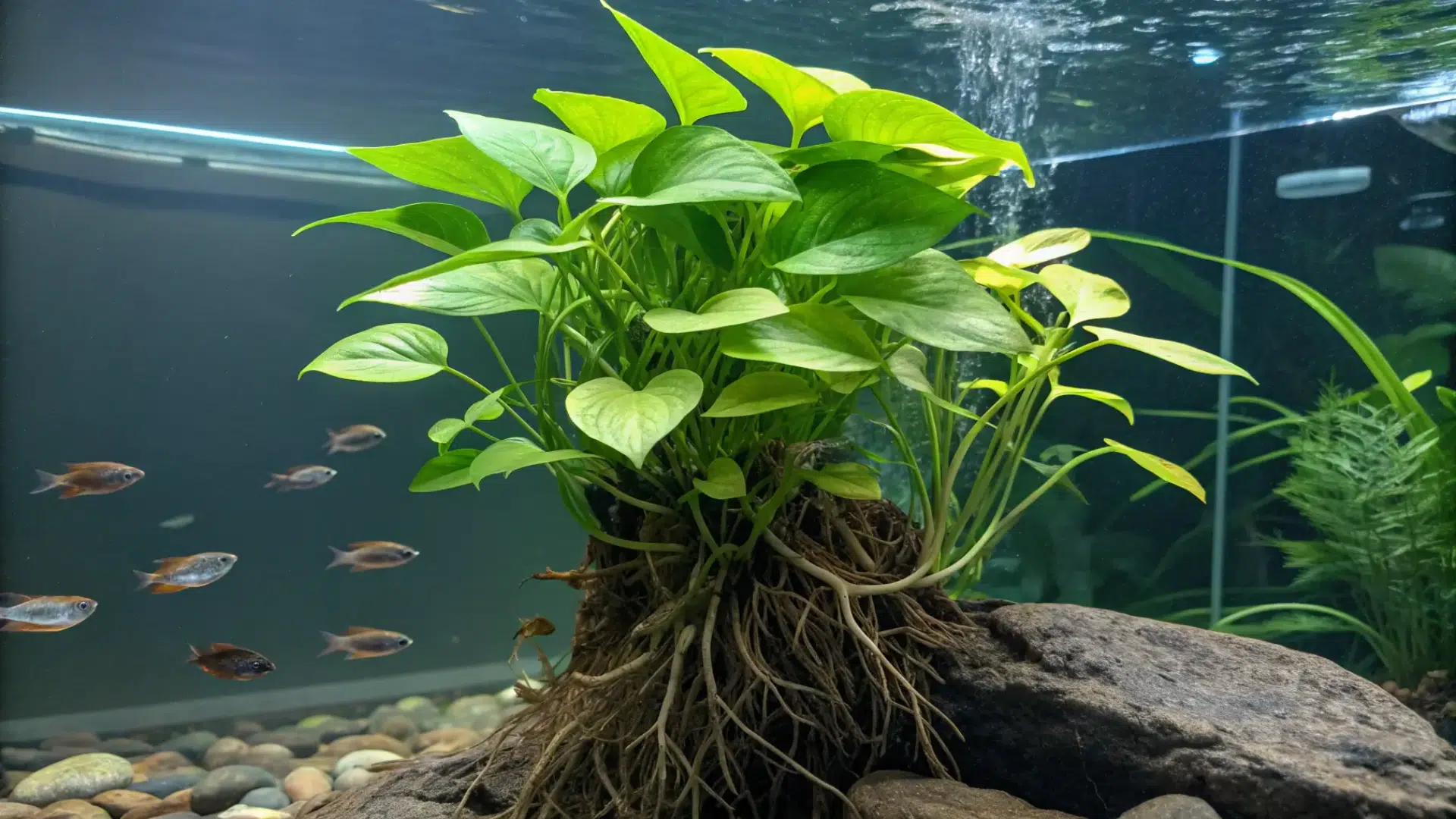
Pothos isn’t a true aquatic plant, but it grows beautifully with its roots in water. I often let it hang from the tank’s edge so the roots stay submerged while the leaves grow above the surface.
It’s one of the best plants for improving water quality because it absorbs nitrates and reduces algae. It doesn’t need CO₂ or much light, just stable water and room for its roots to spread.
Pothos adds a natural, clean look to your setup and helps keep the water healthy for your fish.
16. Ludwigia Repens
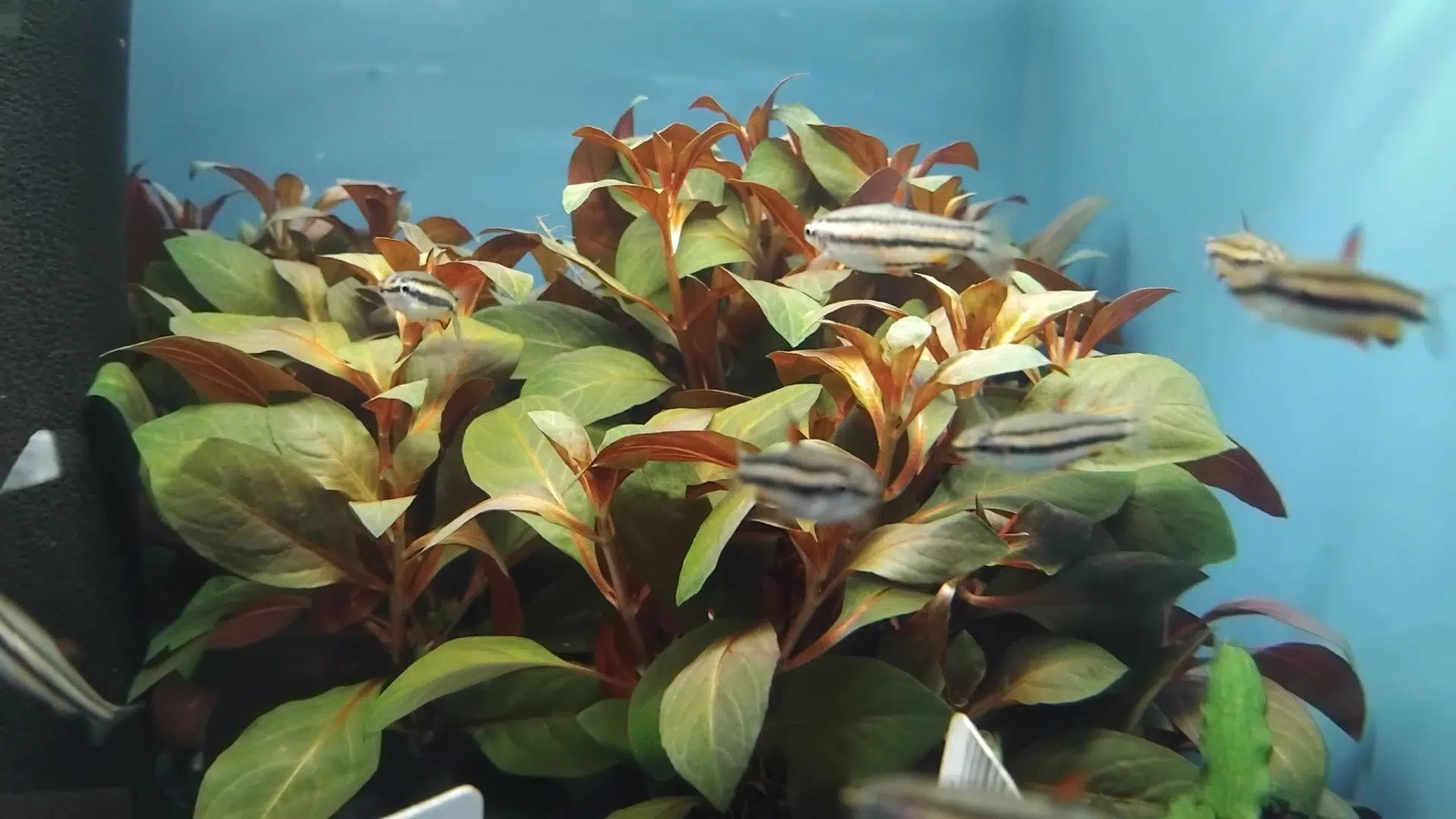
Ludwigia Repens is one of the few low-light aquarium plants that adds a hint of red to your tank. I like it because it grows easily without CO₂, though the color gets deeper with a bit more light.
You can plant it in groups for a bushy effect or let it float near the top. It grows fast, so you may need to trim it occasionally to maintain its shape.
The mix of green and red leaves gives your aquarium a lively contrast without much work.
17. Water Sprite (Ceratopteris Thalictroides)
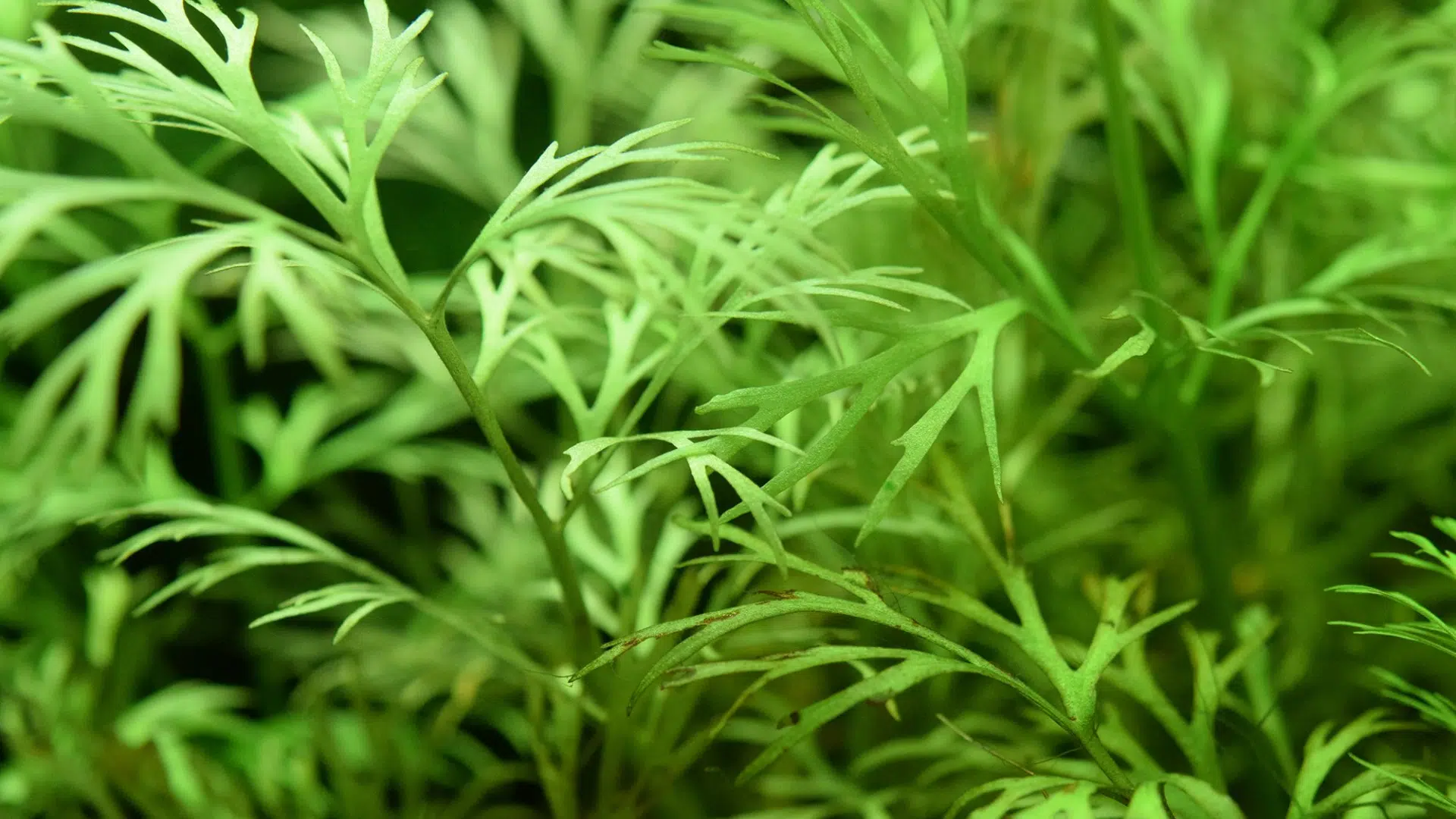
Water Sprite is a versatile, fast-growing plant that works well for beginners. It can be planted in the substrate or left floating on the surface. I like how quickly it adapts and adds greenery even in dim light.
It doesn’t need CO₂, and its delicate leaves provide shade and hiding spaces for fish and shrimp.
It also helps control algae by soaking up extra nutrients. If you want a plant that looks full and grows easily, Water Sprite is a dependable and easy choice for any aquarium.
18. Subwassertang (Lomariopsis Lineata)
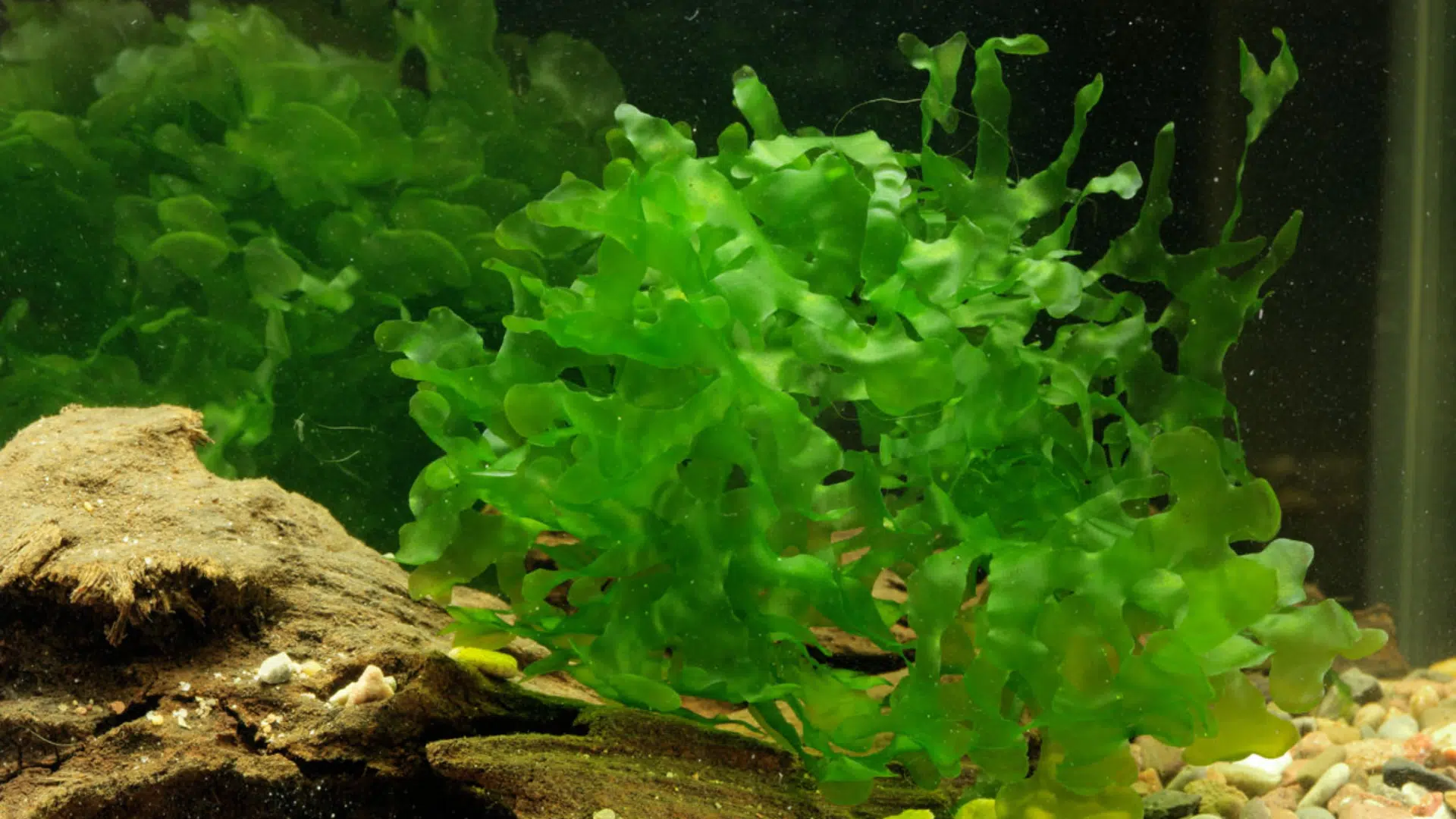
Subwassertang is a soft, leafy plant that’s great for low-light tanks. I like it because it’s almost impossible to mess up.
You don’t need CO₂, special lights, or soil; it grows attached to rocks, driftwood, or even left loose in the tank. It forms thick green clumps that make perfect hiding spots for shrimp and fry.
I usually trim it a little when it gets too dense. It also helps clean the water by trapping debris and using up extra nutrients, keeping your tank balanced with minimal effort.
19. Floating Water Lettuce (Pistia Stratiotes)
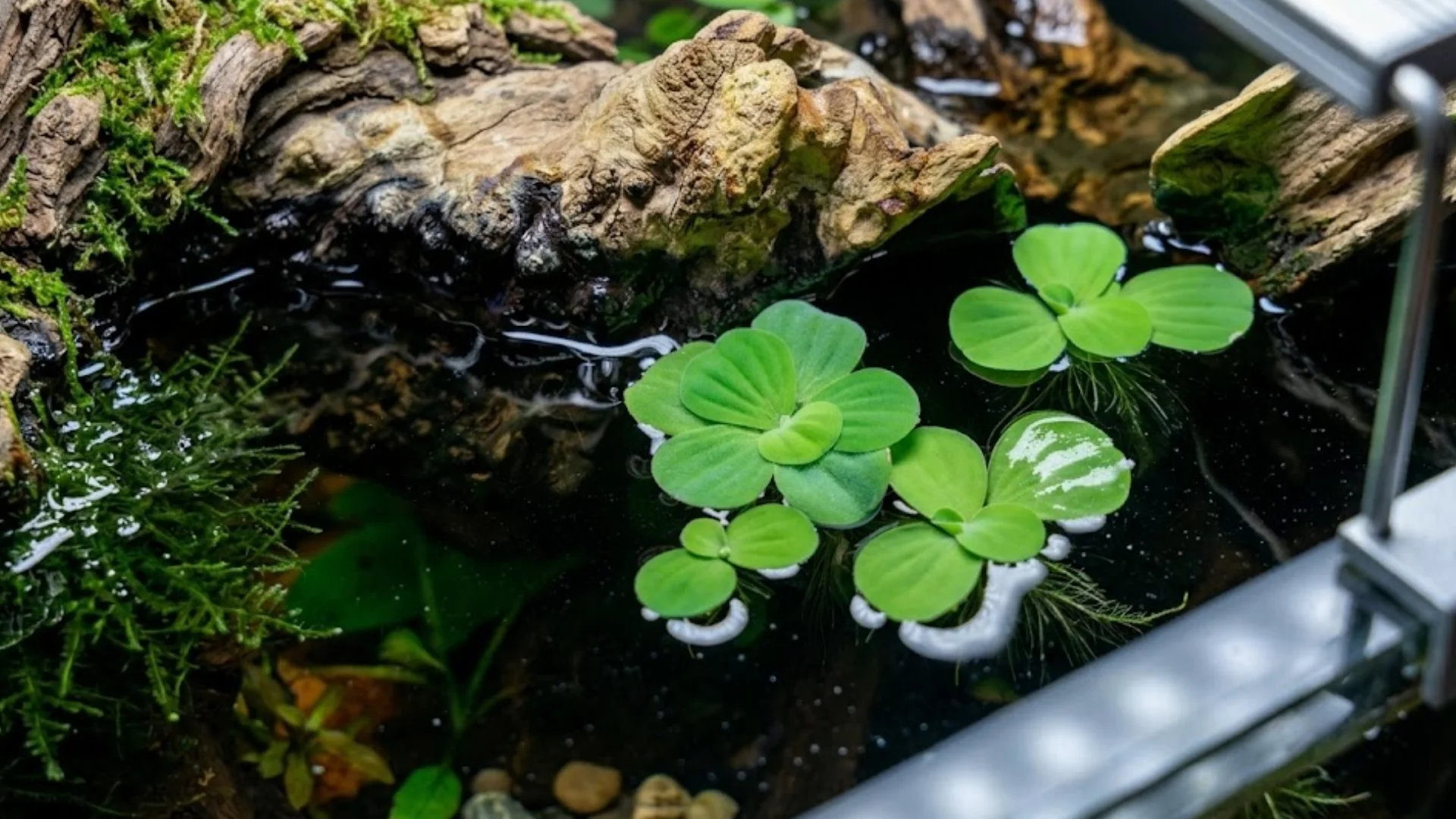
Floating Water Lettuce is a simple way to add greenery to the water’s surface. I like using it because it grows fast and blocks harsh light, keeping the tank cool and shaded.
It doesn’t need CO₂ or planting, just let it float freely. The long roots hang below the surface, providing shelter for fish and shrimp.
You might need to thin it out from time to time so it doesn’t cover the whole surface. It’s an easy, natural way to keep your aquarium calm and low-maintenance.
20. Java Lace Fern
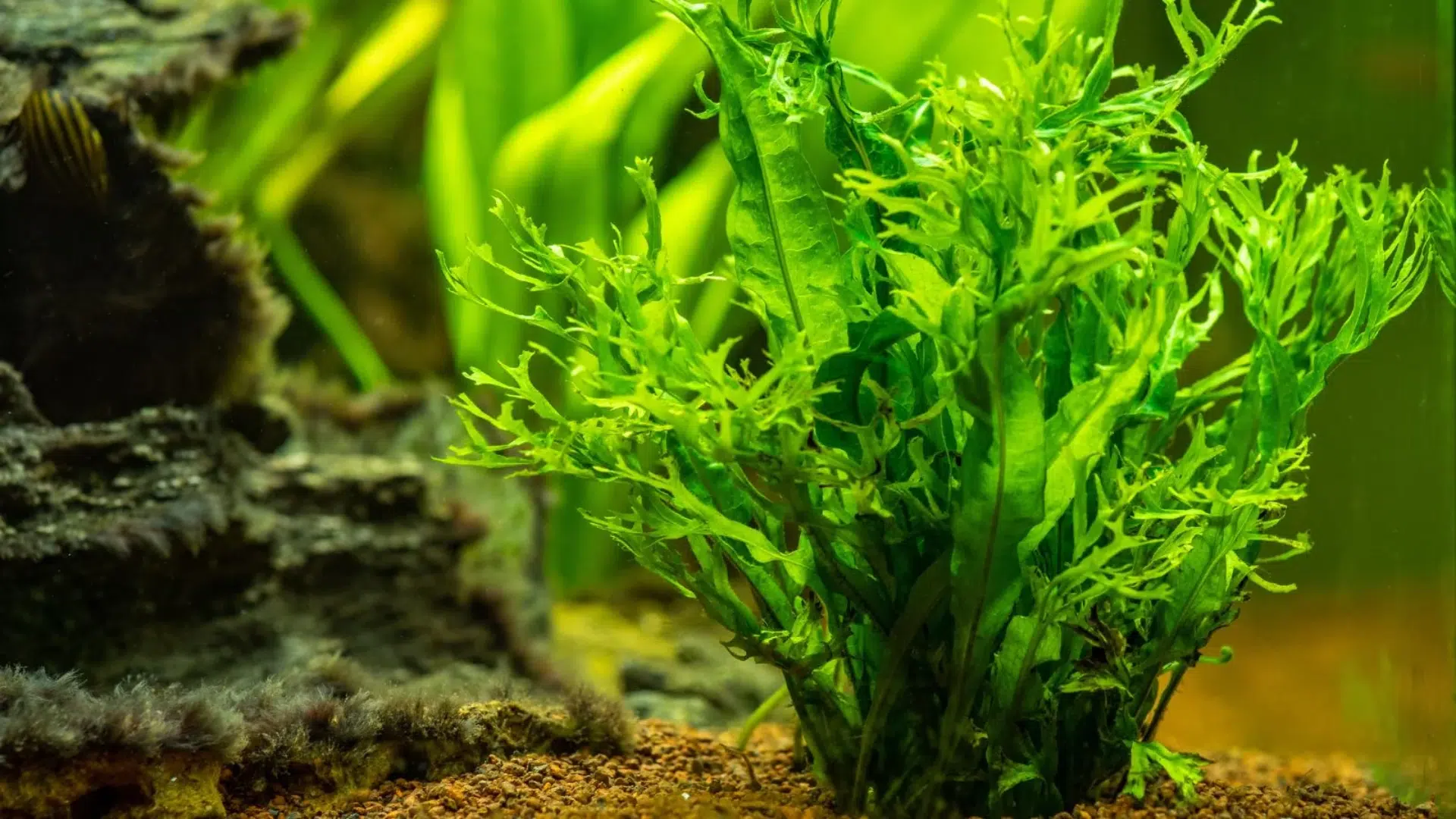
Java Lace Fern is similar to Java Fern but has thinner, more delicate leaves that give a softer look.
I usually attach it to driftwood or stones, and it grows slowly without needing CO₂ or a rich substrate. It prefers shaded spots and steady water flow.
Once it settles, it requires very little care, just occasional trimming if the leaves grow long.
The lace-like texture looks great in natural-style tanks and helps fill background areas without overcrowding. It’s a simple and graceful plant that fits into almost any setup.
21. Anacharis (Elodea Densa)
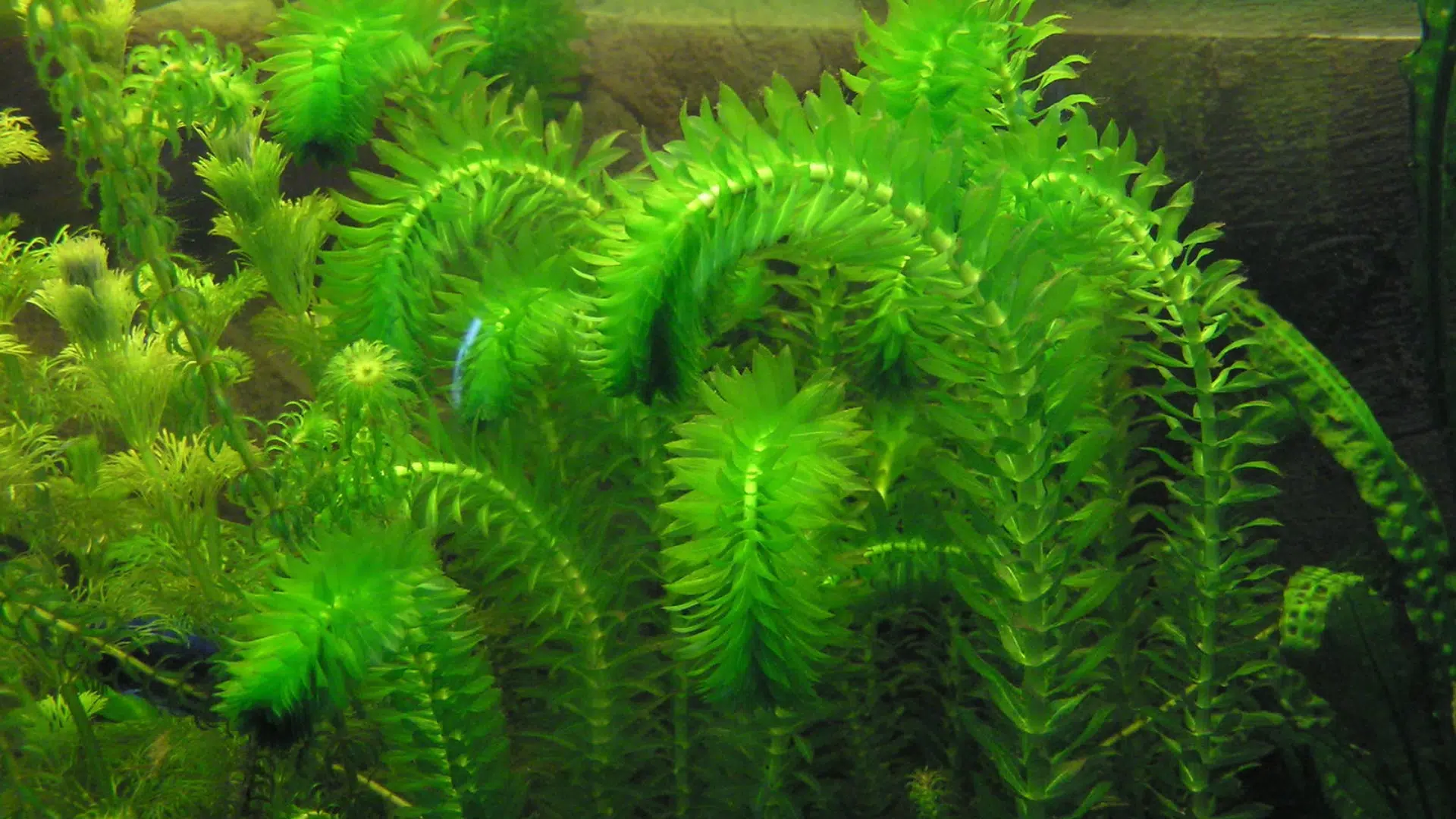
Anacharis is a fast-growing, beginner-friendly, low-light aquarium plant that does well in low light. I like using it because it’s easy to plant or let float, depending on your tank setup.
It grows quickly and helps keep the water clean by absorbing nutrients and limiting algae growth.
You’ll need to trim it now and then, but it’s very forgiving. Its bright green stems create a lush background and give fish plenty of places to hide.
Anacharis is a great choice if you want an active, healthy plant without extra work.
Benefits of Choosing Low-Light Aquarium Plants
When I first started keeping aquariums, I thought plants needed bright lights and fancy gear to grow. I quickly learned that low-light aquarium plants can be just as beautiful, and a lot easier to manage.
They’re perfect if you want a calm, natural look without the constant worry about lighting or trimming.
These plants grow well without expensive lighting, helping you save both time and money. You don’t have to deal with tangled cords or pricey bulbs.
They also need less maintenance, so you’ll spend more time enjoying your tank and less time cleaning it.
Low-light plants can also help reduce algae and keep your tank balanced. They fit well in smaller or shaded tanks, making them ideal for cozy spaces.
Once your plants are settled, pair them with the right aquarium fish.
For me, they bring peace of mind and a quiet sense of joy every time I look at my aquarium.
Common Mistakes to Avoid with Low-Light Aquarium Plants
Low-light aquarium plants are often seen as beginner-friendly, but small setup mistakes can quietly ruin their growth. Issues like improper planting, misunderstanding plant behavior, or using incompatible products can lead to melting leaves, rot, or stalled development.
- Burying Anubias or Bucephalandra rhizomes: The rhizome must stay above the substrate. Even partial burial causes rot, and it sets in fast.
- Mistaking “melt” for death: Cryptocoryne species commonly drop their leaves when moved to a new tank. It’s a stress response, not a death spiral. Leave the roots in place, and new growth will appear.
- Using liquid carbon (Excel) with Vallisneria: Excel’s active ingredient (glutaraldehyde) is toxic to Vallisneria at even normal doses, and the leaves melt within days.
- Expecting carpet plants to carpet without adequate light: Most “low-light carpet” claims are overstated. True low-light carpeting options are limited to Dwarf Sagittaria, Java Moss, and Subwassertang. Others (HC Cuba, Monte Carlo) need medium-high light regardless of what labels say.
- Planting everything at once in a new tank: A newly set-up tank has unstable water chemistry. Introduce 3-4 plants first, let them establish for 2-3 weeks, then add more. This also makes it easier to diagnose which plant is struggling and why.
How Often Should You Trim or Maintain These Plants?
Maintenance frequency depends almost entirely on growth rate.
Fast-growing stems like Hornwort, Water Wisteria, and Anacharis may need trimming every 1-2 weeks at peak growth. Slow growers like Anubias, Bucephalandra, and African Water Fern can go a month or more without any attention.
A weekly 5-minute visual check is enough: look for yellowing leaves, overcrowding, or debris accumulation around plant bases.
Remove damaged leaves promptly to redirect the plant’s energy to new growth.
During water changes, gently disturb the substrate around rooted plants to prevent compaction and anaerobic pockets.
How to Transition Plants from Store to Aquarium?
Moving new low-light aquarium plants into your tank takes a little care, but it’s easy once you know the steps. Here’s how I do it to keep both plants and fish safe.
- Rinse or quarantine new plants: Always rinse plants under clean water or place them in a separate tank for a few days to remove snails, algae, or chemicals.
- Trim damaged leaves: Cut off any brown or broken parts so your plants can focus on new, healthy growth.
- Plant gently: Place the roots softly into the substrate without crushing them. Avoid burying the crown.
- Let them adjust slowly: Keep lights dim for the first few days and maintain steady water conditions.
- Be patient: It may take a week or two for plants to settle and show new growth, but the wait is worth it.
Conclusion
Building an aquarium with low-light aquarium plants is about patience and small, steady steps. You don’t need fancy gear or bright lights to make your tank look good, just a bit of care and consistency.
I’ve found that even a few minutes each day, like trimming a leaf or checking the water, can make a big difference.
These moments help your plants grow stronger, and your tank stay balanced.
Over time, you’ll see your efforts turn into a peaceful, green space that’s easy to care for and relaxing to watch. Enjoy the process, learn as you go, and don’t rush it.
The real reward comes from seeing your plants thrive and knowing you built something natural and calming right in your own home.
Have you tried setting up a low-light aquarium? Share your experience in the comments below.
Frequently Asked Questions
Can I Put a Banana Peel in My Fish Tank?
No, a banana peel will decompose quickly and release excess organic waste, leading to ammonia spikes, poor water quality, and potential harm to fish and plants in the aquarium.
Can I Use a Regular Desk Lamp Or Household LED Bulb for Low-Light Aquarium Plants?
A regular desk lamp or household LED can work temporarily, but most lack the proper spectrum and intensity needed for consistent plant growth, often resulting in slow development or weak, leggy plants.
How Many Hours Of Light Per Day Do Low-Light Aquarium Plants Need?
Low-light aquarium plants typically need around 6 to 8 hours of light daily. Longer exposure can encourage algae growth, while shorter periods may limit healthy plant development and overall stability.