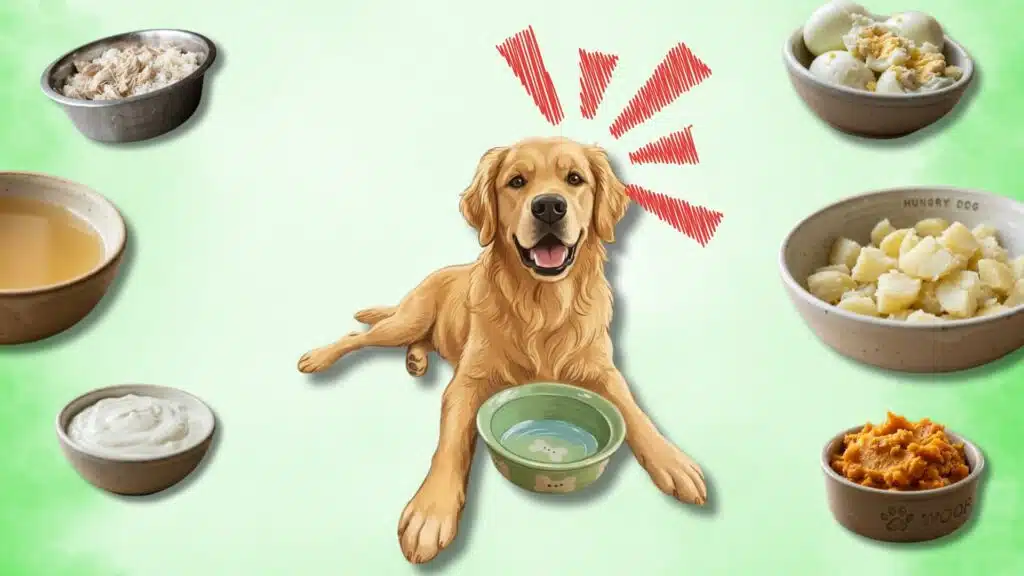
We have all been there. It is 2 a.m., your dog is restless, and suddenly you are dealing with a mess on the carpet while trying not to panic.
In that moment, one question hits first: what to feed a dog with diarrhea so things settle quickly.
Some of you just want a quick answer that works. Others want proper, vet-backed clarity before feeding anything.
As a certified pet nutritionist with over the past years of experience advising dog owners and collaborating with veterinary clinics across California, I have helped hundreds of families navigate exactly this situation.
This blog covers both. You will learn simple home options, the right dog food for diarrhea, and how to support your dog’s recovery without making things worse.
I will also cover what to avoid, whether to fast first, and when it is time to stop guessing and call a vet.
When is Diarrhea Serious?
Not every case is an emergency, but you need to know the difference. Mild diarrhea usually means your dog is still active, eating, and behaving normally.
Severe signs include repeated watery stools, vomiting, lethargy, blood in stool, or refusal to eat.
Call a vet immediately if diarrhea lasts more than 24 to 48 hours, or sooner for puppies, senior dogs, or if symptoms worsen quickly.
Watch for these specific signs of dehydration, which can develop faster than most owners expect: dry or tacky gums, sunken eyes, skin that does not spring back when gently pinched at the scruff of the neck, lethargy, and dark yellow urine.
If you notice any combination of these, contact your vet the same day; do not wait it out.
Some causes are obvious, like eating something bad, but others catch people off guard.
Sudden diet changes, stress, food intolerance, parasites, or even certain medications can trigger it. Knowing the cause helps you choose the right approach and avoid making things worse.
Critical warning on human medications: Never give your dog Pepto-Bismol (bismuth subsalicylate) or Imodium (loperamide) unless your veterinarian has explicitly directed you to. Both can be harmful or toxic to certain dogs, particularly those already on other medications. This is one of the most common well-intentioned mistakes I see dog owners make.
Should You Fast Your Dog First?
This is a step most home guides skip entirely, but it matters significantly. In healthy adult dogs with mild diarrhea, no vomiting, still drinking, and behaving normally, a short 12-hour fast gives the digestive system time to clear and reset before any food is introduced.
That said, fasting is not appropriate for every dog. Do not fast puppies under six months, senior dogs, small breeds prone to low blood sugar, or dogs with underlying health conditions.
For these dogs, move directly to a bland diet instead. During the fast, always keep fresh water available and encourage small, frequent sips.
Diarrhea already causes rapid fluid loss; adding food restriction on top of water restriction can cause serious dehydration within hours.
Once the fast is complete, or if fasting is not appropriate for your dog, the next step is introducing bland, gentle food in very small portions.
The Safest Foods to Feed Your Dog with Diarrhea
When your dog has diarrhea, simple and gentle foods work best. These options are easy to digest, reduce gut stress, and help stools return to normal faster.
Important note on portions and frequency: Regardless of which food you choose, start small. A good working rule is 1 tablespoon of food per 10 lbs of your dog’s body weight, offered 4 to 6 times throughout the day rather than one or two large meals. Smaller, more frequent portions are far gentler on an inflamed digestive system and significantly reduce the risk of triggering another episode.
1. Boiled Chicken and Rice
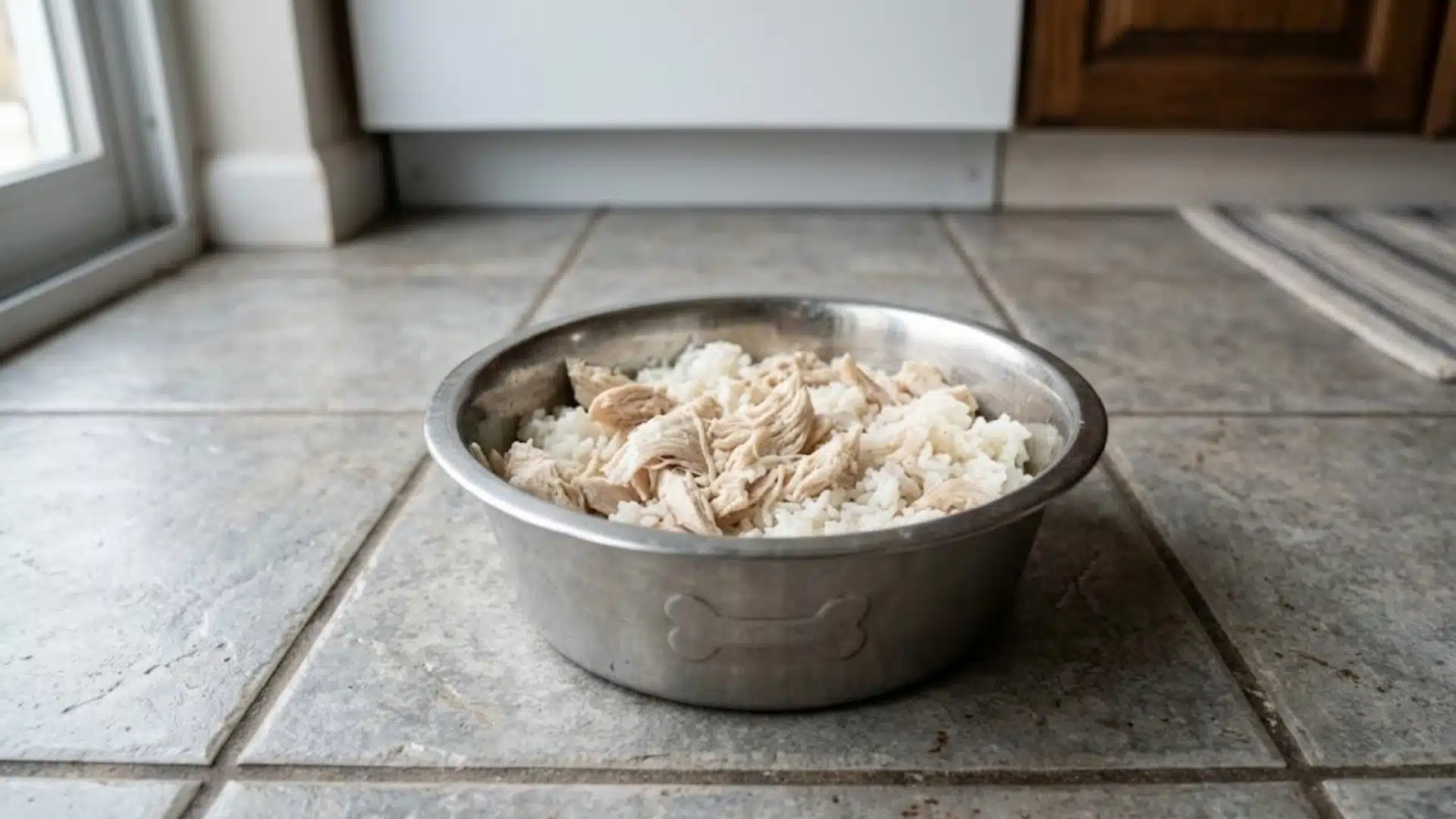
This is the go-to meal for most dog owners because it is light, low in fat, and easy on the stomach. Chicken provides lean protein, while white rice helps firm up stools.
White rice is preferred over brown rice during active diarrhea because its lower fiber content is gentler on an inflamed gut.
It is especially useful in the first couple of days when your dog needs something filling but not heavy.
- Ingredients: Boneless skinless chicken, white rice, water
How to make it?
- Boil chicken until fully cooked, and shred into small pieces.
- Cook rice separately until soft.
- Mix in a 1:1 ratio of chicken to rice
- Let it cool before serving.
2. Pumpkin
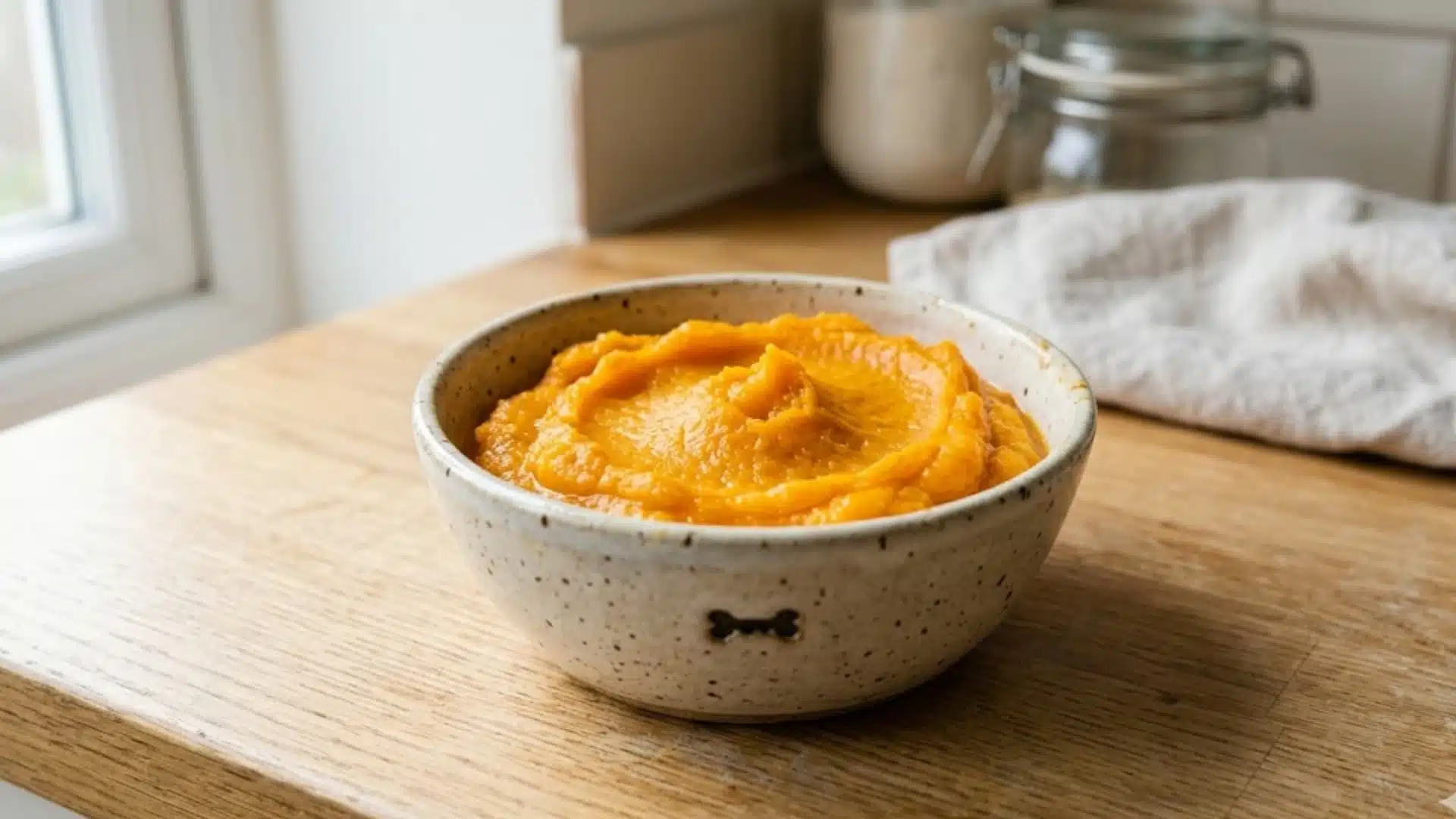
Plain pumpkin is rich in soluble fiber, which helps regulate digestion by absorbing excess water in the colon and slowing gut motility.
It can firm loose stools and support gut balance when given in the right amount. Always use plain canned pumpkin or fresh boiled pumpkin without added sugar or spices.
Pumpkin pie filling is not a substitute; the added sugars and spices will worsen symptoms, not help them.
- Ingredients: Plain pumpkin puree or fresh pumpkin
How to make it?
- If using fresh pumpkin, boil until soft and mash well.
- Serve 1 tablespoon for small dogs, 2 tablespoons for medium dogs, and up to 4 tablespoons for large breeds, mixed with bland food.
- Adjust based on tolerance.
A note of caution on pumpkin: While pumpkin is widely recommended, it does contain simple sugars that can feed certain gut bacteria and may not suit every dog. Start with the minimum dose and watch closely for any worsening of symptoms over the first 24 hours.
3. Sweet Potatoes
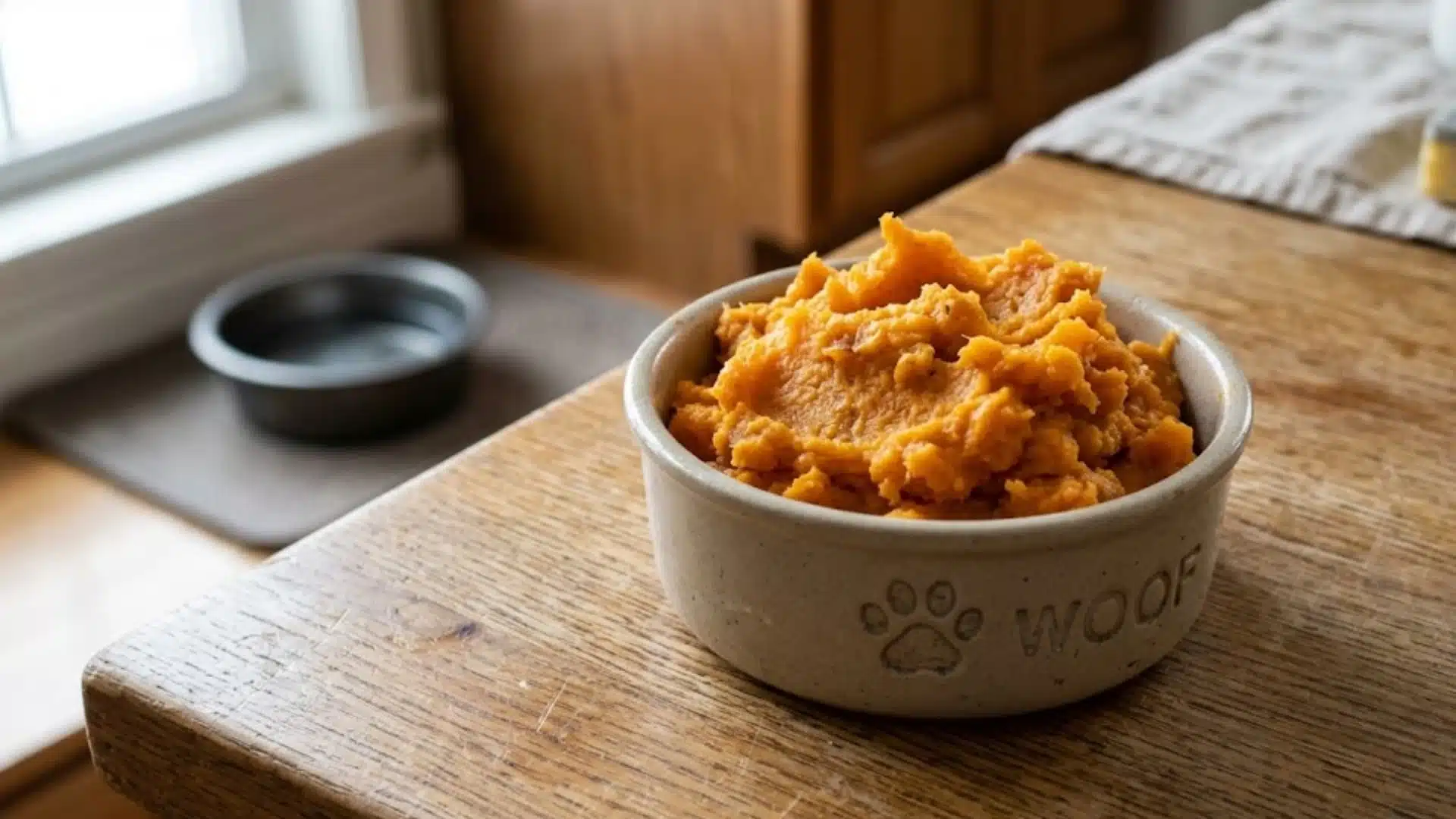
Sweet potatoes are an excellent option that most home guides overlook. They work similarly to pumpkin, high in soluble fiber, easy to digest, and gentle on the gut.
They are particularly useful for dogs that are starting to resist the same rice-and-chicken combination after a couple of days.
- Ingredients: Plain sweet potato, water
How to make it?
- Peel and dice the sweet potato, boil until completely soft
- Mash without adding butter, salt, or any seasoning.
- Let it cool fully before serving in small portions alongside boiled protein.
4. Plain Yogurt
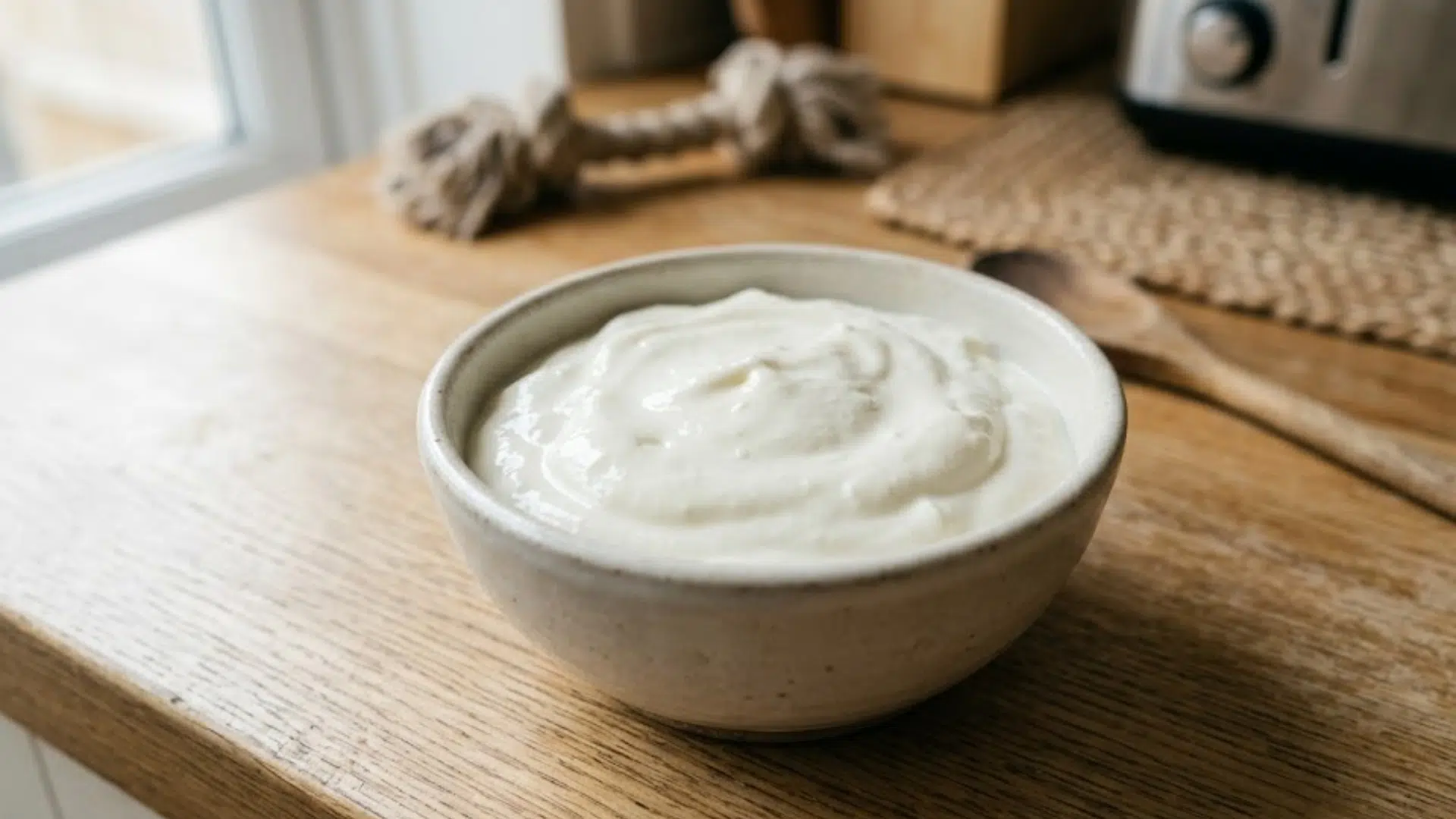
Plain yogurt contains probiotics that can support healthy gut bacteria. Avoid flavored or sweetened yogurt as it can worsen symptoms.
Plain, unsweetened Greek yogurt is the better choice here; it is higher in protein and significantly lower in lactose than regular yogurt, which means a lower risk of worsening diarrhea in dogs with lactose sensitivity.
- Ingredients: Plain Greek yogurt, unsweetened
How to make it?
- Add 1 to 2 tablespoons to your dog’s bland meal.
- Start with a smaller amount, observe for intolerance over 24 hours
- Continue only if stools do not worsen.
5. Boiled Eggs
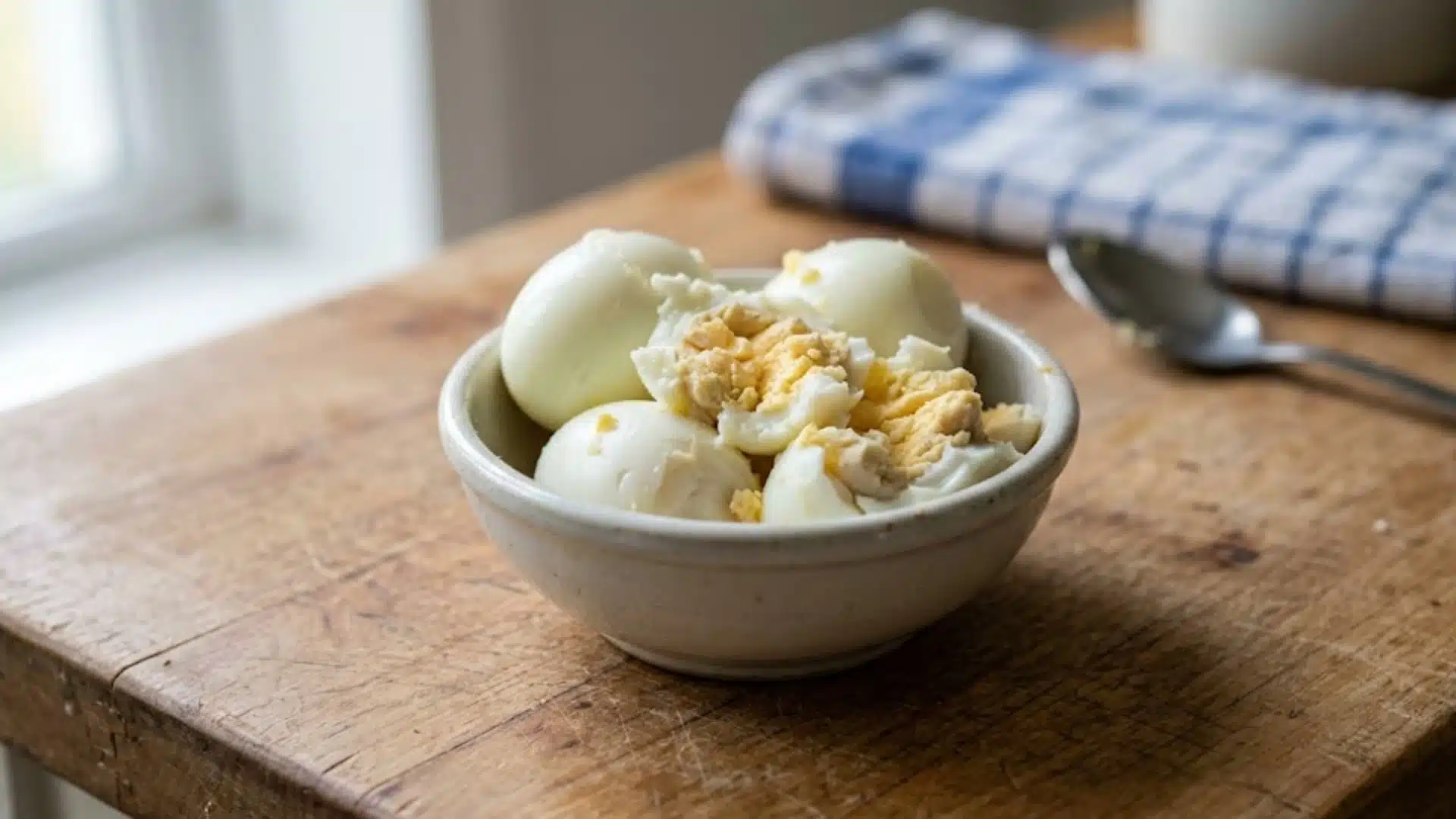
Eggs are a great source of protein and are easy to digest when cooked plain. They can help your dog regain strength without upsetting the stomach.
Plain boiled eggs are the better choice over scrambled eggs during a diarrhea episode; scrambled eggs are often prepared with butter or oil, which adds fat that the gut does not need right now. Avoid adding oil, butter, or seasoning.
- Ingredients: Eggs, water
How to make it?
- Boil eggs until fully cooked, and remove the shell
- Mash or chop into small pieces.
- Serve in small portions alongside rice or alone.
6. Boiled Potatoes
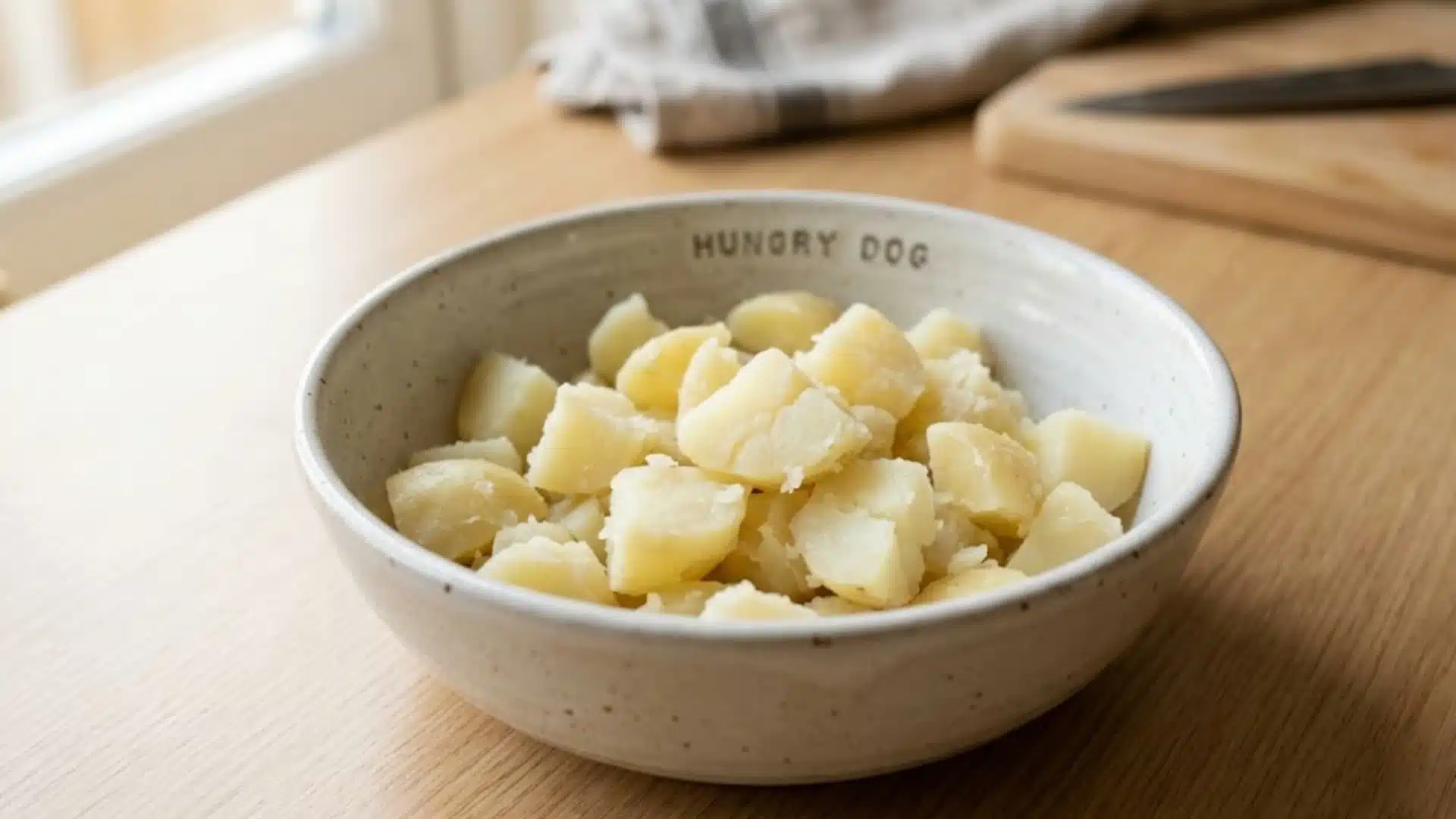
Plain boiled potatoes are soft, easy to digest, and can help bind stools slightly. They contain resistant starch, which supports healthy gut bacteria and helps restore normal digestive function, a useful biochemical bonus that plain rice does not offer to the same degree.
They are a good alternative if your dog does not respond well to rice. Always serve without salt or butter.
- Ingredients: Potatoes, water
How to make it?
- Peel and chop potatoes, boil until soft,
- mash lightly without adding anything.
- Let cool before feeding in small portions.
7. Bone Broth
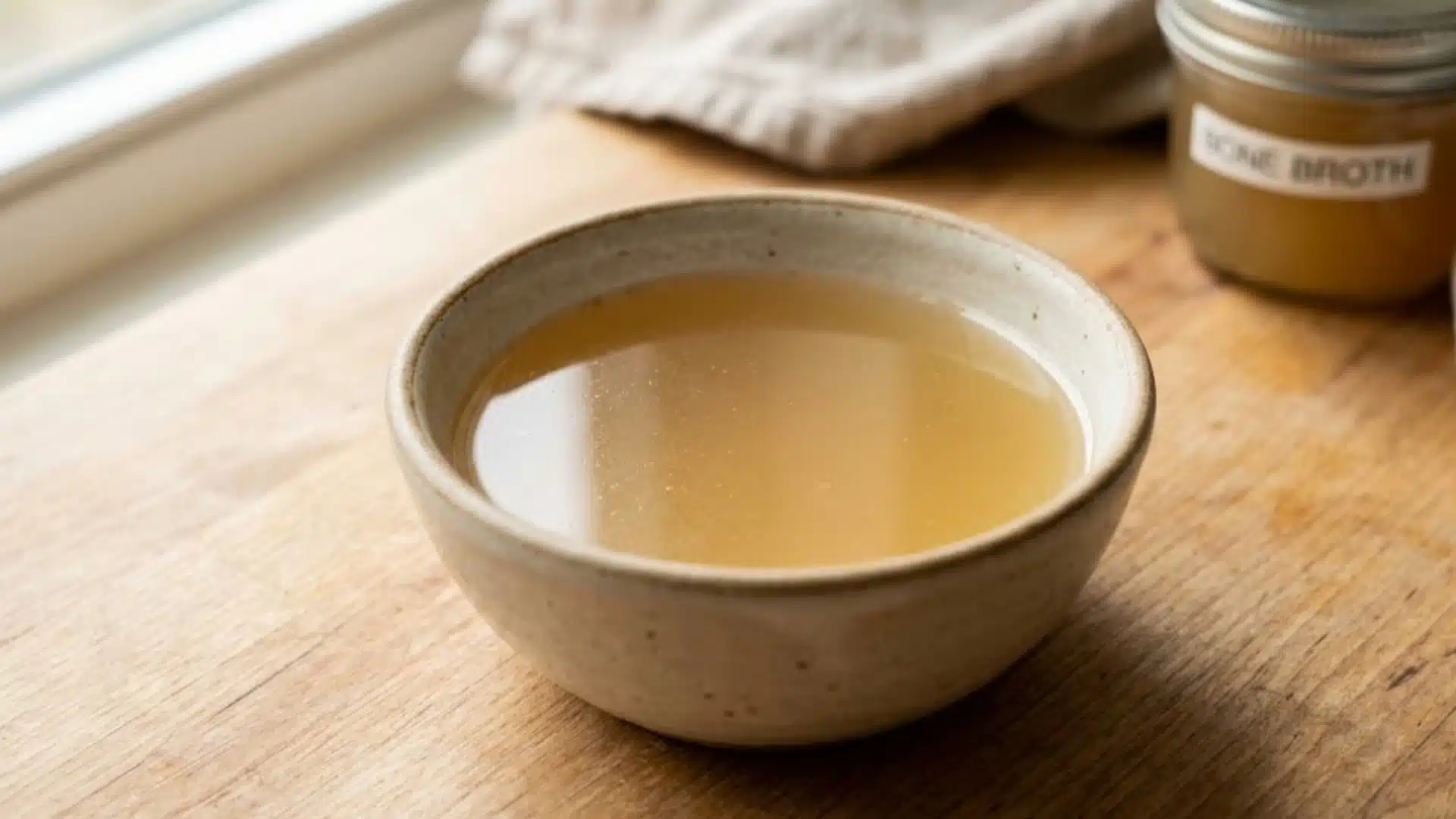
Bone broth is not a full meal, but it helps keep your dog hydrated and adds nutrients. It is especially helpful if your dog is not eating much.
It also works as one of the best appetite stimulants I have seen for dogs that go completely off food during illness; the smell alone is often enough to get a reluctant dog eating again.
Make sure it is plain and free from onion or garlic. Many commercial broths contain onion or garlic powder even when they seem plain, so always read the ingredient label carefully before using a store-bought version.
- Ingredients: Beef marrow bones or chicken/turkey legs, water
How to make it?
- Cover bones with 2–3 inches of water in a slow cooker.
- Cook on low for 20 to 24 hours for maximum nutrient extraction.
- Let the broth cool in the fridge overnight, then skim off the hardened fat layer from the top before serving. Fat is the last thing you want in a recovering gut.
- Serve small amounts alongside meals or alone.
Dog Food for Diarrhea: Should You Switch?
Switching can help, but only if done right. Bland commercial options are useful when you want convenience without cooking. Look for easily digestible formulas with simple ingredients and low fat.
If you come across “chicken meal in dog food ” on a commercial food label, and are not sure whether it is appropriate during recovery.
Prescription diets: If your vet recommends a gastrointestinal-specific prescription diet, the most trusted and widely recommended options are Hill’s Prescription Diet i/d, Royal Canin Gastrointestinal, and Purina Pro Plan EN Gastroenteric.
These are specifically formulated for digestive recovery, highly digestible, lower residue, and calibrated to reduce intestinal inflammation.
In my clinical consulting work, I have seen these diets resolve cases in three to four days that a week of home-cooked bland food had not fully shifted.
They require a vet’s authorization, but for recurring or persistent cases, they are worth asking about.
As for dry vs wet food, wet food is usually gentler during recovery because it adds hydration and is easier to digest. Dry food can be reintroduced slowly once your dog’s stools start normalizing.
What Can I Give My Dog for Diarrhea Besides Food?
Food is only part of the fix. Hydration matters just as much, especially since diarrhea can quickly lead to fluid loss.
Always keep fresh water available, and encourage small, frequent sips rather than large amounts at once.
If your dog is reluctant to drink, lightly flavoring the water with a splash of low-sodium broth or offering small ice cubes can encourage intake without adding stress to the stomach.
Electrolytes can help in moderate cases. Unflavored Pedialyte, diluted to roughly half strength in water, is sometimes recommended for short-term use, but always confirm the appropriate dosage with your vet first, as giving too much at once can cause other issues. Avoid anything with sugar or artificial additives.
Probiotics are often worth considering. They help restore healthy gut bacteria and can speed up recovery.
Dog-specific probiotics with the strongest clinical backing include Purina FortiFlora and Nutramax Proviable, both of which are widely recommended by veterinarians and have more supporting research behind them than most generic options. Use them alongside a bland diet for the best results.
Foods to Avoid Completely During Diarrhea
These foods can worsen diarrhea and slow recovery, even if your dog usually tolerates them well.
- Fatty foods: High fat content irritates the gut and makes stools looser, especially fried or oily items
- Dairy overload: Many dogs cannot digest lactose well, which can worsen diarrhea and cause gas
- Treats and table scraps: Rich, seasoned, or unfamiliar foods can further upset the stomach. One pattern I see often: dogs skip meals but eat treats.
- Spicy or seasoned food: Added spices, salt, or oils can irritate an already sensitive digestive system
- Sudden food changes: Switching diets too quickly can make diarrhea last longer instead of improving
How Long to Follow a Bland Diet?
Most dogs need a bland diet for about 2 to 3 days before their stools begin to normalize.
Once stools have been consistently firm for at least 24 hours, you can begin transitioning back to regular food, but the transition should take 5 to 7 days, not just 1 or 2.
Rushing this step is one of the most common reasons diarrhea returns just when owners think the problem is solved.
5 to 7-Day Reintroduction Schedule:
| Days | Bland Food | Regular Food |
|---|---|---|
| Days 1–2 | 75% | 25% |
| Days 3–4 | 50% | 50% |
| Days 5–6 | 25% | 75% |
| Day 7 | 0% | 100% |
If stools soften at any point during this transition, drop back one step and hold there for an additional day before moving forward again.
Watch for firmer stools, improved energy levels, and a return of appetite as signs that your dog is recovering. Every dog responds differently, so use the schedule as a guide, not a rigid rule.
Common Mistakes That Make Dog Diarrhea Worse
Small mistakes can delay recovery and worsen diarrhea, even when you are trying to help.
- Feeding too much too soon: Overloading the stomach slows recovery and can bring diarrhea back quickly
- Changing food too quickly: Sudden switches confuse the gut and prolong digestive issues
- Ignoring hydration: Lack of fluids can lead to dehydration and worsen the overall condition
- Giving random home remedies: Unverified fixes can irritate the stomach further instead of helping
- Stopping a bland diet too early: Returning to normal food too fast can undo all progress
- Giving human medications without vet guidance: Pepto-Bismol and Imodium are among the most commonly given human medications that can cause serious harm in dogs. If you are unsure, a single phone call to your vet takes two minutes and could prevent a serious complication.
- Skipping the fasting in appropriate dogs: In healthy adult dogs, a 12-hour fast before introducing bland food gives the gut a genuine reset. Starting food while the intestinal tract is still actively inflamed can unnecessarily prolong recovery time.
Conclusion
Dealing with dog diarrhea is stressful, but most mild cases resolve cleanly with a calm, systematic approach.
As someone who has spent the past few years guiding dog owners through exactly this situation and seeing firsthand what works and what does not, my consistent advice is always the same: keep it simple, start small, and respect the timeline.
Stick to bland meals, consider the right commercial or prescription dog food for diarrhea when home options are not enough, and keep hydration front of mind throughout.
Follow a proper 5 to 7-day transition when reintroducing regular food; that single step prevents more relapses than anything else.
If symptoms do not improve within 48 hours, or if you see blood in the stool, persistent vomiting, or signs of dehydration, stop managing it at home and get to a vet. There is no shame in that; it is the right call.
Every dog responds differently, so patience matters. If you have gone through this recently, drop your experience or questions in the comments. It might help someone else, too.