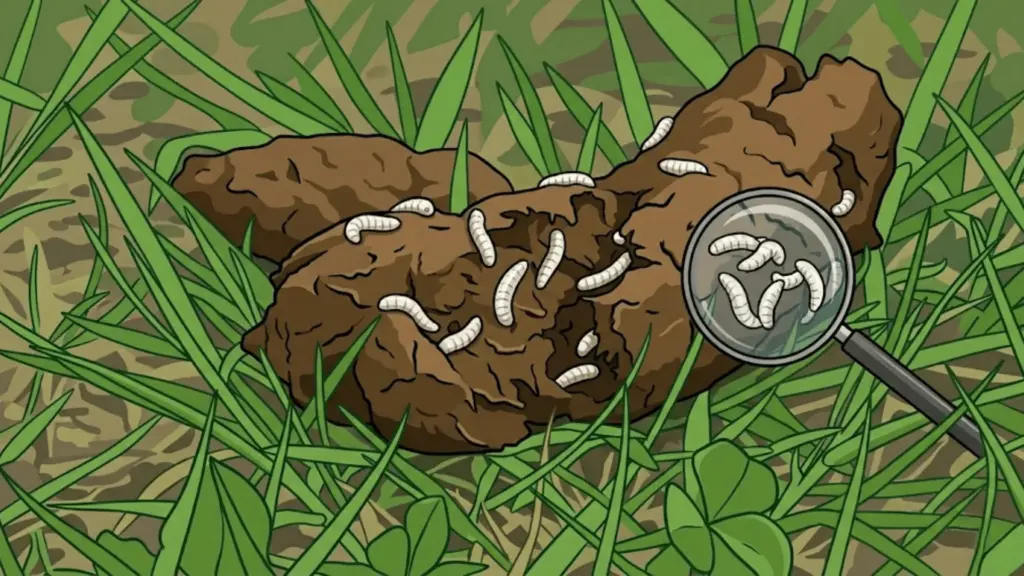
You glanced down at your dog’s waste, and something was moving. Your stomach dropped. You leaned in closer and, sure enough: small, pale, wriggling things.
Most pet parents go straight to the worst-case scenario. Parasites. Infection. Something is seriously wrong with their dog. I’ve been there with my own clients, and I understand exactly why the panic sets in so fast.
But here’s what almost no one says upfront: maggots in dog poop are almost never coming from inside your dog.
In years of veterinary practice, the cause is overwhelmingly external, and it has far more to do with how long waste sat in the yard than with your dog’s health.
There are a few different reasons maggots show up, and they are not all equal. This post walks you through each one, how to tell fly larvae apart from intestinal worms, and which signs mean your dog actually needs a vet visit.
What Are Maggots?
Maggots are the larval stage of flies, most commonly house flies and blowflies. They are not parasites, not a sign of disease, and they do not come from inside your dog.
They hatch outside, directly on waste that has been left long enough for flies to find.
Flies are drawn to decomposing organic matter, and dog feces is exactly what they look for. Once a fly lands, it lays eggs and leaves.
In warm weather above 25°C (77°F), those eggs can hatch in as little as 15 to 30 minutes. The waste does not need to look old or smell different for this to happen. Fresh poop on a warm afternoon is enough.
I have had clients come in convinced their dog had a serious internal infection, only to find out the poop had been sitting in a shaded corner of the yard since morning. That is how fast this happens.
What Causes Maggots in Dog Poop?
Finding maggots in dog poop can be unsettling, but it usually comes down to one of three clear causes, and each points to a very different next step.
1. External Fly Infestation
If dog poop sits outside in warm weather, flies will find it faster than most people realize. Summer temperatures above 25°C accelerate the process dramatically.
Fly eggs can hatch within the hour in peak heat, which means waste that looked fine when your dog went out could be visibly infested by the time you come back to clean up.
Yards with shaded corners, tall grass, or spots where poop goes unnoticed are especially prone.
Flies return to the same areas repeatedly because residual odor pulls them back, so one overlooked pile can become a recurring problem in the same patch of ground. This is a yard hygiene issue, not a sign your dog is sick.
2. Pseudomyiasis (Rare, Usually Harmless)
This one gets almost no coverage in the usual search results, so it’s worth explaining clearly.
Pseudomyiasis happens when a dog accidentally ingests fly larvae, typically while eating garbage, compost, or food that was already infested. The maggots survive the trip through the digestive tract and appear in the stool alive.
It looks alarming. I won’t pretend otherwise. But it generally causes no lasting harm, and most dogs pass the larvae without any symptoms at all.
The timing clue here: if the poop is freshly passed and you are still seeing movement immediately after, pseudomyiasis is worth considering before assuming anything more serious.
A client once brought in her Labrador after finding wriggling larvae in fresh stool. She was certain he had worms. He’d gotten into the compost bin the night before. No treatment was needed, just a more secure bin lid.
3. Myiasis
Myiasis occurs when flies lay eggs on living tissue, usually around a wound, open sore, or an area with chronic moisture, such as the skin near the tail or anal region.
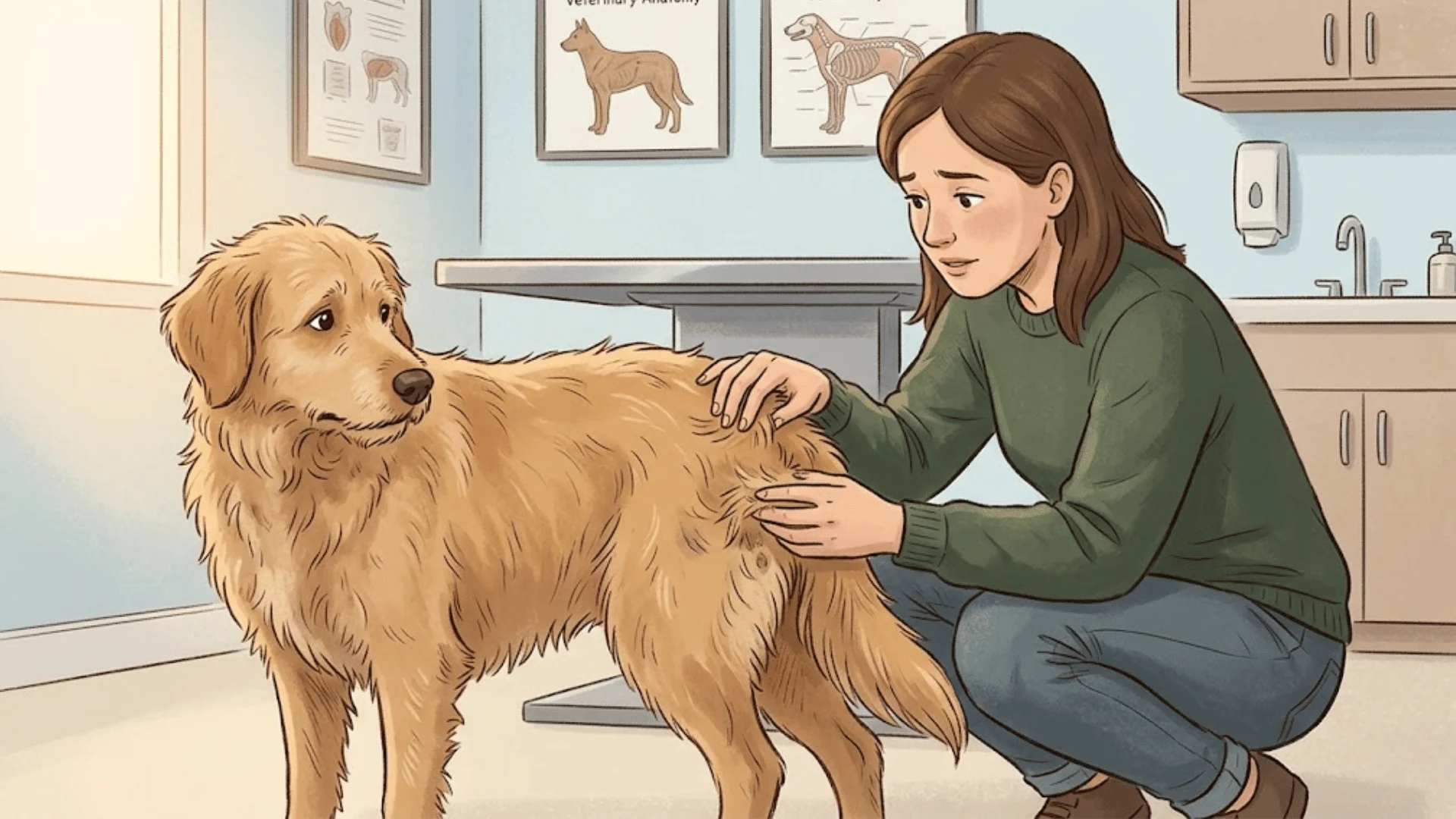
Dogs with long coats, like Golden Retrievers or Shih Tzus , are more prone to this because fecal matter can become matted into the fur around the anus, creating exactly the warm, moist environment flies target.
This condition is sometimes linked to pseudocoprostasis , where matted fur around the rear makes it difficult for the dog to defecate normally, trapping moisture and waste against the skin.
In myiasis cases, the maggots are not in the poop. They are on the dog. They may drop into the stool during defecation, which is how owners sometimes discover the problem.
Signs to watch for: excessive licking or scooting, a foul smell from the rear, visible raw or irritated skin, or your dog acting restless and uncomfortable.
These are also warning signs worth reviewing in the context of signs of an infected wound, since maggots on the skin can cause rapid secondary infections if not addressed. If any of these are present, call your vet the same day.
How to Tell Maggots Apart from Intestinal Worms
This is one of the most common points of confusion, and it’s an understandable mistake. Both maggots and intestinal worms are pale, small, and can appear to move. But the differences are clear once you know what to look for.
| Feature | Maggots | Tapeworm segments | Roundworms |
|---|---|---|---|
| Appearance | Pale, tapered at both ends, wider in the middle | Flat, rice-grain-sized, whitish | Thin, spaghetti-like |
| Movement | Squirming, rolling motion | Slow, flat crawl | Slow wriggle |
| Where found | On outdoor waste that has sat for a while | Near the dog’s anus or in fresh stool | In fresh stool |
| Origin | External fly larvae | Internal parasite | Internal parasite |
| Visible markings | Two dark spots at one end (mouth parts) | Dry into rice-like grains over time | No distinct markings |
| Vet visit needed? | Usually no | Yes | Yes |
What to Do When You See Maggots in Dog Poop?
Maggots in dog poop need two things from you right away: safe removal and a quick check on your dog. Start with step one.
- Don’t touch the waste with your bare hands: Use gloves and a bag. Dispose of it in a sealed bin away from the house.
- Assess its origin: Was the poop sitting outside for a while? External fly activity. Was it freshly passed? Consider pseudomyiasis or myiasis.
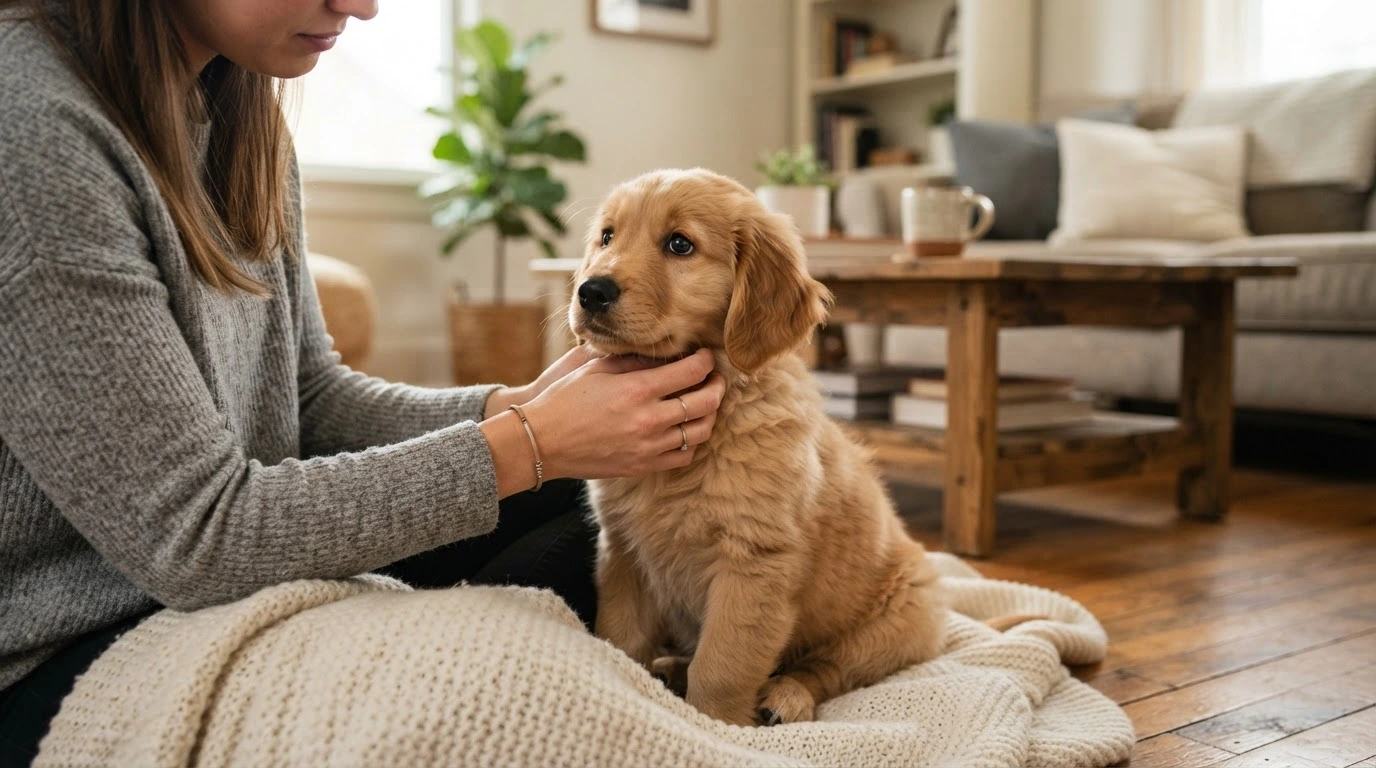
- Check your dog: Look at the skin near the tail, hindquarters, and any area with thicker fur. If you see anything open, raw, or unusually wet-looking, call your vet.
- Clean the area: Hose down the spot. Flies are drawn back to the same location by residual odor, so removing the scent matters.
- Pick up waste more often: In summer, daily cleanup is the minimum. In peak heat, twice a day is better.
Simple Ways to Prevent Maggots in Dog Poop
Most maggot situations are entirely preventable, and the main lever is timing. Flies can find fresh poop within 15 minutes on a warm day, so the window is shorter than most people expect.
- Pick up waste daily, twice in peak heat: In summer, daily cleanup is the bare minimum. During peak heat, go twice a day. The less time waste sits outside, the less opportunity flies have to find it.
- Do a weekly yard sweep: Check corners, fence lines, and behind shrubs where poop accumulates unnoticed. These low-visibility spots are where infestations quietly start and go unnoticed the longest.
- Trim fur around the rear regularly: For long-haired breeds like Golden Retrievers and Shih Tzus, matted fur near the anus traps moisture and waste, exactly what flies are looking for. Keep that area clipped and dry, especially after baths or wet weather.
- Use an enzyme-based yard deodorizer: Flies return to the same spots because residual odor pulls them back. Breaking down that scent after cleanup reduces repeat fly activity in the same area.
- Check your dog’s skin after outdoor time: A quick look at the hindquarters during grooming catches irritation or matting early, before it becomes a fly problem. It takes under a minute, and it’s worth building into your routine.
Conclusion
Most of the time, maggots in dog poop come down to one thing: waste that sat outside too long in warm conditions. It’s a hygiene issue, not a health crisis, and a consistent cleanup routine fixes it entirely.
But there are cases where what looks like a yard problem is actually something that needs professional attention, especially when a dog has skin irritation, matted fur, or open wounds near the rear.
Check your dog first, then deal with the yard. If the skin looks clean and your dog is acting normal, you’re likely fine. If something seems off, don’t wait.
Have you ever found maggots in your dog’s poop? Was it a fly situation or something more serious? Drop it in the comments. Other dog parents are probably wondering the same thing.
Frequently Asked Questions
Can Maggots in Dog Poop Make My Dog Sick?
Usually, no. External maggots in yard waste don’t affect your dog’s health. Myiasis (maggots on the skin) is the exception, and that requires immediate vet care.
Should I Deworm My Dog if I See Maggots in The Poop?
Not automatically. Maggots are not intestinal worms. Deworming won’t do anything to fly larvae. If you’re genuinely concerned about worms, ask your vet for a fecal test.
What if My Dog Ate Something with Maggots in It?
Monitor for vomiting, diarrhea, or lethargy. If symptoms appear, call your vet. Most cases of pseudomyiasis resolve without treatment, but it’s worth keeping an eye on.