

You are not here for cheap cat food; you want something that actually helps your cat stay healthy, active, and happy every single day.
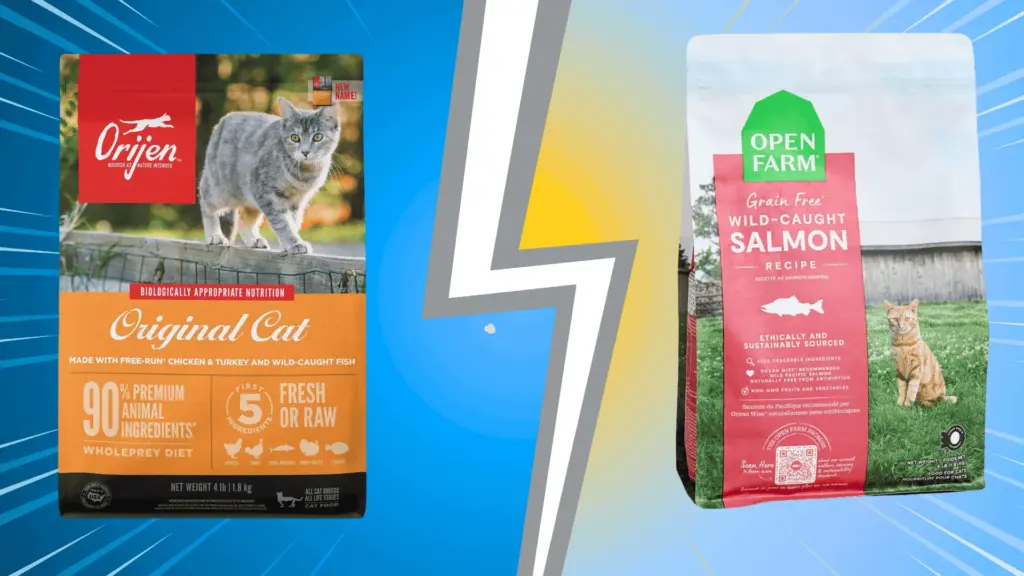
Orijen vs Open Farm is a comparison many cat owners search for when they want high-protein food with better ingredients and real results.
Both brands promise strong nutrition, but they work in very different ways, which can confuse you when picking the right one.
I will help you understand Orijen vs Open Farm by covering nutrition, ingredients, price, availability, and real owner feedback so you can choose better.
But before getting into the details, take a moment and go through each section carefully so you do not miss what truly fits your cat.
Meet the Brands: Orijen and Open Farm
Orijen is a premium cat food brand made by Champion Petfoods, a company founded in 1985 in Alberta, Canada, with the Orijen line itself launching in 2005 and focusing on high meat recipes.”
The brand follows a WholePrey idea, which means it uses meat, organs, and bones together to match what cats naturally eat daily.
Open Farm is a newer brand that started in 2014 in Toronto, Canada, built around clean sourcing, better farming practices, and full transparency for pet owners, with its manufacturing facilities based in Minnesota, USA.”
The brand works with certified farms and lets users track every ingredient using a lot code, which builds trust with careful cat parents.
If you want a deeper breakdown of ingredients, sourcing, and real results, you can check our detailed Orijen cat food review before comparing both brands.
Cat-Specific Product Lines: What Each Brand Offers
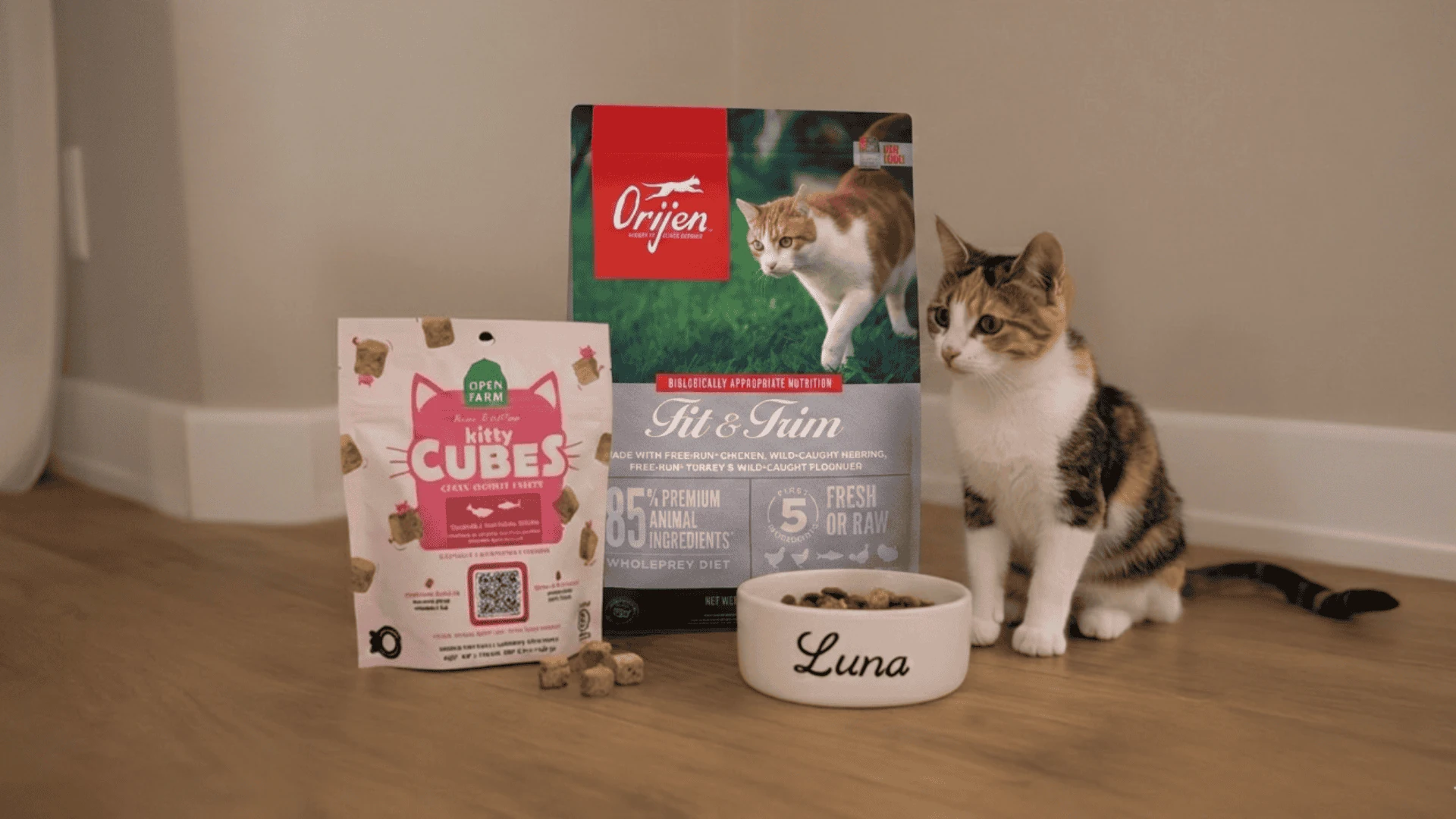
Orijen keeps its cat food lineup simple, focusing on high-protein meals with fewer but stronger options for daily feeding needs.
You mainly get dry food, wet cans, and freeze-dried options, all built around meat-heavy recipes for active cats. Open Farm expands its lineup, adding more formats like broths and supplements, giving owners more ways to feed.
- Dry food options like Original, Six Fish, Guardian 8, Fit and Trim, and Regional Red
- Wet food in small 3-ounce cans with meat-focused recipes
- Freeze-dried meals and treats that work as toppers or snacks
- Dry food recipes like Turkey and Chicken, Salmon, and RawMix blends
- Wet food in larger pouches, which gives more food per pack
- Freeze-dried raw morsels for an added protein boost
- Bone broth, goat milk, and gut health supplements for daily support
Orijen vs Open Farm: Nutritional Value Head-to-Head
Both brands focus on high-quality nutrition, but they take slightly different paths when it comes to protein levels, carbs, and ingredient sourcing.
1. Dry Food Nutritional Comparison
| Metric | Orijen Original | Open Farm Turkey and Chicken |
|---|---|---|
| Protein | Around 40 percent support strong muscles and energy | Around 36 percent, still high but slightly lower than Orijen |
| Fat | Around 20 percent helps with weight and coat health | Around 16 percent, more controlled for balanced feeding |
| Carbs | Lower carb content, better for weight control | Higher carb levels come from grains or veggies |
| Meat Content | Very high animal content, close to a natural diet | Moderate animal content with added plant sources |
| Special Note | Contains peas (around the 18th ingredient position) | Mostly pea-free recipes available |
Orijen clearly pushes higher protein and lower carbs, which suits active cats or those needing lean muscle support.
Open Farm balances nutrition with cleaner sourcing and simpler ingredients, which works well for sensitive stomachs.
2. Wet Food Nutritional Comparison
| Metric | Orijen Wet Food | Open Farm Wet Food |
|---|---|---|
| Protein | Around 12 percent, strong meat focus | Around 8 percent, lighter protein level |
| Fat | Around 7 percent supports energy needs | Around 6 percent, slightly leaner option |
| Calories | Lower per serving due to a smaller portion | Higher per pouch due to bigger serving size |
| Portion Size | Smaller cans, easier portion control | Larger pouches, better value per pack |
| Ingredient Style | Focus on the meat and organ mix | Human-grade ingredients with full traceability |
Price and Availability in the USA
Orijen and Open Farm both fall into the premium cat food category, but pricing varies by pack size and format.
Orijen dry food comes in sizes like 4.5 lb and 12 lb bags, usually priced around $28 for 4.5 lb and $70 to $72 for 12 lb.
Open Farm dry food is sold in 4 lb and 8 lb bags, with prices starting at around 25 dollars for 4 lb and going up to around 42 to 45 dollars for 8 lb .
For wet food, Orijen uses 3-oz cans that typically cost $3-$4 per can for single purchases.
Open Farm sells 5.5 oz pouches, often bundled in 12-packs priced around 30 to 32 dollars, which offer better value per ounce.
When it comes to availability, Orijen is easier to find in stores like PetSmart and Petco across the United States.
If you are wondering why Orijen costs more than many brands, check our guide on why Orijen costs more than Acana, with full price factors explained.
What Real Cat Owners Are Saying?
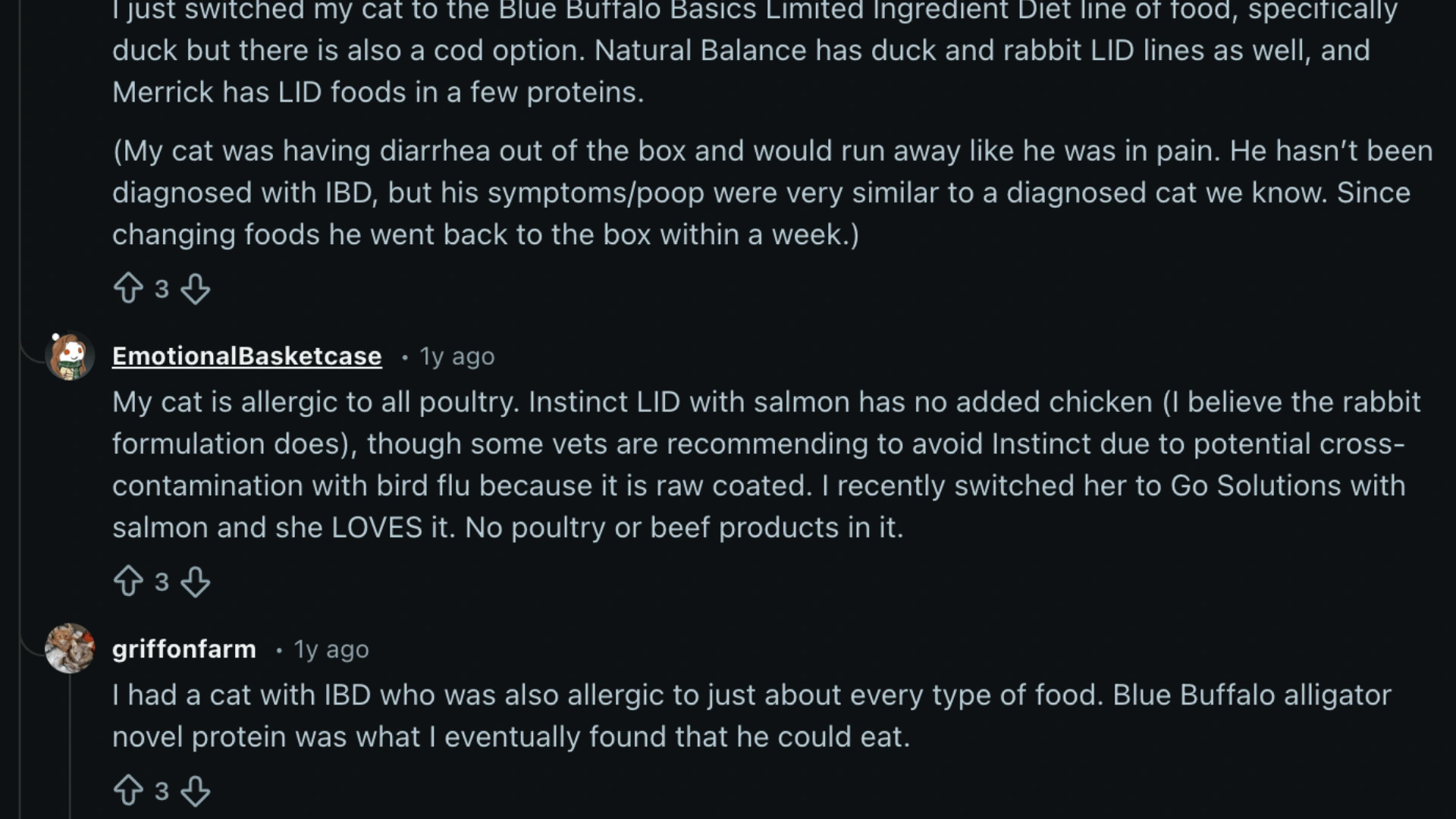
If you check Reddit threads, you will see real cat owners sharing honest feedback about both brands without any brand filtering or promotion.
Many users say Orijen works well for picky cats, with better eating habits, shinier coats, and higher energy after switching.
At the same time, some long-term users mention slight changes in taste or digestion after production shifts, though this is based on personal experience.
Open Farm gets praise for clean ingredients and better digestion, especially for cats with sensitive stomachs.
Many owners also like the traceability feature, since they can track ingredient sources, which builds strong trust.
Overall, both brands get solid feedback, and the choice often depends on whether you prefer high protein or clean sourcing.
Conclusion
Choosing between Orijen and Open Farm depends on what suits your cat better, whether that is higher protein or cleaner ingredient sourcing.
Some cats do better on meat-heavy diets, while others respond well to simpler recipes that are easier to digest.
I suggest watching your cat’s energy, coat, and digestion after switching, since those signs tell you if the food is working.
Some owners also rotate both brands slowly to balance nutrition and keep meals from feeling repetitive. The right choice comes down to your cat’s needs, not market trends.
Which one are you planning to try first, Orijen or Open Farm, and what matters most to you when choosing cat food? Tell us, share with us in the comments below!
Frequently Asked Questions
Is Orijen Safe for Kittens or Only Adult Cats?
Orijen Original and Cat and Kitten recipes are made for all life stages, so kittens can eat them without needing a separate formula.
Did the Mars Acquisition Change Orijen’s Formula or Quality?
After Mars Petcare acquired the brand, some users on forums have reported changes in kibble size, texture, and taste preference in their cats, but not in formula.
Can Open Farm and Orijen Be Mixed Together Safely?
Yes, many cat owners mix both brands to balance high protein with cleaner ingredient sourcing in daily feeding.
Introduce the mix slowly over 7 to 10 days so your cat adjusts well without digestive problems or refusal.