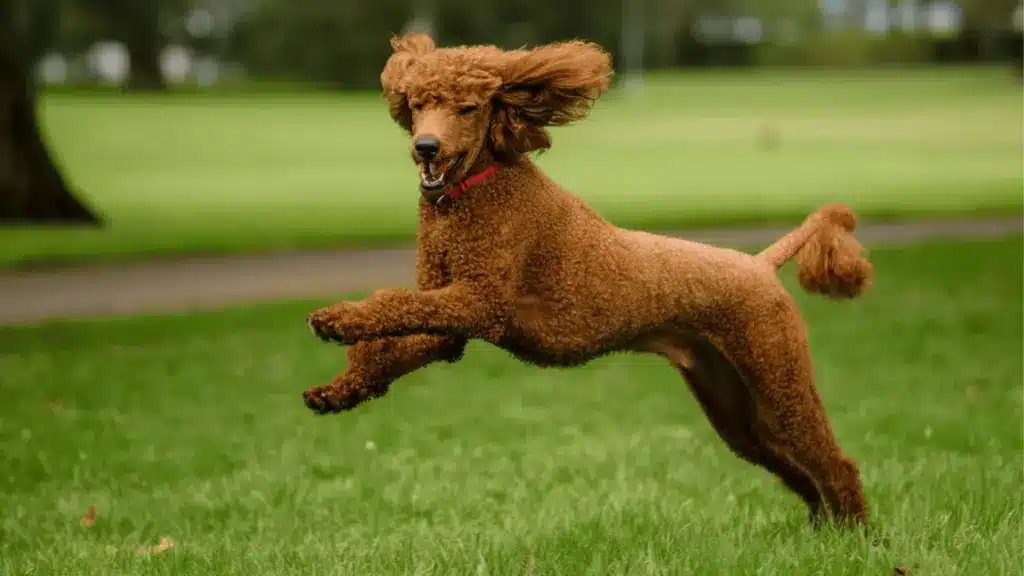
You’ve probably heard that Poodles are one of the smartest dog breeds out there. But smart compared to what, exactly? And what does that actually mean for the dog sitting on your couch right now?
The ranking is real, the science behind it is fascinating, and the training implications are ones most owners don’t find out until they’re already dealing with the consequences.
When someone comes into my clinic frustrated that their Poodle has figured out the pantry latch or learned to fake a limp for attention, I always say the same thing: this is not a behavior problem, this is an intelligence problem.
What that means for you and what to do about it is all in here. Keep reading.
What Does the Poodle IQ Rank Actually Mean?
The ranking comes from canine psychologist Stanley Coren’s 1994 study, which surveyed 199 obedience trial judges across North America.
He tested 138 purebred breeds on two criteria: how many repetitions it took to learn a new command, and how reliably they obeyed a known command on the first try.
Poodles came in second, just behind Border Collies. In practical terms, that means a Poodle can typically learn a new command in under five repetitions and obey a known one roughly 95% of the time.
For comparison, an average dog needs 25 to 40 repetitions and obeys only about 50% of the time.
One thing worth flagging: Coren’s test measures only obedience and working intelligence.
It doesn’t capture how clever a dog is at reading emotional cues, solving novel problems, or manipulating situations to get what it wants, all areas where Poodles are also exceptionally strong.
A dog that scores well in all three categories (obedience, adaptive, and instinctive intelligence) is genuinely operating at a different level than most breeds.
One of the most common side effects of high IQ is that these dogs are prone to separation anxiety when left without enough mental engagement, something I see regularly in the clinic, especially in younger Standard Poodles whose owners work long hours.
The Three Types of Poodle Intelligence
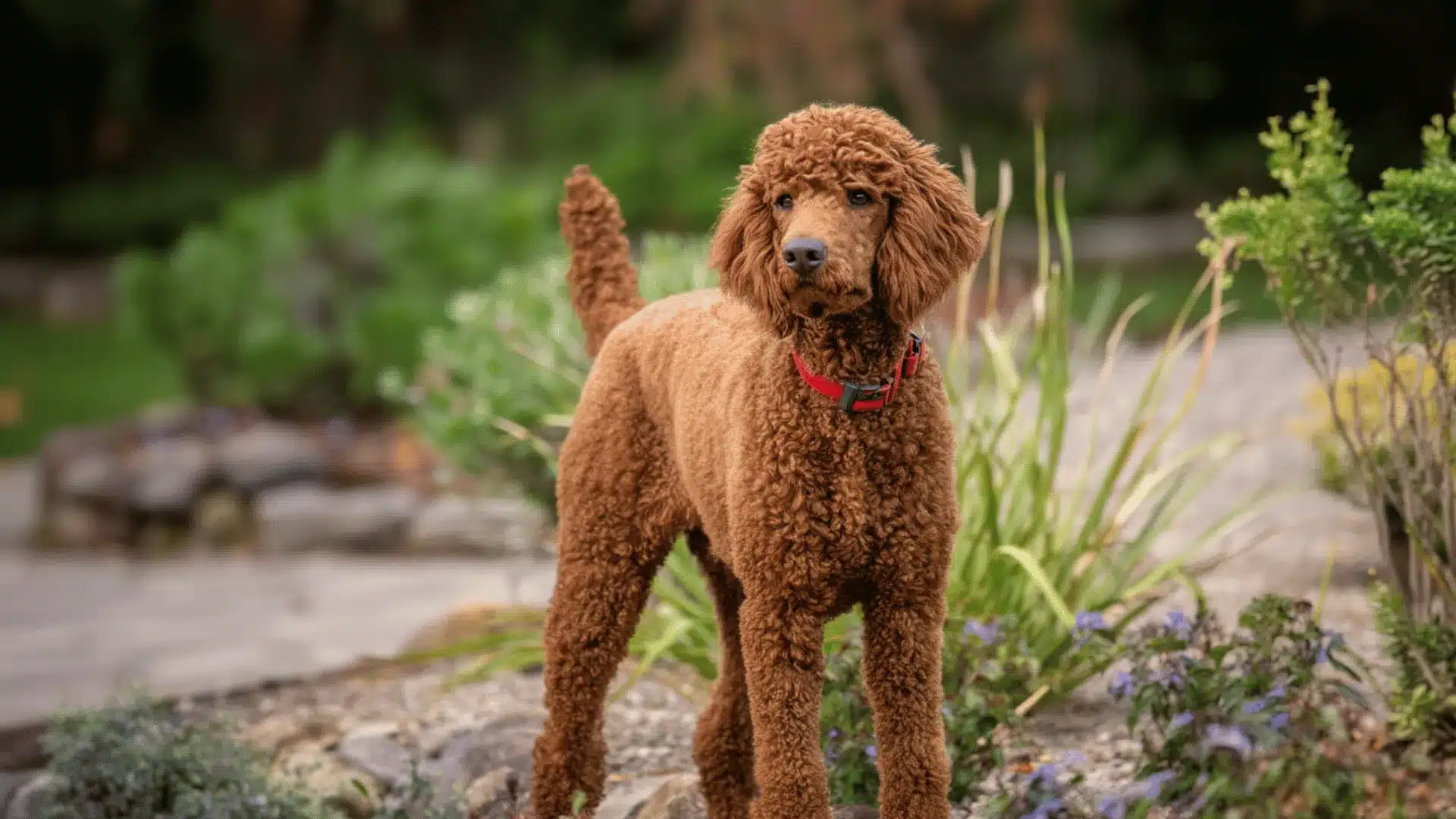
Poodles excel across obedience, adaptive, and instinctive intelligence, making them quick learners, strong problem-solvers, and naturally skilled workers, which explains their responsiveness to training, routines, and task-based activities.
1. Obedience Intelligence
This is the category Coren measured. Poodles learn fast, retain commands long-term, and respond to subtle cues.
In my experience working with dogs in a clinical setting, Poodles are among the easiest breeds to give post-surgical care instructions to.
Owners report that their dogs pick up recovery routines such as “stay off the furniture” or “wait at the gate” with almost no repetition.
2. Adaptive Intelligence
This is a dog’s ability to solve new problems on its own, without human guidance. Poodles score high here, too.
They notice patterns if you grab your car keys, your Poodle probably already knows whether that means a walk or you’re leaving without them. They map cause-and-effect faster than almost any other breed.
3. Instinctive Intelligence
Poodles were originally bred as water retrievers. That means they have natural retrieving instincts, a strong nose, and the drive to work alongside humans.
This isn’t just historical trivia; it explains why Poodles take to fetch games, scent work, and structured tasks so readily compared to companion breeds.
At-Home Poodle Smartness Test
You don’t need a canine psychologist to gauge your Poodle’s intelligence. These three tasks are quick, fair, and telling. Tally up the points at the end.
- Blanket Problem (Problem-Solving): Gently drape a large towel or small blanket over your Poodle’s head while they’re calm. Start a timer. Score: 3 points if they free themselves in under 15 seconds. 2 points for 15–30 seconds. 1 point for 30–60 seconds. 0 points if they need your help.
- Shell Game (Memory and Focus): Place three identical cups upside down. Let your Poodle watch you put a treat under one. Ask them to sit, distract them briefly, then release. Score: 3 points if they go directly to the right cup. 2 points for finding it on the second try. 1 point for the third. 0 points after that.
- New Command (Learning Speed): Pick a command your Poodle has never heard. Use the same word and hand signal consistently. Score: 3 points if they get it in 5 tries or fewer. 2 points for 6–10 tries. 1 point for 11–15 tries. 0 points beyond that.
A total score of 8–9 indicates an exceptionally sharp dog that needs regular mental challenges to stay well-behaved. Scores of 5–7 reflect strong average intelligence suited to standard training routines.
A 3–4 score suggests developing skills that require more repetition and patience, which is normal for puppies. Scores between 0–2 mean it’s best to try again later, as stress, health, or age may affect performance.
Training a Smart Dog: What Actually Works
High-IQ dog breeds like Poodles are not harder to train; they learn quickly and get bored just as quickly. Without enough mental challenge, a Poodle will create its own activities, and those usually lead to unwanted behavior.
Here is what works best for training a Poodle in the USA:
Keep training sessions short and engaging. Five to ten minutes, two to three times a day, works better than long sessions.
Mix commands to prevent routine learning. Practice two known commands and add one new behavior each session.
Use reward-based training with high-value treats in the early stages. Once the behavior is consistent, slowly reduce treats.
Add daily mental stimulation. Puzzle toys, snuffle mats, lick mats, and scent games are essential, not optional. A mentally active Poodle behaves better at home.
Avoid repeating the same command. Once a Poodle understands it, repetition leads to boredom. Progress the training to keep interest high.
The Downside of Poodle Intelligence
Smart dogs come with real challenges that most breed guides gloss over. Poodles that don’t get enough mental stimulation often develop habits like excessive barking, chewing, or attention-seeking behaviors.
In the clinic, I’ve had clients describe their Poodles as “manipulative,” and honestly, that’s not far off. A bored Poodle will test limits, learn what gets a reaction, and repeat it.
They’re also more emotionally sensitive than most owners expect. Tone of voice, body language, and routine changes all register with a Poodle in ways that don’t apply to calmer breeds.
Inconsistency confuses them, and confusion in a smart dog often turns into anxiety. Keeping your training signals consistent and your schedule predictable does more for a Poodle’s wellbeing than most people realize.
If you’re thinking about grooming routines alongside your training plan, knowing your dog’s poodle grooming styles can also help you see how different cuts affect how comfortable and manageable your Poodle is during regular handling sessions, which plays into desensitization training.
Conclusion
Poodle IQ rank explained is more than a fun breed fact; it’s a practical lens for understanding everything your dog does, from how fast they pick up commands to why they unravel when routines change.
This breed’s intelligence is a real advantage, but only when you stay ahead of it.
Short, varied sessions, meaningful rewards, and consistent signals make the difference between a dog that works with you and one that quietly works around you
The mental bar has to stay high, or the boredom shows up in ways you won’t enjoy.
What has your Poodle figured out that genuinely caught you off guard? Drop it in the comments below.
Frequently Asked Questions
How Many Words Can a Poodle Learn?
With consistent training, Poodles can learn 300 or more distinct words and hand signals. The average dog manages around 165.
Are Toy Poodles as Smart as Standard Poodles?
Yes. All three size varieties, Toy, Miniature, and Standard, share the same intelligence ranking. Size does not affect working or obedience intelligence in Poodles.
Are Poodles Easier to Train than Golden Retrievers?
Poodles learn faster and need fewer repetitions, but Goldens are more patient and forgiving for first-time owners. Poodles disengage quickly if training gets repetitive. The better choice depends entirely on how consistent and varied you’re willing to make your training routine.