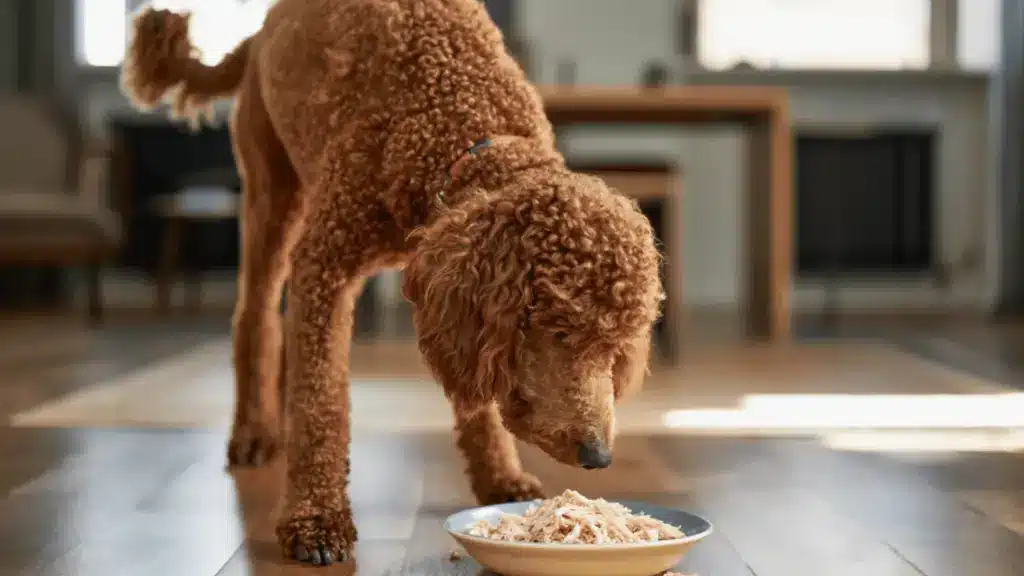
Most poodle owners get the basics right: quality kibble, fresh water, and no table scraps. But the gap between a decent diet and a genuinely good one is wider than it looks.
Poodles have a single-layer, curly coat that depends on fat-soluble nutrients, which most generic dog foods provide only in small amounts.
They’re also one of the breeds at risk for bloat, which means how and when you feed matters just as much as what goes in the bowl.
This poodle diet guide covers the best foods, unsafe foods, and treat picks that hold up to clinical scrutiny, not just the marketing language on a bag.
What Does a Poodle Actually Need in Their Diet?
Poodles are active, mentally sharp dogs that burn through energy faster than most owners expect. Whether you have a Toy, Miniature, or Standard, the core nutritional needs are the same; the portion sizes just shift.
Protein is the foundation. Look for a named animal protein, chicken, salmon, turkey, or beef listed as the first ingredient. Adult poodles need 18–22% crude protein.
Fat content should sit between 8–15%, with a real emphasis on omega-3 and omega-6 fatty acids, which feed your poodle’s coat from the inside.
For carbohydrates, brown rice, oats, and sweet potato are solid choices over corn, soy, or wheat.
In my clinic, I regularly see poodles with flaky skin and a dull coat. Nine times out of ten, the food they’re on is low-fat or a “diet” formula without adequate omega-3. Adding a fish oil topper makes a visible difference within six to eight weeks.
Poodles that gulp their food are at higher risk of bloat, so structured meal times rather than free feeding are worth building into your routine.
If you’re curious about how smart poodles really are, their food motivation during training is a direct reflection of how well-nourished they are.
Best Foods for Poodles
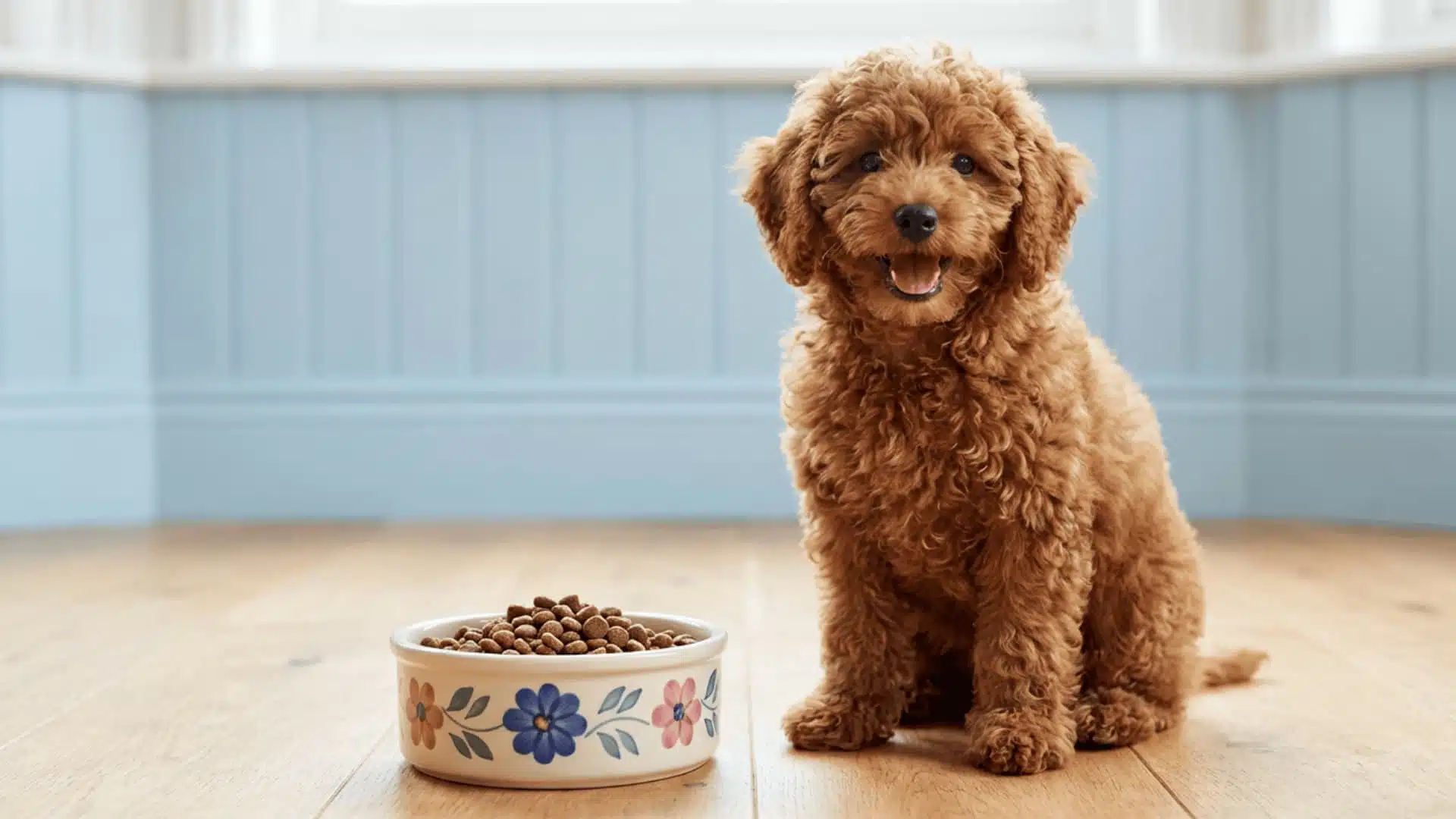
Dry kibble with a real meat first ingredient, a wholesome carbohydrate, and a quality fat source is the most practical base diet. It supports dental health and is easy to portion.
Be cautious with grain-free formulas; the FDA’s investigation into a link between grain-free diets and dilated cardiomyopathy is still ongoing.
If you go grain-free, stick to traditional proteins like chicken or turkey, and avoid formulas that list legumes or potatoes among the first five ingredients.
Several whole foods also make clean, safe additions in small amounts, cooked eggs for biotin and protein, cooked boneless salmon for omega-3, blueberries for antioxidants, plain canned pumpkin for gut regulation, and carrot sticks for a low-calorie, dental-friendly crunch.
These aren’t meant to replace meals, but they add variety and nutritional value without risk.
Poodles with good coat nutrition also tend to need less grooming intervention; the connection between health and grooming is more direct than most owners realize.
Foods That Are Unsafe for Poodles
Several everyday foods pose serious health risks to pets, causing issues like toxicity, organ failure, or internal injuries. Avoid feeding these items to ensure safety and prevent life-threatening complications.
- Chocolate: Contains theobromine; causes vomiting, tremors, and heart issues.
- Grapes & Raisins: Can trigger sudden kidney failure; even small amounts are risky.
- Xylitol: Found in sugar-free foods; leads to severe low blood sugar.
- Onions & Garlic: Damage red blood cells; may cause anemia over time.
- Macadamia Nuts: Cause weakness, vomiting, and tremors within hours.
- Cooked Bones: Splinter easily; can injure or perforate internal organs.
- Caffeine: Raises heart rate; high doses may lead to seizures
Xylitol poisoning shows up in my clinic more often now than it did ten years ago. It’s in more products than people expect, including certain peanut butters and granola bars.
Always read the label before sharing any human food with your poodle. The ASPCA’s full toxic foods list is worth bookmarking.
Some of the Best Treat Picks for Poodles
Treats should make up no more than 10% of daily calorie intake. For Toy Poodles, that’s sometimes as few as 30 to 40 treat calories per day, a tight budget that’s easy to blow through without realizing it.
Consistent overfeeding on treats is one of the most common causes of weight gain in small poodles, which quickly compounds into joint stress.
Good picks include carrot sticks, apple slices without seeds, blueberries, plain air-popped popcorn, and small pieces of unseasoned cooked chicken.
For training, pea-sized soft treats work best, consumed fast, with no disruption to focus. Between meals, dry, crunchy options double as a light dental benefit.
Avoid treats with artificial dyes, propylene glycol, or corn syrup. Budget treat brands rely on these as fillers, and they’re common triggers for poodles with existing skin or gut sensitivities.
How to Feed a Poodle by Life Stage?

Feeding needs change with age. Puppies require frequent, nutrient-rich meals; adults need controlled portions twice daily; and seniors benefit from lower-calorie meals with joint support, with regular health checks guiding any dietary adjustments.
1. Puppies (Under 12 Months)
Three to four small meals per day. Toy poodle puppies are especially prone to hypoglycemia if they go more than five hours without food.
Use puppy-specific formulas with at least 22% protein and DHA for brain development. Transition to adult food at 10 to 12 months for Toys and Miniatures, closer to 18 months for Standards.
2. Adults (1–7 Years)
Two meals daily. Measure portions against the food’s guidelines, then adjust for body condition. Ribs should be felt easily but not visible.
Avoid free feeding, particularly for Standard Poodles.
3. Seniors (7+ Years)
Fewer calories but higher nutrient quality. Joint support through glucosamine and chondroitin matters more at this stage.
If weight has shifted without a diet change, ask your vet for a thyroid panel before making food adjustments.
Supplements Worth Considering for Poodles
Not every poodle needs supplements, but a few targeted additions can make a real difference when diet alone isn’t covering all the bases. Here’s what’s actually worth considering, and what each one does.
- Fish Oil (Omega-3): Directly addresses coat dullness and skin inflammation at the source. Look for molecularly distilled fish oil with EPA and DHA listed, not just “fish oil” as a vague ingredient.
- Probiotics: Useful for poodles with recurring loose stools, post-antibiotic recovery, or known gut sensitivity. Choose a canine-specific strain, such as Lactobacillus acidophilus, rather than human probiotics, which have different bacterial concentrations.
- Glucosamine & Chondroitin: Most relevant for Standard Poodles and seniors, where joint wear begins to show. These don’t reverse damage but slow progression and reduce stiffness.
- Biotin: Supports keratin production and coat strength. If your poodle already eats cooked eggs regularly, they’re likely getting enough.
A quick note: Always run supplements by your vet before starting, especially if your poodle is on any medication. Some supplements interact with blood thinners or anti-inflammatory drugs in ways that aren’t obvious from the label.
Conclusion
A good poodle diet comes down to a few consistent principles: quality protein, the right fat profile, measured portions, and a clean ingredient list.
The breed’s coat, energy level, and long-term joint health all respond noticeably when the nutrition is dialed in.
Treats should be deliberate, unsafe foods should be known and avoided, and feeding habits should shift as your poodle ages.
When something seems off, coat, digestion, weight, and food are always the first places to look.
What does your poodle eat, and has it made a difference in how they feel? Drop your experience in the comments below.
Frequently Asked Questions
Can Poodles Eat Peanut Butter?
Yes, but only natural peanut butter with no xylitol, added sugar, or salt. Check the label each time, formulations change between batches and brands.
Is Grain-Free Food Safe for Poodles?
Not conclusively harmful, but the FDA’s DCM investigation is still open. If your poodle has no documented grain sensitivity, a grain-inclusive food is the safer choice right now.
What Are Signs My Poodle’s Diet Isn’t Working?
Loose stools, persistent itching, recurring ear infections, low energy, or unexplained weight change. If any of these persist for more than two weeks, see your vet rather than just switching foods.